Urban memory and identity weighed against economic investment in urban renewal projects: a case of Kisumu City, Kenya
Abstract
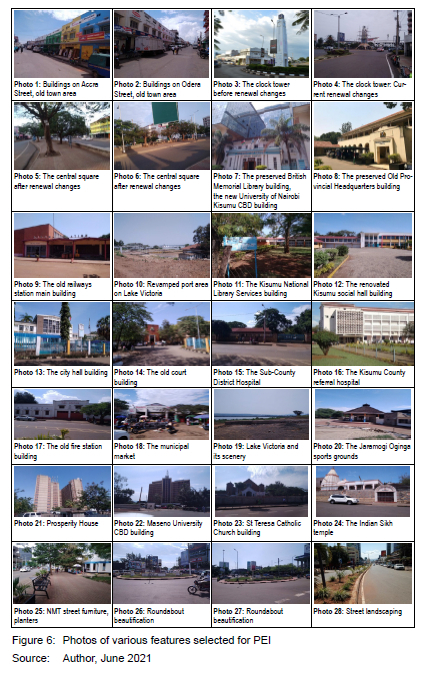
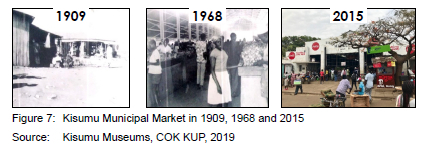
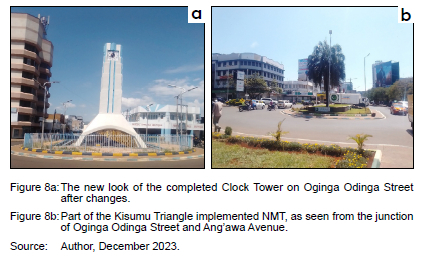
In urban contexts, memory and place are inseparable and important for identity formation. The individual and collective memories of city residents link their identity with place identity. Special features in the landscape and urban fabric help residents differentiate between, and connect with the city's identity. The use of collective memory to identify and retain urban identity during urban renewal projects, however, receives less attention than functional and economic investment considerations. This article investigates the importance of urban landscape identity during urban renewal. It postulates that a city's individual and collective memory is important in maintaining its uniqueness in terms of urban landscape identity, but requires economic investment to maintain basic physical comfort and access. A qualitative research approach with photo-elicitation interviews (PEI) was used to investigate the features that activated the memory of the participants and that were important in contributing to the image of Kisumu City, Kenya. There were ongoing and completed urban renewal projects within Kisumu City at the time of the study, which made it a good case study for postcolonial Africa. Twelve residents (as PEI participants), four officials from the County Government, and four professionals were interviewed as key informants. A field investigation was carried out through mapping and photography in addition to an archival review. The study reveals that the old railway station, the port, and the market featured strongly in collective memory as part of historical trade development. Despite the important role of civic and administrative buildings from the colonial era in the formation of memory, place, and identity, there was also a positive response from residents to the 'new look' of the city. The physical upgrade, decongestion and cleaning of the city, its streets and parks as public spaces resulted in greater safety and public use, which was well appreciated from an investment point of view. The study emphasizes the importance of identifying, considering, and retaining the elements that support memory and identity during urban renewal projects as equal in importance to economic development and functionality when considering long-term sustainability.
conservation; collective memory; Global South; photo-elicitation interviews; urban renewal; urban landscape identity
 Thumbnail
 Thumbnail
 Thumbnail
 Thumbnail
 Thumbnail
 Thumbnail
 Thumbnail