Indoor thermal comfort comparison of stabilised latscrete and sandcrete blocks as walling materials in buildings in Portharcourt Metropolis, Nigeria
Abstract
Stabilised sandcrete (sand-cement) and latscrete (clay/mud-cement) blocks are the most commonly used materials for masonry building walling material in Port Harcourt metropolis. Despite the hot, humid tropical climate in this region, the interior thermal comfort benefits of selecting suitable walling materials for buildings are frequently overlooked. In addition to the interior thermal comfort in buildings, rising energy usage is also a cause for concern. The choice of material for wall building is influenced by cost, strength, and durability. However, interest in employing sustainable green architecture and thermally comfortable building materials has increased in recent years. Selecting appropriate wall materials that can be energy efficient and lower cooling load is necessary, since external walls play a significant role in thermal insulation. Therefore, the study evaluated indoor thermal comfort, comparing commonly used stabilised latscrete blocks as walling material in two model buildings. To evaluate the characteristics of the two walling materials, a series of tests were performed to determine the water absorption rate, compressive strength, splitting tensile strength, and flexural strength, following the standards set by the American Society for Testing and Materials (ASTM). Readings of relative humidity and indoor temperature of the two buildings were respectively taken and recorded for a period of twelve months. The data were collated and analysed using the Temperature-Humidity Index (THI), Heat Index (HI), and Effective Temperature Index (ETI). To compare the thermal comfort performance of the building models, the ASHRAE 55-2020 standard scale was used. Latscrete was found to be a better thermal comfort performer than sandcrete and was, therefore, recommended as an alternative local walling material for building in the study area.
Latscrete; sandcrete; built environment; thermal comfort
1. INTRODUCTION
Energy consumption plays a vital role in the socio-economic development of cities in developing countries (Dilanchiev, Umair & Haroon, 2024). Heating and cooling of conventional buildings consume a lot of energy. Indoor thermal comfort is the maintenance of thermal balance between the human body and the environment (Turhan & Gokcen Akkurt, 2019). It has been noted that, in a number of cities, the energy required to achieve thermal comfort indoors is half of what is produced (Sathiparan et al., 2022).
In the tropical humid region, temperature and humidity are two of the main meteorological factors influencing how human beings adapt to thermal comfort in buildings in relation to the materials used for walls (Liu & Zhang, 2011; Acero et al., 2024; de la Hoz-Torres et al., 2024; Wu et al., 2024). A building in this context is any structure with walls, roof, floor, and physical enclosure with some means for creating a comfortable internal environment for human habitation (Mansour et al., 2022). Buildings provide shelter for the protection of man from harsh climatic conditions, external aggressions, privacy, and storage of possessions at an acceptable comfort.
In developed urban centres such as Port Harcourt, the effects of climate variability and change on buildings, particularly rising temperatures and humidity, manifest in two primary ways. First, elevated temperatures influence indoor climate and thermal comfort levels (Wu et al., 2024). Secondly, the energy needed for cooling per unit area increases, while, if appropriately outfitted, the energy required for heating per unit area decreases (Zhan et al., 2024). These elements collectively influence the overall energy consumption and demand, either directly through an increased demand for cooled living and working spaces or indirectly for altered specific energy needs (Harvey, 2010; Chaturvedi et al., 2014; Santamouris & Vasilakopoulou, 2021).
The thermal masses of building walling materials are primarily influenced by the raw materials used in their construction, as well as their physical dimensions, the workability of the cement, the water-to-aggregate ratio, and the curing parameters (Zhang, 2013; Iyer, 2020). Therefore, given the ongoing infrastructural development in Port Harcourt Metropolis (Echendu, 2021), it is essential to assess the impact of the walling material used in construction on thermal comfort. In Port Harcourt Metropolis, various conventional walling materials have been used for an extended period, including hollow and solid stabilised sandcrete blocks, compressed hydroform bricks, clay blocks, concrete, glass, plastic, timber, and stone (Raheem, Bello & Makinde, 2010). Sandcrete blocks are precast composite masonry units made from cement, sand, and water, along with latscrete, which is composed of cement and lateritic soil, are among the most commonly used materials for building wall construction in the region. Lateritic soils are distinguished by their abundant iron and aluminium content, often exhibiting a red or rusty brown coloration, due to elevated levels of iron oxide. These soils typically develop in hot and humid tropical regions. Although sandcrete blocks are more commonly used for building in Port Harcourt, latscrete blocks are not as widely used, likely due to their lower production levels compared to sandcrete blocks (Anosike & Oyebade, 2012; Wilson, Raji & Alomaja, 2016; Mensah et al., 2022).
Through ongoing research and development, professionals in the built environment are increasingly focused on strategies for achieving indoor thermal comfort in buildings. In tropical regions, design philosophies generally align with two primary approaches, namely heavyweight and lightweight construction. The lightweight approach typically incorporates operable walls, solar shading, and cross-ventilation to mitigate heat gain. Despite their differences, both strategies rely heavily on effective solar shading and natural ventilation techniques.
A notable example is the Gando School project in Burkina Faso, where Kéré (2017) implemented a holistic climatic design to address the challenges of the tropical environment. The design featured a floating shading structure composed of corrugated iron sheets and clay tiles, angled to reduce direct solar gain. The corrugated iron absorbs heat, initiating stack ventilation by promoting the upward movement of warm air, which, in turn, draws in cooler air through lower openings and expels it through the porous clay tiles at higher levels. Kéré's design system significantly improved indoor thermal conditions, as highlighted by Genovese and Zoure (2023).
In contrast, the climatic context of Port Harcourt presents unique challenges. Local construction practices tend to favour heavyweight materials such as sandcrete and latscrete blocks, due to the availability of raw materials and entrenched building conventions. However, these practices often overlook integrated ventilation strategies. This study experimentally evaluates the thermal comfort performance of commonly used heavy wall materials - specifically sandcrete and latscrete - in order to reflect prevailing construction trends in Port Harcourt. The findings aim to provide insights into their thermal behaviour and guide more climate-responsive material selection in future building projects.
Shaibu and Utang (2013) conducted a study on human comfort and the microclimatic variables affecting thermal comfort in Port Harcourt Metropolis and found that commercial zones experienced the highest average levels of heat stress, which corresponded to lower human comfort, followed by densely populated residential areas. Odim (2013) performed comparative studies on the comfort levels linked to hollow and non-hollow concrete block walls in warm, humid climates. The findings indicated that window shading plays a crucial role in influencing the comfort levels within buildings, which, in turn, affects energy consumption. In a study by Sathiparan et al. (2022), housing units made with cement-stabilised earth blocks and fired-clay bricks showed better thermal comfort than those made with cement-sand blocks.
As energy consumption in buildings continues to rise, addressing the need for sustainable and thermally efficient building materials has become increasingly important. Despite the rapid urbanisation of Port Harcourt, there is a notable lack of research examining the comparative thermal comfort performance of stabilised sandcrete and latscrete blocks as walling materials for building construction. Located in the hot, humid tropical climate of Nigeria, Port Harcourt experiences extreme temperature variations, making the insulation of building exteriors crucial for maintaining interior thermal comfort. The choice of appropriate wall materials is critical, as external walls significantly influence thermal insulation and cooling load requirements. While there has been growing interest in green architecture and thermally efficient materials, few studies have specifically compared the thermal comfort provided by these common local materials - stabilised sandcrete and latscrete blocks - despite their widespread use in the region. This study seeks to evaluate the thermal performance of these materials in Port Harcourt, with a focus on their potential to improve energy efficiency and enhance occupant comfort in buildings.
2.1 Masonry walling material and thermal comfort
The American Society of Heating, Refrigeration, and Air Conditioning Engineers (ASHRAE) define thermal comfort as that condition of mind that expresses satisfaction with the thermal environment (Jenkins, 2022: 2-3). The human body exhibits a high degree of sensitivity to climatic conditions, which is crucial for regulating body temperature and achieving thermal equilibrium and overall health (Hardy, 1961; Felix, Eludoyin & Nwokike, 2021). It is imperative to sustain appropriate temperature levels within both the human body and indoor environments, in order to prevent discomfort and mitigate risks associated with heat loss or cold exposure. Ensuring optimal thermal comfort for the human body is crucial for promoting good health and enhancing productivity, especially considering that human beings often spend considerable periods indoors participating in a range of economic activities (Ike, Nkemdirim & Innocent, 2024).
The architectural styles that have emerged in different regions are influenced by cultural diversity and environmental factors, which dictate the materials that are accessible for use in building construction (Canizaro, 2007; Williams, 2007). The types and characteristics of these walling materials serve as a critical boundary between the external and internal environments, thereby influencing energy efficiency, indoor thermal conditions, and the overall functional performance of buildings (Tripathi & Shukla, 2024).
Numerous studies on thermal comfort, including those conducted by Djongyang, Tchinda and Njomo (2010), Cui et al. (2013), Ali et al. (2024), and Pivac (2024) identified four environmental factors, namely air temperature, relative humidity, mean radiant temperature, and air velocity alongside two personal factors, namely metabolic rate and clothing insulation, as determinants of thermal comfort. Nonetheless, Frontczak and Wargocki (2011) and de Dear et al. (2013) highlighted air temperature as the predominant factor influencing thermal comfort, as it significantly affects the occupants' sensations within indoor environments.
Odim (2013), as well as Alozie, Odim and Alozie (2015) pointed out that the selection and treatment of materials for the building envelope play a crucial role in its thermal performance and contribute to minimising heat load. A simulation study by Lawal and Ojo (2011) demonstrated that indigenous materials exhibit superior thermal properties compared to modern building materials in Ibadan, Nigeria. Conversely, a study in Kumasi, Ghana, by Koranteng, Afram and Ayeke (2015) indicated that variations in walling materials do not substantially impact indoor comfort; rather, the building's orientation is more influential.
Odim (2006) argued that the optimisation of human activities and aspirations is contingent upon achieving comfortable indoor environmental conditions. In Nigeria, buildings are typically constructed using cement blocks, but recently, there has been a push to use local materials instead, and much study is being done to determine how sustainable and effective these materials may be in creating sustainable thermal comfort (Basher & Leite, 2022; Jegede & Taki, 2022).
In Nigeria, latscrete and sandcrete walling material has been predominantly used for wall construction in the development of housing and other infrastructural projects (Odeyemi et al., 2015; Akinyemi et al., 2020). Lateritic soils are distinguished by the presence of highly active clay minerals such as elite and montmorillonites. Their colour and properties can vary significantly based on their source. In addition to their application in the production of soil-stabilised bricks and blocks, lateritic soils are also employed in road construction as sub-base and sub-grade materials (Ezreig, Ismail & Ehwailat, 2022). Stabilised laterite blocks are a broad category of construction materials produced from laterite soil combined with various binding or stabilising agents such as cement, lime, petroleum products, phosphate, and other compounds (Raheem et al., 2010). Sandcrete blocks, on the other hand, are masonry components created from a blend of cement, sand, and water. They are precast composite masonry units made from a mixture of cement, sand, and water, typically moulded into various sizes (Adeniji, Ganiyu & Ajagbe, 2013).
Although there have been widespread international initiatives aimed at decreasing energy consumption to promote sustainable development, there is a notable scarcity of research focused on the thermal performance of walling materials in the humid tropics (UN, 2015). This gap is particularly significant in the context of enhancing human productivity in both workplace and residential environments in Nigeria. As an example, Sharma and Ali (1986), Lawal and Ojo (2011), as well as Nwalusi et al., (2019) concentrated on the thermal performance of residential buildings and their occupants' responses to the thermal environment, without examining the influence of the walling material composition on the indoor temperature and relative humidity.
Numerous studies (e.g., Sharma, Kumar & Kulkarni, 2021; Kaushal et al., 2024) have identified building materials as a primary factor affecting thermal comfort in developing countries. Other studies have employed multivariate statistical methods to analyse comfort measures based on the relative strain index (Lee, 1963), the index of thermal stress (Budd, 2001), and the predicted mean vote (Fanger, 1973). However, a straightforward comparison of these results is complicated by variations in methods, measurement sites, and interpretations of the identified components, indicating that thermal comfort is contextually specific and influenced by prevailing environmental and climatic conditions.
2.2 Tropical wall design principles for passive cooling strategy
Buildings are required to have a high degree of thermal inertia so that the indoor temperature and relative humidity remain reasonably stable and unaffected by fluctuations in exterior conditions. The design of the wall has the potential for passive control of a building's indoor conditions, by managing the transference of external outdoor temperature (Homod et al., 2021). Construction materials such as concrete, brick, cement blocks, and other solid masonry materials are considered to have high thermal mass. However, high-thermal-mass materials are considered very effective against rapid heat transfer, which is mainly due to their properties to absorb heat from solar radiation at a much slower rate than lightweight materials with a low thermal mass. Lightweight materials of timber, steel, and the various building wall materials absorb heat quickly and conversely cool down quickly (Vijayan et al., 2021).
The differences in wall thickness significantly impact the comfort levels of buildings, as highlighted by Mallic (1996), who noted that rooms with thicker walls generally offer a higher degree of comfort. Furthermore, a comparative analysis of temperature readings in homes with wall thickness ranging from 125 mm to 500 mm indicates that those with greater wall thickness, especially on lower floors, maintain a consistently comfortable environment throughout the year, in contrast to those located on upper floors.
The massing of the enclosing envelope is primarily influenced by the thickness and type of construction materials used, as well as their capacity to impede heat transfer over time, which is crucial for assessing the building's thermal performance and consequently affects the energy required to maintain thermal comfort in occupied areas (Basrawi et al., 2013). Furthermore, while greater thermal conductivity in insulation materials corresponds to lower thermal resistance, necessitating thicker insulation for optimal thermal performance, it is also important to consider that increased insulation thickness can significantly reduce usable space within the building (Ulutaş, Balo & Topal, 2023).
3. THE STUDY AREA
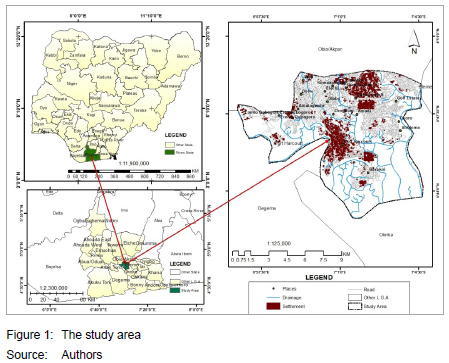
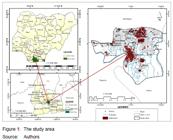
The study area cuts across two geographic administrative units, namely Port-Harcourt City and Obio-Akpor, which together forms Port Harcourt Metropolis. It is located between latitudes of 4° 05'30''N and 5° 14'25''N and Longitudes 5° 40'30''E and 7° 11'01''E (Figure 1) on an elevation of 15m, characterised by dense tropical forest and built-up and covering an area of 1,900 km2. It has an estimated population of 2 344 000 inhabitants.
The rainfall volume in the area ranges between 2000 mm and 2500 mm, while relative humidity increases from April to September, peaking in July before experiencing a sharp decline from January to March. During the dry season, temperatures commonly reach up to 32°C, with the lowest being recorded at 26°C in July (Nwaerema & Weli, 2019). Port Harcourt is characterised by a diverse range of land uses, including residential (high, medium, and low density), commercial, and industrial. This indicates that variations in human comfort and the microclimate arise from human activities across different land uses, which generate varying degrees of heat and create differing levels of thermal comfort.
4. METHODS AND MATERIALS
4.1 The walling materials-production and mechanical properties
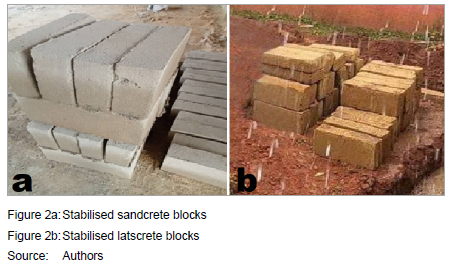
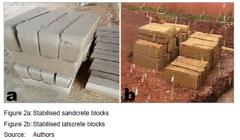
The primary construction materials used for the two buildings comprised stabilised sandcrete blocks, made up of 14% cement and 86% river sharp sand, and stabilised lateritic blocks, which similarly contained 14% cement and 86% lateritic soil. The production procedures for stabilised sandcrete and stabilised latscrete blocks both entail a ratio of one part (25 kg) of cement to six parts (150 kg) of their respective materials - sharp sand and lateritic soil - resulting in the yield of 15 blocks in each case. In both instances, water is incorporated into the mixture and manually mixed with a spade until it reaches a workable consistency, after which the mixture is placed into a steel mould and compacted. Then the blocks are extracted from the mould and, after being allowed to set and cure for a minimum of four days (Figures 2a and b), are watered twice on the second day, once in the morning and once in the evening. The blocks used in constructing both buildings had identical dimensions, measuring 450 mm in length, 100 mm in width, and 225 mm in height.
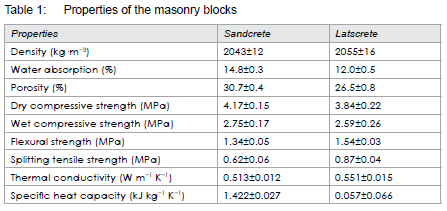
To evaluate the characteristics of two walling materials, a series of tests were conducted to determine their water absorption rate, compressive strength, splitting tensile strength, and flexural strength, in accordance with established standards (ASTMC140, 2017; ASTMC109, 2020; ASTMC1006, 2007; ASTMC1609, 2019). The mechanical properties of the masonry units in the model buildings are summarised in Table 1. Sandcrete exhibited superior compressive strength under both wet and dry conditions. However, latscrete demonstrated a further reduction in compressive strength when subjected to wet conditions, particularly in terms of flexural and splitting tensile strengths. Latscrete demonstrated a more significant reduction in compressive strength when subjected to wet conditions, particularly in terms of flexural and splitting tensile strengths. When compared to sandcrete, latscrete exhibited a higher density, an increased coefficient of thermal conductivity, and a lower specific heat capacity.
4.2 Site description and other building materials
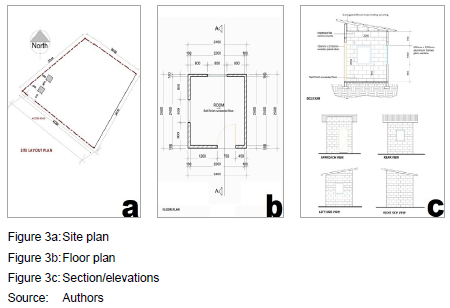
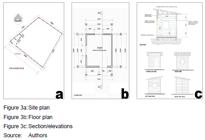
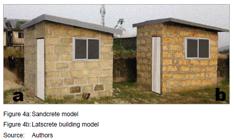
The two model structures were erected on an undeveloped parcel of land within the Apalugbor housing estate, approximately 300 m from Ikwerre Road in Rumuigbo, eastern Port Harcourt Metropolis, Rivers State. The location is characterised by any significant obstruction from wind or sunlight. Cement-sand mortar, mixed in a ratio of 1:6, was used for bonding the blocks during the construction of the walls of the experimental buildings. Both buildings were constructed with roofs and ceilings made from similar materials, including 0.45 mm thick flat aluminium roofing sheets affixed to 50x50 mm purlins supported by semi-hardwood trusses, while the ceilings consisted of 0.35 mm thick cement fibre flat sheets secured to 50x50 mm wooden noggins on wooden trusses. The doors and windows were fabricated from high-density fibreboard (HDF), which were hinged and bolted within wooden frames. Each of the buildings had sandcrete self-floor finish over a concrete floor of the same thickness. The buildings are aligned along the same solar and wind paths - North-East (NE) and South-East (SE) - as illustrated in their architectural details in Figures 3 and 4.
4.3 Test and analysis
The indoor temperatures and RH with doors and windows closed for the two different model buildings were measured four times daily, namely at 6:00 a.m., 12:00 p.m., 6:00 p.m., and 12:00 midnight, from August 2021 to July 2022, using a digital Thermohygrometer (model RTB 17E). The temperature and humidity sensors were positioned on plastic tables at a height of 0.5 m inside buildings that had indoor room dimensions of 2.4 m in length, 2.4 m in width, and 2.7 m in height.
Data retrieved from the field were analysed using Temperature-Humidity Index (THI), Heat Index (HI), and Effective Temperature Index (ETI) scales (Eludoyin, 2014). These scales are represented as follows:

T represents the ambient or dry-bulb temperature measured in degrees Celsius (°C), while RH denotes relative humidity, expressed as a proportion (for instance, 75% corresponds to 0.75). In the assessment of the THI, the results were compared according to the ASHRAE 55-2020 standard scale to determine thermal comfort levels (ASHRAE, n.d.): Mild is classified as a THI of 72 to 79, moderate ranges from 80 to 89, and severe is defined as a THI of 90 or higher. ETI standard scales are established as follows: (a) Lower limit = 22°C, (b) Optimum limit = 25°C, and (c) Upper limit = 27°C. The Heat Index (HI) indicates the apparent temperature perceived by the human body, which decreases at higher RH levels, due to a diminished evaporation rate (Jing et al., 2013).

where c values are constants, T represents temperature in degrees Fahrenheit/Celsius, and R represents RH percentage.
Ordinary Least Squares (OLS) analysis was conducted to assess the relationship between the two distinct types of walling materials. This analysis specifically focused on examining the direct correlation that exists between temperature and RH, allowing for a deeper understanding of how these climatic elements influence the performance and properties of the walling materials. In addition, detailed investigation through time series regression analysis was performed to systematically explore the impact of various data-collection time points (6:00 a.m., 12:00 p.m., 6:00 p.m., and 12:00 midnight) on the fluctuations and variations observed in RH and temperature of the model buildings.
5. RESULTS AND DISCUSSION
5.1 Temperature and humidity trends
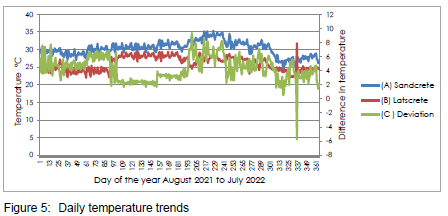
The daily temperature data revealed that the maximum temperature for the sandcrete model reached 33.34°C, surpassing the maximum of the latscrete model, which was recorded at 31.81°C, by a margin of 3.5°C. The standard deviations for these measurements were 2.08 and 19.67, respectively (see Figure 5). The temperature patterns observed for both walling materials were consistent with the seasonal climatic variations typical of the region. Over time, both materials demonstrated a decline in temperature, suggesting that factors such as the age of the materials or seasonal changes may have contributed to the observed temperature variations in the model structures. Notably, the temperature readings for sandcrete exhibited a broader range and greater variability compared to those of latscrete.
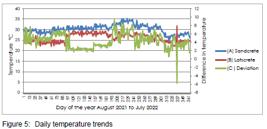
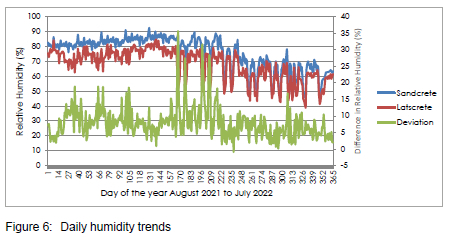
Figure 6 illustrates the average daily RH, indicating that the RH for sandcrete, at 92.38%, was higher than that of latscrete, which recorded 84.5%, by 7.88%. The standard deviations for these values were 11.21 and 10.5, respectively. The RH trends for both materials were in accordance with the seasonal climatic shifts experienced in the Port Harcourt Metropolis. Throughout the duration of the study, both sandcrete and latscrete displayed a similar downward trend in RH, with average daily values of 75.47 and 67.61, respectively.
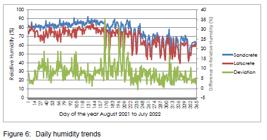
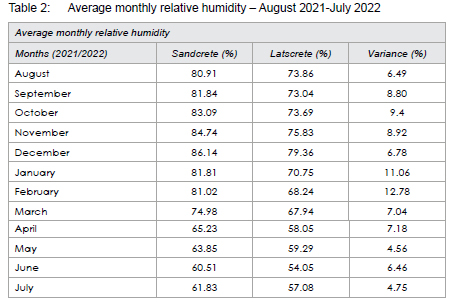
In Table 2, data regarding average monthly RH indicates a rise in humidity levels starting in March, peaking in December for both walling materials. Although it is well established that the highest rainfall occurs between July and August in Port Harcourt, it is significant to note that the peak humidity does not coincide with this rainfall pattern, instead occurring in December for both types of constructiion.
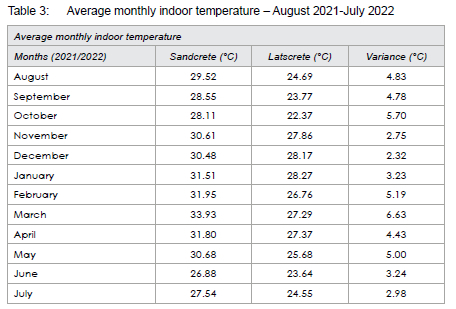
Furthermore, Table 3 shows that the most considerable temperature fluctuations were recorded in March, aligning with the region's peak temperatures, while December exhibited the least temperature variation, marking the beginning of the dry season.
The National Building Code (NBC, 2006) establishes fundamental standards for building design and construction aimed at achieving optimal thermal performance in Nigeria. In Port Harcourt, the enforcement of the NBC and adherence to building regulations is overseen by the Rivers State government, specifically through the Ministry of Lands and Urban Development. According to the NBC, indoor temperatures in the Port Harcourt area should be maintained between 31°C and 18°C, while acceptable indoor RH levels are defined to be between 40% and 60%.
The temperature records for the sandcrete model building exceeded the NBC threshold of 31°C by 51.1%, with no instances of temperatures falling below the minimum benchmark of 18°C. This deviation, characterised by temperatures surpassing the NBC limit, was observed from November to March, aligning with the dry season in the Port Harcourt region. Conversely, during the months of June, July, August, September, and October - when rainfall is most prevalent - temperatures were recorded below the NBC standard. In terms of daily RH for the sandcrete model, only 13.11% of the readings fell within the NBC guidelines, while all monthly assessments indicated RH levels exceeding the NBC benchmark.
In contrast, the latscrete walling model demonstrated that none of the daily temperature readings surpassed the NBC limit of 31°C, nor did any temperatures drop below the minimum threshold of 18°C. Regarding daily RH for the latscrete model, 33.33% of the readings were within the NBC parameters. However, at the monthly level, all recorded months (100%) exhibited optimal RH levels based on the NBC standard.
The analysis of temperature and RH trends reveals important insights on the impact of building walling materials and local climatic conditions on indoor thermal performance in Port Harcourt. In the case of the sandcrete model, it is concerning that temperature measurements surpassed the NBC threshold of 31°C by 51.1%. This finding is particularly troubling as it indicates that, during the dry season, from November to March, the indoor environment does not achieve the comfort levels prescribed by the NBC guidelines. This serves as a clear indication that sandcrete structures may struggle to effectively regulate temperature, particularly in a climate characterised by significant humidity fluctuations. Conversely, the latscrete model demonstrated a much more advantageous performance. It recorded no temperatures exceeding 31°C and consistently maintained conditions within the NBC standards, making it a preferable option for construction in this area. In addition, the fact that 33.33% of daily RH measurements fell within the acceptable range is encouraging, suggesting that latscrete not only excels in temperature regulation, but also enhances indoor thermal comfort quality.
5.2 Thermal comfort of the walling materials
The ASHRAE Standard 55-2020 and ISO 7730 delineate the acceptable range for thermal comfort (ASHRAE, n.d.: online; ISO, n.d.: online). Furthermore, ISO 7730 elaborates on the limits set by ASHRAE 55, providing various ranges for indoor environments. Central to both ASHRAE Standard 55 and ISO 7730 are the Predicted Mean Vote (PMV) and the Predicted Percentage of Dissatisfied (PPD) models, which are recognised as key thermal comfort standards. The PMV assesses the average thermal sensation that a large group of individuals experiences in a specific environment, while the PPD estimates the proportion of individuals likely to express dissatisfaction at a particular PMV level, thereby enhancing the understanding of comfort performance. According to ASHRAE 55 and ISO 7730, the PPD can vary from 5% to 100%, contingent upon the calculated PMV, with these comfort values differing based on the occupant's location within the building. To adhere to the standards, no occupied area should exceed a PPD of 20%. The PMV index is evaluated on a 7-point scale, ranging from +3 (Hot) to -3 (Cold), with 0 indicating a neutral or comfortable state. The primary objective in building design is to attain a PMV close to 0, indicating thermal neutrality for the majority of occupants. These standards utilise the PMV to establish acceptable thermal conditions for human occupancy. ASHRAE 55-2020 indicates that RH levels below 20% or above 70% may result in discomfort. This study, which concentrated on experimental building models, assessed temperature and RH data according to the ASHRAE 55-2020 standard, in order to evaluate thermal comfort levels categorised as mild, moderate, and severe. Mild conditions are defined by a THI of 72 to 79, moderate conditions range from 80 to 89, and severe conditions are characterised by a THI of 90 or higher. The established ETI standard scales are as follows: (a) Lower limit = 22°C, (b) Optimum limit = 25°C, and (c) Upper limit = 27°C.
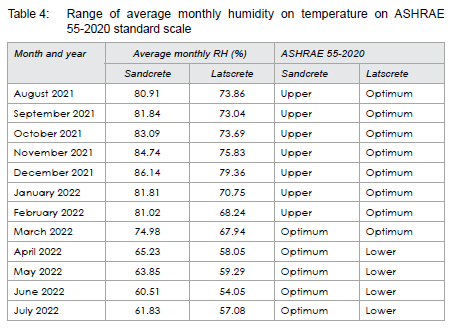
The findings presented in Table 4 demonstrate that RH had a significant impact on the indoor thermal comfort of buildings constructed with sandcrete walls, as evidenced by the parameters defined in the optimal and upper limits according to ASHRAE 55-2020. Importantly, no lower limit was identified throughout the study period. In contrast, the analysis of buildings with stabilised latscrete walls indicated that, from August 2021 to March 2022, RH played a crucial role in maintaining optimal indoor thermal comfort. However, during the period from April 2022 to July 2022, RH was found to establish lower limits for thermal comfort.
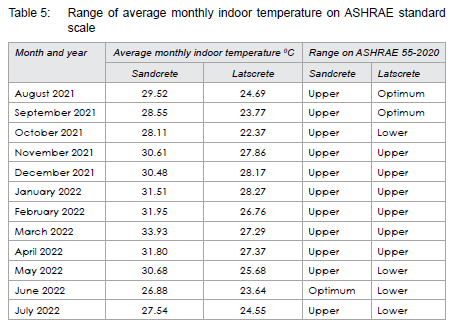
According to the results in Table 5, with the exception of June 2021, when temperatures fell within the optimal range, all other months recorded average monthly temperatures at the 'upper limit' range for buildings with sandcrete walls. In the case of buildings with latscrete, the average indoor temperature showed six months below the 'upper limit' (comprising four months at the 'lower limit' and two months at the 'optimum limit') alongside six months at the 'upper limit'.
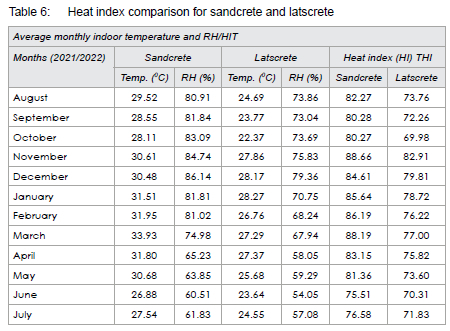
The assessment utilising the ASHRAE heat index scale, as shown in Table 6, indicated that sandcrete walls exhibited acceptable mild heat indices only during June (75.51 THI) and July (76.58 THI). In contrast, the months from January to May and August to December were classified within the acceptable moderate range of 80-89 THI. For latscrete, only November achieved a heat index of 82.59 THI, qualifying it as an acceptable moderate heat index level (80-89 THI), while the remaining months were categorised within the acceptable mild heat index range of 72-79 THI.
5.3 Regression analysis
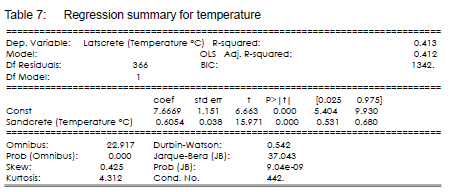
A moderately strong correlation exists between the room temperatures of sandcrete and latscrete, as indicated by an R-squared value of 0.413. This finding implies that roughly 41.3% of the variability in latscrete temperatures can be accounted for by the temperatures of sandcrete (Table 7).
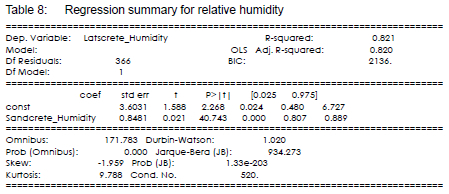
Positive correlation was iTentified between trie humidity levels of sandcrete and latscrete, as indicated in Table 8, with an R-squared valun of 0.821. This -indine;) implies that roughly 82.1% of the variability in latscrete humidity can be accounted for by the humidity of sandcrete.
5.4 Time variability of the walling materials
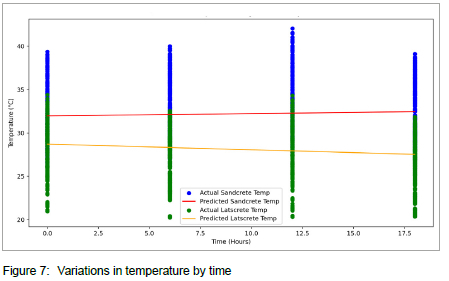
The analysis presented in this section focuses on the regression of temperature and RH data collected at specific times (6:00 a.m., 12:00 p.m., 65:00 p.m., and 12:00 midnight) for both sandcrete and latscrete building models. Figure 7 illustrates the temperature coefficients and intercepts for sandcrete and latscrete, which are recorded as (0.02653, -0.06541) and (3196, 28.71), respectively. The findings indicate that the sandcrete model exhibits a positive correlation with time suggesting an increase in temperature as time advances. Conversely, the latscrete model demonstrates a negative correlation, indicating a decrease in temperature over the same period.
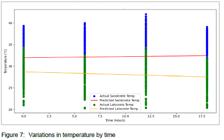
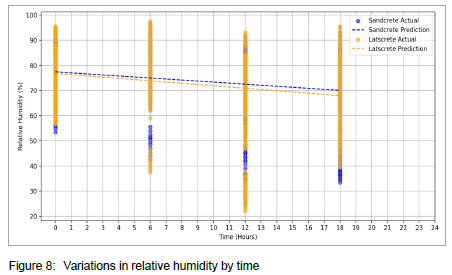
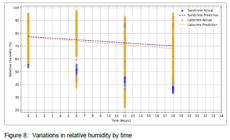
Figure 8 indicates the coefficients and intercepts for the linear models, which can be used to predict RH based on the time of day. For sandcrete, the model has a coefficient of approximately -0.41 and an intercept of about 77.45, which means that RH decreases by ~0.41% per hour from midnight to noon. For latscrete, the model has a coefficient of approximately -0.49 and an intercept of roughly 76.81, which means that RH decreases by ~0.49% per hour from midnight to noon. These coefficients suggest that, as time increases (from midnight to noon), the RH decreases for both types of materials.
6. CONCLUSION AND RECOMMENDATION
This research analysis indicated that latscrete maintained a mild heat index (HI) level of 70-79 THI for eleven months during the study period, with the exception of November, which recorded a moderate HI level of 80-89 THI. In contrast, sandcrete predominantly exhibited a moderate HI level of 80-89 THI throughout the analysis. When evaluated against the effective temperature (ET) standards established by ASHRAE for acceptable indoor thermal comfort, which range from 22°C to 27°C, latscrete demonstrated a narrower variance in thermal performance, ranging from 2.32°C to 6.63°C, compared to sandcrete. These findings align with the conclusions drawn by Sathiparan et al. (2022) who noted that residential units built with cement-stabilised earth blocks and fired-clay bricks offer significantly enhanced comfort regarding temperature and humidity fluctuations.
This investigation emphasises the necessity of examining alternative masonry wall materials that exhibit superior indoor thermal performance compared to the widely utilised sandcrete blocks. The findings indicate that stabilised lateritic blocks may serve as a more effective walling option than stabilised sandcrete blocks for enhancing indoor thermal comfort in the studied region. Lateritic blocks not only demonstrate improved thermal efficiency relative to sandcrete blocks, but they can also be manufactured using simple block-making machines or hand-operated moulds in a manner similar to that of sandcrete. This research has built upon previous recommendations by scholars advocating for the development of lateritic soil as a modern walling material.
This study concludes that stabilised latscrete blocks are a viable alternative to the traditionally used stabilised sandcrete blocks for masonry wall construction in the examined region. It is recommended that latscrete blocks be produced on a large scale, similar to sandcrete blocks, and made accessible in the marketplace for consumers to acquire as needed. This initiative is expected not only to promote public health, but also to create job opportunities for individuals interested in working within the latscrete block manufacturing sector.
7. LIMITATIONS AND FUTURE STUDY
The primary limitation of this research was the absence of holistic ventilation in the modelled buildings. For future investigations, it is advisable to also use actual habitable buildings to gain a comprehensive understanding of the thermal comfort associated with the walling materials. Future research should also use both outdoor and indoor measurements in analysing full-scale models or actual houses and the social aspect regarding the acceptance of the local population to stay in such accommodation as well as their capacity to use it.
REFERENCES
2. LITERATURE REVIEW
-
Acero, J.A., Kestel, P., Dang, H.T. & Norford, L.K. 2024.Impact of rainfall on air temperature, humidity and thermal comfort in tropical urban parks. Urban Climate, 56, article102051. https://doi.org/10.1016/j.uclim.2024.102051
» https://doi.org/10.1016/j.uclim.2024.102051 - Adeniji, A.A., Ganiyu, A.A. & Ajagbe, W.O. 2013. Quality assessment of sandcrete blocks in Ibadan - A review. Epistemicsin Science Engineering and Technology, Vol. 3, pp. 272-277.
-
Akinyemi, B., Elijah, A., Oluwasegun, A., Akpenpuun, D. & Glory, O. 2020. The use of red earth, lateritic soils and quarry dust as an alternative building material in sandcrete block. Scientific African, 7, article 00263. https://doi.org/10.1016/j.sciaf.2020.e00263
» https://doi.org/10.1016/j.sciaf.2020.e00263 -
Ali, H., Rehman, T., Arıcı, M., Said, A., Durakovic, B. et al. 2024. Advances in thermal energy storage: Fundamentals and applications. Progress in Energy and Combustion Science, 100, article 101109. https://doi.org/10.1016/j.pecs.2023.101109
» https://doi.org/10.1016/j.pecs.2023.101109 - Alozie, G., Odim, O. & Alozie, E. 2015. Impact of air temperature in thermal comfort of indoors of residential buildings in Umuahia Urban Abia State, Nigeria. International Journal of Scientific and Engineering Research, 6, pp. 1531-1547.
-
Anosike, M.N. & Oyebade, A.A. 2012. Sandcrete blocks and quality management in Nigeria building industry. Journal of Engineering, Project, and Production Management, 2(1), pp. 37-46. https://doi.org/10.32738/JEPPM.201201.0005
» https://doi.org/10.32738/JEPPM.201201.0005 -
ASHRAE (American Society of Heating, Refrigeration, and Air Conditioning Engineers). n.d. Standards and Guidelines. [Online]. Available at: https://www.ashrae.org/technical-resources/standards-and-guidelines [Accessed: 14 February 2024].
» https://www.ashrae.org/technical-resources/standards-and-guidelines - ASTM-C140/C140M. 2017. Standard test methods for sampling and testing concrete masonry units and related units. West Conshohocken, PA: ASTM International.
- ASTM-C109. 2020. Standard test method for compressive strength of hydraulic cement mortars (using 2-in. or [50-mm] cube specimens). West Conshohocken, PA: ASTM International.
- ASTM-C1006. 2007. Standard test method for splitting tensile strength of masonry units. West Conshohocken, PA: ASTM International.
- ASTM-C1609/C1609M. 2019. Standard test method for flexural performance of fiber-reinforced concrete (using beam with third-point loading). West Conshohocken, PA: ASTM International.
-
Bashir, A. & Leite, B. 2022. Performance of aerogel as a thermal insulation material towards a sustainable design of residential buildings for tropical climates in Nigeria. Energy and Built Environment, 3(3), pp. 291-315. https://10.1016/j.enbenv.2021.02.003
» https://10.1016/j.enbenv.2021.02.003 -
Basrawi, F., Ibrahim, H., Taib, M. & Lee, G. 2013. Optimum thickness of wall insulations and their thermal performance for buildings in Malaysian climate. International Journal of Automotive and Mechanical Engineering, 8, pp. 1207-1217. https://doi.org/10.15282/ijame.8.2013.11.0099
» https://doi.org/10.15282/ijame.8.2013.11.0099 -
Budd, G.M. 2001. Assessment of thermal stress - The essentials. Journal of Thermal Biology, 26, pp. 371-374. https://doi.org/10.1016/S0306-4565(01)00046-8
» https://doi.org/10.1016/S0306-4565(01)00046-8 - Canizaro, V.B. 2007. Architectural regionalism: Collected writings on place, identity, modernity, and tradition. New York: Princeton Architectural Press.
-
Chaturvedi, V., Eom, J., Clarke, L. & Shukla, R. 2014. Long-term building energy demand for India: Disaggregating end use energy services in an integrated assessment modeling framework. Energy Policy, 64, pp. 226-242. https://doi.org/10.1016/j.enpol.2012.11.021
» https://doi.org/10.1016/j.enpol.2012.11.021 -
Cui, W., Cao, G., Park, J.H., Ouyang, Q. & Zhu, Y. 2013. Influence of indoor air temperature on human thermal comfort, motivation and performance. Building and Environment, 68, pp. 114-122. https://doi.org/10.1016/j.buildenv.2013.06.012
» https://doi.org/10.1016/j.buildenv.2013.06.012 -
de Dear, R.J., Akimoto, T., Arens, E.A., Brager, G., Candido, C. et al. 2013. Progress in thermal comfort research over the last twenty years. Indoor Air, 23(6), pp. 442-461. https://doi.org/10.1111/ina.12046
» https://doi.org/10.1111/ina.12046 -
de la Hoz-Torres, M., Aguilar, A., Ruiz, D. & Martínez-Aires, M. 2024. An investigation of indoor thermal environments and thermal comfort in naturally ventilated educational buildings. Journal of Building Engineering, 84, article 108677. https://doi.org/10.1016/j.jobe.2024.108677
» https://doi.org/10.1016/j.jobe.2024.108677 -
Dilanchiev, A., Umair, M. & Haroon, M. 2024. How causality impacts the renewable energy, carbon emissions, and economic growth nexus in the South Caucasus countries? Environmental Science and Pollution Research, 31, pp. 33069-33085. https://doi.org/10.1007/s11356-024-33430-7
» https://doi.org/10.1007/s11356-024-33430-7 -
Djongyang, N., Tchinda, R. & Njomo, D. 2010. Thermal comfort: A review paper. Renewable and Sustainable Energy Reviews, 14(9), pp. 2626-2640. https://doi.org/10.1016/j.rser.2010.07.040
» https://doi.org/10.1016/j.rser.2010.07.040 -
Echendu, A.J. 2021. Relationship between urban planning and flooding in Port Harcourt City, Nigeria: Insights from planning professionals. Journal of Flood Risk Management, 14(2), article e12693. https://doi.org/10.1111/jfr3.12693
» https://doi.org/10.1111/jfr3.12693 -
Eludoyin, O., Adelekan, I., Webster, R. & Eludoyin, A. 2014. Air temperature, relative humidity, climate regionalization and thermal comfort of Nigeria. International Journal of Climatology, 34(6), pp. 2000-2018. https://doi.org/10.1002/joc.3817
» https://doi.org/10.1002/joc.3817 -
Ezreig, A., Ismail, M. & Ehwailat, K. 2022. Hydrophobic effect of soil stabilization for a sustainable subgrade soil improvement. Materials, 15(9), article 3087. https://doi.org/10.3390/ma15093087
» https://doi.org/10.3390/ma15093087 -
Fanger, P.O. 1973. Assessment of man's thermal comfort in practice. British Journal of Industrial Medicine, 30(4), pp. 313-324. https://doi.org/10.1136/oem.30.4.313
» https://doi.org/10.1136/oem.30.4.313 - Felix, I., Eludoyin, A. & Nwokike, C. 2021. Rainfall, vegetation phenology and prevalence of malaria among infants and pregnant women in the humid part of Africa: A case study of Abia State in South-Eastern Nigeria. Savanna, 26, pp. 1-14.
-
Frontczak, M. & Wargocki, P. 2011. Literature survey on how different factors influence human comfort in indoor environments. Building and Environment, 46(4), pp. 922-937. https://doi.org/10.1016/j.buildenv.2010.10.021
» https://doi.org/10.1016/j.buildenv.2010.10.021 -
Genovese, P.V. & Zoure, A.N., 2023. Architecture trends and challenges in sub-Saharan Africa's construction industry. Renewable and Sustainable Energy Reviews, 184, article 113593. https://doi.org/10.1016/j.rser.2023.113593
» https://doi.org/10.1016/j.rser.2023.113593 -
Hardy, J. 1961. Physiology of temperature regulation. Physiological Reviews, 41, pp. 521-606. https://doi.org/10.1152/physrev.1961.4.1.3.521
» https://doi.org/10.1152/physrev.1961.4.1.3.521 - Harvey, D. 2010. Energy and the new reality 1: Energy efficiency and the demand for energy services. London, UK: Earthscan.
-
Homod, R., Almusaed, A., Almssad, A., Jaafar, M., Goodarzi, M. & Sahari, K. 2021. Effect of different building envelope materials on thermal comfort and air-conditioning energy savings: A case study in Basra City, Iraq. Journal of Energy Storage, 34, article 101975. https://doi.org/10.1016/j.est.2020.101975
» https://doi.org/10.1016/j.est.2020.101975 -
Ike, F., Nkemdirim, V.U. & Innocent, C.E. 2024. Impact of land-use change on urban thermal variance in Umuahia Urban, Nigeria: A remote sensing-based approach. South African Journal of Geomatics, 13(2), pp. 304-320. https://dx.doi.org/10.4314/sajg.v13i2.6
» https://dx.doi.org/10.4314/sajg.v13i2.6 -
ISO (International Standard Organisation). n.d. ISO 7730. [Online]. Available at: https://www.iso.org/standard/85803.html [Accessed: 14 March 2024].
» https://www.iso.org/standard/85803.html -
Iyer, N.R. 2020. An overview of cementitious construction materials. In: Samui. P. (Ed.). New materials in civil engineering. Cape Town, South Africa: Butterworth-Heinemann, pp. 1-64. https://doi.org/10.1016/B978-0-12-818961-0.00001-6
» https://doi.org/10.1016/B978-0-12-818961-0.00001-6 -
Jegede, O.E. & Taki, A. 2022. Optimization of building envelopes using indigenous materials to achieve thermal comfort and affordable housing in Abuja, Nigeria. International Journal of Building Pathology and Adaptation, 40(2), pp. 219-247. https://doi.org/10.1108/IJBPA-01-2021-0009
» https://doi.org/10.1108/IJBPA-01-2021-0009 -
Jenkins, M. 2022. What is ASHRAE 55? Basics of thermal comfort. SimScale Blog. [Online]. Available at: https://www.simscale.com/blog/ [Accessed: 18 November 2024].
» https://www.simscale.com/blog/ -
Jing, S., Li, B., Tan, M. & Liu, H. 2013. impact of relative humidity on thermal comfort in a warm environment. Indoor and Built Environment, 22(4), pp. 598-607. https://doi.org/10.1177/1420326X12447614
» https://doi.org/10.1177/1420326X12447614 -
Kaushal, A., Anand, P., Aithal, B. & Sen, J. 2024. Thermal comfort in Indian naturally ventilated buildings: A comprehensive review. Energy and Buildings, article 113923. https://doi.org/10.1016/j.enbuild.2024.113923
» https://doi.org/10.1016/j.enbuild.2024.113923 -
Kéré D.F. 2017. Gando Primary School. Architectural Worlds, 32(4), pp. 12-15. http://doi.org/10.14080/j.aw
» http://doi.org/10.14080/j.aw - Koranteng, C., Afram, S. & Ayeke, E. 2015. A review on seven principles of architecture. International Journal of Engineering Research and Development, 11(11), pp. 27-34.
-
Lawal, A.F. & Ojo, O.J. 2011. Assessment of thermal performance of residential buildings in Ibadan Land, Nigeria. Journal of Emerging Trends in Engineering and Applied Sciences, 2(4), pp. 581-586. https://doi.org/10.10520/EJC156649
» https://doi.org/10.10520/EJC156649 - Lee, D. 1963. Evaluation of thermal environment in shelters. U.S. Dept. of Health, Education and Welfare, Public Health Service, Division of Occupational Health.
-
Liu, L. & Zhang, Y. 2011. Urban heat island analysis using the Landsat TM data and ASTER data: A case study in Hong Kong. Remote Sensing, 3(7), pp. 1535-1552. https://doi.org/10.3390/rs3071535
» https://doi.org/10.3390/rs3071535 -
Mallick, F.H. 1996. Thermal comfort and building design in the tropical climates. PLEA '94 International Conference, 23(3), pp. 161-167. https://doi.org/10.1016/0378-7788(95)00940-X
» https://doi.org/10.1016/0378-7788(95)00940-X -
Mansour, A., Bentley, R., Baker, E., Li, A. & Martino, E. et al. 2022. Housing and health: An updated glossary. Journal of Epidemiology and Community Health, 76(9), pp. 833-838. https://doi.org/10.1136/jech-2022-219085
» https://doi.org/10.1136/jech-2022-219085 -
Mensah, S., Ameyaw, C., Abaitey, B. & Yeboah, H. 2022. Optimizing stabilization of laterite as walling unit. Journal of Engineering, Design and Technology, 20(6), pp. 1482-1498. https://doi.org/10.1108/JEDT-12-2020-0501
» https://doi.org/10.1108/JEDT-12-2020-0501 - NBC (National Building Code). 2006. The National Building Code of Federal Republic of Nigeria. NBC. Durban, South Africa: Lexis Nexis, Butterworths.
-
Nwaerema, P. & Weli, V. 2019. Urban warming in Port Harcourt Metropolis and environs. Journal of Geography, Environment and Earth Science International, 14(4), pp. 1-12. https://doi.org/10.9734/JGEESI/2018/41123
» https://doi.org/10.9734/JGEESI/2018/41123 - Nwalusi, D., Chukwuali, C., Nwachukwu, M. & Chike, H. 2019. Analysis of thermal comfort in traditional residential buildings in Nigeria. Journal of Recent Activities in Architectural Sciences, 4(2), pp. 28-39.
-
Odeyemi, S., Otunola, O., Adeyemi, A., Oyeniyan, W. & Olawuyi, M. 2015. Compressive strength of manual and machine compacted sandcrete hollow blocks produced from brands of Nigerian cement. American Journal of Civil Engineering, 3(2), pp. 6-9. https://doi.org/10.11648/j.ajce.s.2015030203.12
» https://doi.org/10.11648/j.ajce.s.2015030203.12 - Odim, O. 2006. Passive design as ecotechnique for energy-efficient buildings in warm humid climates. Unpublished PhD dissertation, Imo State University, Owerri, Nigeria.
-
Odim, O. 2013. An assessment of comfort levels of buildings with shaded and non-shaded windows in warm humid climates. Advanced Materials Research, 772, pp. 835-838. https://doi.org/10.4028/www.scientific.net/AMR.772.835
» https://doi.org/10.4028/www.scientific.net/AMR.772.835 - Pivac, N. 2024. Modeling occupants' metabolic rate in office buildings by implementation of smart wearable sensors considering personal thermal comfort. Unpublished PhD dissertation, University of Split, Croatia.
- Raheem, A., Bello, O. & Makinde, O. 2010. A comparative study of cement and lime stabilized lateritic interlocking blocks. The Pacific Journal of Science and Technology, 11(2), pp. 27-34.
-
Santamouris, M. & Vasilakopoulou, K. 2021. Present and future energy consumption of buildings: Challenges and opportunities towards decarbonisation. e-Prime-Advances in Electrical Engineering, Electronics and Energy, 1, article 100002. https://doi.org/10.1016/j.prime.2021.100002
» https://doi.org/10.1016/j.prime.2021.100002 -
Sathiparan, N., Subramaniam, D., Malsara, K. & Akmal, M. 2022. Thermal comfort analysis of fired-clay brick, cement-sand block and cement stabilized earth block masonry house models. Innovative Infrastructure Solutions, 7(2), article 147. https://doi.org/10.1007/s41062-022-00744-9
» https://doi.org/10.1007/s41062-022-00744-9 -
Shaibu, V.O. & Utang, P.B. 2013. Human comfort and the microclimatic drivers across different land use types in Port Harcourt Metropolis, Nigeria. Ethiopian Journal of Environmental Studies and Management, 6(6), pp. 737-745. https://doi.org/10.4314/ejesm.v6i6.4S
» https://doi.org/10.4314/ejesm.v6i6.4S -
Sharma, A., Kumar, A. & Kulkarni, K.S. 2021. Thermal comfort studies for the naturally ventilated built environments in Indian subcontinent: A review. Journal of Building Engineering, 44, article 103242. https://doi.org/10.1016/j.jobe.2021.103242
» https://doi.org/10.1016/j.jobe.2021.103242 -
Sharma, M.R. & Ali, S. 1986. Tropical summer index - A study of thermal comfort of Indian subjects. Building and Environment, 21(1), pp. 11-24. https://doi.org/10.1016/0360-1323(86)90004-1
» https://doi.org/10.1016/0360-1323(86)90004-1 -
Tripathi, B.M. & Shukla, S.K. 2024. A comprehensive review of the thermal performance in energy-efficient building envelope incorporated with phase change materials. Journal of Energy Storage, 79, p. 110128. https://doi.org/10.1016/j.est.2023.110128
» https://doi.org/10.1016/j.est.2023.110128 -
Turhan, C. & Gokcen Akkurt, G. 2019. The relation between thermal comfort and human-body energy consumption in a temperate climate zone. Energy and Buildings, 205, article 109548. https://doi.org/10.1016/j.enbuild.2019.109548
» https://doi.org/10.1016/j.enbuild.2019.109548 -
Ulutaş, A., Balo, F. & Topal, A. 2023. Identifying the most efficient natural fibre for common commercial building insulation materials with an integrated PSI, MEREC, LOPCOW and MCRAT model. Polymers, 15(6), article 1500. https://doi.org/10.3390/polym15061500
» https://doi.org/10.3390/polym15061500 -
UN (United Nations). 2015. Department of Economic and Social Affairs. Goal 7 Ensure access to affordable, reliable, sustainable and modern energy for all. [Online]. Available at: https://sdgs.un.org/goals/goal7 [Accessed: 20 November 2024].
» https://sdgs.un.org/goals/goal7 -
Vijayan, D., Mohan, A., Revathy, J., Parthiban, D. & Varatharajan, R. 2021. Evaluation of the impact of thermal performance on various building bricks and blocks: A review. Environmental Technology & Innovation, 23, article 101577. https://doi.org/10.1016/j.eti.2021.101577
» https://doi.org/10.1016/j.eti.2021.101577 - Williams, D.E. 2007. Sustainable design: Ecology, architecture, and planning. Hoboken, NJ: John Wiley & Sons.
- Wilson, U.N., Raji, S.A. & Alomaja, J.A. 2016. Comparative review on the use of sandcrete blocks and laterite-cement bricks in Nigeria. Ethiopian International Journal of Multidisciplinary Research, 3(3), pp. 32-44.
-
Wu, Y., Jiang, A., Liu, H., Li, B. & Kosonen, R. 2024. Climate chamber investigation of the effect of indoor thermal histories on thermal adaptation in different seasons. Energy and Built Environment, 5(3), pp. 455-463. https://doi.org/10.1016/j.enbenv.2023.02.002
» https://doi.org/10.1016/j.enbenv.2023.02.002 -
Zhan, R., Zhang, B., Liu, L., Huan, C., Zhao, D. & Xi, H. 2024. An improved equivalent heat capacity method to simulate and optimize latent thermal energy storage units. International Journal of Heat and Mass Transfer, 235, article 126135. https://doi.org/10.1016/j.ijheatmasstransfer.2024.126135
» https://doi.org/10.1016/j.ijheatmasstransfer.2024.126135 -
Zhang, L. 2013. Production of bricks from waste materials - A review. Construction and Building Materials, 47, pp. 643-655. https://doi.org/10.1016/j.conbuildmat.2013.05.043
» https://doi.org/10.1016/j.conbuildmat.2013.05.043
Peer reviewed and revised: April 2025
Published: June 2025
DECLARATION: The author(s) declared no potential conflicts of interest with respect to the research, authorship, and/or publication of this article.