SME contractors' management practices to achieve sustainable business performance in the Eastern Cape Province, South Africa
Abstract
The construction industry in the Eastern Cape province of South Africa plays a crucial role in the region's economy, yet small and medium enterprise (SME) construction companies face significant challenges in achieving long-term business sustainability. This article aims to provide practical guidelines for SMEs, by investigating the most critical construction management practices adopted by SME contractors. Utilising a quantitative approach, data were collected from 59 purposefully selected participants, including directors, construction managers, quantity surveyors, site agents, and technicians, all registered under the Construction Industry Development Board (CIDB) Grades 1-4 in General Building (GB). The management practices of SME contractors were analysed using the relative importance index (RII) and factor analysis to rank these practices according to their significance. Findings indicate that SME contractors prioritise health and safety strategies, effective resource utilisation, integrated project management systems, competent recruitment, strong leadership skills, and robust health and safety management as essential practices. The principal component analysis identified six key management factors to enhance competitiveness while contributing to the region's sustainable development goals. These factors include shared knowledge among management, effective project scope planning, comprehensive health and safety management, ownership of construction business knowledge, scope control on projects, and clearly defined goals for management teams. This study is original in its focus on the specific management practices that can strengthen the sustainability of SME contractors within a developing region, providing a valuable framework for enhancing their operational effectiveness.
business performance; leadership; management practices; SMEs; sustainability
1. INTRODUCTION
SME contractors are crucial for job creation, as they are labour intensive and rely on technical skills that meet community needs for employment and skills development (Bikitsha & Amoah, 2022; Sogaxa & Simpeh, 2022; Aigbavboa, Tshikhudo & Thwala, 2014). Ndlovu and Thwala (2012) highlight that SME contractors offer low-income individuals in South Africa access to traditional economic opportunities, despite the country's significant income and wealth disparities. SMEs account for approximately 61% of jobs and contribute 52% to 57% of the gross domestic product (GDP) in South Africa (Amoah et al., 2022). In addition, SME contractors act as hubs of innovation and adaptability, fostering technical advancements and industry mobility (Ndlovu & Thwala, 2012; Wentzel, Fapohunda & Haldenwang, 2023; Erebor, Ibem & Adewale, 2019).
Despite their economic contributions, Dapaah, Thwala and Musonda (2017: 22) as well as Wentzel et al. (2023: 2) found that over 70% of South African SME contractors close their businesses within the first Ave years. These contractors face numerous challenges that hinder their success, including difficulties in resource management, such as labour distribution, equipment allocation, and limited access to modern technology and software for project planning, scheduling, and communication (Sogaxa, Simpeh & Ndihokubwayo, 2021: 119; Mbazor, Aigbavboa & Thwala, 2024: 22). Poor recruitment and retention of skilled labour, along with inadequate training and development opportunities, further impair their performance (Akinradewo, Aigbavboa & Ngwenya, 2019: 2). Aigbavboa and Thwala (2014: 772) suggests that these contractors struggle with a lack of management skills, poor customer relationships, and challenges in maintaining long-term profitability and competitiveness, all of which contribute to the difficulties faced by South African construction SMEs. Other barriers to sustainable performance include limited financial capacity, insufficient awareness of sustainability benefits, and inadequate access to supportive infrastructure and policies (Bushe, 2019: 7; Ndege & Park, 2015: 76-86).
A gap in the management practices of SME contractors hinders their ability to enhance advanced planning and resource management skills (Erebor et al., 2019: 1974). Mbazor et al. (2024: 21) highlight that many SMEs lack awareness of financial planning techniques that could improve cash-flow management and strengthen resilience against economic instability. To address these gaps, it is essential to implement interventions that empower SME contractors to develop and adopt effective construction management practices focused on sustainability, operational efficiency, and profitability. Such practices can provide vital support and guidance, enabling contractors to incorporate sustainable strategies that enhance their long-term viability and competitiveness in the construction industry. While previous research primarily focused on large enterprises or generalised management practices (Aigbavboa, 2014: 772), this article specifically investigates and categorises the most impactful construction management practices that can enhance the sustainable profitability of SME contractors in the Eastern Cape province of South Africa. By assessing current management practices and their effects on financial performance, the study aims to offer actionable best practice recommendations tailored to the unique needs of these contractors (Pariafsai & Behzadan, 2021: 214).
2.1 SME contractors
SME contractors, or SMEs in the construction sector, often work on a smaller scale, have fewer staff and lower annual sales than large construction Arms (Tezel, et al., 2020). For example, depending on the criteria used within a country or region, an SME contractor could have anything from a few to 250 employees (Wentzel et al., 2023: 2). Regardless of size, SME contractors play an important role in the construction industry to create jobs and support local economies (Love, Irani & Edwards, 2004: 502). Therefore, SME contractors include a variety of enterprises such as general contractors who manage entire projects and specialty trade contractors who specialise in areas such as plumbing, electrical work, and masonry (Asante, Kissi & Badu, 2018: 358). SME contractors, however, frequently encounter obstacles including limited financial resources and limitations when it comes to growing their businesses (Eniola & Entebang, 2015: 335). For SME contractors to become more sustainable, profitable, and efficient in their operations, especially in areas such as the Eastern Cape province of South Africa, these issues must be addressed and appropriate construction management practices be encouraged (Coleman et al., 2016: 52).
2.2 Importance of SME contractors in the South African economy
SME contractors are critical to the South African economy, especially in the construction industry (Anugwo & Shakantu, 2020: 1931). Anugwo and Shakantu (2020: 1932) reveal that SME contractors contribute greatly to job creation, which is critical in a country with high unemployment rates. Tshikhudo, Aigbavboa and Thwala (2015: 3) add that SME contractors contribute to poverty reduction and economic growth, by creating job opportunities and developing skills. SME contractors' presence promotes competition, fosters innovation, and drives down costs, all of which benefit consumers and the economy (Sogaxa & Simpeh, 2022: 147). SME contractors frequently source materials and services locally, which supports other small businesses and generates economic activity in their areas (Etuk, Etuk & Michael, 2014: 36). Their responsiveness and adaptability enable them to work on a wide range of projects, from residential to small-scale commercial ventures, that larger organisations may neglect (Attakora-Amaniampong, 2016). Thus, SME contractors' diversity is critical for balanced regional development, especially in underserved areas such as the Eastern Cape province (Mbazor et al., 2024: 23).
2.3 Sustainable construction business performance
Sustainable construction business performance is at the crossroads of environmental awareness, economic viability, and social responsibility in the building industry (Tan et al., 2015: 278; Pham & Kim, 2019: 4). Shurrab, Hussain and Khan (2019:1064) uncovered that SME contractors devoted to sustainable building focus on resource efficiency, environmental impact reduction, and community health and well-being. According to Pham and Kim (2019: 4) and Chang et al. (2018: 1442), in recent decades, both international and local communities have recognised the importance of the building industry in promoting sustainable development. This strategy includes several components such as green building design, energy-efficient construction processes, responsible material procurement, and waste-reduction initiatives (Mousa, 2015: 11). However, Tan et al. (2015: 274) posited that contractors who incorporate sustainability principles into every project phase, from planning and controlling and including operation, can reduce their environmental impacts and deliver structures and facilities that improve individual quality of life while lowering future operating costs. Social sustainability factors can have a significant impact on many areas of building project execution (Dang et al., 2020: 7). Involving community members in the planning and decision-making processes can result in more informed and inclusive project designs, lowering the possibility of dissent or resistance that could deadlock development (Albrechts, Barbanente & Monno, 2019: 1490). Sustainable construction business performance involves overseeing and monitoring every aspect of the building process, including quality management, resource management, workplace safety and health, as well as work acceptability (Albrechts et al., 2019: 1490; Kezar, 2008: 407). SME contractors may achieve long-term business growth and resilience, by focusing on sustainable project performance and delivering high-quality, cost-effective projects that comply with modern environmental regulations (Ahmed & El-Sayegh, 2022: 302; Swarup, Korkmaz & Riley, 2011: 1045). In the context of this study, sustainable construction project delivery involves monitoring the entire construction process, from tendering to ultimate completion (Erebor et al., 2019: 1974).
2.4 Construction management competencies
According to Omar and Fayek (2016: 187) as well as Sitohang, Pratami and Bay (2020: 3), construction management competencies include the ability to incorporate a wide range of skills and knowledge required for successfully managing construction projects from start to finish. Chan, Scott and Chan (2004: 205) opine that the variables in effective construction management practices include adequate communication, control mechanisms, feedback capabilities, troubleshooting, coordination effectiveness, decision-making effectiveness, monitoring, project organisation structure, plan and schedule followed, and related previous management experience. Emuze and Smallwood (2013: 514) summarised that, in order to take effective management actions/decisions, actions should be analysed at both the strategic and operational levels, as effectiveness is mainly dependent on how well the strategic perspective and operational details of a project are not mismatched. Efficient construction management requires strong leadership, communication skills, and a thorough understanding of construction concepts and practices (Sitohang et al., 2020: 3). Pariafsai and Behzadan (2021: 213) reveal that effective construction management practices are measured based on successfully planning, organising, and coordinating all project areas such as scheduling, budgeting, and resource allocation. Strong problem-solving abilities are essential for managing the inevitable hurdles and barriers that arise throughout the construction process, whether they are related to design revisions, material shortages, or unforeseen site conditions (Attakora-Amaniampong, 2016: 70; Panas, Pantouvakis & Lambropoulos 2014: 741). In summary, Syah (2021: 3) argues that construction project workflow can be more efficient when the contractors incorporate digital technologies to share data in real-time, enhance decision-making, and enable more precise project forecasting. In order to drive innovation and carry out projects more successfully in the current digital era, a modern construction manager must therefore have a great aptitude for utilising technology in addition to traditional competencies (Tiruneh & Fayek, 2021: 717; Syah, 2021: 3).
2.5 Management practices
The study of management practices among SME contractors in the Eastern Cape province draws on several key theories that explain their impact on long-term business success. Knowledge management is rooted in the knowledge-based view (KBV), which posits that knowledge is a critical resource that Arms must manage effectively, in order to support innovation and maintain a competitive edge (Stoian, Tardios & Samdanis, 2024: 2). For SME contractors, who often face resource constraints, leveraging information through efficient management can enhance decision-making and operational efficiency (Martin & Javalgi, 2019: 616). This is essential in navigating the complexities of the construction sector, where expertise and shared knowledge significantly influence project outcomes (Curado, 2006: 5). Similarly, scope management aligns with project management theory, emphasising the importance of clearly defining project objectives and deliverables to prevent scope creep (Parker, Parsons & Isharyanto, 2015: 556). Ultimately, effective scope management is crucial for a contracting Arm's financial viability, as it ensures projects are completed on time and within budget (Boehm & Ross, 1989: 903).
Acebes et al. (2014:425) explain that monitoring and control can be understood through control theory, which emphasises establishing performance standards, assessing actual performance, and implementing necessary corrective measures. This approach is essential for maintaining quality and efficiency in construction projects, as it allows contractors to proactively address potential issues (Vanhoucke, Coelho & Batselier, 2016: 159). In this context, the study adopts the transformational leadership theory (TLT), which posits that effective leaders inspire and motivate their teams to achieve higher performance levels (Bass & Riggio, 2006: 138). In the construction industry, strong leadership encourages a positive work environment, enhancing employee engagement and collaboration, ultimately leading to improved project outcomes (Reza, 2019: 121). Health and safety management is informed by safety management theory, which emphasises the importance of preventive health and safety measures (Li & Guldenmund, 2018: 95). By cultivating a robust safety culture and implementing risk-management strategies, SME contractors can reduce workplace accidents, ensuring both employee well-being and the long-term sustainability of their businesses (Li & Guldenmund, 2018: 96). Together, these theories offer a comprehensive framework for understanding how effective management practices can promote long-term profitability.
2.5.1 Knowledge management
Loforte-Ribeiro (2009: 270) defines knowledge as encompassing "knowing why, knowing how, and knowing who", viewing it as an economic resource capable of generating future revenues. For SME contractors, knowledge management (KM) involves gathering, preserving, disseminating, and utilising knowledge and experience (Shokri-Ghasabeh & Chileshe, 2014: 114). Maqsood and Finegan (2009: 302) emphasise the critical role of KM in the construction industry for enhancing business performance. Establishing information repositories that include project documentation, lessons learned, best practices, and technical specifications is essential for effective construction KM (Shokri-Ghasabeh & Chileshe, 2014: 114). By documenting insights and experiences from past projects, SME contractors can mitigate mistakes, leverage successful strategies, and continually improve their processes (Lin, Wang & Tserng, 2006: 695).
Encouraging a culture of cooperation and knowledge-sharing among project teams further facilitates the transfer of tacit knowledge, or experience-based expertise vital for innovative problem-solving in construction (Shokri-Ghasabeh & Chileshe, 2014: 114). According to Arthur-Aidoo, Aigbavboa and Thwala (2016: 232) as well as Intezari, Taskin and Pauleen (2017), having extensive construction business expertise is crucial for navigating industry challenges and achieving long-term success, particularly for SMEs in South Africa's Eastern Cape province. Owners must be knowledgeable in key areas such as project management, financial planning, and legal compliance (Hamunen et al., 2015: 3). A solid grasp of expense estimation, budget management, and regulatory compliance is essential to ensure that projects are completed on time and within budget (Hamunen et al., 2015: 3).
Hendrickson, Haas and Au (2024) note that awareness of industry trends is critical for the long-term viability and growth of SME contractors. Consequently, construction business owners who excel at identifying new opportunities and adapting to market changes can maintain a consistent project pipeline, ensuring business continuity (Arthur-Aidoo et al., 2016: 233).
2.5.2 Scope management
Scope management, as described by Derenskaya (2018: 120), involves the procedures necessary to define, schedule, and oversee the completion of project work. Effective management requires early input from stakeholders to establish goals, costs, schedules, resource needs, methods, project boundaries, exclusions, deliverables, acceptance criteria, constraints, and assumptions (Ajmal et al., 2022: 2788). Alp and Stack (2012) emphasise that unclear scope definitions during early project phases can lead to significant challenges. Acknowledging stakeholders' concerns and addressing competing interests is crucial (Fageha & Aibinu, 2013: 156). Therefore, a scope management approach that prioritises competitive advantage, detailed scope statements, client requirements, and return on investment is essential for ensuring profitability and maintaining market share (Ogunberu, Akintelu & Olaposi, 2018: 520-522). Watiri and Severina (2024: 301) highlight the strong relationship between scope verification, project definition, as well as effective control and implementation. Kim, Ma and Biddiss (2023: 64) note that a well-defined construction project scope is vital for clarity, risk reduction, resource optimisation, cost control, time management, stakeholder engagement, quality assurance, and effective change management. Ultimately, the construction project scope serves as a roadmap, guiding the project from inception to completion (Fashina, Abdilahi & Ibrahim, 2020: 6).
2.5.3 Project management
To enhance project outcomes, optimise resources, and streamline operations, integrated project management is essential for SME contractors (Demirkesen & Ozorhon, 2017: 1641). Vanhoucke (2014: 979) notes that this approach involves coordinating all project activities, including resource allocation, scheduling, planning, and risk management, into a cohesive plan that ensures smooth operation across all components. By integrating project management practices, SME contractors can foster better collaboration among suppliers, clients, and team members, thereby reducing the risk of misunderstandings and delays (Demirkesen & Ozorhon, 2017: 1641). Walker (2015) supports this view, stating that integrated project management solutions such as centralised software platforms facilitate real-time data exchange and tracking of project milestones, finances, and resources, leading to improved decision-making. This comprehensive strategy not only emphasises risk assessment and contingency planning but also enables SMEs to proactively address challenges and ensure project continuity (Jadidoleslami et al., 2022: 1227).
Georgieva and Allan (2008: 44) assert that adopting best practices in project management is crucial for SME contractors to enhance profitability and achieve project success. Tereso et al. (2019: 7) emphasise that clearly defining project objectives and deliverables is a fundamental project-management technique that helps manage client expectations and mitigate scope creep. Using a work breakdown structure (WBS) allows contractors to better track and allocate resources, by breaking projects into smaller, manageable tasks (Siami-Irdemoosa, Dindarloo & Sharifzadeh, 2015: 87). Thorough project planning, which includes precise budgets, schedules, and risk assessments, is equally significant (Georgieva & Allan, 2008: 44). By anticipating and mitigating potential risks through best management practices, SME contractors can minimise delays and cost overruns (Siami-Irdemoosa et al., 2015: 86).
2.5.4 Monitoring and control
Effective monitoring and supervision of construction projects require a multifaceted approach to ensure alignment with objectives, minimise risks, and optimise resources (Tom & Paul, 2013; Obondi, 2022). Rigorous project planning lays the foundation, by setting clear goals, deadlines, and resource allocations (Adebayo, Eniowo & Ogunjobi, 2018). This planning is complemented by robust monitoring mechanisms that track progress against these benchmarks, utilising project management tools to ensure timely and budget-compliant execution (Yan, Zhang & Zhang, 2023). In addition, budget monitoring safeguards against cost overruns, while stringent quality control processes uphold standards and reduce the likelihood of rework (Srewil & Scherer, 2013; Hazır, 2015). Effective communication enhances transparency among stakeholders, facilitating timely issue resolution and informed decision-making (Hazır, 2015). Furthermore, monitoring encompasses a wide array of factors, including supplier performance and safety procedures, all of which are vital to project success (Kania et al., 2021). Ultimately, thorough construction project monitoring promotes accountability and transparency through regular progress reporting, keeping stakeholders informed of developments (Callistus & Clinton, 2016).
2.5.5 Communication management
Hendrickson et al. (2024) emphasise that strong client relationships are essential for the long-term viability and growth of SME contractors. Effective communication management is crucial to project success, as it keeps all stakeholders aligned, informed, and engaged throughout the project lifecycle (Taleb et al., 2017). By implementing clear and consistent communication strategies, contractors can build trust with clients, collaborate more effectively with subcontractors, and streamline workflows within project teams (Lee & Kim, 2018; Maliranta & Nurmi, 2019). Olanrewaju, Tan and Kwan (2017) highlight that establishing a communication plan at the project's outset is vital; it defines how information will be exchanged, identifies accountability for updates, and specifies preferred communication channels. Aiyewalehinmi (2013) argues that regular progress meetings, status reports, and open feedback channels enable SME contractors to promptly address issues, keep stakeholders informed, and make necessary adjustments to achieve project objectives. Maintaining open lines of communication regarding scope changes enhances alignment, streamlines processes, and ultimately contributes to greater project success (Cerezo-Narváez et al., 2020).
2.5.6 Leadership practices
Kanyaru and Musembi (2023: 284) emphasise that effective leadership and human resource management are essential for developing and retaining a skilled workforce, crucial for maintaining high quality and efficiency on construction sites.
In construction project delivery, effective leadership is vital, particularly for promoting the sustainable business performance of SME contractors (Opoku & Fortune, 2011: 4). Strong leadership practices inspire and guide individuals and teams toward a shared goal (Jansson, D0ving & Elstad, 2021: 565). Contemporary leadership literature highlights the leader's role as an active group member, with leadership characterised as an interactive process that inspires followers through shared visions of the future. However, the impact of SME contractors' leadership on promoting sustainable construction projects is often overlooked (Tabassi et al., 2016: 341). Attracting and retaining top talent, while fostering inclusivity and diversity, presents a continuous challenge for leaders in a competitive labour market (Tabassi et al., 2016: 342).
Recruitment management is critical for SME contractors, as the quality of personnel directly influences project outcomes, operational efficiency, and overall growth (Dhabuwala & Pitroda, 2021: 113). Given the unique challenges faced by SMEs, including limited resources and the need for specialised skills, a strategic approach to attracting, selecting, and retaining talent is essential (Aldhuhoori et al., 2022: 3832). Dhabuwala and Pitroda (2021) suggest that establishing clear job descriptions tailored to the contractor's specific needs is the first step in effective recruitment management. This ensures that candidates possess the necessary skills and knowledge to contribute from day one (Zhang et al., 2024: 970). Furthermore, SME contractors should prioritise cultural fit, as employees who align with the organisation's values and mission are more likely to remain engaged and committed (Aldhuhoori et al., 2022: 3832).
Management commitment is crucial for the success of SME contractors, influencing company culture, operational performance, and long-term viability (Salazar et al., 2022: 5). When leadership is fully dedicated to the organisation's goals and vision, it creates a positive environment that motivates individuals at all levels to excel (Jansson et al., 2021: 565). For SME contractors, this commitment includes prioritising resource allocation, supporting training and development, and maintaining a safe and productive workplace (Khan, Khan & Soomro, 2020: 5). Active participation in project planning, progress tracking, and strategic decision-making ensures that projects meet quality standards, timelines, and budgets (Mahfouz, Awang & Muda, 2019: 152). Strong management commitment often enhances communication with clients and stakeholders, fostering trust and reliability (Batra & Hyde, 2020: 68). For example, engagement in social development initiatives benefits SME contractors, by enhancing community well-being and improving the contractor's reputation and stakeholder relationships (Garrigós Simón, González-Cruz & Contreras-Pacheco, 2017: 52). Participation in social programmes allows SMEs to showcase corporate social responsibility (CSR), generate goodwill within the community, and build trust with clients and partners (Jiang & Wong, 2016: 852). Sponsoring local events, supporting educational programmes, and collaborating with non-profit organisations can positively impact both the community and the contractor's brand (Çelik, Kamali & Arayici, 2017: 78).
2.5.7 Health and safety management
Health and safety (H&S) practices play a crucial role in the business performance of SME contractors, particularly in the construction industry where hazards are prevalent (Emuze & Smallwood, 2013: 853). According to Onubi, Yusof and Hassan (2020: 340-342), contractors that encourage a strong health and safety culture not only protect their employees from accidents and injuries, but also enhance overall productivity and profitability. Ibrahim, Simpeh and Adebowale (2024: 17) further assert that, by implementing stringent safety measures, SME contractors can significantly reduce workplace incidents, leading to decreased downtime, lower legal liabilities, and reduced compensation costs. In addition, Nnaji and Karakhan (2020: 2) emphasise that a safe work environment boosts employee morale and productivity, resulting in higher quality work and fewer project delays.
3. METHODOLOGY
3.1 Research design
This study investigates effective construction management practices adopted by SME contractors to enhance sustainable business performance in the Eastern Cape province of South Africa. This study adopted a quantitative research method through the utilisation of structured survey questionnaires. The method allows for generalisation of findings from a population and for descriptive and inferential analysis of data (Ahmad et al., 2019: 5089; Goertzen, 2017: 12; Bloomfield & Fisher, 2019: 28). A comprehensive literature analysis revealed nineteen (19) survey variables for investigating various aspects of construction project management and operational effectiveness among SME contractors. These factors cover crucial areas such as knowledge management, leadership techniques, communication management, health and safety, and so on. These variables were ranked on the relevant importance index (RII) to determine the most effective management practices. Principal component analysis (PCA) was used to reduce these measured variables to smaller factors critical for construction SME management (Hasan & Abdulazeez, 2021: 24).
3.2 Population and sample size
The study population comprised Grades 1 to 4 SME contractors registered under the CIDB Eastern Cape province contractor register. The CIDB database yielded a combined list of 2,721 Grades 1 to 4 contractors listed on the CIDB Eastern Cape contractors' website. This comprises 2,554 registered contractors under Grade 1; 71 under Grade 2; 40 under Grade 3, and 56 under Grade 4 as SME contractors, making it impossible to collect data from the overall population. Adopting a purposive sampling technique (Julious, 2023: 33), the sample was carefully chosen from SME contractors who have experience in construction management, including construction managers, quantity surveyors, site agents, foremen, site technicians, and directors. To determine the sample size, a simplified formula for proportions (n = N / [1 + N (e)2]) was adopted (Singh & Masuku, 2014: 14). According to Bujang and Baharum (2018: 6), the precision is 5 and 10%. Therefore, n = 2721/ [1 + 2721*(0.10)2] = 97, indicating the minimum sample size, while this study considers a sample size of 128 SME contractors to be sufficient to validate the results for this study (Singh & Masuku, 2014: 10). According to Lakens (2022: 10), a sample size of 128 may be sufficient to capture demographic diversity, accounting for variances in company size, types of projects, and management practices.
3.3 Data collection
Using email, survey questionnaires were distributed to 128 SME contractors' management teams from June to August 2019. A letter of consent, indicating the confidentiality and voluntary participation, as well as any risk associated with the study, formed part of the data-collection instrument. Survey questionnaires comprised two sections. Section A contains the demographic information of the participants such as gender, relevant experience, educational qualification, and so on which were vital in enhancing the validity of the results (Bennardo et al., 2020: 823). Section B relates to 19 construction management practices for enhancing sustainable construction project delivery. Participants were requested to rate their level of agreement on the statements regarding effective management practices on a five-point Likert scale, where SD = strongly disagree, D = disagree, N = neutral, A = agree, and SA = strongly agree. The response rate for the 128 questionnaires was 46%, representing 59 returned questionnaires. The study response rate aligns with the average response rate for e-mail surveys of 31%, as recommended by Deutskens et al. (2004: 31). The data from these measurements form the Likert-scale items used in the ranking analysis and the variables used in the inferential statistics that tested the validity and reliability of the factors.
3.4 Data analysis
This study used Statistical Package for Social Science (SPSS) version 29 in analysing the data. For the respondents' profile, descriptive statistical analysis was adopted, and the data was presented using frequencies and percentages. This study employed mean ranking and standard deviation to assess and rank the variables. Mean ranking is a statistical method used to evaluate and compare the relative significance of various factors based on their average scores, where each variable is assigned a mean score derived from the average responses of multiple participants (Creswell & Creswell, 2017). Standard deviation is a statistical measure that indicates the degree of variation within a dataset relative to the mean (Creswell & Creswell, 2017). The relative importance index (RII) was used to evaluate univariate importance. The RII is a statistical technique that ranks management practices or variables according to their perceived relevance (importance) by study participants (Baig et al., 2022: 84). Akadiri (2011: 656) describes five ranking levels based on the RII values, where high (H) = (0.8 < RII < 1); high-medium (H-M) = (0.6 < RII < 0.8); medium (M) = (0.4 < RII < 0.6); medium-low (M-L) = (0.2 < RII < 0.4), and low (L) = (0 < RII < 0.2). Cronbach's alpha was adopted to test the consistency and reliability of the survey questionnaires related to SME contractors' management practices (Kennedy, 2022: 19). Acceptable Cronbach's alpha ranged from 0.70 to 0.95 (Heo, Kim & Faith, 2015). Thus, a cut-off value of 0.70 was adopted for this study.
Regarding the analysis of the inferential statistics, an exploratory factor analysis (EFA) was used to reduce the number of variables to smaller groups. For factor loadings to be reliable, Pallant (2020: 134) suggests a range from 0.2 to 0.4 as the optimal inter-item correlations mean (factor loading). All variables with factor loadings greater than 0.30 were included. The Kaiser-Meyer-Olkin (KMO) and Bartlett's Test of Sphericity (Pallant, 2020) were conducted to determine the suitability of the data for factor analysis. Yong and Pearce (2013) stated that the KMO value should range from 0 to 1, with 0.60 identified as the minimum value for good factor analysis. For this study, a statistically significant Bartlett test (p<0.05) indicates that sufficient correlations exist between the variables to continue with the analysis (Pallant, 2020: 190).
The main purpose of factor analysis is to reduce observable and measurable variables to fewer unobservable latent variables, called reducing dimensionality (Yong & Pearce, 2013: 80). PCA is an effective statistical technique for reducing the dimensionality (Attia et al., 2023: 12). For factor extraction and rotation, Oblimin with Kaiser normalisation and PCA was adopted to reduce the initial factors into a minimum number of factors, by concentrating the explanatory power on the first factor (Attia et al., 2023: 12). For this study, eigen values of 1 and more was used to determine the factors to keep (Kline, 2014).
4. RESULTS
4.1 Demographic profile of the respondents
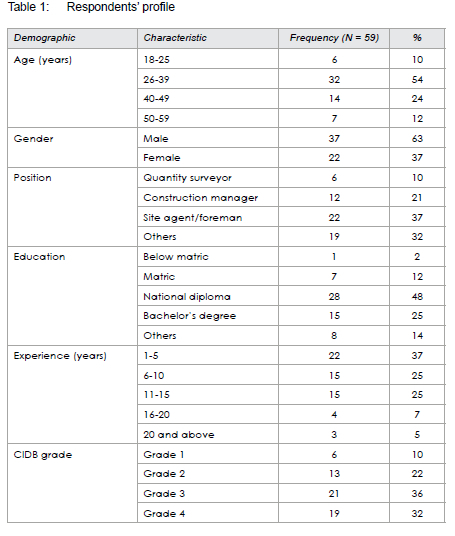
Table 1 presents the profile of the 59 SME respondents. Based on frequency of occurrence, most of the respondents (63%) were males, aged between 26 and 39 years (54%). Of the respondents, 10% are in the age group 18-25 years. This shows that there are few participants aged between 18 and 25 years in the management team of SME contractors. Just over half of the respondents (57%) are either construction managers (20%) or site agents/foremen (37%) and have between 6 to 15 years' experience in SME contractor work (50%). In addition, 32% of the respondents were other professionals (site engineers, site representatives, and directors). This indicates that SME construction projects are mostly run by site agents, foremen or other professionals. Most of the participants (73%) had either a national diploma (48%) or bachelor's degree (25%), and 12% had matriculated. This proves that most of the respondents within SME contractors' management team have tertiary qualifications and are qualified to work in the construction industry. Respondents were almost equally distributed for Grades 2 to 4 in CIDB grading with 22% in Grade 2, 36% in Grade 3, and 32% in Grade 4 contractors.
4.2 Ranking SME contractors' construction management practices
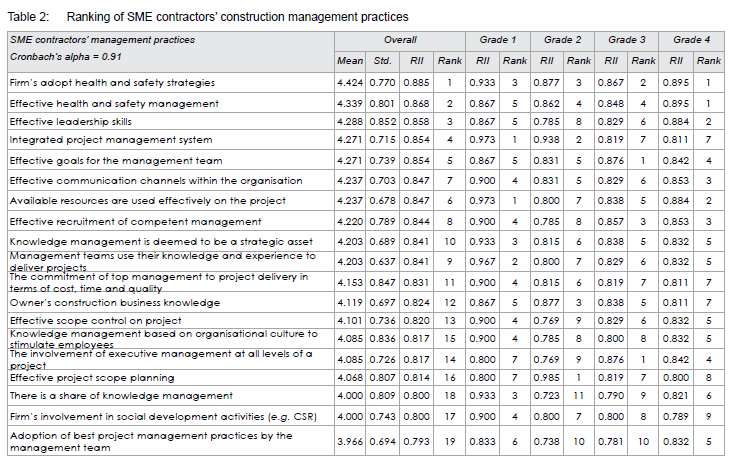
Table 2 shows the findings related to the construction management practices of SME contractors, categorised by CIDB grade. The Cronbach's alpha was calculated at 0.91, exceeding the recommended threshold of 0.70, which indicates good internal reliability of the questionnaire results (Bakar & Yusof, 2016: 86). For analysis purposes, only variables with a mean score (MS) of 3.5 or higher are considered significant. All items achieved a high-ranking score on the RII (0.8 < RII < 1), suggesting that respondents recognise the importance of these management practices for the sustainability of SME construction firms.
The top three practices adopted by SME contractors to promote sustainable business success in construction are the implementation of health and safety strategies (MS=4.424; RII=0.885), effective health and safety management (MS=4.339; RII=0.868), and strong leadership skills (MS=4.288; RII=0.858). The least favoured construction management practice among SME contractors in the Eastern Cape province is the adoption of best project management practices by the management team (MS=3.966; RII=0.793).
The results indicate that SME contractors under CIDB Grade 1 prioritise an integrated project management system (RII=0.973) and the effective utilisation of available resources (RII=0.973) as their top management practices. Leveraging their knowledge and experience to deliver projects (RII=0.967) ranks second in enhancing sustainable construction project delivery. Health and safety strategies (RII=0.933), the recognition of knowledge management as a strategic asset (RII=0.933), and the sharing of knowledge management practices (RII=0.933) are all ranked third among the most significant construction management practices adopted by Grade 1 SME contractors.
For contractors registered under CIDB Grade 2, the top two construction management practices identified by SME contractors are effective project scope planning (RII=0.985) and an integrated project management system (RII=0.938). Ranked third are effective owners' construction business knowledge (RII=0.877) and the adoption of health and safety strategies (RII=0.877).
SME contractors registered under CIDB Grade 3 identified two key construction management practices: the involvement of executive management at all project levels (RII=0.876) and the establishment of effective goals for the management team (RII=0.876). The adoption of health and safety strategies (RII=0.867) and the effective recruitment of competent management (RII=0.857) were ranked as the next top practices.
SME contractors operating under CIDB Grade 4 prioritise health and safety strategies (RII=0.895) and effective health and safety management (RII=0.895) as their primary practices to enhance business performance. Following these, effective leadership skills (RII=0.884) and the efficient utilisation of available resources on projects (RII=0.884) are ranked second. Ranked third is the effective recruitment of competent management and the establishment of effective communication channels within the organisation (RII=0.853).
4.3 Principal component analysis results
PCA was conducted on 19 construction management practices that influence SME contractors' project delivery to assess their validity and reliability. The results include an evaluation of data suitability for analysis, factor extraction, rotation, and interpretation.
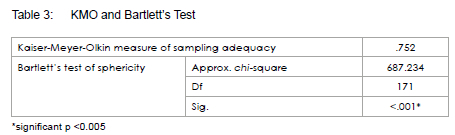
As shown in Table 3, the data was deemed suitable for factor analysis, with a KMO measure of sampling adequacy of 0.752, which exceeds the recommended minimum of 0.6. The Bartlett's test of sphericity was statistically significant (p<0.001), further confirming the factorability of the data.
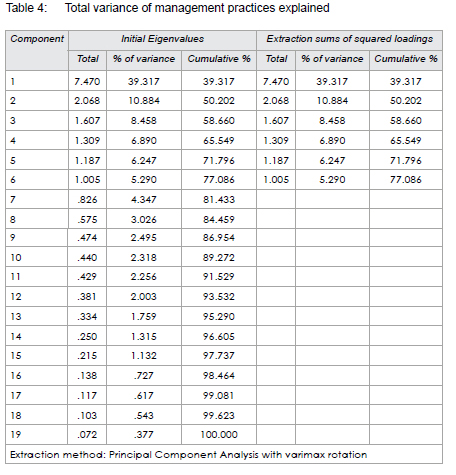
PCA factor extraction with varimax rotation revealed six meaningful components with eigenvalues greater than 1.0 after rotating the initial 19 factors. As shown in Table 4, these six factors account for a cumulative variance of approximately 77.1%. Specifically, factor one explains 39.3% of the variance; factor two 10.9%; factor three 8.5%; factor four 6.9%; factor Ave 6.2%, and factor six 5.3%.
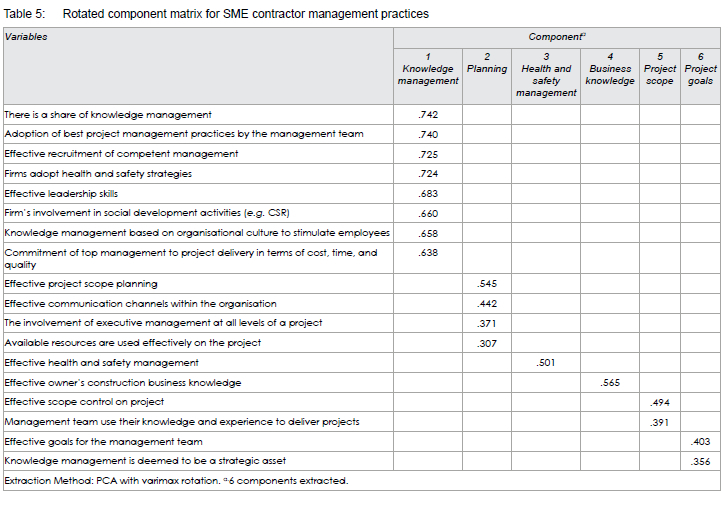
Table 5 presents the results of the varimax rotation, which was employed to analyse the six components. Variables with the highest factor loadings are considered to belong to their respective components, with a significant loading defined as 0.3 or higher. The findings show that each of the six components has loadings greater than 0.4 in the rotated component matrix. Notably, 'share of knowledge management' converges at Component 1. Other variables, including 'effective project scope planning', 'effective health and safety management', 'effective owner's business information', 'effective scope control on the project', and 'effective goals for the management team', are associated with Components 2 to 6, as indicated in Table 5.
5. DISCUSSION OF FINDINGS
Component 1 (Knowledge management) emerged as the most significant factor, accounting for the majority of the variability in the dataset. It was characterised by eight key variables: there is a share of knowledge management (0.742), adoption of best project management practices by the management team (0.740), effective recruitment of competent management (0.725), firms adopt health and safety strategies (0.724), effective leadership skills (0.683), firm's involvement in social development activities (e.g. CSR) (0.660), knowledge management based on organisational culture to stimulate employees (0.658), and the commitment of top management to project delivery in terms of cost, time, and quality (0.638). This component highlights the critical role of knowledge sharing in driving collective development and innovation, as noted by Huysman and De Wit (2004), Intezari et al. (2017), as well as Paulin and Suneson (2015). Knowledge sharing encourages collaboration, enhances operational efficiency, promotes staff development, and offers a competitive advantage, particularly in the construction sector (Shokri-Ghasabeh & Chileshe, 2014; Arthur-Aidoo et al., 2016: 233). Research indicates that knowledge sharing may occur for altruistic or reciprocal reasons (Kanyaru & Musembi, 2023). SME contractors who effectively implement knowledge sharing models are more likely to achieve sustainability and productivity goals (Azmy, 2012; Safapour et al., 2019). The findings align with the RII results for CIDB-registered contractors in the Grade 1 category, emphasising that extensive knowledge and experience within the management team are essential for delivering projects efficiently, on time, and within budget (Paulin & Suneson, 2015).
Component 2 (Planning) encompasses four key features: effective project scope planning (0.545), effective communication channels within the organisation (0.442), involvement of executive management at all project levels (0.371), and effective resource utilisation (0.307). Effective project scope planning accounts for 39.317% of the variance. It is a crucial element of successful construction project management, ensuring that project goals are clearly defined, stakeholders' expectations are recognised, and resources are allocated efficiently (Sanghera & Sanghera, 2019: 7).
Ajmal et al. (2022: 2789) emphasise that robust construction project scope management enables early risk identification, quality standard maintenance, and performance tracking. Precisely defining the project scope facilitates accurate budgeting and scheduling, ensuring resources are effectively allocated and potential conflicts are addressed (Fageha & Aibinu, 2013: 159). Research among SME contractors operating under CIDB Grade 2 indicates that effective project scope planning is a significant management practice that enhances sustainable construction business performance, with a ranking of RII = 0.985. Sanghera and Sanghera (2019: 6), along with Fageha and Aibinu (2013: 156), outline that effective project scope planning involves explicitly defining project objectives, deliverables, and boundaries to ensure a shared understanding among all stakeholders. Consequently, effective scope planning enables construction managers to manage expectations and prevent scope creep by developing comprehensive scope statements and work breakdown structures (Sanghera & Sanghera, 2019: 5).
Component 3 (Health and safety management) accounts for 8.458% of the total variance in this study. It comprises two key features: the effectiveness of health and safety management (0.403) and the management team's application of their knowledge and experience in project delivery (0.391). SME contractors must prioritise the well-being of both their workers and the surrounding communities (Bianchini et al., 2017). In this context, health and safety are centred on developing specific procedures and programmes aimed at safeguarding personnel during their duties, ultimately enhancing productivity and overall organisational performance (Scott, 2009). Spillane and Oyedele (2013) highlight the necessity for robust supervision in the diverse and challenging environment of construction sites, where on-site professionals must strive to maintain impeccable health and safety records, particularly in complex, confined spaces. Results from the RII calculations indicate that Arms adopting health and safety strategies exhibit the highest overall values, underscoring the need for SME contractors to integrate these strategies into their operations. Comprehensive health and safety plans are crucial for protecting employees and enhancing organisational performance (Emuze & Smallwood, 2013). Kukoyi and Smallwood (2017) further argue that proactive strategies aimed at reducing hazards encourage a culture of positive commitment to health and safety among workers. Onubi et al. (2020) emphasise the critical role of SME contractors in ensuring worker protection and project efficiency through the adoption of health and safety practices. By implementing thorough safety measures that comply with industry norms and regulations, SME contractors can significantly improve their operational outcomes (Nnaji & Karakhan, 2020; Ibrahim et al., 2024).
Component 4 (Business knowledge) accounts for 6.890% of the total variance, with a factor loading of 0.565. This component shows the importance of SME owners possessing comprehensive construction business knowledge to successfully navigate contemporary business environments (Brosseau, Fredrickson & Casey, 2007; Arthur-Aidoo et al., 2016). Sacks et al. (2018) emphasise that effective construction business knowledge encompasses a clear understanding of the company's vision, objectives, and goals, supported by thorough market research to identify opportunities and threats. Hendrickson et al. (2024) further assert that precise construction business knowledge from the owner establishes a robust foundation for project planning and decision-making. This clarity ensures that the project team fully understands the owner's vision and requirements, facilitating the alignment of project objectives with overarching business goals (Maliranta & Nurmi, 2019).
Component 5 (Project scope) is characterised by two key features: effective scope control on the project (0.494) and the management team's application of their knowledge and experience to project delivery (0.391). According to Atkinson, Crawford and Ward (2006), effective scope control is essential for SME contractors to achieve project success, optimise resource management, and ensure client satisfaction. Research by Alp and Stack (2012) as well as Alkhaffaf (2018) highlights that the quality of scope information is critical during the planning process, as it establishes a baseline for project certainty and clarity. Adequate scope control facilitates resource management by ensuring that resources are allocated appropriately within the defined scope, thus preventing both over- and underutilisation. Effective scope control enhances risk management, by identifying potential impacts of scope changes on project timelines, budgets, and quality, thereby enabling timely mitigation strategies (Ogunberu et al., 2018; Tom & Paul, 2013). In addition, scope control contributes to stakeholder satisfaction by delivering promised outcomes on schedule and within budget, while also promoting transparency and accountability throughout the project lifecycle (Alkhaffaf, 2018).
Component 6 (Project goals) accounts for 5.290% of the total variance in the study and comprises two factors: effective goals for the management team (0.403) and the recognition of knowledge management as a strategic asset (0.356). Mehek (2020), Bang and Midelfart (2017), as well as Mehta and Mehta (2018) emphasise that aligning the management team's goals with the organisation's strategy is essential for enhancing operational efficiency and fostering a culture of continuous improvement.
6. PROPOSED SME CONTRACTORS' MANAGEMENT PRACTICES FRAMEWORK
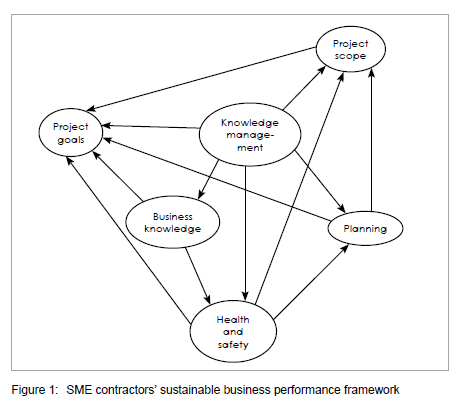
The sustainability of business performance among SME contractors is significantly influenced by their management practices. Recent frameworks, developed from studies of SME management, allow for the evaluation of both objective and subjective practices. Figure 1 shows that, in construction project management, the interconnectivity of critical elements such as knowledge management, planning, health and safety management, business knowledge, project scope, and project goals is essential for the success of construction projects. Knowledge management serves as a cornerstone for effectively disseminating relevant information, best practices, and lessons learned among project team members (Arthur-Aidoo et al., 2016: 235). It facilitates comprehensive scope planning, enabling informed decision-making regarding project boundaries, objectives, and deliverables (Maliranta & Nurmi, 2019: 115). It also enhances health and safety management, by providing access to crucial safety data and protocols, thereby ensuring the safe execution of all project activities (Ibrahim et al., 2024: 18).
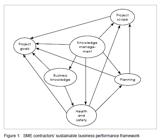
Figure 1 illustrates that maintaining the integrity of a project necessitates effective planning and control of its scope. Owners with expertise and experience in the construction industry play a crucial role in project scope planning and control, by making informed decisions that uphold the project's direction and momentum (Attakora-Amaniampong, 2016: 72).
Health and safety management is an essential component that interacts with planning, project scope, and project goals. Integrating safety considerations into the project scope ensures that the project not only achieves its goals, but also prioritises the well-being of all parties involved in sustainable construction project delivery (Kontogiannis, Leva & Balfe, 2017: 129). Figure 1 indicates that the project goals must be reflected in all Ave (5) components, with precise safety targets that are consistent with the overall project plan. The success of these approaches is increased by contractors' business knowledge to ensure that the project follows industry standards and best practices (Mehta & Mehta, 2018). Contractors with a thorough awareness of construction operations, industry norms, and potential challenges are better positioned to make adequate decisions that benefit project needs (Intezari et al., 2017).
The management team is critical in coordinating these variables, ensuring that all factors are aligned and working toward a common project goal that is sustainable project success (Mehta & Mehta, 2018). Setting specific and attainable project goals is critical for directing the team's activities, especially in areas such as planning, project scope management, as well as health and safety. The project objectives must be guided by the knowledge and insights provided by good knowledge management systems, allowing the team to foresee issues and respond to changes efficiently (Zhang & Jiang, 2015: 1095). In this approach, the management team serves as the project's cornerstone, coordinating several activities, and ensuring that each contributes to a well-executed, efficient, and successful construction project (Kanyaru & Musembi, 2023: 284). In conclusion, the success of a construction project is dependent on the seamless integration of these six (6) components, with each supporting the others to provide a cohesive and well-managed sustainable construction project success.
7. CONCLUSION AND RECOMMENDATIONS
In recent years, sustainability has emerged as a concern within the construction industry, particularly for SMEs. The management practices adopted by these SMEs are crucial for enhancing their sustainable business performance. This study aimed to identify effective management practices that can benefit SME contractors at the project level, specifically within the context of South Africa's Eastern Cape province.
The findings show the significance of integrated management practices for SME contractors, particularly those operating in rural areas that face challenges such as resource scarcity, market instability, and regulatory complexities. These challenges often impede effective construction management and hinder sustainable performance. The research indicates that SMEs can bridge knowledge gaps, enhance decision-making, and improve operational efficiency through robust knowledge management systems. Effective planning, precise project scope definition, and attention to health and safety, often overlooked in smaller enterprises, are essential for achieving sustainable outcomes. Notably, the study highlights that effective project scope management is pivotal in attaining sustainable business performance, aligning closely with established project management best practices.
It is imperative for SME contractors to address health and safety management issues proactively, as neglecting these areas can lead to costly delays and reputational damage, undermining their competitive position. The enhancement of business knowledge is critical for SMEs aiming to achieve sustainability and align with industry standards. By cultivating a comprehensive management strategy that integrates project scope, meticulous planning, health and safety protocols, and relevant business knowledge, SME contractors can enhance robust and sustainable business performance, thereby contributing to economic development in South Africa.
This study enriches the existing body of knowledge, by proposing a set of comprehensive management practices that can help SME contractors maintain operational viability beyond Ave years, while improving their sustainable performance in the Eastern Cape. In addition, it contributes theoretical insights, by synthesising perspectives from the knowledge-based view, project management theory, and transformational leadership theory, effectively bridging the gap between theory and practice.
However, this research is not without limitations. The focus on Grades 1 to 4 CIDB-registered general cuilding Contractors in the Eastern Cape limits the generalisability of the findings to broader contexts. Moreover, the data were collected exclusively from the management teams of SMEs, potentially overlooking valuable insights from other stakeholders. The specific economic conditions of the Eastern Cape during the study period may also have influenced the outcomes, suggesting that results could vary across different regions or under varying economic circumstances.
Future research should explore the management knowledge of SME contractors on a national level to gain a more comprehensive understanding of the landscape. Such investigations could facilitate the development of tailored strategies that address the unique challenges faced by SME contractors across diverse contexts, thereby enhancing their sustainability and overall contribution to the construction industry.
REFERENCES
ACKNOWLEDGMENT
In creating ideas for this paper and providing language suggestions, the author acknowledges OpenAI's ChatGPT.
2. LITERATURE REVIEW
-
Acebes, F., Pajares, J., Galán, J.M. & López-Paredes, A. 2014. A new approach for project control under uncertainty. Going back to the basics. International Journal of Project Management, 32(3), pp. 423-434. https://doi.org/10.1016/j.ijproman.2013.08.003
» https://doi.org/10.1016/j.ijproman.2013.08.003 -
Adebayo, O.R., Eniowo, O.D. & Ogunjobi, V.O. 2018. Assessment of project monitoring and control techniques in Ondo State Agency for Road Maintenance and Construction (OSARMCO). International Journal of Engineering and Management Research, 8(5), pp. 177-184. https://doi.org/10.31033/ijemr.8.5.21
» https://doi.org/10.31033/ijemr.8.5.21 -
Ahmed, S. & El-Sayegh, S. 2022. The challenges of sustainable construction projects delivery - Evidence from the UAE. Architectural Engineering and Design Management, 18(3), pp. 299-312. https://doi.org/10.1080/17452007.2022.2027224
» https://doi.org/10.1080/17452007.2022.2027224 -
Ahmad, S., Wasim, S., Irfan, S., Gogoi, S., Srivastava, A. & Farheen, Z. 2019. Qualitative v/s. quantitative research - A summarized review. Population, 1(2), pp. 2828-2832. https://doi.org/10.18410/jebmh/2019/587
» https://doi.org/10.18410/jebmh/2019/587 -
Aigbavboa, C.O. & Thwala, W.D. 2014. Challenges facing Black-owned small and medium construction companies: A case study of Nelspruit Mbombela Municipality, South Africa. Journal of Economics and Behavioral Studies, 6(10), pp. 771-778. https://doi.org/10.22610/jebs.v6i10.536
» https://doi.org/10.22610/jebs.v6i10.536 - Aigbavboa, C.O., Tshikhudo, L.M. & Thwala, W.D. 2014. Identification of critical success factors for the survival of small, medium, and micro-enterprise contracting firms in the greater Johannesburg metropolitan area. In: Layea, S. & Ibem, E. (Eds). Proceedings of the 8th Construction Industry Development Board (cidb) Postgraduate Conference, 10-11 February, University of the Witwaterstrand, Johannesburg, South Africa, pp. 349-356.
- Aiyewalehinmi, E.O. 2013. Factor analysis of communication in the construction industry. The International Journal of Engineering and Science, 2(10), pp. 49-57.
-
Ajmal, M.M., Khan, M., Gunasekaran, A. & Helo, P.T. 2022. Managing project scope creep in the construction industry. Engineering, Construction and Architectural Management, 29(7), pp. 2786-2809. https://doi.org/10.1108/ECAM-07-2020-0568
» https://doi.org/10.1108/ECAM-07-2020-0568 - Akadiri, O.P. 2011. development of a multi-criteria approach for the selection of sustainable materials for building projects. PhD Thesis, University of Wolverhampton, Wolverhampton, UK.
-
Akinradewo, O., Aigbavboa, C. & Ngwenya, L. 2019. Overcoming the challenges encountered by construction industry SMEs in using insurance. In: IOP Conference Series: Materials Science and Engineering, 640(1), article 012027. https://doi.org/10.1088/1757-899X/640/1/012027
» https://doi.org/10.1088/1757-899X/640/1/012027 -
Albrechts, L., Barbanente, A. & Monno, V. 2019. From stage-managed planning towards a more imaginative and inclusive strategic spatial planning. Environment and Planning C: Politics and Space, 37(8), pp. 1489-1506. https://doi.org/10.1177/2399654419825655
» https://doi.org/10.1177/2399654419825655 -
Aldhuhoori, R., Almazrouei, K., Sakhrieh, A., Al Hazza, M. & Alnahhal, M. 2022. The effects of recruitment, selection, and training practices on employee performance in the construction and related industries. Civil Engineering Journal, 8(12), pp. 3831-3841. https://doi.org/10.28991/cej-2022-08-12-013
» https://doi.org/10.28991/cej-2022-08-12-013 -
Alkhaffaf, M. 2018. The role of user involvement in the success of project scope management. International Journal of Advanced Computer Science and Applications, 9(10), article 14569. https://doi.org/10.14569/IJACSA.2018.091157
» https://doi.org/10.14569/IJACSA.2018.091157 - Alp, N. & Stack, B. 2012. Scope management and change control process study for project-based companies in the construction and engineering industries. In: Proceedings of PICMET'12: Technology management for emerging technologies, pp. 2427-2436. IEEE.
-
Amoah, J., Belas, J., Dziwornu, R. & Khan, K.A. 2022. Enhancing SMEs contribution to economic development: A perspective from an emerging economy. Journal of International Studies, 15(2), pp. 63-76. https://doi.org/10.14254/2071-8330.2022/15-2/5
» https://doi.org/10.14254/2071-8330.2022/15-2/5 - Anugwo, I.C. & Shakantu, W.M. 2020. Critical review on SME contractors' capability to achieve economic sustainability beyond their first Ave years in the South African construction. Journal of Critical Reviews, 7(19), pp. 1930-1942.
-
Arthur-Aidoo, B.M., Aigbavboa, C.O. & Thwala, W.D. 2016. Attitudes of owners which impedes Arm's growth: A case of small and medium-sized construction firms in Ghana. Procedia Engineering, 164, pp. 230-234. https://doi.org/10.1016/j.proeng.2016.11.614
» https://doi.org/10.1016/j.proeng.2016.11.614 -
Asante, J., Kissi, E. & Badu, E. 2018. Factorial analysis of capacity-building needs of small- and medium-scale building contractors in developing countries: Ghana as a case study. Benchmarking: An International Journal, 25(1), pp. 357-372. https://doi.org/10.1108/BIJ-07-2016-0117
» https://doi.org/10.1108/BIJ-07-2016-0117 -
Atkinson, R., Crawford, L. & Ward, S. 2006. Fundamental uncertainties in projects and the scope of project management. International Journal ofProject Management, 24(8), pp. 687-698. https://doi.org/10.1016/j.ijproman.2006.09.011
» https://doi.org/10.1016/j.ijproman.2006.09.011 -
Attakora-Amaniampong, E. 2016. Project management competencies of building construction Arms: A structural equation model approach. Architecture Research, 6(3), pp. 68-79. DOI: 10.5923/j.arch.20160603.03
» 10.5923/j.arch.20160603.03 -
Attia, E.A., Alarjani, A., Uddin, M.S. & Kineber, A.F. 2023. Examining the influence of sustainable construction supply chain drivers on sustainable building projects using mathematical structural equation modelling approach. Sustainability, 15(13), article 10671. https://doi.org/10.3390/su151310671
» https://doi.org/10.3390/su151310671 - Azmy, N. 2012. The role of team effectiveness in construction project teams and project performance. PhD dissertation, Iowa State University.
-
Baig, U.M.A.I.R., Khan, A.A., Abbas, M.G., Shaikh, Z.A., Mikhaylov, A.L.E.X.E.Y., Laghari, A.A. & Hussain, B.M. 2022. Crucial causes of delay in completion and performance management of the construction work: Study on the base of relative importance index. Journal of Tianjin University Science and Technology, 55(6), pp. 75-102. DOI: 10.17605/OSF.IO/SRCK4
» https://doi.org/10.17605/OSF.IO/SRCK4 -
Bakar, F. & Yusof, M. 2016 Managing CSR initiatives from the Islamic perspective: The case of Bank Islam Malaysia Berhad (BIMB). Jurnal Pengurusan, 46, pp. 67-76. https://doi.org/10.17576/pengurusan-2016-46-07
» https://doi.org/10.17576/pengurusan-2016-46-07 -
Bang, H. & Midelfart, T.N. 2017. What characterizes effective management teams? A research-based approach. Consulting Psychology Journal: Practice and Research, 69(4), article 334. https://doi.org/10.1037/cpb0000098
» https://doi.org/10.1037/cpb0000098 -
Bass, B.M. & Riggio, R.E. 2006. Transformational leadership. New York: Psychology Press. https://doi.org/10.4324/9781410617095
» https://doi.org/10.4324/9781410617095 - Batra, S. & Hyde, A.M. 2020. Leadership, commitment, and socialization in the construction sector: A concise exploration. International Management Review, 16(1), pp. 65-77.
-
Bennardo, F., Buffone, C., Fortunato, L. & Giudice, A. 2020. Are dental students aware of and knowledgeable about COVID-19? A questionnaire-based investigation. The Open Dentistry Journal, 14(1). https://doi.org/10.2174/1874210602014010623
» https://doi.org/10.2174/1874210602014010623 -
Bianchini, A., Donini, F., Pellegrini, M. & Saccani, C. 2017. An innovative methodology for measuring the effective implementation of an occupational health and safety management system in the European Union. Safety Science, 92, pp. 26-33. https://doi.org/10.1016/j.ssci.2016.09.012
» https://doi.org/10.1016/j.ssci.2016.09.012 -
Bikitsha, L. & Amoah, C. 2022 Emerging contractor's management and planning skills to overcome business risk factors. International Journal of Building Pathology and Adaptation, 40(4), pp. 670-689. https://doi.org/10.1108/IJBPA-01-2021-0003
» https://doi.org/10.1108/IJBPA-01-2021-0003 -
Bloomfield, J. & Fisher, M.J. 2019. Quantitative research design. Journal of the Australasian Rehabilitation Nurses Association, 22(2), pp. 27-30. https://doi.org/10.33235/jarna.22.2.27-30
» https://doi.org/10.33235/jarna.22.2.27-30 -
Boehm, B.W. & Ross, R. 1989. Theory-W software project management principles and examples. IEEE Transactions on Software Engineering, 15(7), pp. 902-916. https://doi.org/10.1109/32.29499
» https://doi.org/10.1109/32.29499 -
Brosseau, L.M., Fredrickson, A.L. & Casey, M.A. 2007. Small business owners' opinions about written health and safety information. Industrial Health, 45(2), pp. 209-216. https://doi.org/10.2486/indhealth.45.209
» https://doi.org/10.2486/indhealth.45.209 -
Bujang, M. & Baharum, N. 2018. A review on sample size determination for cronbach's alpha test: A simple guide for researchers. Malaysia Journal of Medicine Science, 25(6), pp. 85-99. https://doi.org/10.21315/mjms2018.25.6.9
» https://doi.org/10.21315/mjms2018.25.6.9 -
Bushe, B. 2019. The causes and impact of business failure among small to micro and medium enterprises in South Africa. Africa's Public Service Delivery and Performance Review, 7(1), pp. 1-26. https://hdl.handle.net/10520/EJC-141abef027. https://doi.org/10.4102/apsdpr.v7i1.210
» https://hdl.handle.net/10520/EJC-141abef027 -
Callistus, T. & Clinton, A. 2016. Evaluating barriers to effective implementation of project monitoring and evaluation in the Ghanaian construction industry. Procedia Engineering, 164, pp. 389-394. https://doi.org/10.1016/j.proeng.2016.11.635
» https://doi.org/10.1016/j.proeng.2016.11.635 -
Çelik, T., Kamali, S. & Arayici, Y. 2017. Social cost in construction projects. Environmental Impact Assessment Review, 64, pp. 77-86. https://doi.org/10.1016/j.eiar.2017.02.004
» https://doi.org/10.1016/j.eiar.2017.02.004 -
Cerezo-Narváez, A., Pastor-Fernández, A., Otero-Mateo, M. & Ballesteros-Pérez, P. 2020. Integration of cost and work breakdown structures in the management of construction projects. Applied Sciences, 10(4), article 1386. https://doi.org/10.3390/app10041386
» https://doi.org/10.3390/app10041386 -
Chan, A.P., Scott, D. & Chan, A.P. 2004. Factors affecting the success of a construction project. Journal of Construction Engineering and Management, 130(1), pp. 153-155. https://doi.org/10.1061/(ASCE)0733-9364(2004)130:1(153)
» https://doi.org/10.1061/(ASCE)0733-9364(2004)130:1(153) -
Chang, R.D., Zuo, J., Zhao, Z.Y., Soebarto, V., Lu, Y., Zillante, G. & Gan, X.L. 2018. Sustainability attitude and performance of construction enterprises: A China study. Journal of Cleaner Production, 172, pp. 1440-1451. https://doi.org/10.1016/j.jclepro.2017.10.277
» https://doi.org/10.1016/j.jclepro.2017.10.277 -
Coleman, S., Göb, R., Manco, G., Pievatolo, A., Tort-Martorell, X. & Reis, M.S. 2016. How can SMEs benefit from big data? Challenges and a path forward. Quality and Reliability Engineering International, 32(6), pp. 2151-2164. https://doi.org/10.1002/qre.2008
» https://doi.org/10.1002/qre.2008 - Creswell, J.W. & Creswell, J.D. 2017. Research design: Qualitative, quantitative, and mixed methods approach. Thousand Oaks, CA: Sage Publications.
- Curado, C. 2006. The knowledge-based view of the Arm: From theoretical origins to future implications. Instituto Superior de Economía e Gestäo. Departamento de Gestäo. Working Paper Series no. 1-06.
-
Dang, P., Niu, Z., Gao, S., Hou, L. & Zhang, G. 2020. Critical factors influencing the sustainable construction capability in prefabrication of Chinese construction enterprises. Sustainability, 12(21), article 8996. https://doi.org/10.3390/su12218996
» https://doi.org/10.3390/su12218996 -
Dapaah, A.D., Thwala, W.D. & Musonda, I. 2017. Performance evaluation of contractor development programmes in South Africa. African Journal of Science, Technology, Innovation and Development, 9(1), pp. 21-29. https://hdl.handle.net/10520/EJC-6aa60f387. https://doi.org/10.1080/20421338.2016.1254847
» https://hdl.handle.net/10520/EJC-6aa60f387. https://doi.org/10.1080/20421338.2016.1254847 -
Demirkesen, S. & Ozorhon, B. 2017. Impact of integration management on construction project management performance. International Journal of Project Management, 35(8), pp. 1639-1654. https://doi.org/10.1016/j.ijproman.2017.09.008
» https://doi.org/10.1016/j.ijproman.2017.09.008 -
Derenskaya, Y. 2018. Project scope management process. Baltic Journal of Economic Studies, 4(1), pp. 118-125. https://doi.org/10.30525/2256-0742/2018-4-1-118-125
» https://doi.org/10.30525/2256-0742/2018-4-1-118-125 -
Deutskens, E., De Ruyter, K., Wetzels, M. & Oosterveld, P. 2004. Response rate and response quality of internet-based surveys: An experimental study. Marketing Letters, 15, pp. 21-36. https://doi.org/10.1023/B:MARK.0000021968.86465.00
» https://doi.org/10.1023/B:MARK.0000021968.86465.00 - Dhabuwala, P.A. & Pitroda, J.R. 2021. Recruitment, selection and training of human resource in construction: A review. Reliability: Theory & Applications, 16(60), pp. 111-120.
- Emuze, F. & Smallwood, J. 2013. How can supply chain management proliferate in South African construction? In: Proceedings of the 29th Annual Association of Researchers in Construction Management Conference, dates?, Edinburgh, Scotland, pp. 513-522.
-
Eniola, A.A. & Entebang, H. 2015. SME Arm performance - Financial innovation and challenges. Procedia - Social and Behavioral Sciences, 195, pp. 334-342. https://doi.org/10.1016/j.sbspro.2015.06.361
» https://doi.org/10.1016/j.sbspro.2015.06.361 - Erebor, E., Ibem, E.O. & Adewale, B.A. 2019. Current research trends on sustainable construction project delivery. International Journal of Mechanical Engineering and Technology, 10(1), pp. 1973-1986.
-
Etuk, R.U., Etuk, G.R. & Michael, B. 2014. Small and medium scale enterprises (SMEs) and Nigeria's economic development. Small, 11, article 35. https://doi.org/10.5901/mjss.2014.v5n7p656
» https://doi.org/10.5901/mjss.2014.v5n7p656 -
Fageha, M.K. & Aibinu, A.A. 2013. Managing project scope definition to improve stakeholders' participation and enhance project outcome. Procedia - Social and Behavioral Sciences, 74, pp. 154-164. https://doi.org/10.1016/j.sbspro.2013.03.038
» https://doi.org/10.1016/j.sbspro.2013.03.038 - Fashina, A.A., Abdilahi, S.M. & Ibrahim, A. 2020. The significant factors that influence the choice of project scope management practices in telecommunication companies in Somaliland. PM World Journal, 8(9), pp. 1-15.
-
Garrigós Simón, F.J., González-Cruz, T. & Contreras-Pacheco, O. 2017. Policies to enhance social development through the promotion of SME and social entrepreneurship: A study in the Colombian construction industry. Entrepreneurship & Regional Development, 29(1-2), pp. 51-70. https://doi.org/10.1080/08985626.2016.1255432
» https://doi.org/10.1080/08985626.2016.1255432 - Georgieva, S. & Allan, G. 2008. Best practices in project management through a grounded theory lens. Electronic Journal of Business Research Methods, 6(1), pp. 43-52.
- Goertzen, M.J. 2017. Introduction to quantitative research and data. Library Technology Reports, 53(4), pp. 12-18.
-
Hamunen, K., Virkkula, O., Hujala, T., Hiedanpää, J. & Kurttila, M. 2015. Enhancing informal interaction and knowledge co-construction among forest owners. Silva Fennica, 49(1), pp. 1-15. https://doi.org/10.14214/sf.1214
» https://doi.org/10.14214/sf.1214 -
Hasan, B.M.S. & Abdulazeez, A.M. 2021. A review of principal component analysis algorithm for dimensionality reduction. Journal of Soft Computing and Data Mining, 2(1), pp. 20-30. https://publisher.uthm.edu.my/ojs/index.php/jscdm/article/view/8032
» https://publisher.uthm.edu.my/ojs/index.php/jscdm/article/view/8032 -
Hazır, Ö. 2015. A review of analytical models, approaches and decision support tools in project monitoring and control. International Journal of Project Management, 33(4), pp. 808-815. https://doi.org/10.1016/j.ijproman.2014.09.005
» https://doi.org/10.1016/j.ijproman.2014.09.005 - Hendrickson, C., Haas, C.T. & Au, T. 2024. The owners' perspective. In: C. Hendrickson, C.T. Haas & T. Au. Project management for construction (and deconstruction): Fundamental concepts for owners, engineers, architects, and builders. 3rd edition. Pittsburgh: Carnegie Mellon University, ebook.
-
Heo, M., Kim, N. & Faith, M.S. 2015. Statistical power as a function of Cronbach alpha of instrument questionnaire items. BMC Medical Research Methodology, 15, pp. 1-9. https://doi.org/10.1186/s12874-015-0070-6
» https://doi.org/10.1186/s12874-015-0070-6 -
Huysman, M. & de Wit, D. 2004. Practices of managing knowledge sharing: Towards a second wave of knowledge management. Knowledge and Process Management, 11, pp. 81-92.https://doi.org/10.1002/kpm.192
» https://doi.org/10.1002/kpm.192 -
Ibrahim, K., Simpeh, F. & Adebowale, O.J. 2024 Awareness and adoption of wearable technologies for health and safety management in the Nigerian construction industry. Frontiers in Engineering and Built Environment, 4(1), pp. pp. 15-28. https://doi.org/10.1108/FEBE-11-2022-0041
» https://doi.org/10.1108/FEBE-11-2022-0041 -
Intezari, A., Taskin, N. & Pauleen, D.J. 2017. Looking beyond knowledge sharing: An integrative approach to knowledge management culture. Journal of Knowledge Management, 21(2), pp. 492-515. https://doi.org/10.1108/JKM-06-2016-0216
» https://doi.org/10.1108/JKM-06-2016-0216 -
Jadidoleslami, S., Saghatforoush, E., Heravi, A. & Preece, C. 2022. A practical framework to facilitate constructability implementation using the integrated project delivery approach: A case study. International Journal of Construction Management, 22(7), pp. 1225-1239. https://doi.org/10.1080/15623599.2019.1686834
» https://doi.org/10.1080/15623599.2019.1686834 -
Jansson, D., D0ving, E. & Elstad, B. 2021. The construction of leadership practice: Making sense of leader competencies. Leadership, 17(5), pp. 560-585. https://doi.org/10.1177/1742715021996497
» https://doi.org/10.1177/1742715021996497 -
Jiang, W. & Wong, J.K. 2016. Key activity areas of corporate social responsibility (CSR) in the construction industry: A study of China. Journal of Cleaner Production, 113, pp. 850-860. https://doi.org/10.1016/j.jclepro.2015.10.087
» https://doi.org/10.1016/j.jclepro.2015.10.087 -
Julious, S.A. 2023. Sample sizes for clinical trials. Boca Raton, FL: Chapman & Hall/CRC. https://doi.org/10.1201/9780429503658
» https://doi.org/10.1201/9780429503658 -
Kania, E., Sladowski, G., Radziszewska-Zielina, E., Sroka, B. & Szewczyk, B. 2021. Planning and monitoring communication between construction project participants. Archives of Civil Engineering, 67(2). https://doi.org/10.24425/ace.2021.137179
» https://doi.org/10.24425/ace.2021.137179 -
Kanyaru, D.M. & Musembi, A. 2023. Project scope management and successful implementation of projects in nongovernmental organizations in Nairobi County. International Journal of Management and Business Research, 5(1), pp. 282-290. https://grandmarkpublishers.com/index.php/ijmbr/article/view/16
» https://grandmarkpublishers.com/index.php/ijmbr/article/view/16 -
Kennedy, I. 2022.Sample size determination in test-retest and cronbach alpha reliability estimates. British Journal of Contemporary Education, 2(1), pp. 17-29. https://doi.org/10.52589/BJCE-FY266HK9
» https://doi.org/10.52589/BJCE-FY266HK9 -
Kezar, A. 2008. Understanding leadership strategies for addressing the politics of diversity. The Journal of Higher Education, 79(4), pp. 406-441. https://doi.org/10.1080/00221546.2008.11772109
» https://doi.org/10.1080/00221546.2008.11772109 -
Khan, A.N., Khan, N.A. & Soomro, M.A. 2020. The impact of moral leadership on construction employees' psychological behaviors. IEEE Transactions on Engineering Management, 69(6), pp. 2817-2825. https://doi.org/10.1109/TEM.2020.3020371
» https://doi.org/10.1109/TEM.2020.3020371 -
Kim, K.P., Ma, T. & Biddiss, J. 2023. Exploratory investigation of scope management for a BIM-enabled construction project. Management Review: An International Journal, 18(1), pp. 60-82. https://doi.org/10.55819/mrij.2023.18.1.60
» https://doi.org/10.55819/mrij.2023.18.1.60 -
Kline, P. 2014. An easy guide to factor analysis. London: Routledge. https://doi.org/10.4324/9781315788135
» https://doi.org/10.4324/9781315788135 -
Kontogiannis, T., Leva, M.C. & Balfe, N. 2017. Total safety management: Principles, processes and methods. Safety Science, 100, pp. 128-142. https://doi.org/10.1016/j.ssci.2016.09.015
» https://doi.org/10.1016/j.ssci.2016.09.015 -
Kukoyi, P.O. & Smallwood, J.J. 2017. A qualitative study of health and safety (H&S) construction practices in Lagos. Journal of Construction Business and Management, 1(1), pp. 1-7. https://doi.org/10.15641/jcbm.L1.64
» https://doi.org/10.15641/jcbm.L1.64 -
Lakens, D. 2022. Sample size justification. Collabra: Psychology, 8(1), article 33267. https://doi.org/10.1525/collabra.33267
» https://doi.org/10.1525/collabra.33267 -
Lee, N. & Kim, Y. 2018. A conceptual framework for effective communication in construction management: Information processing and visual communication. In: Construction Research Congress, 2-4 April, New Orleans, Louisiana, USA, pp. 531-541. https://doi.org/10.1061/9780784481264.052
» https://doi.org/10.1061/9780784481264.052 -
Li, Y. & Guldenmund, F.W. 2018. Safety management systems: A broad overview of the literature. Safety Science, 103, pp. 94-123. https://doi.org/10.1016/j.ssci.2017.11.016
» https://doi.org/10.1016/j.ssci.2017.11.016 -
Lin, Y.C., Wang, L.C. & Tserng, H.P. 2006. Enhancing knowledge exchange through web map-based knowledge management system in construction: Lessons learned in Taiwan. Automation in Construction, 15(6), pp. 693-705. https://doi.org/10.10167j.autcon.2005.09.006
» https://doi.org/10.10167j.autcon.2005.09.006 -
Loforte-Ribeiro, F. 2009. Enhancing knowledge management in construction Arms. Construction Innovation, 9(3), pp. 268-284. https://doi.org/10.1108/14714170910973493
» https://doi.org/10.1108/14714170910973493 -
Love, P.E., Irani, Z. & Edwards, D.J. 2004. Industry-centric benchmarking of information technology benefits, costs and risks for small to medium-sized enterprises in construction. Automation in Construction, 13(4), pp. 507-524. https://doi.org/10.1016/j.autcon.2004.02.002
» https://doi.org/10.1016/j.autcon.2004.02.002 - Mahfouz, S.A., Awang, Z. & Muda, H. 2019. The impact of transformational leadership on employee commitment in the construction industry. International Journal of Innovation, Creativity and Change, 7(10), pp. 151-167.
-
Maliranta, M. & Nurmi, S. 2019. Business owners, employees, and Arm performance. Small Business Economics, 52, pp. 111-129. https://doi.org/10.1007/s11187-018-0029-1
» https://doi.org/10.1007/s11187-018-0029-1 -
Martin, S.L. & Javalgi, R.R.G. 2019. Explaining performance determinants: A knowledge-based view of international new ventures. Journal of Business Research, 101, pp. 615-626. https://doi.org/10.1016/j.jbusres.2018.12.051
» https://doi.org/10.1016/j.jbusres.2018.12.051 -
Maqsood, T. & Finegan, A. 2009. A knowledge management approach to innovation and learning in the construction industry. International Journal of Managing Projects in Business, 2(2), pp. 297-307. https://doi.org/10.1108/17538370910949310
» https://doi.org/10.1108/17538370910949310 -
Mbazor, D., Aigbavboa, C. & Thwala, W. 2024. Evaluation of the challenges facing small and medium-scale building contractors in Nigeria. Nigerian Journal of Technology, 43(1), pp. 25-34. https://doi.org/10.4314/njt.v43i1.1
» https://doi.org/10.4314/njt.v43i1.1 - Mehek, A. 2020. Team management: Effective tool. International Research Journal of Modernization in Engineering Technology and Science, 2(6), pp. 1376-1379.
-
Mehta, A. & Mehta, N. 2018. Knowledge integration and team effectiveness: A team goal orientation approach. Decision Sciences, 49(3), pp. 445-486. https://doi.org/10.1111/deci.12280
» https://doi.org/10.1111/deci.12280 -
Mousa, A. 2015. A business approach for transformation to sustainable construction: An implementation on a developing country. Resources, Conservation and Recycling, 101, pp. 9-19. https://doi.org/10.1016/j.resconrec.2015.05.007
» https://doi.org/10.1016/j.resconrec.2015.05.007 - Ndege, M. & Park, B. 2015. Factors that affect the growth and development of small, micro and medium-sized business enterprises in the Vaal Triangle region of Gauteng province in South Africa. European Journal of Business, Economics and Accountancy, 3(3), pp. 73-100.
- Ndlovu, S. & Thwala, W.D. 2012. Investigation of a financial model for small, medium and micro-enterprises contractors in South Africa. In: West Africa Built Environment Research Conference, 24-26 July, Abuja, Nigeria, 2, article 929.
-
Nnaji, C. & Karakhan, A.A. 2020. Technologies for safety and health management in construction: Current use, implementation benefits and limitations, and adoption barriers. Journal of Building Engineering, 29, article 101212. https://doi.org/10.1016/j.jobe.2020.101212
» https://doi.org/10.1016/j.jobe.2020.101212 -
Obondi, K. 2022. The utilization of project risk monitoring and control practices and their relationship with project success in construction projects. Journal of Project Management, 7(1), pp. 35-52. https://doi.org/10.5267/j.jpm.2021.7.002
» https://doi.org/10.5267/j.jpm.2021.7.002 - Ogunberu, A.O., Akintelu, S.O. & Olaposi, T.O. 2018. Application of project scope management practices on project success among telecommunication organizations in Nigeria. International Journal of Development and Sustainability, 7(2), pp. 518-532.
-
Olanrewaju, A., Tan, S.Y. & Kwan, L.F. 2017. Roles of communication on performance of the construction sector. Procedia Engineering, 196, pp. 763-770. https://doi.org/10.1016/j.proeng.2017.08.022
» https://doi.org/10.1016/j.proeng.2017.08.022 -
Omar, M.N. & Fayek, A.R. 2016. Modeling and evaluating construction project competencies and their relationship to project performance. Automation in Construction, 69, pp. 115-130. https://doi.org/10.1016/j.autcon.2016.05.021
» https://doi.org/10.1016/j.autcon.2016.05.021 -
Onubi, H.O., Yusof, N.A. & Hassan, A.S. 2020. Adopting green construction practices: Health and safety implications. Journal of Engineering, Design and Technology, 18(3), pp. 635-652. https://doi.org/10.1108/JEDT-08-2019-0203
» https://doi.org/10.1108/JEDT-08-2019-0203 - Opoku, A.L.E.X. & Fortune, C.H.R.I.S. 2011. Leadership in construction organizations and the promotion of sustainable practices. In: Management and Innovation for a Sustainable Built Environment, 20-23 June, Amsterdam, The Netherlands. CIB, Working Commissions W55, W65, W89, W112; ENHR and AESP.
-
Pallant, J. 2020. SPSS survival manual: A step-by-step guide to data analysis using IBM SPSS. London: Routledge. https://doi.org/10.4324/9781003117452
» https://doi.org/10.4324/9781003117452 -
Panas, A., Pantouvakis, J.P. & Lambropoulos, S. 2014. A simulation environment for construction project manager competence development in construction management. Procedia - Social and Behavioral Sciences, 119, pp. 739-747. https://doi.org/10.1016/j.sbspro.2014.03.083
» https://doi.org/10.1016/j.sbspro.2014.03.083 -
Pariafsai, F. & Behzadan, A.H. 2021. Core competencies for construction project management: Literature review and content analysis. Journal of Civil Engineering Education, 147(4), article 04021010. https://doi.org/10.1061/(ASCE)EI.2643-9115.0000051
» https://doi.org/10.1061/(ASCE)EI.2643-9115.0000051 -
Parker, D.W., Parsons, N. & Isharyanto, F. 2015. Inclusion of strategic management theories to project management. International Journal of Managing Projects in Business, 8(3), pp. 552-573. https://doi.org/10.1108/IJMPB-11-2014-0079
» https://doi.org/10.1108/IJMPB-11-2014-0079 - Paulin, D. & Suneson, K. 2015. Knowledge transfer, knowledge sharing and knowledge barriers - Three blurry terms in KM. Issues in Knowledge Management, 2(2), article 73.
-
Pham, H. & Kim, S.Y. 2019. The effects of sustainable practices and managers' leadership competences on sustainability performance of construction Arms. Sustainable Production and Consumption, 20, pp. 1-14. http://doi.org/10.1016/j.spc.2019.05.003
» http://doi.org/10.1016/j.spc.2019.05.003 - Reza, M.H. 2019. Components of transformational leadership behavior. EPRA International Journal of Multidisciplinary Research, 5(3), pp. 119-124.
-
Sacks, R., Eastman, C., Lee, G. & Teicholz, P. 2018. BIM handbook: A guide to building information modeling for owners, designers, engineers, contractors, and facility managers. Hoboken: John Wiley & Sons. https://doi.org/10.1002/9781119287568
» https://doi.org/10.1002/9781119287568 -
Safapour, E., Kermanshachi, S., Kamalirad, S. & Tran, D. 2019. Identifying effective project-based communication indicators within primary and secondary stakeholders in construction projects. Journal of Legal Affairs and Dispute Resolution in Engineering and Construction, 11(4), article 04519028. https://doi.org/10.1061/(ASCE)LA.1943-4170.0000332
» https://doi.org/10.1061/(ASCE)LA.1943-4170.0000332 -
Salazar, L.A., Ballard, G., Arroyo, P. & Alarcón, L.F. 2022. Development of a commitment management system for construction projects. Journal of Construction Engineering and Management, 148(12), article 05022012. https://doi.org/10.1061/(ASCE)CO.1943-7862.0002324
» https://doi.org/10.1061/(ASCE)CO.1943-7862.0002324 -
Sanghera, P. & Sanghera, P. 2019. Planning project and scope. PMP® in Depth: Project Management Professional Certification Study Guide for the PMP® Exam, pp. 115-153. https://doi.org/10.1007/978-1-4842-3910-0
» https://doi.org/10.1007/978-1-4842-3910-0 -
Scott, I. 2009. What are the most effective strategies for improving quality and safety of health care? Internal Medicine Journal, 39(6), pp. 389-400. https://doi.org/10.1111/j.1445-5994.2008.01798.x
» https://doi.org/10.1111/j.1445-5994.2008.01798.x -
Shokri-Ghasabeh, M. & Chileshe, N. 2014. Knowledge management: Barriers to capturing lessons learned from Australian construction contractors' perspective. Construction Innovation, 14(1), pp. 108-134. https://doi.org/10.1108/CI-06-2013-0026
» https://doi.org/10.1108/CI-06-2013-0026 -
Shurrab, J., Hussain, M. & Khan, M., 2019. Green and sustainable practices in the construction industry: A confirmatory factor analysis approach. Engineering, Construction and Architectural Management, 26(6), pp. 1063-1086. https://doi.org/10.1108/ECAM-02-2018-0056
» https://doi.org/10.1108/ECAM-02-2018-0056 -
Siami-Irdemoosa, E., Dindarloo, S.R. & Sharifzadeh, M. 2015. Work breakdown structure (WBS) development for underground construction. Automation in Construction, 58, pp. 85-94. https://doi.org/10.1016/j.autcon.2015.07.016
» https://doi.org/10.1016/j.autcon.2015.07.016 - Singh, A.S. & Masuku, M.B. 2014. Sampling techniques and determination of sample size in applied statistics research: An overview. International Journal of Economics, Commerce and Management, 2(11), pp. 1-22.
-
Sitohang, Y.F., Pratami, D. & Bay, A.F. 2020. Competency evaluation of project manager performance in network construction projects. In: Fifth International Conference on Informatics and Computing, pp. 1-8. https://doi.org/10.1109/ICIC50835.2020.9288580
» https://doi.org/10.1109/ICIC50835.2020.9288580 -
Sogaxa, A. & Simpeh, E.K. 2022. Efficient material management strategies for enhancing the performance of SMEs in the South African construction industry. International Journal of Construction Supply Chain Management, 12(1), pp. 147-166. DOI: http://doi.org/10.14424/ijcscm120122-147-166
» http://doi.org/10.14424/ijcscm120122-147-166 -
Sogaxa, A., Simpeh, E. & Ndihokubwayo, R. 2021. Assessment of time management practices of small medium-sized contractors in project delivery in the Eastern Cape province, South Africa. Acta Structilia, 28(1), pp.117-141. https://doi.org/10.18820/24150487/as28iL5
» https://doi.org/10.18820/24150487/as28iL5 -
Spillane, J. & Oyedele, L.O. 2013. Strategies for effective management of health and safety in confined site construction. Australasian Journal of Construction Economics and Building, 13(4), pp. 50-64. https://doi.org/10.5130/AJCEB.v13i4.3619
» https://doi.org/10.5130/AJCEB.v13i4.3619 -
Srewil, Y. & Scherer, R.J. 2013. Effective construction process monitoring and control through a collaborative cyber-physical approach. In: Proceedings of the 14th IFIP WG 5.5 Working Conference on Virtual Enterprises, 30 October, Dresden, Germany, pp. 172-179. https://doi.org/10.1007/978-3-642-40543-3_19
» https://doi.org/10.1007/978-3-642-40543-3_19 -
Stoian, M.C., Tardios, J.A. & Samdanis, M. 2024. The knowledge-based view in international business: A systematic review of the literature and future research directions. International Business Review, 33(2), article 102239. https://doi.org/10.1016/j.ibusrev.2023.102239
» https://doi.org/10.1016/j.ibusrev.2023.102239 -
Swarup, L., Korkmaz, S. & Riley, D. 2011. Project delivery metrics for sustainable, high-performance buildings. Journal of Construction Engineering and Management, 137(12), pp.1043-1051. https://doi.org/10.1061/(ASCE)CO.1943-7862.0000379
» https://doi.org/10.1061/(ASCE)CO.1943-7862.0000379 - Syah, D.A. 2021. The influence of project manager competency and construction worker competence toward performance of construction workers medicated variables of the application of occupational health and safety (OHS) management system. International Journal of Management and Education in Human Development, 1(02), pp. 1-8.
-
Tabassi, A.A., Roufechaei, K.M., Ramli, M., Bakar, A.H.A., Ismail, R. & Pakir, A.H.K. 2016. Leadership competences of sustainable construction project managers. Journal of Cleaner Production, 124, pp. 339-349. https://doi.org/10.1016/j.jclepro.2016.02.076
» https://doi.org/10.1016/j.jclepro.2016.02.076 -
Taleb, H., Ismail, S., Wahab, M.H., Mardiah, W.N., Rani, W.M. & Amat, R.C. 2017. An overview of project communication management in construction industry projects. Journal of Management, Economics, and Industrial Organization, 1(1), pp. 1-8. https://doi.org/10.31039/jomeino.2017.1.1.1
» https://doi.org/10.31039/jomeino.2017.1.1.1 -
Tan, Y., Ochoa, J.J., Langston, C. & Shen, L. 2015. An empirical study on the relationship between sustainability performance and business competitiveness of international construction contractors. Journal of Cleaner Production, 93, pp. 273-278. https://doi.org/10.1016/jjclepro.2015.01.034
» https://doi.org/10.1016/jjclepro.2015.01.034 -
Tereso, A., Ribeiro, P., Fernandes, G., Loureiro, I. & Ferreira, M. 2019. Project management practices in private organizations. Project Management Journal, 50(1), pp. 6-22. https://doi.org/10.1177/8756972818810966
» https://doi.org/10.1177/8756972818810966 -
Tezel, A., Taggart, M., Koskela, L., Tzortzopoulos, P., Hanahoe, J. & Kelly, M. 2020. Lean construction and BIM in small and medium-sized enterprises (SMEs) in construction: A systematic literature review. Canadian Journal of Civil Engineering, 47(2), pp. 186-201. https://doi.org/10.1139/cjce-2018-0408
» https://doi.org/10.1139/cjce-2018-0408 -
Tiruneh, G.G. & Fayek, A.R. 2021. Competency and performance measures for organizations in the construction industry. Canadian Journal of Civil Engineering, 48(6), pp. 716-728. https://doi.org/10.1139/cjce-2019-0769
» https://doi.org/10.1139/cjce-2019-0769 - Tom, A.F. & Paul, S. 2013. Project monitoring and control using primavera. International Journal of Innovative Research in Science, Engineering and Technology, 2(3), pp. 762-771.
- Tshikhudo, L., Aigbavboa, C. & Thwala, W.D. 2015. Critical success factors for the survival of small, medium and micro enterprise construction companies in the South Africa construction industry. Paper presented at the OTMC Conference. 2-5 September Primosten, Croatia.
-
Vanhoucke, M. 2014. Integrated project management and control. Switzerland: Springer. https://doi.org/10.1007/978-3-319-04331-9
» https://doi.org/10.1007/978-3-319-04331-9 -
Vanhoucke, M., Coelho, J. & Batselier, J. 2016. An overview of project data for integrated project management and control. The Journal of Modern Project Management, 3(3), pp. 158-158. https://doi.org/10.19255/JMPM01211
» https://doi.org/10.19255/JMPM01211 - Walker, A. 2015. Project management in construction. Hoboken: John Wiley & Sons.
- Watiri, W. & Severina, N. 2024. Project scope management and performance of real estate developers' projects in Machakos county, Kenya. International Journal of Social Sciences Management and Entrepreneurship, 8(2), pp. 296-310.
-
Wentzel, L., Fapohunda, J.A. & Haldenwang, R. 2023. A corporate social responsibility (CSR) model to achieve sustainable business performance (SBP) of SMEs in the South African construction industry. Sustainability, 15(13), article 10007. https://doi.org/10.3390/su151310007
» https://doi.org/10.3390/su151310007 -
Yan, X., Zhang, H. & Zhang, W. 2023. Intelligent monitoring and evaluation for the prefabricated construction schedule. Computer-Aided Civil and Infrastructure Engineering, 38(3), pp. 391-407. https://doi.org/10.1111/mice.12838
» https://doi.org/10.1111/mice.12838 -
Yong, A.G. & Pearce, S. 2013. A beginner's guide to factor analysis: Focusing on exploratory factor analysis. Tutorials in Quantitative Methods for Psychology, 9(2), pp. 79-94. https://doi.org/10.20982/tqmp.09.2.p079
» https://doi.org/10.20982/tqmp.09.2.p079 -
Zhang, W., Ding, N., Xue, R., Han, Y. & Liu, C. 2024. Building success: The impact of talent recruitment on the growth of the construction industry. Engineering, Construction and Architectural Management. https://doi.org/10.1108/ECAM-10-2019-0564
» https://doi.org/10.1108/ECAM-10-2019-0564
Peer reviewed and revised: September 2024
Published: December 2024