Exploring water conservation strategies in housing construction projects in Cape Town, South Africa
Abstract
South Africa faces a persistent water shortage crisis, with the City of Cape Town severely affected between 2015 and 2018. Construction projects, particularly housing developments, are known for their intensive water consumption; yet water conservation practices during the construction phase remain underexplored. Despite the recognition of limitations in sustainable construction knowledge and practices, inefficiencies in water usage persist in the low-cost housing sector. This article investigates water-conservation methods during housing construction in Cape Town, aiming to identify sources of water use, assess current conservation practices, and propose actionable solutions to optimise water efficiency. A mixed-methods research approach was employed, integrating both qualitative and quantitative methods for a holistic analysis. Data was collected through a self-designed questionnaire distributed to 104 construction personnel, including private contractors and government project managers. Responses were analysed using IBM SPSS, employing descriptive statistics. The findings highlight a notable deficiency in current water-conservation practices during construction, highlighting the necessity for stricter monitoring, the adoption of innovative technologies such as closed-loop water systems, and increased awareness among site personnel. The analysis identified strong support for rainwater collection, leak detection systems, and the adoption of pre-mixed materials to reduce water use. These findings highlight the urgent need to integrate water-efficient policies and practices within the construction sector. This article contributes to understanding sustainable water use in housing construction, offering insights that can inform policymakers, construction firms, and researchers. The findings provide a foundation for future studies and strategies to mitigate water-scarcity challenges in the construction industry.
construction project sustainability; construction water use; environmental impact of construction; housing construction; sustainable construction; sustainable water resource management; water conservation; water efficiency strategies
1. INTRODUCTION
The construction industry is a significant consumer of natural resources; yet water management remains an often-overlooked aspect of sustainable development (Jacque et al., 2024). In South Africa, where water scarcity is a pressing concern (Marutlulle, 2021), the demand for housing -particularly low-cost government housing - continues to rise, placing increasing pressure on limited water resources. In the years 2010-2025, more than 2.7 million low-cost houses have been built, yet a backlog of 2.1 million remains, with an annual growth rate of 178,000 new housing units, further intensifying resource demands (Marutlulle, 2021). Addressing water conservation within the construction sector is, therefore, imperative to balance urban expansion with environmental sustainability.
Despite growing awareness of sustainability principles in construction, water-conservation strategies remain underexplored (Waidyasekara, De Silva & Raufdeen, 2016). Housing construction, in particular, relies heavily on water for various processes, and without efficient management, this contributes significantly to overall water wastage (Ramantswana et al., 2021). Given South Africa's classification as a water-scarce country (Marutlulle, 2021), it is crucial to investigate conservation methods applicable to the construction industry to mitigate the risks of excess demand surpassing supply. Water scarcity, driven by urbanisation, population growth, economic development, and climate change, poses significant challenges globally (Mishra et al., 2021; Cullis et al., 2019), with construction activities being a notable contributor.
This article investigates water-usage practices, efficiency strategies, and conservation methods in housing construction projects in Cape Town. It views water conservation as a multidimensional approach involving economic, behavioural, technological, and educational interventions (Singha et al., 2022), the study identifies efficient practices, alternative water sources, and barriers to implementation. Although it does not propose a full framework, it contributes to promoting water-efficient construction by emphasising principles such as 'reduce, reuse, and recycle', engaging policymakers, construction firms, and stakeholders and aligning environmental goals with social and economic priorities for sustainable housing development (Singha et al., 2022).
2.1 Guidelines for freshwater use
The sustainable management of freshwater resources is critical for ensuring a balanced and equitable future, particularly in water-intensive industries such as construction. The National Water Act (NWA) of 1998 establishes the legal framework for managing South Africa's water resources sustainably and equitably (South Africa, 2013). Recognising water as a public resource, the Act addresses historical inequalities in water access and use, assigning the Department of Water and Sanitation (DWS) as the custodian of the nation's water resources. The DWS is tasked with managing water use, protecting water quality, allocating resources, and ensuring integrated water management through stakeholder engagement (DWS, 2018; South Africa, 2013). Central to the NWA is the Minister of Water and Sanitation's responsibility to oversee water allocation and usage, ensuring alignment with the nation's sustainability objectives. This includes assessing freshwater availability and ensuring its efficient use across sectors. However, while the Act outlines measures for waste-water management and environmental protection, it does not explicitly address industrial freshwater use in sectors such as construction. This lack of specific guidelines highlights limitations in regulating water-consumption practices in the construction industry, particularly for housing projects. The absence of such frameworks highlights the need for industry-specific measures to optimise freshwater use and contribute to sustainable water-resource management (Nyam et al., 2021).
2.2 Sources of water in housing construction
Water plays an indispensable role in the construction process, being essential for activities such as mixing cement, preparing mortar, and curing concrete. However, there is limited literature addressing the specific sources of water used in housing construction and the implementation of water-saving practices. Nyam et al. (2021) highlight limitations in knowledge and awareness regarding sustainable construction practices, while Moghayedi et al. (2025) report inefficiencies in water usage within South Africa's low-cost housing sector.
Several studies have explored alternative water sources such as greywater for construction purposes. Varshney, Khan and Khan (2021) argue that greywater - waste water from kitchens, bathrooms, or laundries - can be used for mixing and curing concrete without compromising safety. Similarly, Varshney et al. (2021) suggest that using waste water in concrete production not only reduces environmental impact, but also minimises construction costs. However, concerns remain about the durability of concrete exposed to waste water, as its properties vary depending on the source and components of the water (Awasthi, Gandhi & Rayalu, 2023; Varshney et al., 2021).
Water-management practices during construction are often overlooked, with hardly any documentation on the water used per unit area of construction (Ramantswana et al., 2021). Studies have shown that inefficiencies and wastage are common, especially during curing and other water-intensive stages of construction (Patil, 2016). For instance, dos Santos and da Silva (2015) found that in Recife, Brazil, over 50% of water consumed during construction is used by workers, while only 16.91% is directly used in construction processes.
In South Africa, despite the considerable water consumption in construction, the industry lacks consistent water-management practices. The volume of water used varies with the size and type of project (Ramantswana et al., 2021). Barriers to efficient water use include low prioritisation of water management and limited awareness of its importance (Waidyasekara et al., 2016). This is particularly concerning, as construction remains a significant contributor to natural resource depletion and water scarcity (Wang & Azam, 2024).
2.3 Water conservation and efficient use of water
Water scarcity is one of the most pressing global challenges, driven by declining rainfall patterns, population growth, urbanisation, and increasing per capita water consumption (Leal Filho et al., 2022). The 2018 United Nations World Boretti Water Development Report estimated that nearly 6 billion people will face clean water shortages by 2050 (Boretti & Rosa, 2019). In South Africa, a water-scarce country, the average annual rainfall is 500 mm - significantly below the global average of 800 mm - and is unevenly distributed across regions and seasons. High evaporation rates further limit the availability of usable water (Nevermann et al., 2024).
Water conservation refers to reducing water consumption through efficient use and saving practices. Sanchez, Rodriguez-Sanchez & Sancho-Esper (2023) define water conservation as the minimisation of waste, preservation of water resources, and promotion of water-efficient practices, including demand management and strategies such as water rationing. Similarly, water efficiency focuses on promoting sustainable water use while reducing waste and encouraging responsible solutions for water supply and usage (Colombo et al., 2023).
Climate change significantly influences attitudes toward water conservation. Studies show mixed results on the impact of climate change awareness. For instance, Thogersen (2021) argues that awareness of climate change does not always lead to changes in individual consumption behaviour. In contrast, Boermans et al. (2024) found that informed individuals were more likely to adopt conservation measures, highlighting the role of awareness in driving sustainable practices.
In the construction industry, water-use efficiency can be enhanced through soft measures such as effective policies, planning, and behavioural change among workers (Waidyasekara & Lalith De Silva, 2016). These measures include good housekeeping, monitoring water use, and using alternative water sources. In addition, implementing water-efficient practices such as rainwater collection, water auditing, and leak detection systems can significantly reduce water consumption on construction sites (Thebuwena, Samarakoon & Ratnayake, 2024; Jacque et al., 2024).
Technological innovations also play a critical role in improving water-use efficiency. Efficient technologies such as low-flow showerheads, vacuum toilets, and high-pressure spray guns for dust suppression have been widely recommended for adoption in construction projects (Waidyasekara & De Silva, 2016). Alternative construction methods such as using precast materials, admixtures, and steel-intensive methods further contribute to reducing water usage (Nilima, 2023).
In South Africa, the National Water Act (Act 36 of 1998) emphasises sustainable water-resource management, supported by the Water Conservation and Demand Management Strategy (South Africa, 1998). Forecasts predict an additional demand of 300-350 million litres of water daily by 2028, necessitating immediate action to adopt sustainable water-management practices (The Nature Conservancy, 2019). Efforts to enhance water efficiency must focus not only on direct water consumption, but also on addressing the significant water demand during construction phases. Effective water-conservation strategies in construction can contribute to sustainable development, while mitigating the impact of water scarcity on economic growth and quality of life (Evans, Morgan & Mario, 2024).
2.4 Barriers to water conservation
Water-conservation behaviours are significantly influenced by individuals' beliefs, perceptions, and attitudes (Palamuleni et al., 2024). Research indicates that negative attitudes toward conservation programmes can hinder their adoption, even when the benefits outweigh the costs (Thakur et al., 2022). For example, individuals who perceive their neighbours as wasting water may feel less inclined to conserve. Conversely, the belief that others, including utility providers, are actively engaged in conservation efforts can encourage similar behaviours (Howard-Jones, Warren-Lee & Aldred, 2023).
Barriers to water conservation often stem from misconceptions, insufficient knowledge, or mistrust. Some individuals doubt the effectiveness of conservation measures or believe that household-level efforts have minimal impact (Prajapati et al., 2025). In addition, trust in government institutions has been identified as a key factor influencing conservation behaviour, warranting further investigation (Voogd et al., 2022). A lack of awareness regarding water-efficient practices and concerns about the costs of implementation present further obstacles, particularly in urban and built environments (Jacque et al., 2024).
Behavioural constraints are further shaped by limited access to education on water conservation, inadequate information, and individual capabilities (Addo, Thoms & Parsons, 2018). Practical barriers such as scepticism about the reliability of water-efficient technologies or concerns over the inconvenience of conservation practices also discourage adoption (Addo et al., 2018). In the construction sector, key challenges include perceptions of low cost-effectiveness, unsupportive workplace cultures, and deeply ingrained worker habits (Ramantswana et al., 2021).
Psychological factors, including personal values, beliefs, and emotional responses, also play a crucial role in shaping conservation behaviours. Socio-economic variables such as income, water pricing, and policy frameworks further influence individuals' willingness to conserve water (Smith et al., 2018). In accordance with the theory of planned behaviour, intentions - shaped by attitudes, subjective norms, and perceived behavioural control - serve as the most immediate predictors of conservation actions (Singha & Aljamal, 2020). Moreover, moral considerations such as a personal sense of responsibility to preserve natural resources have been found to positively impact pro-environmental behaviours (Singha & Aljamal, 2020).
Regional studies provide additional insight into conservation attitudes and practices. In Australia, heightened awareness of water scarcity has encouraged widespread support for conservation initiatives and water-saving technologies (Singha & Aljamal, 2020). Research in the United Kingdom highlights the relationship between direct experiences of water scarcity and the adoption of conservation measures (Singha & Aljamal, 2020). Retrofitting projects that integrate water-efficient appliances have been shown to reduce water consumption by 9%-12%, highlighting the importance of practical interventions in overcoming conservation barriers (Singha & Aljamal, 2020).
3. METHODOLOGY
3.1 Research design
This study adopted a mixed-methods (qualitative and quantitative) data-collection approach to comprehensively investigate water-conservation practices during the construction of housing projects in Cape Town, South Africa. The study used one questionnaire as the research instrument designed to collect both quantitative and qualitative data. Using one mixed-format tool allows for comprehensive data collection, while ensuring consistency and reducing respondent burden (Braun, Clarke & Grey, 2016). The quantitative section included six constructs with structured statements rated on a Likert scale. These assessed professionals within the housing construction industry's (stakeholders) perspectives on water-conservation practices. The responses were statistically analysed and ranked to identify key enabling and disabling factors for water-conservation implementation (Ahmad et al., 2019). The questionnaire also included open-ended questions to collect qualitative data. These responses provided the industry-specific knowledge and thematic data analysis, provided key themes on practical strategies for enhancing water efficiency suggested by the stakeholders (Braun, Clarke & Grey, 2016). By integrating quantitative and qualitative data, the research explored both measurable relationships and deeper contextual insights into the challenges of implementing sustainable water-management practices. This design facilitated triangulation, enhancing the validity and credibility of the recommendations for sustainable water-management practices (Bans-Akutey & Tiimub, 2021).
3.2 Population, sample, and response rate
The target population for this study consisted of professionals within the construction industry in Cape Town, including project managers, engineers, health and safety consultants, quantity surveyors, architects, and personnel from government departments such asthe Department of Human Settlements (DHSf A total of 104 respondent were selected using purposive sempling to ensure broad representation acrosc key stakeholder groups. The sample size was determined using Robson's (2016) formula for finite populations:
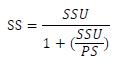
Where:
SS = Required sample size
SSU = Sample size for an unlimited population (e.g., 385 for a confidence levelof 95% and margin of error of 5%)
PS = Estimated population size
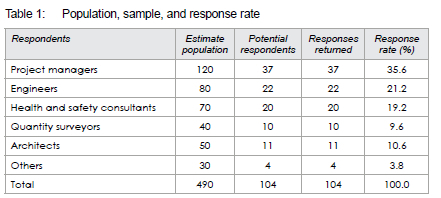
Based on available estimates of the professional population in Cape Town's constmction sector, tOe sample of 104 was Oeemed sufficient to capture the fiversity of stakeholders involved in housing projects. Table 1 presents the estimated number of professionals in each category, drawn from official sources such as the South African Council for the Architectural Professinal (SACAP), the Engineering Council of South Africa (ECSA), and internal DHS records. These include approximately 120 project managers, 80 engineers, 70 health and safety consultants, 40 quantity surveyors, 50 architects, and 30 other professionals (e.g., contractors and site sepervisors).
To ensure proportional representation, the calculated sample was distributed across professional categories: 37 project managers, 22 engineers, 20 health and safety consultants, 10 quantity surveyors, 11 architects, and 4 others. All invited participants completed the questionnaire, resulting in a 100% response rate for each group. This high level of participation enhances the reliability and validity of the study findings.
3.3 Data collection
Data collection was conducted through a self-designed questionnaire distributed to 104 respondents via Google Forms from April 2023. The questionnaire comprised both closed- and open-ended questions, carefully developed through an in-depth literature review to ensure alignment with existing knowledge and best practices in water conservation during construction projects.
Prior to distribution, the questionnaire underwent review and approval by the research supervisor to ensure clarity and relevance. It was divided into seven sections. Section A gathered demographic and professional data about the respondents, including gender, age, education, organisational representation, profession, experience, and involvement in local government housing construction projects. Section B included nine statements for the construct 'Awareness and adoption of policies' to explore whether respondents were aware of and adhered to existing guidelines and policies for water conservation. Section C set seven statements on the construct 'Water source utilisation' to assess the variety and efficiency of water sources used in housing construction. Section D included ten statements for the construct: 'Conservation techniques' to evaluate the practical application of water-saving methods on construction sites. Section E set six statements on the construct 'Conservation challenges' to identifying barriers that hinder effective water-conservation practices. Section F included 10 questions for the construct 'Conservation strategies' to examine the existing strategies for water conservation in housing construction projects within Cape Town. Respondents were asked to rate their level of agreement with the statements and questions measured on a 5-point Likert scale. For the qualitative data collection, Section G of the questionnaire included open-ended questions that allowed respondents to provide detailed insights into how water wastage could be controlled and managed. This approach enabled gathering data on various perspectives and recommended actions to enhance water-conservation efforts.
3.4 Data analysis and interpretation
Data collected via the self-designed questionnaire was analysed using IBM SPSS software (Rahman & Muktadir, 2021). For quantitative data analysis, descriptive statistics were employed to summarise and interpret the respondents' profile data (f and %) and to analyse Likert-scale responses. Measures of central tendency (mean, mode, median) and dispersion (standard deviation) provided insights into the overall trends and variability in participants' perceptions. Each statement from Sections B, C, D, E, and F of the questionnaire was ranked based on its mean score, allowing determining the relative importance of each item. For analysis purposes, the measurement scale intervals were 1 = strongly disagree ((>1.00 and <1.80); 2 = disagree (>1.81 and <2.60); 3 = neutral (>2.61 and <3.40); 4 = agree (>3.41 and <4.20), and 5 = strongly agree (>4.21 and <5.00). Likert-type or frequency scales use fixed choice response formats and are designed to measure attitudes or opinions (Joshi et al., 2015). To assess the internal consistency of the questionnaire, Cronbach's alpha was calculated for each construct. The acceptable reliability threshold was set at 0.7, which is widely recognised as the minimum standard for research instruments (Ahmed, Pereira & Jane, 2024).
For the qualitative data, the open-ended responses from Section G of the questionnaire were analysed thematically (Nowell et al., 2017). This process involved identifying recurring patterns and themes that complemented the quantitative results. Key insights were categorised into broader themes such as the need for policy development, worker training, and technological innovation. These qualitative findings enriched the interpretation of the numerical data, by providing contextual depth and practical recommendations for improving water conservation in the construction industry.
3.5 Limitations of the study
While the mixed-methods approach provided a holistic perspective, the study is subject to certain limitations. First, the reliance on self-reported data may introduce response bias. Secondly, the sample, although diverse, is limited to Cape Town, potentially restricting generalisability to other regions. Lastly, the cross-sectional nature of the study precludes causal inferences regarding water-conservation practices over time. These limitations are acknowledged and should be considered when interpreting the results.
4. FINDINGS
4.1 Participant demographics
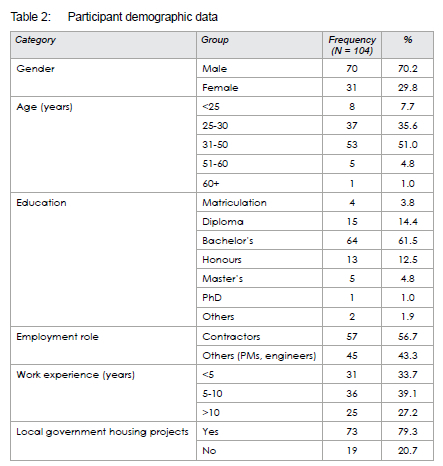
Table 1 summarises the key demographic and professional characteristics of the respondents. These provide important context for understanding water-conservation practices in Cape Town's housing construction sector. The vast majority of the participants were aged 31-50 years (51%), followed by those aged 25-30 years (35.6%). Younger respondents under the age of 25 years accounted for 7.7%, while those over the age of 50 years comprised 5.8%. The sample was predominantly male (70.2%), with female respondents accounting for 29.8%. This gender imbalance may influence attitudes and decision-making processes related to water conservation. The vast majority of the respondents held a bachelor's degree (61.5%), with others possessing diplomas (14.4%), honours degrees (12.5%), and master's degrees (4.8%). This reflects a well-educated workforce equipped to engage with sustainable construction practices. Contractors represented the largest professional group (56.7%), followed by project managers (35.6%), engineers (21.2%), health and safety consultants (19.2%), and architects (10.6%). Respondents displayed a range of professional experience: 39.1% had 5-10 years' experience, 33.7% had less than 5 years, and 27.2% had over 10 years in the sector. This distribution suggests a mix of emerging and seasoned professionals contributing to the study. A substantial majority of the respondents (79.3%) reported active participation in local government housing initiatives, showing their engagement with public-sector infrastructure and the relevance of their insights to policy implementation. Collectively, these findings highlight the diverse backgrounds, qualifications, and experiences of professionals involved in Cape Town's construction sector, offering a robust foundation for analysing the human dimensions of sustainable water use in housing projects.
Understanding the composition of the workforce, including gender dynamics, age distribution, educational background, professional roles, and experience levels, enables more targeted interventions to promote sustainable practices. For instance, training programmes or awareness campaigns could be tailored to address specific knowledge gaps among different groups, ensuring broader adoption of water-saving techniques. In addition, the high level of engagement with local government projects suggests that respondents are well-positioned to inform and influence policy decisions related to water conservation in the construction sector.
4.2 Water-conservation awareness and adoption of policies
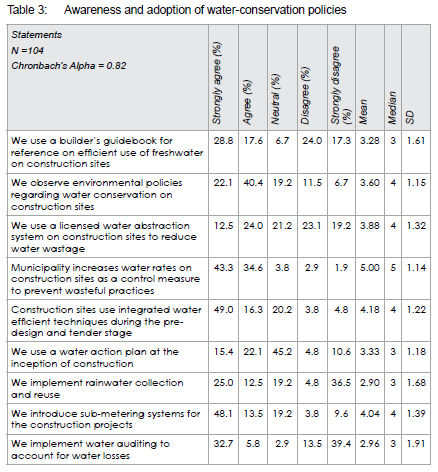
Table 3 shows the results on participants' awareness of water conservation and their perceptions and practices concerning various water-conservation guidelines. The Cronbach's Alpha is 0.82, indicating satisfactory reliability of the items in the construct. Based on mean scores above 4.00, respondents agreed that municipal increased water rates on construction sites (MS = 5.00); integrated water-efficient techniques during the pre-design and tender stage (MS = 4.18), and sub-metering systems for the construction project (MS = 4.04) are the top three control measures for freshwater-conservation practices on construction sites.
The findings show that a significant portion of the respondents (28.8%) expressed strong agreement with the use of a builder's guidebook for efficient freshwater use, while 17.6% of the respondents agreed, indicating a moderate reliance on structured guidelines. However, the relatively high percentage of neutral (6.7%) and disagreement responses (41.3%) suggests that many construction sites may not fully implement these practices or that awareness is lacking. The findings show a notable commitment to observing environmental policies, with 22.1% of the respondents strongly agreeing and 40.4% of them agreeing, resulting in a mean score of 3.60. The use of licensed water abstraction systems received a mean score of 3.88, with 12.5% of the respondents strongly agreeing, and 24.0% of them agreeing. Regarding municipal interventions, the majority of the respondents (43.3%) strongly agreed that increased water rates serve as a control measure against wasteful practices, demonstrating support for regulatory approaches. This was further reflected in the mean score of 5.00, which suggests that many believe financial incentives can enhance water conservation. In terms of integrating water-efficient techniques during the pre-design and tender stages, 49.0% of the respondents strongly agreed, and 16.3% agreed, with a mean score of 4.18. The use of water action plans at the inception of construction, however, showed mixed results, with only 15.4% of the respondents strongly agreeing and a mean score of 3.33. Efforts to implement rainwater collection received a mean score of 2.90, with a significant percentage (36.5%) of the respondents strongly disagreeing. Sub-metering systems were supported by 48.1% of the respondents who strongly agreed, with a mean score of 4.04. Water-auditing practices showed lower enthusiasm, with a mean score of 2.96% and 39.4% of the respondents strongly disagreeing, suggesting challenges in tracking water losses on construction sites. Lastly, the introduction of water leak detection and monitoring systems received a mean score of 3.23, indicating some level of acceptance, but also highlighting areas for improvement.
4.3 Water-source utilisation
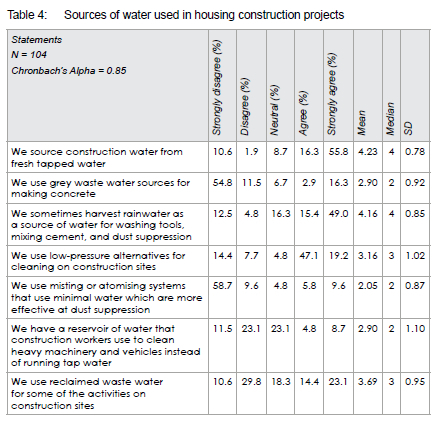
Table 4 presents insights into the sources of water used in housing construction projects, based on responses from 104 participants. The Cronbach's Alpha is 0.85, indicating satisfactory reliability of the items in the construct. Although respondents agreed (based on mean scores) that the top three water sources available for housing construction are fresh water (MS = 4.25), rainwater (MS = 4.16) and waste water (MS = 3.69), the results reveal varying levels of acceptance for different water sources and conservation techniques.
The vast majority of the respondents (55.8%) strongly agreed with sourcing construction water from fresh tapped water, leading to a high mean score of 4.23. Despite calls for sustainable practices, fresh tapped water remains a dominant choice, due to its accessibility and familiarity. In contrast, the use of grey waste water for making concrete garnered limited support, with 54.8% of the respondents strongly disagreeing and a low mean score of 2.90. This resistance may stem from concerns about material quality or logistical challenges. Rainwater harvesting appears to be moderately accepted, with 49.0% of the respondents strongly agreeing and a mean score of 4.16. However, the relatively low percentage of strong agreement suggests that, while recognised as beneficial, it is not yet widely implemented. Low-pressure cleaning alternatives showed moderate support, achieving a mean score of 3.16, although barriers such as cost or training requirements may hinder broader adoption. Interestingly, misting or atomising systems for dust suppression faced significant resistance, with 58.7% of the respondents strongly disagreeing and a mean score of 2.05. This underscores the need for education and demonstration of their effectiveness to overcome scepticism. Similarly, the use of reservoirs for cleaning machinery scored poorly, with 11.5% of the respondents strongly agreeing and a mean score of 2.90, highlighting gaps in implementing water-efficient practices. Finally, reclaimed waste water for construction activities achieved a mean score of 3.69, reflecting moderate agreement among respondents. While 23.1% of the respondents strongly agreed, many remained neutral or opposed, indicating ongoing debates about its viability and safety.
4.4 Water-conservation techniques
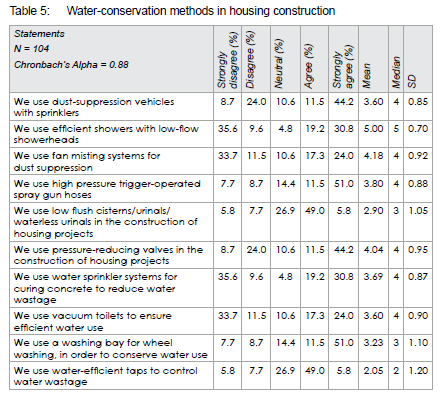
Table 5 presents the implementation of various water-saving measures on construction sites associated with housing projects in Cape Town. The internal consistency of the construct was confirmed with a Cronbach's Alpha of 0.88, indicating high reliability of the measurement items. Based on mean scores above 4.00, the respondents agreed that efficient showers with low-flow showerheads (MS = 5.00), fan misting systems for dust suppression (MS = 4.18), and pressure-reducing valves (MS = 4.04) are the top three water-conservation techniques used on housing construction sites.
The analysis of the findings reveals a spectrum of approval for various water-saving methods in construction, reflecting differing perceptions of their utility and relevance among the respondents. Low-flow showerheads emerged as the most favoured technique, with a mean score of 5.00, indicating strong consensus on their effectiveness; over 30.8% of the participants strongly agreed that these fixtures are valuable for conserving water, particularly in residential or onsite applications. Fan misting systems received moderate support (MS = 4.18), with 24.0% of the respondents strongly agreeing and a combined 34.6% of the respondents showing practical acceptance, suggesting their potential for dust suppression during construction. Pressure-reducing valves also garnered moderate approval (MS = 4.04), although limited strong agreement (11.5%) points to their perceived usefulness in specific contexts. Sprinkler systems for curing concrete scored 3.69; highlighting mixed opinions while 35.6% strongly supported their use, 30.8% expressed scepticism, underscoring the need for further clarification on their efficiency. Vacuum toilets achieved a mean score of 3.60, demonstrating moderate agreement but facing resistance from 24.0% of the respondents who strongly disagreed, indicating doubts about their broader applicability. Washing bays for wheel washing scored lower at 3.23, with just 7.7% of the respondents strongly supporting them and 51.0% of them strongly opposing, revealing limited enthusiasm for this method. Low flush fixtures (MS = 2.90) and water-efficient taps (MS = 2.05) faced significant scepticism, with only 7.7% and 5.8% of the respondents, respectively, strongly agreeing, while 49.0% of them strongly disagreed with the latter, suggesting unfamiliarity or disbelief in their ability to reduce water waste effectively during construction. These results highlight the importance of addressing knowledge gaps and promoting awareness to enhance the adoption of sustainable water-conservation practices.
4.5 Conservation challenges
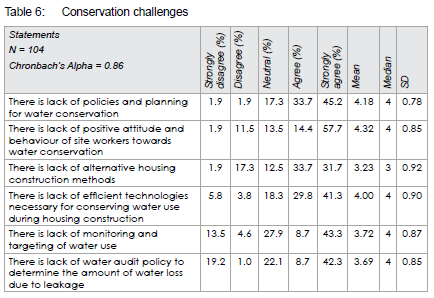
Table 6 shows the results on the barriers that hinder effective water practices. This study delves into the challenges encountered while attempting to implement sustainable water-conservation methods within housing construction projects in Cape Town. The Cronbach's Alpha is 0.86, indicating high reliability of the measurement items. With mean score rating above 4.00, the participants agreed that the attitude and behaviour among site workers toward water conservation, (MS = 4.32), lack of policies and planning (MS = 4.18), and a lack of efficient technologies for conserving water (MS = 4.00) are the top three challenges to implementing water-conservation practices in housing construction projects.
The findings reveal multifaceted challenges in implementing sustainable water conservation practices during housing construction in Cape Town. A prominent challenge is the lack of policies and planning for water conservation, with 45.2% strongly agreeing and an overall mean score of 4.18. This resonates with prior research underscoring the critical role of policy support in fostering sustainable practices. Another significant obstacle identified is the negative attitudes and behaviours of site workers toward water conservation, with 57.7% strongly agreeing and a high mean score of 4.32. This highlights the importance of addressing behavioural factors through targeted training programs and awareness campaigns to promote mindful consumption practices. The lack of alternative housing construction methods also emerged as a noteworthy challenge, with 33.7% agreeing and 31.7% strongly agreeing, resulting in a mean score of 3.23. This suggests recognition of the potential benefits of exploring alternative materials and techniques to enhance water efficiency in construction processes. Insufficient access to efficient technologies for water conservation was another considerable barrier, with 41.3% strongly agreeing and a mean score of 4.00. This finding aligns with existing literature emphasizing the role of technological innovation in advancing sustainable water management practices. The lack of monitoring and targeting mechanisms for water use during construction projects surfaced as a significant issue, with 43.3% strongly agreeing and a mean score of 3.72. This highlights the importance of introducing systems to track and regulate water consumption, ensuring transparency and accountability. Finally, the absence of a water audit policy to determine water losses due to leakage was identified as a considerable challenge, with 42.3% strongly agreeing and a mean score of 3.69. This underscores the need for systematic evaluations to identify inefficiencies and reduce water wastage effectively.
4.6 Conservation strategies
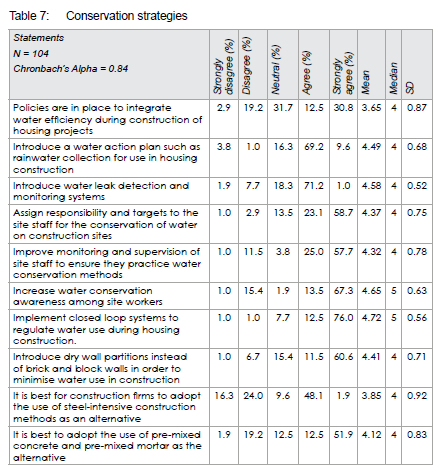
Table 7 shows the results for possible strategies for enhancing water conservation in housing construction projects within Cape Town as perceived by the survey respondents. The Cronbach's Alpha is 0.84, indicating high reliability of the measurement items. The adoption of closed loop systems (MS = 4.72), increasing water conservation awareness among site workers (MS = 4.65), and the introduction of water leak detection and monitoring systems (MS = 4.58) emerged as the top three water conservation strategies in housing construction.
The results highlight several promising strategies for enhancing water conservation in housing construction projects in Cape Town. A key finding is the overwhelming support for introducing a water action plan such as rainwater collection systems, with 69.2% of the respondents agreeing and a high mean score of 4.49. This indicates that respondents recognise the importance of proactive measures to address water scarcity during construction. Another notable strategy is the introduction of water leak detection and monitoring systems, which received a mean score of 4.58 and agreement from 71.2% of the participants. This emphasises the critical role of technology in identifying and minimising water wastage on construction sites. Assigning responsibilities and targets to site staff for water conservation also garnered significant support, with 58.7% of the respondents strongly agreeing and a mean score of 4.37. This suggests that clear accountability mechanisms could play a vital role in promoting sustainable practices among workers. Similarly, increasing water-conservation awareness among site workers was widely supported, achieving a mean score of 4.65 and agreement from 67.3% of the respondents. This highlights the importance of education and training in fostering a culture of sustainability within the construction sector. The adoption of closed loop systems emerged as one of the most favoured strategies, with 76.0% of the respondents strongly agreeing and a high mean score of 4.72. This indicates a strong willingness to embrace innovative solutions for regulating water use during construction. Other strategies such as introducing dry wall partitions (MS = 4.41) and adopting pre-mixed concrete and mortar (MS = 4.12) also received favourable responses, reflecting interest in exploring alternative materials to minimise water consumption. However, the adoption of steel-intensive construction methods faced some resistance, with only 48.1% of the respondents agreeing and a lower mean score of 3.85. This suggests that, while alternatives exist, their feasibility and acceptance vary depending on context and perception.
4.6 Qualitative results
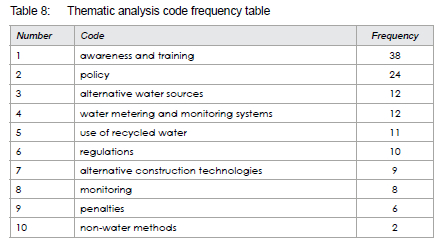
To complement the quantitative findings, this study incorporated open-ended questions to explore strategies for water conservation during housing construction in Cape Town. The qualitative data provided deeper insights into the complexities of water management on construction sites. Table 8 shows the ten strategies that emerged from the thematic analysis.
Education: A recurring suggestion from participants was the need for increased awareness and training regarding water-conservation practices. Thirty-eight responses highlighted the importance of educating site workers and promoting mindful consumption habits. This proactive approach could encourage a culture of sustainability within the construction sector, ensuring more efficient water use and reduced wastage.
Policy: Twenty-four responses advocated for stronger policy guidelines to enforce sustainable water practices, while six responses suggested introducing penalties for excessive water wastage. These recommendations reflect the need for stricter regulatory frameworks to ensure compliance with water-conservation goals. Ten responses noted the necessity of implementing rules and controls to manage water usage effectively, while eight responses emphasised the importance of guidelines and monitoring systems.
Alternative water sources: Twelve responses highlighted the need for alternative water sources such as rainwater harvesting or boreholes. Eleven responses supported the use of recycled water for non-potable purposes such as dust suppression and cleaning, while nine responses recommended exploring alternative construction technologies that minimise water consumption.
Alternative technologies: Twelve responses advocated for the implementation of water metering and monitoring systems to track and regulate water usage on construction sites. Such measures would provide valuable data to optimise resource allocation and identify areas for improvement.
5. DISCUSSION
This study shows the critical importance of sustainable water management in housing construction projects, revealing varying degrees of awareness, acceptance, and implementation of water-conservation practices among stakeholders in Cape Town's construction sector. The findings suggest a growing recognition of water-efficient technologies, yet also highlight significant barriers that hinder their broader adoption.
The results on the adoption and effectiveness of water-efficient technologies reveal strong stakeholder agreement on the effectiveness of specific water-saving technologies. Notably, low-flow showerheads received the highest approval (MS = 5.00), reaffirming their perceived utility in reducing water consumption. Similarly, fan misting systems for dust suppression (MS = 4.18) and pressure-reducing valves (MS = 4.04) garnered moderate support, indicating growing acceptance of these practical solutions. These findings align with Tam and Lee (2007), who emphasised the effectiveness of such technologies in promoting sustainable water use on construction sites. However, other technologies received mixed or low support. Water-efficient taps (MS = 2.05), low-flush fixtures (MS = 2.90), and rainwater collection systems (MS = 2.90) were met with scepticism, reflecting significant knowledge limitations and a lack of perceived cost-benefit justification. This corroborates the findings of Dolnicar and Hurlimann (2010) and Waidyasekara et al. (2016), who identified limited awareness, behavioural resistance, and technological unfamiliarity as common barriers to adoption. Vacuum toilets (MS = 3.60) and sprinkler systems for concrete curing (MS = 3.69) were moderately accepted but faced resistance - particularly vacuum toilets, with 33.7% of the respondents strongly disagreeing with their use - suggesting a need for education on their functionality and benefits. Similarly, despite the potential of sub-metering systems (MS = 4.04) and water leak detection tools (MS = 3.23), their modest uptake indicates implementation challenges related to cost, logistical complexity, or limited technical capacity.
Results on the guidelines, planning, and policies in water conservation revealed critical gaps in the implementation of freshwater usage guidelines. While 28.8% of the respondents supported the use of a builder's guidebook, a significant portion of the respondents either disagreed (41.3%) or remained neutral (6.7%), indicating low awareness or limited integration of best practices on construction sites. This reflects broader issues highlighted in the National Water Act (South Africa, 2013), which emphasises policy intent but often lacks practical enforcement mechanisms at project level. Environmental policy compliance received moderate support (MS = 3.60), suggesting that regulatory frameworks are acknowledged but inconsistently applied. The strong agreement on the potential effectiveness of increased water tariffs as a control measure (MS = 5.00) reinforces the role of economic incentives in promoting behavioural change (Olley et al., 2024).
Incorporating water-efficient design from early planning stages was also moderately supported (MS = 4.18), highlighting a shift toward integrating sustainability into project inception. However, lower scores for water action plans at construction inception (MS = 3.33) and rainwater harvesting (MS = 2.90) indicate challenges in operationalising these strategies, likely due to cost constraints, insufficient training, or unclear guidelines.
Several key barriers emerged from the study, showing the complex landscape of water conservation implementation. The most significant challenge identified was the lack of planning and regulatory frameworks for water conservation, with 45.2% of the respondents strongly agreeing (MS = 4.18) that this issue impedes progress. This reflects broader structural shortcomings emphasised in the literature (South Africa, 1998).
Behavioural resistance among site workers was another prominent barrier (MS = 3.17), with 57.7% of the respondents strongly agreeing. Resistance to change, limited awareness, and inadequate training contribute to this issue, as also reported by Waidyasekara et al. (2016). In addition, technological limitations (MS = 4 .00) and insufficient monitoring and auditing systems (MS = 3.69 and MS = 3.72, respectively) further constrain effective implementation. Similarly, George-Williams et al. (2024) advocate for innovation and systemic oversight to reduce inefficiencies and water losses on construction sites.
Despite the challenges, several strategies emerged as effective measures to promote water conservation. High support was recorded for water leak detection systems (MS = 4.58), assigning responsibilities and setting water-use targets for site staff (MS = 4.37), and implementing comprehensive water action plans (MS = 4.49). These findings support Tam and Lee's (2007) assertion that proactive planning and accountability are vital for sustainability.
Awareness-raising campaigns were particularly emphasised (MS = 4.65), aligning with Addo et al. (2018), who stressed the transformative power of education in shaping sustainable behaviours. Adoption of closed-loop water systems (supported by 76.0% of the respondents) and dry wall partitions (supported by 60.6% of the respondents) further demonstrate the willingness of industry professionals to embrace innovative, water-saving construction techniques.
Qualitative findings reinforce these quantitative trends, highlighting a comprehensive set of proposed actions: enhanced training and education (38 responses), clear policy frameworks and penalties for non-compliance (24 responses), use of recycled water and alternative sources (12 responses), and broader adoption of monitoring systems and technologies. These recommendations echo Ajzen's (2005) theory of planned behaviour, which links awareness, attitudes, and perceived control to conservation behaviour. Importantly, respondents emphasised the widespread use of water trucks for construction activities, including concrete mixing and dust suppression. This reliance highlights inefficiencies and the urgent need for alternative water sources and better usage tracking (Patil, 2016).
The study's findings carry several practical implications for construction industry stakeholders to optimise water efficiency. First, targeted awareness and education programmes are essential to overcome behavioural resistance and improve acceptance of underutilised technologies. Secondly, regulatory enforcement must be strengthened to bridge the gap between policy and practice. Thirdly, integration of water-saving strategies at the pre-design and tendering stages can help embed sustainability from project inception. Furthermore, promoting economic incentives such as higher water tariffs, subsidies for adopting efficient technologies, or penalties for wasteful practices can drive behavioural shifts. Finally, collaboration between policymakers, contractors, engineers, and workers is critical to developing practical solutions tailored to on-site realities.
6. CONCLUSION AND RECOMMENDATIONS
The findings of this study highlight that effective water conservation in housing construction projects depends not only on technological solutions but also on comprehensive stakeholder engagement, informed decision-making, and policy support. Although the impacts of water scarcity on construction timelines and project costs are evident, this research emphasises that the real opportunity lies in how industry stakeholders respond through strategic action.
Stakeholders identified that encouraging a proactive approach, through awareness campaigns and site-based training initiatives, is central to cultivating a culture of water mindfulness on construction sites. These initiatives should be tailored to workers at all levels, from site staff to project managers, ensuring that practical knowledge of water-efficient tools, behavioural habits, and conservation procedures becomes embedded in daily practice.
Regulatory interventions and structured enforcement mechanisms were consistently emphasised as critical enablers for sustained water-saving behaviour. Stakeholders are encouraged to collaborate with authorities in developing and adopting clear guidelines, builder's handbooks, and compliance benchmarks that integrate water efficiency into all stages of project development from planning and tendering through to construction and post-construction phases.
In addition to policy and education, stakeholders should also focus on incorporating alternative water sources such as recycled or harvested rainwater and integrating closed-loop systems and sub-metering technologies. These systems not only reduce dependence on municipal supplies but also provide measurable data to inform more efficient site-management practices.
The study reinforces the importance of strategic collaboration among developers, contractors, suppliers, and policymakers to align technological implementation with regulatory expectations and on-site realities. By working collectively and adopting a holistic, multidimensional approach to water conservation, the housing construction sector can enhance operational efficiency, reduce water-related project risks, and contribute meaningfully to long-term sustainability goals.
REFERENCES
2. LITERATURE REVIEW
-
Addo, I.B., Thoms, M.C. & Parsons, M. 2018. Barriers and drivers of household water-conservation behavior: A profiling approach. Water, 10(12), article 1794. https://doi.org/10.3390/w10121794
» https://doi.org/10.3390/w10121794 - Addo, K., Amoako, C. & Twumasi, Y.A. 2018. Challenges associated with the lack of alternative construction methods and insufficient access to efficient technologies in promoting water efficiency. International Journal of Construction Management, 18(4), pp. 349-360.
-
Ahmad, S., Wasim, S., Irfan, S., Gogoi, S., Srivastava, A. & Farheen, Z. 2019. Qualitative v/s quantitative research - A summarized review. Population, 1(2), pp. 2828-2832. https://doi.org/10.18410/jebmh/2019/587
» https://doi.org/10.18410/jebmh/2019/587 -
Ahmed, A., Pereira, L. & Jane, K. 2024. Mixed methods research: Combining both qualitative and quantitative approaches. [Online]. Available at: https://www.researchgate.net/publication/384402328 [Accessed: 3 March 2025].
» https://www.researchgate.net/publication/384402328 - Ajzen, I. 2005. Attitudes, personality, and behaviour. 2nd edition. Berkshire, UK: Open University Press.
-
Awasthi, A., Gandhi, K. & Rayalu, S. 2023. Greywater treatment technologies: A comprehensive review. International Journal of Environmental Science and Technology, 21, pp. 1053-1082. https://doi.org/10.1007/s13762-023-04940-7
» https://doi.org/10.1007/s13762-023-04940-7 -
Bans-Akutey, A. & Tiimub, B.M. 2021. Triangulation in research. Academia Letters, article 3392. https://doi.org/10.20935/AL3392
» https://doi.org/10.20935/AL3392 -
Boermans, D.D., Jagoda, A., Lemiski, D., Wegener, J. & Krzywonos, M. 2024. Environmental awareness and sustainable behavior of respondents in Germany, The Netherlands and Poland: A qualitative focus group study. Journal of Environmental Management, 370, article 122515. https://doi.org/10.1016/jjenvman.2024.122515
» https://doi.org/10.1016/jjenvman.2024.122515 -
Boretti, A. & Rosa, L. 2019. Reassessing the projections of the World Water Development Report. NPJ Clean Water, 2, Article 15. https://doi.org/10.1038/s41545-019-0039-9
» https://doi.org/10.1038/s41545-019-0039-9 - Braun, V., Clarke, V. & Grey, D. 2016. Collecting qualitative data. London, UK: Cambridge University Press.
- Bryman, A. 2016. Social research methods. Oxford, UK: Oxford University Press.
-
Colombo, S.L., Chiarella, S.G., Lefrançois, C., Fradin, J., Raffone, A. & Simione, L. 2023. Why knowing about climate change is not enough to change: A perspective paper on the factors explaining the environmental knowledge-action gap. Sustainability, 15(20), article 14859. https://doi.org/10.3390/su152014859
» https://doi.org/10.3390/su152014859 -
Cullis, J.D.S., Horn, A., Rossouw, N., Fisher-Jeffes, L., Kunneke, M.M. & Hoffman, W. 2019. Urbanisation, climate change and its impact on water quality and economic risks in a water scarce and rapidly urbanising catchment: Case study of the Berg River Catchment. H2Open Journal, 2(1), pp. 146-167. https://doi.org/10.2166/h2oj.2019.027
» https://doi.org/10.2166/h2oj.2019.027 -
Dolnicar, S. & Hurlimann, A. 2010. Water-saving behaviours and water perceptions of Australian households: Do they match? Australasian Journal of Water Resources, 14(1), pp. 43-53. https://doi.org/10.1080/13241583.2010.11465373
» https://doi.org/10.1080/13241583.2010.11465373 - Dos Santos, C.M. & Da Silva, S.R. 2015. Water consumption in construction sites in the city of Recife/PE. Electronic Journal of Geotechnical Engineering, 20(7), pp. 1711-1726.
- DWS (Department of Water and Sanitation). 2018. National Water and Sanitation Master Plan. Republic of South Africa. Vol. 1: Call to Action v 10.1 31.
-
Evans, L., Morgan, D. & Mario, C. 2024. Water efficiency in sustainable construction: Reducing consumption and enhancing conservation. [Online]. Available at: https://www.researchgate.net/publication/385659521 [Accessed: 3 March 2024].
» https://www.researchgate.net/publication/385659521 -
George-Williams, H., Hunt, D. & Rogers, C. 2024. Sustainable water infrastructure: Visions and options for sub-Saharan Africa. Sustainability, 16(4), 1592. https://doi.org/10.3390/su16041592
» https://doi.org/10.3390/su16041592 -
Howard-Jones, P., Warren-Lee, N. & Aldred, C. 2023. Using evaluation data to inform climate education practice. 2023. Applied Environmental Education & Communication, 22(3-4), pp. 177-192. https://doi.org/10.1080/1533015X.2023.2268107
» https://doi.org/10.1080/1533015X.2023.2268107 -
Jacque, H., Mozafari, B., Dereli, R.K. & Cotterill, S. 2024. Implications of water conservation measures on urban water cycle: A review. Sustainable Production and Consumption, 50, pp. 571-586. https://doi.org/10.1016/j.spc.2024.08.026
» https://doi.org/10.1016/j.spc.2024.08.026 -
Joshi, A., Kale, S., Chandel, S. & Pal, D.K. 2015. Likert scale: Explored and explained. British Journal of Applied Science & Technology, 7(4), pp. 396-403. https://doi.org/10.9734/BJAST/2015/14975
» https://doi.org/10.9734/BJAST/2015/14975 -
Leal Filho, W., Totin, E., Franke, J.A., Andrew, S.M., Abubakar, I.R., et al. 2022. Understanding responses to climate-related water scarcity in Africa. Science of The Total Environment, 806(1), article 150420. https://doi.org/10.1016/j.scitotenv.2021.150420
» https://doi.org/10.1016/j.scitotenv.2021.150420 -
Marutlulle, N. 2021. A critical analysis of housing inadequacy in South Africa and its ramifications. Africa's Public Service Delivery & Performance Review, 9(1), article 372. https://doi.org/10.4102/apsdpr.v9i1.372
» https://doi.org/10.4102/apsdpr.v9i1.372 -
Mishra, B.K., Kumar, P., Saraswat, C., Chakraborty, S. & Gautam, A. 2021. Water security in a changing environment: Concept, challenges and solutions. Water, 13(4), article 490. https://doi.org/10.3390/w13040490
» https://doi.org/10.3390/w13040490 -
Moghayedi, A., Behzadian, K., Vassilev, V., Akinwunmi, I., Mehmood, A. et al. 2025. Causality between challenges, motivations, and extent of use of water recycling systems in residential properties. In: Gorse, C. (Ed.). Sustainable Ecological Engineering Design. SEEDS 2021. Springer, Cham, pp. 635-654. https://doi.org/10.1007/978-3-031-73947-7_43
» https://doi.org/10.1007/978-3-031-73947-7_43 -
Nevermann, H., Aminzadeh, M., Madani, K. & Shokri, N. 2024. Quantifying water evaporation from large reservoirs: Implications for water management in water-stressed regions. Environmental Research, 262(1), article 119860. https://doi.org/10.1016/j.envres.2024.119860
» https://doi.org/10.1016/j.envres.2024.119860 -
Nilima, J. 2023. Smart materials and technologies for sustainable concrete construction. Developments in the Built Environment, 15, article 100177. https://doi.org/10.1016/j.dibe.2023.100177
» https://doi.org/10.1016/j.dibe.2023.100177 -
Nowell, L.S., Norris, J.M., White, D.E. & Moules, N.J. 2017. Thematic analysis: Striving to meet the trustworthiness criteria. International Journal of Qualitative Methods, 16(1), pp.1-13. https://doi.org/10.1177/1609406917733847
» https://doi.org/10.1177/1609406917733847 -
Nyam, Y., Kotir, J., Jordaan, A. & Ogundeji, A. 2021. Developing a conceptual model for sustainable water resource management and agricultural development: The case of the Breede River Catchment Area, South Africa. Environmental Management, 67, pp. 632-647. https://doi.org/10.1007/s00267-020-01399-x
» https://doi.org/10.1007/s00267-020-01399-x -
Olley, J., Cvitanovic, M., Ginige, T. & Bunt-MacRury, L. 2024. A systematic literature review of sustainable water management in South Africa. Sustainable Water Resource Management, 10(5), article 162. https://doi.org/10.1007/s40899-024-01135-x
» https://doi.org/10.1007/s40899-024-01135-x -
Palamuleni, L.G., Nde, S.C., Du Plessis, Y. & Bakuwa, R.C. 2024. Water conservation by managers at the workplace: Examination of attitudes and behaviour using the theory of planned behaviour. Physics and Chemistry of the Earth, Parts A/B/C, 136, article 103721. https://doi.org/10.1016/j.pce.2024.103721
» https://doi.org/10.1016/j.pce.2024.103721 - Patil, P. 2016. Water consumption in construction. International Journal of Research in Civil Engineering, Architecture & Design, 4(2), pp. 58-66.
-
Prajapati, M., Patel, R., Dogra, A.K., Singh, V., Kumar Gupta, P. & Verma, S. 2025. Impact of water conservation on household end-use water consumption. In: Advancing social equity through accessible green innovation. New York: IGI Global. https://doi.org/10.4018/979-8-3693-9471-7.ch017
» https://doi.org/10.4018/979-8-3693-9471-7.ch017 -
Ramantswana, T., Mdingi, P., Maake, M. & Vuyani, P. 2021. Approaching Day Zero: Effects of water scarcity in construction projects in South Africa. Journal of African Real Estate Research, 6(1), pp. 104-120. https://doi.org/10.15641/jarer.v6i1.976
» https://doi.org/10.15641/jarer.v6i1.976 -
Rahman, G. & Muktadir, A. 2021. SPSS: An imperative quantitative data analysis tool for social science research. International Journal of Research and Innovation in Social Science, 5(1), pp. 300-302. https://doi.org/10.47772/IJRISS.2021.51012
» https://doi.org/10.47772/IJRISS.2021.51012 -
Sanchez, C., Rodriguez-Sanchez, C. & Sancho-Esper, F. 2023. Barriers and motivators of household water-conservation behaviour: A bibliometric and systematic literature review. Water, 15(23), article 4114. https://doi.org/10.3390/w15234114
» https://doi.org/10.3390/w15234114 -
Singha, B. & Aljamal, O. 2020. A review on water conservation and consumption behaviour: Leading issues, promoting actions, and managing the policies. In: Proceedings of International Exchange and Innovation Conference on Engineering & Sciences, 20-22 October, Kyushu University, Japan. https://doi.org/10.5109/4102484
» https://doi.org/10.5109/4102484 -
Singha, B., Eljamal, O., Karmaker, S.C., Maamoun, I. & Sugihara, Y. 2022. Water conservation behavior: Exploring the role of social, psychological, and behavioral determinants. Journal of Environmental Management, 317, article 115484. https://doi.org/10.1016/j.jenvman.2022.115484
» https://doi.org/10.1016/j.jenvman.2022.115484 -
Smith, H., Brouwer, S., Jeffrey, P. & Frijns, J. 2018. Public responses to water reuse -understanding the evidence. Journal of Environmental Management, 207, pp. 43-50. https://doi.org/10.1016/j.jenvman.2017.11.021
» https://doi.org/10.1016/j.jenvman.2017.11.021 - South Africa. 1998. National Water Act, Act 36 of 1998. Pretoria: Government Printer.
- South Africa. 2013. Government notice, National Water Act, Act 36 of 1998. Government Gazette, no. 36820. Pretoria: Government Printer.
- Tam, V.W.Y. & Lee, K.N. 2007. Assessing environmental performance in the construction industry. Surveying and Built Environment, 18(2), pp. 59-72.
-
Thakur, R., Onwubu, S., Harris, G. & Thakur, S. 2022. Factors influencing water conservation behaviour amongst low-income communities in South Africa. International Journal of Research in Business and Social Science, 11(4), pp. 255-266. https://doi.org/10.20525/ijrbs.v11i4.1786
» https://doi.org/10.20525/ijrbs.v11i4.1786 -
Thebuwena, A., Samarakoon, S. & Ratnayake, R. 2024. On the necessity for improving water efficiency in commercial buildings: A green design approach in hot humid climates. Water, 16(17), article 2396. https://doi.org/10.3390/w16172396
» https://doi.org/10.3390/w16172396 -
The Nature Conservancy. 2019. Greater Cape Town water fund business case: Assessing the return on investment for ecological infrastructure restoration. [Online]. Available at: https://www.nature.org/content/dam/tnc/nature/en/documents/GCTWF-Business-Case-April-2019.pdf [Accessed: 2 February 2025].
» https://www.nature.org/content/dam/tnc/nature/en/documents/GCTWF-Business-Case-April-2019.pdf -
Thogersen, J. 2021. Consumer behavior and climate change: Consumers need considerable assistance. Current Opinion in Behavioral Sciences, 42, pp. 9-14. https://doi.org/10.1016/j.cobeha.2021.02.008
» https://doi.org/10.1016/j.cobeha.2021.02.008 -
Varshney, H., Khan, R. & Khan, I. 2021. Sustainable use of different waste water in concrete construction: A review. Journal of Building Engineering, 41, article 102411. https://doi.org/10.1016/j.jobe.2021.102411
» https://doi.org/10.1016/j.jobe.2021.102411 -
Voogd, R., Rudberg, P.M., De Vries, J.R., Beunen, R., Espíritu, A.A. & Methner, N. et al. 2022. A systematic review on the role of trust in the water governance literature. Water Research 10(16), article 100147. https://doi.org/10.1016/j.wroa.2022.100147
» https://doi.org/10.1016/j.wroa.2022.100147 -
Waidyasekara, K., De Silva, L. & Raufdeen, R. 2016. Water-use efficiency and conservation during construction: Drivers, barriers and practices. Built Environment Project and Asset Management, 6, pp. 553-566. https://doi.org/10.1108/BEPAM-09-2015-0052
» https://doi.org/10.1108/BEPAM-09-2015-0052 -
Wang, J. & Azam, W. 2024. Natural resource scarcity, fossil fuel energy consumption, and total greenhouse gas emissions in top emitting countries. Geoscience Frontiers, 15(2), article 101757. https://doi.org/10.1016/j.gsf.2023.101757
» https://doi.org/10.1016/j.gsf.2023.101757
Peer reviewed and revised: May 2025
Published: June 2025