Designerly and entrepreneurial thinking in architectural practice: a case study of Al Stratford
Abstract
To remain resilient amid technological disruption and economic volatility, the architectural field must adopt entrepreneurial mindsets and methods. Design Thinking and Designerly Thinking have been the subject of comparison and analysis in the academic literature. However, their application in architectural practice and architectural entrepreneurship is vague. This article applies case-study research methodology to gain insight into how architects might apply their skills in new fields. This research adopts a qualitative approach, combining a comprehensive literature review with primary data collection through a semi-structured interview. The case study focuses on Al Stratford - an award-winning figure in architecture, product, and furniture design -who has successfully transitioned into entrepreneurship and industrial design. Thematic analysis was used to interpret both the literature and the interview transcript. The analysis considers what the thinking and design processes applied by Al Stratford in architectural design, product design, and business design are, how they differ, how they differ from the theoretical standard, and what the causes for any differences might be. The study suggests that architectural Designerly Thinking processes are often distinct and context specific, differing from broader notions of Designerly Thinking, while occasionally incorporating elements of Design Thinking. The key findings indicate that, for designers, the entrepreneurial process can align closely with Designerly Thinking, making the latter more suitable than Design Thinking in architectural contexts. Importantly, architects and designers are encouraged to identify entrepreneurial opportunities that emerge organically within the designerly process itself. In doing so, they should emulate Stratford's commitment to addressing concrete, context-specific needs with appropriate and innovative solutions. This integration of creativity, contextual responsiveness, and problem-solving within the design process can serve as a foundation for entrepreneurial innovation in architecture.
Entrepreneurship; architectural entrepreneurship; architectural practice; creative innovation in architecture; design thinking; designerly thinking
1. INTRODUCTION
The relevance of entrepreneurship for architectural practices was largely overlooked until 2008 when Moreno (2008: 82) highlighted the connection, asserting that "architects - indeed all entrepreneurs - must make enough money to stay in business and prosper". Prior to 2008, architectural academics and practitioners acknowledged the importance of the business dimension of architectural practice, yet entrepreneurship2 was not a prominent focus area. Two years later, Gutman (2010: 38) published the book Architecture: The entrepreneurial profession, advocating for architects to develop greater assertiveness in "getting work and creating its own demand". Richardson (2011: 309) expanded on this idea in his article, "Architecture is entrepreneurship and (why) it matters", arguing that the evolving nature of society and its challenges should compel architects to reconsider their expertise and application. He suggested that a key to enhancing architects' productivity might lie in the profession's self-conception and relationship to entrepreneurship. Richardson (2014: 68-79) continued this discussion in a chapter titled "On enterprising architecture", in the book Architecture in an age of uncertainty.
In a research study, Vosloo (2022: 217-218) found that entrepreneurial architects have not only carved out opportunities for themselves, but have also extended benefits to others who previously had limited access to their expertise. This means that entrepreneurial architects can practise outside of mainstream economic hubs. He explains that the Fourth Industrial Revolution (4IR) will usher in numerous entrepreneurial opportunities for those with an entrepreneurial mindset, moreover, that entrepreneurial architects are often willing to share their knowledge and assist others who wish to follow in their footsteps. In another study, Vosloo found that, with the arrival of the 4IR, the architectural profession will continue to stay relevant, with upcoming and future advancements offering new opportunities for architects. These opportunities will arise from technological progress within the 4IR, including both innovative systems and applications. In addition, new building materials and construction technologies, introduced through technological advancements and the pursuit of greater efficiency, will further enhance the profession (Vosloo, 2023: 253). This article shows that good design and entrepreneurship are compatible. It argues that the profession gains from the entrepreneurial efforts of its members. Furthermore, it points out that the profession will continue to do so and that it needs more entrepreneurial architects for the profession's survival. Entrepreneurial architects will, by pushing existing boundaries, create new opportunities not only for themselves, but also for all architects. By Alling these new spaces, the profession can continuously reinvent itself. Therefore, entrepreneurship should be encouraged among all architectural professionals. Architectural education must evolve with the changing landscape. In addition, architects must be on the lookout for new fields for applying their unique skills. Finally, architectural education programmes should incorporate entrepreneurship education and training (Vosloo, 2022: 217-218).
As noted earlier, such entrepreneurial approaches are vital for the ongoing relevance and reinvention of the architectural profession in the face of technological and economic change (Vosloo, 2022; 2023). Hardly anything is known about how these entrepreneurial approaches might compare with the design and thinking processes applied in architectural practice and architectural entrepreneurship. This article applies case-study research methodology to provide insight into how architects might apply their skills in new fields. It considers what the thinking and design processes applied by Al Stratford in architectural design, product design, and business design are, how they differ, how they differ from the theoretical standard, and what the causes for any differences might be. The aim is to inform other architects, who intend following this example, to differentiate and expand their service offerings, and to spread their skills to communities and sectors that currently do not benefit from such skills.
Understanding the historical convergence of design and architecture is essential for examining how design thinking informs both design and entrepreneurial processes.
2.1 Design, designers and the design process
Bannon and Ehn (2013: 38), referencing Droste, argue that design is simultaneously a profession, a concept, and a movement. They explain that it took shape in its current form during the socio-economic challenges that followed World War I. A defining moment in this development was the founding of the Bauhaus in 1919 - an art school that distinguished itself from traditional fine arts institutions through its commitment to social transformation. Lesieutre (1974: 7-22) further traces the origins of the Art Deco movement - a style that brought together elements of architecture and design - back to the pre-World War I years of 1914-1915. These accounts affirm the longstanding interconnection between design and architecture.
In discussing the design process, Bothma (2023: 174), citing Plowright, defines it as any sequence of steps undertaken to reach a conclusion. While this suggests a linear progression, many designers experience it differently. Dubberly (2004: 3), for example, takes an inclusive view, arguing that everyone engages in design, even when they are planning, organising, or arranging things. While this idea is accessible and broadens the definition of design, it can also be viewed as minimising the specialised, professional, and often complex nature of actual design work. The International Council of Design3 (ICoD, 2025: online) offers a more nuanced definition, describing design as "a discipline of study and practice focused on the interaction between a person - a 'user'- and the man-made environment, considering aesthetic, functional, contextual, cultural and societal considerations". In this view, design is a modern construct.
Although there is no universal agreement on the definition of design, Tselepis and Lavelle, citing Margolin (2020: 2), describe it as the "conception and planning of the artificial world". They emphasise the pluralistic and interdisciplinary nature of design, asserting its relevance across a wide spectrum of human activity. The ICoD agrees, noting that designers now work in fields ranging from business strategy to digital interfaces and service systems. They argue that, regardless of the domain, designers apply structured methodologies and operate according to fundamental principles. Designers are trained to approach problems holistically -understanding both the immediate issue and the systems that generate it. They adopt a user-centred perspective and aim to "do more with less," maximising efficiency through creativity and resourcefulness (ICoD, 2025: online). This article aligns with this understanding of the designer's role.
2.2 Design and entrepreneurial processes
The entrepreneurial and design processes are not unlike each other. Entrepreneurship is a process which early theorists such as Nieuwenhuizen (2014) as well as Maasdorp and Van Vuuren (1998) described as a linear one. However, recent theorists such as Neck and Greene (2011) as well as Tselepis and Lavele (2020) pointed out that the entrepreneurial process often is non-linear, like the design process. The similarities between the design and entrepreneurship processes, particularly the fact that they both require creativity and are complex and non-linear in nature, have of late received attention in related academic conversations (Tselepis & Lavele, 2020: 1). The authors explained that Design Thinking is a popular strategic and problem-solving process advocated for use by businesses and entrepreneurs (Tselepis & Lavele, 2020: 2). By implication, this includes professional architectural and built environment practices.
While Design Thinking has been linked to entrepreneurship, Designerly Thinking, a concept often confused with it, as far as could be established, has not been linked in this way. Designerly Thinking is a term used by Johansson-Sköldberg, Woodilla and Çetinkaya (2013: 123) when discussing the creative processes used by designers as part of their professional design endeavours. This process is itself also often non-linear. The Designerly Thinking processes followed by architects can be viewed as unique forms of Designerly Thinking, due to the peculiarities associated with architectural practice. For instance, it involves other professions such as quantity surveyors, structural and other engineering professionals (SAIA, n.d.: 28). This raises the question about the uniqueness of Design Thinking processes followed by architects, should they use it in practice planning. Al Stratford Design is a progressive architectural practice that has ventured beyond the confines of traditional architectural practice. Stratford has designed, set up a manufacturing enterprise and marketed ranges of building components and furniture while practicing as an architect. He has received Ave awards for his work. He is a Sophia Gray Memorial Lecture Laureate and a past president of the South African Institute of Architects and the Border-Kei Institute of Architects (Steele, 2016).
Even though Design Thinking and Designerly Thinking have been covered and compared by authors such as Laursen and Haase (2019) and Johansson-Sköldberg, et al. (2013), hardly anything is known about how these might compare with the design and thinking processes applied in architectural practice and architectural entrepreneurship. This article focuses on this aspect, by using the practice of Al Stratford as a case study.
3. METHODS AND REVIEW APPROACH
This research adopts a qualitative case-study methodology, combining a comprehensive literature review with primary data collection through a semi-structured interview. The case study focuses on Al Stratford - an award-winning figure in architecture, product, and furniture design - who has successfully transitioned into entrepreneurship and industrial design. Stratford was selected, due to his interdisciplinary achievements and unique professional trajectory, which make him an ideal subject for exploring the intersection of design thinking and entrepreneurial practice. A case-study approach is appropriate when the research aims to answer 'how', 'why', or 'when' questions related to contemporary phenomena (Yin, 2009: 2). Single-case designs, as Yin (2009: 19) notes, are particularly useful for in-depth investigations of unique or revelatory cases. Cresswell (2009: 13) supports this, by affirming that case studies allow for a deep exploration of processes and individuals. This study employs two primary methods: an integrative literature review and a semi-structured personal interview.
The literature review draws from books, peer-reviewed articles, and credible internet sources relevant to Al Stratford's design and entrepreneurial practices. An integrative review approach is employed, which aims to "assess, critique, and synthesize literature on a research topic" (Snyder, 2019). According to Snyder (2019: 339), integrative reviews play a vital role in building new knowledge, generating innovative insights, and guiding future research and practice. This review provides a theoretical foundation, defining key concepts such as design thinking, designerly thinking, and entrepreneurship in the context of architecture and product design. A semi-structured interview was conducted with Al Stratford to explore his design philosophy, entrepreneurial strategies, and the operational models of his Arm. Sixteen open-ended questions were used to encourage comprehensive responses, covering themes such as innovation, design thinking, and business development in architectural and product design contexts. The interview, conducted via Microsoft Teams with Stratford's informed consent, was recorded, using a Dictaphone, and transcribed, using Turboscribe AI software. Stratford also provided visual materials to complement the interview data.
Thematic analysis was used to interpret both the literature and the interview transcript. Thematic coding facilitated the identification of recurring patterns and distinctive insights into Stratford's approach to design and entrepreneurship. This method enabled a comparative analysis between Stratford's real-world practices and established theoretical frameworks in design and business. The thematic analysis followed Braun and Clarke's (2021) updated six-phase framework: familiarisation, coding, theme development, theme review, theme definition, and report writing. This ensured a systematic and transparent approach to data interpretation. To enhance validity and reliability, the study incorporated triangulation through cross-verification between interview responses, literature findings, and visual materials provided by Stratford or published in relevant trade literature. Controlling questions were used during the interview to confirm the consistency and accuracy of responses.
The review begins with an introduction to the concepts Design Thinking, Designerly Thinking and Designerly Thinking in Architecture, as unique thinking processes that architects could consider in their practices. Secondly, Al Stratford's professional journey is presented as a case example of entrepreneurial design in architecture and product development and when planning to start a new business. The discussion section compares Stratford's practices with the theoretical concepts, highlighting how his thinking processes align with and diverge from conventional architectural and entrepreneurial paradigms. This comparison offers insights into how architects and designers might develop entrepreneurial mindsets and practices.
The study concludes with recommendations for the architectural and design professions, proposing ways in which the integration of entrepreneurial thinking can inform future design education and professional practice.
4. THINKING PROCESSES
4.1 Design Thinking
Han (2022: online) explains that Design Thinking is a tool or process that emanates from designer's workflows (Designerly Thinking). This methodology allows businesses to develop creative solutions to complicated or wicked business problems that are often human centred. She continues that it is solution based and focused. Tselepis and Lavelle (2020: 2) cite Dong, Massimo and Lovallo who explain Design Thinking as "a framework for thinking and doing in an iterative way to promote convergent and divergent thinking". Johansson-Sköldberg et al. (2013: 123) reserve this term for "the discourse where design practice and competence are used beyond the design context (including art and architecture), for and with people without a scholarly background in design, particularly in management". Carella et al. (2023: 7), citing others such as Brown, Forrester, Liedka, and more, hold that Design Thinking is regarded as "a driver of innovation and change" and as "a powerful practice" (citing authors such as Brown, Carlgren, Rauth, and Elmquist) and "a set of techniques, methods and tools that can support managers to overcome difficult and multifaceted challenges". IDEO, an international design and consulting Arm that uses a Design Thinking approach to develop products, services, environments, brands, and digital experiences (Wikipedia, 2024), believes that Design Thinking provides "a powerful methodology for business leaders to develop impactful products, services and processes" (IDEOU, 2024). They continue by stating that, because of its focus on human needs, Design Thinking delivers solutions that are deeply relevant, technologically feasible, and economically viable. Carella et al. (2023: 9) share that the vast majority of authors agree that the benefits of this methodology lie in the fields of innovation, strategic option generation, and management education.
The Design Thinking concept originated from the work of management writers such as Richard Buchanan, Herbert Simon, Donald Schön, Nigel Cross, Klaus Krippendorff, and Rodger Martin (Johansson-Sköldberg et al., 2013: 123-126). Different authors describe the process differently. IDEOU (2024: 3) holds that the process comprises six phases (frame a question, gather inspiration, generate ideas, make ideas tangible, test to learn, and share the story), while Han (2022: online) explains that there are many models that vary from three to seven steps. She proposes a model comprising four steps (clarify, ideate, develop, and implement). IDEOU (2024: 3) and Carella et al. (2023: 10) explain that these processes are not always linear. Some authors connect Designerly Thinking to Design Thinking and then to entrepreneurial action. More recently, authors such as Nikolina Dragičević,, Gergana Vladova, and Andre Ullrich (2023: 1) suggest that design thinking practices may And application in fields such as digitalised landscapes. In turn, Timespro (2025; [s.a.]) shares that Design Thinking is also used in more fields, particularly in healthcare and education.
However, there are those who question this concept. Some researchers hold that there is no theoretical foundation to the concept and that there was no sustained development of the concept in academic literature (Johansson-Sköldberg et al., 2013: 121). These authors adopt a sceptical position on this topic and point to the fact that some of the earlier proponents of this methodology such as Bruce Nussbaum renounced this term and now propose a method called 'creative intelligence'. At the time, they believed that this methodology, like many other novel ideas and processes promoted by business consultants and business schools, will end in the trash bin, unless a significant scholarly support base develops. This has not happened. However, the method still forms part of both the business academic discourse and the curriculum taught by business schools such as the Harvard Business School (Han, 2022: 1). Laursen and Haase (2019: 813) believe that Design Thinking, as currently conceptualised, needs methodological approaches. It needs guidelines detailing how best to apply this process. They state that the current Design Thinking guidelines involve the use of general tools and methodologies that should be grounded in a design paradigm.
Johansson-Sköldberg et al. (2013: 131) also criticise the term 'Design Thinking'. They state that "to talk about design and leaving the designer out is like talking about musicians and leaving the music out". This criticism might resonate with many designers as it does with this author.
From the foregoing, it can be stated that Design Thinking is a process applied outside the design milieu, often in business (or other) contexts to solve complex or wicked problems or ill-defined challenges. Furthermore, this process is derived from designers' thinking methods, tools, and techniques but does not involve designers themselves. Lastly, many authors have taken a critical stance towards it.
4.2 Designerly Thinking
In contrast to the above, Johansson-Sköldberg et al. (2013: 123) describe Designerly Thinking as "the academic construction of the professional designer's practice (practical skills and competence) and theoretical reflections around how to interpret and characterise this non-verbal competence of designers". Infoscepedia (2024) defines it as "the scholarly disposition, mindsets, and processes that inform trained designers' way in the world". Professional designers are designers as described in section 2.1. Due to space constraints, only a brief overview of the design methods and thinking commonly employed by such professionals is provided in this instance.
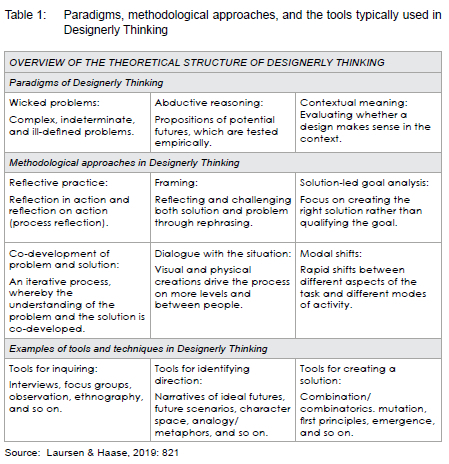
Laursen and Haase (2019: 816) explain that Designerly Thinking stems from design researchers' sustained efforts to understand and legitimise design as an independent academic discipline. They trace the origins of the concept 'Designerly Thinking' to the foundational work of theorists such as Archer, Jones, and Simon, who defined design as "the creation of artefacts" and sought to develop a repeatable design methodology. According to Johansson-Sköldberg et al. (2013: 123), research into this area has been ongoing for over four decades. Building on their own investigations, Laursen and Haase summarise the dominant paradigms, methodological approaches, and tools typically associated with Designerly Thinking (see Table 1).
Dubberly (2004: 5) argues that the processes employed by designers play a critical role in determining the quality of their outputs. In his research, he compiled over 100 models of the design process drawn from a broad spectrum of disciplines, including architecture, industrial design, software development, mechanical engineering, and quality management. Although his review omits several well-established design professions such as interior, graphic, and multimedia design, it nonetheless underlines the diversity of methodologies in use across the design landscape. Shelly (2016: 1) notes that there are numerous valid approaches to conducting the design process, none of which can be universally regarded as standard.
While the pursuit of a scientific method might imply a desire for consensus, the reality is that design thrives on variation. It is a discipline in which practitioners routinely refine and adapt their methods, a defining trait of Designerly Thinking (Shelly, 2016: 2).
In her analysis of three archetypal models, namely the 'Double Diamond', the 'Pinball Machine', and the 'Helix', Shelly identifies several common features. First, all models incorporate both problem-framing and problem-solving, a dynamic she refers to as 'co-evolution', which requires designers to engage with shifting parameters. Secondly, iterative processes are fundamental across all three models, meaning that designers repeatedly cycle through stages of exploration, prototyping, testing, and refinement to improve their solutions. Thirdly, each model displays a tendency toward repetition. Finally, Shelly observes that each model aligns with specific designer profiles. Some are better suited for beginners, others for those comfortable with ambiguity, and still others for more analytically inclined practitioners (Shelly, 2016: 10). She concludes by emphasising that design is ultimately concerned with understanding human needs. Its capacity to navigate complexity renders it particularly well-suited to contemporary preferences for nonlinear narratives, relative truths, pluralistic perspectives, and diversity.
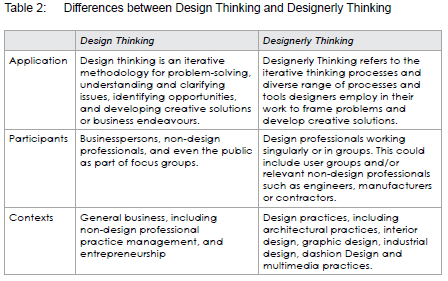
The preceding review suggests that Designerly Thinking encompasses both the cognitive approaches and the diverse processes that designers use in their practice. While these processes vary significantly across disciplines and are continually evolving, they share several core characteristics. Most notably, they involve both problem-framing and problem-solving, and they consistently rely on iteration - the repeated refinement of ideas and solutions. Furthermore, these processes often embrace repetition, and different models tend to resonate with different types of designers, depending on their experience, preferences, and working styles. Table 2 outlines the key distinctions between Design Thinking and Designerly Thinking.
4.3 Architectural Designerly Thinking
As with Designerly Thinking, various architectural theorists have developed and proposed a wide range of design processes. Given the diversity of projects, clients, beneficiaries, and other stakeholders, architects frequently adapt these processes to meet the specific demands of each project context. Schön (as cited in Van Doorn, 2020: 39) identifies two overarching paradigms in architectural design, namely 'technical rationality' and 'reflective practice'. According to Schön, both paradigms are present to varying degrees in any design process, depending on the discipline and context.
Due to space constraints, this article can only offer a brief overview, focusing on a select number of processes particularly relevant to developing contexts and aligned with the article's goal of promoting architectural entrepreneurship. For a more comprehensive discussion, readers are referred to works such as Plowright (2014), Van Doorn (2020), and other key texts in the field.
Spiridonidis and Voyatzaki (2009: 9) provide a particularly insightful description of the architectural design process:
The process of design through which architectural forms are produced is primarily driven by values, principles, ethics and objectives directing the creative manipulation of mass, space, volumes, materials, textures, light and pragmatic elements such as cost, construction techniques and technology, in order to achieve an aesthetic, functional and meaningful end.
Kotze (2017: 2) warns that the profession's value should be measured by its lasting contributions, not by fees or trendy objects. He explains that architects have extensive knowledge, insight, professional traditions, and creative abilities that allow them to make a substantial contribution to humankind's living experience and wealth. In doing so, he highlights the urgent need for architects to think entrepreneurially and offer their services in areas that currently do not benefit from their abilities.
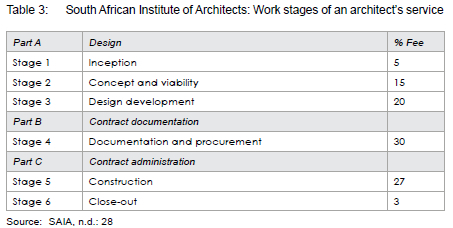
In South Africa, architects and architectural professionals are viewed as statutory professionals and the profession is regulated by the South African Council for the Architectural Professions (SACAP). The South African Institute of Architects (SAIA), a voluntary association, represents and supports architectural professionals. According to SAIA, (n.d.: 28), the architect's service comprises six work stages, as illustrated in Table 3.
This subdivision is similar to that published by the Royal British Institute of Architects (RIBA) (2020: 35-68), which comprises eight stages, namely strategic definition, preparation and briefing, concept design, spatial coordination, technical design, manufacturing and construction, handover, and use. According to the SAIA model, the design process is concentrated in Stages 1-3. Further reading of the SAIA guide reveals that Stage 1 complies to the problem-framing stage identified by Shelly (2016: 2). Therefore, the design process described in this instance is somewhat similar in nature to Designerly Thinking as found by her. In Stages 1-3, many architects use unique or customised processes. Significantly, the RIBA model highlights that design also forms part of Part B, as per the SAIA model. It is important to note that both models represent conventional projects. Some critics of this type of process point out that the process is a linear one which restricts the opportunity for experimentation or participatory design, unlike circular design (Bothma, 2023: 173).
Circular design processes are design processes developed by individual architects because they allow more open interaction and discussions (including feedback) in respect of materials, technologies, and the process of making (Bothma, 2023: 173). It outlines open-ended processes, with integrated components of the design process, in contrast to the segmented nature of the aforementioned linear processes. Such processes can potentially result in the development of innovative production solutions and more expressive building forms because they integrate a range of skill sets resulting in comprehensively synthesised buildings (Bothma, 2023: 183). These processes are frequently regarded as participatory design methodologies. Bothma lists three prominent South African architects who work in this manner, namely Kate Otten, Earthworld Architects, and Peter Rich (Bothma, 2023: 176).
According to Bannon and Ehm (2013: 37), participatory design originated in the Bauhaus. They continue by relaying that early modern design was programmatically collaborative and thus essentially participative. This iteration of circular design "has to do with participation, with how stakeholders - especially users, developers and planners - cooperatively make or adjust systems, technologies, and artefacts in ways which fit more appropriately to the needs of those who are going to use them" (Bannon & Ehm, 2012: 41). It is interdisciplinary by nature and is core to the work of not only Rich, but also Carin Smuts (Smuts, 2024), BasaboseStudio's (Architizer Editors, 2024: online), Kate Otten (Bothma, 2023: 177), and Heinrich Kammeyer (Cooke, 2008: 18), among others. One of the most important advantages of the participatory approach to architectural design is its ability to encourage communities to take ownership of projects in their environment and to create a sense of ownership and pride (Marschall, 1996: 104). From this perspective, it seems that Architectural Designerly Thinking process or processes often are unique in their own ways and are distinctive from broader Designerly Thinking as described earlier. However, they may include aspects of Design Thinking.
5. CASE STUDY: AL STRATFORD'S PRACTICE
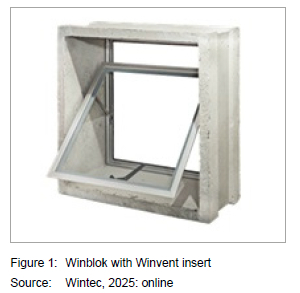
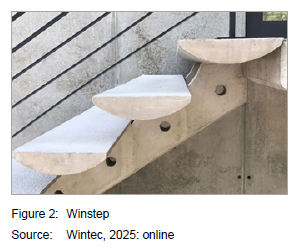
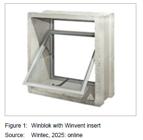
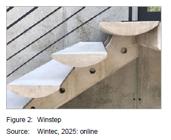
Al Stratford is an architect, designer, and entrepreneur raised in the Fort Jackson area near East London in the Eastern Cape of South Africa (Tshwane University of Technology, n.d.: online), where he attended school, enjoyed art, and excelled in woodwork (Steele, 2016: 22). He studied motor mechanics and learnt technical drawings at the East London Technical College. His first employment was as a structural steel detailer moving onto reinforced concrete structures. During off-duty hours, he visited the East London Library, where he studied architectural books leading to him building Ave houses in Gonubie during 1973 (Stratford, 2016: 8-9). In 1974, he joined the multiprofessional Arm Zakrzewski Associates in Durban. His growing interest in architecture was further developed as he addressed various practical and technical challenges that influence building design (Steele, 2016: 24). Then he moved on to the Urban Foundation, where his focus moved to low-cost housing and realised that "a house is a human thing: it is an expression of who you are" (Steele, 2016: 9). In 1979, he returned to East London and designed a house for his family. This house extensively used block windows leading to the development of the Winblok® in 1982 (see Figure 1). Soon demand for this block grew and production facilities had to be set up. Winvents, aluminium window inserts, and a range of sizes, shapes, and accessories followed. The range was expanded with the Winslot® system. Later came Winstep® (a system of interchangeable precast concrete components that could be used in the construction of stairs or bridges) (see Figure 2). The Winstep® system was expanded with the Winstep Winder, which offered an economical option for the construction of spiral staircases (Wintec, 2025: online).
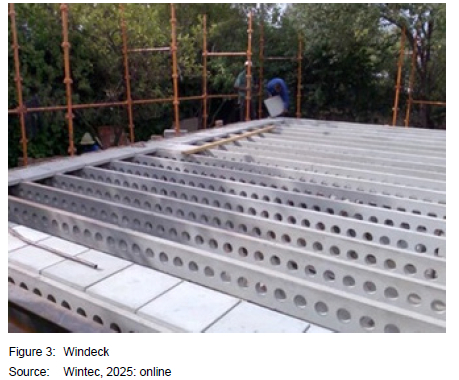
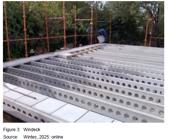
Stratford continues with a suspended flooring system, Windeck, and a precast concrete decking and flooring system followed (Stratford, 2016: 10) (see Figure 3). The Winstep® and Windeck® ranges were awarded the South African Bureau of Standards Industrial Design Award in 1996.
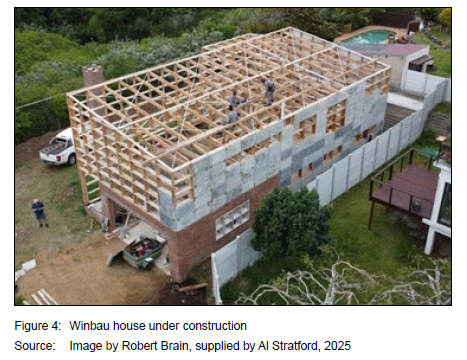
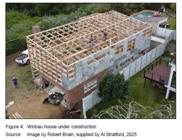
In 1996, Stratford conceptualised the Winkit house, which led to the development of the Winbau® system, a solution that aims to address the challenges associated with building on steep sites, common in large parts of the Eastern Cape. The Winbau system aims to provide a well-designed, efficiently manufactured, environmentally friendly modular building system for on-site assembly of the factory-manufactured, standardised components, in ways that will allow for variation and unique customised buildings. The system comprises a unique timber framing system clad with lightweight precast concrete panels. The walling system is quite different from conventional wooden-framed building methods and comprises interlocking timber (Saligna Grandis) frames. The system also includes floors. Staford describes the system as a "premanufactured modular complete building system which creates walls, floors and roofs. Timber wall frames, interlocked to create the structure are clad in lightweight thermo-concrete panels with a variety of glazing and opening options" (Stratford, 2025). He estimates that this system can save the developer roughly 20 per cent in costs compared to traditional methods. While still under development, this visionary system, which is in line with future architecture development trends, as highlighted by Vosloo, (2023: 235, 248-249), will disrupt not only traditional forms of building, but also traditional forms of practising architecture, as described previously (Stratford, 2025). The prefabricated components are small enough to allow for the construction of unique and personalised buildings, avoiding the standardisation and monotony often found in buildings constructed using prefabricated components. The first houses built with this system have been completed or are under construction (see Figure 4).
Stratford envisages a radically different and disruptive design and construction process. He foresees a central Winbau 'hub' that would be responsible for the marketing, manufacture, and supply of the system (Stratford, 2025). Developers interested in building a building using this system would approach a specially trained Charted Winbau Architect who would use proprietary software to design the house, and the founding structures required to fit the building to the particular site, including Stages Ave and six of the SAIA work stages of an architect's service or plan of work.
The cost of the premanufactured components would include the design fees. The central hub would then pay the Charted Winbau Architect's fees for the main structure (Stratford, 2025).
Producing the range of products listed above meant that Stratford became an industrialist (Stratford, 2016: 10). These highly productive years also included the design of some of his most esteemed architectural projects such as House Dutton, Audio Video Gallery (with Alan Ter Morshuizen), and the very innovative Stratford's Guesthouse which includes a wide range of design and structural inventions (Stratford Guesthouse, n.d: online). The Stratford family built the guesthouse themselves, allowing for ongoing innovation during the project. Up to this point, he was not registered as a professional architect, but he worked with Allan Ter Morshuizen, a professional architect. Together, they were awarded a South African Institute of Architects (SAIA) Award of merit for the project (Stratford, 2016: 10). Soon afterwards, by virtue of his prior learning and experience, he was allowed to sit for the South African Council of Architects (SACAP) Professional Practice Examination and Anally registered as a professional architect in 2002. He practices as Al Stratford Design (Pty) Ltd trading as Stratford Architects (Stratford, 2025).
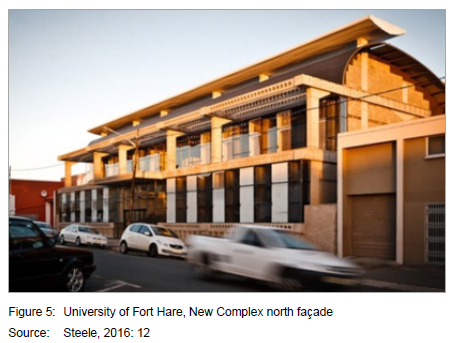
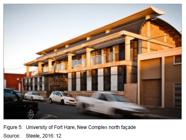
Over the years, a number of successful and recognised architectural projects were completed by the practice: Van Strein Plaza, using cold bent tempered glass (Steele, 2016:31; Stratford, 2016:10); House Kockett, using the Winslot system, which comprises a modular load-bearing fenestration system, and the University of Fort Hare New Complex (with Ter Morshuizen and Sindile Ngonyama), which incorporated an inventive natural ventilation system developed by Stratford (see Figure 5). He resigned his appointment as one of the professional architects for the project to develop the production system for the floor structure and Trombe wall systems for the building (Stratford, 2016: 13).
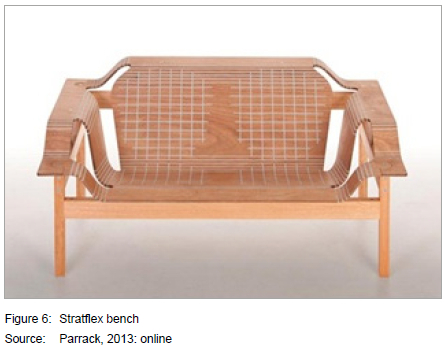
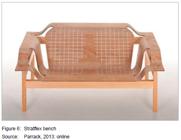
During this period, he served as President of the Border-Kei Regional Institute of Architects and later as President of SAIA (Stratford, 2016: 13). His efforts led to a wholesale reorganisation. Furthermore, the University of the Free State invited him to present the prestigious 2016 Sophia Gray lecture with concomitant exhibition. During his career and despite his architectural focus, he remained an industrial designer at heart and continued designing furniture, particularly chairs. He developed Stratflex, a plywood-based system for the manufacture of a range of furniture (see Figure 6). His furniture, designed using this system, won the Innovation Award at the 2013 Design Indaba.
However, he also faced business challenges along the way. As an example, following the COVID-19 lockdown, Stratford filed for voluntary liquidation of Wintec (Pty) Ltd in 2023 (Stratford, 2025). Fortunately, the trademark WINTEC® was excluded from the liquidation process, as it is registered as an asset of the Al Stratford Family Trust. So, he continues to trade with the Wintec trademark under the auspices of Al Stratford Design (Pty) Ltd (Stratford, 2025). A licencing agreement for the manufacture of Winblok in Israel ended with the licensee suing him in an attempt to bypass his intellectual property rights. These setbacks highlight that architectural entrepreneurs should acquire business acumen (commercial law included) and innovation, in order to successfully set-up and manage their practices.
6. DISCUSSION
6.1 Design approach
Stratford's design approach is deeply rooted in innovation, contextual awareness, and the resolution of challenges within the built environment. Ultimately, he is striving to solve human-centred needs and challenges, by responding to needs identified in the built environment. His process is inherently lateral and non-linear, initiated when he identifies a design brief, a recurring problem, or an industry challenge. The subsequent steps consistently follow a pattern where ideas percolate simultaneously, interweaving in a dynamic flow until he experiences what he describes as an 'epiphany moment'. This moment marks the crystallisation of creative insight, propelling his thinking toward viable solutions. In this instance, ideas emerge, evolve, and are refined before transitioning into structured phases of implementation, including manufacturing, marketing, and distribution, where relevant. This process is adhered to regardless of whether Stratford is engaged in architectural design, product innovation, or entrepreneurial ventures.
While his methodology comprises a unique hybridisation of theoretical Designerly Thinking processes, Stratford's design methodology aligns with the 'technical rationality' paradigm, often used by designers, as described by Schön (cited by Van Doorn, 2020: 39). He characterises this process as one of "innovative reduction", where design is the expression of necessity following an initial lateral idea or invention (Stratford, 2016: 10). This approach is particularly evident in his preference for economic use of materials and his commitment to practical, replicable construction systems suited for industry application. His architectural philosophy stems from a deep understanding of the built environment, identifying inefficiencies in conventional architectural and construction practices, which he seeks to address through his innovative interventions (Stratford, 2025). The result has been the introduction of disruptive construction methods that challenge previously accepted industry norms, while simultaneously offering financial savings and environmental benefits (Steele, 2016: 35).
During architectural design, Stratford mentally navigates through the three-dimensional space as it takes shape, allowing for an immersive conceptualisation process (Steele, 2016: 28). His design thinking involves collaboration with engineers, consultants, and utimately clients, ensuring that the initial design intent is preserved, while remaining open to necessary refinements. His process exhibits two key characteristics, namely the importance of the initial concept and a collaborative openness to ensure the realisation of that concept. It is interesting to note that, despite his construction experience, contractors are rarely involved in the design process, which shows his confidence in his design-to-construction approach (Stratford, 2025).
Stratford's iterative thinking process mirrors Le Corbusier's model of converging vectors connected by a zig-zag line, symbolising the progressive refinement of both general and specific aspects of a design (Cooke, 2012: 40). He emphasises that technical and contextual constraints are integral to effective design. When these constraints are not well defined or understood, inherent flaws may arise, emphasing the necessity of a comprehensive research-driven approach to design (Cooke, 2012: 41). His ability to view problems holistically allows him to integrate human-centred and technical considerations into his solutions. Furthermore, his description of himself as a 'meerkat' shows his constant environmental awareness and drive to And better ways to design and build (Stratford, 2025).
Stratford applies a consistent design process, regardless of the discipline, be it architectural design, furniture production, building components, or manufacturing enterprises. To him, design is inseparable from business considerations, as he continuously seeks to develop products that are both functional and economically viable. The ultimate aim remains the resolution of human-centred needs and challenges. He meticulously prepares business models and structures when establishing new ventures, reflecting a strong entrepreneurial mindset (Stratford, 2025). Inspired by his parents' resilience, he approaches engineering and structural challenges with a reductionist philosophy, often engaging in controlled physical testing in the absence of established engineering codes (Cooke, 2012: 41). His resulting architectural outcomes frequently exhibit brutalist characteristics, reflecting both the efficiency of his approach and his material-conscious design philosophy.
6.2 Implications for practice
Stratford's approach highlights a significant intersection between design and entrepreneurship. While his methodology aligns with technical rationality, his iterative, solution-driven approach blurs distinctions between Design Thinking, Designerly Thinking, and architectural Designerly Thinking. This suggests that, within an entrepreneurial framework, Design Thinking evolves into Designerly Thinking when a designer is actively engaged in problem-solving. This highlights the fact that it is fundamentally impossible for designers to practise Design Thinking. Furthermore, Stratford's ability to integrate entrepreneurial strategy into a design-oriented approach suggests a model that architects and designers could adopt to enhance their ability to recognise and act on opportunities for innovation.
7. CONCLUSIONS AND RECOMMENDATIONS
This article set out to consider the thinking and design processes applied by Stratford in architectural design, product design, and business design, how they differ, how they differ from the theoretical standard, and what the causes for any differences might be. The review confirms the necessity for architects to develop an entrepreneurial mindset, enabling them to identify opportunities for both design innovation and business ventures. However, this path is not without its challenges, reinforcing the importance of entrepreneurial and business management training in architectural education. Stratford's numerous design awards validate the potential synergy between strong entrepreneurial action and high-quality design, proving that business acumen and creative excellence can coexist and complement each other effectively.
The above leads to the following recommendations to the architectural and design professions:
• For designers, the entrepreneurial process could be like the designerly process, and Designerly Thinking should be applied rather than Design Thinking.
• Architects and designers should seek entrepreneurial opportunities that could exist inside their design proposal.
• When seeking entrepreneurial opportunity, architects and designers should consider Stratford's drive to provide appropriate solutions to real and identified needs that exist in their environment or elsewhere.
• Innovation while designing and realising solutions to common problems could provide them with the opportunity they seek.
• Applying Designerly Thinking, something they practise every day, can be particularly useful in this regard.
• Architects and designers would do well to acquire entrepreneurship and business management training before the time. These are aspects with which they are not in contact in their everyday practices.
• The foregoing highlights the need for architectural and design education programmes to include entrepreneurial sensitivity enhancement into their offerings. Presently, these aspects, at best, receive scant education (Vosloo, 2023: 193).
• In addition, entrepreneurship and business management training should be offered as part of the life-long learning requirements.
• Architects should be on the lookout for opportunities brought about by changes in our socio-economic environment and the so-called Fourth Industrial Revolution.
Finaly, the article made the somewhat apparent point that designers cannot apply Design Thinking because that process specifically excludes professional designers. This in response to statements by some authors on entrepreneurship. Further research could investigate the reasons why other entrepreneurial architects have adopted this stance.
REFERENCES
2. LITERATURE REVIEW
-
Architizer Editors. 2024. 25 Best architecture firms in South Africa. [Online]. Available at: https://architizer.com/blog/inspiration/collections/best-architecture-firms-in-south-africa/ [Accessed: 5 November 2024].
» https://architizer.com/blog/inspiration/collections/best-architecture-firms-in-south-africa/ - Bannon, I.J. & Ehn, P. 2013. Design; Design matters in participatory design. In: Simonsen, J. & Robertson, T. (Eds). Routledge international handbook of participatory design. New York: Routledge.
- Bothma, C. 2023. Design and construction: Intersections of linear and circular design. Paper presented at the 17th DEFSA conference, Centurion, 21-22 September 2023.
-
Braun, V. & Clarke, V. 2021. One size fits all? What counts as quality practice in (reflexive) thematic analysis? Qualitative Research in Psychology, 18(3), pp. 328-352. https://doi.org/10.1080/14780887.2020.1769238
» https://doi.org/10.1080/14780887.2020.1769238 -
Carella, G., Cautela, C., Melazzini, M., Pei, X. & Schmittinger, F. 2023. Design Thinking for entrepreneurship: An explorative inquiry into its practical contributions. The Design Journal, 26(1), pp. 7-31. https://doi.org/10.1080/14606925.2022.2144565
» https://doi.org/10.1080/14606925.2022.2144565 - Cooke, J. 2008. Highveld places: Two buildings by Heinrich Kammeyer. Architecture SA, no. 23, March/April, pp. 16-19.
- Cooke, J. 2012. Al Stratford - inventor in concrete. Architecture SA, no. 55, July/ August, pp. 40-43.
- Creswell, J.W. 2009. Research design: Qualitative, quantitative, and mixed method approaches. New York: Sage Publishing.
-
Dragičević,, N., Vladova, G, & A. Ullrich. 2023. Design thinking capabilities in the digital world: A bibliometric analysis of emerging trends. Frontiers in Education, 7. [Online]. https://doi.org/10.3389/feduc.2022.1012478
» https://doi.org/10.3389/feduc.2022.1012478 -
Dubberly, H. 2004. How do you design? [Online]. Available at: https://www.dubberly.com/wp-content/uploads/2008/06/ddo_designprocess.pdf [Accessed: 22 October 2024].
» https://www.dubberly.com/wp-content/uploads/2008/06/ddo_designprocess.pdf - Gutman, R. 2010. Architecture, the entrepreneurial profession. In: Cuff, D. & Wriedt, J. (Eds). Architecture from the outside. New York: Princeton Architectural Press, pp. 32-42.
-
Han, E. 2022. What is Design Thinking and why is it important? Harvard Business School Online Business Insights Blog. [Online]. Available at: https://online.hbs.edu/blog/post/what-is-design-thinking [Accessed: 16 October 2024].
» https://online.hbs.edu/blog/post/what-is-design-thinking -
ICoD (International Council of Design). 2025. What is design? [Online]. Available at: https://www.theicod.org/en [Accessed: 25 March 2024].
» https://www.theicod.org/en -
IDEOU. 2024. What is Design Thinking and why is it beneficial? [Online]. Available at: https://www.ideou.com/blogs/inspiration/what-is-design-thinking [Accessed: 17 October 2024].
» https://www.ideou.com/blogs/inspiration/what-is-design-thinking -
Infoscepedia. 2024. 'Designerly Thinking'. [Online]. Available at: https://www.igi-global.com/dictionary/smash-up/74942 [Accessed: 22 October 2024].
» https://www.igi-global.com/dictionary/smash-up/74942 -
Johansson-Sköldberg, U., Woodilla, J. & Çetinkaya, M. 2013. Design Thinking: Past, present and possible futures. Creativity and Innovation Management, 22(2), pp. 121-146. https://doi.org/10.1111/caim.12023
» https://doi.org/10.1111/caim.12023 - Kotze, P. 2017. Finding the right architect. Architecture SA, no. 88, November/ December, p. 2.
-
Laursen, L.N. & Haase, L.M. 2019. The shortcomings of Design Thinking when compared to Designerly Thinking. The Design Journal, 22(6), pp. 813-832. https://doi.org/10.1080/14606925.2019.1652531
» https://doi.org/10.1080/14606925.2019.1652531 - Lesieutre, A. 1974. The spirit and splendour of Art Deco. London: Paddington Press.
- Maasdorp, E.F. & Van Vuuren, J.J. 1998. Entrepreneurship. In: Marx, S., Van Rooyen, D.C., Bosch, J.K. & Reynders, H.J.J. (Eds). Business management. 2nd edition. Pretoria: Van Schaik, pp. 727-728.
-
Marschall, S. 1996. Architecture as empowerment: The participatory approach in contemporary architecture in South Africa in Transformation 35 published by the Michigan State University. [Online]. Available at: file:///C:/Users/chris/Downloads/tran035005.pdf [Accessed: 5 November 2024].
» file:///C:/Users/chris/Downloads/tran035005.pdf - Moreno, E.M. 2008. Starting an architecture firm. In: Demkin, J.A. (Ed.). The architect's handbook of professional practice. 14th edition. Hoboken, NJ: John Wiley & Sons, pp. 82-92.
-
Neck, H.M. & Greene, P.G. 2011. Entrepreneurship education: Known worlds and new frontiers. Journal of Small Business Management, 49(1), pp. 55-70. https://doi.org/10.1111/j.1540-627X.2010.00314.x
» https://doi.org/10.1111/j.1540-627X.2010.00314.x - Nieuwenhuizen, C. 2014. The nature and development of entrepreneurship. In: Nieman, G. & Nieuwenhuizen, C. (Eds). Entrepreneurship: A South African perspective. 3rd edition. Pretoria: Van Schaik, pp. 3-23.
-
Parrack, D. 2013. Stratflex collection adds curves to flat pack furniture. [Online]. Available at: https://newatlas.com/stratflex-flat-pack-furniture/26636/ [Accessed: 24 March 204].
» https://newatlas.com/stratflex-flat-pack-furniture/26636/ -
Plowright, P.D. 2014. Revealing architectural design: Methods, frameworks and tools. London, UK: Routledge. https://doi.org/10.4324/9781315852454
» https://doi.org/10.4324/9781315852454 - RIBA (Royal British Institute of Architects). 2020. RIBA Plan of Work 2020 overview. London: RIBA.
- Richardson, N. 2011. Architecture is entrepreneurship and (why) it matters. Paper presented at The Association of Collegiate Schools of Architecture, Local Identities, Global Challenges Conference, 6-8 October, Texas, USA, paper 309.
- Richardson, N. 2014. On enterprising architecture. In: Flowers, B. (Ed.). Architecture in an age of uncertainty. Farnham: Ashgate Publishing, pp. 68-79.
-
SAIA (South African Institute of Architects). [n.d.]. A client's guide to working with a SAIA architect. [Online]. Available at: https://saia.org.za/assets/docs/A-client-guide-to-working-with-a-SAIA-architect.pdf [Accessed: 31 October 2024].
» https://saia.org.za/assets/docs/A-client-guide-to-working-with-a-SAIA-architect.pdf -
Shelly, K. 2016. Designing design methods: Understanding the field by comparing three distinct approaches to process. Medium. [Online]. Available at: https://medium.com/@interkatie/designing-design-methods-c3a1a9e188d3 [Accessed: 25 October 2024].
» https://medium.com/@interkatie/designing-design-methods-c3a1a9e188d3 -
Smuts, C. 2024. Participatory design produces a vibrant dynamic urban environment. Canopy Forum, 20 March. [Online]. Available at: https://canopyforum.org/2024/03/20/participatory-design-produces-a-vibrant-dynamic-urban-environment/ [Accessed: 5 November 2024].
» https://canopyforum.org/2024/03/20/participatory-design-produces-a-vibrant-dynamic-urban-environment/ -
Snyder, H. 2019. Literature review as a research methodology: An overview and guidelines. Journal of Business Research, 104, pp. 333-339. https://doi.org/10.1016/j.jbusres.2019.07.039
» https://doi.org/10.1016/j.jbusres.2019.07.039 -
Spiridonidis, C. & Voyatzaki, M. 2009. Architectural design and construction education. Paper delivered at the ENHSA-EAAE Architectural Design Teachers and Construction Teachers' Networks: Transactions on Architectural Education No. 45 workshop: Experimentation towards integration workshop. [Online]. Available at: https://www.eaae.be/wp-content/uploads/2017/04/45_architectural-design-and-construction-education.pdf [Accessed: 6 November 2024].
» https://www.eaae.be/wp-content/uploads/2017/04/45_architectural-design-and-construction-education.pdf - Steele, J. 2016. Inventive owner-builder, architect and disruptive innovator: Al Stratford of East London, South Africa. South African Journal of Art History, 31(1), pp. 20-37.
- Stratford, A. 2016. Reductive innovation in architecture. Architecture SA, no. 82, November/December, pp. 8-13.
- Stratford, A. 2025. Professional architect, designer, inventor, industrialist. Online interview regarding his practice and entrepreneurial process followed. [Recorded]. 4 February.
-
Stratford Guesthouse. n.d. Welcome to Stratford's Guesthouse. [Online]. Available at: https://stratfords.co.za/ [Accessed: 25 March 2025].
» https://stratfords.co.za/ -
Timespro. 2025. What is Design Thinking? [Online]. Available at: https://timespro.com/blog/what-is-design-thinking#applying-design-thinking-in-various-fields [Accessed: 22 May 2025].
» https://timespro.com/blog/what-is-design-thinking#applying-design-thinking-in-various-fields - Timmons, J.A. & Spinelli, S. 2007. New venture creation: Entrepreneurship for the 21st century. 7th edition. London: McGraw-Hill.
-
Tselepis, T.J. & Lavelle, C.A. 2020. Design Thinking in entrepreneurship education: Understanding framing and placements of problems. Acta Commercii, 20(1), pp 1-8. https://doi.org/10.4102/ac.v20i1.872
» https://doi.org/10.4102/ac.v20i1.872 -
Tshwane University of Technology, Architecture and Industrial Design. S.A. Al Stratford biography. [Online]. Available at: https://tutarchitecture.co.za/wp-content/uploads/2023/02/Al-Stadford-Bio-Part-01.pdf [Accessed: 11 November 2024].
» https://tutarchitecture.co.za/wp-content/uploads/2023/02/Al-Stadford-Bio-Part-01.pdf - Van Doorn, E. 2020. Anchoring the design process: A framework to make the designerly way of thinking explicit in architectural design education. Unpublished PhD dissertation, Delft University of Technology, The Hague, The Netherlands.
-
Vosloo, C. 2022. Entrepreneurship for unsettled times in the architectural profession - A review. Acta Structilia, 29(2), pp. 190-225. https://doi.org/10.18820/24150487/as29i2.7
» https://doi.org/10.18820/24150487/as29i2.7 -
Vosloo, C. 2023. Future directions in architectural practice. Athens Journal of Architecture, 9(2) pp. 227-256. https://doi.org/10.30958/aja.9-2-5
» https://doi.org/10.30958/aja.9-2-5 -
Wikipedia.2024. Ideo. [Online]. Available at: https://en.wikipedia.org/wiki/IDEO [Accessed: 17 October 2024].
» https://en.wikipedia.org/wiki/IDEO -
Wintec. 2025. Wintec Architectural Systems. [Online]. Available at: https://wintec.co.za/index.html [Accessed: 3 March 2025].
» https://wintec.co.za/index.html - Yin, R.K. 2009. Case study research: Design and methods. 4th edition. New York: Sage Publishing.
Peer reviewed and revised: May 2025
Published: June 2025
2 Timmons & Spinelli (2007: 79) describe entrepreneurship as a way of thinking, arguing, and acting, and is related to new endeavours.
3 The International Council of Design is a multidisciplinary council of 114 independent member organisations from 58 countries. Its aim is to create a unified voice for the global design community.