Alcohol and tobacco use by construction workers: a systematic literature review
Abstract
Achieving Sustainable Development Goal 3 (SDG 3), which aims to ensure healthy lifestyles and promote well-being for all, is a critical focus within the context of construction health and safety, particularly for construction workers. A significant factor influencing the health and safety of construction workers is their consumption of alcohol and tobacco (A). This article presents a systematic review of the research on A use among construction workers, an analysis of key findings, research methodologies, and recommendations. A knowledge-mapping approach is applied to 108 articles sourced from the Web of Science (WOS), generating clusters of relevant keywords to illustrate the interrelationships between A usage and construction workers. The knowledge map reveals 40 distinct keyword distributions, organised into five clusters, highlighting the key connections between alcohol, tobacco, and construction workers. From an initial pool of 336 articles from WOS and Scopus, 26 were selected based on the PRISMA protocol for further analysis. A review of these 26 studies demonstrates a predominant use of mixed-methods and quantitative research approaches. The findings show the heightened vulnerability of construction workers to hazardous A consumption, its adverse health effects, and the urgent need for comprehensive interventions aimed at reducing or eliminating this risk.
alcohol; tobacco; construction workers; PRISMA; knowledge mapping; construction health and safety
1. INTRODUCTION
To lead happy and fulfilled lives, individuals must maintain good health and well-being, which are essential indicators and prerequisites for sustainable development and population well-being. By contrast, the burden of illness has profound personal, societal, and financial consequences, leading to a universal interest in achieving optimal health. However, the COVID-19 pandemic and ongoing global crises have hindered progress toward Sustainable Development Goal 3 (SDG 3), which aims to "ensure healthy lives and promote well-being for all at all ages". Consequently, many SDG 3 targets may not be met by the 2030 deadline, with significant regional disparities in progress (Mikula, Raczkowska & Utzig, 2024: 1). The European Union (EU) prioritises the implementation of the SDGs, particularly SDG 3, both domestically and internationally. Key objectives of SDG 3 initiatives within the EU include developing more resilient, accessible, and inclusive health systems; improving maternal, child, and reproductive health; eradicating major infectious disease outbreaks, and reducing the prevalence of non-communicable and mental illnesses. In addition, these initiatives focus on mitigating environmental and behavioural health risk factors (Gabija, 2024: 1). A critical aspect of construction health and safety is the reduction of such behavioural and environmental health risks. Specifically, alcohol and tobacco (A&T) consumption is identified as a significant health risk behaviour (Boal et al., 2020: 493).
Concerns regarding employees' A&T use and its impact on health, well-being, and workplace safety are escalating globally. Due to its depressant effects, alcohol impairs motor skills and sensory perception, leading to difficulties in coordination, balance, and decision-making. Such impairments can significantly reduce human performance, posing serious risks to workplace safety. Tobacco use is identified as a major risk factor for both lung and oral cancers (Tirukkovalluri, Arumugam et al., 2020: 1991). Furthermore, employees who engage in A&T consumption tend to experience decreased productivity (Kirkham et al., 2015: 30), increased absenteeism, and associated penalties (Sullivan, Fiona & Ian, 2019: 543). Industries such as construction, characterised by a predominantly male workforce, are particularly susceptible to the hazards associated with unsafe A&T consumption.
The prevalence of A&T use among construction workers is particularly concerning, as this worker group exhibits higher consumption rates compared to workers in other industries. For example, apprentices in the building and construction trades have reported engaging in risky drinking behaviours, with approximately half admitting to consuming alcohol while on the job (Roche et al., 2020: 945). In the United States, construction workers have the highest percentage (48%) of individuals who have ever smoked, compared to an overall occupational average of 39% (Ham et al., 2011: 4). Similarly, in Nigeria, the smoking rate among construction craftsmen is 9.6%, significantly exceeding the national average of 3.9% (Olomofe et al., 2021: 3). Australian data further reveal that reckless drinking rates are high among younger workers (under the age of 25years ) and those in mid-age (aged between 45 to 54 years) compared to the national average (Roche et al., 2020: 941). Given these alarming statistics, it is essential to extract and evaluate relevant data on A&T usage among construction workers from existing literature. A systematic review could provide a comprehensive overview, serving as a catalyst for developing targeted strategies aimed at addressing A&T use and enhancing the health and safety of workers in the construction sector. This study is significant as, to the authors' knowledge, no prior systematic review has been conducted on this topic.
The literature on the use of A&T among construction workers has expanded significantly over time. This study aims to review relevant works to trace these developments. Recent research indicates that bibliometric analysis, which integrates knowledge mapping through keywords, is an effective method for identifying significant issues in this field (Farooq, 2024: 339). Knowledge mapping elucidates the fundamental cognitive structure of a subject, serving as a foundation for further investigation. Both knowledge mapping and the preferred reporting items for systematic reviews and meta-analyses (PRISMA) framework are instrumental in organising and synthesising domain-specific information (Wang & Cheung, 2024: 2194).
By employing the PRISMA technique, this study seeks to reveal research trajectories and historical trends, thereby identifying potential areas for future advancements (Chen et al., 2022). Ultimately, this study intends to generate keyword clusters from the knowledge-mapped articles and illustrate the interrelations among these clusters concerning A&T utilisation in the construction industry. In addition, the PRISMA framework is used to analyse the research methodologies, findings, and recommendations of studies focusing on A&T consumption by construction workers.
2.1 Construction injury, fatalities, health and safety behaviour
The construction industry (CI) presents significant hazards compared to other manufacturing sectors, as evidenced by its higher frequency of fatalities and injuries. Data from advanced nations such as the United States, the United Kingdom, Australia, China, and Australia show that the CI has a higher accident rate than any other industry. For example, in 2015, Australia recorded 37 fatalities in the construction sector, whereas the UK reported 35 fatalities in the same year (Loosemore & Malouf, 2019: 223). The situation in China's construction sector is equally alarming, with an average of 1.99 worker deaths per day reported between 2010 and 2019, culminating in over 7,275 fatalities during this period (Xu & Xu, 2021: 1). Furthermore, since 2015, there has been a notable increase in the incidence of preventable accidents and fatalities associated with housing and municipal developments (Zhang et al., 2020: 1).
In developing nations, the prevalence of construction injuries and fatalities is expected to be even higher, exacerbated by inadequate reporting of health and safety incidents, limited policy adoption, and weak enforcement. Recent data from Nigeria indicate that, between 2014 and 2016, there were 3,461 reported accidents and 238 fatalities across various industries, with the construction sector accounting for nearly 39% of these incidents (Boadu, Wang & Sunindijo, 2020: 2). South Africa similarly reflects a troubling health and safety record in the construction industry (Geminiani, Smallwood & Wyk, 2008: 1121). Data from the Ghana Statistical Service indicate that, in 2015, Ghana experienced 43 occupational injuries for every million hours worked, translating to an incidence rate of 63 injuries per 1,000 workers and a severity rate of 418 days lost per million hours worked (Boadu et al., 2020: 2). Collectively, these statistics show the critical need for enhanced safety management practices within the construction industry, highlighting that the operational safety environment remains complex and demands substantial improvements.
Research indicates that unsafe behaviour accounts for nearly 80% to 90% of all incidents at construction sites, serving as a primary factor contributing to injuries and fatalities (Han & Lee, 2013: 131). The attitudes of construction workers at job sites are critical for enhancing behavioural safety, as these individuals are directly engaged in physical construction activities and are consequently exposed to potential hazards (Liu et al., 2020). Scholars in both general occupational safety and construction safety have identified safety-related behaviours as key predictors of workplace safety, highlighting the significant role of health-risk behaviours (Hon, Chan & Yam, 2014; Beus, McCord, & Zohar, 2016; Guo, Yiu, & González, 2016; Boal et al., 2020). The consumption of both smokeless and smoked tobacco, along with binge drinking, has been recognised as particularly concerning health-risk behaviours (Boal et al., 2020: 493). According to the Behavioral Risk Factor Surveillance System, 'current smokers' are defined as individuals who have smoked at least 100 cigarettes in their lifetime and currently smoke on some days or every day, whereas those who use smokeless tobacco are classified as "currently using chewing tobacco or snuff (including snus) on some days or every day" (Boal et al., 2020: 498). Binge drinking is characterised as consuming five or more drinks for men or four or more drinks for women on at least one occasion over the past 30 days. While much of the existing literature has focused on A&T use in isolation, fewer studies have investigated their co-occurrence; however, research has demonstrated a robust correlation between frequent alcohol consumption and tobacco use (Boal et al., 2020: 500; Brenner et al., 1997: 89). This study aims to provide a more integrated understanding of these health-risk behaviours. For example, a survey, conducted over 25 years ago and involving 8,043 construction workers in Germany, revealed a strong association between A&T use, with over 65% of individuals who abused alcohol also reporting cigarette use (Brenner et al., 1997: 87-90).
2.2 Alcohol use in the construction industry
Excessive alcohol consumption is recognised as one of the most significant health risks in contemporary society (Sawicki & Szóstak, 2020: 2). For example, data from the EU Statistical Office indicates that, in 2014, only 16.4% of men across 27 EU member states reported having "never or not in the last 12 months" consumed alcohol. Among these men, 14.7% reported drinking alcohol 'every day', whereas 35.5% indicated 'every week'. Portugal recorded the highest daily alcohol consumption rate at 38.6%, whereas the UK had the highest weekly rate at 51.6% (Sawicki & Szóstak, 2020: 2). Furthermore, alcohol misuse is disproportionately prevalent among construction workers compared to other industries. A study involving 386,620 workers revealed that 25,842 construction workers exhibited a statistically significant higher prevalence of alcohol abuse (p<0.001) relative to workers in other sectors (Boal et al., 2020: 493).
Surveys conducted in California in 2005 indicate that the likelihood of binge drinking among construction workers is 14.8% higher than that of professional workers (Barnes & Brown, 2013: 108). In addition, data from the 2006 wave of the National Longitudinal Survey of Youth, which included individuals born between 1957 and 1965, reveal that males who engage in physically demanding occupations not only drank more frequently, but also consumed larger quantities on typical drinking days, often exceeding six drinks (Barnes & Zimmerman, 2013: 40). Furthermore, a U.S. household survey from the early 1980s highlights a persistent issue of alcohol misuse among construction workers. While 6.5% of the general population reported having an alcohol use disorder, the prevalence among construction workers was notably higher at 28%, with specific construction occupations (construction labourers, equipment drivers, and carpenters) exhibiting rates exceeding 9.8% (Boal et al., 2020: 493; Mandell et al., 1992: 738).
Alcohol-related health risks are common, and this has led to both human and financial losses in the form of accidents, deaths, absences from work, rework due to poor execution, and incorrect delivery of work tasks (Brenner et al., 1997: 85; Sawicki & Szóstak, 2020). A comparative analysis of mortality rates indicates that individuals who consume alcohol exhibit a mortality rate 2.8 times higher than non-consumers (Brenner et al., 1997: 85). Furthermore, Hola and Mariusz (2019: 1879) suggest that alcohol consumption impairs the concentration of workers on scaffolding, thereby increasing the risk of falls from heights. Alcohol use is one of the most common, yet comparatively understudied individual risk factors associated with construction work-related injuries (Ramirez et al., 2013: 6155).
In addition to jeopardising their own health, workers who abuse alcohol can adversely affect the physical and mental well-being of their colleagues. This concern is supported by a study indicating that 58% of construction workers reported consuming alcohol daily, thereby normalising the behaviour both during leisure and in the workplace (Biggs & Williamson, 2012: 445). The repercussions extend to verbal abuse, racial harassment, threats, and acts of aggression, creating a climate of violence that impacts on both drinkers and non-drinkers alike. Such behaviours can significantly undermine interpersonal relationships among colleagues (Du Plessis, et al., 2013: 423).
In the context of construction, where adherence to precise specifications is essential, maintaining a sound state of mind is crucial. Alcohol dependency can severely impair an individual's ability to coordinate effectively. Research by Martin et al. (2017) and Huang et al. (2015) demonstrates that alcohol consumption negatively affects attention, clarity of thought, concentration, decision-making, and proactive measures that could prevent accidents. Alcohol abuse is also associated with psychomotor dysfunction, including impairments in balance, communication, cognition, and threat perception, as well as increased anxiety and depression (Du Plessis et al., 2013; Martin et al., 2017; Huang et al., 2015).
2.3 Tobacco use in the construction industry
It is projected that the total number of deaths attributable to tobacco use - encompassing conditions such as anaemia, cardiovascular diseases, cancer, and other illnesses - will rise from 5.4 million cases in 2004 to an alarming 8.3 million by 2030 (Sushanthi, Doraikannan & Indiran, 2022: 263). All forms of tobacco, including cigarettes, cigars, pipe tobacco, snuff, and chewing tobacco contain over 4,000 compounds, including nicotine, which is highly addictive and rapidly absorbed into the bloodstream (Davis, 2008: 75). Particularly concerning is the data from the National Health Interview Survey conducted between 2014 and 2016, which indicates that tobacco use is significantly more prevalent among construction workers compared to other occupational groups. Specifically, 25.8% of workers in construction and extraction occupations reported smoking cigarettes, in contrast to 15.4% of the overall workforce. In addition, 9.0% of these workers used smokeless tobacco, compared to only 3.0% of all workers (Boal et al., 2020: 493).
Tobacco use is identified as one of the six significant health-risk behaviours among construction workers (Boal et al., 2020: 493). Nicotine, a highly addictive psychotropic substance, significantly reinforces the act of smoking. Nicotine dependence is notably persistent, as evidenced by the high rates of cessation failure among construction workers (Davis, 2008). Tobacco and alcohol are often grouped under the broader category of 'substance use', due to their shared addictive properties. Consequently, many of the adverse health and productivity effects associated with alcohol consumption in the construction industry, as discussed in the previous section, also apply to tobacco use (Laraqui et al., 2021; Flannery, Saheed & Adekunle, 2021: 477-479).
2.4 Construction workers' alcohol and tobacco use
Negative lifestyle choices such as alcohol consumption and the use of tobacco (both smoked and smokeless) among construction workers are often overlooked. However, these behaviours have significant direct and indirect consequences, resulting in financial losses, time inefficiencies, and even fatalities within the construction sector (Brenner et al., 1997; Sawicki & Szóstak, 2020). If proactive measures are not implemented to eliminate or substantially reduce these practices, the industry may face a critical labour shortage, particularly in countries experiencing high rates of population ageing. It is essential to safeguard the health of the existing workforce, postpone early retirements due to health issues, and improve the overall quality of life for construction workers (De Wind et al., 2013).
The harmful use of alcohol is one of the foremost risk factors for population health and a leading cause of mortality worldwide. According to research by the World Health Organization (WHO), alcohol is associated with approximately 60 different diseases and injuries, ranking as the third most significant risk factor for human health (WHO, 2018; Anderson & Baumberg, 2006). Alcohol use disorder, a severe condition, has profound implications for individuals' health and well-being (Brooks et al., 2020). The construction industry is particularly characterised by a culture that promotes alcohol consumption, as noted by the Australian Institute for Suicide Research and Prevention (Flannery et al., 2021). In addition, the prevalence of tobacco use is highest among construction workers, with rates reaching 34.3% (Syamlal, 2018). Construction workers are also exposed to numerous occupational hazards, including chemicals, dust, and fumes from welding and asphalt, which exacerbate the health risks associated with smoking (Markowitz et al., 2013; Blanc et al., 2009). For instance, smokers face a higher risk of lung cancer, with those who also inhale asbestos having a 28.4 times greater likelihood of developing this disease (Markowitz et al., 2013). These issues highlight the urgent need for comprehensive surveys and systematic analyses of existing literature to derive findings and recommendations regarding A&T use among construction workers, emphasising the critical importance of occupational health and safety within the industry.
3. RESEARCH METHODOLOGY
A systematic literature review is a comprehensive method for identifying, evaluating, and synthesising research on a specific topic (Boell & Cecez-Kecmanovic, 2015). This approach is effective for studying complex issues such as A&T use among construction workers, because it follows established protocols such as PRISMA to ensure rigour and reproducibility (Chen et al., 2022). A systematic literature review also allows for the use of bibliometric analysis (Farooq, 2024: 339) including knowledge mapping (Farooq, 2024: 339), which involves clustering keywords and identifying connections between them (Xiao & Watson, 2019). In this study, the knowledge mapping process and the systematic review process are different but complementary, because both used the same literature from the initial Web of Science (WOS) search. For the PRISMA process, additional studies were sourced from the Scopus database. First, bibliographic results limited to the titles and abstracts from literature sourced from the WOS database were mapped. Using mapping keywords "construction workers", "alcohol", and "tobacco" of multidisciplinary articles showed 40 theme items and, after mapping, five theme clusters showed how these items interact and highlight gaps in the literature on construction workers' A&T use. After completing the knowledge-mapping process, a systematic review using the PRISMA protocol was conducted. Using articles initially collected from the WOS database and then the additional studies sourced from the Scopus database together, full text access to this literature was obtained and validated through Google Scholar and ResearchGate databases. Only full-text, peer-reviewed, English-language research articles were analysed for specific research approaches used to investigate construction workers' A&T use, specific findings, and recommendations from studies focusing on A&T consumption by construction workers.
3.1 Search strategy
In the first search on 21 June 2024, the literature on construction workers' A&T use was retrieved from the WOS, a reliable bibliographic database that gives users access to over 12,000 research publications and citation data from academic journals, conference proceedings, and other documents in various academic disciplines. The WOS is a reliable source of data for bibliometric research and analysis. Using Boolean operation (AND, OR, NOT) keywords search, the primary study keywords (construction workers, alcohol, and tobacco) were used to formulate and run the following search strings limited to the title and abstract ("Construction" OR "Building*" OR "Artisan*" OR "Craftsm*" OR "Workm*" OR "Construction worker*" OR "Construction professional*") AND ("Alcohol" OR "Tobacco") (Title) AND ("Construction" OR "Building*" OR "Artisan*" OR "Craftsm*" OR "Workm*" OR "Construction worker*" OR "Construction professional*" AND ("Alcohol" OR "Tobacco"). Note the use of similar word search and asterisks (*) for construction workers according to the rule of WOS search database (artisan, craftsm*, workm*, construction professional*).
In the second search on 21 June 2024, additional literature on construction workers' A&T use was retrieved from the WOS and Scopus databases, because of their widespread use in providing comprehensive and current coverage of a wide range of peer-reviewed literature (Baas et al., 2020; Birkle et al., 2020). Pertinent and differentiate terms and phrases with Boolean search operators were selected and applied to the first search, which was limited to article titles and article abstracts. For the second search, the focus was on research methodologies, findings, and recommendations of studies focusing on A&T consumption by construction workers. For the WOS database, the following search strings were run ("Construction" OR "Building*" OR "Artisan*" OR "Craftm*" OR "Workm*" OR "Construction worker*" OR "Construction professional*") AND ("Alcohol" OR "Tobacco") and the following search strings were run on the Scopus database ("construction" OR "building" OR "artisan" OR "craftsmen" OR "workmen" OR "construction professional" AND "tobacco" AND "alcohol"). Since the second search was limited to full-text studies, the most relevant publications identified from the Scopus and WOS databases were accessed and validated through Google Scholar and ResearchGate to retrieve the full text.
3.2 Inclusion and exclusion criteria
For the knowledge-mapping process, the titles and abstracts of multi-disciplinary literature on construction health, safety, and management were considered. The literature gathered is expected to include contributions from conference proceedings, as well as master's and doctoral dissertations (Ibrahim & Belayutham, 2019).
For the PRISMA process, only peer-reviewed, full-text, English-language articles were included in the search. The selection criteria aimed to comprehensively capture all relevant academic works published in the Scopus and WOS databases. Excluded from the search were conference papers and publications in languages other than English. The review focused on peer-reviewed research specifically addressing A&T use among construction workers. Relevant studies from journals related to medicine, dentistry, public health, and occupational health and safety were included, as these fields often contain research pertinent to construction health and safety. In addition, journals in economics and construction management were considered, as they also contribute valuable insights to the topic.
3.3 Identification of studies
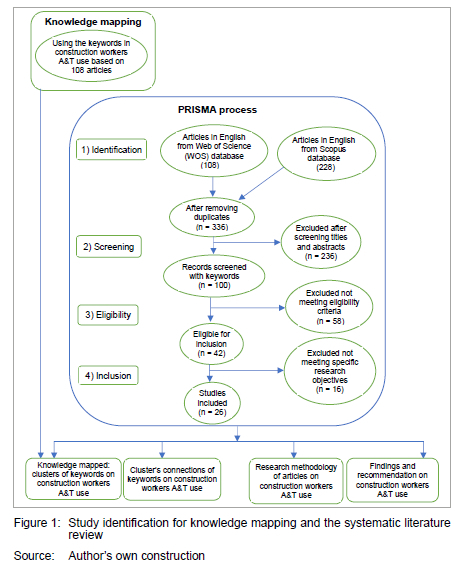
Figure 1 shows how the articles were identified for knowledge mapping and the systematic literature review. In the WOS search, the titles and abstracts of 108 journal articles published in the English language and related to 'construction workers', 'alcohol' and/or 'tobacco' were identified for keyword mapping. After the keyword mapping, a second search identified 228 peer-reviewed articles addressing A&T use among construction workers from the Scopus database.
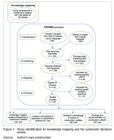
During step 1 of the PRISMA process, search results from both the WOS (108) and Scopus (228) databases identified 336 articles suitable for the systematic review. In step 2, screening of the articles, the first 336 online articles were screened for duplicates using RStudio, a dependable application data science program (Marlina et al., 2023); this resulted in 336 articles because there were no duplicates. After evaluating the abstracts and titles to determine their relevance to the research questions, 100 publications were selected for full-text screening. During step 3, in checking the eligibility of articles, the PDF document version of all 100 publications was retrieved through Google Scholar and ResearchGate for full-text screening to identify articles that met the inclusion and exclusion criteria related to the following topics: (1) construction workers' drinking of alcohol only; (2) construction workers' use of either smokeless or smoked tobacco only, and (3) construction workers' use of both A&T. At the end of the eligibility process, 42 articles were deemed eligible for inclusion. During step 4, inclusion of selected articles, a thorough analysis of each of the 42 papers was conducted. Only articles that offered adequate details pertinent to the research methodology, conclusions, and recommendations regarding the usage of A&T by construction workers were included for the final analysis. This resulted in a total of 26 publications.
3.4 Analysis of identified literature
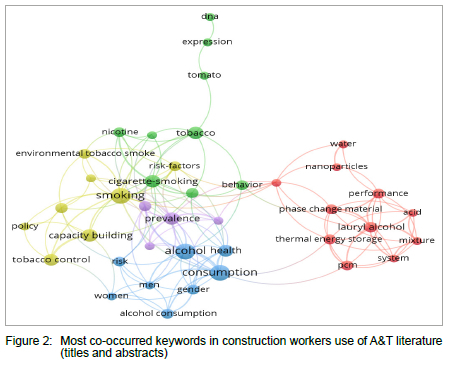
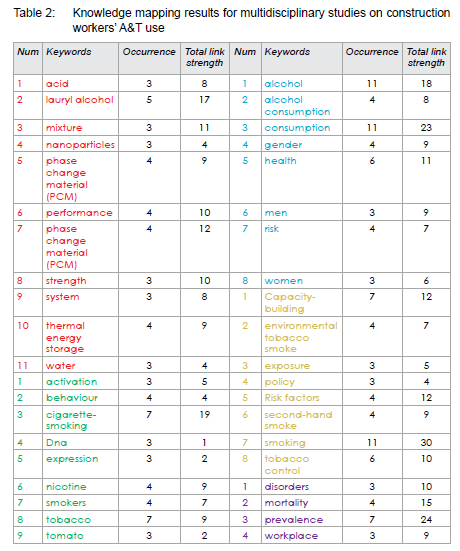
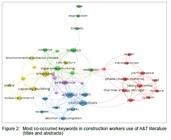
For the knowledge mapping, the titles and abstracts of 108 English-language journal articles retrieved from the WOS database were analysed. Using VOSviewer (Van Eck & Waltman, 2010), five clusters were generated, comprising 40 items with a minimum of three keyword occurrences. These 40 items were selected based on their high relevance to the themes of 'construction workers', 'alcohol', and 'tobacco'. They were used to construct the co-occurrence network (see Figure 2 and Table 2).
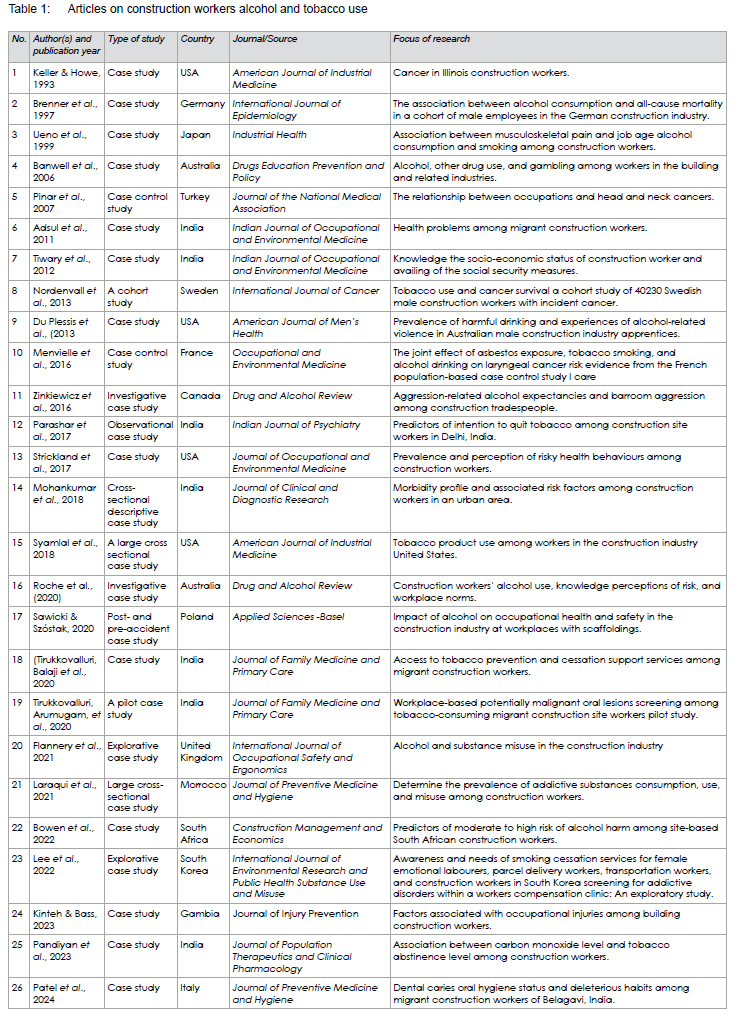
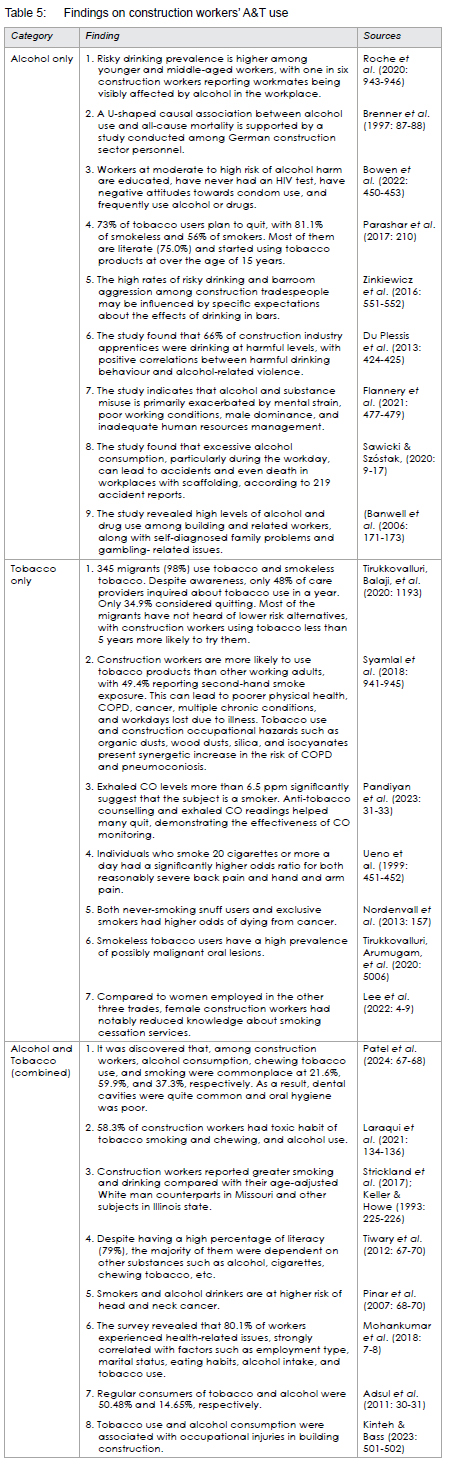
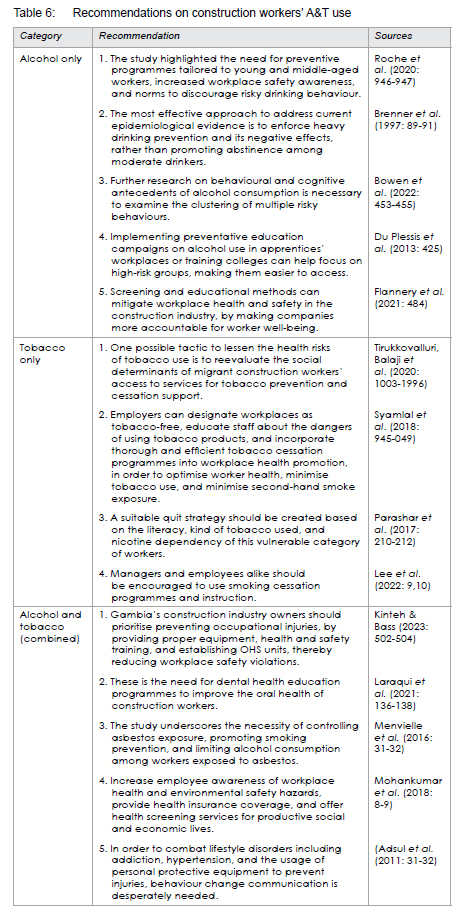
For the systematic literature review, data extraction and analysis were performed by one author and subsequently verified by another. To examine the study approach and research findings regarding the use of A&T among construction workers, the 26 relevant studies were first analysed. These studies were categorised according to the author(s), year of publication, study design, research methods, country of origin, journal/source, and primary focus or objective. The studies were organised by publication year in ascending order for clarity (see Table 1). Data were then extracted from the methodology, results, discussion, conclusion, and recommendations sections of each article to classify findings on A&T use among construction workers into three categories: 'alcohol alone', 'tobacco alone', and 'alcohol and tobacco combined' (see Tables 4, 5, and 6).
4. FINDINGS AND DISCUSSION
4.1 Knowledge mapping of multidisciplinary studies on construction workers' A&T use
The co-occurrence network provides a clear representation of the thematic relationships among the selected articles. As Oraee et al. (2017: 1294) note, "author keywords represent the core of the study and the focal point of an investigation, carefully chosen by the authors". In the network, the nodes correspond to specific keywords that broadly encapsulate the central themes of each article. He et al. (2017: 674) further suggest that the evolution (patterns and shifts) of the keyword network over time reflects the shifting contours (for example, the changing and emerging trends, key topics, and evolving areas of interest) of the subject under investigation, offering insights into the key areas of focus within the field.
Figure 2 and Table 2 present the network based on keywords, colours, numbers, and the five clusters. The clusters of five colours of 40 items of keyword distributions, placed in brackets, are red (11), green (9), blue (8), yellow (8), and purple (4).
The most prominent cluster, represented in red (Figure 2 and Table 2), focuses primarily on alcohol-based phase change materials (PCMs). These materials are closely associated with thermal energy storage technologies, which reduce energy consumption in cooling applications, by storing cold within PCMs. Due to their ability to store significant amounts of cold and undergo phase transitions at a constant temperature, these materials are considered particularly suitable for enhancing thermal comfort in buildings. While this cluster does not have a direct application to the study of construction workers' adoption of A&T, it is relevant insofar as thermal energy storage technologies are part of the broader context of specialised construction applications, and the use of A&T may influence construction outcomes in this domain.
The green cluster of keywords identified in the analysis is primarily associated with cigarette smoking, tobacco, nicotine, smokers, and related behaviours (see Table 2 and Figure 2). Notably, keywords related to cigarette smoking and tobacco exhibit the strongest links and highest co-occurrence within this cluster. The concepts of human behaviour and expression are also closely related, reflecting their relevance to the study of tobacco use. Furthermore, nicotine, the addictive substance present in all tobacco products (Reynales-Shigematsu et al., 2023), is a central theme. By contrast, keywords such as DNA, tomato, and activation appear to be more closely associated with broader clinical studies on tobacco.
The blue cluster of keywords focuses on articles addressing the health risks associated with alcohol consumption, with particular emphasis on gender differences in alcohol use. Notably, no studies were found within this cluster that explored the co-occurrence of A&T consumption at the keyword level. This gap shows the need for research that combines A&T use in a comprehensive analysis, especially given that both substances are commonly abused by construction workers (Mohankumar et al., 2018; Laraqui et al., 2021; Kinteh & Bass, 2023; Patel et al., 2024).
The yellow cluster centres on smoking, the environmental health risks associated with tobacco use, public health policy, and the regulation of tobacco smoking in public spaces. The keyword mapping within this cluster highlights the importance of addressing not only the issue of A&T use among construction workers, but also the risks associated with second-hand smoke exposure on construction sites. Implementing regulations to protect the health and well-being of workers exposed to second-hand smoke, even if they themselves do not engage in A&T use, is a critical concern.
The purple cluster focuses on the prevalence of A&T use and its association with disorders and mortality, particularly within the workplace context. It is noteworthy that none of the clusters specifically included terms related to the construction industry, such as 'construction workers', 'construction sites', or 'artisans'. This suggests a gap in the literature, indicating the need for more research on the health and well-being of construction workers, particularly studies exploring the impact of A&T use in this sector. Given that construction industry workers are among the most likely to engage in A&T use (Roche et al., 2020; Strickland et al., 2017), this area warrants further investigation.
4.2 Literature review results
4.2.1 Country and citation
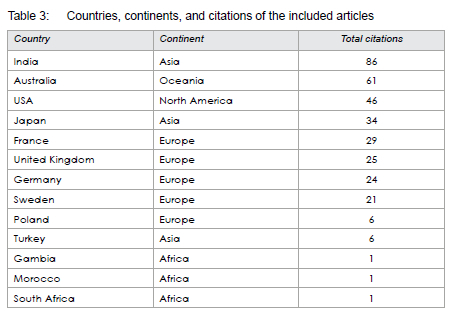
Articles from India and South Africa had the highest and lowest, respectively, number of citations on articles that include findings and recommendations on construction workers' A&T use (Table 3). Notably, no articles from South America were identified, highlighting a gap in research on A&T use among construction workers in this region. This further substantiates the need for this study to address this deficiency in the literature.
4.2.2 Articles' research approach
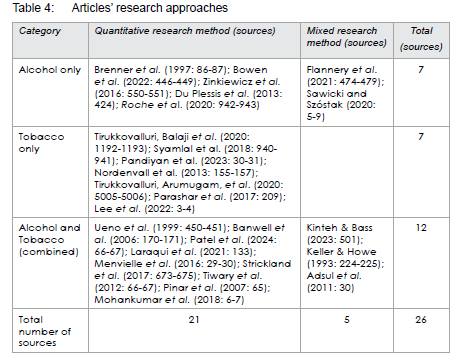
Quantitative, qualitative, and mixed methods represent the three primary research approaches, each with its own advantages and limitations. Notably, none of the 26 articles included in this study relied exclusively on qualitative methods. Of these, 21 articles employed a purely quantitative approach, while the remaining five utilised a mixed-methods design (see Table 4).
Interestingly, the number of articles focused solely on alcohol use (7) and tobacco use (7) was equal, suggesting that researchers may place comparable emphasis on these substances within the context of construction workers. By contrast, the 12 articles that addressed both alcohol and tobacco use collectively outnumbered those that focused on a single substance (see Table 4). This disparity may indicate a potential interrelationship between the two behaviours, where the consumption of one substance may influence or coincide with the use of the other. Notably, all articles that exclusively addressed tobacco use did not adopt a mixed-methods approach (see Table 4).
4.2.3 Articles' findings
The research findings from the 26 studies are summarised in Table 5, which categorises the results into three groups: nine findings related to alcohol use alone, seven findings related to tobacco use alone, and eight findings concerning the combined use of A&T. The evidence highlights the diverse negative effects of A&T use on the health and performance of construction workers. A significant portion of the studies focused on dental hygiene and other health issues associated with tobacco and alcohol use, drawing on public health surveys (Pinar et al., 2007: 64; Bowen et al., 2022; Patel et al., 2024: 65). Other studies examined broader health and safety concerns for construction workers (Tiwary et al., 2012: 66; Roche et al., 2020: 941; Strickland et al., 2017: 673).
4.2.4 Articles' recommendations
In Table 6, the recommendations derived from multiple studies are categorised into three distinct groups: alcohol only, tobacco only, and both substances combined. These recommendations encompass a range of actions, addressing the behaviour of construction workers, as well as the responsibilities of construction organisations, medical institutions, and government policies. The suggestions aim to outline the necessary measures to effectively reduce A&T use among construction workers.
5. DISCUSSION
Several studies employed quantitative and mixed research methods to analyse data collected from surveys, with the majority focusing on construction workers in relation to A&T. While some of these studies also explored other health-related issues such as oral hygiene, construction workers were either the primary focus or a significant study population. The widespread use of quantitative research methods can be attributed to their ability to systematically test hypotheses and provide rigorous statistical analysis, which lends itself to the formal evaluation of research questions. In addition, a mixed-methods approach was used in five studies, likely to mitigate the limitations associated with relying solely on either qualitative or quantitative methods. As Dawadi, Shrestha, and Giri (2021: 27-28) suggest, this approach offers a more comprehensive understanding, by integrating the strengths of both methodological paradigms.
The knowledge mapping of keyword clusters and their connections highlights the close relationship between human behaviour and expression, particularly in the context of addiction. A&T use presents a significant challenge for intervention, as these behaviours are influenced not only by habitual patterns, but also by the addictive properties of the substances themselves. For instance, tobacco contains nicotine, a highly addictive substance, which complicates efforts to quit. Although addiction is not exclusive to construction workers, this population exhibits a disproportionately high prevalence of addictive behaviours (Roche et al., 2020: 941; Strickland et al., 2017: 673). Research has also shown that female construction workers, in particular, demonstrate significantly lower awareness of smoking cessation services compared to women in other trades (Lee et al., 2022: 1). Furthermore, a study of new entrants (construction apprentices) revealed that 66% were consuming alcohol at harmful levels (Du Plessis et al., 2013: 423). In light of these findings, several studies have emphasised the need for a comprehensive and accessible A&T quitting programme tailored specifically to construction workers. Such programmes must be prioritised, with strong commitment from both construction managers and the public to ensure their success (Kinteh & Bass, 2023: 504; Laraqui et al., 2021: 132; Mohankumar et al., 2018: 9).
The articles reviewed identified a range of health hazards associated with both smoke and smokeless forms of tobacco use, as well as the dangers of second-hand tobacco smoke (Tirukkovalluri, Balaji et al., 2020: 1991). The negative impact of excessive alcohol consumption, particularly when combined with other substances, was also highlighted (Flannery et al., 2021: 472; Banwell et al., 2006: 168). Studies documented the adverse effects of A&T use on construction worksites (Roche et al., 2020: 947; Kinteh & Bass, 2023: 500). For instance, Sawicki and Szóstak (2020: 1) reported numerous accidents and fatalities, with a particular concentration of incidents occurring on scaffolding, based on an analysis of 219 accident reports. These fatalities not only disrupt construction projects and impede firm performance, through both life and time losses, but also generate significant financial consequences, including costs associated with litigation and compensation claims.
A significant concern in the construction industry is the health and psycho-social well-being of workers (Oladimeji, 2020: 187). Research has highlighted several severe health and social issues directly linked to the use of A&T among construction workers. These include terminal illnesses such as oral and neck cancers (Pinar et al., 2007: 64), familial conflicts and gambling problems (Banwell et al., 2006: 168), as well as behaviours such as barroom aggression and risky sexual practices (Bowen et al., 2022: 442). Such issues show the critical need for targeted interventions to reduce or eliminate A&T use among construction workers. Without addressing this underlying issue, efforts to improve worker health and safety will likely prove ineffective.
A notable limitation identified in the literature is the scarcity of research on A&T use among construction workers in South America, since the South American population is widely recognised for both the production and consumption of A&T (Sóñora et al., 2022: 138; Reynales-Shigematsu et al., 2023); this shows the need for further investigation. There is also a need for more studies that explore A&T use in combination, rather than examining them separately, as is the case in many of the articles reviewed and systematically analysed in this study.
6. CONCLUSIONS
This study highlighted that construction workers are among the highest consumers of A&T within occupational groups. Given this, it is essential to map existing knowledge and systematically examine the literature that addresses A&T use among construction workers. Several studies focused on the health implications of A&T use, particularly oral health and cancer, often identifying construction workers as a high-risk group, either as a specific focus or within a broader comparison of occupational sectors. Other research, centred on the broader health and safety concerns of construction workers, also identified A&T consumption as a significant factor. The findings consistently indicate that construction workers require targeted interventions to address A&T use.
To optimise worker health and reduce or eliminate A&T consumption, employers should consider designating workplaces as A&T-free zones, providing education on the risks associated with A&T products, and implementing comprehensive cessation programmes within workplace health promotion initiatives. In addition, it is crucial to raise awareness about the dangers A&T pose to workplace safety and to challenge cultural norms in respect of hazardous levels of alcohol consumption and smoking both within and outside the workplace.
However, this study is limited by the use of specific, yet restricted, search terms in the databases. Nonetheless, the conclusions show the importance for construction industry stakeholders to be proactive in addressing A&T use among workers, ensuring a healthier workforce that can contribute to improved productivity and a more sustainable construction sector.
REFERENCES
2. LITERATURE REVIEW
-
Adsul, B.B., Laad, P., Howal, P. & Chaturvedi, R. 2011. Health problems among migrant construction workers: A unique public-private partnership project. Indian Journal of Occupational and Environmental Medicine, 15(1), pp. 29-32. https://doi.org/10.4103/0019-5278.83001
» https://doi.org/10.4103/0019-5278.83001 -
Anderson, P. & Baumberg, B. 2006. Alcohol in Europe - Public health perspective: Report Summary. Drugs: Education, Prevention and Policy, 13(6), pp. 483-488. https://doi.org/10.1080/09687630600902477
» https://doi.org/10.1080/09687630600902477 -
Baas, J., Schotten, M., Plume, A., Côté, G. & Karimi, R. 2020. Scopus as a curated, high-quality bibliometric data source for academic research in quantitative science studies. Quantitative Science Studies, 1(1), pp. 377-386. https://doi.org/10.1162/qss_a_00019
» https://doi.org/10.1162/qss_a_00019 -
Banwell, C., Dance, P., Quinn, C., Davies, R. & Hall, D. 2006. Alcohol, other drug use, and gambling among Australian Capital Territory (ACT) workers in the building and related industries. Drugs: Education, Prevention and Policy, 13(2), pp. 167-178. https://doi.org/10.1080/09687630600577550
» https://doi.org/10.1080/09687630600577550 -
Barnes, A.J. & Brown, R.E. 2013. Occupation as an independent risk factor for binge drinking. The American Journal of Drug and Alcohol Abuse, 39(2), pp. 108-114. https://doi.org/10.3109/00952990.2012.694537
» https://doi.org/10.3109/00952990.2012.694537 -
Barnes, A.J. & Zimmerman, F.J. 2013. Associations of occupational attributes and excessive drinking. Social Science & Medicine, 92, pp. 35-42. https://doi.org/10.1016/j.socscimed.2013.05.023
» https://doi.org/10.1016/j.socscimed.2013.05.023 -
Beus, J.M., McCord, M. & Zohar, D. 2016. Workplace safety: A review and research synthesis. Organizational Psychology Review, 6(4), pp. 352-381. https://doi.org/10.1177/2041386615626243
» https://doi.org/10.1177/2041386615626243 -
Biggs, H. & Williamson, A. 2012. Safety Impacts of Alcohol and Other Drugs in Construction: Development of an Industry Policy and Cultural Change Management Program. In: Proceedings of the 28th Annual Association of Researchers in Construction Management (ARCOM) Conference, Association of Researchers in Construction Management (ARCOM), (1), pp. 445-454. https://eprints.qut.edu.au/55049/
» https://eprints.qut.edu.au/55049/ -
Birkle, C., Pendlebury, D., Schnell, J. & Adams, J. 2020. Web of Science as a Data Source for Research on Scientific and Scholarly Activity. Quantitative Science Studies 1(1), pp. 363-376. https://doi.org/10.1162/qss_a_00018
» https://doi.org/10.1162/qss_a_00018 -
Blanc, P.D., Iribarren, C., Trupin, L., Earnest, G. & Katz, P. et al. 2009. Occupational Exposures and the Risk of COPD: Dusty Trades Revisited. Thorax 64(1), pp. 6-12. https://doi.org/10.1136/thx.2008.099390
» https://doi.org/10.1136/thx.2008.099390 -
Boadu, E.F., Wang, C.C. & Sunindijo, R.Y. 2020. Characteristics of the construction industry in developing countries and its implications for health and safety: An exploratory study in Ghana. International Journal of Environmental Research and Public Health, 17(11), article 4110. https://doi.org/10.3390/ijerph17114110
» https://doi.org/10.3390/ijerph17114110 -
Boal, W.L., Li, J, Dong, X. & Sussell, A. 2020. Health risk behavior profile of construction workers, 32 States, 2013 to 2016. Journal of Occupational and Environmental Medicine, 62(7), pp. 493-502. https://doi.org/10.1097/JOM.0000000000001876
» https://doi.org/10.1097/JOM.0000000000001876 -
Boell, S.K. & Cecez-Kecmanovic, D. 2015. On being 'systematic' in literature reviews in IS. Journal of Information Technology, 30(2), pp. 161-173. https://doi.org/10.1057/jit.2014.26
» https://doi.org/10.1057/jit.2014.26 -
Bowen, P., Yakubu, K. & Govender, R. 2022. Predictors of moderate to high risk of alcohol harm among site-based South African construction workers. Construction Management and Economics, 40(6), pp. 442-458. https://doi.org/10.1080/01446193.2022.2080241
» https://doi.org/10.1080/01446193.2022.2080241 -
Brenner, H., Arndt, V., Rothenbacher, D., Schuberth, S. & Eckart, F. et al. 1997. The association between alcohol consumption and all-cause mortality in a cohort of male employees in the German construction industry. International Journal of Epidemiology, 26(1), pp. 85-91. https://doi.org/10.1093/ije/26.1.85
» https://doi.org/10.1093/ije/26.1.85 -
Brooks, A.T., Raju, S., Barb, J.J., Kazmi, N. & Chakravorty, S. et al. 2020. Sleep regularity index in patients with alcohol dependence: Daytime napping and mood disorders as correlates of interest. International Journal of Environmental Research and Public Health, 17(1), article 331. https://doi.org/10.3390/ijerph17010331
» https://doi.org/10.3390/ijerph17010331 -
Chen, X., Chang-Richards, A.Y., Pelosi, A., Jia, Y. & Shen, X. et al. 2022. Implementation of technologies in the construction industry: A systematic review. Engineering, Construction and Architectural Management, 29(8), pp. 3181-3209. https://doi.org/10.1108/ECAM-02-2021-0172
» https://doi.org/10.1108/ECAM-02-2021-0172 - Davis, R.M. (ed.). 2008. The role of the media in promoting and reducing tobacco use (No. 19). US Department of Health and Human Services, National Institutes of Health, National Cancer Institute.
-
Dawadi, S., Shrestha, S. & Giri, R. 2021. Mixed-methods research: A discussion on its types, challenges, and criticisms. Journal of Practical Studies in Education, 2(2), pp. 25-36. https://doi.org/10.46809/jpse.v2i2.20
» https://doi.org/10.46809/jpse.v2i2.20 -
De Wind, A., Geuskens, G., Reeuwijk, K., Westerman, M. & Ybema, J. et al. 2013. Pathways through which health influences early retirement: A qualitative study. BMC Public Health, 13, pp. 1-9. https://doi.org/10.1186/1471-2458-13-292
» https://doi.org/10.1186/1471-2458-13-292 -
Du Plessis, K., Corney, T. & Burnside, L. 2013. Harmful drinking and experiences of alcohol-related violence in Australian male construction industry apprentices. American Journal of Men's Health, 7(5), pp. 423-426. https://doi.org/10.1177/1557988313479965
» https://doi.org/10.1177/1557988313479965 -
Farooq, R. 2024. A review of knowledge management research in the past three decades: A bibliometric analysis. VINE Journal of Information and Knowledge Management Systems, 54(2), pp. 339-378. https://doi.org/10.1108/VJIKMS-08-2021-0169
» https://doi.org/10.1108/VJIKMS-08-2021-0169 -
Flannery, J., Saheed, O.A. & Adekunle, S.O. 2021. Alcohol and substance misuse in the construction industry. International Journal of Occupational Safety and Ergonomics, 27(2), pp. 472-487. https://doi.org/10.1080/10803548.2019.1601376
» https://doi.org/10.1080/10803548.2019.1601376 - Gabija, L. 2024. Achieving Sustainable Development Goal 3 (SDG 3): The EU's role in promoting health and well-being for all. Maastricht, Netherlands: European Union.
- Geminiani, F.L., Smallwood, J.J. & Van Wyk, J.J. 2008. The effectiveness of the occupational health and safety (OH&S) inspectorate in South African construction. In: Dainty, A. (Ed.). Proceedings of the 24th Annual ARCOM Conference, 1-3 September, Cardiff, UK, Association of Researchers in Construction Management, pp. 1113-1121.
-
Guo, B., Yiu, T. & González, V. 2016. Predicting safety behaviour in the construction industry: Development and test of an integrative model. Safety Science, 84, pp. 1-11. https://doi.org/10.1016/j.ssci.2015.11.020
» https://doi.org/10.1016/j.ssci.2015.11.020 -
Ham, D., Przybeck, T., Strickland, J., Luke, E., Bierut, L. & Evanoff, B 2011. Occupation and workplace policies predict smoking behaviors: Analysis of national data from the current population survey. Journal of Occupational and Environmental Medicine, 53(11), pp. 1337-1345. https://doi.org/10.1097/JOM.0b013e3182337778
» https://doi.org/10.1097/JOM.0b013e3182337778 -
Han, S. & Lee, S. 2013. A vision-based motion capture and recognition framework for behavior-based safety management. Automation in Construction, 35, pp. 131-141. https://doi.org/10.1016/j.autcon.2013.05.001
» https://doi.org/10.1016/j.autcon.2013.05.001 -
He, Q., Wang, G., Luo, L., Shi, Q., Xie, J. & Meng, X. 2017. Mapping the managerial areas of building information modeling (BIM) using scientometric analysis. International Journal of Project Management, 35(4), pp. 670-685. https://doi.org/10.1016/j.ijproman.2016.08.001
» https://doi.org/10.1016/j.ijproman.2016.08.001 -
Hola, B. & Szóstak, M. 2019. Modelling of the accidentality phenomenon in the construction industry. Applied Sciences, 9(9), article 1878. https://doi.org/10.3390/app9091878
» https://doi.org/10.3390/app9091878 -
Hon, C., Chan, A. & Yam, M. 2014. Relationships between safety climate and safety performance of building repair, maintenance, minor alteration, and addition (RMAA) works. Safety Science, 65, pp. 10-19. https://doi.org/10.1016/j.ssci.2013.12.012
» https://doi.org/10.1016/j.ssci.2013.12.012 -
Huang, J., Li, R., Huang, S., Sia, H., Chen, Y. & Tang, F. 2015. Lifestyle factors and metabolic syndrome among workers: The role of interactions between smoking and alcohol to nutrition and exercise. International Journal of Environmental Research and Public Health, 12(12), pp. 15967-15978. https://doi.org/10.3390/ijerph121215035
» https://doi.org/10.3390/ijerph121215035 - Ibrahim, C.C. & Belayutham, S. 2019. Towards successful social collaboration in BIM-based construction: A review. MATEC Web of Conferences, 266. Article 03007. International Conference on Built Environment and Engineering 2018 - Enhancing Construction Industry Through IR4.0 (IConBEE2018), 29-30 October 2018, Johor, Malaysia, published online 20 February 2019.
-
Keller, J.E. & Howe, L.H. 1993. Cancer in Illinois construction workers: A study. American Journal of Industrial Medicine, 24(2), pp. 223-230. https://doi.org/10.1002/ajim.4700240208
» https://doi.org/10.1002/ajim.4700240208 -
Kinteh, B. & Bass, P. 2023. Prevalence and factors associated with occupational injuries among building construction workers in the Gambia. Injury Prevention, 29(6), pp. 500-505. https://doi.org/10.1136/ip-2023-044958
» https://doi.org/10.1136/ip-2023-044958 -
Kirkham, H., Clark, B., Bolas, C., Lewis, G. & Jackson, A. et al. 2015. Which modifiable health risks are associated with changes in productivity costs? Population Health Management, 18(1), pp. 30-38. https://doi.org/10.1089/pop.2014.0033
» https://doi.org/10.1089/pop.2014.0033 -
Laraqui, O., Manar, N., Laraqui, S., Hammouda, R. & Deschamps, F. et al. 2021. Prevalence of consumption of psychoactive substances among construction workers. Journal of Preventive Medicine and Hygiene, 62(1), pp. 132-140. https://doi.org/10.15167/2421-4248/jpmh2021.62.L1238
» https://doi.org/10.15167/2421-4248/jpmh2021.62.L1238 -
Lee, D., Lee, K., Kim, H., Lee, Y. & Lee, M. et al. 2022. Awareness and needs of smoking cessation services for female emotional laborers, parcel delivery workers, transportation workers, and construction workers in South Korea. International Journal of Environmental Research and Public Health, 19(22), pp. 1-13. https://doi.org/10.3390/ijerph192215220
» https://doi.org/10.3390/ijerph192215220 -
Liu, Q., Na, X., Hui J., Shengcheng, W., Wenshun, W. & Jianping, W. 2020. Psychological driving mechanism of safety citizenship behaviors of construction workers: Application of the theory of planned behavior and norm activation model. Journal of Construction Engineering and Management, 146(4), article 04020027. https://doi.org/10.1061/(ASCE)CO.1943-7862.0001793
» https://doi.org/10.1061/(ASCE)CO.1943-7862.0001793 -
Loosemore, M. & Malouf, N. 2019. Safety training and positive safety attitude formation in the Australian construction industry. Safety Science, 113, pp. 233-243. https://doi.org/10.1016/j.ssci.2018.11.029
» https://doi.org/10.1016/j.ssci.2018.11.029 -
Mandell, W., Eaton, W.W., Anthony, J.C. & Garrison, R. 1992. Alcoholism and occupations: A review and analysis of 104 occupations. Alcoholism: Clinical and Experimental Research, 16(4), pp. 734-746. https://doi.org/10.1111/j.1530-0277.1992.tb00670.x
» https://doi.org/10.1111/j.1530-0277.1992.tb00670.x -
Markowitz, S., Levin, S., Miller, A. & Morabia, A. 2013. Asbestos, asbestosis, smoking, and lung cancer. New findings from the North American insulator cohort. American Journal of Respiratory and Critical Care Medicine, 188(1), pp. 90-96. https://doi.org/10.1164/rccm.201302-0257OC
» https://doi.org/10.1164/rccm.201302-0257OC -
Marlina, M., Rahim, A., Ria, R. & Hadi, H.S. 2023. Technological pedagogical content knowledge in chemistry education: A review and bibliometric analysis using VOSviewer and RStudio Applications. Moroccan Journal of Chemistry, 11(3), pp. 11-13. https://doi.org/10.47750/pegegog.13.03.19
» https://doi.org/10.47750/pegegog.13.03.19 -
Martin, J.L., Gadegbeku, B., Wu, D., Viallon, V. & Laumon, B. 2017. Cannabis, alcohol and fatal road accidents. PLoS One 12(11), article 0187320. https://doi.org/10.1371/journal.pone.0187320
» https://doi.org/10.1371/journal.pone.0187320 -
Menvielle, G., Fayossé, A., Radoï, L., Guida, F. & Sanchez, M. et al. 2016. The joint effect of asbestos exposure, tobacco smoking and alcohol drinking on laryngeal cancer risk: Evidence from the French population-based case-control study, ICARE. Occupational and Environmental Medicine, 73(1), pp. 28-33. https://doi.org/10.1136/oemed-2015-102954
» https://doi.org/10.1136/oemed-2015-102954 -
Mikula, A., Raczkowska, M. & Utzig, M. 2024. Implementation of Sustainable Development Goal 3: Good health and well-being in European Union countries in the context of the COVID-19 pandemic. Sustainability, 16(18), article 7921. https://doi.org/10.3390/su16187921
» https://doi.org/10.3390/su16187921 -
Mohankumar, P., Gopalakrishnan, S. & Muthulakshmi, M. 2018. Morbidity profile and associated risk factors among construction workers in an urban area of Kancheepuram District, Tamil Nadu, India. Journal of Clinical and Diagnostic Research, 12(7), pp. 6-9. https://doi.org/10.7860/JCDR/2018/34678.11773
» https://doi.org/10.7860/JCDR/2018/34678.11773 -
Nordenvall, C., Nilsson, P., Ye, W., Andersson, T. & Nyren, O. 2013. Tobacco use and cancer survival: A cohort study of 40,230 Swedish male construction workers with incident cancer. International Journal of Cancer, 132(1), pp. 155-161. https://doi.org/10.1002/ijc.27587
» https://doi.org/10.1002/ijc.27587 -
Oladimeji, O. 2020. Psychosocial construction work environment and well-being in the viability of indigenous construction Arms. Journal of Engineering, Project and Production Management, 10(3), pp. 187-199. https://doi.org/10.2478/jeppm-2020-0021
» https://doi.org/10.2478/jeppm-2020-0021 -
Olomofe, C.O., Benyon, C.M., Durowade, K.A. & Olomofe, O.R. 2021. A cross-sectional survey of the prevalence and the risk factors of tobacco use amongst construction artisans in Ekiti State, Nigeria. MedRxiv, pp. 1-20. https://doi.org/10.1101/2021.04.08.21255137
» https://doi.org/10.1101/2021.04.08.21255137 -
Oraee, M., Hosseini, R., Papadonikolaki, E., Palliyaguru, R. & Arashpour, M. 2017. Collaboration in BIM-based construction networks: A bibliometric-qualitative literature review. International Journal of Project Management, 35(7), pp. 1288-1301. https://doi.org/10.1016/j.ijproman.2017.07.001
» https://doi.org/10.1016/j.ijproman.2017.07.001 -
Pandiyan, I., Jayakumar, N.D. & Indiran, M. 2023. Association between carbon monoxide level and tobacco abstinence level among construction workers in Chennai City - A longitudinal study. Journal of Population Therapeutics and Clinical Pharmacology, 30(6), pp. 28-36. https://doi.org/10.47750/jptcp.2023.30.06.005
» https://doi.org/10.47750/jptcp.2023.30.06.005 -
Parashar, M., Singh, M., Agarwalla, R., Panda, M. & Pathak, R. 2017. Predictors of intention to quit tobacco among construction site workers in Delhi, India. Indian Journal of Psychiatry, 59(2), pp. 208-213. https://doi.org/10.4103/psychiatry.IndianJPsychiatry_368_16
» https://doi.org/10.4103/psychiatry.IndianJPsychiatry_368_16 -
Patel, A., Jalihal, S., Ankola, A., Santhosh, V. & Ragu, K. et al. 2024. Dental caries, oral hygiene status and deleterious habits among migrant construction workers of Belagavi, India. Journal of Preventive Medicine and Hygiene, 65(1), pp. 65-72. doi: 10.15167/2421-4248/jpmh2024.65.1.3150
» https://doi.org/10.15167/2421-4248/jpmh2024.65.1.3150 - Pinar, T., Recep, A., Arslan, T., Kadri, A. & Mustafa, C. 2007. The relationship between occupations and head and neck cancers. Journal of the National Medical Association, 99(1), pp. 68-71.
-
Ramirez, M., Bedford, R., Sullican, R., Anthony, R. & Kraemer, J. et al. 2013. Toxicology testing in fatally injured workers: A review of five years of Iowa FACE -ases. International Journal of Environmental Research and Public Health, 10(11), pp. 6154-6168. https://doi.org/10.3390/ijerph10116154
» https://doi.org/10.3390/ijerph10116154 -
Reynales, L., Barnoya, J., Cavalcante, T., Aburto, T. & Romieu, I. et al. Latin America and the Caribbean Code Against Cancer, 1st edition: Tobacco and nicotine-related products, second-hand smoke, and alcohol and cancer. Cancer Epidemiology, 86, article 102413. https://doi.org/10.1016/j.canep.2023.102413
» https://doi.org/10.1016/j.canep.2023.102413 -
Roche, A.M., Chapman, J., Duraisingam, V., Phillips, B., Finnane, J. & Pidd, Ken. 2020. Construction workers' alcohol use, knowledge, perceptions of risk and workplace norms. Drug and Alcohol Review, 39(7), pp. 941-949. https://doi.org/10.1111/dar.13075
» https://doi.org/10.1111/dar.13075 -
Sawicki, M. & Szóstak, M. 2020. Impact of alcohol on occupational health and safety in the construction industry at workplaces with scaffoldings. Applied Sciences, 10(19), article 6690. https://doi.org/10.3390/app10196690
» https://doi.org/10.3390/app10196690 -
Sóñora, G., Reynales-Shigematsu, L., Barnoya J., Llorente, B., Szklo, A. & Thrasher, J. 2022. Achievements, challenges, priorities and needs to address the current tobacco epidemic in Latin America. Tobacco Control, 31(2), pp. 138-141. https://doi.org/10.1136/tobaccocontrol-2021-057007
» https://doi.org/10.1136/tobaccocontrol-2021-057007 -
Strickland, J.R., Wagan, S., Dale, A. & Evanoff, B. 2017. Prevalence and perception of risky health behaviours among construction workers. Journal of Occupational and Environmental Medicine, 59(7), pp. 673-768. https://doi.org/10.1097/JOM.0000000000001051
» https://doi.org/10.1097/JOM.0000000000001051 -
Sullivan, T., Edgar, F. & McAndrew, I. 2019. The hidden costs of employee drinking: A quantitative analysis. Drug and Alcohol Review, 38(5), pp. 543-553. https://doi.org/10.1111/dar.12935
» https://doi.org/10.1111/dar.12935 -
Sushanthi, S., Doraikannan, S. & Indiran, M.A. 2022. Assessment of anxiety, depression and nicotine dependence among construction workers in Chennai - A cross-sectional study. Journal of Oral Biology and Craniofacial Research, 12(2), pp. 263-267. https://doi.org/10.1016/j.jobcr.2022.03.004
» https://doi.org/10.1016/j.jobcr.2022.03.004 -
Syamlal, G., King, B. & Mazurek, J. 2018. Tobacco product use among workers in the construction industry, United States, 2014-2016. American Journal of Industrial Medicine, 61(11), pp. 939-951. https://doi.org/10.1002/ajim.22907
» https://doi.org/10.1002/ajim.22907 -
Tirukkovalluri, S.S., Balaji, A.N., Gunasekharan, E., Suganya, T., Akhshaya, P. & Divyadharshini, S. 2020. Social determinants in access to tobacco prevention and cessation support services among migrant construction workers in urban Chennai, India. Journal of Family Medicine and Primary Care, 9(4), pp. 1991-1998. https://doi.org/10.4103/jfmpc.jfmpc_1072_19
» https://doi.org/10.4103/jfmpc.jfmpc_1072_19 -
Tirukkovalluri, S., Arumugam, B., Gunasekharan, N., Suganya, E., Ponsuba, T. & Divyadharshini, S. 2020. Workplace-based potentially malignant oral lesions screening among tobacco consuming migrant construction site workers in Chennai, South India: A pilot study. Journal of Family Medicine and Primary Care, 9(9), pp. 5004-5009. https://doi.org/10.4103/jfmpc.jfmpc_687_20
» https://doi.org/10.4103/jfmpc.jfmpc_687_20 -
Tiwary, G., Gangopadhyay, P.K. Biswas, S., Nayak, K., Chatterjee, M. & Mukherjee, S. 2012. Socio-economic status of workers of building construction industry. Indian Journal of Occupational and Environmental Medicine, 16(2), pp. 66-671. https://doi.org/10.4103/0019-5278.107072
» https://doi.org/10.4103/0019-5278.107072 -
Ueno, S., Hisanaga, N., Jonai, H., Shibata, E. & Kamijima, M. 1999. Association between musculoskeletal pain in Japanese construction workers and job, age, alcohol consumption, and smoking. Industrial Health, 37(4), pp. 449-456. https://doi.org/10.2486/indhealth.37.449
» https://doi.org/10.2486/indhealth.37.449 -
Van Eck, N.J. & Waltman, L. 2010. Software survey: VOSviewer, a computer program for bibliometric mapping. Scientometrics, 84(2), pp. 523-538. https://doi.org/10.1007/s11192-009-0146-3
» https://doi.org/10.1007/s11192-009-0146-3 -
Wang, D. & Cheung, C. 2024. Decent work in tourism and hospitality - A systematic literature review, classification, and research recommendations. International Journal of Contemporary Hospitality Management, 36(7), pp. 2194-2213. https://doi.org/10.1108/IJCHM-10-2022-1263
» https://doi.org/10.1108/IJCHM-10-2022-1263 - World Health Organization. 2018. Global status report on alcohol and health 2018. World Health Organization.
-
Xiao, Y. & Watson, M. 2019. Guidance on conducting a systematic literature review. Journal of Planning Education and Research, 39(1), pp. 93-12. https://doi.org/10.1177/0739456X17723971
» https://doi.org/10.1177/0739456X17723971 -
Xu, Q. & Xu, K. 2021. Analysis of the characteristics of fatal accidents in the construction industry in China based on statistical data. International Journal of Environmental Research and Public Health, 18(4), pp. 1-21. https://doi.org/10.3390/ijerph18042162
» https://doi.org/10.3390/ijerph18042162 -
Zhang, J., Xiang, P., Zhang, Rong., Chen, D. & Ren, Y. 2020. Mediating effect of risk propensity between personality traits and unsafe behavioural intention of construction workers. Journal of Construction Engineering and Management, 146(4), article 04020023. https://doi.org/10.1061/(ASCE)CO.1943-7862.0001792
» https://doi.org/10.1061/(ASCE)CO.1943-7862.0001792 -
Zinkiewicz, L., Smith, G, Burn, M, Steven, L., Wells, S., Graham, K. & Miller P. 2016. Aggression-related alcohol expectancies and barroom aggression among construction tradespeople. Drug and Alcohol Review, 35(5), pp. 549-556. https://doi.org/10.1111/dar.12360
» https://doi.org/10.1111/dar.12360
Peer reviewed and revised: November 2024
Published: December 2024