Strategies for sme contractors to enhance on-site labour productivity through sustainable construction project delivery
Abstract
On-site labour productivity is a critical determinant of project performance for small and mediumsized enterprise (SME) contractors, who play an important role in South Africa's economic development and employment creation. Many construction projects continue to incur productivity losses, due to inadequate site management practices, skills shortages, ineffective supervision, and material supply disruptions. This study examines strategies to enhance on-site labour productivity among SME contractors within the context of sustainable construction project delivery. A quantitative research design was used, and data was collected through survey questionnaires from 155 site-management personnel, including directors, construction managers, quantity surveyors, site agents, and foremen, from SME contractors registered under cidb grades 1 to 6 in the General Building category. Mean rating scores and factor analysis were applied to identify the most significant productivity-enhancing strategies. The findings indicate that SME contractors prioritise effective supervision, regular quality inspections, consistent progress monitoring, timely decision-making, and appropriate task delegation. The adoption of smart technologies such as drone monitoring, telematics for equipment tracking, and blockchain systems for labour payments was also recognised as increasingly valuable. Additional strategies include proper material-handling training, monitoring material usage, efficient waste management, hiring skilled equipment operators, routine machinery maintenance, and maintaining spare machinery parts. Principal component analysis revealed three overarching components for improving labour productivity: site control, smart technologies for productivity enhancement, and site management. This study offers evidencebased strategies for SME contractors and policymakers, presenting an operational framework designed to minimise project inefficiencies and strengthen sustainable performance in the construction sector.
construction technology adoption; on-site labour productivity; site management; SME contractors; supervision and leadership
Abstract
Arbeidsproduktiwiteit op boupersele is 'n kritieke bepaler van projekprestasie vir klein en mediumgrootte ondernemings (KMO) kontrakteurs, wat 'n belangrike rol speel in Suid-Afrika se ekonomiese ontwikkeling en werkskepping. Baie konstruksieprojekte ly steeds produktiwiteitsverliese as gevolg van onvoldoende terreinbestuurspraktyke, vaardigheidstekorte, oneffektiewe toesig en ontwrigtings in materiaalvoorsiening. Hierdie studie ondersoek strategieë om arbeidsproduktiwiteit op boupersele onder KMO-kontrakteurs te verbeter binne die konteks van volhoubare konstruksieprojeklewering. 'n Kwantitatiewe navorsingsontwerp is gebruik, en data is ingesamel deur middel van opnamevraelyste van 155 terreinbestuurspersoneel, insluitend direkteure, konstruksiebestuurders, bourekenaars, terreinagente en voormanne, van KMO-kontrakteurs wat geregistreer is onder cidb grade 1 tot 6 in die Algemene Bou-kategorie. Gemiddelde graderingstellings en faktoranalise is toegepas om die belangrikste produktiwiteitsverhogende strategieë te identifiseer. Die bevindinge dui daarop dat KMO-kontrakteurs effektiewe toesig, gereelde kwaliteitsinspeksies, konsekwente vorderingmonitering, tydige besluitneming en toepaslike taakdelegering prioritiseer. Die aanvaarding van slim tegnologieë soos hommeltuigmonitering, telematika vir toerustingopsporing en blokkettingstelsels vir arbeidsbetalings is ook as toenemend waardevol erken. Bykomende strategieë sluit in behoorlike materiaalhanteringsopleiding, monitering van materiaalverbruik, doeltreffende afvalbestuur, die aanstelling van geskoolde toerustingoperateurs, roetine-masjinerie-onderhoud en die instandhouding van onderdele vir masjinerie. Hoofkomponentanalise het drie oorkoepelende komponente vir die verbetering van arbeidsproduktiwiteit aan die lig gebring: terreinbeheer, slim tegnologieë vir produktiwiteitsverbetering en terreinbestuur. Hierdie studie bied bewysgebaseerde strategieë vir KMO-kontrakteurs en beleidmakers, en bied 'n operasionele raamwerk wat ontwerp is om projek-ondoeltreffendhede te minimaliseer en volhoubare prestasie in die konstruksiesektor te versterk.
1. INTRODUCTION
The construction industry is widely recognised as one of the most labour-intensive sectors globally, where on-site labour productivity serves as a key determinant of project success and overall industry performance (Sogaxa, 2024). Productivity at the construction site reflects not only the efficiency of project delivery, but also the capability of contractors to contribute meaningfully to sustainable development (Dhliwayo et al., 2024; Urrahmi, Oktaviani & Mubarak, 2024; Bamfo-Agyei, Thwala & Aigbavboa, 2023). Within this context, small and medium-sized enterprise (SME) contractors play a vital role in employment creation, infrastructure development, and economic growth. Despite this importance, poor on-site labour productivity remains one of the most persistent challenges facing SME contractors, contributing to business failure and threatening their project delivery in the South African construction industry (Adebowale & Agumba, 2023a; Al Alawi et al., 2022).
According to Rens et al. (2021), when productivity declines, so too does the ability of the contractor to deliver successful construction projects and contribute to a meaningful socio-economic impact. The performance of construction projects, therefore, largely depends on the management of on-site labour productivity, which directly influences the timeliness, cost-effectiveness, and quality of project outcomes (Adebowale & Agumba, 2023a). As such, developing strategies to enhance on-site labour productivity are essential for strengthening the competitiveness and resilience of SME contractors (Bamfo-Agyei et al., 2023).
In South Africa, low on-site labour productivity has been a recurring concern for over four decades (Bierman et al., 2016), reflecting a broader global problem also experienced in both developed and developing countries (Adebowale & Smallwood, 2020). Studies conducted in India, Brazil, and other emerging economies confirm that improving on-site labour productivity remains one of the most complex and pressing challenges faced by SME contractors (Patel, Bhavsar & Pitroda, 2017; Agrawal & Halder, 2020). Globally, on-site labour productivity declined by nearly 8% between 2020 and 2022, further highlighting the need for more effective productivity strategies, particularly in developing nations such as South Africa (Mischke, Stokvis & Koen, 2024). Given that labour costs typically account for 30%-50% of total construction expenditure, productivity levels directly influence profitability and successful business (Adebowale & Agumba, 2023b). Enhancing on-site labour productivity is, therefore, essential for ensuring that contractors deliver value for money to clients while maintaining business profitability.
Despite substantial global research on productivity factors, there is a significant research gap in empirically investigating the influence of construction technology, leadership practices, and resource management on on-site labour productivity in the Western Cape province of South Africa (Hamza et al., 2022). This study is anchored within the framework of the United Nations Sustainable Development Goals, specifically SDG 8 (Decent Work and Economic Growth) and SDG 9 (Industry, Innovation, and Infrastructure). Improving on-site labour productivity in construction SMEs immediately contributes to economic efficiency and job creation, and enhances labour productivity through effective human resource utilisation and working conditions (Ebekozien et al., 2025). To address productivity ineffectiveness, SME contractors need to adopt innovative strategies such as lean construction, digital project management tools, and improved site coordination systems (Tu et al., 2025). This study aims to address this gap by investigating strategies that influence on-site labour productivity and propose an operational framework for improving SME contractors' on-site productivity for enhancing successful construction project delivery.
2.1 On-site labour management strategies for enhancing productivity
The construction industry is labour-intensive; therefore, its most significant asset is its workforce (Assaad & El-Adaway, 2021). According to Bamfo-Agyei et al. (2023), on-site labour productivity is vital, as it directly affects the total effectiveness and success of construction work. SME contractors highly depend on on-site labour to establish a competitive edge in the construction industry, by successfully delivering construction projects without delays (Adebowale & Agumba, 2024). Moreover, effective on-site labour productivity affects the project schedules, costs, the quality of the works, and the potential of SME contractors to win future construction contracts (Hamza et al., 2022). A study by Oladiran and Onatayo (2019) indicates that effective labour management extends beyond task distribution to include factors such as worker motivation, health and safety compliance, as well as coordinated site operations. Mai, Doan and Ghaffarianhoseini (2025) emphasise that regular toolbox talks (a quick refresher on relevant safety topics) and strict adherence to safety measures, in line with the Occupational Health and Safety Act, support SME contractors in maintaining workforce stability and reducing labour-related productivity disruptions. Ahn et al. (2020) note that performance- and attendance-based incentive programmes can substantially improve worker morale, particularly among SMME contractors operating within constrained budgets.
2.2 Training and skills development for improved on-site labour productivity
An effectively trained workforce is a critical determinant of productivity and the successful delivery of construction projects. Karakhan et al. (2023) stresses that through workforce training, construction Arms can develop an educated, knowledgeable, and adaptable labour force that contributes to improved project completion, enhanced customer satisfaction and, ultimately, the sustainable development of the construction industry. Training assists workers in keeping pace with emerging changes in industry trends and technologies (Walters & Rodriguez, 2019). Training the construction workforce increases job performance, minimises mistakes, strengthens safety practices, and promotes a positive workplace culture (Karakhan, Gambatese & Simmons, 2020). Assaad et al. (2023) also indicate that, besides increasing the knowledge base of workers, training enhances employee morale and job satisfaction, leading to greater engagement and retention. Through strategic investments in workforce development, construction Arms can attract and retain competent employees, strengthen their brand image, and secure a competitive advantage in the market (Adebowale & Agumba, 2024). Karakhan et al. (2023) indicate that employers cannot afford the continuous cycle of hiring and training new workers, as maintaining well-educated employees is more cost-effective in the long term.
2.3 Construction supervisory strategies for productivity improvement
Effective supervisory and leadership practices are critical for enhancing on-site labour productivity (Edwin & Calistus, 2023; Manoharan et al., 2024b; Jimoh et al., 2017). Establishing strong relationships and mutual understanding between construction supervisors and on-site labourers strengthens motivation, improves work quality, and ultimately contributes to higher productivity (Manoharan et al. , 2024b). Existing studies further highlight the importance of adopting sound supervisory measures to prevent the use of incorrect construction processes and to mitigate suboptimal performance in labourbased operations (Manoharan et al., 2024a; Manoharan et al., 2024b; Jimoh et al., 2017).
Other leadership traits that enable supervisors to optimise employee capabilities include strong decision-making and communication skills, as well as the ability to motivate labourers (Jimoh et al., 2017). Supervisors' technical competencies can empower labourers to perform at their highest potential, thereby contributing significantly to on-site labour productivity (Edwin & Calistus, 2023). Effective supervision directly influences the successful completion of construction activities in accordance with project timelines, budgets, and required quality standards (Manoharan et al., 2024a). Conversely, inadequate supervision may lead to labour mismanagement, resulting in inefficiencies and other construction-related challenges (Dalibi, 2016).
When implementing leadership practices to enhance on-site labour productivity, construction supervisors should prioritise continuous training and development to ensure that labourers maintain up-to-date skills and remain effective. Clear and effective communication also improves labourers' understanding of tasks and expectations (Kesavan et al., 2022). According to Edwin and Calistus (2023), delegating duties based on individuals' strengths and knowledge promotes labourer participation in decision-making and problem-solving. Manoharan et al. (2024b) further highlight leadership practices such as resolving conflict promptly and impartially, making timely decisions, delegating responsibilities, empowering labourers to participate actively, and encouraging ownership. They also emphasise that prioritising worker safety and welfare strengthens a productive and secure working environment, while ongoing monitoring and constructive feedback can continuously enhance productivity. Adaptability in leadership style is essential to accommodate changing project requirements and labour-related challenges (Dalibi, 2016). The effective integration of these leadership strategies and supervisory practices ensures sustained improvements in labour productivity and contributes to the successful execution of construction projects.
2.4 Labour motivation strategies for improving on-site productivity
Hayford et al. (2022) state that motivation is the factor that induces an individual to perform a specific behaviour. According to Uka and Prendi (2021) as well as Lakshan, Wijesinghe and Perera (2023), motivation plays a crucial role in improving productivity. Motivation is generally categorised as intrinsic or extrinsic (Hayford et al., 2022). For labourers, intrinsic motivation applies when individuals are capable of performing their work and experience personal satisfaction, while extrinsic motivation arises from rewards such as promotions, salaries, bonuses, and other benefits (Ohueri et al., 2018).
Site managers and supervisors can intrinsically motivate on-site labourers, by helping them understand the significance of their roles in the project, emphasising how their contributions benefit the community and support infrastructure development (Panuwatwanich, AlHaadir & Stewart, 2017). Hayford et al. (2022) further argue that providing opportunities for skill development and training can enhance labourers' intrinsic motivation, by enabling them to gain proficiency in various tasks and increasing their confidence.
Company owners and directors can extrinsically motivate on-site labourers, by ensuring that they receive fair and competitive salaries and by offering incentives for exceeding performance targets (Hayford et al., 2022). Werner and Balkin (2021) emphasise that benefit packages such as health insurance, retirement plans, and paid vacations can enhance job satisfaction and overall well-being. Programmes that publicly recognise exceptional performance, such as "Employee of the Month" awards or similar acknowledgement initiatives, can serve as powerful extrinsic motivators (Vivian & Amah, 2024). Creating clear pathways for career advancement within the company not only motivates labourers, but also encourages long-term retention (Werner & Balkin, 2021).
2.5 Health and safety site strategies for enhancing labour productivity
Safe working conditions on construction sites not only safeguard workers from injury, but also promote higher productivity, improved efficiency, and overall project success (Oswald et al., 2020). According to Khan et al. (2022) and Mashwama, Aigbavboa and Thwala (2019), maintaining safe working conditions significantly reduces injuries and illnesses among labourers and staff. This, in turn, minimises absenteeism and supports uninterrupted project progress. Wong, Sapuan and Khan (2023) further argue that, when workers do not need to be concerned about safety hazards, they are able to focus their energy and attention on task completion, resulting in smoother workflows and faster project delivery.
By contrast, unsafe working environments often contribute to increased labour turnover, as workers may seek employment elsewhere if they feel unsafe. Ayodele, Chang-Richards and González (2020) note that accidents and injuries can lead to substantial downtime, due to incident investigations, recovery periods, and the replacement of injured personnel. Ensuring safe working conditions, therefore, reduces the likelihood of accidents, minimises delays, and helps keep projects on schedule (Ayodele et al., 2020). Strong safety performance enhances a construction Arm's reputation, with clients more likely to trust and rehire contractors who consistently prioritise worker safety, ultimately supporting repeat business and positive referrals (Kreuzer, Röglinger & Rupprecht, 2020).
2.6 Technology integration strategies for enhancing on-site labour productivity
The Construction 5.0 paradigm represents the latest phase of industrial development, emphasising the integration of human expertise with efficient, precise machines to create resource-efficient and client-oriented production solutions (Yitmen, Almusaed & Alizadehsalehi, 2023). According to Umar (2025), enhanced Human-Robot Collaboration (HRC) is a defining feature of Construction 5.0, founded on the principle that robots do not replace human workers but instead complement their knowledge and skills. In practice, HRC has garnered considerable attention for its capacity to increase productivity, improve safety, and enhance the overall efficiency of construction projects (Assaad et al. , 2023). Technologies with particular potential to strengthen on-site labour productivity include wearable exoskeletons, robotic labour assistants, smart collaborative devices, Virtual Reality (VR)/Augmented Reality (AR), drone systems, and blockchain applications (Yitmen et al., 2023).
Wearable exoskeletons are among the leading innovations for improving labour productivity on construction sites (Zhu, Dutta & Dai, 2021). Mahmud et al. (2022) note that these devices reduce strain and potential injury, by supporting joints, redistributing weight, and promoting proper posture. Exoskeletons can significantly enhance labour capacity, especially for tasks involving heavy lifting or pushing and pulling (Wang et al., 2020). Examples such as mounted-arm exoskeletons and "chairless chairs" offer partially motorised support systems that minimise repetitive stress and muscular fatigue caused by sustained or repetitive movements (Zhu et al., 2021). Wang et al. (2020) emphasise that exoskeletons may also enable older or physically limited workers to extend their participation in the workforce, thereby expanding the available labour pool. Labour-assisting robots can also support complex or hazardous construction tasks such as deconstruction, transporting heavy materials, and welding.
Smart devices, including helmets, watches, and tablets, further contribute to productivity, by enhancing communication, monitoring, and task coordination among on-site labour (Zhu et al., 2021). For example, smartwatches allow workers to receive real-time instructions from supervisors and enable biometric monitoring such as tracking fatigue levels or heart rate. SDG 9 encourages the adoption of innovative construction strategies and sustainable project delivery strategies that contribute to resilient infrastructure development and enhanced operational performance in the construction industry (Edobor & Sambo-Magaji, 2025).
VR and AR technologies also substantially improve on-site labour productivity, by enhancing training and skills development. Through immersive, interactive simulations, trainees can gain a deeper understanding of complex tasks, equipment operations, and safety protocols, while benefiting from improved learning retention and reduced training time compared to conventional approaches (Olbina & Glick, 2023). Combining VR/AR with traditional learning tools ensures a comprehensive and integrated training experience, bridging the gap between theoretical knowledge and practical application (Yazdi, 2024). Beyond training, VR/AR technologies support project monitoring, safety management, scheduling, cost control, quality assurance, and early detection of malfunctions (Ahmed, 2018).
Drone technology further contributes to improved communication and supervision, by providing aerial overviews of on-site activities, thereby enabling better team coordination (Peiris et al., 2023). Wang et al. (2020) highlight the usefulness of drones on large construction sites for monitoring progress and optimising labour deployment. Drones enhance safety, by reducing the need for workers to enter hazardous inspection areas.
Blockchain technology presents another valuable tool, offering secure, transparent, and automated systems for managing payments and records. Hamledari and Fischer (2021) suggest that integrating drone data with blockchain can facilitate accurate, work-based payments to subcontractors and labourers. Moreover, blockchain supports efficient verification of payment records, thereby strengthening trust between employers and workers (Yazdi, 2024).
3. METHODOLOGY
3.1 Research design
This study employs a quantitative research design, using a structured survey to identify key strategies that enable SME contractors to improve on-site labour productivity in construction projects within the Western Cape province of South Africa. Quantitative methods allow objective data collection, numerical measurement, and statistical analysis, supporting the detection of patterns and relationships in large datasets (Cresswell & Creswell, 2018; Saunders et al., 2018). They also enable broader generalisation and robust descriptive and inferential analysis (Bryman, 2016). The literature review identified 31 variables related to on-site labour productivity strategies for SME contractors. These were ranked using mean score analysis, after which Principal Component Analysis (PCA) was applied to group-related strategies. PCA reduced the 31 variables into fewer coherent components based on the highest eigenvalues (Pallant, 2020), improving the reliability of the dataset, by consolidating correlated variables and enhancing data interpretability. From the PCA results, key on-site labour productivity strategies were determined and were considered in the development of a framework to improve SME contractors' on-site labour productivity.
3.2 Population, sample size, and response rate
The study population comprised active SME contractors operating within the Western Cape province of South Africa. These contractors are registered with the cidb under the General Building (GB) category across Grades 1 to 6. According to the cidb Western Cape contractors' database, the population includes 978 contractors in Grade 1, 178 in Grade 2, 91 in Grade 3, 128 in Grade 4, 60 in Grade 5, and 87 in Grade 6, amounting to a total of 1,522 SME contractors. To ensure balanced representation across the cidb grades, a stratified random sampling technique was implemented (Oribhabor & Anyanwu, 2019). A sample of 307 contractors was determined, using Cochran's formula (Hsieh & Perri, 2021), based on a 95% confidence level, an estimated population proportion of 0.5, and a 5% margin of error (Morey et al., 2016). This sample size also aligns with the recommendations of Krejcie and Morgan (1970), who suggest that populations between 1,700 and 2,000 warrant a sample of approximately 317-322 respondents. The convergence of these methods strengthens the appropriateness of the selected sample size. From the sampled group, 155 valid responses were received, yielding a response rate of 50.5%. This rate is considered acceptable for survey research, as noted by Ebert et al. (2018). While the response rate is moderate, the respondents' professional experience, designations, and qualifications contribute meaningfully to the depth of the data, yet generalisation of the findings beyond the defined study population should be approached cautiously.
3.3 Data collection
Data were collected in January 2025, using questionnaires administered to 307 SME contractor representatives. The online questionnaire included a consent letter to ensure confidentiality, voluntary participation, and transparency regarding potential risks, in accordance with recommendations by Hox and Boeije (2005). The instrument comprised two sections. Section A captured demographic variables essential for enhancing the study's validity, including gender, qualifications, education level, and company cidb grading. Section B included 5 constructs on the strategies for improving on-site labour productivity, encompassing site management, leadership and supervisory practices, technology integration, material management, and machinery management. Respondents rated their level of agreement with various productivity-enhancing statements, using a five-point Likert scale (1 = Strongly disagree, 2 = Disagree, 3 = Neutral, 4 = Agree, 5 = Strongly agree), as recommended by Taherdoost (2019).
3.4 Data analysis
Questionnaire data were analysed using the Statistical Package for the Social Sciences (SPSS) version 29. Descriptive statistics (frequencies and percentages) were used to summarise respondent profiles. Mean item score and standard deviation (SD) were calculated to rank the most significant on-site labour-productivity strategies, as perceived by SME contractors in the Western Cape, based on a 5-point Likert scale (Creswell & Creswell, 2018). Lower SD values indicate a greater consensus among respondents relative to the particular variable. For mean score interpretation, this study adopted the following scales: 1.00-1.80 (not important), 1.81-2.60 (less important), 2.61-3.40 (moderate importance), 3.41-4.20 (important), 4.21-5.00 (very important). Cronbach's alpha, with coefficients above 0.70, indicates acceptable reliability of the data items in the questionnaire constructs (Taber, 2018).
Inferential statistics were used for factor analysis (Hair et al., 2019). PCA was adopted to reduce the 31 productivity strategies into smaller, meaningful components based on relationships among the variables (Pallant, 2020). The suitability of the data for PCA was confirmed through Bartlett's test of sphericity (p < 0.05) and the Kaiser-Meyer-Olkin (KMO) test, which met the minimum required value of 0.60 (Shrestha, 2021; Napitupulu, Kadar & Jati, 2017). A factor loading cut-off of 0.40 was generally applied to identify meaningful correlations among variables (Tabachnick & Fidell, 2019). Some rotated loadings slightly below 0.40 (ranging from 0.345 to 0.397) were retained, due to their theoretical relevance and contribution to the interpretability of the factors (Tabachnick & Fidell, 2019; Pallant, 2020). Factors with eigenvalues greater than 1 were retained, using the Kaiser criterion (Pallant, 2020). These factors were included in the operational framework for SME contractors to enhance on-site labour productivity.
4. FINDINGS AND DISCUSSIONS
4.1 Respondents' profile
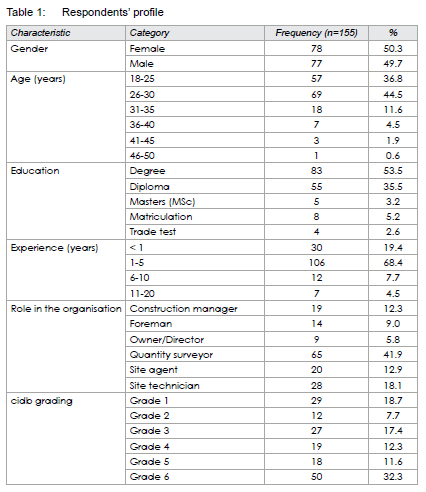
Table 1 indicates that, of the 155 respondents, 50.3% were female and 49.7% male, indicating an increasing gender equality in the construction industry. Of respondents, 44.5% were aged 26-30, and 36.8% aged 18-25. This suggests that SME contractors mostly employ younger professionals, while the low number of older respondents may reflect high turnover or limited career longevity. In terms of education, 53.5% held degrees and 35.5% diplomas, with only 2.6% having a trade test qualification. Regarding experience, 68.4% had 1-5 years' experience, and 19.1% had less than a year. Few had over 10 years' experience, suggesting challenges in retaining experienced employees. Occupationally, 41.9% were quantity surveyors, 18.1% site technicians, and only 5.8% were owners or directors, showing that most of the projects are led by junior professionals. The cidb grading revealed that the vast majority of the respondents worked for grade 6 Arms (32.3%), followed by grade 1 (18.7%) and grade 3 (17.4%), suggesting equal distribution of SME contractors between grades 1 and 6.
4.2 Ranking results
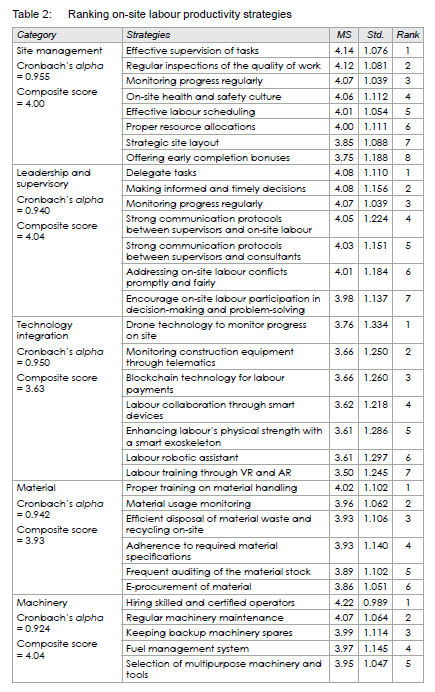
Table 2 presents the results relating to SME contractors' strategies for enhancing on-site labour productivity. The strategies were grouped into five key categories: site management, leadership and supervisory strategies, technology integration, material management, and machinery management. Overall, all items recorded mean scores (MS) above 3.41, indicating that respondents generally regard these strategies as important for improving on-site labour productivity. The reliability analysis indicates strong internal consistency across all categories, with Cronbach's alpha values ranging from 0.924 to 0.955. These values exceed the recommended threshold of 0.70, confirming that the measurement scales used in the study are reliable.
Site management strategies recorded a composite score of 4.00 and a high reliability coefficient (α = 0.955), indicating strong agreement among respondents on the importance of these practices. Among the strategies, effective supervision of tasks ranked highest (MS = 4.14), followed by regular inspections of the quality of work (MS = 4.12) and monitoring progress regularly (MS = 4.07). These results highlight the central role of active site oversight and continuous monitoring in improving labour productivity. Conversely, offering early completion bonuses ranked the lowest (MS = 3.75), although it was still considered important.
For leadership and supervisory strategies, the composite score was 4.04 with a Cronbach's alpha of 0.940, indicating strong internal reliability and a high perceived importance of leadership practices. The highest ranked strategies were delegating tasks (MS = 4.08), making informed and timely decisions (MS = 4.08), and monitoring progress regularly (MS = 4.07). These findings emphasise the importance of effective leadership, timely decision-making, and structured delegation in maintaining productivity on construction sites. The strategy with the lowest ranking was encouraging on-site labour participation in decision-making and problem-solving (MS = 3.98), although it still falls within the "important" range.
The technology integration category recorded the lowest composite score (3.63), although the reliability level remained very high (α = 0.950). This suggests that while respondents consistently recognise the role of technology, it is comparatively less emphasised than other strategies. Drone technology for monitoring progress on-site ranked highest (MS = 3.76), followed by monitoring construction equipment through telematics (MS = 3.66) and blockchain technology for labour payments (MS = 3.66). The lowest ranked strategy was labour training through VR and AR (MS = 3.50). These findings suggest that, while technological solutions are acknowledged, their practical adoption may still be limited among SME contractors.
Material management strategies recorded a composite score of 3.93, with a Cronbach's alpha of 0.942, indicating high reliability and general agreement on the importance of material-related practices. The most important strategy was proper training on material handling (MS = 4.02), followed by material usage monitoring (MS = 3.96) and efficient disposal of material waste and recycling on-site (MS = 3.93). In contrast, e-procurement of material ranked the lowest (MS = 3.86), suggesting that digital procurement systems may still be less commonly used in SME construction projects.
Machinery management strategies recorded the highest composite score (4.04) alongside strong reliability (α = 0.924). The results indicate that machinery-related practices are among the most emphasised strategies for improving on-site labour productivity. The highest ranked item across all categories was hiring skilled and certified operators (MS = 4.22), which falls within the "very important" range. This was followed by regular machinery maintenance (MS = 4.07) and keeping backup machinery spares (MS = 3.99). The lowest-ranked strategy was selection of multipurpose machinery and tools (MS = 3.95), although it remained within the "important" category.
Overall, the findings suggest that SME contractors place the greatest emphasis on machinery management and leadership practices, followed closely by site management strategies, while technology integration receives comparatively lower emphasis. This indicates that productivity improvements are currently driven more by effective supervision, leadership practices, and efficient machinery utilisation than by advanced digital technologies.
4.3 Factor analysis results
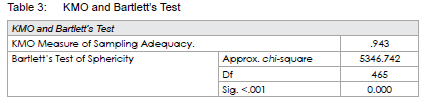
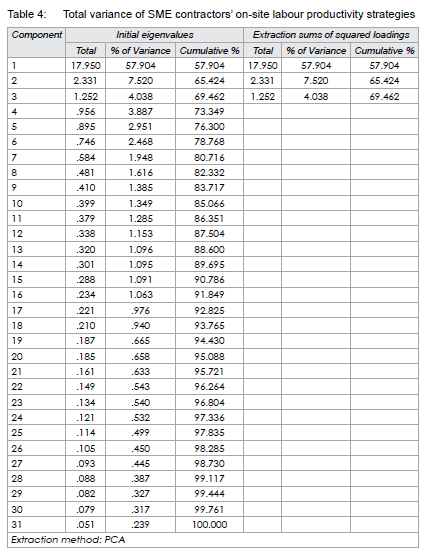
PCA was employed in this study to reduce the dimensionality of the dataset, by transforming the original 31 observed variables into three latent components that account for a substantial proportion of the variance. As shown in Table 3, the KMO Measure of Sampling Adequacy yielded a value of 0.943, which is well above the recommended minimum threshold of 0.6, indicating that the data were suitable for factor analysis. The Bartlett's Test of Sphericity was highly significant (χ2 =5346.742, df = 465, p < 0.001), confirming that sufficient correlations existed among the variables to justify the use of PCA. The resulting factor structures and component loadings are presented in Table 4.
The PCA factor results in Table 4 show that, after varimax rotation, three components with eigenvalues greater than 1.0 were retained, providing a meaningful underlying representation of on-site labour productivity strategies that could support SME contractors in achieving sustainable project success. Component 1 accounts for 57.90% of the total variance, while Component 2 explains 7.52%, and Component 3 explains an additional 4.04%. These three components explain approximately 69.46% of the cumulative variance, demonstrating a strong and coherent factor structure.
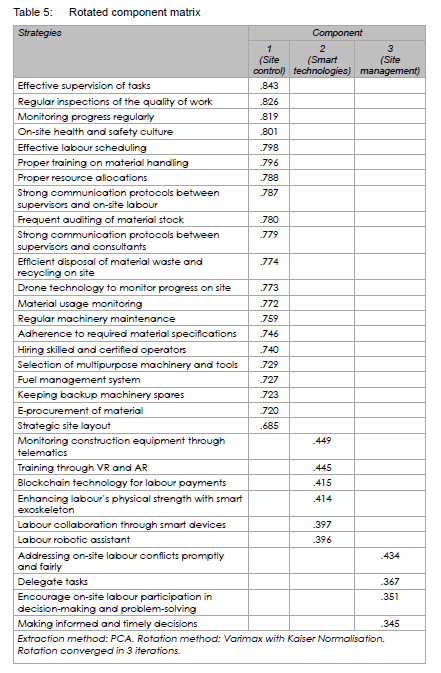
The extracted components were analysed, by examining the relationships among variables within each factor. Items with the highest loadings, generally above 0.40, were assigned to their respective components. Loadings slightly below this threshold (0.345-0.397) were retained, due to their theoretical relevance and contribution to factor interpretability. As shown in Table 5, the three components were identified as Component 1 - 'Site control', Component 2 - 'Smart technologies', and Component 3 -'Site management', representing key on-site labour productivity strategies that can support SME contractors in achieving sustainable project success.
5. DISCUSSION
Component 1 (site control) has an eigenvalue of 17.9, comprises 20 variables, and accounts for 57.9% of the total variance. It is defined by high loadings for effective supervision of tasks (0.843), regular inspections of work quality (0.826), regular monitoring of progress (0.819), and on-site health and safety culture (0.801), along with strong contributions from labour scheduling, material-handling training, resource allocation, supervisor-labour and supervisor-consultant communication, material stock auditing, waste management, drone-based monitoring, material usage tracking, machinery maintenance, adherence to material specifications, skilled operators, multipurpose machinery, fuel management, backup spares, e-procurement, and strategic site layout. Effective supervision, the highest loading variable, was also ranked highest in the descriptive statistics (MS = 4.14), supporting Manoharan et al. (2024a), who demonstrate that clear supervisory instructions and real-time oversight enhance task execution and ensure timely, standards-compliant work. Regular inspection of work quality (0.826), the second highest loading, aligns with descriptions of continuous assessment, ensuring compliance with drawings and specifications (Kreuzer et al., 2020). Overall, the component reflects the coordinated management of labour, materials, equipment, technology, and supervisory processes to ensure efficient, safe, and high-quality construction operations (Bamfo-Agyei et al., 2023), ultimately improving labour productivity, by reducing disruptions, strengthening communication and decision-making, and enabling SME contractors to achieve intended project outcomes (Daoutidis et al., 2018).
Component 2 (smart technologies) consists of six variables and explains 7.5% of the total variance, with an eigenvalue of 2.331. These include monitoring construction equipment through telematics (0.449), labour training, using VR and AR (0.445), blockchain technology for labour payments (0.415), the use of smart exoskeletons to enhance workers' physical capabilities (0.414), labour collaboration via smart devices (0.397), and the deployment of robotic assistants (0.396). Descriptive results ranked equipment monitoring as the second most important factor. As noted by Umar (2025), equipment monitoring involves the use of digital tracking systems to capture real-time data on equipment location, performance, and maintenance needs, thereby improving productivity in project delivery. Such technologies help minimise project delays, enhance operational efficiency, and support labourers' performance, by ensuring continuous equipment availability on construction sites (Zhu et al., 2021). The clustering of these variables indicates a growing emphasis among SME contractors on adopting technology-driven approaches to improve site monitoring and labour management. Although still emerging, these tools enable data-driven decision-making, reduce inefficiencies, and improve transparency in labour output and payment processes. This aligns with findings by Mahmud et al. (2022), who argue that digital tool adoption enhances project efficiency, while mitigating operational risks.
Component 3 (site management) has an eigenvalue of 1.3 and explains 4.0% of the variance. It comprises four variables with modest loadings: addressing on-site labour conflicts promptly and fairly (0.434), delegating tasks (0.367), encouraging labour participation in decision-making and problem-solving (0.351), and making informed, timely decisions (0.345). Collectively, these indicators underscore the role of interpersonal dynamics and participatory management in sustaining productivity on construction sites, where unresolved disputes can disrupt workflow and reduce efficiency. Proactive conflict resolution, worker empowerment, and inclusive decision-making enhance morale and minimise downtime, consistent with evidence that fair conflict-management mechanisms strengthen collaborative site cultures (Adebowale & Agumba, 2023b). Overall, site management reflects the capacity to involve labour in key decisions, address interpersonal tensions effectively, and adjust managerial approaches to changing site conditions.
6. OPERATIONAL FRAMEWORK FOR ENHANCING SME CONTRACTORS' ON-SITE LABOUR PRODUCTIVITY
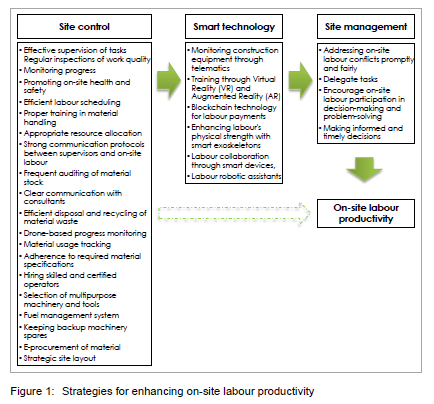
The operational framework in Figure 1 outlines a structured process whereby SME contractors can enhance on-site labour productivity, while ensuring successful project delivery. In developing contexts such as South Africa, successful project delivery is closely linked to site control (Spillane et al., 2013). Site control requires a high degree of connectivity and communication among construction stakeholders (Azubuike, Chikere & Okpokwasili, 2016). SME contractors who acknowledge the importance of effective supervision of tasks, regular inspections of work quality, monitoring progress, promoting on-site health and safety, efficient labour scheduling, proper training in material handling, appropriate resource allocation, strong communication protocols between supervisors and on-site labour, frequent auditing of material stock, clear communication with consultants, efficient disposal and recycling of material waste, drone-based progress monitoring, and material usage tracking can achieve improved productivity and operational efficiency, as reflected in Figure 1. According to Wontorczyk and Roznowski (2022), site control facilitates discipline in daily site activities, minimises idle time (delays) and rework, and ensures optimal utilisation of labour, machinery, and materials. Bock and Linner (2016) further argue that structured operational control enables the translation of managerial intentions into measurable productivity gains on construction sites. Figure 1 shows that site control directly influences SME contractors' on-site labour productivity within construction projects. Effective site control, through proper supervision, coordination, safety enforcement, quality monitoring, and resource management, enables an organised working environment that enhances on-site labour productivity (Azubuike et al., 2016).
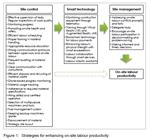
The adoption of smart technologies enables SME contractors to optimise operational performance, particularly in terms of labour productivity (Kwon et al., 2024). These technologies include monitoring construction equipment through telematics, training through VR and AR, blockchain technology for labour payments, enhancing labour's physical strength with smart exoskeletons, labour collaboration through smart devices, and labour robotic assistants. According to Lemière and Uvarova (2020), smart construction technologies allow contracting firms to improve on-site labour productivity, by enhancing resource efficiency, strengthening financial performance, and promoting timely completion of projects. Consequently, the proposed operational framework reflects an evolving interplay between contractors' operations, technological enablement, productivity imp rovements, and successful project delivery (Ibe et al., 2025).
Evidence from Figure 1 shows that site management forms a critical governance foundation for achieving labour productivity in construction work environments (Ahn et al., 2020). By addressing on-site labour conflicts promptly and fairly, delegating tasks, encouraging on-site labour participation in decision-making and problem-solving, and making informed and timely decisions, SME contractors can cultivate a stable and motivated workforce. These elements highlight the importance of effective labour management and inclusive practices as key drivers of improved productivity in construction project delivery (Spillane et al., 2013). Site management reduces site disruptions, strengthens managerial accountability, and enhances worker commitment, thereby establishing favourable conditions for operational efficiency (Azubuike et al., 2016).
7. CONCLUSION AND RECOMMENDATION
This study sought to identify strategies that can enhance on-site labour productivity among SME contractors in the Western Cape province. The findings confirmed that site control, through structured workflows, significantly influences SME contractors' labour productivity. Smart technologies such as telematics, VR/AR-based training, blockchain-enabled payments, and wearable devices were found to enhance monitoring, coordination, and workforce efficiency. Site management enhances participatory decision-making, equitable conflict resolution, and competency-based task delegation, thereby enabling the impact of operational practices on productivity.
The findings further demonstrate that effective site management is essential for improving labour performance in construction sites. Through clear communication, appropriate task assignment, continuous progress monitoring, and prompt conflict resolution, supervisors can create a stable and productive working environment. Site management also reinforces safety practices, boosts worker morale, and reduces absenteeism, ultimately enhancing productivity. SME contractors are, therefore, encouraged to prioritise supervisory training, develop unified site management strategies, and cultivate a leadership culture that promotes motivation, accountability, and cohesion across project teams.
The results also underscore the growing importance of technological adoption in improving labour productivity aligning with SDG 9. Although technological uptake among SMEs remains moderate, tools such as drones, telematics, VR/AR systems, automated monitoring technologies, and blockchain-based payment solutions offer substantial potential for improving accuracy, transparency, and operational efficiency. Government incentives, industry partnerships, and targeted training programmes can support SME contractors in progressively integrating these technologies into their operations.
In addition to technology, effective material and machinery management is crucial for enhancing on-site productivity. SME contractors are thus advised to strengthen logistical planning, implement daily material audits, maintain preventative machinery servicing schedules, and improve coordination among procurement teams, suppliers, and site managers. Policymakers and industry bodies should further support these efforts through financial assistance, capacity-building initiatives, and specialised training programmes.
The proposed operational framework is particularly relevant to SMEs operating with limited resources, especially those facing inefficiencies, labour disputes, inadequate supervision, and insufficient technological integration that compromise productivity. The framework demonstrates how governance principles, operational systems, and technological tools interact sequentially to improve productivity outcomes, thereby offering a practical mechanism for integrating management discipline with sustainable project delivery. The study further aligns with the South African National Development Plan (NDP) Vision 2030, which prioritises infrastructure development, skills improvement, innovation, economic growth, and increased productivity as key drivers for sustainable national development and improved construction sector performance. The study, therefore, contributes to both academic knowledge and practical construction management practice.
Overall, the evidence suggests that SME contractors, through strategic and evidence-based approaches, can substantially enhance operational efficiency, improve sustainability, and contribute meaningfully to the development of South Africa's construction sector.
Future research should empirically test the operational framework across diverse project types and contexts to validate its applicability and refine strategies for enhancing on-site labour productivity.
REFERENCES
2. LITERATURE REVIEW
-
Adebowale, O.J. & Agumba, J.N. 2024. Applications of augmented reality for construction productivity improvement: A systematic review. Smart and Sustainable Built Environment, 13(3), pp. 479-495. https://doi.org/10.1108/SASBE-06-2022-0128
» https://doi.org/10.1108/SASBE-06-2022-0128 -
Adebowale, O.J. & Agumba, J.N. 2023a. Construction SMEs labour productivity, causal layered analysis. Journal of Engineering, Design and Technology, 82(1), pp. 1-25. https://doi.org/10.1108/JEDT-09-2022-0460
» https://doi.org/10.1108/JEDT-09-2022-0460 -
Adebowale, O.J. & Agumba, J.N. 2023b. A scientometric analysis and review of construction labour productivity research. International Journal of Productivity and Performance Management, 72(7), pp. 1903-1923. https://doi.org/10.1108/IJPPM-09-2021-0505
» https://doi.org/10.1108/IJPPM-09-2021-0505 -
Adebowale, O. & Smallwood, J. 2020. Contractors' perceptions of factors affecting construction labour productivity in South Africa. Journal of Contemporary Management, 17(2), pp. 326-346. https://doi.org/10.35683/jcm20028.78
» https://doi.org/10.35683/jcm20028.78 -
Agrawal, A. & Halder, S. 2020. Identifying factors affecting construction labour productivity in India and measures to improve productivity. Asian Journal of Civil Engineering, 21(4), pp. 569-579. https://doi.org/10.1007/s42107019002123
» https://doi.org/10.1007/s42107019002123 -
Ahmed, S. 2018. A review on using opportunities of augmented reality and virtual reality in construction project management. Organization, Technology & Management in Construction: an International Journal, 10(1), pp. 1839-1852. https://doi.org/10.2478/otmcj-2018-0012
» https://doi.org/10.2478/otmcj-2018-0012 -
Ahn, S., Crouch, L., Kim, T.W. & Rameezdeen, R. 2020. Comparison of worker safety risks between onsite and offsite construction methods: A site management perspective. Journal of Construction Engineering and Management, 146(9), article 05020010. https://doi.org/10.1061/(ASCE)CO.19437862.0001890
» https://doi.org/10.1061/(ASCE)CO.19437862.0001890 -
Al Alawi, M.K., Al Abdali, A., Al Shahri, M. & Altawil, S. 2022. Productivity factors in construction SMEs in Oman - Exploration study. The Journal of Engineering Research, 19(1), pp. 33-40. https://doi.org/10.53540/tjer.vol19iss1pp33-40
» https://doi.org/10.53540/tjer.vol19iss1pp33-40 -
Assaad, R. & El-Adaway, I.H. 2021. Guidelines for responding to COVID-19 pandemic: Best practices, impacts, and future research directions. Journal of Management in Engineering, 37(3), article 06021001. https://doi.org/10.1061/(ASCE)ME.1943-5479.0000906
» https://doi.org/10.1061/(ASCE)ME.1943-5479.0000906 -
Assaad, R.H., El-Adaway, I.H., Hastak, M. & LaScola Needy, K. 2023. Key factors affecting labor productivity in offsite construction projects. Journal of Construction Engineering and Management, 149(1), article 04022158. https://doi.org/10.1061/JCEMD4.COENG-12654
» https://doi.org/10.1061/JCEMD4.COENG-12654 -
Ayodele, O.A., Chang-Richards, A. & González, V. 2020. Factors affecting workforce turnover in the construction sector: A systematic review. Journal of Construction Engineering and Management, 146(2), article 03119010. https://doi.org/10.1061/(ASCE)CO.1943-7862.0001725
» https://doi.org/10.1061/(ASCE)CO.1943-7862.0001725 -
Azubuike, C.C., Chikere, C.B. & Okpokwasili, G.C. 2016. Bioremediation techniques-classification based on site of application: Principles, advantages, limitations and prospects. World Journal of Microbiology and Biotechnology, 32(11), article 180. https://doi.org/10.1007/s112740162137x
» https://doi.org/10.1007/s112740162137x -
Bamfo-Agyei, E., Thwala, D.W. & Aigbavboa, C. 2023. Optimisation of labour-intensive productivity for construction projects in Ghana. Acta Structilia, 30(1), pp. 122-154. https://doi.org/10.38140/as.v30i1.6988
» https://doi.org/10.38140/as.v30i1.6988 -
Bierman, P.R., Shakun, J.D., Corbett, L.B., Zimmerman, S.R. & Rood, D.H. 2016. A persistent and dynamic East Greenland Ice Sheet over the past 7.5 million years. Nature, 540(7632), pp. 256-260. https://doi.org/10.1038/nature20147
» https://doi.org/10.1038/nature20147 -
Bock, T. & Linner, T. 2016. Site automation. Cambridge: Cambridge University Press. https://doi.org/10.1017/CBO9781139872027
» https://doi.org/10.1017/CBO9781139872027 - Bryman, A. 2016. Social research methods. Oxford: Oxford University Press.
- Creswell, J.W. & Creswell, J.D. 2018. Research design: Qualitative, quantitative, and mixed methods approaches. 5th edition. London, UK: SAGE Publications.
- Dalibi, S.G. 2016. Resultant effects of poor supervision in construction projects in Nigeria. Paper presented at the 6th Building and Construction Economic Round Table, Abuja FCT, Nigeria, 14-15 June.
-
Daoutidis, P., Lee, J.H., Harjunkoski, I., Skogestad, S., Baldea, M. & Georgakis, C. 2018. Integrating operations and control: A perspective and roadmap for future research. Computers & Chemical Engineering, 115, pp. 179-184. https://doi.org/10.1016/j.compchemeng.2018.03.006
» https://doi.org/10.1016/j.compchemeng.2018.03.006 -
Dhliwayo, T., Musonda, I., Gumbo, T. & Kaisara, G. 2024. Critical success factors framework for enhancing the sustainability of small and medium-sized contractors in Namibia. Acta Structilia, 31(1), pp. 120-158. https://doi.org/10.38140/as.v31i1.7889
» https://doi.org/10.38140/as.v31i1.7889 -
Ebekozien, A., Hafez, M., Aigbavboa, C., Shariff, M.S.M., Nwaole, A.N.C. et al. 2025. Appraising the role of building contracting firms in the digitalisation of artisans' skills development to achieving Sustainable Development Goal 8. Frontiers in Built Environment, 11, article 1632509. https://doi.org/10.3389/fbuil.2025.1632509
» https://doi.org/10.3389/fbuil.2025.1632509 -
Ebert, J.F., Huibers, L., Christensen, B. & Christensen, M.B. 2018. Web-based questionnaire invitations as a method for data collection: Cross-sectional comparative study of differences in response rate, completeness of data, and financial cost. Journal of Medical Internet Research, 20(1), article 24. https://doi.org/10.2196/jmir.8353
» https://doi.org/10.2196/jmir.8353 -
Edobor, F. & Sambo-Magaji, A. 2025. Small and medium enterprises (SMEs) and sustainable economic development. In: Kumar, P. et al. (Eds). Digital transformation for business sustainability and growth in emerging markets (pp. 197-222). Leeds, UK: Emerald Publishing Limited. https://doi.org/10.1108/978-1-83549-109-620251008
» https://doi.org/10.1108/978-1-83549-109-620251008 -
Edwin, A.A. & Calistus, A. 2023. Measurement and analysis of impact of supervision on construction labour productivity: A case study of north-central Nigeria. Bima Journal of Science and Technology, 7(1), pp. 2536-6041. https://doi.org/10.56892/bima.v7i01.403
» https://doi.org/10.56892/bima.v7i01.403 -
Hair, J.F., Hult, G.T.M., Ringle, C.M. & Sarstedt, M. 2019. A primer on partial least squares structural equation modeling (PLS-SEM). 2nd edition. London, UK: SAGE Publications. https://doi.org/10.3926/oss.37
» https://doi.org/10.3926/oss.37 -
Hamledari, H. & Fischer, M. 2021. Construction payment automation using blockchain-enabled smart contracts and robotic reality capture technologies. Automation in Construction, 132, article 103926. https://doi.org/10.1016/j.autcon.2021.103926
» https://doi.org/10.1016/j.autcon.2021.103926 -
Hamza, R., Rabii, A., Ezzahraoui, F.Z., Morgan, G. & Iorhemen, O.T. 2022. A review of the state of development of aerobic granular sludge technology over the last 20 years: Full-scale applications and resource recovery. Case Studies in Chemical and Environmental Engineering, 5, article 100173. https://doi.org/10.1016/j.cscee.2022.100173
» https://doi.org/10.1016/j.cscee.2022.100173 - Hayford, J., Eccles, T., Fong, D. & Ebohon, O. 2022. Development of conceptual motivational framework to improve construction labour productivity in the UK. In: Proceedings of the AUBEA 2022 Conference - The 45th Australasian Universities Building Education Association Conference, 24 November, Western Sydney University, Australia.
-
Hox, J.J. & Boeije, H.R. 2005. Data collection, primary versus secondary. In: Everitt, B.S. & Howell, D.C. (Eds). Encyclopedia of statistics in behavioral science. Chichester: John Wiley & Sons, pp. 593-599. https://doi.org/10.1016/B0-12-369398-5/00041-4
» https://doi.org/10.1016/B0-12-369398-5/00041-4 -
Hsieh, S.H. & Perri, P.F. 2021. Estimating the proportion of non-heterosexuals in Taiwan using Christofides' randomized response model: A comparison of different estimation methods. Social Science Research, 93, article 102475. https://doi.org/10.1016/j.ssresearch.2020.102475
» https://doi.org/10.1016/j.ssresearch.2020.102475 -
Ibe, C.N., Serbescu, A., Hossain, M. & Ibe, I.I. 2025. Optimizing circular economy practices in construction: A systematic review of material management strategies. Built Environment Project and Asset Management, 15(5), pp. 1020-1035. https://doi.org/10.1108/BEPAM-02-2024-0026
» https://doi.org/10.1108/BEPAM-02-2024-0026 -
Jimoh, R., Oyewobi, L., Suleiman, S. & Isa, R. 2017. Influence of supervision on labour productivity on construction sites in Abuja-Nigeria. Independent Journal of Management and Production, 8(1), pp. 64-84. https://doi.org/10.14807/ijmp.v8i1.523
» https://doi.org/10.14807/ijmp.v8i1.523 -
Karakhan, A.A., Gambatese, J. & Simmons, D.R. 2020. Development of assessment tool for workforce sustainability. Journal of Construction Engineering and Management, 146(4), pp. 11-19. https://doi.org/10.1061/(ASCE)CO.1943-7862.0001785
» https://doi.org/10.1061/(ASCE)CO.1943-7862.0001785 -
Karakhan, A.A., Nnaji, C.A., Gambatese, J.A. & Simmons, D.R. 2023. Best practice strategies for workforce development and sustainability in construction. Practice Periodical on Structural Design and Construction, 28(1), pp. 15-21. https://doi.org/10.1061/(ASCE)SC.1943-5576.0000723
» https://doi.org/10.1061/(ASCE)SC.1943-5576.0000723 -
Kesavan, M., Dissanayake, P., Pathirana, C., Deegahawature, M. & Silva, K. 2022. Developing a new construction supervisory training programme focusing on productivity and performance improvement of labour operations. Engineer, 55(4), pp. 135-151. https://doi.org/10.4038/engineer.v55i4.7550
» https://doi.org/10.4038/engineer.v55i4.7550 -
Khan, S.B., Proverbs, D.G. & Xiao, H. 2022. The motivation of operatives in small construction firms towards health and safety - A conceptual framework. Engineering, Construction and Architectural Management, 29(1), pp. 245-261. https://doi.org/10.1108/ECAM-06-2020-0399
» https://doi.org/10.1108/ECAM-06-2020-0399 -
Krejcie, R.V. & Morgan, D.W. 1970. Determining sample size for research activities. Educational and Psychological Measurement, 30(3), pp. 607-610. https://doi.org/10.1177/001316447003000308
» https://doi.org/10.1177/001316447003000308 -
Kreuzer, T., Röglinger, M. & Rupprecht, L. 2020. Customer-centric prioritization of process improvement projects. Decision Support Systems, 133(34), pp. 113-186. https://doi.org/10.1016/j.dss.2020.113186
» https://doi.org/10.1016/j.dss.2020.113186 -
Kwon, H., Park, J., Shin, J.E. & Koo, B. 2024. Optimal investment strategy analysis of on-site hydrogen production based on the hydrogen demand prediction using machine learning. International Journal of Energy Research, 48(1), article 6313421. https://doi.org/10.1155/2024/6313421
» https://doi.org/10.1155/2024/6313421 -
Lakshan, H., Wijesinghe, T. & Perera, B. 2023. The impact of labour motivation on project performance with an insight into the Sri Lankan construction industry. In: SLIIT 2nd International Conference on Engineering and Technology, 25 March, Malabe Campus, Sri Lanka. https://doi.org/10.54389/LUJO3426
» https://doi.org/10.54389/LUJO3426 -
Lemière, B. & Uvarova, Y.A. 2020. New developments in field-portable geochemical techniques and on-site technologies and their place in mineral exploration. Geochemistry: Exploration, Environment, Analysis, 20(2), pp. 205-216. https://doi.org/10.1144/geochem2019-043
» https://doi.org/10.1144/geochem2019-043 -
Mahmud, H., Islam, A.N., Ahmed, S.I. & Smolander, K. 2022. What influences algorithmic decision-making? A systematic literature review on algorithm aversion. Technological Forecasting and Social change, 175, article 121390. https://doi.org/10.1016/j.techfore.2021.121390
» https://doi.org/10.1016/j.techfore.2021.121390 -
Mai, T.P., Doan, D.T. & Ghaffarianhoseini, A. 2025. Utilizing multiskilled resources in addressing labor shortage issues in off-site construction: Benefits, challenges, and best practices. Journal of Construction Engineering and Management, 151(4), article 04025014. https://doi.org/10.1061/JCEMD4.COENG-15275
» https://doi.org/10.1061/JCEMD4.COENG-15275 -
Manoharan, K., Dissanayake, P., Pathirana, C., Deegahawature, D. & Silva, R. 2024a. Assessing the performance and productivity of labour in building construction projects through the application of work-based training practices. Construction Innovation, 24(2), pp. 558-583. https://doi.org/10.1108/CI-05-2022-0126
» https://doi.org/10.1108/CI-05-2022-0126 -
Manoharan, K., Dissanayake, P., Pathirana, C., Deegahawature, D. & Silva, R. 2024b. Investigating and determining the crucial construction site supervisory competencies influencing the effectiveness of building construction project activities. International Journal of Industrial Engineering and Operations Management, 6(1), pp. 43-63. https://doi.org/10.1108/IJIEOM-02-2023-0015
» https://doi.org/10.1108/IJIEOM-02-2023-0015 -
Mashwama, N., Aigbavboa, C. & Thwala, W. 2019. Occupational health and safety challenges among small and medium sized enterprise contractors in South Africa. Springer International Publishing, 1(792), pp. 68-76. https://doi.org/10.1007/978-3-319-94000-7_7
» https://doi.org/10.1007/978-3-319-94000-7_7 -
Mischke, J., Stokvis, K. & Koen V. 2024. Delivering on construction productivity is no longer optional. McKinsey and Company. https://www.mckinsey.com
» https://www.mckinsey.com -
Morey, R.D., Hoekstra, R., Rouder, J.N., Lee, M.D. & Wagenmakers, E.J. 2016. The fallacy of placing confidence in confidence intervals. Psychonomic Bulletin and Review, 23, pp. 103-123. https://doi.org/10.3758/s13423-015-0947-8
» https://doi.org/10.3758/s13423-015-0947-8 -
Napitupulu, D., Kadar, J.A. & Jati, R.K. 2017. Validity testing of technology acceptance model based on factor analysis approach. Indonesian Journal of Electrical Engineering and Computer Science, 5(3), pp. 697-704. https://doi.org/10.11591/ijeecs.v5.i3
» https://doi.org/10.11591/ijeecs.v5.i3 -
Ohueri, C.C., Enegbuma, W.I., Wong, N.H., Kuok, K.K. & Kenley, R. 2018. Labour productivity motivation framework for Iskandar Malaysia. Built Environment Project and Asset Management, 8(3), pp. 293-304. https://doi.org/10.1108/BEPAM-09-2017-0070
» https://doi.org/10.1108/BEPAM-09-2017-0070 -
Oladiran, O. & Onatayo, D. 2019. Labour productivity: Perception of site managers on building projects. LAUTECH Journal of Civil and Environmental Studies, 2(1), pp. 12-19. https://doi.org/10.36108/laujoces/9102/20(0110)
» https://doi.org/10.36108/laujoces/9102/20(0110) -
Olbina, S. & Glick, S. 2023. Using integrated hands-on and virtual reality (VR) or augmented reality (AR) approaches in construction management education. International Journal of Construction Education and Research, 19(3), pp. 341-360. https://doi.org/10.1080/15578771.2022.2115173
» https://doi.org/10.1080/15578771.2022.2115173 - Oribhabor, C.B. & Anyanwu, C.A. 2019. Research sampling and sample size determination: A practical application. Journal of Educational Research (Fudjer), 2(1), pp. 47-57.
-
Oswald, D., Ahiaga-Dagbui, D.D., Sherratt, F. & Smith, S.D. 2020. An industry structured for unsafety? An exploration of the cost-safety conundrum in construction project delivery. Safety Science, 122(11), pp. 104-153. https://doi.org/10.1016/j.ssci.2019.09.020
» https://doi.org/10.1016/j.ssci.2019.09.020 -
Pallant, J. 2020. SPSS survival manual: A step-by-step guide to data analysis using IBM SPSS. Oxfordshire, UK: Routledge. https://doi.org/10.4324/9781003117452
» https://doi.org/10.4324/9781003117452 -
Panuwatwanich, K., Al-Haadir, S. & Stewart, R.A. 2017. Influence of safety motivation and climate on safety behaviour and outcomes, evidence from the Saudi Arabian construction industry. International Journal of Occupational Safety and Ergonomics, 23(1), pp. 60-75. https://doi.org/10.1080/10803548.2016.1235424
» https://doi.org/10.1080/10803548.2016.1235424 -
Patel, B., Bhavsar, J.J. & Pitroda, J. 2017. A critical literature review of labour productivity in building construction. International Journal of Constructive Research in Civil Engineering, 3(4), pp. 76-80. https://doi.org/10.20431/2454-8693.0304007
» https://doi.org/10.20431/2454-8693.0304007 -
Peiris, A., Hui, F., Duffield, C., Wang, J., Garcia, M.G. et al. 2023. Digitalising modular construction: Enhancement of off-site manufacturing productivity via a manufacturing execution and control (MEC) system. Computers & Industrial Engineering, 178, article 109117. https://doi.org/10.1016/j.cie.2023.109117
» https://doi.org/10.1016/j.cie.2023.109117 -
Rens, E., Smith, P., Nicaise, P., Lorant, V. & Van den Broeck, K. 2021. Mental distress and its contributing factors among young people during the first wave of COVID-19: A Belgian survey study. Frontiers in Psychiatry, 12, article 575553. https://doi.org/10.3389/fpsyt.2021.575553
» https://doi.org/10.3389/fpsyt.2021.575553 -
Saunders, B., Sim, J., Kingstone, T., Baker, S., Waterfield, J. et al. 2018. Saturation in qualitative research: Exploring its conceptualization and operationalization. Quality and Quantity, 52(4), pp. 1893-1907. https://doi.org/10.1007/s1113501705748
» https://doi.org/10.1007/s1113501705748 -
Shrestha, N. 2021. Factor analysis as a tool for survey analysis. American Journal of Applied Mathematics and Statistics, 9(1), pp. 4-11. https://doi.org/10.12691/ajams-9-1-2
» https://doi.org/10.12691/ajams-9-1-2 -
Sogaxa, A. 2024. SME contractors' management practices to achieve sustainable business performance in the Eastern Cape province, South Africa. Acta Structilia, 31(2), pp. 81-122. https://doi.org/10.38140/as.v31i2.8196
» https://doi.org/10.38140/as.v31i2.8196 -
Spillane, J.P., Oyedele, L.O., Von Meding, J., Konanahalli, A. & Jaiyeoba, B.E. 2013. Critical factors affecting effective management of site personnel and operatives in confined site construction. International Journal of Information Technology Project Management (IJITPM), 4(2), pp. 92-108. https://doi.org/10.4018/ijitpm.2013040106
» https://doi.org/10.4018/ijitpm.2013040106 - Tabachnick, B.G. & Fidell, L.S. 2019. Using multivariate statistics. 7th edition. Boston: Pearson.
-
Taber, K.S. 2018. The use of Cronbach's alpha when developing and reporting research instruments in science education. Research in Science Education, 48(6), pp. 1273-1296. https://doi.org/10.1007/s1116501696022
» https://doi.org/10.1007/s1116501696022 - Taherdoost, H. 2019. What is the best response scale for survey and questionnaire design? Review of different lengths of rating scale/attitude scale/Likert scale. International Journal of Academic Research in Management (IJARM), 8(1), pp. 1-10.
-
Tu, Y.X., Kubatko, O., Melnyk, L., Li, R., Kovalov, B. & Yaremenko, A. 2025. Economic, institutional and environmental drivers of SMEs' development in the EU: Sustainable development goals perspective. Environment, Development and Sustainability, 27(8), pp. 20101-20119. https://doi.org/10.1007/s10668-024-05686-z
» https://doi.org/10.1007/s10668-024-05686-z -
Uka, A. & Prendi, A. 2021. Motivation as an indicator of performance and productivity from the perspective of employees. Management and marketing. Challenges for the knowledge society. Sciendo, 16(3), pp. 268-285. https://doi.org/10.2478/mmcks-2021-0016
» https://doi.org/10.2478/mmcks-2021-0016 - Umar, M. 2025. The role of onsite support in enhancing operational efficiency in industrial factories. Unpublished Masters thesis, Metropolia University of Applied Sciences, Finland.
-
Urrahmi, M., Oktaviani, C.Z. & Mubarak, M. 2024. Analysis of the success of construction projects based on labor productivity. In: E3S Web of Conferences, 476(4), pp. 1-11. https://doi.org/10.1051/e3sconf/202447601011
» https://doi.org/10.1051/e3sconf/202447601011 - Vivian, C.N. & Amah, E. 2024. The impact of employer provided benefits on job satisfaction in public construction sector in Rivers State, Nigeria. Research Journal of Management Practice, 4(4), pp. 32-48.
- Walters, K. & Rodriguez, J. 2019. The importance of training and development in employee performance and evaluation. World Wide Journal of Multidisciplinary Research and Development, 3(10), pp. 206-212.
-
Wang, M., Wang, C.C., Sepasgozar, S. & Zlatanova, S. 2020. A systematic review of digital technology adoption in off-site construction: Current status and future direction towards industry 4.0. Buildings, 10(11), article 204. https://doi.org/10.3390/buildings10110204
» https://doi.org/10.3390/buildings10110204 - Werner, S. & Balkin, D.B. 2021. Strategic benefits: How employee benefits can create a sustainable competitive edge. The Journal of Total Rewards, 30(1), pp. 8-22.
-
Wong, Q., Sapuan, N.M. & Khan, M. 2023. The impact of safety and health towards construction workforce productivity. Journal of Governance and Integrity, 6(1), pp. 504-514. https://doi.org/10.15282/jgi.6.1.2023.9114
» https://doi.org/10.15282/jgi.6.1.2023.9114 -
Wontorczyk, A. & Roznowski, B. 2022. Remote, hybrid, and on-site work during the SARS-CoV-2 pandemic and the consequences for stress and work engagement. International Journal of Environmental Research and Public Health, 19(4), article 2400. https://doi.org/10.3390/ijerph19042400
» https://doi.org/10.3390/ijerph19042400 -
Yazdi, M. 2024. Artificial intelligence in workplace health and safety: Data-driven technologies, tools and techniques. Boca Raton, USA: CRC Press. https://doi.org/10.1201/9781003515173
» https://doi.org/10.1201/9781003515173 -
Yitmen, I., Almusaed, A. & Alizadehsalehi, S. 2023. Investigating the causal relationships among enablers of the construction 5.0 paradigm: Integration of operator 5.0 and society 5.0 with human-centricity, sustainability, and resilience. Sustainability, 15(11), article 9105. https://doi.org/10.3390/su15119105
» https://doi.org/10.3390/su15119105 -
Zhu, Z., Dutta, A. & Dai, F. 2021. Exoskeletons for manual material handling - A review and implication for construction applications. Automation in Construction, 122(1), pp 1-1. https://doi.org/10.1016/j.autcon.2020.103510
» https://doi.org/10.1016/j.autcon.2020.103510
Peer reviewed and revised: May 2026
Published: June 2026