A Comparative Study of the Efficacy of Conventional Dissolved Gas Analysis Techniques, Fuzzy Inference Systems, and Artificial Neural Network Classifiers for Fault Diagnosis in Oil-Filled Power Transformers
Abstract
Power transformers are critical assets that require reliable monitoring due to their high economic and operational importance. Dissolved Gas Analysis (DGA) is extensively used as a condition monitoring technique because of its ability to detect internal faults without interrupting operation. However, its effectiveness is often constrained by reliance on expert knowledge and inconsistencies among traditional interpretation techniques. To address these challenges, this study explores the use of intelligent computational methods to enhance diagnostic accuracy. An Artificial Neural Network (ANN) model and Fuzzy Inference Systems (FIS) are evaluated using transformer DGA data. The ANN utilises a feedforward backpropagation algorithm with Bayesian regularization, while data preprocessing includes dimensionality reduction using Principal Component Analysis (PCA) and dataset balancing through Adaptive Synthetic Sampling (ADASYN). In parallel, fuzzy logic is incorporated into four conventional DGA approaches: IEC, Rogers, Doernenburg, and Duval Triangle to assess whether uncertainty handling improves classification performance. The proposed ANN model demonstrated improved classification performance reaching an accuracy of approximately 77% on unseen data, exceeding the performance of all conventional techniques. Among the fuzzy-enhanced methods, only the IEC approach demonstrated noticeable improvement. The findings indicate that ANN-based models offer a more reliable and consistent alternative for transformer fault diagnosis compared to both classical and fuzzy-modified techniques.
Dissolved Gas Analysis; Power Transformer; Machine Learning; Artificial Neural Network; Fuzzy Inference Systems
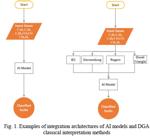 Thumbnail
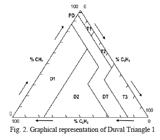 Thumbnail
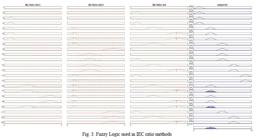 Thumbnail
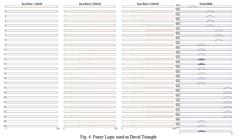 Thumbnail
 Thumbnail
 Thumbnail
 Thumbnail
 Thumbnail
 Thumbnail
 Thumbnail
 Thumbnail
 Thumbnail
 Thumbnail