A technical and economic comparison between traditionally employed and emerging fault level management solutions at distribution voltages
Abstract
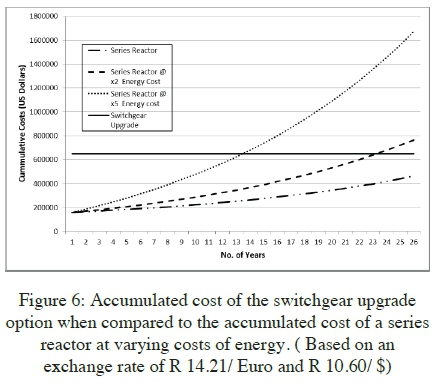
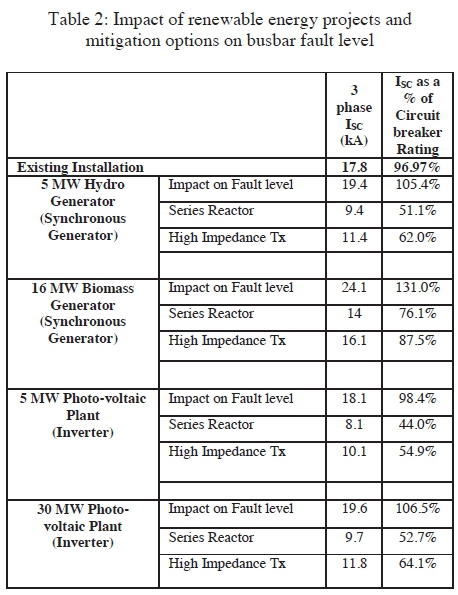
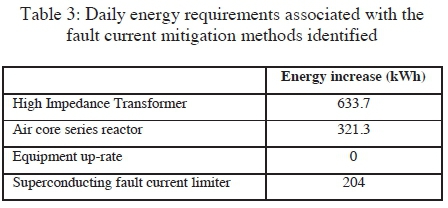
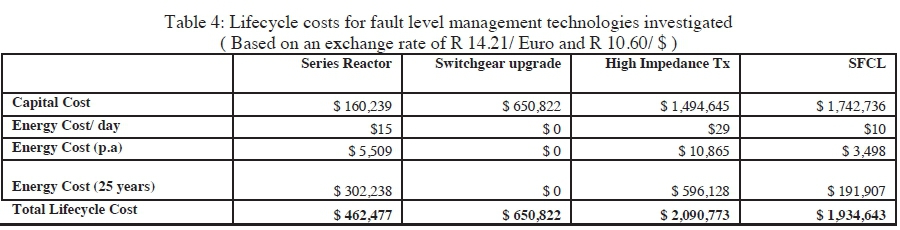
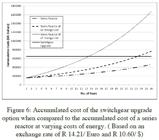
Network fault levels are reported to be increasing and this is often attributed to an increase in network interconnectivity and localised generation. When the fault level at a substation increases beyond the rated value of the installed equipment, a power utility traditionally responded by either (i) replacing the equipment with higher rated equipment or, (ii) installing series reactors or, (iii) replacing the existing transformers with high impedance transformers. Using a South African case study, this paper compares both the effectiveness and financial viability of a superconducting fault current limiter (SFCL) against the traditional three options. When one also considers the operational or 'energy' cost associated with all these options it was found that a high capital cost was sometimes offset by lower energy costs over a 25 year service life. Regional prices of electricity and tariffs therefore have a significant impact on a utility's choice of fault management solutions.
fault level management; power system management; superconducting fault current limiters
 Thumbnail
 Thumbnail
 Thumbnail
 Thumbnail
 Thumbnail