Using LSTM To Perform Load Predictions For Grid-Interactive Buildings
Abstract
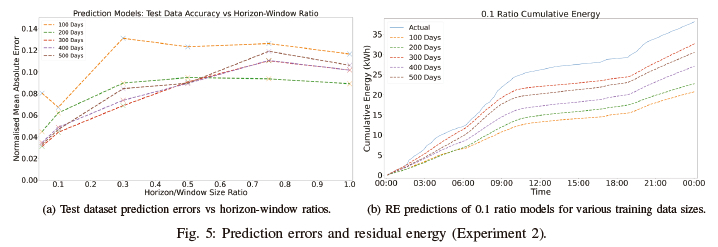
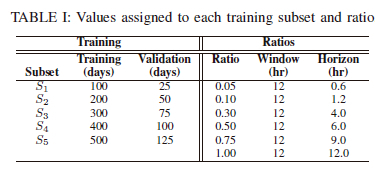
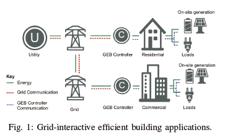
Energy consumption from the residential sector forms a large portion of the electricity grid demand. The growing accessibility of residential load profile data presents an opportunity for improved residential load forecasting and the implementation of demand-side management (DSM) strategies. Machine learning is a tool well-suited for predicting stochastic processes, such as residential power usage due to human behavior. Long short-term memory (LSTM) recurrent neural networks are especially suited for predicting time-series data such as electrical load profiles. This paper investigates the impact of LSTM hyperparameters to the predictive performance of models, which include the tradeoffs associated with training data size, horizon ratios, model fidelity, prediction horizon and computational intensity. This paper provides a framework to evaluate the choice of LSTM hyperparameters for understanding trade-offs in a practical application of load profile predictions for the context of Grid-interactive Efficient Buildings (GEBs).
Grid-Interactive Buildings; LSTM; Machine Learning; Load Forecasting; Demand-Side Management
 Thumbnail
 Thumbnail
 Thumbnail
 Thumbnail
 Thumbnail