Selection of a classroom observation tool for disability inclusion in Uganda
Abstract
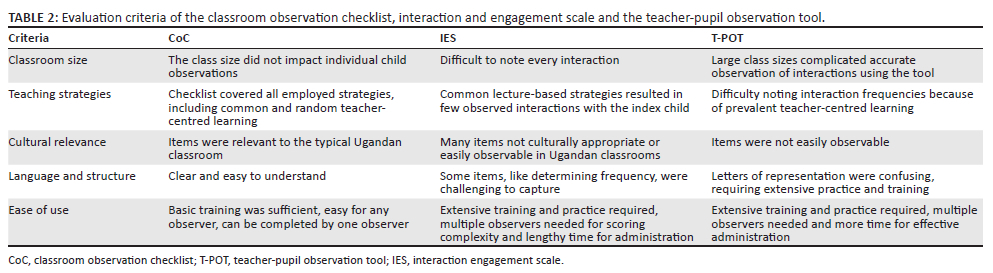
BACKGROUND: Obuntu Bulamu is a Ugandan intervention promoting inclusive education for children with disabilities. This culturally appropriate approach, based on the Ubuntu philosophy, utilises peer-to-peer support activities for children, parents and teachers. OBJECTIVES: To effectively measure the intervention's impact on disability inclusion, the study aimed to select, adapt and test classroom observation instruments suitable for the Ugandan context. METHOD: Three structured classroom observation tools were selected and piloted in 10 primary schools in Wakiso District: The Classroom Observation Checklist (CoC), the Teacher-Pupil Observation Tool (T-POT) and the Interaction Engagement Scale (IES). These tools were adapted to ensure cultural relevance and applicability within Ugandan school settings. RESULTS: Factors like class size, teaching methods, cultural relevance, language and ease of use influenced the suitability of the selected tool. The CoC emerged as a more effective tool with a strong internal consistency (Cronbach's alpha of 0.80) for capturing inclusiveness and peer-to-peer support in the classroom compared to the T-POT and IES. CONCLUSION: The study findings emphasise the significance of adapting and testing tools in specific cultural contexts and low-income country settings and considering culturally contextual factors like class size, teaching methods, language complexity and ease of use when measuring disability inclusion in primary schools. CONTRIBUTION: The selection of a classroom observation tool for the Obuntu Bulamu randomised control trial contributed to African disability knowledge and practices designed on and for the continent.
disability; adaptation; testing; classroom observations; tools; inclusive education; peer support; primary schools; Uganda