Impact of prostheses on quality of life and functional status of transfemoral amputees in Tanzania
Abstract
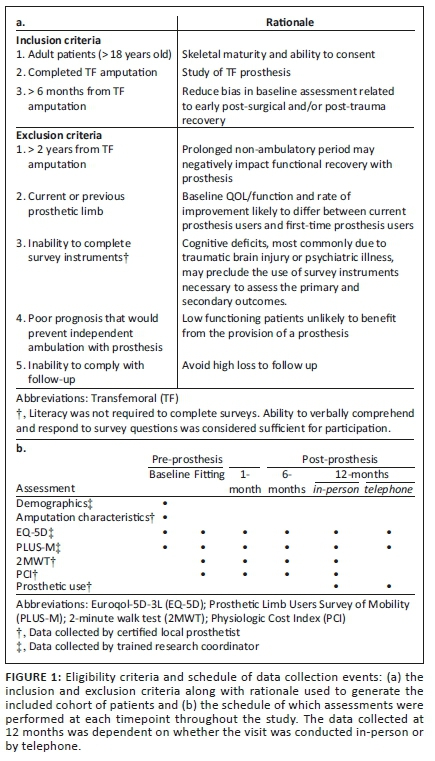
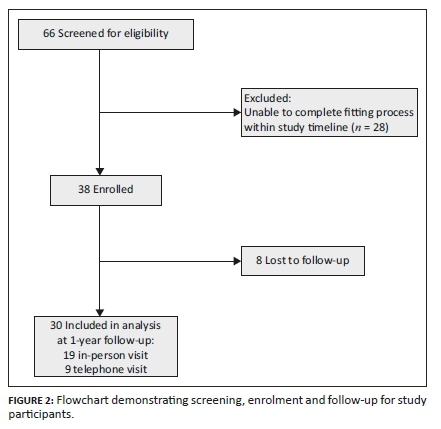
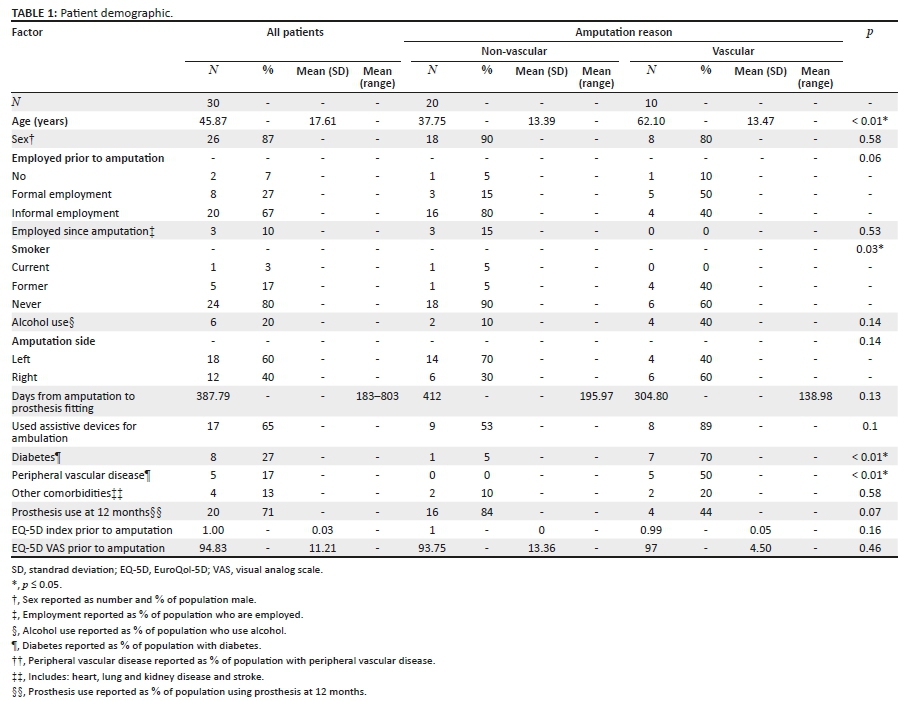
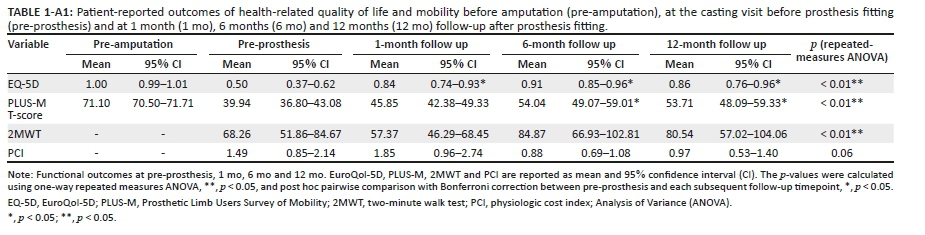
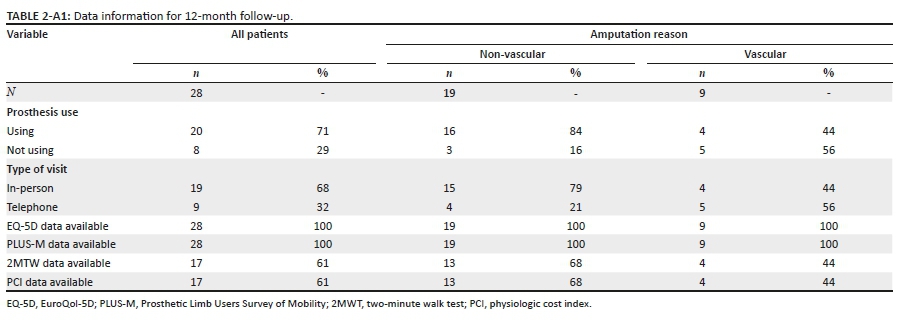
BACKGROUND: The rise of diabetes and traumatic injury has increased limb loss-related morbidity in low- and middle-income countries (LMICs). Despite this, the majority of amputees in LMICs have no access to prosthetic devices, and the magnitude of prosthesis impact on quality of life (QOL ) and function has not been quantified. OBJECTIVES: Quantify the impact of prostheses on QOL and function in Tanzanian transfemoral amputees. METHOD: A prospective cohort study was conducted. Transfemoral amputees at Muhimbili Orthopaedic Institute were assessed twice before and three times after prosthetic fitting using EuroQol-5D-3L (EQ-5D-3L), Prosthetic Limb Users Survey of Mobility (PLUS-M), 2-minute walk test (2MWT) and Physiologic Cost Index (PCI). Data were analysed for change over time. Subgroup analysis was performed for amputation aetiology (vascular or non-vascular) and prosthesis use RESULTS: Amongst 30 patients, EQ-5D, PLUS-M and 2MWT improved after prosthesis provision (p < 0.001). EuroQol-5D increased from 0.48 to 0.85 at 1 year (p < 0.001). EuroQol-5D and 2MWT were higher in non-vascular subgroup (p < 0.030). At 1-year, 84% of non-vascular and 44% of vascular subgroups reported using their prosthesis (p = 0.068). CONCLUSION: Prosthesis provision to transfemoral amputees in an LMIC improved QOL and function. This benefit was greater for non-vascular amputation aetiologies. Quality of life and function returned to pre-prosthesis levels with discontinued use of prosthesis.
low- and middle-income countries; transfemoral amputation; above-knee prosthesis; quality of life; functional status; Tanzania
 Thumbnail
 Thumbnail