Whole-genome sequencing for surveillance of Salmonella at a public health institution in South Africa
Abstract
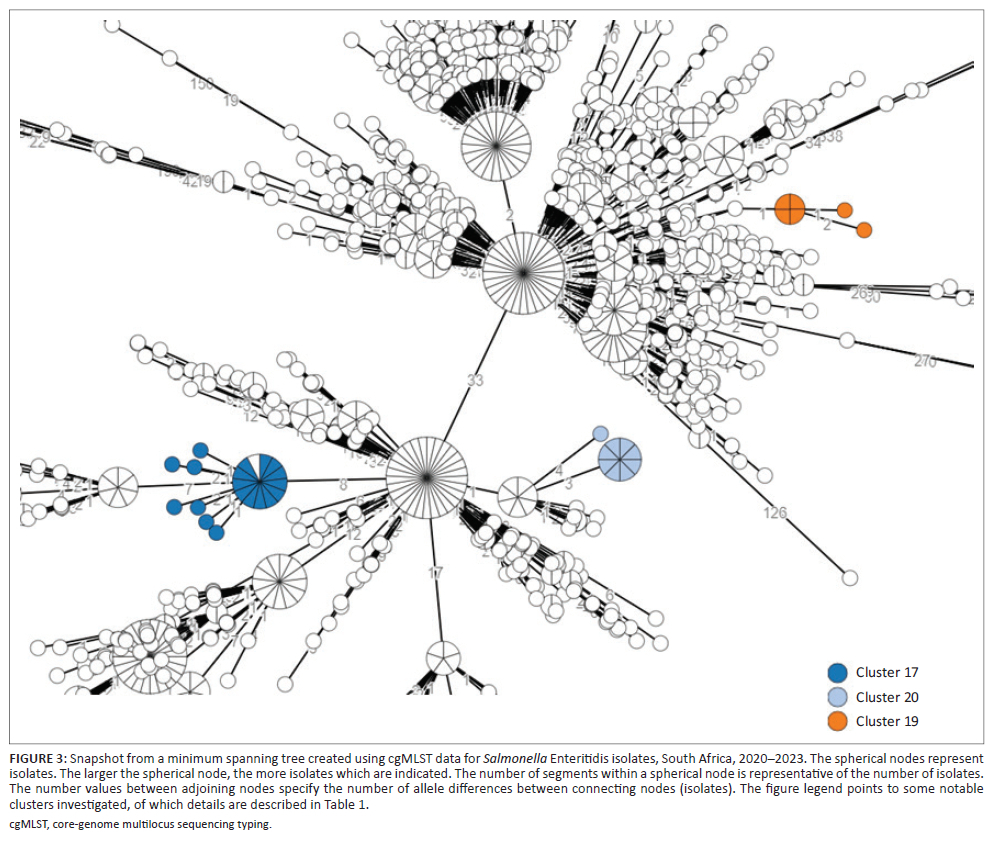
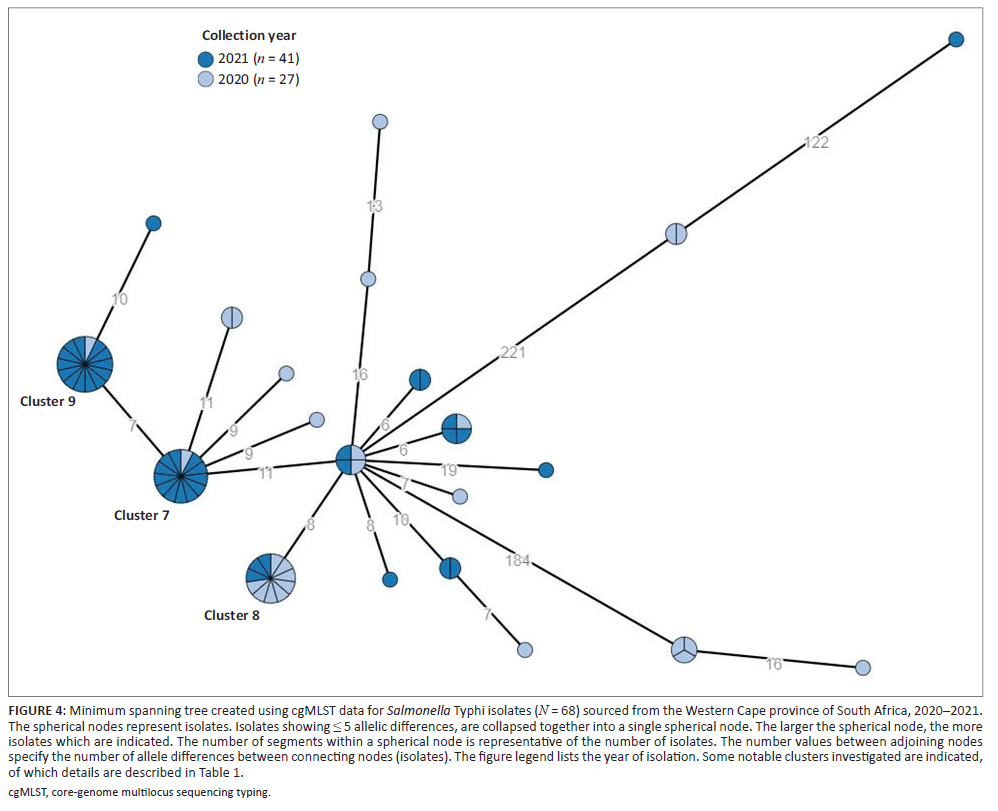
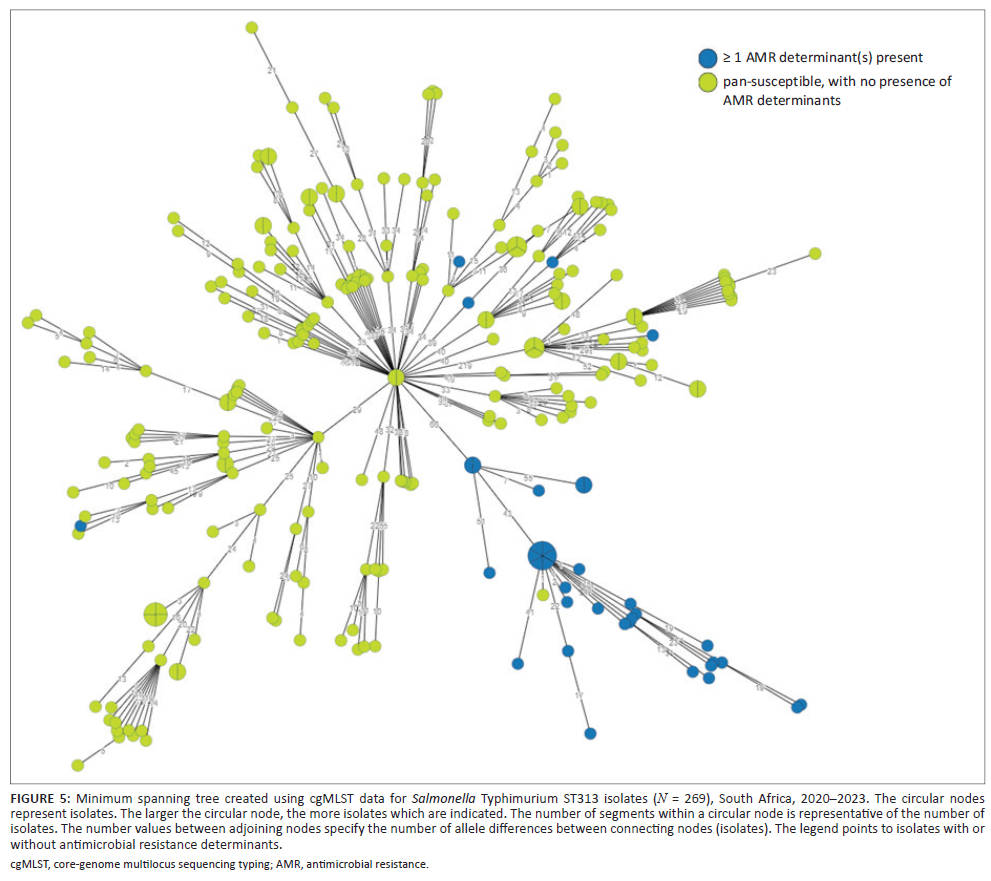
BACKGROUND: Whole-genome sequencing (WGS) is transforming communicable disease surveillance globally. The National Institute for Communicable Diseases, South Africa, participates in national laboratory-based surveillance for human isolates of Salmonella OBJECTIVE: This study was to investigate human Salmonella isolates from South Africa, 2020-2023, using WGS analysis. METHODS: WGS was performed using Illumina NextSeq Technology. Data were analysed using multiple bioinformatics tools, including those available at the Center for Genomic Epidemiology, Pathogenwatch and EnteroBase. Data analysis allowed for identification and characterisation of isolates. Core-genome multilocus sequence typing was used to investigate the phylogeny of isolates. RESULTS: Of the 8006 isolates of Salmonella that were analysed using WGS, 130 distinctive serovars and subspecies were identified. Salmonella enterica serovar Enteritidis (Salmonella Enteritidis) (4271/8006; 53.3%) and Salmonella Typhimurium (1430/8006; 17.9%) were the most prevalent serovars, accounting for 71.2% of all isolates. This was followed by Salmonella Typhi (482/8006; 6.0%). Sixteen per cent (1288/8006) of isolates showed the presence of antimicrobial resistance (AMR) determinants associated with ≥ 2 classes of antimicrobials. Salmonella Isangi (167/8006; 2.1%) showed the highest prevalence of AMR, with most isolates (159/167; 95.2%) showing AMR determinants associated with ≥ 7 classes of antimicrobials. Core-genome multilocus sequence typing was used to confirm several suspected clusters and outbreaks and identified additional cryptic or unreported clusters and outbreaks. Investigation of clusters and outbreaks mostly involved Salmonella Enteritidis and Salmonella Typhi. CONCLUSION: The implementation of WGS has enabled genomic surveillance of Salmonella, which allows for enhanced characterisation and AMR determination of isolates and identification of clusters and outbreaks, which informs targeted public health investigation and response. WHAT THIS STUDY ADDS: This study describes the population structure of Salmonella isolated from humans in South Africa and hugely contributes to the available Salmonella WGS data from Africa.
Salmonella; whole-genome sequencing; genomics; surveillance; outbreak; cluster; South Africa; Africa; public health
 Thumbnail
 Thumbnail