Bacterial agents and antibiotic resistance in febrile neutropaenia in Africa: A systematic review and meta-analysis
Abstract
BACKGROUND: Febrile neutropaenia (FN) is an oncology emergency, but there is a paucity of data on it in Africa AIM: This study aimed to review and aggregate data on FN in the context of antibiotic resistance METHODS: Published original articles between 1991 and 2024 were systematically searched in Google Scholar, PubMed, and African Journals Online databases (grey literature excluded). 'Febrile neutropenia' was combined by Boolean terms 'OR' and 'AND' with individual countries for the searched terms. Data aggregation on bacteria isolates and antibiotics was done using Microsoft Excel RESULTS: Of 16 637 articles retrieved, 15 (from nine countries) with 1216 non-duplicate isolates were included in the analyses after exclusion of irrelevant and duplicate articles. There were 57.0% (698/1225) Gram-positive and 43.3% (527/1225) Gram-negative bacteria. Aggregated resistance to antibiotics for Gram-positive bacteria was 71.8% (163/227), for ampicillin, 74.3% (226/304), for cefoxitin, 64.1% (25/39), and 54.0% (47/87) for oxacillin, while that of Gram-negative bacteria was 35.5% (184/519) for ciprofloxacin, 60.6% (168/277) for ceftriaxone, 65.9% (89/135) for cefuroxime, and 38.2% (153/401) for imipenem. Staphylococcus aureus had 68.8% (22/32) resistance to oxacillin/methicillin and 10% (1/10) resistance to vancomycin. Klebsiella spp. was 50% (9/18) resistant to quinolones, 75.9% (22/29) resistant to third-generation cephalosporins, and 25.0% (4/16) resistant to carbapenems, while Acinetobacter spp. was 85.7% (6/7) resistant to gentamycin CONCLUSION: This review highlighted the paucity of data and the emergence of multidrug resistance in FN in Africa. There is a need for antibiotic-resistance surveillance and antibiotic stewardship to optimise therapy in FN in Africa WHAT THIS STUDY ADDS: To the best of our knowledge, this is the first systematic review of FN in Africa in the context of available laboratory resources across the African regions
febrile-neutropaenia; bloodstream-infection; bacterial agents; multi-drug resistance; Africa
Introduction
Cancer is one of the leading causes of morbidity and mortality globally and the fifth leading cause of mortality in Africa.12345
Neutropaenia is an absolute neutrophil count of less than 1.0 × 10996789101112
Early appropriate prophylaxis and empiric antibiotic use have significantly contributed to reduced morbidity and mortality in patients with FN.8131413
The World Health Organization predicts that the incidence of malignancy would increase by 48% by 2030 from the previous survey in 2018 in LMICs. This estimate could be less than the actual value, as there is an underestimation of cancer in Africa because of diagnostic capacity and cancer reporting.15
Methods
This systematic review was performed according to the guidelines provided by the Cochrane Handbook for Systematic Reviews of Interventions and reported by the Preferred Reporting Items for Systematic reviews and Meta-Analyses guidelines.16
Data sources and search strategy
Google Scholar, PubMed, and African Journals Online Library databases were systematically searched using relevant keywords (and indexed words) combined by Boolean terms 'OR' and 'AND' to form a final search strategy. The search term for Google Scholar ['Febrile neutropenia OR neutropenia sepsis AND antibiotic OR antibacterial OR antimicrobial AND sensitivity OR resistance OR susceptibility AND the name of the individual African countries'], PubMed ['Febrile neutropenia OR neutropenia sepsis AND the name of the individual African countries'], African Journals Online Library ['Febrile neutropenia OR neutropenia sepsis AND the name of the individual African countries'] were tailored to each database, with year of publication restrictions from January 1991 to December 2024 for optimised performance at pulling out original articles published in Africa. Moreover, the references of the identified studies were hand-searched for other relevant studies not pulled by the searched terms from the databases.
Selection criteria
Studies included in the synthesis of this systematic review were original observational studies published in peer-reviewed journals conducted in Africa on FN (or infection in oncology patients with FN components), which included a minimum of blood culture results with or without susceptibility pattern, with availability of the full texts. Review articles, letters, editorials, case reports, case series, conference summaries/abstracts, clinical trials and articles not published in the English language were excluded from the synthesis of this review. These selection criteria were predetermined by all the authors before the search. The study's validity was ensured by strict compliance with the determined selection criteria.
Study identification and article selection
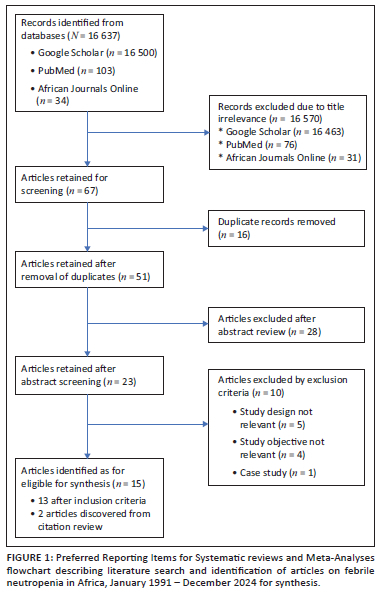
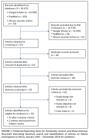
A total of 16 637 articles were pulled out by the search engines from the searched databases. Upon screening by titles, 16 570 were found to be irrelevant based on the predetermined parameters for this study. The remaining 67 articles were screened using Mendeley Citation Manager software (Elsevier, Amsterdam, Netherlands), and 16 were excluded for being duplicates. Twenty-eight articles were further excluded after screening of the abstracts and subsequent sorting based on inclusion criteria by two independent reviewers (T.O.O. and A.T.A.). Where there was disagreement, another reviewer (O.A.I) was brought in to break the tie. At the end of the process, 15 eligible articles were selected for the final synthesis. The details of the Preferred Reporting Items for Systematic reviews and Meta-Analyses16Figure 1.
Data extraction
The relevant qualitative and quantitative data were extracted from the selected articles using a piloted Microsoft Excel Worksheet software (Microsoft Corporation, Redmond, Washington, United States) individually by two investigators (T.O.O. and A.T.A.). Qualitative parameters extracted were the study design, location, region of Africa (based on regional grouping by the African Union; https://au.int/en/member_states/countryprofiles2), duration of study (in months), study time frame, sampled population, blood culture system, and the technique for bacteria identification and antibiotic susceptibility pattern of the bacteria associated with FN. The quantitative data extracted were the number of patients, the number of isolates obtained from the blood culture, the proportion of blood culture positivity, volume of blood sampled for microbiology investigation, antibiotic susceptibility, and patient outcome. Discrepancies in the data extracted were corrected by referring to the original studies.
Data analysis
The data on isolates and antibiotic susceptibility patterns were aggregated from the selected articles and presented in proportions. Risk factors for FN were not included in this study, because of the varied study designs of the eligible articles with non-comparable study outcomes.
Ethical considerations
This article followed all ethical standards for research without direct contact with human or animal subjects.
Results
Description of eligible articles
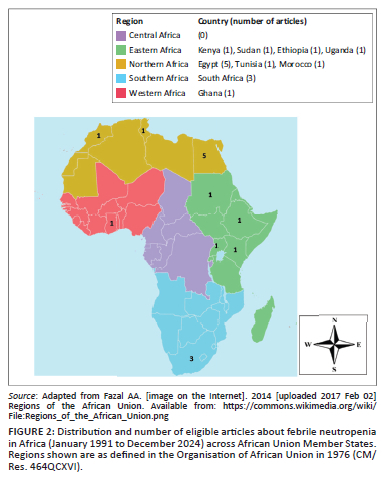
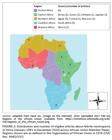
The article search done in February 2024 and yielded a total of 16 637 articles from the three databases (Google Scholar [n = 16 500; PubMed [n = 103]; African Journals Online [n = 34]), of which 13 eligible original articles were selected for analysis. An additional two articles17,18Figure 2). The studies were conducted between 1991 and 2013 (Figure 2).
The majority of the studies were prospective (10 studies; 66.7%) (Supplementary Table 1), conducted at a single centre (14 studies; 93.3%) (data not shown in table). Many of the eligible articles had university teaching hospitals as study locations (seven studies; 46.7%). Four studies (26.7%) were from cancer institutes and specialist hospitals. Six studies (40%) were conducted among paediatric patients only, and among both paediatric and adult patients, while two studies (13.3%) were conducted among adult patients alone. Nine studies (60.0%) were conducted among a patient population with both haematological and solid tumours, and two studies (13.3%) were from a population of patients with stem cell transplantation.
Medical microbiology laboratory methods
The medical microbiology laboratory methods used were stated in many of the studies; 10 studies stated the blood culture system used (automated blood culture system BACTEC/BACT ALERT, n = 7, and manual/conventional, n = 3). Ten studies stated bacterial identification methods used (conventional biochemical method only, n = 1; VITEK, n = 2; Phoenix, n = 1; Analytical Profile Index [API], n = 2; Sensititre, n = 1; Microscan, n = 2; BBL [Becton Dickinson Bioscience] Crystal ID, n = 1). Antibiotic susceptibility testing in 40% (6/11) of the studies was by disc diffusion methods (Supplementary Table 1).
Bacteria agents
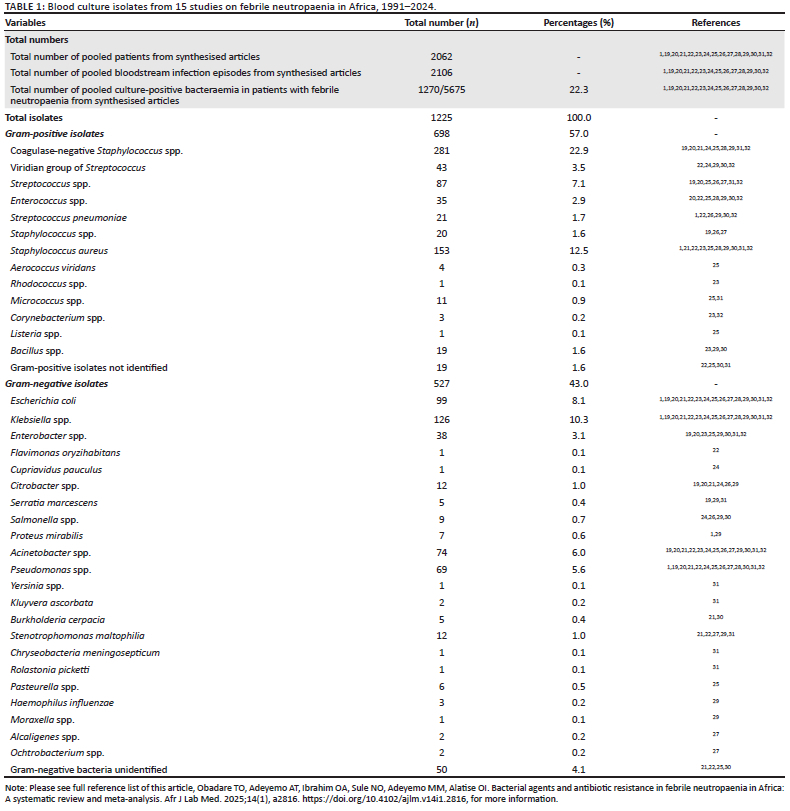
The review included 2062 patients, 2106 febrile episodes and a positive blood culture rate of 22.3% (1270/5675) (Table 1). A total of 1216 non-duplicate isolates were recovered from the selected studies, of which 57.0% (698/1225) were Gram-positive and 43.0% (527/1225) were Gram-negative isolates. The most common isolates were coagulase-negative Staphylococcus spp. (CONS; n = 281; 2.9%); Staphylococcus aureus (n = 153; 12.5%); Klebsiella spp. (n = 126; 10.3%); Escherichia coli (n = 99; 8.1%); Streptococcus spp. (n = 87; 7.1%); Acinetobacter spp. (n = 74; 6.0%) and Pseudomonas spp. (n = 69; 5.6%).
Antibiotic susceptibility patterns
Antibiotic susceptibility patterns were reported in 11 studies (Supplementary Table 2). Of these studies, four reported the antibiotic susceptibility patterns based on the isolated organisms tested,18,20,25,2717,19,24,2822,23,29
Antibiotic resistance profile
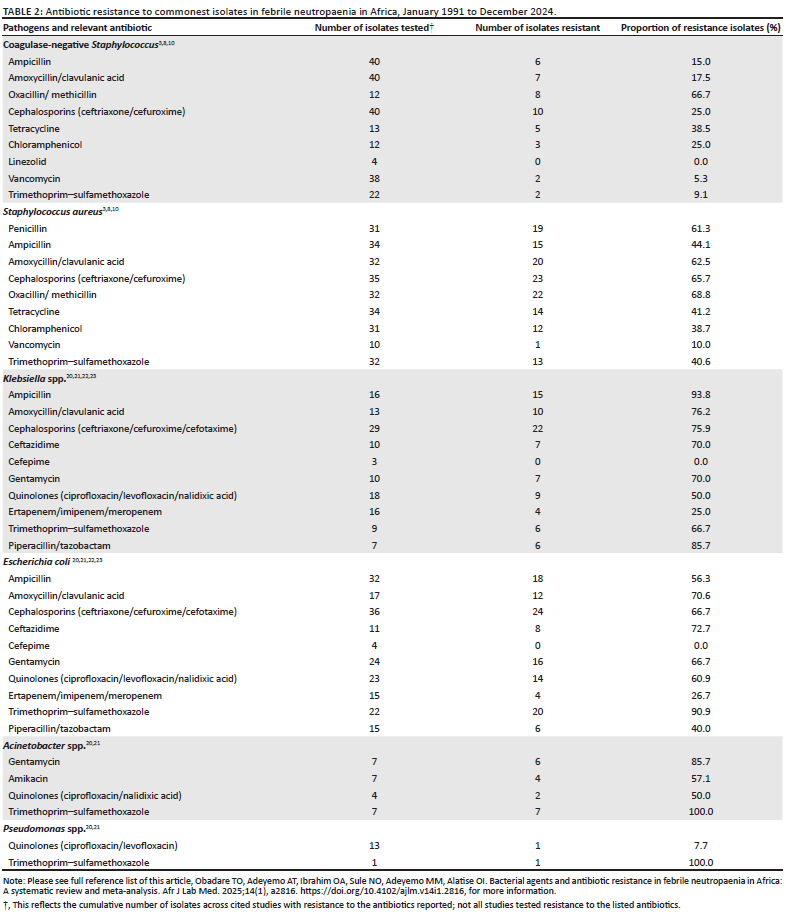
For the most prevalent bacteria to the tested antibiotics, 66.7% (8/12) of CONS isolates were resistant to oxacillin/methicillin, mostly susceptible to vancomycin (resistance rate 5.3%; 2/38), and susceptible to linezolid (Table 2). In the same manner, S. aureus isolates were highly resistant to oxacillin/methicillin (68.8%; 22/32), and were mostly susceptible to vancomycin (10.0%; 1/10). Klebsiella spp. isolates were mostly resistant to ampicillin (93.8%; 15/16), piperacillin/tazobactam (85.7%; 6/7), and third-generation cephalosporins (75.9%; 22/29), and a quarter (4/16) showed resistance to the carbapenems. Escherichia coli showed similar high resistance to ceftazidime (72.7%; 8/11), and other third-generation cephalosporins (66.7%; 24/36). Non-fermenters such as Acinetobacter spp. showed resistance rates of between 50% and 100% to tested antibiotics, including gentamicin and ciprofloxacin. However, Pseudomonas spp. showed low resistance to ciprofloxacin (7.7%; 1/13).
Discussion
Febrile neutropaenia is a medical emergency with attending consequences of morbidity, mortality and economic burden on both the patients and healthcare systems globally. The consequences of FN are further made difficult to deal with as the evolution of antimicrobial resistance escalates in LMICs amid a dilapidating healthcare system, complicated with layered drivers of antibiotic overuse and limited/absolute access to recommended newer antibiotics appropriate for treating MDR infections.31
The burden of FN in Africa might not be fully described because of the paucity of data from this region. This review highlighted the low data output on FN compared to other regions, such as high-income countries, where oncology practice is more advanced, and is prioritised to be included in their health-benefit package for the public health sector, as there was no eligible study for this review in the last decade from Africa.321321
Blood cultures are a highly dependent test for the investigation of bloodstream infections, including FN in clinical microbiology laboratories.33,34Corynebacterium spp., Bacillus spp, Micrococcus spp., and Cutibacterium spp. because of poor disinfection of the skin.35363534371,34
Clinical Laboratory Standards Institute and European Committee on Antimicrobial Susceptibility Testing guidelines on antibiotic susceptibility have stipulated specific antibiotics that are relevant for testing against specific bacteria. However, this was not followed in all cases. This could be because of the common use of a generic multidisc - a single-paneled antibiotic disc for Gram-negative and Gram-positive organisms, which might not accommodate the unique approach offered by a single antibiotic disc as stipulated by antibiotic susceptibility guidelines for the testing of organisms such as Acinetobacter spp, Pseudomonas spp. and Streptococcus spp.3839
The epidemiological distribution of bacteria in FN varies with geographical location, medical procedures, and antibiotic consumption in the locality. In this review, the significant variability across decades was not obvious. Gram-positive bacteria were the most isolated (56.7%) organism in this review, which is similar to the pattern documented over six years (1995-2000)4041424344
The use of prophylactic antibiotics (especially fluoroquinolone) has reduced the overall mortality in patients with an intermediate-to-high Multinational Association for Supportive Care in Cancer FN risk index. However, it is cautioned against by the European Organisation for Research and Treatment of Cancer and the American Society of Clinical Oncology, especially in cases with a low Multinational Association for Supportive Care in Cancer FN risk index (≥ 21), because of the risk of emergence of MDR.4531,4647,48Klebsiella spp, and E. coli, had high resistance to piperazilin/tazobactam, third-generation cephalosporins, and even last-result drugs such as carbapenems. In addition, there is a high prevalence of methicillin resistance in Gram-positive cocci; however, vancomycin is still effective, as only about 10% of S. aureus isolates, and about 20% of CONS, are resistant to vancomycin. The pattern of antibiotic resistance distributed across the spectrum of bacterial pathogens isolated in the FN from this review revealed that antibiotic resistance, especially to last-resort antibiotics such as carbapenems in Gram-negative bacilli organisms, is more widespread. This is a huge concern that the MDR organisms are increasingly being implicated in FN, and this poses a significant challenge to treatment in such patients. In the light of this, especially with increasing morbidity and mortality because of carbapenem resistance in Enterobacterales and non-glucose-fermenting Gram-negative bacilli, there is an increasing role in the use of beta-lactams (and non-beta-lactams) in combination with beta-lactam-inhibitors such as ceftazidime-avibactam, ceftolozane-tazobactam, imipenem/relebactam, and others. There is, however, a challenge regarding access to this newer combination of antibiotics in LMICs because of their high cost, and limited data on their use for FN in such climes.4646,47,49
Limitations
There is an inherent limitation with systematic review, as its outcome is based on an aggregation of the secondary data from synthesised original articles. It was observed that some eligible articles did not follow the antibiotic susceptibility guidelines to select the antibiotics tested on the bacterial agents. Moreover, in some cases, the breakpoints, the panels of antibiotics for some bacteria, had changed over time. These made the articles heterogeneous and presented challenges to getting a common denominator for the antibiotic susceptibility results for some analyses. However, these limitations did not nullify the essence of this study to report the situation analysis on the state of FN in Africa in the context of antibiotic resistance.
Conclusion
This review highlighted the paucity of data on FN in Africa, which corroborated the health disparity in cancer treatment across the economic divide of the nations. Our findings underscore the need for good laboratory infrastructures as well as correct blood culture technique in investigating FN to ensure isolation of true pathogens and appropriate 'drug-bug' combinations based on standard antibiotic susceptibility guidelines to reflect the appropriate epidemiological picture for the development of local guidelines in managing FN in Africa. There is a high level of MDR strains among the organisms isolated in FN in this review, which makes a case for continuous need for antimicrobial resistance surveillance, improved laboratory capacity and stewardship. There is also a need for the review of international guidelines and suggested antibiotic prophylaxis and empiric therapy for FN in the light of local epidemiological findings. There might be a need for improved access to newer agents, such as beta-lactam-beta-lactamase inhibitors, in Africa to treat FN caused by MDR, causing resistance to last-resort antibiotics (such as carbapenems) for improved outcomes in FN patients. This review should encourage further studies on bacterial agents of FN in this clime to generate needed pieces of evidence to support improvement in medical microbiology laboratory capacity for the diagnosis of infections in FN to inform local empirical guidelines and definitive therapy for optimised management of cancer patients.
Competing interests
The authors declare that they have no financial or personal relationships that may have inappropriately influenced them in writing this article.
Authors' contributions
T.O.O. and O.I.A. conceived and conceptualised this review. T.O.O., A.T.A., N.O.S., and O.A.I. searched the literature, and collated the data. The article was drafted by T.O.O., A.T.A., N.O.S., O.A.I., and M.M.A. O.I.A. provided leadership and critically reviewed the article. T.O.O., A.T.A., O.A.I., N.O.S., M.M.A., and O.I.A. agreed on the final draft of the article.
Sources of support
This research received no specific grant from any funding agency in the public, commercial or not-for-profit sectors.
Data availability
The authors confirm that the data supporting the findings of this study are available within the article and its supplementary materials.
Disclaimer
The views and opinions expressed in this article are those of the authors and are the product of professional research. The article does not necessarily reflect the official policy or position of any affiliated institution, funder, agency, or that of the publisher. The authors are responsible for this article's results, findings, and content.
Acknowledgements
We acknowledge Taiwo Ogunbiyi for his role in facilitating the logistics during the data collection and literature search for this manuscript.
References
- 1. Omotoso O, Teibo JO, Atiba FA, et al. Addressing cancer care inequities in sub-Saharan Africa: Current challenges and proposed solutions. Int J Equity Health. 2023;22(1):1-14.
-
2. Sharma R, Nanda M, Fronterre C, Sewagudde P, Amponsah-Manu F, Ssentongo P. Mapping cancer in Africa: A comprehensive and comparable characterization of 34 cancer types using estimates from GLOBOCAN. Front Public Health. 2022;10(April):1-14. https://doi.org/10.3389/fpubh.2022.839835
» https://doi.org/10.3389/fpubh.2022.839835 -
3. Larkin HD. Cancer deaths may double by 2030 in sub-Saharan Africa. JAMA. 2022;327(23):2280. https://doi.org/10.1001/jama.2022.10019
» https://doi.org/10.1001/jama.2022.10019 -
4. Brand NR, Qu LG, Chao A, Ilbawi AM. Delays and barriers to cancer care in low- and middle-income countries: A systematic review. Oncologist. 2019;24(12):e1371-e1380. https://doi.org/10.1634/theoncologist.2019-0057
» https://doi.org/10.1634/theoncologist.2019-0057 - 5. Stefan DC. Cancer care in Africa: An overview of resouces. Am Soc Clin Oncol. 2023;1(1):1-5.
-
6. Vanderpuye V, Yarney J, Beecham K. Management of febrile neutropenia in patients receiving chemotherapy for solid tumors: A retrospective study of twenty cases from the Radiotherapy Centre, Accra, Ghana. West Afr J Med. 2010;29(5):303-308. https://doi.org/10.4314/wajm.v29i5.68249
» https://doi.org/10.4314/wajm.v29i5.68249 - 7. Punnapuzha S, Pk E, Elmoheen A. Febrile neutropenia. Treasure Island, FL: StatPearls, 2022; p. 1-7.
- 8. Lucas AJ, Olin JL, Coleman MD. Management and preventive measures for febrile neutropenia. P T. 2018;43(4):228-232.
-
9. Klastersky J, De Naurois J, Rolston K, et al. Management of febrile neutropaenia: ESMO clinical practice guidelines. Ann Oncol. 2016;27(Supplement 5):v111-v118. https://doi.org/10.1093/annonc/mdw325
» https://doi.org/10.1093/annonc/mdw325 -
10. Schelenz S, Giles D, Abdallah S. Epidemiology, management and economic impact of febrile neutropenia in oncology patients receiving routine care at a regional UK cancer centre. Ann Oncol. 2012;23(7):1889-1893. https://doi.org/10.1093/annonc/mdr520
» https://doi.org/10.1093/annonc/mdr520 -
11. Caggiano V, Weiss RV, Rickert TS, Linde-Zwirble WT. Incidence, cost, and mortality of neutropenia hospitalization associated with chemotherapy. Am Cancer Soc. 2005;103(9):1916-1924. https://doi.org/10.1002/cncr.20983
» https://doi.org/10.1002/cncr.20983 - 12. Rasmy A, Amal A, Fotih S, Selwi W. Febrile neutropenia in cancer patient: Epidemiology, microbiology, pathophysiology and management. J Cancer Prev Curr Res. 2016;5(3):273-278.
-
13. Tong D, Getahun H. Antimicrobial stewardship and optimizing antimicrobial use in the cancer community. In: Probart T, editor. AMR control supplements. The challenge for the cancer community. Geneva: Global Health Dynamics, 2022; p. 62-64. http://resistancecontrol.info/amr2022/
» http://resistancecontrol.info/amr2022/ -
14. Naeem D, Alshamrani M, Aseeri M, Khan M. Prescribing empiric antibiotics for febrile neutropenia: Compliance with institutional febrile neutropenia guidelines. Pharmacy. 2018;6(3):83. https://doi.org/10.3390/pharmacy6030083
» https://doi.org/10.3390/pharmacy6030083 -
15. Okello CD, Niyonzima N, Ferraresso M, et al. Haematological care priorities in sub-Saharan Africa 3 haematological malignancies in sub-Saharan Africa: East Africa as an example for improving care. Lancet Haematol. 2021;8(10):e756-e769. https://doi.org/10.1016/S2352-3026(21)00198-8
» https://doi.org/10.1016/S2352-3026(21)00198-8 -
16. Moher D, Liberati A, Tetzlaff J, Altman DG, Group TP. Preferred reporting items for systematic reviews and meta-analyses: The PRISMA statement. PLoS Med. 2009;6(7):e1000097. https://doi.org/10.1371/journal.pmed.1000097
» https://doi.org/10.1371/journal.pmed.1000097 -
17. El-Mahallawy H, Samir I, Abdel R, Kadry D. Source, pattern and antibiotic resistance of blood stream infections in hematopoietic stem cell transplant recipients. J Egypt Natl Cancer Inst. 2014;26(2):73-77. https://doi.org/10.1016/j.jnci.2013.12.001
» https://doi.org/10.1016/j.jnci.2013.12.001 - 18. Nkrumah NO, Labi AK, Acquah ME, Donkor ES. Bloodstream infections in patients with malignancies: Im plications for antibiotic treatment in a Ghanaian tertiary setting. BMC Res Notes. 2015;8(742):1-11.
-
19. El-Mahallawy H, Sidhom I, El-Din NHA, Zamzam M, El-Lamie MM. Clinical and microbiologic determinants of serious bloodstream infections in Egyptian pediatric cancer patients: A one-year study. Int J Infect Dis. 2005;9:43-51. https://doi.org/10.1016/j.ijid.2003.11.010
» https://doi.org/10.1016/j.ijid.2003.11.010 -
20. Louw VJ, Van Der Westhuizen J, Rautenbach W, Van Der Berg E, Wamelink M, Joubert G. The antibiotic susceptibility of bacteria isolated from blood cultures during episodes of neutropenic fever in patients with acute myeloid leukaemia. South Afr J Epidemiol Infect. 2010;25(2):9-11. https://doi.org/10.1080/10158782.2010.11441380
» https://doi.org/10.1080/10158782.2010.11441380 -
21. El-Mahallawy HA, El-Wakil M, Moneer MM, Shalaby L. Antibiotic resistance is associated with longer bacteremic episodes and worse outcome in febrile neutropenic children with cancer. Pediatr Blood Cancer. 2011;57:283-288. https://doi.org/10.1002/pbc.22926
» https://doi.org/10.1002/pbc.22926 - 22. Jeddi R, Achour M, Ben AR, et al. Factors associated with severe sepsis: Prospective study of 94 neutropenic febrile episodes. Hematology. 2013;15(1):28-32.
-
23. Mvalo T, Eley B, Bamford C, et al. Bloodstream infections in oncology patients at Red Cross War Memorial Children's Hospital, Cape Town, from 2012 to 2014. Int J Infect Dis. 2018;77:40-47. https://doi.org/10.1016/j.ijid.2018.09.012
» https://doi.org/10.1016/j.ijid.2018.09.012 - 24. Hagag AA, Hassan SM, Elgamasy MA, Afifi IK. Study of common bacterial and fungal pathogens in children with hematological malignancies during febrile neutropenia: Single Center Egyptian Study. Infect Disord - Drug Targets. 2016;16(1):54-62.
-
25. Lubwama M, Phipps W, Najjuka CF, et al. Bacteremia in febrile cancer patients in Uganda. BMC Res Notes. 2019;12(1):464. https://doi.org/10.1186/s13104-019-4520-9
» https://doi.org/10.1186/s13104-019-4520-9 - 26. Depasse J, Caniza MA, Quessar A, et al. Infections in hospitalized children and young adults with acute leukemia in Morocco. Pediatr Blood Cancer. 2013;60(February):916-922.
-
27. Arega B, Woldeamanuel Y, Adane K, Sherif A, Asrat D. Microbial spectrum and drug-resistance profile of isolates causing bloodstream infections in febrile cancer patients at a referral hospital in Addis Microbial spectrum and drug-resistance profile of isolates causing bloodstream infections in febrile cance. Infect Drug Resist. 2018;11:1511-1519. https://doi.org/10.2147/IDR.S168867
» https://doi.org/10.2147/IDR.S168867 - 28. Zain OM, Elsayed MY, Abdelkhalig SM, Abdelaziz M. Bloodstream infection in cancer patients; susceptibility profiles of the isolated pathogens, at Khartoum Oncology Hospital, Sudan. Afr Health Sci. 2022;22(4):70-76.
-
29. Kipchumba SK. Bacterial isolates and characteristics of children with febrile neutropenia on treatment for cancer at a tertiary hospital in Western Kenya. JCO Glob Oncol. 2024;10:e2300313. https://doi.org/10.1200/GO.23.00313
» https://doi.org/10.1200/GO.23.00313 -
30. Elgendy SG, Hameed MRA, El-mokhtar MA. Tigecycline resistance among Klebsiella pneumoniae isolated from febrile neutropenic patients. J Med Microbiol. 2018;67:972-975. https://doi.org/10.1099/jmm.0.000770
» https://doi.org/10.1099/jmm.0.000770 - 31. Kanan M, Ramadan M, Haif H, et al. Empowering low- and middle-income countries to combat AMR by minimal use of antibiotics: A way forward. Antibiotics. 2023;12(10):1-13.
- 32. WHO. WHO global survey on the inclusion of cancer care in health-benefit packages 2020-2021. Geneva: World Health Organization (WHO), 2024; p. 1-15
-
33. Lamy B, Dargère S, Arendrup MC, Parienti J-J, Tattevin P. How to optimize the use of blood cultures for the diagnosis of bloodstream infections? A state-of-the art. Front Microbiol. 2016;7(697):1-13. https://doi.org/10.3389/fmicb.2016.00697
» https://doi.org/10.3389/fmicb.2016.00697 - 34. Ombelet S, Barbé B, Affolabi D, Ronat J. Best practices of blood cultures in low- and middle-income countries. Front Med. 2019;6(June):1-27.
-
35. Doern GV, Carroll KC, Diekema DJ, et al. A comprehensive update on the problem of blood culture contamination and a discussion of methods for addressing the problem. Clin Microbiol Rev. 2020;33(1):1-21. https://doi.org/10.1128/CMR.00009-19
» https://doi.org/10.1128/CMR.00009-19 - 36. Rupp ME, Cavalieri RJ, Marolf C, Lyden E. Reduction in blood culture contamination through use of initial specimen diversion device. Clin Infect Dis. 2017;65(2):201-205.
- 37. Ryder JH, Van Schooneveld TC, Diekema DJ, Fabre V. Every crisis is an opportunity: Advancing blood culture stewardship during a blood culture bottle shortage. Open Forum Infect Dis. 2024;11(9):1-7.
-
38. Hellen G, Okeke IN, Aboderin AO, Martinez E, Matu M. East Africa public health laboratory networking project strengthening the role of laboratories in tracking antimicrobial drug resistance in East Africa. Washington, DC: Center for Disease Dynamics, Economics & Policy, 2016; p. 40. https://onehealthtrust.org/wp-content/uploads/2017/06/wb_report_32-1.pdf
» https://onehealthtrust.org/wp-content/uploads/2017/06/wb_report_32-1.pdf -
39. Reddy EA, Shaw AV, Crump JA. Community-acquired bloodstream infections in Africa: A systematic review and meta-analysis. Lancet Infect Dis. 2010;10(6):417-432. https://doi.org/10.1016/S1473-3099(10)70072-4
» https://doi.org/10.1016/S1473-3099(10)70072-4 -
40. Wisplinghoff H, Seifert H, Wenzel RP, Edmond MB. Current trends in the epidemiology of nosocomial bloodstream infections in patients with hematological malignancies and solid neoplasms in hospitals in the United States. Clin Infect Dis. 2003;36:1103-1110. https://doi.org/10.1086/374339
» https://doi.org/10.1086/374339 - 41. Viscoli C, Varnier O, Machetti M. Infections in patients with febrile neutropenia: Epidemiology, microbiology, and risk stratification. Clin Infect Dis. 2005;40(Suppl 4):1-6.
-
42. Calvo-Lon J, Landaverde DU, Ramos-Esquivel A, Villalobos JM. Epidemiology and outcomes of bloodstream infections in patients with solid tumors in a Central American Population at Mexico Hospital, San Jose. J Glob Oncol. 2018;4(4):1-6. https://doi.org/10.1200/JGO.17.00058
» https://doi.org/10.1200/JGO.17.00058 - 43. Israels T, Afungchwi GM, Klootwijk L, et al. Fever and neutropenia outcomes and areas for intervention: A report from SUCCOUR - Supportive care for children with cancer in Africa. Pediartr Blood Cancer. 2021;68(9):e29224.
-
44. Feld R. Bloodstream infections in cancer patients with febrile neutropenia. Int J Antimicrob Agents J. 2008;32S:30-33. https://doi.org/10.1016/j.ijantimicag.2008.06.017
» https://doi.org/10.1016/j.ijantimicag.2008.06.017 -
45. Villafuerte-Gutierrez P, Villalon L, Losa JE, Henriquez-Camacho C. Treatment of febrile neutropenia and prophylaxis in hematologic malignancies: A critical review and update. Adv Hematol. 2014;2014(ID 986938):1-9. https://doi.org/10.1155/2014/986938
» https://doi.org/10.1155/2014/986938 - 46. Kedzior SK, Ham Y, Bubalo J. Overcoming resistance: Antibiotic guidance for multidrug-resistant febrile neutropenia in patients with cancer. J Hematol Oncol Pharm. 2021;11(2):95-104.
-
47. Zimmer AJ, Freifeld AG. Optimal management of neutropenic fever in patients with cancer. J Onchol Pract. 2019;15(1):19-25. https://doi.org/10.1200/JOP.18.00269
» https://doi.org/10.1200/JOP.18.00269 -
48. De Court JR, Bruns AHW, Roukens AHE, et al. The Dutch Working Party on Antibiotic Policy (SWAB) recommendations for the diagnosis and management of febrile neutropenia in patients with cancer. Infect Dis Ther. 2022;11(6):2063-2098. https://doi.org/10.1007/s40121-022-00700-1
» https://doi.org/10.1007/s40121-022-00700-1 -
49. Lyman GH. Febrile neutropenia: An ounce of prevention or a pound of cure. J Oncol Pract. 2019;15(1):27-29. https://doi.org/10.1200/JOP.18.00750
» https://doi.org/10.1200/JOP.18.00750

Accepted: 21 May 2025
Published: 26 Aug. 2025