Characterisation of genes encoding for extended spectrum β-lactamase in Gram-negative bacteria causing healthcare-associated infections in Mwanza, Tanzania
Abstract
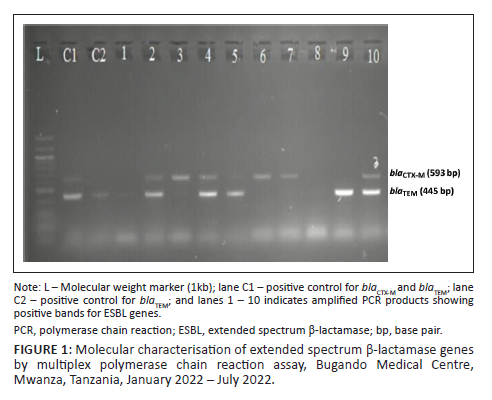
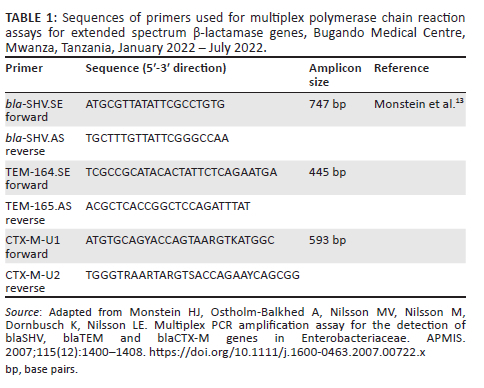
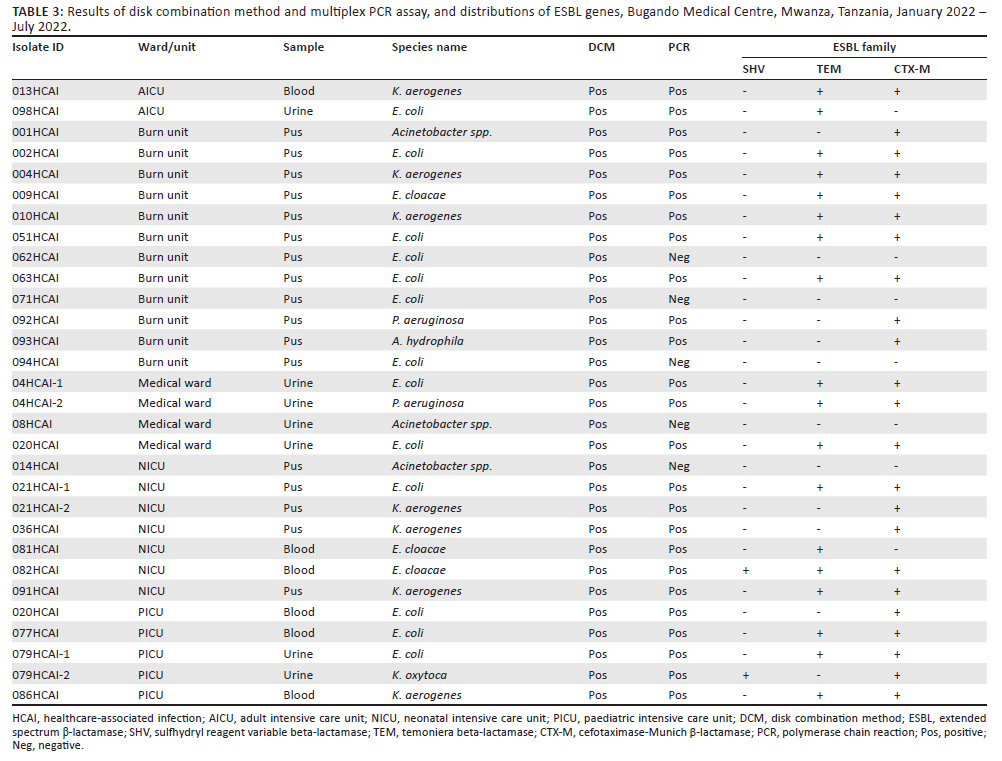
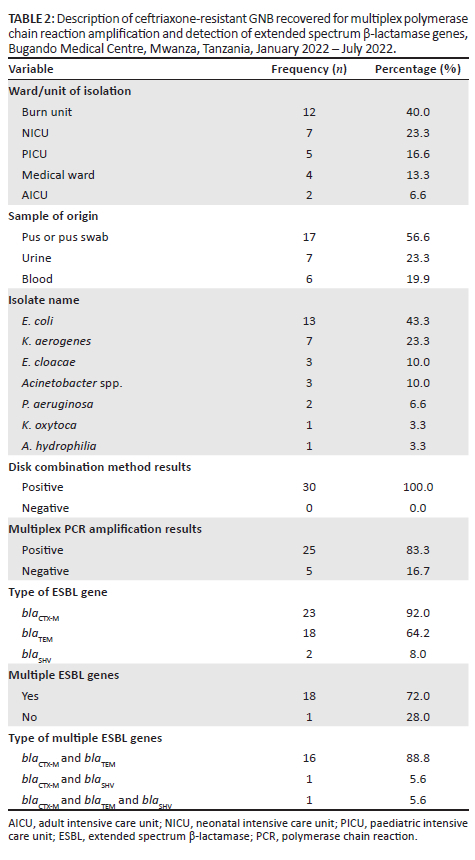
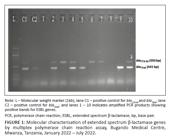
Healthcare-associated infections (HCAIs) caused by extended spectrum β-lactamase-producing Gram-negative bacteria (ESBL-GNB) increase morbidity and mortality. This cross-sectional study characterised ESBL genes (blaCTX-M, blaTEM and blaSHV) among 30 ceftriaxone-resistant GNB causing HCAIs between January 2022 and July 2022 by multiplex polymerase chain reaction assay at the zonal referral hospital in Mwanza, Tanzania. Twenty-five (83.3%) had at least one ESBL gene, of which 23/25 (92.0%) carried the blaCTX-M gene. Seventy-two percent (18/25) of the GNB-ESBL isolates carried more than one ESBL gene, of which the majority (88.8%; n = 16/25) carried the blaCTX-M and blaTEM genes. Extended spectrum β-lactamase genes, particularly blaCTX-M, are common among ceftriaxone-resistant GNB causing HCAIs. WHAT THIS STUDY ADDS: This study revealed the distribution of genes (blaCTX-M, blaTEM and blaSHV) coding for ESBL production among ceftriaxone resistant GNB causing HCAIs However, all ESBL producing GNB were susceptible towards ceftriaxone-sulbactam indicating that ceftriaxone-sulbactam may be empirically prescribed for treating patients with HCAIs.
beta lactamases; extended spectrum beta-lactamase; Gram-negative bacteria; healthcare-associated infections; multiplex PCR assay
 Thumbnail