Rolling out Xpert MTB/RIF® for tuberculosis detection in HIV-positive populations: An opportunity for systems strengthening
Abstract
BACKGROUND: To eliminate preventable deaths, disease and suffering due to tuberculosis, improved diagnostic capacity is critical. The Cepheid Xpert MTB/RIF® assay is recommended by the World Health Organization as the initial diagnostic test for people with suspected HIV-associated tuberculosis. However, despite high expectations, its scale-up in real-world settings has faced challenges, often due to the systems that support it. OPPORTUNITIES FOR SYSTEM STRENGTHENING: In this commentary, we discuss needs and opportunities for systems strengthening to support widespread scale-up of Xpert MTB/RIF as they relate to each step within the tuberculosis diagnostic cascade, from finding presumptive patients, to collecting, transporting and testing sputum specimens, to reporting and receiving results, to initiating and monitoring treatment and, ultimately, to ensuring successful and timely treatment and cure. Investments in evidence-based interventions at each step along the cascade and within the system as a whole will augment not only the utility of Xpert MTB/RIF, but also the successful implementation of future diagnostic tests. CONCLUSION: Xpert MTB/RIF will only improve patient outcomes if optimally implemented within the context of strong tuberculosis programmes and systems. Roll-out of this technology to people living with HIV and others in resource-limited settings offers the opportunity to leverage current tuberculosis and HIV laboratory, diagnostic and programmatic investments, while also addressing challenges and strengthening coordination between laboratory systems, laboratory-programme interfaces, and tuberculosis-HIV programme interfaces. If successful, the benefits of this tool could extend beyond progress toward global End TB Strategy goals, to improve system-wide capacity for global disease detection and control.
Introduction
The 2015 United Nations Sustainable Development Goals include an ambitious plan to end the tuberculosis and HIV epidemics by 2030.123Mycobacterium tuberculosis in people living with HIV.4,56,77,8,9
In 2010, the World Health Organization (WHO) acknowledged the Cepheid Xpert MTB/RIF® assay (Sunnyvale, California, United States) as a major milestone in bringing rapid, simple, bacteriologically-confirmed diagnosis of tuberculosis disease and rifampicin resistance potentially closer to the patient POC, by strongly recommending it as the initial diagnostic test for people with suspected multi-drug-resistant (MDR) or HIV-associated tuberculosis.10,11,12,1314® instruments (17 883 modules) and more than 10 million MTB/RIF cartridges.4,9,15,16,17
Despite initially high expectations, however, rapid scale-up of Xpert MTB/RIF has uncovered limitations, many due not to the test itself, but to the systems that support it. Although initial modelling predicted that accurate same-day diagnosis by Xpert MTB/RIF could reduce tuberculosis mortality by 20%-35% by facilitating earlier treatment initiation,18,199,20,21,22,23,2420,23,24,25,26,27,28,2929,3021,23,31,32,3334,35,363713,19,38,39,40,41,4241,42http://www.stoptb.org/global/awards/tbreach/) countries revealed increased tuberculosis case detection, but also multiple challenges, including a 10.6% test failure rate (partly due to difficulties maintaining a continuous power supply), heterogeneous result reporting, and difficulties with supply chain management and sputum transport.42
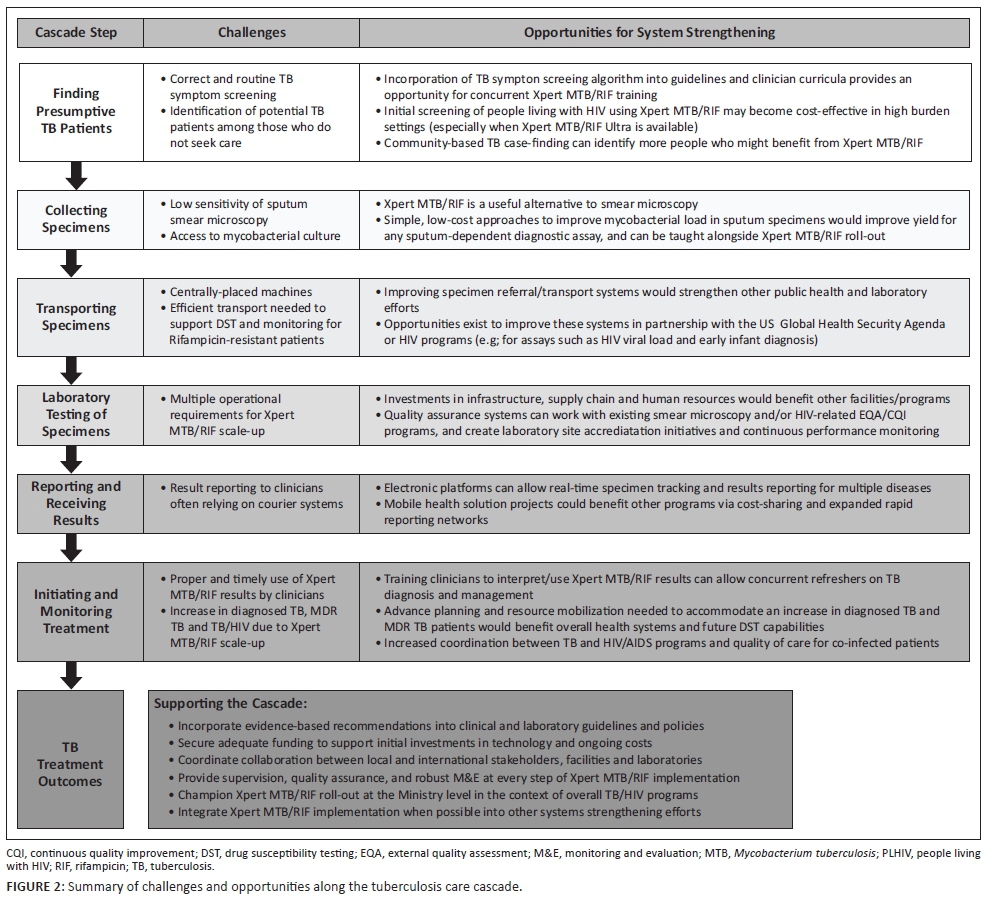
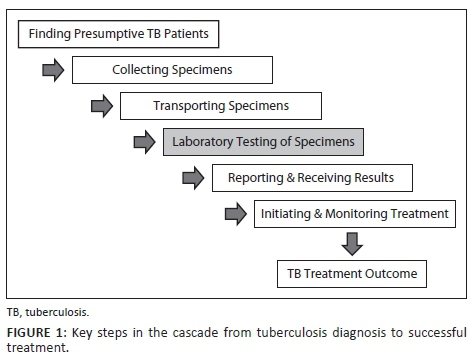
These experiences highlight that use of Xpert MTB/RIF technology itself is merely one component within a cascade of activities that must be successful to ensure that all tuberculosis patients are diagnosed and achieve successful and timely treatment and cure (Figure 1). Each process is critical in the programmatic management of tuberculosis (and HIV), and weaknesses in any may minimise the realised utility of any new diagnostic. In addition, they must all be supported by adequate funding, coordination and stakeholders engagement, as exemplified by the varied success of Xpert MTB/RIF implementation thus far. While this technology and newer assays certainly present opportunities for rapid, accurate diagnosis closer to the POC, to maximise their impact in programmatic settings it is crucial that we concurrently optimise other system- and programme-related factors necessary for tuberculosis diagnosis and treatment. Scale-up of Xpert MTB/RIF for diagnosis of tuberculosis in people living with HIV presents a unique opportunity to leverage current tuberculosis and HIV laboratory, diagnostic and programmatic investments, and to coordinate with multiple stakeholders to strengthen laboratory systems, laboratory-programme interfaces, and tuberculosis-HIV programme interfaces overall. Investments in evidence-based interventions at each step along the cascade and within the system as a whole will augment not only the utility of Xpert MTB/RIF, but also the successful implementation of future diagnostic tests (Figure 2).
Opportunities for system strengthening along the tuberculosis diagnosis and treatment cascade
Finding presumptive tuberculosis patients
The WHO recommends Xpert MTB/RIF as the initial diagnostic test in individuals with suspected HIV-associated or MDR tuberculosis, which eliminates the additional clinic visit needed to perform sputum microscopy followed by Xpert MTB/RIF if negative.11,4344,4546
Tuberculosis case detection among people living with HIV can be maximised by strategically placing GeneXpert® machines in facilities and areas with the highest tuberculosis and HIV prevalence. However, even under the best programmatic circumstances, clinical screening algorithms alone may be insufficient to identify tuberculosis among those who do not seek care, are contacts of known tuberculosis patients or are from remote or marginalised populations. Randomised interventions, such as tuberculosis contact tracing, mobile vans, household tuberculosis and HIV counseling, as well as screening reduced tuberculosis prevalence in communities in Zambia, South Africa and Zimbabwe,47,4849,50,51,52,53,54
Collecting specimens
The sensitivity of smear microscopy for one sputum specimen was 29% in a study of people living with HIV with presumptive tuberculosis in Thailand and Vietnam, and the incremental yield was 7% for two sputum specimens and 2% for three.55456® MTB/RIF Ultra), the collection of a single sputum specimen must at least be optimised.
Although data regarding the impact of sputum quality on tuberculosis diagnosis is sparse and heterogenous,5758,59,606146
Recent advances in transport media can further improve specimen quality. The PrimeStore Molecular Transport Medium® (Longhorn Vaccines and Diagnostics, San Antonio, Texas, United States) inactivates organisms, preserves nucleic acids for molecular detection, and has been shown to enhance tuberculosis detection by Xpert MTB/RIF significantly in samples with low volume and/or bacterial load. Staff familiarity with this medium may facilitate use of other decontaminating transport reagents that preserve organisms for culture.62,63
Transporting specimens
The ability of Xpert MTB/RIF to detect M. tuberculosis within two hours is a breakthrough; however, reduced turn-around time is not necessarily sufficient to adequately affect time to diagnosis.64,657,6667,68
Although Xpert MTB/RIF may not be a classic POC test, several programmes are choosing to introduce GeneXpert machines in high-volume clinics where presumptive tuberculosis patients are screened and treated, thereby reducing specimen transport needs. However peripheral, low-volume sites may conversely place machines centrally, which increases demand for efficient specimen transport systems. In addition, the WHO recommends that individuals diagnosed with rifampicin-resistant tuberculosis have a specimen referred for laboratory culture and conventional drug susceptibility testing, and are monitored by sputum smear and culture.1369,707172
Testing specimens
While much excitement surrounding Xpert MTB/RIF has stemmed from its relative user-friendliness, it does have key and sometimes challenging operational requirements. These requirements include an uninterrupted power supply, stable ambient temperatures, waste disposal mechanisms, and equipment security against theft. Supply chains must be reliable, and must control for backlogs in order processing and customs clearance, and limited cartridge shelf life. Modules require annual calibration, machines need routine maintenance, and technical assistance must be readily accessible for trouble-shooting unanticipated challenges.6,1342,73106,11,12,13,42,74
In addition, Xpert MTB/RIF scale-up requires investments in labour. In one South African primary healthcare setting, Xpert MTB/RIF use increased tuberculosis screening and rapid detection, but POC placement increased logistical responsibilities for the clinic, requiring two to five staff members to provide same-day diagnostic evaluations for 16 patients per day.4023,40,56
Continuous quality improvement for any diagnostic test is critical for ensuring accuracy and reliability, detecting and reducing errors, and ensuring customer satisfaction.7576,77,787980,817574,77,8283
Reporting and receiving results
The laboratory-clinic interface is often challenged by lack of effective communication. In many settings, courier systems relied upon to transport specimens to the point of testing are also responsible for delivering test results to clinicians. However, the potential impact of rapid diagnostic tests such as Xpert MTB/RIF to improve clinical care cannot be realised if results are not received and interpreted rapidly.647
The WHO recommends establishment of rapid reporting mechanisms for Xpert MTB/RIF results, including electronic systems, especially in the setting of incompletely decentralised Xpert MTB/RIF availability.1351718485
Initiating and monitoring treatment
Assuming presumptive patient identification and specimen collection, transport, testing and result reporting all occur in a rapid and high-quality manner, clinicians receiving tuberculosis diagnostic results are then tasked with making treatment decisions. When Xpert MTB/RIF (or other genotypic) results are discrepant from phenotypic results, clinicians must be trained to interpret them and act based on available information.12,13
After interpreting Xpert MTB/RIF results, clinicians must then see patients through to treatment completion and cure. Due to improved sensitivity of Xpert MTB/RIF over smear microscopy, and its capacity to detect rifampicin resistance, increased drug sensitive and MDR tuberculosis case detection among people living with HIV is anticipated with Xpert MTB/RIF scale-up. In one South African study, although Xpert MTB/RIF introduction reduced the time to MDR tuberculosis treatment initiation, higher case detection paradoxically increased the waiting list for treatment initiation and admission to a tuberculosis specialty hospital.86614,876,1388
Finally, improved tuberculosis case detection will increase the number of people living with HIV prioritised for antiretroviral therapy - even in the context of new WHO guidelines recommending antiretroviral therapy initiation regardless of immune status - and is also the gateway for other important tuberculosis/HIV interventions including tuberculosis infection control and preventive therapy.43,89,90
Although each element in the cascade between tuberculosis symptom identification and successful treatment must be optimised individually to maximise the impact of Xpert MTB/RIF technology, there are also several overarching requirements. First, it is important that evidence-based recommendations are incorporated into clinical and laboratory guidelines and policies within national tuberculosis and HIV programmes. A recent survey of 22 high tuberculosis burden countries noted that, while 86% had a policy or algorithm to use Xpert MTB/RIF, most implementation was donor-supported, and not considered sustainable.744,12,13686916,20,89
The second critical factor required to support the tuberculosis diagnostic cascade is increased local and international stakeholder commitment to tuberculosis programmes in general, and coordination of efforts between healthcare sectors, facilities and central governments, and healthcare settings and laboratories. Xpert MTB/RIF has generated significant interest and investment among Ministries of Health, research institutions, and donors. To ensure the success of initial phased implementation projects and national scale-up plans, it is important that tools, innovations and best practices are shared, and that all efforts within countries are coordinated and championed at the ministry level according to national priorities.92
Finally, roll-out and national scale-up of projects must be planned in the context of overall tuberculosis and HIV programmes. In particular, as Xpert MTB/RIF use is scaled up, underlying systems must be able to accommodate additional patients expected to be diagnosed using the assay. After stakeholders are coordinated and implementation plans finalised, supplies must be procured, inventories organised, staff trained, and sites prepared for roll-out. Supervision and quality assurance are needed at every step, as is robust monitoring and evaluation - currently not well established - to routinely collect and respond to data on programmatic performance, outcomes and impact, and to assess where instruments are used and where rate- and quality-limiting steps within the cascade are occurring.92
Conclusion
In 2012, Loveday et al. assessed a typical patient's journey from diagnosis to treatment in Kwa-Zulu Natal, South Africa, to determine the effectiveness of decentralised care for MDR tuberculosis patients. Although both patient- and health system-related factors resulted in ultimately sub-optimal outcomes, most challenges encountered were due to health systems factors, including poor communication of laboratory results, incorrect provider implementation of clinical guidelines, and inadequate integration of tuberculosis and HIV services. This 'typical journey' highlights the fact that weaknesses at any step in the clinical cascade can compound deficits in others.93
Xpert MTB/RIF is a major diagnostic breakthrough, but will only improve patient outcomes if optimally placed and implemented within the context of strong tuberculosis programmes and systems. The roll-out and rapid scale-up of this technology to people living with HIV and others in resource-limited settings offers a unique opportunity to address current challenges to maximise impact on the quality of tuberculosis programmes in general. Ministries of Health, funding agencies and implementing partners should capitalise upon this opportunity by investing in strong, patient-centred health systems, staff and programmes, not only to optimise the success of Xpert MTB/RIF (and other GeneXpert-supported platforms such as HIV viral load testing and early infant diagnosis), but also to allow any future technologies to be seamlessly incorporated and implemented.73,94
Competing interests
The authors declare that they have no financial or personal relationships which may have inappropriately influenced them in writing this article.
Sources of support
None.
Authors' contributions
I.P. and H.A. were responsible for concept development, literature review, writing and revisions. A.D., W.L.C., J.N. and A.S.P. were responsible for writing and revisions.
Acknowledgements
References
- 1. United Nations. Sustainable development goals [homepage on the Internet]. c2015 [cited 2016 Feb 10].
- Available from: https://sustainabledevelopment.un.org/sdgs
-
c2015 [cited 2015 Nov 04]. Available from: http://apps.who.int/iris/bitstream/10665/137094/1/9789241564809_eng.pdf?ua=1
» https://doi.org/10.1016/j.aogh.2015.01.001 - 3. World Health Organization. The End TB Strategy [document on the Internet]. c2015 [cited 2015 Jun 10].
-
Available from: http://www.who.int/tb/post2015_TBstrategy.pdf
» https://doi.org/10.9745/GHSP-D-12-00004 - 5. Getahun H, Harrington M, O'Brien R, et al. Diagnosis of smear-negative pulmonary tuberculosis in people with HIV infection or AIDS in resource-constrained settings: informing urgent policy changes. Lancet. 2007;369(9578):2042-2049.
- 7. Squire SB, Belaye AK, Kashoti A, et al. 'Lost' smear-positive pulmonary tuberculosis cases: where are they and why did we lose them? Int J Tuberc Lung Dis. 2005;9(1):25-31.
-
8. Campaign for Access to Essential Medicines, Treatment Action Group, and Partners in Health. Defining specifications for a TB point-of-care test: meeting report [document on the Internet]. c2009 [cited 2015 Jun 10].
» Defining specifications for a TB point-of-care test: meeting report [document on the Internet] -
Available from: http://www.msfaccess.org/sites/default/files/MSF_assets/TB/Docs/TB_event_POC_meetingoutcomes_full_ENG_2008.pdf
» https://doi.org/10.1002/14651858.CD009593.pub3 -
9. McNerney R, Cunningham J, Hepple P, et al. New tuberculosis diagnostics and rollout. Int J Infect Dis. 2015:32:81-86. https://doi.org/10.1016/j.ijid.2015.01.012
» https://doi.org/10.1016/j.ijid.2015.01.012 - 10. World Health Organization. WHO endorses new rapid tuberculosis test: a major milestone for global TB diagnosis and care [page on the Internet]. c2010 [cited 2015 Jun 10].
- Available from: http://www.who.int/mediacentre/news/releases/2010/tb_test_20101208/en/
- 11. World Health Organization. Roadmap for rolling out Xpert MTB/RIF for rapid diagnosis of TB and MDR TB [document on the Internet]. c2010 [cited 2015 Jun 10].
-
Available from: http://www.who.int/tb/laboratory/roadmap_xpert_mtb-rif.pdf
» https://doi.org/10.1097/QAD.0b013e3283522d47 -
12. Shinnick TM, Starks AM, Alexander HL, et al. Evaluation of the Cepheid Xpert MTB/RIF assay. Expert Rev Mol Diagn. 2015;15(1):9-22. https://doi.org/10.1586/14737159.2015.976556
» https://doi.org/10.1586/14737159.2015.976556 - 13. World Health Organization. Xpert MTB/RIF implementation manual. Technical and operational 'how-to': practical considerations [document on the Internet]. c2014 [cited 2015 Jun 05].
-
Available from: http://apps.who.int/iris/bitstream/10665/112469/1/9789241506700_eng.pdf
» https://doi.org/10.1093/ofid/ofu038 - 15. The United States President's Emergency Plan for AIDS Relief (2010). U.S. global health programs welcome World Health Organization endorsement of rapid test for tuberculosis [page on the Internet]. c2010 [cited 2015 Jun 11].
-
Available from: http://www.pepfar.gov/press/releases/2010/152541.htm
» https://doi.org/10.1371/journal.pmed.1001766 - 16. World Health Organization. TB diagnostics and laboratory strengthening [page on the Internet]. c2015 [cited 2015 Jun 09].
- Available from: http://www.who.int/tb/areas-of-work/laboratory/mtbrifrollout/en/
-
17. Foundation for Innovative New Diagnostics. FIND-negotiated product pricing [page on the Internet]. c2016 [cited 2016 Dec 04]. Available from: http://www.finddx.org/find-negotiated-product-pricing/
» https://doi.org/10.5588/ijtld.14.0775 -
18. Keeler E, Perkins MD, Small P, et al. Reducing the global burden of tuberculosis: the contribution of improved diagnostics. Nature. 2006;444 (Suppl 1):49-57. https://doi.org/10.1038/nature05446
» https://doi.org/10.1038/nature05446 -
20. Muyoyeta M, Moyo M, Kasese N., et al. Implementation research to inform the use of Xpert MTB/RIF in primary health care facilities in high TB and HIV settings in resource constrained settings. PLoS One. 2015;10(6):e0126376. https://doi.org/10.1371/journal.pone.0126376
» https://doi.org/10.1371/journal.pone.0126376 -
21. Cox HS, Mbhele S, Mohess N, et al. Impact of Xpert MTB/RIF for TB diagnosis in a primary care clinic with high TB and HIV prevalence in South Africa: a pragmatic randomised trial. PLoS Med. 2014;11(11):e1001760. https://doi.org/10.1371/journal.pmed.1001760
» https://doi.org/10.1371/journal.pmed.1001760 -
23. Theron G, Zijenah L, Chanda D, et al. Feasibility, accuracy, and clinical effect of point-of-care Xpert MTB/RIF testing for tuberculosis in primary-care settings in Africa: a multicentre, randomised, controlled trial. Lancet. 2014;383(9915):424-435. https://doi.org/10.1016/S0140-6736(13)62073-5
» https://doi.org/10.1016/S0140-6736(13)62073-5 -
24. Churchyard GJ, Stevens WS, Mametja LD, et al. Xpert MTB/RIF versus sputum microscopy as the initial diagnostic test for tuberculosis: a cluster-randomised trial embedded in South African roll-out of Xpert MTB/RIF. Lancet Glob Health. 2015;3(8):e450-457. https://doi.org/10.1016/S2214-109X(15)00100-X
» https://doi.org/10.1016/S2214-109X(15)00100-X -
26. Theron G, Peter J, Dowdy D, et al. Do high rates of empirical treatment undermine the potential effect of new diagnostic tests for tuberculosis in high-burden settings? Lancet Infect Dis. 2014;14(6):527-532. https://doi.org/10.1016/S1473-3099(13)70360-8
» https://doi.org/10.1016/S1473-3099(13)70360-8 -
29. Hanrahan CF, Clouse K, Bassett J, et al. The patient impact of point-of-care vs. laboratory placement of Xpert® MTB/RIF. Int J Tuberc Lung Dis. 2015;19(7):811-816. https://doi.org/10.5588/ijtld.15.0013
» https://doi.org/10.5588/ijtld.15.0013 -
30. Van Den Handel T, Hampton KH, Sanne I, et al. The impact of Xpert® MTB/RIF in sparsely populated rural settings. Int J Tuberc Lung Dis. 2015;19(4):392-398. https://doi.org/10.5588/ijtld.14.0653
» https://doi.org/10.5588/ijtld.14.0653 - 31. Yoon C, Cattamanchi A, Davis JL, et al. Impact of Xpert MTB/RIF testing on tuberculosis management and outcomes in hospitalized patients in Uganda. PLoS One. 2012;7(11):e48599. https://doi.org/10.1371/journal.pone.0048599
-
32. Van Rie A, Page-Shipp L, Hanrahan CF, et al. Point-of-care Xpert® MTB/RIF for smear-negative tuberculosis suspects at a primary care clinic in South Africa. Int J Tuberc Lung Dis. 2013;17(3):368-372. https://doi.org/10.5588/ijtld.12.0392
» https://doi.org/10.5588/ijtld.12.0392 -
33. Kwak N, Choi SM, Lee J, et al. Diagnostic accuracy and turnaround time of the Xpert MTB/RIF assay in routine clinical practice. PLoS One. 2013;8(10):e77456. https://doi.org/10.1371/journal.pone.0077456
» https://doi.org/10.1371/journal.pone.0077456 -
34. Cohen GM, Drain PK, Noubary F, et al. Diagnostic delays and clinical decision making with centralized Xpert MTB/RIF testing in Durban, South Africa. J Acquir Immune Defic Syndr. 2014;67(3):e88-93. https://doi.org/10.1097/QAI.0000000000000309
» https://doi.org/10.1097/QAI.0000000000000309 -
35. McNerney R, Zumla A. Impact of the Xpert MTB/RIF diagnostic test for tuberculosis in countries with a high burden of disease. Curr Opin Pulm Med. 2015;21(3):304-308. https://doi.org/10.1097/MCP.0000000000000161
» https://doi.org/10.1097/MCP.0000000000000161 -
36. Lawn SD, Kerkhoff AD, Wood R. Location of Xpert® MTB/RIF in centralised laboratories in South Africa undermines potential impact. Int J Tuberc Lung Dis. 2012;16(5):701,702. https://doi.org/10.5588/ijtld.12.0131
» https://doi.org/10.5588/ijtld.12.0131 -
37. Boehme C, Nicol MP, Nabeta P, et al. Feasibility, diagnostic accuracy, and effectiveness of decentralised use of the Xpert MTB/RIF test for diagnosis of tuberculosis and multidrug resistance: a multicentre implementation study. Lancet. 2011;377(9776):1495-1505. https://doi.org/10.1016/S0140-6736(11)60438-8
» https://doi.org/10.1016/S0140-6736(11)60438-8 -
38. Vassall A, Van Kampen S, Sohn H, et al. Rapid diagnosis of tuberculosis with the Xpert MTB/RIF assay in high burden countries: a cost-effectiveness analysis. PLoS Med. 2011;8(11):e1001120. https://doi.org/10.1371/journal.pmed.1001120
» https://doi.org/10.1371/journal.pmed.1001120 -
39. Pantoja A, Kik S, Denkinger CM. Costs of novel tuberculosis diagnostics - will countries be able to afford it? J Infect Dis. 2015;211(Suppl 2):S67-77. https://doi.org/10.1093/infdis/jiu820
» https://doi.org/10.1093/infdis/jiu820 -
40. Clouse K, Page-Shipp L, Dansey H, et al. Implementation of Xpert MTB/RIF for routine point-of-care diagnosis of tuberculosis at the primary care level. S Afr Med J. 2012;102(10):805-807. https://doi.org/10.7196/samj.5851
» https://doi.org/10.7196/samj.5851 -
41. Langley I, Lin H, Egwaga S, et al. Assessment of the patient, health system, and population effects of Xpert MTB/RIF and alternative diagnostics for tuberculosis in Tanzania: an integrated modelling approach. Lancet Glob Health. 2014;2(10):e581-591. https://doi.org/10.1016/S2214-109X(14)70291-8
» https://doi.org/10.1016/S2214-109X(14)70291-8 -
42. Creswell J, Codlin AJ, Andre E. Results from early programmatic implementation of Xpert MTB/RIF testing in nine countries. BMC Infect Dis. 2014;14:2. https://doi.org/10.1186/1471-2334-14-2
» https://doi.org/10.1186/1471-2334-14-2 -
43. World Health Organization. WHO policy on collaborative TB/HIV activities: guidelines for national programmes and other stakeholders [document on the Internet]. c2012 [cited 2015 Jun 17]. Available from: http://apps.who.int/iris/bitstream/10665/44789/1/9789241503006_eng.pdf?ua=1&ua=1
» https://doi.org/10.1164/rccm.200905-0692OC - 44. World Health Organization. Guidelines for intensified tuberculosis case-finding and isoniazid preventive therapy for people living with HIV in resource-constrained settings [document on the Internet]. c2011 [cited 2015 Jun 17].
-
Available from: http://whqlibdoc.who.int/publications/2011/9789241500708_eng.pdf?ua=1
» https://doi.org/10.5588/ijtld.14.0798 -
45. Getahun H, Kittikraisak W, Heilig CM, et al. Development of a standardized screening rule for tuberculosis in people living with HIV in resource-constrained settings: individual participant data meta-analysis of observational studies. PloS Med. 2011;8(1):e1000391. https://doi.org/10.1371/journal.pmed.1000391
» https://doi.org/10.1371/journal.pmed.1000391 - 46. Alland D, Rowneki M, Smith L, et al. Xpert MTB/RIF Ultra: a new near-patient TB test with sensitivity equal to culture [Abstract 91]. Paper presented at the 22nd Conference on Retroviruses and Opportunistic Infections, Seattle, WA, Feb 23-26 2015 [page on the Internet].
-
c2015 [cited 2015 Nov 24]. Available from: http://www.croiconference.org/sessions/xpert-mtbrif-ultra-new-near-patient-tb-test-sensitivity-equal-culture
» https://doi.org/10.1016/S0140-6736(07)60916-7 -
47. Ayles H, Muyoyeta M, Du Toit E, et al. Effect of household and community interventions on the burden of tuberculosis in Southern Africa: the ZAMSTAR community-randomised trial. Lancet. 2013;382(9899):1182-1194. https://doi.org/10.1016/S0140-6736(13)61131-9
» https://doi.org/10.1016/S0140-6736(13)61131-9 -
48. Corbett EL, Bandason T, Duong T, et al. Comparison of two active case-finding strategies for community-based diagnosis of symptomatic smear-positive tuberculosis and control of infectious tuberculosis in Harare, Zimbabwe (DETECTB): a cluster-randomised trial. Lancet. 2010;376(9748):1244-1253. https://doi.org/10.1016/S0140-6736(10)61425-0
» https://doi.org/10.1016/S0140-6736(10)61425-0 - 49. Miller AC, Golub JE, Cavalcante SC, et al. Controlled trial of active tuberculosis case finding in a Brazilian favela. Int J Tuberc Lung Dis. 2010;14(6):720-726.
-
50. Parija D, Patra TK, Kumar AMV, et al. Impact of awareness drives and community-based active tuberculosis case finding in Odisha, India. Int J Tuberc Lung Dis. 2014;18(9):1105-1107. https://doi.org/10.5588/ijtld.13.0918
» https://doi.org/10.5588/ijtld.13.0918 -
51. Lorent N, Choun K, Thai S, et al. Community-based active tuberculosis case finding in poor urban settlements of Phnom Penh, Cambodia: a feasible and effective strategy. PLoS One. 2014;9(3):e92754. https://doi.org/10.1371/journal.pone.0092754
» https://doi.org/10.1371/journal.pone.0092754 -
52. Khan AJ, Khowaja S, Khan FS, et al. Engaging the private sector to increase tuberculosis case detection: an impact evaluation study. Lancet Infect Dis. 2012;12(8):608-616. https://doi.org/10.1016/S1473-3099(12)70116-0
» https://doi.org/10.1016/S1473-3099(12)70116-0 -
53. Yassin MA, Datiko DG, Tulloch O, et al. Innovative community-based approaches doubled tuberculosis case notification and improve treatment outcome in Southern Ethiopia. PLoS One. 2013;8(5):e63174. https://doi.org/10.1371/journal.pone.0063174
» https://doi.org/10.1371/journal.pone.0063174 -
54. Shapiro AE, Variava E, Rakgokong MH, et al. Community-based targeted case finding for tuberculosis and HIV in household contacts of patients with tuberculosis in South Africa. Am J Respir Crit Care Med. 2012;185(10):1110-1116. https://doi.org/10.1164/rccm.201111-1941OC
» https://doi.org/10.1164/rccm.201111-1941OC -
56. Boehme C, Nabeta P, Hillemann D. Rapid molecular detection of tuberculosis and rifampin resistance. N Engl J Med. 2010;363:1005-1015. https://doi.org/10.1056/NEJMoa0907847
» https://doi.org/10.1056/NEJMoa0907847 -
58. Theron G, Peter J, Calligaro G, et al. Determinants of PCR performance (Xpert MTB/RIF), including bacterial load and inhibition, for TB diagnosis using specimens from different body compartments. Sci Rep. 2014;4:5658. https://doi.org/10.1038/srep05658
» https://doi.org/10.1038/srep05658 - 59. Alisjahbana B, Van Crevel R, Danusantoso H, et al. Better patient instruction for sputum sampling can improve microscopic tuberculosis diagnosis. Int J Tuberc Lung Dis. 2005;9(7):814-817.
- 61. Bell DJ, Dacombe R, Graham SM, et al. Simple measures are as effective as invasive techniques in the diagnosis of pulmonary tuberculosis in Malawi. Int J Tuberc Lung Dis. 2009;13(1):99-104.
-
62. Daum LT, Fourie PB, Peters RPH. Xpert® MTB/RIF detection in Mycobacterium tuberculosis from sputum collected in molecular transport medium. Int J Tuberc Lung Dis. 2016;20(8):1118-1124. https://doi.org/10.5588/ijtld.15.0990
» https://doi.org/10.5588/ijtld.15.0990 -
63. Maharjan B, Shrestha B, Weirich A, et al. A novel sputum transport solution eliminates cold chain and supports routine tuberculosis testing in Nepal. J Epidemiol Glob Health. 2016 April 27. pii: S2210-6006(16)30008-9. https://doi.org/10.1016/j.jegh.2016.04.002.
» https://doi.org/10.1016/j.jegh.2016.04.002 - [Epub ahead of print]
-
64. Pascopella L, Kellamn S, Ridderhof J, et al. Laboratory reporting of tuberculosis test results and patient treatment initiation in California. J Clin Microbiol. 2004;42(9):4209-4213. https://doi.org/10.1128/JCM.42.9.4209-4213.2004
» https://doi.org/10.1128/JCM.42.9.4209-4213.2004 - 65. Yagui M, Perales MT, Asencios, L., et al. Timely diagnosis of MDR-TB under program conditions: is rapid drug-susceptibility testing sufficient? Int J Tuberc Lung Dis. 2006;10(8):838-843.
- 66. Paramasivan CN, Narayana AS, Prabhakar R, et al. Effect of storage of sputum specimens at room temperature on smear and culture results. Tubercle. 1983;64(2):119-124.
-
67. Nkengasong JN, Nsubaga P, Nwanyanwu O, et al. Laboratory systems and services are critical in global health: time to end the neglect? Am J Clin Pathol. 2010;134(3):368-373. https://doi.org/10.1309/AJCPMPSINQ9BRMU6
» https://doi.org/10.1309/AJCPMPSINQ9BRMU6 - 68. Shinnick TM, Iademarco MF, Ridderhof JC. National plan for reliable tuberculosis laboratory services using a systems approach. Morb Mortal Wkly Rep. 2005;54(RR05):1-12.
- 69. Cepheid and FIND. World's most portable molecular diagnostics system unveiled at AACC [page on the Internet]. c2015 [cited 2015 Nov 24].
-
Available from: http://ir.cepheid.com/releasedetail.cfm?releaseid=924108
» https://doi.org/10.1016/S2214-109X(13)70032-9 -
70. Drain P, Garrett NJ. The arrival of a true point-of-care molecular assay - ready for global implementation? Lancet Glob Health. 2015;3(11):e633-634. https://doi.org/10.1016/S2214-109X(15)00186-2
» https://doi.org/10.1016/S2214-109X(15)00186-2 - 71. Borchert JN, Tappero JW, Downing R, et al. Rapidly building global health security capacity - Uganda demonstration project, 2013. Morb Mortal Wkly Rep. 2014;63(04):73-76.
- 72. Cepheid. Cepheid Solutions: CE-IVD tests: Virology [homepage on the Internet].
- c2015 [cited 2016 Feb 12]. Available from: http://www.cepheid.com/en/cepheid-solutions-uk/clinical-ivd-tests/virology
- 73. UNITAID. Tuberculosis diagnostics technology and market landscape. 3rd ed. Geneva, Switzerland: World Health Organization; 2014.
-
74. Pai M, Schito M. Tuberculosis diagnostics in 2015: landscape, priorities, needs and prospects. J Infect Dis. 2015;211(Suppl 2):S21-28. https://doi.org/10.1093/infdis/jiu803
» https://doi.org/10.1093/infdis/jiu803 -
75. Parekh BS, Kalou MB, Alemnji G, et al. Scaling up HIV rapid testing in developing countries: comprehensive approach for implementing quality assurance. Am J Clin Pathol. 2010;134:573-584. https://doi.org/10.1309/AJCPTDIMFR00IKYX
» https://doi.org/10.1309/AJCPTDIMFR00IKYX - 76. Klein K, Degruy K, Hatcher C, et al. A pilot proficiency testing program for Xpert® MTB/RIF using dried tube specimens. [Abstract OA-410-05]. Presented at the 46th Union World Conference on Lung Health. Cape Town, South Africa. Dec 2-6, 2015.
-
77. Scott L, Albert H, Gilpin C, et al. Multicenter feasibility study to assess external quality assessment panels for Xpert MTB/RIF assay in South Africa. J Clin Microbiol. 2014;52(7):2493-2499. https://doi.org/10.1128/JCM.03533-13
» https://doi.org/10.1128/JCM.03533-13 -
78. Scott LE, Gous N, Cunningham BE, et al. Dried culture spots for Xpert MTB/RIF external quality assessment: results of a phase 1 pilot study in South Africa. J Clin Microbiol. 2011;49(12):4356-4360. https://doi.org/10.1128/JCM.05167-11
» https://doi.org/10.1128/JCM.05167-11 - 79. Association of Public Health Laboratories, Centers for Disease Control and Prevention, International Union Against Tuberculosis and Lung Disease, and World Health Organization. External quality assessment for AFB smear microscopy [document on the Internet].
- c2002 [cited 2015 Jun 22]. Available from: http://www.aphl.org/AboutAPHL/publications/Documents/External_Quality_Assessment_for_AFB_Smear_Microscopy.pdf
- 80. World Health Organization. TB diagnostics and laboratory strengthening - WHO policy: reduction of number of smears for the diagnosis of pulmonary TB, 2007 [page on the Internet]. c2015 [cited 2015 Jun 22].
- Available from: http://www.who.int/tb/laboratory/policy_diagnosis_pulmonary_tb/en/
- Available from: http://whqlibdoc.who.int/publications/2011/9789241501606_eng.pdf?ua=1
- 82. Cepheid. RemoteXpert program [document on the Internet]. c2014 [cited 2015 Jun 22].
- Available from: http://www.stoptb.org/wg/gli/assets/documents/M6/Colla%20-%20Cepheid_RemoteXpert.pdf
- 83. World Health Organization. Improving the quality of HIV-related point-of-care testing: ensuring the reliability and accuracy of test results [document on the Internet]. c2015 [cited 2016 Feb 12].
- Available from: http://apps.who.int/iris/bitstream/10665/199799/1/9789241508179_eng.pdf?ua=1
- 84. President's Emergency Plan for AIDS Relief. Early infant diagnosis: improving PMTCT and pediatric HIV programs. Final Meeting Report from PEPFAR Annual Meeting August 18, 2010 [document on the Internet].
- c2010 [cited 2015 Jun 22]. Available from: http://www.womenchildrenhiv.org/pdf/vc-10-07/Report_EID.pdf
- 85. GxAlert. GxAlert [homepage on the Internet].
- c2016 [cited 2016 Feb 12]. Available from: http://www.gxalert.com/
-
86. Padayatchi M, Loveday M, Naidu N. Drug-resistant tuberculosis control in South Africa: scientific advances and health systems strengthening are complementary. Expert Opin Pharmacother. 2014;15(15):2113-2116. https://doi.org/10.1517/14656566.2014.953053
» https://doi.org/10.1517/14656566.2014.953053 -
87. Lawn SD, Mwaba P, Bates M, et al. Advances in tuberculosis diagnostics: the Xpert MRB/RIF assay and future prospects for a point-of-care test. Lancet Infect Dis. 2013;13(4):349-361. https://doi.org/10.1016/S1473-3099(13)70008-2
» https://doi.org/10.1016/S1473-3099(13)70008-2 -
88. Wells WA, Boehme CC, Cobelens FGJ, et al. Aligning new tuberculosis drug regimens and drug susceptibility testing: a needs assessment and roadmap for action. Lancet Infect Dis. 2013;13(5):449-458. https://doi.org/10.1016/S1473-3099(13)70025-2
» https://doi.org/10.1016/S1473-3099(13)70025-2 -
89. Date A, Modi S. TB Screening among people living with HIV/AIDS in resource-limited settings. J Acquir Immune Defic Syndr. 2015;68(Suppl 3):S270-273. https://doi.org/10.1097/QAI.0000000000000485
» https://doi.org/10.1097/QAI.0000000000000485 - 90. World Health Organization. Guideline on when to start antiretroviral therapy and on pre-exposure prophylaxis for HIV [document on the Internet]. c2015 [cited 2015 Sep 30].
- Available from: http://apps.who.int/iris/bitstream/10665/186275/1/9789241509565_eng.pdf
- 92. Alexander H. Scaling up Xpert MTB/RIF as part of HIV care: progress, challenges, and the way forward? Talk presented at the 19th Core Group Meeting of the Global TB/HIV Working Group. Washington, DC; 11-12 February, 2014.
-
93. Loveday M, Padayatchi N, Voce A, et al. The treatment journey of a patient with multidrug-resistant tuberculosis in South Africa: is it patient-centred? Int J Tuberc Lung Dis. 2013;17(10 Suppl 1):56-59. https://doi.org/10.5588/ijtld.13.0101
» https://doi.org/10.5588/ijtld.13.0101 -
94. Kik SK, Denkinger CM, Jefferson C, et al. Potential market for novel tuberculosis diagnostics: worth the investment? J Infect Dis. 2015;211(Suppl 2):S58-66. https://doi.org/10.1093/infdis/jiu817
» https://doi.org/10.1093/infdis/jiu817

Accepted: 03 Aug. 2016
Published: 31 Mar. 2017