A systematic review of healthcare-associated infections in Africa: An antimicrobial resistance perspective
Abstract
BACKGROUND: Healthcare-associated infection (HCAI) is a global health challenge, not only as an issue of patient safety but also as a major driver of antimicrobial resistance (AMR). It is a major cause of morbidity and mortality with economic consequences. OBJECTIVE: This review provides an update on the occurrence of HCAI, as well as the contribution of emerging AMR on healthcare delivery in Africa. METHODS: We searched PubMed, Cochrane database, African Journals Online and Google Scholar for relevant articles on HCAI in Africa between 2010 and 2017. Preferred reporting items of systematic reviews and meta-analyses guidelines were followed for selection. Thirty-five eligible articles were considered for the qualitative synthesis. RESULTS: Of the 35 eligible articles, more than half (n = 21, 60%) were from East Africa. Klebsiella spp., Staphylococcus aureus, Escherichia coli and Pseudomonas spp. were the common pathogens reported in bloodstream infection, (catheter-associated) urinary tract infection, surgical site infection and healthcare-associated pneumonia. Among these various subtypes of HCAI, methicillin-resistant S. aureus (3.9% - 56.8%) and extended-spectrum beta-lactamase producing Gram-negative bacilli (1.9% - 53.0%) were the most reported antimicrobial resistant pathogens. CONCLUSION: This review shows a paucity of HCAI surveillance in Africa and an emergence of AMR priority pathogens. Hence, there is a need for a coordinated national and regional surveillance of both HCAI and AMR in Africa.
Background
Healthcare-associated infection (HCAI) is a global health challenge, not only as an issue of patient safety but also as a major driver of antimicrobial resistance (AMR). The emergence and spread of AMR threatens effective control and treatment of various infections worldwide.1,23,4,56
Healthcare-associated infections rank among the 10 leading causes of death in the United States, accounting for 1.7 million affected individuals and about 99 000 deaths in 2002 and resulting in up to USD33 billion of excess medical costs every year.752,5
There are different types of HCAIs as highlighted by the National Healthcare Safety Network patient safety component manual of the United States Centers for Disease Control and Prevention.8,9
Generally, HCAI pervades all health systems across the divide of developed and developing economies globally. For every 100 hospitalised patients at any given time, 7 in developed and 10 or more in developing countries will acquire at least one HCAI.72,5Staphylococcus aureus (MRSA), penicillin-resistant pneumococci, vancomycin-resistant enterococci, extended-spectrum beta-lactamase (ESBL)-producing Enterobacteriaceae and carbapenem-resistant Enterobacteriaceae.
The epidemiological gaps leading to the absence of reliable estimates of the global burden are mainly because surveillance of HCAI consumes time and resources and requires expertise in data collection, analysis and interpretation.5,10111210
Systematic search methods
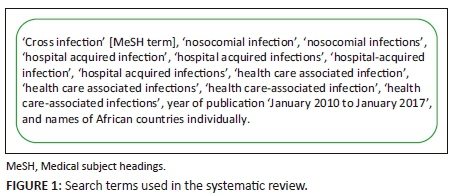
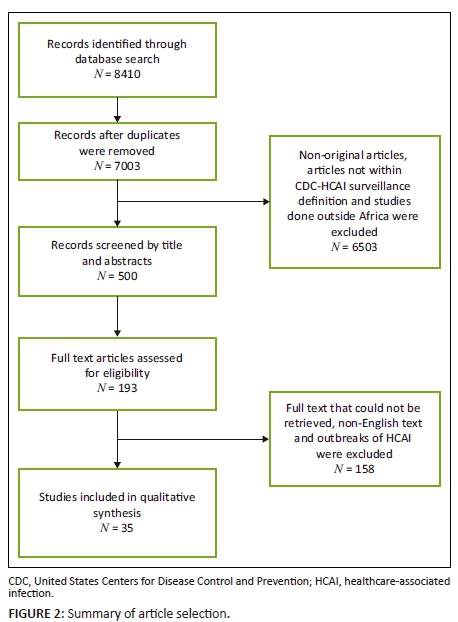
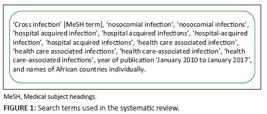
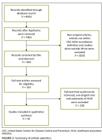
This systematic review was conducted in line with the Preferred Reporting Items for Systematic reviews and Meta-Analyses (PRISMA), guidelines.13Figure 1). Other articles were obtained from Google Scholar. The literature search included articles from January 2010 to January 2017. The review included articles written only in the English language, as well as articles on all types of patient populations. We excluded duplicate articles, publications reporting the same data, outbreaks of HCAI and data of surveillance beyond Africa. We obtained the full text of potentially relevant studies and scrutinised them independently. Then we screened the potentially relevant studies for further eligibility Figure 2.
Criteria for selecting the articles included definitions used for HCAI diagnosis, reported HCAI prevalence or incidence, identified microbiological isolates and patterns of antimicrobial resistance (when documented). We only judged microbiological data suitable for assessment when the number of bacterial isolates was reported in relation to in-patients having suspected HCAI. Healthcare-associated infections included in this review were as defined by the United States Centers for Disease Control and Prevention,9
Literature search and characteristics of the studies included in the systematic review
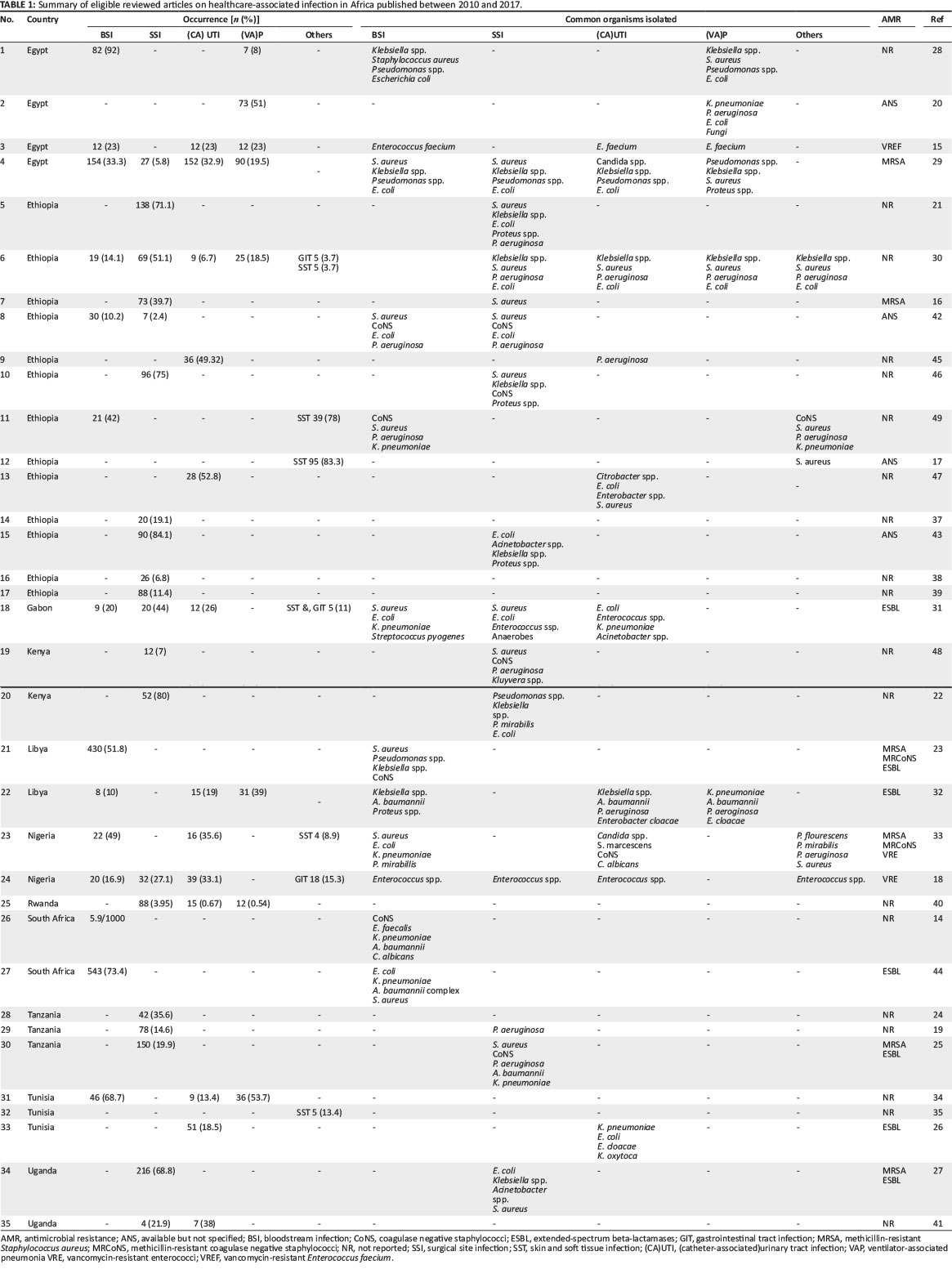
We identified 8410 records from the search of the electronic databases. The number of full text articles screened was 7003 after the removal of duplicate studies, of which 193 studies were potentially eligible. However, only 35 articles were finally selected for qualitative synthesis for this review according to the aforementioned inclusion criteria.9,11 Data were pooled from both prevalence and incidence studies and afterwards summarised in Table 1. The prevalence of infection refers to infected patients per patients present in the hospital or ward at a given point in time.
Results
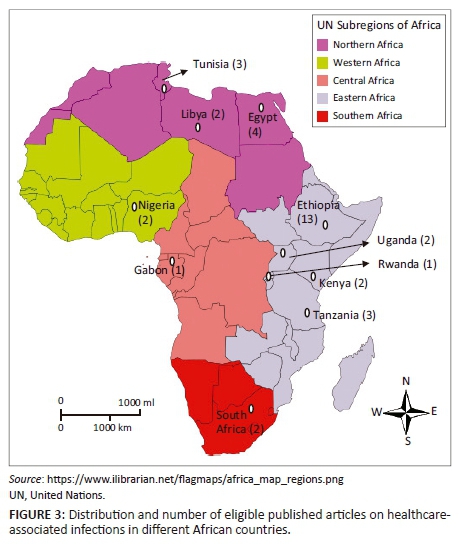
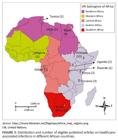
Two-thirds of the reviewed articles were from PubMed, one-third were from African Journals Online and Google Scholar, and none were retrieved from the Cochrane library. Further, more than half (n = 21, 60%) of the synthesised articles were from East Africa, whereas the rest were shared across northern, western, southern and central Africa (Figure 3). Only one article reported an incidence study,1415,16,17,18,1914,16,17,20,21,22,23,24,25,26,35,37,38,39,44,45,46,47,4828,29,30,31,32,33,34,358,3624,34,35,37,38,39,40,41n = 16, 46%) of all the reviewed articles14,15,17,18,20,23,25,26,27,29,31,32,33,42,43,4417,20,42,4331,32,3315,16,19,22,23,25,27,31,41,42,43,44,45,46,47,48
Furthermore, surveillance on (central line-associated) BSI was recorded in 14 (40%) of the reviewed articles14,15,18,23,28,29,30,31,32,33,34,44,4914,23,34,44Table 1). BSI in some individuals was episodic and some others were central line-associated. Diverse microorganisms implicated in BSI in order of decreasing frequency included Klebsiella spp., S. aureus, E. coli, Pseudomonas spp. and Acinetobacter spp. (Table 1). Klebsiella spp. and Staphyloccocus spp. were the most frequently identified causes of BSI. ESBL producers and methicillin-resistant Staphylococcus spp. were the most identified antibiotic-resistant microorganisms in the BSI articles (that mentioned AMR within their panel of laboratory investigation).23,29,31,32,33,4418Acinetobacter baumannii to the carbapenems.32
Surveillance for SSI was common among the reviewed articles. Over half of the reviewed articles had SSI within the context of their surveillance, of which only 13 focused solely on SSI.16,19,21,22,24,25,27,37,38,39,43,46,48S. aureus, E. coli, Klebsiella spp., Pseudomonas spp., in the order of decreasing frequency. Common antimicrobial resistant organisms identified in SSI articles reviewed were MRSA and ESBL-producing Gram-negatives.
In this systematic review, catheter-associated UTI was seen mainly in urologic conditions such as prostatic enlargement and post-gynaecological procedures. Some reviewed articles (n = 10; 29%) categorised healthcare-associated UTI (catheter-associated inclusive) as a subset of other HCAI surveillance types.15,18,29,30,31,32,33,34,40,41 Common microorganisms isolated from healthcare-associated UTI included Klebsiella spp., E. coli, Enterococcus spp., and Pseudomonas spp. In addition, MRSA, vancomycin-resistant enterococci and ESBL-producing Gram-negative bacilli were the most common antimicrobial resistant pathogens noticed in some identified bacteria for healthcare-associated UTI among the reviewed articles.
Only one study included healthcare-associated pneumonia as a lone subtype of HCAI,2015,28,29,30,32,35,40 Common microorganisms reported among these articles included Klebsiella spp., Pseudomonas spp., S. aureus and E. coli. As with other HCAI subtypes in this review, MRSA and ESBL-producing Gram-negative bacilli were the most common antimicrobial resistant pathogens seen. Other HCAI studied in this systematic review were gastroenteritis,18,30,31 and skin and soft tissue infection.17,30,31,33,35,49
Overall, for the reviewed articles that identified AMR, the prevalence of methicillin-resistant Staphylococcus spp. ranged between 3.9% and 80% among the Staphylococcus spp. (S. aureus and coagulase negative staphylococci) reported.16,23,25,27,29,33 The prevalence of Gram-negative bacteria producing ESBL23,25,26,27,31,32,44 ranged between 1.9% and 53%, whereas vancomycin-resistant enterococci15,18,33 was between 2.54% and 100%.
Discussion
Until recently in Africa, evidence on the enormity and debilitating effects of HCAI on patients (and relatives of patients) has been low. The resultant effect of many studies conducted in developed countries was to propose a singular surveillance platform for HCAI across their sub-regions.8,50 This was intended to identify gaps and target control of HCAI. However, the gravity of HCAI is yet to be fully understood in Africa due to the enormous resource requirements for surveillance and diagnoses.51Figure 3).
Although a well-documented protocol for HCAI has been proffered by the United States Centres for Disease Control and Prevention,8,9 only a few studies we reviewed adhered to it or any other protocol of interest. Also, the robustness, reproducibility and inferences from methodology used in the reviewed articles differed considerably from study to study, thus limiting comparability and robust analysis. This systematic review was also limited with search only done in English. Additionally, a follow-up for trends on the HCAI surveillance was rarely conducted in the different healthcare facilities where these studies were conducted. This would have given a clue to either the reduction or the increment of HCAI in such centres, as seen in the archival documentation of the United States CDC.
The prevalent bacteria identified in BSI in this review were Klebsiella spp., S. aureus, E. coli, Acinetobacter spp., in order of decreasing frequency, which slightly contradicts the order of occurrence in a previous review conducted in South East Asia,52Acinetobacter spp. was found to be the most prevalent organism causing BSI. A similar frequency of identification was seen in SSI surveillance, with S. aureus being the most common across reviews with different ecologies but similar healthcare issues of poor funding.11,52 Again, as with BSI, Klebsiella spp. was the most commonly identified pathogen in this review, which concurs with a similar review by Ling et al.52Klebsiella spp. still remained highly prevalent among other bacteria identified, as noted in a similar study.5253
In addition, the range of occurrence of the AMR patterns in the review articles was quite alarming, considering there have been few or no previous reviews on AMR patterns in HCAI pathogens in Africa. The range of MRSA in this review was higher than that reported in the joint European surveillance of MRSA in HCAI.54555657
The inadequate IPC strategies instituted in these healthcare facilities to prevent HCAI compromise the quality of healthcare service delivery, hence the prevalence.1111,12 have emphasised the need for improved IPC in healthcare facilities to drastically reduce HCAI prevalence. Many of the selected studies14,20 mentioned the need for the establishment of IPC, whereas others identified bundle implementation (of the different subtypes of HCAI)14,20,38,26 in curbing HCAI in their centres. Only one article studied the aftermath reduction of HCAI using IPC measures.2051
In this review, most of the reviewed articles highlighted the corresponding AMR patterns of the microorganisms implicated in HCAI,15,16,18,23,25,26,27,29,31,32,33,44 whereas others simply mentioned them as multidrug-resistant organisms.17,20,42,43 This may be due to inadequate laboratory capacity to identify the specific AMR patterns. This also gives a foreknowledge of the existing prevalence of AMR microorganisms in the healthcare facilities in Africa and a possible spread to the communities if not curtailed. MRSA was identified in a previous review by Allengrazi et al.111,58 and are widely implicated in HCAI,50,58 but were rarely mentioned in the synthesised articles. However, one study highlighted carbapenem resistance in Acinetobacter baumannii as HCAI in an intensive care unit in Libya.3259,60 The recognition of this was, however, of little priority in the articles reviewed, with only a limited number of studies15,18,23,25,27,30,37,31,33 highlighting the importance of antimicrobial stewardship in the reduction of AMR in HCAI.
Countries in Africa have a wide variation in the capacity to combat AMR in HCAI, but have been greatly hampered by the availability of funds for research, innovation and capacity building.61,62 This is worsened by a lower percentage of total health spending in African countries.63,64 Thus, the true burden of HCAI in this systematic review is likely to be under-reported and is perhaps greater in countries with weaker health infrastructures. However, this narrative is changing with increasing commitment in Africa to respond to the global threat of AMR. In-country technical capacity with support from partners is now evolving not only to develop national action plans to combat AMR, but also to institute national surveillance for AMR. The WHO Global Antimicrobial Surveillance System provides a tool to standardise data gathering, sharing and analysis through participating institutions and countries at the global level to monitor trends and implement controls.61,62,65,66 Moreover, with the current global attention and high-level political commitment to control AMR, funding support for AMR control in Africa is coming from various organisations, which include the WHO, ReAct Africa, the Center for Disease Dynamics, Economics and Policy and the Fleming Fund.61,67,68
For sustainability, countries also should have budget lines for AMR control activities either as stand-alone or, more realistically, as part of existing systems such as IPC, maternal and child health and health systems strengthening. Monitoring and evaluation has to be incorporated as the systems develop. Current platforms to do this include the Global Antimicrobial Surveillance System,6669
Conclusion
Although prevention and evolution of HCAI and the reduction of the occurrence of AMR globally have been a primary focus of WHO,517
Finally, this systematic review has compiled all relevant, accessible and eligible studies on HCAI in Africa as a baseline for further insight into developing a concrete surveillance system and strengthening local data collection at healthcare facilities. There seems to be a higher number of studies on HCAI compared to previous reviews.12Klebsiella spp. was prevalent across all the HCAI subtypes. MRSA and ESBL-producing Gram-negative bacilli were the notable resistant pathogens identified with worrisome occurrences. These make a strong case for increased laboratory capabilities in the identification of microorganisms and determination of resistance profiles (especially in WHO priority pathogens)70
Competing interests
The authors declare that they have no financial or personal relationships which may have inappropriately influenced them in writing this article.
Sources of support
None.
Authors' contributions
A.O.A was the project leader and also made the conceptual contribution. E.O.I., T.O.O. and A.A.A. performed the search of literature. E.O.I and T.O.O compiled the figures and the table. A.A.A contributed to the editorial changes and A.O.A critically reviewed the manuscript.
Acknowledgements
We wish to acknowledge the contribution of Nigeria Centres for Disease Control to this manuscript. We also thank Professor Iruka N. Okeke and Professor A.T. Olayinka for the materials provided from the situation analysis for the Nigeria action plan on antimicrobial resistance (http://www.ncdc.gov.ng/themes/common/docs/protocols/77_1511368219.pdf).
References
- 1. World Health Organization. Antimicrobial resistance.
- [homepage on the Internet]. Vol. 61, Bull World Health Organ. 2014. [cited 2017 February 5]; Available from: http://www.ncbi.nlm.nih.gov/pubmed/22247201
-
3. Allegranzi B, Pittet D. Preventing infections acquired during health-care delivery. Lancet. 2008;372:1719-20. https://doi.org/10.1016/S0140-6736(08)61715-8
» https://doi.org/10.1016/S0140-6736(08)61715-8 - 4. Archibald L, Jarvis W. Incidence and nature of endemic and epidemic healthcare-associated infections. 5th ed. W. J, editor. Hospital infections. Philadelphia, PA: Lippincott Williams & Wilkins; 2007.
-
5. Pittet D, Donaldson L. Clean care is safer care: A worldwide priority. Lancet. 2005;366:1246-7. https://doi.org/10.1016/S0140-6736(05)67506-X
» https://doi.org/10.1016/S0140-6736(05)67506-X - 6. Samuel SO, Kayode OO, Musa OI, et al. Nosocomial infections and the challenges of control in developing countries. Afr J Clin Exp Microbiol. 2010;11(2):102-10.
- 7. World Health Organization. Health care-associated infections Fact sheet. World health Organization [cited 2017 February 5].
- 2015;4. Available from: http://www.who.int/gpsc/country_work/gpsc_ccisc_fact_sheet_en.pdf
- 8. Healthcare Associated Infection Surveillance Coordinating Centre. CDC / NHSN Surveillance Definition of Healthcare-Associated Infection (HAI) and Criteria for Specific Types of Infections in the Acute Care Setting. VICNISS Healthcare Associated Infection Surveillance Coordinating Centre. 2011; (October):1-31.
-
9. Centers for Disease Control and Prevention. National Healthcare Safety Network (NHSN) Overview. 2017;(January 2017):1-318. Available from: http://www.cdc.gov/nhsn/
» http://www.cdc.gov/nhsn/ - 10. World Health Organization. Hand hygiene in health care first global patient safety challenge clean care is safer care. World Health [serial online].
- 2009;30(1):270. Available from: http://whqlibdoc.who.int/publications/2009/9789241597906_eng.pdf
- 11. Allegranzi B, Bagheri Nejad S, Combescure C, et al. Burden of endemic health-care-associated infection in developing countries: Systematic review and meta-analysis. Lancet (London, England) [serial online].
-
2011;377(9761):228-41. Available from: http://www.ncbi.nlm.nih.gov/pubmed/21146207
» https://doi.org/10.1186/s13756-017-0216-x - 2011 [cited 2016 May 5];89:757-65. Available from: http://www.who.int/bulletin/volumes/89/10/11-088179.pdf
- 13. Moher D, Liberati A, Tetzlaff J, Altman DG, Grp P. Preferred reporting items for systematic reviews and meta-analyses: The PRISMA Statement (Reprinted from Annals of Internal Medicine). Phys Ther. 2009;89(9):873-80.
-
14. Geldenhuys C, Chb MB, Sa F, et al. Central-line-associated bloodstream infections in a resource-limited South African neonatal intensive care unit. S Afr Med J. 2017;107(9):758-62. https://doi.org/10.7196/SAMJ.2017.v107i9.12124
» https://doi.org/10.7196/SAMJ.2017.v107i9.12124 -
15. Moemen D, Tawfeek D, Badawy W. Healthcare-associated vancomycin resistant Enterococcus faecium infections in the Mansoura University Hospital's intensive care units, Egypt. Brazilian J Microbiol. 2015;3:777-83. https://doi.org/10.1590/S1517-838246320140403
» https://doi.org/10.1590/S1517-838246320140403 -
16. Kahsay A, Mihret A, Abebe T, Andualem T. Isolation and antimicrobial susceptibility pattern of Staphylococcus aureus in patients with surgical site infection at Debre Markos Referral Hospital, Amhara Region, Ethiopia. Archiv Public Health. 2014;72(16):1-7. https://doi.org/10.1186/2049-3258-72-16
» https://doi.org/10.1186/2049-3258-72-16 - 18. Olayinka OK, Fadiora SO. Prevalence of hospital-acquired enterococci infections in two primary- Olawale, Kafayat Olayinka; Fadiora, Solomon Olufemi and Taiwo, Samuel Sunday. Afr J Infect Dis. 2011;5(2):40-6.
-
20. Azab SFA, Sherbiny HS, Saleh SH, et al. Reducing ventilator-associated pneumonia in neonatal intensive care unit using 'VAP prevention Bundle': A cohort study. BMC Infect Dis [serial online]. 2015;4-10. Available from: https://doi.org/10.1186/s12879-015-1062-1
» https://doi.org/10.5001/omj.2015.54 - 22. Barasa G, Butt F, Onyango J, Mutua F, Dimba E. Antibiotic sensitivity patterns of aerobic bacterial agents in post-surgical orofacial infections. Ann African Surg. 2015;12(1):32-6.
- 23. Zorgani A, Franka RA, Zaidi MM, Alshweref UM, Elgmati M. Trends in nosocomial bloodstream infections in a burn intensive care unit : An eight-year survey. Ann Burns Fire Disasters. 2010;XXIII(June):88-94.
- 24. Akoko LO, Mwanga AH, Fredrick F, Mbembati NM. Risk factors of surgical site infection at Muhimbili National Hospital, Dar es Salaam, Tanzania. East Central Afr J Surg. 2012;17(3):12-7.
- 25. Fathimunnisa K, Nagaraju B, Sreekanth B. Aerobic bacteriological profile and antibiotic resistance of surgical site infections in surgery ward of tertiary care hospital Mahaboobnagar. Imtu Med J. 2015;6:62-8.
- 26. Bouassida K, Jaidane M, Bouallegue O, Tlili G, Naija H, Mosbah AT. Nosocomial urinary tract infections caused by extended-spectrum beta-lactamase uropathogens: Prevalence, pathogens, risk factors, and strategies for infection control. Canadian Urological Association Journal. 2016;10(April):E87-92.
-
27. Seni J, Najjuka CF, Kateete DP, et al. Antimicrobial resistance in hospitalized surgical patients: A silently emerging public health concern in Uganda. BMC Res Notes. 2013;6(298):1-7. https://doi.org/10.1186/1756-0500-6-298
» https://doi.org/10.1186/1756-0500-6-298 - 28. El-feky EAM, Saleh DA, El-kholy J, Sayed AM, Mansi Y. Use of personal digital assistants to detect healthcare-associated infections in a neonatal intensive care unit in Egypt. J Infect Develop Countries. 2016;10(11):1250-7.
- 29. Hassan RH, Eldegla H, Elmorsy F, Eldars WM. Egyptian pediatric association Gazette clinical and microbiological characteristics of healthcare-associated infections in a tertiary care pediatric hospital. Egyptian Pediatric Association Gazette [serial online].
-
2017;1-5. Available from: https://doi.org/10.1016/j.epag.2017.09.001
» https://doi.org/10.4314/ejhs.v23i3.3 -
30. Walelegn WY, Abera K, Feleke MY. Point prevalence of hospital-acquired infections in two teaching hospitals of Amhara region in. Drug, Healthcare Patient Safety. 2016;8:71-6. https://doi.org/10.2147/DHPS.S107344
» https://doi.org/10.2147/DHPS.S107344 -
31. Scherbaum M, Kösters K, Mürbeth RE, et al. Incidence, pathogens and resistance patterns of nosocomial infections at a rural hospital in Gabon. BMC Infect Dis. 2014;14(124):13-5. https://doi.org/10.1186/1471-2334-14-124
» https://doi.org/10.1186/1471-2334-14-124 -
33. Iwuafor AA, Ogunsola FT, Oladele RO, et al. Incidence, clinical outcome and risk factors of intensive care unit infections in the lagos university teaching hospital (LUTH), Lagos, Nigeria. PLoS ONE. 2016;11(10):1-15. https://doi.org/10.1371/journal.pone.0165242
» https://doi.org/10.1371/journal.pone.0165242 - 34. Mohamed BR, Jihene S, Dhekra C, Selwa K. Mortality among patients with nosocomial infections in tertiary mortality among patients with nosocomial infections in tertiary intensive care units of Sahloul Hospital, Sousse, Tunisia. Arch Iranian Med. 2016;19(3):179-85.
- 35. Mohamed M, Nebiha B, Waadia B, Tasnim M. Healthcare-associated infections in a Tunisian university hospital: From analysis to action. Pan Afr Med J. 2015;8688:1-7.
- 36. CDC / NHSN Patient safety component manual summary of revisions, April 2015 Summary of Revisions. (April 2015):10-11.
- 37. Laloto TL, Gemeda DH, Abdella SH. Incidence and predictors of surgical site infection in Ethiopia: Prospective cohort. BMC Infect Dis. 2017;17(119):1-9.
- 38. Gelaw KA, Aweke AM, Astawesegn FH. Surgical site infection and its associated factors following cesarean section : A cross sectional study from a public hospital in Ethiopia. Patient Safety in Surgery. 2017;11(18):1-7. https://doi.org/10.1186/s13037-017-0131-3
- 39. Demisew A, Tefera B, Fitsum A. Surgical site infection rate and risk factors among obstetric cases of jimma university specialized hospital, southwest Ethiopia. Ethiopian J Health Sci. 2011;21(2):91-100.
-
40. Petroze RT, Byiringiro JC, Kyamanywa P, Ntakiyiruta G, Calland JF, Sawyer RG. Infectious outcomes assessment for health system strengthening in low-resource settings : The novel use of a trauma registry in Rwanda. Surg Infect. 2014;15(4):382-6. https://doi.org/10.1089/sur.2013.146
» https://doi.org/10.1089/sur.2013.146 - 41. Okello TR, Kansiime J, Odora J. Invasive procedures and hospital acquired infection (HAI) in a large hospital in northern Uganda. East Central Afr J Surg. 2014;19(3):77-84.
- 42. Wondimagegn M, Gebre K, Getenet B. Postoperative infections and antimicrobial resistance pattern of bacteria isolates among patients admitted at Felege Hiwot Referral Hospital, Bahirdar, Ethiopia. Ethiopian J Health Sci. 2012;22(1):7-18.
-
43. Dessie W, Mulugeta G, Fentaw S, Mihret A, Hassen M, Abebe E. Pattern of bacterial pathogens and their susceptibility isolated from surgical site infections at selected referral hospitals, Addis Ababa, Ethiopia. Int J Microbiol. 2016;2016:1-9. https://doi.org/10.1155/2016/2418902
» https://doi.org/10.1155/2016/2418902 -
44. Mckay R, Bamford C, Chb MB, Microbiology M, Town C, Africa S. Community- versus healthcare-acquired bloodstream infections at Groote Schuur Hospital, Cape Town, South Africa. S Afr Med J. 2015;105(5):363-9. https://doi.org/10.7196/SAMJ.8183
» https://doi.org/10.7196/SAMJ.8183 -
45. Bekele T, Tesfaye A, Sewunet T, Waktola HD. Pseudomonas aeruginosa isolates and their antimicrobial susceptibility pattern among catheterized patients at Jimma. BMC Res Notes. 2015;8:1-4. https://doi.org/10.1186/s13104-015-1497-x
» https://doi.org/10.1186/s13104-015-1497-x -
46. Mengesha RE, Kasa BG, Saravanan M, Berhe DF. Aerobic bacteria in post surgical wound infections and pattern of their antimicrobial susceptibility in Ayder teaching and referral. BMC Res Notes. 2014;7(575):4-9. https://doi.org/10.1186/1756-0500-7-575
» https://doi.org/10.1186/1756-0500-7-575 -
47. Wondimeneh Y, Muluye D, Alemu A, et al. Urinary tract infection among obstetric fistula patients at Gondar University Hospital, northwest Ethiopia. BMC Women's Health. 2014;14(12):2-7. https://doi.org/10.1186/1472-6874-14-12
» https://doi.org/10.1186/1472-6874-14-12 - 48. Victor D, Sam K, Abdi H, Asad R, Andrew K. Pattern of pathogens and their sensitivity isolated from surgical site infections at the aga khan university hospital, Nairobi, Kenya. Ethiopian J Health Sci. 2013;23(3):141-8.
- 50. European Centre for Disease Prevention and Control. European centre for disease prevention and control. Surveillance of surgical site infections in European hospitals - HAISSI protocol. version 1. Stockholm: European Centre for Disease Prevention and Control.; 2012, 47 p.
- 51. World Health Organisation. on hand hygiene in health care first global patient safety challenge clean care is safer care. World Health [serial online].
- 2009;30(1):270. Available from: http://whqlibdoc.who.int/publications/2009/9789241597906_eng.pdf
-
52. Ling ML, Apisarnthanarak A, Madriaga G. The burden of healthcare-associated infections in southeast Asia: A systematic literature review and meta-analysis. Clin Infect Dis. 2015;60(11):1690-9. https://doi.org/10.1093/cid/civ095
» https://doi.org/10.1093/cid/civ095 - 53. Ternent L, Dyson RJ, Krachler AM, Jabbari S. Bacterial fitness shapes the population dynamics of antibiotic-resistant and -susceptible bacteria in a model of combined antibiotic and anti-virulence treatment. J Theor Biol.
- [serial online]. 2015;372:1-11. Available from: http://doi.org/10.1016/j.jtbi.2015.02.011
- 54. Kock R, Becker K, Cookson B, et al. Methicillin-resistant Staphylococcus aureus (MRSA): Burden of disease and control challenges in Europe. Eur Commun Dis Bull. 2010;15(41):19688.
- 55. Bearman G, Steven M, Edmond M, Wenzel RP. Infection control in the hospital. fifth. Boston, MA: The International Society for Infectious Diseases. Previous; 2014, 418 p.
- 56. Flokas ME, Detsis M, Alevizakos M, Mylonakis E. Prevalence of ESBL-producing Enterobacteriaceae in paediatric urinary tract infections: A systematic review and meta-analysis. J Infect [serial online]. 2016 Dec 1 [cited 2018 Feb 25];73(6):547-57. Available from: https://www.sciencedirect.com/science/article/pii/S0163445316301785
- 57. McDanel J, Schweizer M, Crabb V, et al. Incidence of Extended-Spectrum β-Lactamase (ESBL)-producing Escherichia coli and Klebsiella Infections in the United States: A systematic literature review. Infect Control Hosp Epidemiol.
- [serial online]. 2017 Oct 31 [cited 2018 Feb 25];38(10):1209-15. Available from: https://www.cambridge.org/core/product/identifier/S0899823X17001568/type/journal_article
- 58. Centers for Disease Control and Prevention (CDC). Facility guidance for control of Carbapenem-resistant Enterobacteriaceae (CRE). Atlanta, GA: National Center for Emerging and Zoonotic Infectious Diseases; 2015, p. 24.
- 59. ECDC. Point prevalence survey of healthcare-associated infections and antimicrobial use in European acute care hospitals. version 5. Eur Centre Dis Prevent Control; 2016. 90 p.
- 60. CDC. Antibiotic use in the United States, 2017: Progress and Opportunities. Atlanta, GA: Department of Health and Human Services, CDC;2017.
- 61. Mendelson M, Dar OA, Hoffman SJ, Laxminarayan R. Global antimicrobial conservation fund for low- and middle-Income countries. Int J Infect Dis. 2016;51:70-2.
- 62. World Health Organisation. source>Global antimicrobial resistance surveillance system [homepage on the Internet].
- World Health Organisation. 2015. Available from: http://apps.who.int/iris/bitstream/10665/188783/1/9789241549400_eng.pdf?ua=1
- 63. Clarke G, Desai R, Hallward-Driemeier M, et al. World development report 2005: A better investment climate for everyone [homepage on the Internet].
- 2005 [cited 2018 August 20]. Available from: http://documents.worldbank.org/curated/en/876951468158729105/Relatorio-sobre-o-desenvolvimento-mundial-2005-um-melhor-clima-de-investimento-para-todos
- 64. University of Washington Center for Health Trends and Forecasts. Financing Global Health 2017 | Institute for Health Metrics and Evaluation [homepage on the Internet].
- 2017 [cited 2018 Aug 20]. Available from: http://www.healthdata.org/infographic/financing-global-health-2017
- 65. World Health Organisation. Global action plan on antimicrobial resistance [homepage on the Internet].
- Geneva: World Health Organization; p. 28. 2015 [cited 2018 August 20] Available from: http://apps.who.int/iris/handle/10665/193736
- 66. World Health Organization. Global antimicrobial resistance surveillance system [homepage on the Internet],
- 36 p. 2015 [cited 2018 Aug 20] Available from: http://apps.who.int/iris/bitstream/10665/188783/1/9789241549400_eng.pdf?ua=1
- 67. Funding- About Us - ReAct Africa [homepage on the Internet].
- [cited 2018 Sep 18]. Available from: https://www.reactgroup.org/about-us/funding/
- 68. Hellen G, Okeke IN, Aboderin AO, Martinez E, Matu M. East Africa public health laboratory networking project strengthening the role of laboratories in tracking antimicrobial drug resistance in east Africa [homepage on the Internet],
- p. 40. 2016 [cited 2018 Aug 20] Available from: http://cddep.org/sites/default/files
- 69. Global PPS [Internet].
- [cited 2018 Oct 25]. Available from: http://www.global-pps.com/
- 70. Knols BG, Smallegange RC, Tacconelli E, Magrini N, Kahlmeter G, Singh N. Global priority list of antibiotic-resistant bacteria to guide research, discovery, and development of new antibiotics. Lancet Infect Dis. 2016;9(9):535-6.

Accepted: 20 Sept. 2018
Published: 06 Dec. 2018