Extranodal presentation of a lymphoma with precursor B-cell phenotype and translocation t(8;14) in South Africa
Abstract
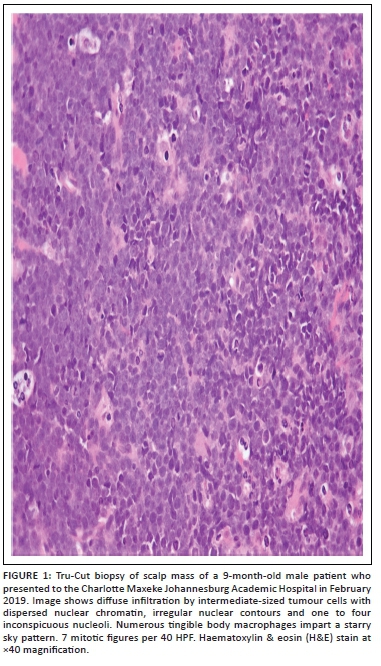
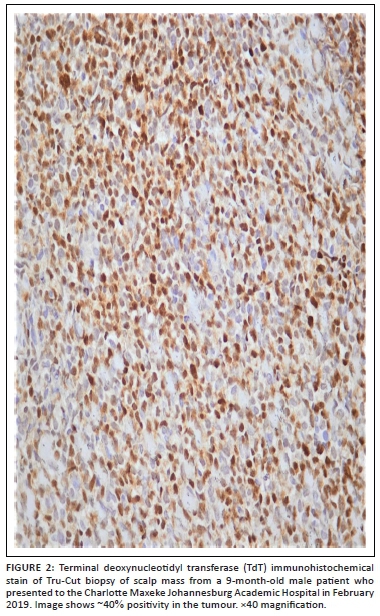
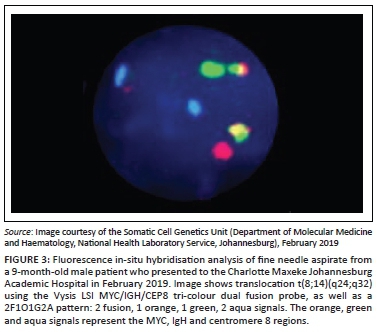
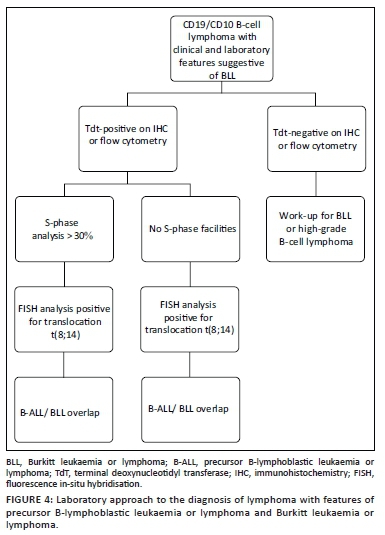
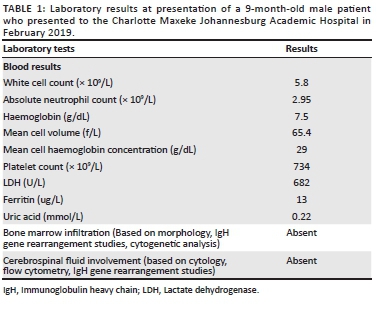
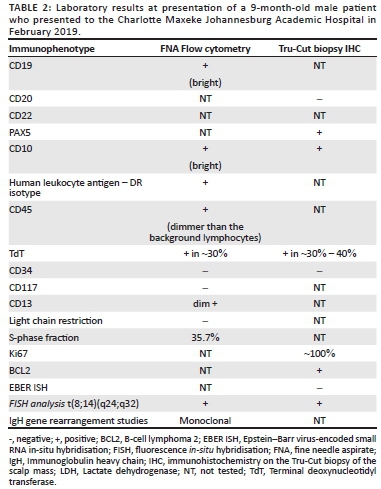
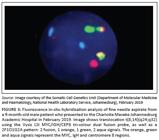
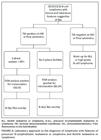
INTRODUCTION: A rare entity of a B-cell malignancy with precursor B-cell phenotype and concomitant translocation t(8;14) or variant MYC translocation exists. These cases show clinical, pathological and molecular overlap between precursor B-lymphoblastic leukaemia or lymphoma and Burkitt leukaemia or lymphoma (BLLCASE PRESENTATION: We report a case from February 2019 at the Charlotte Maxeke Johannesburg Academic Hospital, South Africa, of a 9-month-old infant with a predominantly extracranial soft tissue mass showing extradural extension. There was no involvement of the peripheral blood or bone marrow. Fine needle aspiration and Tru-Cut biopsy of the soft tissue scalp mass showed the tumour to be of precursor B-cell phenotype. Contrastingly, an immunophenotypic assessment revealed a high S-phase fraction and raised concern for BLL. This prompted testing for the translocation t(8;14) by fluorescence in-situ hybridisation analysis, which confirmed this aberrationMANAGEMENT AND OUTCOME: Based on the published experience of other centres, the patient was initiated on a BLL protocol. Despite an excellent clinical response, the patient succumbed to neutropenic sepsis six months after diagnosis.CONCLUSION: Leukaemia or lymphoma with translocation t(8;14) or variant MYC translocation and precursor B-cell phenotype is a rare entity with a varied clinical presentation. This poses a challenge for diagnosis and classification and a clinical dilemma for the choice of treatment
Burkitt leukaemia/lymphoma; B-lymphoblastic leukaemia/lymphoma; translocation t(8;14); variant MYC translocations; S-phase fraction; terminal deoxynucleotidyl transferase (TdT); extranodal
 Thumbnail
 Thumbnail
 Thumbnail
 Thumbnail