Improved sensitivity, safety and laboratory turnaround time in the diagnosis of pulmonary tuberculosis by use of bleach sedimentation
Abstract
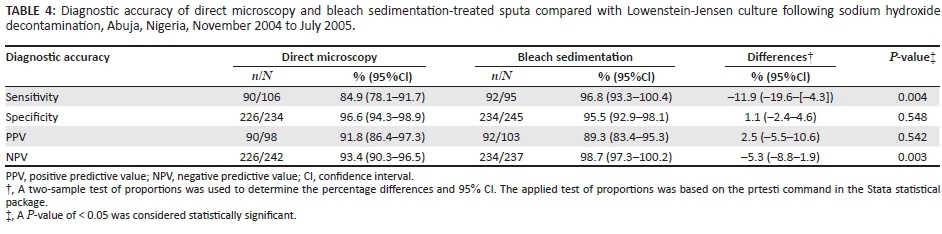
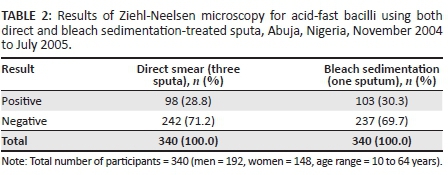
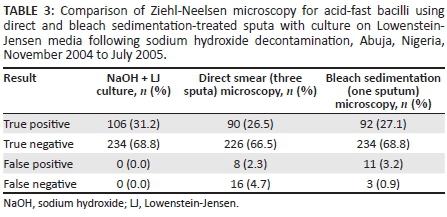
BACKGROUND: Inadequate diagnostic processes and human resources in laboratories contribute to a high burden of tuberculosis (TB) in low- and middle-income countries. Direct smear microscopy is relied on for TB diagnosis; however, sensitivity rates vary. To improve sensitivity of direct microscopy, the researchers employed several approaches, including sputum digestion and concentration of acid-fast bacilli (AFB), a technique which uses commercial bleach. OBJECTIVES: This study compared methods used to diagnose active Mycobacterium tuberculosis infections. METHODS: Three sputum specimens were collected from each of 340 participants in Abuja, Nigeria, over two consecutive days. Direct microscopy was performed on all specimens; following microscopy, one specimen from each patient was selected randomly for bleach sedimentation and one for Lowenstein-Jensen culture. RESULTS: Direct microscopy produced 28.8% AFB-positive results, whilst bleach sedimentation resulted in 30.3%. When compared with the cultures, 26.5% were AFB true positive using direct microscopy and 27.1% using bleach sedimentation. Whilst the specificity rate between these two methods was not statistically significant (P = 0.548), the sensitivity rate was significant (P = 0.004). CONCLUSION: Based on these results, bleach increases the sensitivity of microscopy compared with direct smear and has similar specificity. When diagnosing new cases of pulmonary TB, one bleach-digested smear is as sensitive as three direct smears, reducing waiting times for patients and ensuring the safety of laboratory technicians.
 Thumbnail