Whole blood pathogen reduction technology and blood safety in sub-Saharan Africa: A systematic review with regional discussion
Abstract
BACKGROUND: Despite vast improvements in transfusion services in sub-Saharan Africa over the last decade, there remain serious concerns on the safety and adequacy of the blood supply across the region. OBJECTIVE: This review paper ascertains the role of pathogen reduction technology (PRT) in improving blood safety and supply adequacy in the region. METHOD: The state of blood safety in sub-Saharan Africa was reviewed. Meetings, seminars and correspondence were undertaken with key clinicians, scientists and professional bodies in the region, including the World Health Organization's Regional Office for Africa, to examine the suitability of PRT for improving t safety of whole blood transfusion, a prevalent transfusion format in the region. RESULTS: Existing literature suggests that combining PRT with current blood safety measures (such as serology) would improve the safety and adequacy of the blood supply for transfusions in sub-Saharan Africa. This was echoed by the findings of the stakeholder meetings. CONCLUSION: Following a detailed appraisal of two leading PRT systems, the Mirasol® PRT System and the Cerus S-303 System, we suggest that companies conduct comprehensive toxicological evaluation of the agents used for PRT and publish this in the scientific literature. We also recommend that the safety and efficacy of these technologies should be established in a randomised clinical trial conducted in sub-Saharan Africa.
Introduction
The United Nations Millennium Declaration, issued in 2000, led to the establishment of eight international development goals, which became known as the Millennium Development Goals.112
The World Health Organization (WHO) estimates that there are 3.9 whole blood donations per 1000 inhabitants in low-income countries; far below the minimum WHO requirement of 10 whole blood donations per 1000 inhabitants.23,4,53,4,53,4,53,4,53,4,5,6,7,8
Finally, whereas in high-income countries almost all blood is fractionated into plasma, platelets and red blood cells (RBCs),9,109,109,109,10
Blood safety in sub-Saharan Africa
In recent years, there has been a vast improvement in the organisation, management, clinical and technical aspects of transfusion services in sub-Saharan Africa,9,10,11
According to the WHO recommended minimum of 10 units of donated blood per 1000 catchment population, an estimated 8-9 million units of blood are currently needed per year for transfusion in Africa.11111112
Improving access to safe blood leads to improved healthcare. In Malawi, safer blood led to a 60% decrease in mortality amongst seriously ill children and a 50% decrease in mortality amongst pregnant women with severe blood loss.132,3,4,5,8,9
The blood donation rate in sub-Saharan Africa is generally low, with 4-5 per 1000 population8,922,9,148,98,915
The high prevalence of TTIs, such as infection with HIV (5% amongst adults), hepatitis B virus (8%) and hepatitis C virus (10%),92,3,4,9,107,993,44
Another major difference between blood transfusion in low- and middle-income countries and high-income countries is that only 41.2% of all collections in Africa (1.4 million of 3.4 million) were transfused as components in 2010.910,12
Aim
The aim of this review was to determine the suitability of pathogen reduction technology (PRT) for improving the safety of whole blood transfusions in sub-Saharan Africa, as well as for improving the adequacy of the blood supply available for transfusions. This technology could offer a way forward toward addressing the Millennium Development Goals in sub-Saharan Africa through helping to ensure an adequate and safe blood supply.
Review method
During the period September 2012 to January 2015, we searched for articles in the PubMed index using keywords and combinations of keywords, including 'pathogen reduction/inactivation', 'blood safety', 'transfusion-transmitted infections', 'sub-Saharan Africa', 'Mirasol', 'S303', 'riboflavin' and 'amustaline'. We also sought out articles from emerging key opinion leaders. We then applied the Grading of Recommendations, Assessment, Development and Evaluation (GRADE)161718,19,20® PRT and the Cerus S-303 PRT, were examined, as these two systems could offer additional solutions to ensure safer transfusion of whole blood, potentially leading to a paradigm shift for healthcare in low- and middle-income countries.18,19,2021,22,23
Findings
The challenges of an inadequate and unsafe supply of blood for transfusions
The situation described in the WHO 2010 survey921,22,2324575,158,925,262727,2827,29
Thus, added to the wider iatrogenic risks such as TTIs associated with transfusions,5,6,7,8,9
The potential of pathogen reduction technology
There are a number of current technologies for the reduction of blood-borne pathogens.19,20,21303132,3318,19,20
Discussion
Ensuring blood safety in sub-Saharan Africa
Three key principles18,19,20,34
With regard to donor selection and/or exclusion, it should be pointed out that the WHO promotes VNRBD.352436363635
As for the testing of donated blood, the current practice in high-income countries is to employ the following layers of protection: donor screening, serology, NAT, leukoreduction, gamma irradiation and bacterial detection. Donors in high-income countries have a much lower prevalence of TTIs.37,3837,3837,383913
Considering all of these factors, the current status of highly risky transfusion in sub-Saharan Africa requires a new paradigm approach. To start a combination of new technologies is needed that would be effective for whole blood transfusion - a significant format of transfusion in sub-Saharan Africa - and that could enhance the current testing solution for improved safety. Given the difficulty of recruiting sufficient donations, the proposed way forward should also have the potential to reduce supply wastage by rendering safe blood that would otherwise be rejected for testing positive. Amongst other attributes, the appropriate technology would need to exhibit: safety, effectiveness, clinical efficacy, physiological integrity of biological components, operational efficiency and competitive health economics. The various platforms encompassing PRT represent such a novel approach.18,19,2030,3118,19,20,30,4040
Moving forward: validation and safety of pathogen reduction technology
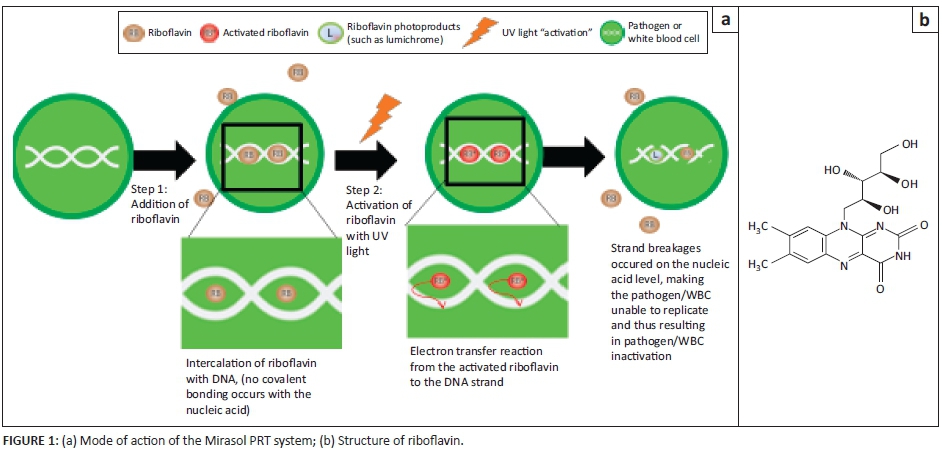
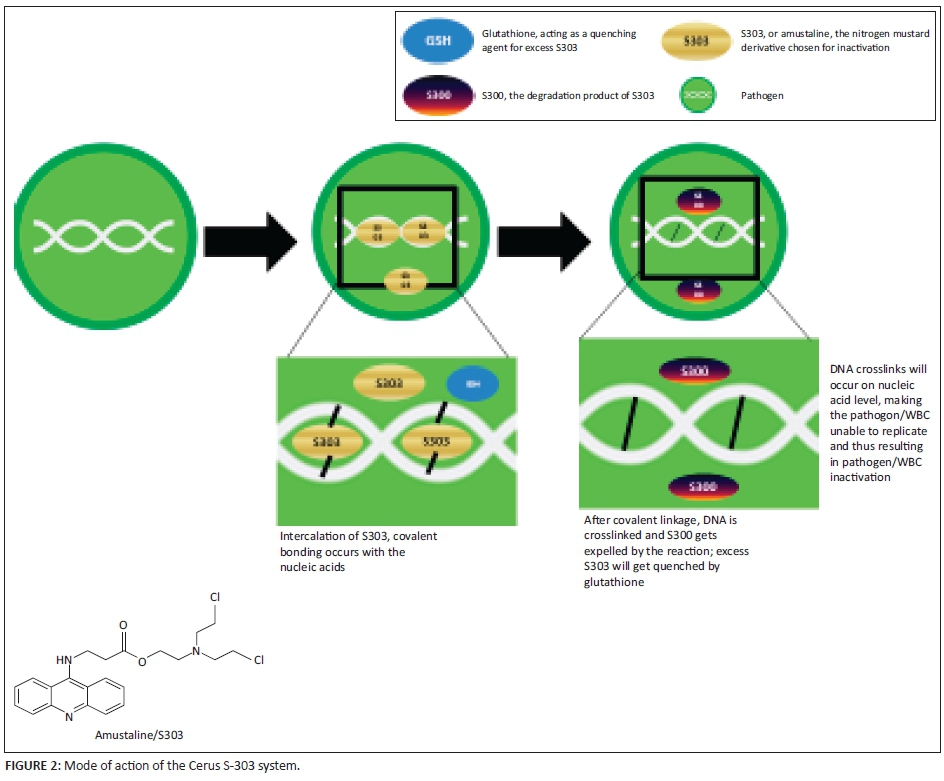
We examined two PRT platforms in detail, the Mirasol PRT System for Whole Blood and the Cerus S-303 system. Both systems are based on disrupting the nucleic acid in the pathogen. The Mirasol system achieves this through electron transfer reactions, whereas the Cerus S-303 system does so through irreversible crosslinking of the DNA. We focused specifically on the toxicology of the systems to laboratory staff and patients and the potential usefulness of these two systems for whole blood transfusion.
The Mirasol PRT System for Whole Blood
30 , 38The system: The Mirasol PRT system is manufactured by Terumo BCT (Lakewood, Colorado, United States) and was granted the CE mark in 2008.3041Figure 1).
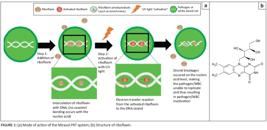
Safety: Riboflavin is a safe, non-toxic, non-mutagenic, water-soluble vitamin necessary for normal cell function, growth and energy production in humans.42424242424343,4443,44
Extensive toxicology studies have been performed to confirm the safety profile of riboflavin.424343
The chemistry of the base technology for the Mirasol PRT platform remains the same for whole blood, plasma and platelets.30,3845,4647,48
Strengths and challenges: The Mirasol platform has been licensed and is being used across Europe for plasma and platelet transfusions.3032,33Plasmodium spp. parasites.532,3332,33
Because the Mirasol PRT is a nascent technology, the blood-banking sector, long-accustomed to routine traditional testing, would need to take into consideration the substantial paradigm shift and the training of personnel toward ensuring its safe and effective implementation. In addition, the extra cost of combining the new technology with current routine testing remains a key limitation.
The Cerus S-303 blood system
49 , 50 , 51The system: The Cerus S-303 system is manufactured by Cerus Corporation (Concord, California, United States) and a CE mark was granted in 2002.31Figure 2) employs a chemical compound, S-303 (amustaline), which intercalates with the nucleic acids in the pathogen with no activation of the material.49,50,5149,50,515149
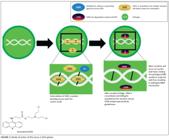
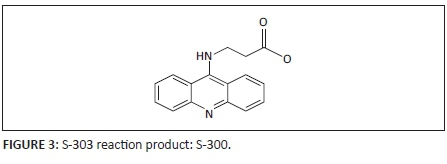
Safety: The Cerus platform uses a xenobiotic/foreign chemical, S-303, as the pathogen reduction agent, which in turn results in xenobiotic breakdown products, including S-300 and products of the 'heteroalkyl' group.52Figures 3 and 4). The pharmacokinetic properties of quinacrine are well known.535455,56,5755,5657585951
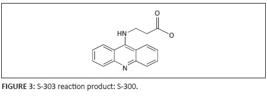
Furthermore, quinacrine, quinacrine mustard, S-303 and S-300 are heterocyclic amines, which are known for their mutagenicity.60,616263636465
It is well known that compounds with structures similar to a pharmacologically-active drug are often themselves biologically active.59
Some patients transfused with S-303-treated RBCs developed positive cross-match reactions to the RBCs with the first generation of the Cerus platform. As a result, the second generation system includes glutathione as a quencher.656552in vivo, glutathione is found predominantly in RBCs, not in plasma.51in vivo and no longer available to prevent S-300 from reacting with the vital biological components of the extracellular environment.
Strengths and challenges: The Cerus Intercept platform version of the Cerus S-303 is currently available for platelets and plasma. A phase III clinical trial for RBCs has been completed in Europe.20,50
That said, there is a need for more appropriate experimental approaches to determine adverse effects such as immunotoxicity, carcinogenicity and genotoxicity. Importantly, the current absence of a removal step in the whole blood PRT process proposed for packed RBC treatment for the S-303 platform only emphasises the need for such detailed toxicological evaluations. Indeed, further extensive toxicological evaluation of S-303 and its breakdown products, in phase III of the evaluation process, would ensure not only safety but also a reproducible and user-friendly technology for resource-limited settings. Such technology should be adapted, not only to current recommended blood safety regulations, but should include ethical considerations, affordability and economical sustainability for blood services.66
Pathogen reduction technology and the pathogen detection window
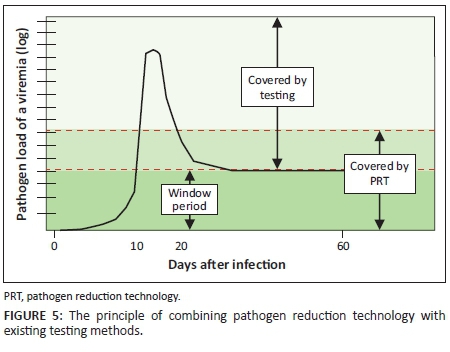
The above limitations of toxicity (Cerus S-303 platform) and extra cost (both the Mirasol and Cerus S-303 platforms) notwithstanding, based on the underpinning pathogen nucleic binding chemistry, both PRT formats are potentially effective against a range of pathogens known and unknown, on white blood cells, as long as they contain nucleic acids. Moreover, by virtue of the underlying analytical sensitivity of the strategy, PRT has the potential of further closing the pathogen detection window period - when blood levels of specific pathogen markers are still below the detection limits of other methods (Figure 5).
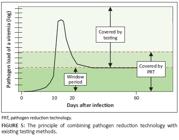
This highlights the potential of PRT to markedly improve the safety of blood through a synergistic combination with the diagnostic window of testing. This conclusion came out of the seminars held with stakeholders, including clinicians, scientists and the WHO's Regional Office for Africa, during the period of this study.21,22,23
Conclusion
Whole blood transfusion and adequacy of the blood supply
Given the high cost of establishing and running a blood componentisation programme, it might be beneficial for low- and middle-income countries to keep their focus on whole blood transfusions, increase blood donations and decrease the risk of exposure to pathogens in the blood supply, rather than on extensive componentisation. However, facilities permitting, the need for blood components might be met through apheresis, allowing blood banks to produce specific blood components based on the demand of the prescribing physician. That said, reduction of blood transfusion to their indispensable indications and appropriate use of blood components are critical to meet safe blood needs. This includes early diagnosis of diseases requiring blood transfusion, the use of surgical techniques and of medication aimed at limiting blood loss, as well as respect for national directives. In 2009, less than one out of 10 African countries had a proper policy in place for clinical use of blood.9
A new safety paradigm toward whole blood pathogen reduction technology
The provision of an adequate blood supply and safe transfusion of blood as recommended in the United Nations' Millennium Development Goals remains a major challenge for sub-Saharan Africa. Current blood-borne pathogen testing arrangements, hampered by lack of adequate testing resources, result in TTIs at an estimated risk of 10% - 50% per transfusion. Moreover, because of poor blood donation rates, blood supplies at blood banks are low. This review supports the position that PRT may offer a solution for ensuring that the regionally dominant format of whole blood transfusion is rendered safer by removing TTIs. We suggest that a new paradigm toward combining PRT with standard quality testing would improve the safety of transfusion. The existing literature suggests that combining PRT with current routine blood screening methods (such as serology) would improve the safety of transfusions in sub-Saharan Africa. Following a detailed review of two of the leading PRT methods, the Terumo BCT Mirasol PRT Whole Blood system and the Cerus S-303 system, we suggest that manufacturers conduct a comprehensive toxicological evaluation of the agents used for PRT and publish their findings in the scientific literature. We also recommend that the safety and efficacy of PRT technology should be established in a randomised clinical trial conducted in sub-Saharan Africa, if the technology is adopted in the region.
Competing interests
The authors declare an unconditional financial support from Terumo BCT (manufacturers of the Mirasol PRT system) during this study. The statements made are the independent collective position of the authors on the respective issues discussed.
Authors' contributions
A.N. produced the primary draft and supervised subsequent continuity, coherence and version control. G.A., E.A. and T.A. reviewed the toxicology. C.T. reviewed the clinical haematology.
Acknowledgements
We would like to acknowledge the contributions of the Delegates of the Cameroon PRT Round-Table Panel, Yaoundé, 28-29 January 2015, including: Dr Noah Owona (Ministry of Public Health and Permanent Secretary of the National Blood Safety Programme, Yaoundé, Cameroon); Professor Dieudonné Adiogo (Vice Dean, Faculty of Medicine, University of Douala); Dr Biboum Balogog (Head of the Blood Bank, CHE/CNPS Essos, Yaoundé); Colonel Dr Celestin Ayangma (Head, Laboratories and Blood Bank, Garnison Military Hospital, Yaoundé); Professor Dora Mbanya (Faculty of Medicine and Biomedical Sciences & Head, Haematology Laboratory & Blood Bank, CHU, Yaoundé); Dr Maurice Mouladje (The Blood Bank, Regional Hospital, Buea).
References
-
1. World Health Organization. The Millennium Development Goals [page on the Internet]. c2000 [cited 2015 May 31]. Available from: http://www.who.int/mediacentre/factsheets/fs290/en/
» http://www.who.int/mediacentre/factsheets/fs290/en/ -
2. Bloch EM, Vermeulen M, Murphy E. Blood transfusion safety in Africa: a literature review of infectious disease and organizational challenges. Transfus Med Rev. 2012;26(2):164-180. http://dx.doi.org/10.1016/j.tmrv.2011.07.006
» http://dx.doi.org/10.1016/j.tmrv.2011.07.006 -
3. Tagny CT, Murphy EL, Lefrère JJ. The Francophone Africa Blood Transfusion Research Network: a five-year report (2007-2012). Transfus Med. 2013;23(6):442-444. http://dx.doi.org/10.1111/tme.12076
» http://dx.doi.org/10.1111/tme.12076 -
4. Lefrère JJ, Dahourouh H, Dokekias AE, et al. Estimate of the residual risk of transfusion-transmitted human immunodeficiency virus infection in sub-Saharan Africa: a multinational collaborative study. Transfusion. 2011;51(3):486-492. http://dx.doi.org/10.1111/j.1537-2995.2010.02886.x
» http://dx.doi.org/10.1111/j.1537-2995.2010.02886.x -
5. Owusu-Ofori AK, Parry C, Bates I. Transfusion-transmitted malaria in countries where malaria is endemic: a review of the literature from sub-Saharan Africa. Clin Infect Dis. 2010;51(10):1192-1198. http://dx.doi.org/10.1086/656806
» http://dx.doi.org/10.1086/656806 -
6. Burnouf T, Emmanuel J, Mbanya D, et al. Ebola: call for blood transfusion safety in sub-Saharan Africa. Lancet. 2014;384(9951):1347-1348. http://dx.doi.org/10.1016/S0140-6736(14)61693-7
» http://dx.doi.org/10.1016/S0140-6736(14)61693-7 -
7. Olawumi HO, Fadeyi A, Babatunde SK, et al. Malaria parasitaemia among blood donors in Ilorin, Nigeria. Afr J Infect Dis. 2015;9(1):10-13. http://dx.doi.org/10.4314/ajid.v9i1.3
» http://dx.doi.org/10.4314/ajid.v9i1.3 - 8. Tapko J-B, Mainuka P, Diarra-Nama AJ. Status of blood safety in the WHO African region. Report of the 2004 survey. WHO-Afro Brazzaville, Congo; 2006.
- 9. Tapko J-B, Toure B, Sambo LG. Status of blood safety in the WHO African region. Report of the 2010 survey. WHO-Afro Brazzaville, Congo; 2014.
-
10. Pitman JP, Wilkinson R, Liu Y, et al. Blood component use in a sub-Saharan African country: results of a 4-year evaluation of diagnoses associated with transfusion orders in Namibia. Transfus Med Rev. 2015;29(1):45-51. http://dx.doi.org/10.1016/j.tmrv.2014.11.003
» http://dx.doi.org/10.1016/j.tmrv.2014.11.003 - 11. World Health Organization. Availability, safety and quality of blood products. Executive Board EB125/5. 125th Session. Geneva May 7. WHO; 2009.
- 12. Asanghanwa CMN. Clinical indications of blood transfusion at the Yaoundé University Teaching Hospital and the Cité Verte District Hospital. MD Thesis, Department of Microbiology, Haematology and Cancerology, Faculty of Medicine & Biomedical Sciences, University of Yaounde 1, Cameroon; 2013.
-
13. World Health Organization. Making safe blood available in Africa [document on the Internet]. c2014 [cited 2014 Jul 09]. Available from: http://www.who.int/bloodsafety/makingsafebloodavailableinafricastatement.pdf?ua=1
» http://www.who.int/bloodsafety/makingsafebloodavailableinafricastatement.pdf?ua=1 - 14. Tapko J-B. Coping with Ebola crisis in transfusion services in West Africa. Presentation to the 25th Regional Congress of the International Society for Blood Transfusion, London, United Kingdom. 1 July 2015.
-
15. Tagny CT, Mbanya D, Tapko J-B, et al. Blood safety in sub-Saharan Africa: a multi-factorial problem. Transfusion. 2008;48(6):1256-1261. http://dx.doi.org/10.1111/j.1537-2995.2008.01697.x
» http://dx.doi.org/10.1111/j.1537-2995.2008.01697.x -
16. Balshem H, Heland M, Schünemann HJ, et al. GRADE guidelines: 3. Rating the quality of evidence. J Clin Epidemiol. 2011;64(4):401-406. http://dx.doi.org/10.1016/j.jclinepi.2010.07.015
» http://dx.doi.org/10.1016/j.jclinepi.2010.07.015 - 17. Garson D, Lillvik C. 2012. The literature review: a research journey [pictorial]. In: A guide to quality improvement methods. Health Quality Improvement Partnership (HQIP). London, 2015; p. 8.
- 18. Picker SM. Pathogen reduction technologies: the best solution for safer blood? J Blood Disorders Transf. 2012;3:133.
- 19. Picker SM. Current methods for the reduction of blood-borne pathogens: a comprehensive literature review. Blood Transfus. 2013;11(3):343-348.
-
20. Schlenke P. Pathogen inactivation technologies for cellular blood components: an update. Transfus Med Hemother. 2014;41(4):309-325. http://dx.doi.org/10.1159/000365646
» http://dx.doi.org/10.1159/000365646 - 21. Nkohkwo A, Talboys N, Ndihokubwayo J-B, et al. Improving blood supply safety and adequacy in Africa. A meeting at the WHO, Brazzaville, Congo, January 2014 (unpublished report).
- 22. Nkohkwo A, Talboys N. Improving blood supply safety and adequacy in developing countries: pan-African blood safety perspectives. Abstract for the 2nd Congress of the African Society for Laboratory Medicine; Nov 30 - Dec 4. Cape Town, South Africa; 2014.
- 23. Nkohkwo A, Asonganyi T, Agbor G, et al. Toxicological aspects of pathogen reduction/inactivation system for use in Cameroon. A roundtable seminar, Hilton. Yaoundé, Cameroon, 29-30 January 2015 (unpublished report).
- 24. Safe Blood for Africa Foundation. Desktop analysis of Blood Safety in Cameroon. Rivonia, South Africa: SFBA, 2013; p23.
- 25. Konotey-Ahulu FID. The sickle cell disease patient. Tettah-A'Domeno Co. Watford, England; 1996.
- 26. NHS. Sickle cell disease in childhood- standards and guidelines for clinical care. NHS Screening Programmes, London; 2006 & 2010.
- 27. World Health Organization. The management of haemoglobin disorders. Report of Joint WHO-TIF meeting. Nicosia, Cyprus, November 2007. WHO; 2008.
- 28. Sickle Cell Society. Standards for the clinical care of adults with sickle cell disease in the UK. Sickle Cell Society, London; 2008.
- 29. Mbanya DS. Sickle cell disease in sub-Saharan Africa. Presentation to the 25th Regional Congress of the International Society for Blood Transfusion, London, United Kingdom. 1 July 2015.
-
30. Terumo BCT. CaridianBCT receives CE mark for Mirasol® Pathogen Reduction Technology System [page on the Internet]. c2007 [cited 2016 May 06]. Available from: https://www.terumobct.com/location/north-america/about-terumobct/press-room/Pages/MirasolPathogenReductionTechnologySystemforPlateletsReceivesCEMark.aspx
» https://www.terumobct.com/location/north-america/about-terumobct/press-room/Pages/MirasolPathogenReductionTechnologySystemforPlateletsReceivesCEMark.aspx -
31. Cerus Corporation. Intercept Blood System CE mark [page on the Internet]. n.d. [cited 2016 May 06]. Available from: http://www.interceptbloodsystem.com/resource-center/ce-mark-a-iso-certificates
» http://www.interceptbloodsystem.com/resource-center/ce-mark-a-iso-certificates - 32. Owusu-Ofori S, Allain JP. AIMS trial: Report of the first randomized control trial with Mirasol-treated whole blood. The findings of an RCT study in Ghana. Presentation to the 25th Regional Congress of the International Society for Blood Transfusion, London, United Kingdom. 1 July 2015.
- 33. Allain JP, Owusu-Ofori S. AIMS Trial: Report of the first randomized control trial with Mirasol-treated whole blood. The findings of an RCT study in Ghana. Presented to the meeting of the American Society of Haematology; 2015. In press.
- 34. SaBTO (Advisory Committee on the Safety of Blood Tissues & Organs). Donor selection criteria review. Department of Health, London; April 2011.
-
35. Allain JP. Moving on from voluntary non-remunerated donors: who is the best blood donor? Br J Haematol. 2010;154(6):763-769. http://dx.doi.org/10.1111/j.1365-2141.2011.08708.x
» http://dx.doi.org/10.1111/j.1365-2141.2011.08708.x -
36. Field SP, Allain JP. Transfusion in sub-Saharan Africa: does a Western model fit? J Clin Pathol. 2007;60(10);1073-1075. http://dx.doi.org/10.1136/jcp.2006.043505
» http://dx.doi.org/10.1136/jcp.2006.043505 -
37. Hourfar MK, Jork C, Schottstedt V, et al. Experience of German Red Cross blood donor services with nucleic acid testing: results of screening more than 30 million blood donations for human immunodeficiency virus-1, hepatitis C virus, and hepatitis B virus. Transfusion. 2008;48(8):1558-1566. http://dx.doi.org/10.1111/j.1537-2995.2008.01718.x
» http://dx.doi.org/10.1111/j.1537-2995.2008.01718.x -
38. Bihl F, Castelli D, MArincola F, et al. Transfusion-transmitted infections. J Transl Med. 2007;5:25. http://dx.doi.org/10.1186/1479-5876-5-25
» http://dx.doi.org/10.1186/1479-5876-5-25 -
39. Jayaraman S, Chalabi Z, Perel P, et al. The risk of transfusion-transmitted infections in sub-Saharan Africa. Transfusion 2010;50(2);433-442. http://dx.doi.org/10.1111/j.1537-2995.2009.002402.x
» http://dx.doi.org/10.1111/j.1537-2995.2009.002402.x - 40. Mufti N, Erickson A, Pinkoski L, et al. Whole blood pathogen inactivation to improve blood safety. Poster presented at the Global Maternal Child Health Conference, Arusha, Tanzania, 15-17 January 2013.
- 41. Goodrich RP, Edrich RA, Goodrich LL, et al. Chapter 5. The antiviral and antibacterial properties of riboflavin and light: applications to blood safety and transfusion medicine. In: Silva E, Edwards A (editors), Flavins: Photochemistry & Photobiology. Cambridge: RSC Publishing, 2006; pp. 83-113.
- 42. Institute of Medicine (US) Standing Committee on the Scientific Evaluation of Dietary Reference Intakes and its Panel on Folate, Other B Vitamins, and Choline. Chapter 5: Riboflavin. In: Dietary reference intakes for thiamin, riboflavin, niacin, vitamin B6, folate, vitamin B12, pantothenic acid, biotin, and choline. Washington (DC): National Academies Press (US), 1998; pp. 87-122.
- 43. Letowska M, Windyga J, Poglod R, et al. Clinical effect of therapeutic plasma exchange (TPE) with Mirasol PRT-treated fresh frozen plasma in patients with acquired thrombotic thrombocytopenic purpura (TTP). Transfusion. 2013;53(suppl):116A.
-
44. Picker SM, Steisel A, Gathof BS. Cell integrity and mitochondrial function after Mirasol-PRT treatment for pathogen reduction of apheresis-derived platelets: results of a three-arm in vitro study. Transfus Apher Sci. 2009;40(2):79-85. http://dx.doi.org/10.1016/j.transci.2009.01.013
» http://dx.doi.org/10.1016/j.transci.2009.01.013 -
45. Picker SM, Oustianskaia L, Schneider V, et al. Functional characteristics of apheresis-derived platelets treated with ultraviolet light combined with either amotosalen-HCl (S-59) or riboflavin (vitamin B2) for pathogen-reduction. Vox Sang. 2009;97(1):26-33. http://dx.doi.org/10.1111/j.1423-0410.2009.01176.x
» http://dx.doi.org/10.1111/j.1423-0410.2009.01176.x -
46. Reddy HL, Dayan AD, Cavagnaro J, et al. Toxicity testing of a novel riboflavin-based technology for pathogen reduction and white blood cell inactivation. Transfus Med Rev. 2008;22(2):133-153. http://dx.doi.org/10.1016/j.tmrv.2007.12.003
» http://dx.doi.org/10.1016/j.tmrv.2007.12.003 -
47. Reddy HL. The Mirasol system for whole blood [document on the Internet]. c2012 [cited 2015 Jun 18]. Available from: http://rdcr.org/wp-content/uploads/symp2012pdf/The%20mirasol%20system%20for%20whole%20blood%20-%20Heather%20Reddy.pdf
» http://rdcr.org/wp-content/uploads/symp2012pdf/The%20mirasol%20system%20for%20whole%20blood%20-%20Heather%20Reddy.pdf - 48. Lin L, Mufti N. Pathogen inactivation of red blood cell concentrates (RBC) and whole blood (WB) using the INTERCEPT™ technology: advances and challenges. Presented at the 6th IABS Symposium on Advances in Transfusion Safety. Queens' College, Cambridge, UK. 6 July 2009.
- 49. Stassinopoulos A, Pinkoski L, Postich M, et al. Frangible anchor linker effector compounds structure optimization for pathogen inactivation in whole blood. Poster presented at the 32nd Congress of the International Society of Blood Transfusion, Cancun, Mexico, 7-12 July 2012.
-
50. Henschler R, Seifried E, Mufti N. Development of the S-303 pathogen inactivation technology for red blood cell concentrates. Transfus Med Hemother. 2011;38(1):33-42. http://dx.doi.org/10.1159/000324458
» http://dx.doi.org/10.1159/000324458 -
51. North A, Ciaravino V, Mufti N, et al. Preclinical pharmacokinetic and toxicology assessment of red blood cells prepared with S-303 pathogen inactivation treatment. Transfusion. 2011;51(10):2208-2218. http://dx.doi.org/10.1111/j.1537-2995.2011.03132.x
» http://dx.doi.org/10.1111/j.1537-2995.2011.03132.x - 52. Cook D, Merritt JE, Nerio A, et al. Frangible compounds for pathogen inactivation. Patent No. US6093725 A, July 25, 2000.
-
53. Ehsanian R, Van Waes C, Feller SM. Beyond DNA binding - a review of the potential mechanisms mediating quinacrine's therapeutic activities in parasitic infections, inflammation, and cancers. J Cell Commun Signal. 2011;9:13. http://dx.doi.org/10.1186/1478-811X-9-13
» http://dx.doi.org/10.1186/1478-811X-9-13 - 54. Shannon JA, Earle DP, Brodie BB, et al. The pharmacological basis for the rational use of Atabrine in the treatment of malaria. J Pharmacol Exp Ther. 1944;81(4):307-330.
- 55. Goodman LS, Gilman A, (Eds.), Goodman and Gilman's The pharmacological basis of therapeutics. New York: Macmillian; 1955.
-
56. US Army. Plasma quinacrine concentration as a function of dosage and environment. Arch Intern Med (Chic). 1946;78:64-107. http://dx.doi.org/10.1001/archinte.1946.00220010074007
» http://dx.doi.org/10.1001/archinte.1946.00220010074007 -
57. Wallace DJ. The use of quinacrine (Atabrine) in rheumatic diseases: a reexamination. Semin Arthritis Rheum. 1989;18(4):282-296. http://dx.doi.org/10.1016/0049-0172(89)90050-4
» http://dx.doi.org/10.1016/0049-0172(89)90050-4 - 58. Looareesuwan S, Phillips RE, Edwards G, et al. Mepacrine accumulation during treatment of chloroquine-resistant falciparum malaria. Ann Trop Med Parasitol. 1988;82(2):107-112.
- 59. Thomas G. Chapter 4: The SAR and QSAR approach to drug design. In: Thomas G (editor), Fundamentals of medicinal chemistry. London: John Wiley & Sons Ltd., 2003; pp. 71-94.
-
60. Dashwood RH, Yamane S, Larsen R. Study of the forces of stabilizing complexes between chlorophylls and heterocyclic amine mutagens. Environ Mol Mutagen. 1996;27(3):211-218. http://dx.doi.org/10.1002/(SICI)1098-2280(1996)27:3<211::AID-EM6>3.0.CO;2-H
» http://dx.doi.org/10.1002/(SICI)1098-2280(1996)27:3<211::AID-EM6>3.0.CO;2-H -
61. Pietrzak M, Wieczorek Z, Stachelska A, et al. Interactions of chlorophyllin with acridine orange, quinacrine mustard and doxorubicin analyzed by light absorption and fluorescence spectroscopy. Biophys Chem. 2003;104(1):305-313. http://dx.doi.org/10.1016/S0301-4622(02)00387-3
» http://dx.doi.org/10.1016/S0301-4622(02)00387-3 - 62. Laikind PK, Allison WS. Quinacrine mustard inactivates the bovine heart mitochondrial F1-ATPase with the modification of the β-subunit. J. Biol Biochem. 1983;258(19):11700-11704.
-
63. Yu Y, Shi L, Karlin A. Structural effects of quinacrine binding in the open channel of the acetylcholine receptor. PNAS. 100(7):3907-3912. http://dx.doi.org/10.1073/pnas.0730718100
» http://dx.doi.org/10.1073/pnas.0730718100 - 64. Greenberg M, Tsong TY. Detergent solubilization and affinity purification of a local anesthetic binding protein from mammalian axonal membranes. J. Biol Chem. 1984;259(21):13241-13245.
- 65. Ardelt B, Kunicki J, Traganos F, et al. Chlorphyllin protects cells from the cytostatic and cytotoxic effects of quinacrine mustard but not of nitrogen mustard. Int J Oncol. 2001;18(4):849-853.
- 66. Tagny CT, El Dusouqui S, Rigal E, et al. Whole blood pathogen reduction: which benefit for blood safety in Africa? Int J Hematol Res. 2015;1(1):27-28.

Accepted: 01 Mar. 2016
Published: 09 June 2016