Malaria an opportunistic infection in HIV/AIDS patients? - A Nigerian experience
Abstract
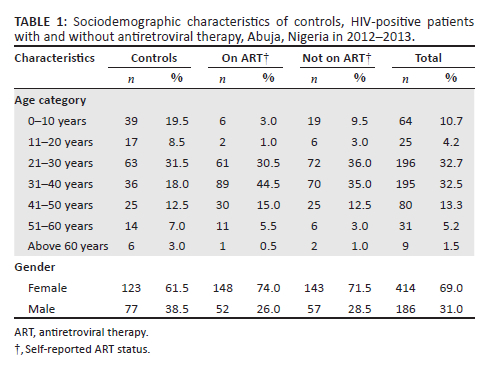
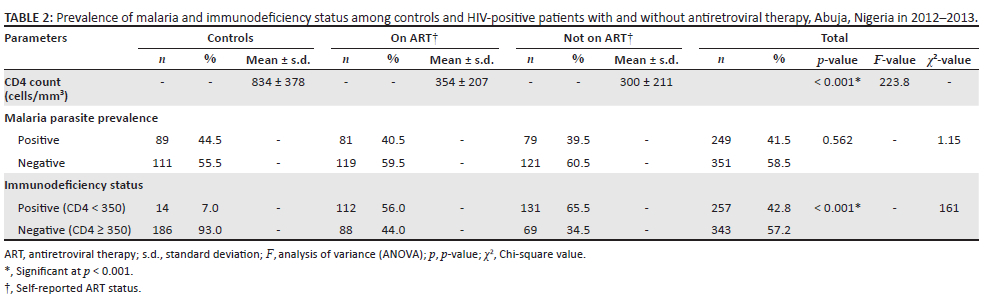
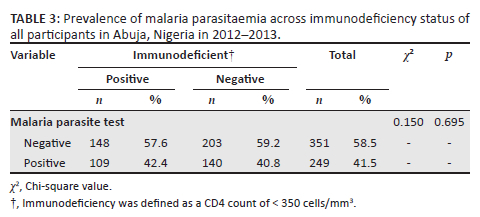
BACKGROUND: HIV and malaria interact at the level of the host's susceptibility to infection, but little is known about the effect of HIV on malaria infection in Nigeria. OBJECTIVE: This study estimated the prevalence of malaria parasitaemia and its relationship with HIV immunodeficiency. METHODS: This cross-sectional study was conducted in two hospitals in Abuja, Nigeria between October 2012 and March 2013 among 600 respondents, comprising 200 HIV-negative controls, 200 HIV-positive patients on antiretroviral therapy (ART), and 200 HIV-positive patients not on ART. Malaria parasites, malaria density and absolute CD4 counts were carried out on all three groups. Participants with CD4 counts below 350 cells/mm3 were considered immunocompromised and likely to develop opportunistic infections. RESULTS: Most study participants were aged 21-40 years (65.2%). The mean CD4 counts of HIV-positive patients not on ART (300 ± 211 cells/mm3) and those on ART (354 cells/mm3) were significantly lower than among controls (834 cells/mm3) (p < 0.001). Malaria prevalence was not statistically different between the controls (44.5%), patients on ART (40.5%), and those not on ART (39.5%) (p = 0.562). Compared to 7% immunodeficiency among controls, 56% of patients on ART and 65.5% of those not on ART had a CD4 count < 350 cells/mm3 (p < 0.001). The prevalence of malaria parasitaemia among immunodeficient individuals (42.4%) was similar to prevalence among those with CD4 counts > 350 cells/mm3 (40.8%; p = 0.695). CONCLUSION: These findings suggest that malaria parasitaemia is not an opportunistic infection among HIV-positive individuals in Nigeria.
malaria; infection; HIV; opportunistic; CD4