The viable but non-culturable state in pathogenic Escherichia coli: A general review
Abstract
BACKGROUND: The persistence and pathogenicity of pathogenic bacteria are dependent on the ability of the species to survive in adverse conditions. During the infectious process, the organism may need to pass through certain hostile anatomical sites, such as the stomach. Under various environmental stresses, many bacteria enter into the viable but non-culturable (VBNC) state, where they are 'alive' or metabolically active, but will not grow on conventional media. Escherichia coli bacteria encounter several diverse stress factors during their growth, survival and infection and thus may enter into the VBNC state. OBJECTIVES: This review discusses various general aspects of the VBNC state, the mechanisms and possible public health impact of indicator and pathogenic E. coli entering into the VBNC state. METHOD: A literature review was conducted to ascertain the possible impact of E. coli entering into the VBNC state. RESULTS: Escherichia coli enter into the VBNC state by means of several induction mechanisms. Various authors have found that E. coli can be resuscitated post-VBNC. Certain strains of pathogenic E. coli are still able to produce toxins in the VBNC state, whilst others are avirulent during the VBNC state but are able to regain virulence after resuscitation. CONCLUSION: Pathogenic and indicator E. coli entering into the VBNC state could have an adverse effect on public health if conventional detection methods are used, where the number of viable cells could be underestimated and the VBNC cells still produce toxins or could, at any time, be resuscitated and become virulent again.
Introduction
The survival of a microbial species largely depends upon its ability to subsist in hostile environments.1,211,23,43
Escherichia coli (E. coli) is a genetically diverse species that contains both commensal and pathogenic variants. Strains of E. coli and related Gram-negative coliform bacteria predominate amongst the aerobic commensal flora in the gut of humans and animals.5,6E. coli is a non-sporulating, facultative anaerobe7E. coli derive mutual benefit.87
There are various pathogenic strains of E. coli that possess a variety of disease-causing mechanisms such as diverse toxin, secretion, adhesion and siderophore systems, as well as many others.6E. coli strains have the potential to acquire genetic elements encoding for virulence factors and could themselves become pathogenic.6
Both non-pathogenic and pathogenic species of E. coli have been shown to survive sub-lethal environmental stress conditions by entering into the VBNC state.9,10,11,12,13E. coli that are able to enter into a VBNC state, are a major public health concern, because they are able to return to the infectious state after transport in animal hosts.1414E. coli and Enterococcus faecalis) and if they are not detected at a concentration below the guidelines, the water is considered to be safe for consumption. Thus, in circumstances where there is a chance of VBNC pathogens, additional molecular tests would be required in order to reduce potential outbreaks of infectious disease.153E. coli cannot be used as an indicator of faecal contamination when the cells are in the VBNC state.16
The purpose of this review was to highlight the possible impact on public health of E. coli entering into the VBNC state and may be of interest to environmental scientists and medical clinicians. We systematically searched scientific literature databases (Science Direct, Springer, Google Scholar, Wiley, Directory of Open Access Journals, PLoS, NCBI) using keyword combinations of terms such as 'viable but non-culturable', 'Escherichia coli', 'virulence', 'resuscitation', 'induction' and 'pathogens'. Articles older than 10 years were avoided, when possible, in order to ensure that the latest information on the topic was obtained. All studies involving the VBNC state were included, particularly those relating to E. coli.
Viable but non-culturable state: What exactly does this mean?
The VBNC state is defined as a state of dormancy that certain species of bacteria can enter into when confronted with adverse environmental conditions152,13,15,1713,15,172,13,15,1713,151515,17171517,1819
In an archetypal VBNC response, when the VBNC cells are exposed to environmental stresses a regular decline in colony-forming units is seen. However, total cell counts remain fairly constant. The viable count is very important in determining the VBNC state, as this will show whether the unculturable colonies are dormant but alive, or dead. There are several methods that can demonstrate viability, but all show some aspect of intact bacterial membranes and/or cellular metabolic activity.17
Bacteria known to enter the viable but non-culturable state
To date, the list of bacteria that have been shown to enter the VBNC state constantly increases; some of the notable human pathogens are pathogenic E. coli,13,15,17,19,20Mycobacterium tuberculosis, Campylobacter spp., Klebsiella pneumoniae, Helicobacter pylori, Listeria monocytogenes,15,17,19,20Pseudomonas aeruginosa, several Salmonella and Shigella spp.,13,15,17,19,20Vibrio cholerae and Vibrio parahaemolyticus.15,17,19,20E. coli and E. faecalis, also enter into the VBNC state.15
Cell changes in the viable but non-culturable state
Bacteria in the VBNC state generally exhibit dwarfing (decrease in cell size),17,19,212117,1917,19,211921
Day and Oliver22Vibrio vulnificus after incubation at 5 °C in seawater. The results indicated that changes in the fatty acid composition occurred prior to entry into the VBNC state, suggesting that the capability to maintain fluidity of the membrane may be an aspect in this physiological response. Cell death occurred in bacteria where there was inhibition of fatty acid synthesis, indicating that fatty acid synthesis is essential for cells entering the VBNC state.
Cellular repair mechanisms
Microbial recovery is characterised by the ability to revert to a functionally 'normal' state after enduring damage to essential components. This may be achieved by a resuscitation period in a favourable environment.2323242526
In E. coli, trehalose has been recognised as the primary protective osmolyte; trehalose biosynthesis is induced by osmotic shock, extreme heat and cold, desiccation and entry into stationary phase.2527E. coli, RpoS is the main regulator of the general stress response. Various stress factors affect rpoS transcription in different ways with or without the assistance of other cellular regulatory proteins. Under normal circumstances, RpoS levels are relatively low as rpoS messenger RNA forms a stable secondary structure, which results in reduced transcription; ClpXP protease also repeatedly degrades the protein.26
Detection of pathogens in the viable but non-culturable state
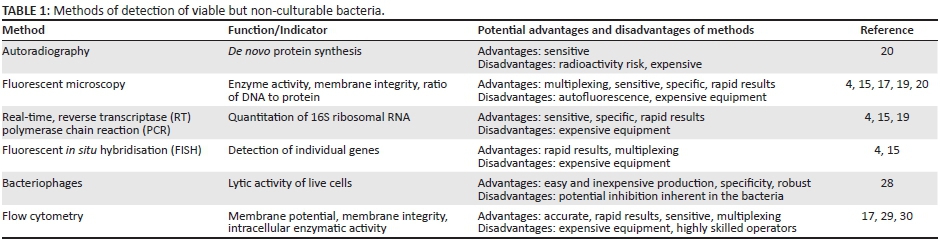
Because bacteria in the VBNC state are no longer culturable, alternate methods must be employed to demonstrate whether or not these cells are alive.194,19,20E. coli).4428 Table 1 shows some of the methods employed to detect VBNC bacteria.
Escherichia coli in the viable but non-culturable state
Because of both biotic and abiotic ecological factors, aquatic ecosystems such as rivers and oceans represent a hostile environment for allochthonous bacteria such as E. coli;31,3232E. coli in foods depends on the interaction between extrinsic or environmental factors (such as pH, temperature and water activity) and intrinsic factors (i.e. those related to food).26E. coli depend on culturing.32
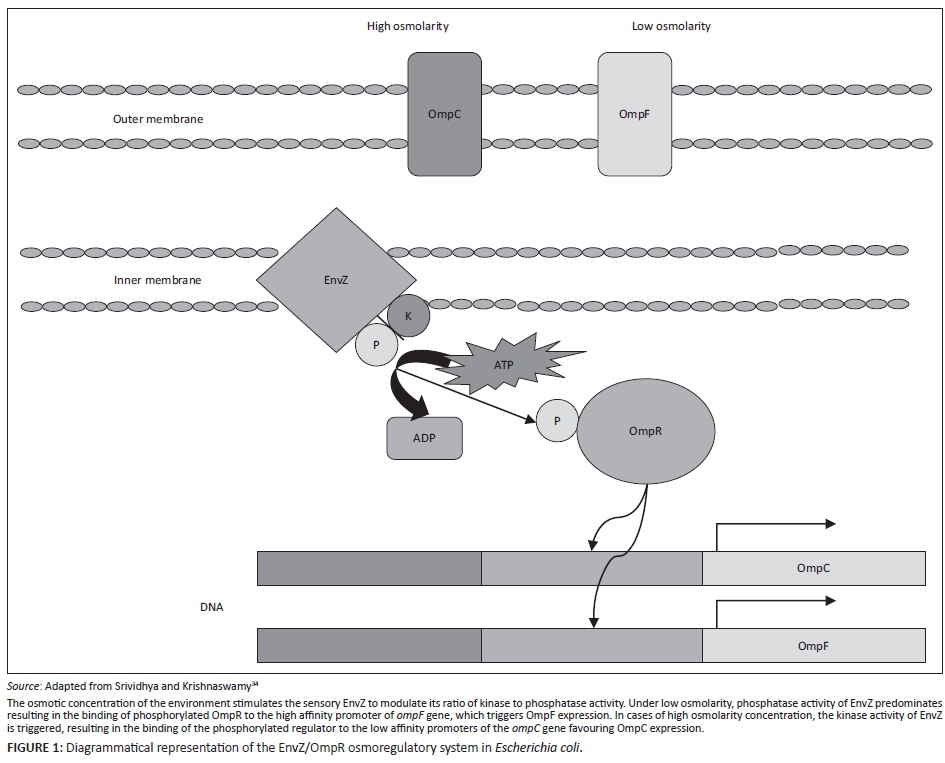
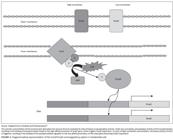
Under altered environmental conditions, porins are vital for the survival of bacteria.33E. coli are OmpF and OmpC, whose gene expression is regulated by EnvZ (an osmolarity sensor protein) and OmpR, which responds primarily to changes in osmolarity.33 Figure 1 illustrates the EnvZ/OmpR osmoregulatory system in E. coli.3433E. coli populations entered VBNC under stress conditions of pH, osmolarity and starvation, whereas EnvZ mutants (deficient of EnvZ) were not able to enter a VBNC state. The researchers concluded that because the EnvZ mutant population could not sense the environmental changes, they did not enter into a VBNC state when exposed to the tested adverse conditions. The analysis of the outer membrane subproteomes in VBNC E. coli was studied by Muela et al.,32E. coli; decreases in its expression have been associated with culturability loss in aquatic environments. Elongation factor-TU has an essential role in biosynthesis and becomes membrane bound when E. coli is starved of certain nutrients.3210E. coli (EHEC) O157:H7 displayed markedly increased levels of OmpW and a prevalence of Elongation Factor-TU protein after induction into the VBNC state using hydrogen peroxide. In 2008, a study35in vivo passage genetic alteration.35
Pathogenic EHEC attach and efface intestinal mucosal cells and secrete cytotoxic shiga toxins (Stx) 1 and 2 through the outer membrane.363636E. coli strains: E. coli O157:H7; an rpoS-deficient mutant of EHEC (EHEC-RM); and non-pathogenic E. coli (NPEC). They found that decimal reduction times (D-values) in simulated gastric fluid of cells adapted to acid were higher than those of non-acid-adapted cells, regardless of the strain. In microbiology, the decimal reduction time is used when assessing thermal death time and thermal resistance. It is the exposure time required to cause death in 90% of the initial population under constant temperature and under specified conditions.37cis-vaccenic acid (C18:1_7c) and increased palmitic acid (C16:0) in the membrane lipids of all strains. The ratio of cis-vaccenic acid to palmitic acid increased at acidic pH, which caused a decrease in the fluidity of the membrane. The greatest Stx concentrations of 2470 ng/mL (EHEC) and 1460 ng/mL (EHEC-RM) were seen in EHEC adapted to pH 8.3 and EHEC-RM adapted to pH 7.3. Furthermore, the ratio of extracellular to intracellular Stx concentration decreased at acidic pH, possibly as a result of the reduction of membrane fluidity. The results may suggest that whilst the rpoS gene does not directly affect acid resistance in acid-adapted cells it causes a decrease in membrane fluidity which may, in turn, cause decreased Stx secretion and increase acid resistance.36
Despite extensive investigation of VBNC state, relatively little is known about its genetic control.33,38E. coli upon exposure to conditions that cause stress.3,38E. coli in the VBNC state.18,38,3918rpoS gene) resulted in faster induction into the VBNC state in E. coli and Salmonella spp. Boaretti et al.38E. coli cells to remain in a VBNC state for long periods of time, which led to more rapid cell death. After 33 days in an artificial oligotrophic medium incubated at 4 °C, the parental strain of E. coli became non-culturable, whereas the rpoS mutant lost culturability in only 21 days.
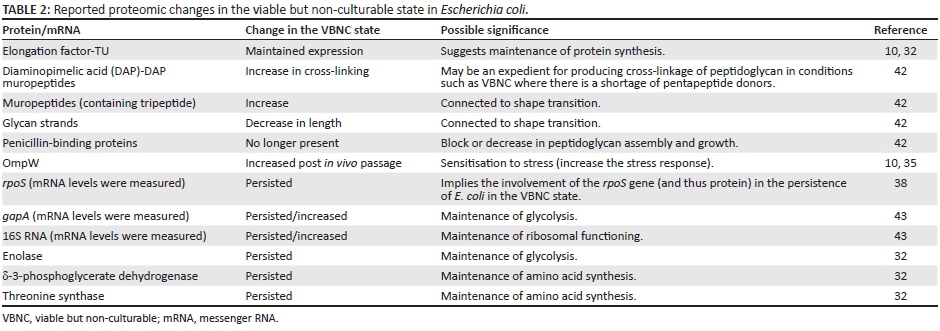
A study conducted in 20053940E. coli display reduced superoxide dismutase activity, which resulted in an increase in oxidative damage. Arana et al.41E. coli to hydrogen peroxide treatment and showed that some of the cells entered into the VBNC state. Stationary phase E. coli were inoculated into filter-sterilised river water samples, then exposed to varying concentrations of hydrogen peroxide for 15 min at 20 °C. The total number of cells (control group), as determined with acridine orange direct count, was higher than the colony-forming unit counts (culturable count) of E. coli exposed to hydrogen peroxide. These results suggest that oxidative stress response regulation may be involved in the initiation of the VBNC state. Table 2 summarises some of the proteomic changes seen in E. coli that have entered into the VBNC state, as well as which of these are under RpoS and/or OxyR control.
Induction into and in vitro resuscitation of E. coli in the viable but non-culturable state
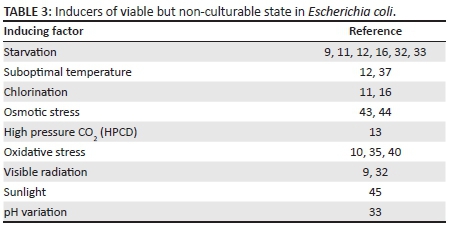
Numerous environmental and chemical factors have been reported to induce the VBNC state.1917Table 3 summarises a number of methods that have been reported to induce the VBNC state in E. coli.
It is important to note that the VBNC phenotype is reversible; that is, bacteria that enter this state may again become culturable.346123473
It is important to note that for VBNC detection and resuscitation, a rich medium should generally be used, since some cells that may have been injured (but have not become VBNC) during exposure to the VBNC-inducing stress might not be capable of growing on differential or selective media containing antibiotics and/or other restrictive compounds.33
Ohtomo and Saito48E. coli with the removal of environmental stress. Exposure of these cells to high saline stress caused a significant decrease in the number of colony-forming units, but when the culture was relieved of the stressful condition the number of colony-forming units returned, within two hours, to the same level as before the stress.
In 2011, Pinto et al.46E. coli to resuscitate under a minimal medium supplemented with different amino acids, discovering that a combination of glutamine, threonine, leucine and methionine would be adequate to trigger resuscitation of one of the tested strains (Eco3). It was proposed that in order to initiate resuscitation, these amino acids may bind to receptors on the cell surface or be transported into the cells. Additionally, they found that increased resuscitation was observed at 37 °C as opposed to 25 °C.
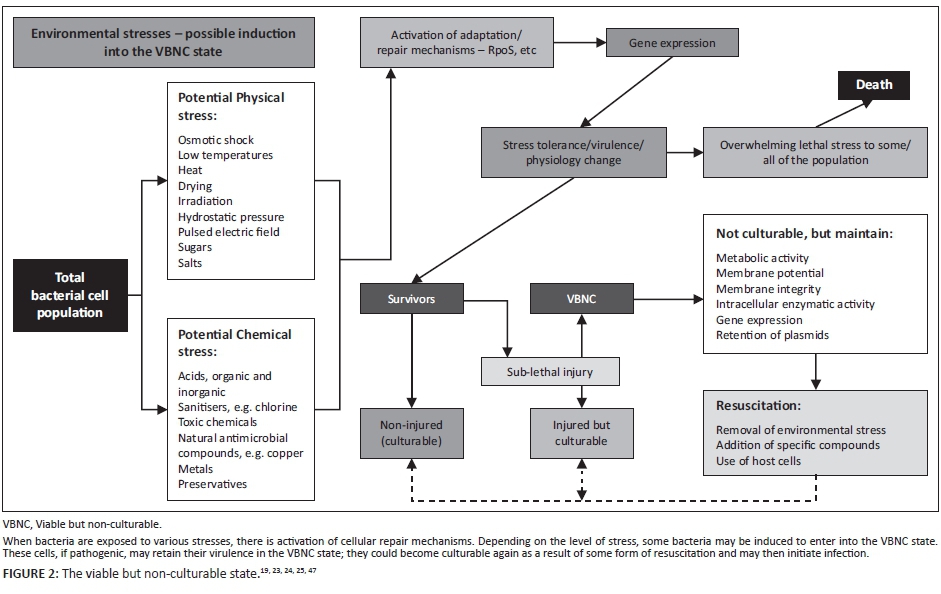
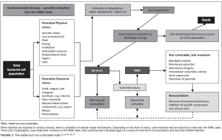
Bacteria communicate with each other by means of a process known as quorum sensing and can modulate population density-dependent behaviour such as biofilm formation and pathogenicity. Population size estimation is accomplished by producing and responding to certain chemical signalling molecules.49E. coli use the S-Ribosylhomocysteinase (luxS)/autoinducer (AI)-2 quorum sensing system for population communication and were found to produce at least two autoinducers, AI-2 and AI-3.5047E. coli in the intestine can produce AIs similar to those produced by EHEC O157:H7.47Figure 2 summarises the VBNC state and the connection to repair mechanisms, induction and resuscitation.
Potential virulence of E. coli in the viable but non-culturable state
For those species of bacteria that cause human infections, the underestimation or even non-detection of viable cells in quality control samples from clinical samples, water distribution systems and the food industry, may present a grave public health risk.351in vivo may induce the bacteria into a VBNC state.511
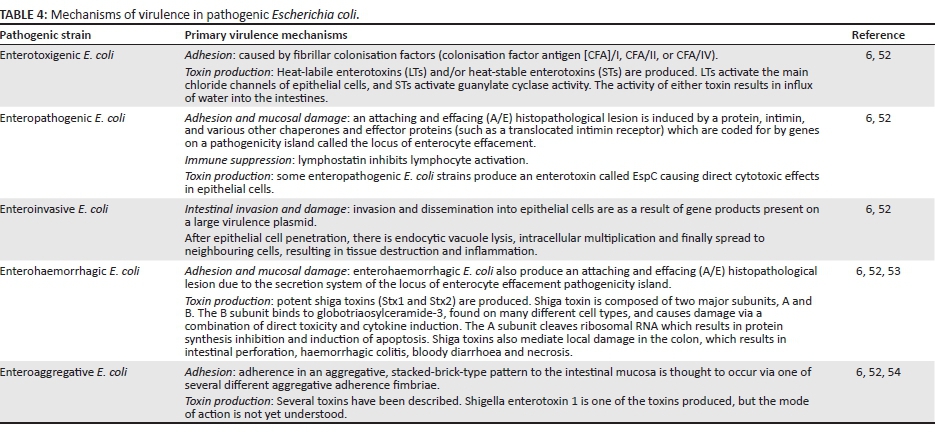
Pathogenic E. coli are classified into groups based on their mechanisms of pathogenicity, clinical syndromes, virulence factors and distinctive O:H serotypes. The overall pathogenesis of these strains consist of mucosal site adhesion/colonisation, host defence evasion, multiplication and host damage.52E. coli, enteropathogenic E. coli, enteroinvasive E. coli, enteroaggregative E. coli and enterohaemorrhagic E. coli.26Table 4.
Viable but non-culturable pathogenic E. coli have been implicated in a variety of diseases. Pathogenic bacteria, whilst in the VBNC state, can be avirulent. The problem arises when some of the organisms can regain their virulence after resuscitation into culturable cells under suitable conditions.3 Table 5 summarises the pathogenic E. coli that have been shown to enter the VBNC state.
Zhao et al.13E. coli O157:H7 into the VBNC state by exposure to high-pressure CO2 treatment (one of the non-thermal techniques used for pasteurisation). They were able then to resuscitate the organism using tryptic soy broth at 37 °C. Their results demonstrated that high-pressure CO2 treatment could induce E. coli into the VBNC state, which has future public health implications since this technique is operational and soon to be employed for pasteurisation of liquid foods (such as fruit juice and milk) on a commercial scale.572 treatment should be checked for VBNC populations of bacteria using molecular-based methods in order to ensure the safety of the product.
Waste water forms the chief reservoir of human enteric bacteria such as E. coli. Enteric bacteria are potential sources of disease; thus, it is imperative to properly disinfect waste water before it reaches the intakes for water treatment plants. Chlorine, in the form of hypochlorous acid, is generally used to this end as it is an exceptionally powerful antibactericidal agent.1616E. coli K12 and S. typhimurium cells were exposed to a mixture of free and combined chlorine (as is used in waste water disinfection), a small proportion of the cells survived in the VBNC state. The researchers were not successful in resuscitating the cells, but concluded that the presence of the non-culturable cells still posed a possible threat to public health as evidence from other studies indicate that the cells of E. coli and S. typhimurium are capable of resuscitation. Another study45E. coli H10407 and found that the bacteria entered into a VBNC state after exposure to both solar irradiation and seawater. The researchers established that E. coli retained its pathogenicity in the VBNC state, as enterotoxins were still produced. Lothigius et al.44E. coli may still be metabolically active and viable after incubation in both fresh- and salt water for extended periods of time because of the VBNC state. It was found that the cell wall remained intact and there was expression of both metabolic and virulence genes after three months of incubation in water.43
Another significant health implication of the VBNC state in pathogenic E. coli is possible antibiotic resistance in such cells.3,43,41958E. coli was exposed to 10 or 100 times the minimum inhibitory concentration of ciprofloxacin. The results showed that the colony-forming units decreased over time; however, there was no decrease in total cell numbers as seen by means of flow cytometry and light microscopy.58
Conclusion
VBNC pathogenic E. coli pose a public health risk, particularly those that may be present in water or food, because they still display metabolic activity, but cannot be detected via standard laboratory techniques, such as culturability.121
Competing interests
The authors declare that they have no financial or personal relationship(s) that may have inappropriately influenced them in writing this article.
Authors' contributions
J.A.P. was responsible for conception, design and manuscript writing. A.S. and T.G.B. were responsible for critically reviewing the information and final article approval for publication.
Acknowledgements
References
-
1. Barcina I, Arana I. The viable but nonculturable phenotype: a crossroads in the life-cycle of non-differentiating bacteria. Rev Environ Sci Biotechnol. 2009;8:245-255. http://dx.doi.org/10.1007/s11157-009-9159-x
» http://dx.doi.org/10.1007/s11157-009-9159-x -
2. Keep N, Ward J, Robertson G, et al. Bacterial resuscitation factors: revival of viable but non-culturable bacteria. Cell Mol Life Sci. 2006;63(22):2555-2559. http://dx.doi.org/10.1007/s00018-006-6188-2
» http://dx.doi.org/10.1007/s00018-006-6188-2 -
3. Li L, Mendis N, Trigui H, et al. The importance of the viable but non-culturable state in human bacterial pathogens. Front Microbiol. 2014;5:258. http://dx.doi.org/10.3389/fmicb.2014.00258
» http://dx.doi.org/10.3389/fmicb.2014.00258 -
4. Ramamurthy T, Ghosh A, Pazhani GP, et al. Current perspectives on viable but non-culturable (VBNC) pathogenic bacteria. Front Public Health. 2014;2:103. http://dx.doi.org/10.3389/fpubh.2014.00103
» http://dx.doi.org/10.3389/fpubh.2014.00103 - 5. Greenwood D, Slack R, Peutherer J. Escherichia. In: Medical Microbiology. 16th ed. Edinburgh: Churchill Livingstone, 2003; p. 265-273.
-
6. Evans DE, Evans DG. Escherichia coli in diarrheal disease. In: Baron S (editor), Medical Microbiology. 4th ed. Galveston (TX): University of Texas Medical Branch at Galveston; 1996. Chapter 25. Available from: http://www.ncbi.nlm.nih.gov/books/NBK7710/
» http://www.ncbi.nlm.nih.gov/books/NBK7710/ -
7. Tenaillon O, Skurnik D, Picard B, et al. The population genetics of commensal Escherichia coli. Nature Rev. Mi. 2010;8:207-217. http://dx.doi.org/10.1038/nrmicro2298
» http://dx.doi.org/10.1038/nrmicro2298 -
8. Alam M, Farzana T, Ahsen C, et al. Distribution of coliphages against four E. coli virotypes in hospital originated sewage sample and a sewage treatment plant in Bangladesh. Indian J Microbiol. 2011;51(2):188-193. http://dx.doi.org/10.1007/s12088-011-0093-6
» http://dx.doi.org/10.1007/s12088-011-0093-6 -
9. Arana I, Seco C, Epelde K, et al. Relationships between Escherichia coli cells and the surrounding medium during survival processes. Antonie van Leeuwenhoek. 2004;86(2):189-199. http://dx.doi.org/10.1023/B:ANTO.0000036146.28808.93
» http://dx.doi.org/10.1023/B:ANTO.0000036146.28808.93 -
10. Asakura H, Panutdaporn N, Kawamoto K, et al. Proteomic characterization of enterohemorrhagic Escherichia coli O157:H7 in the oxygen-induced viable but non-culturable state. Microbiol Immunol. 2007;51(9):875-881. http://dx.doi.org/10.1111/j.1348-0421.2007.tb03969.x
» http://dx.doi.org/10.1111/j.1348-0421.2007.tb03969.x -
11. Liu Y, Wang C, Tyrrell G, et al. Production of Shiga-like toxins in viable but nonculturable Escherichia coli 0157:H7. Water Res. 2010;44(3):711-718. http://dx.doi.org/10.1016/j.watres.2009.10.005
» http://dx.doi.org/10.1016/j.watres.2009.10.005 -
12. Na S, Miyanaga K, Unno H, et al. The survival response of Escherichia coli K12 in a natural environment. Appl Microbiol Biotechnol. 2006;72(2):386-392. http://dx.doi.org/10.1007/s00253-005-0268-3
» http://dx.doi.org/10.1007/s00253-005-0268-3 -
13. Zhao F, Bi X, Hao Y, et al. Induction of viable but nonculturable Escherichia coli 0157:H7 by high pressure CO2 and its characteristics. PLoS One. 2013;8(4):e62388. http://dx.doi.org/10.1371/journal.pone.0062388
» http://dx.doi.org/10.1371/journal.pone.0062388 - 14. Sardessai Y. Viable but non-culturable bacteria: their impact on public health. Curr. Sci. 2005;89(10):1650.
- 15. Fakruddin M, Mannan K, Andrews S. Viable but nonculturable bacteria: food safety and public health perspective. ISRN Microbiology. 2013;Article ID 703813, 6 pages.
-
16. Oliver JD, Dagher M, Linden K. Induction of Escherichia coli and Salmonella typhimurium into the viable but nonculturable state following chlorination of wastewater. J Water Health. 2005;3(3):249-257. http://dx.doi.org/10.2166/wh.2005.040
» http://dx.doi.org/10.2166/wh.2005.040 - 17. Oliver JD. The viable but nonculturable state in bacteria. J Microbiol. 2005;43(1):93-100.
-
18. Kusumoto A, Asakura H, Kawamoto K. General stress sigma factor RpoS influences time required to enter the viable but non-culturable state in Salmonella enterica. Microbiol Immunol. 2012;56(4):228-237. http://dx.doi.org/10.1111/j.1348-0421.2012.00428.x
» http://dx.doi.org/10.1111/j.1348-0421.2012.00428.x -
19. Oliver JD. Recent findings on the viable but nonculturable state in pathogenic bacteria. FEMS Microbiol Rev. 2010;34(4):415-425. http://dx.doi.org/10.1111/j.1574-6976.2009.00200.x
» http://dx.doi.org/10.1111/j.1574-6976.2009.00200.x -
20. McDougald D, Rice S, Weichart D, et al. Nonculturability: adaptation or debilitation? FEMS Microbiol Ecol. 1998;25(1):1-9. http://dx.doi.org/10.1111/j.1574-6941.1998.tb00455.x
» http://dx.doi.org/10.1111/j.1574-6941.1998.tb00455.x -
21. Falcioni T, Papa S, Campana R, et al. State transitions of Vibrio parahaemolyticus VBNC cells evaluated by flow cytometry. Cytometry B Clin Cytom. 2008;74(5):272-281. http://dx.doi.org/10.1002/cyto.b.20427
» http://dx.doi.org/10.1002/cyto.b.20427 - 22. Day AP, Oliver JD. Changes in membrane fatty acid composition during entry of Vibrio vulnificus into the viable but nonculturable state. J Microbiol. 2004;42(2):69-73.
-
23. Wu VC. A review of microbial injury and recovery methods in food. Food Microbiol. 2008;25(6):735-744. http://dx.doi.org/10.1016/j.fm.2008.04.011
» http://dx.doi.org/10.1016/j.fm.2008.04.011 - 24. Przybylski KS, Witter LD. Injury and recovery of Escherichia coli after sublethal acidification. Appl Environ Microbiol. 1979;37(2):261-265.
- 25. Wesche A, Gurtler J, Marks B, et al. Stress, sublethal injury, resuscitation, and virulence of bacterial foodborne pathogens. J Food Prot. 2008;72(5):1121-1138.
-
26. Chung HJ, Bang W, Drake MA. Stress response of Escherichia coli. Comp Rev Food Sci Food Safety. 2006;5(3):52-64. http://dx.doi.org/10.1111/j.1541-4337.2006.00002.x
» http://dx.doi.org/10.1111/j.1541-4337.2006.00002.x -
27. Charoenwong D, Andrews S, Mackey B. Role of rpoS in the development of cell envelope resilience and pressure in stationary-phase Escherichia coli. Appl Environ Microbiol. 2011;77(15):5220-5229. http://dx.doi.org/10.1128/AEM.00648-11
» http://dx.doi.org/10.1128/AEM.00648-11 -
28. Ben Said M, Masahiro O, Hassen A. Detection of viable but non cultivable Escherichia coli after UV irradiation using a lytic Qβ phage. Ann Microbiol. 2010;60(1):121-127. http://dx.doi.org/10.1007/s13213-010-0017-4
» http://dx.doi.org/10.1007/s13213-010-0017-4 -
29. Wickens HJ, Pinney RJ, Mason DJ, et al. Flow cytometric investigation of filamentation, membrane patency, and membrane potential in Escherichia coli following ciprofloxacin exposure. Antimicrob Agents Chemother. 2000;44(3):682-687. http://dx.doi.org/10.1128/AAC.44.3.682-687.2000
» http://dx.doi.org/10.1128/AAC.44.3.682-687.2000 -
30. Taimur Khan MM, Pyle BH, Camper AK. Specific and rapid enumeration of viable but nonculturable and viable-culturable gram-negative bacteria by using flow cytometry. Appl Environ Microbiol. 2010;76(15):5088-5096. http://dx.doi.org/10.1128/AEM.02932-09
» http://dx.doi.org/10.1128/AEM.02932-09 -
31. Barcina I, Lebaron P, Vives-Rego J. Survival of allochthonous bacteria in aquatic systems: a biological approach. FEMS Microbiol Ecol. 1997;23(1):1-9. http://dx.doi.org/10.1111/j.1574-6941.1997.tb00385.x
» http://dx.doi.org/10.1111/j.1574-6941.1997.tb00385.x -
32. Muela A, Seco C, Camafeita E, et al. Changes in Escherichia coli outer membrane subproteome under environmental conditions inducing the viable but nonculturable state. FEMS Microbiol Ecol. 2008;64(1):28-36. http://dx.doi.org/10.1111/j.1574-6941.2008.00453.x
» http://dx.doi.org/10.1111/j.1574-6941.2008.00453.x - 33. Darcan C, Özkanca R, Idil O, et al. Viable but non-culturable state (VBNC) of Escherichia coli related to EnvZ under the effect of pH, starvation and osmotic stress in sea water. Pol J Microbiol. 2009;58(4):307-317.
-
34. Srividhya KV, Krishnaswamy S. A simulation model of Escherichia coli osmoregulatory switch using E-CELL system. BMC Microbiol. 2004;4:44. http://dx.doi.org/10.1186/1471-2180-4-44
» http://dx.doi.org/10.1186/1471-2180-4-44 -
35. Asakura H, Kawamoto K, Haishima Y, et al. Differential expression of the outer membrane protein W (OmpW) stress response in enterohemorrhagic Escherichia coli O157:H7 corresponds to the viable but non-culturable state. Res Microbiol. 2008;159(9-10):709-717. http://dx.doi.org/10.1016/j.resmic.2008.08.005
» http://dx.doi.org/10.1016/j.resmic.2008.08.005 -
36. Yuk HG, Marshall DL. Adaptation of Escherichia coli O157:H7 to pH alters membrane lipid composition, verotoxin secretion, and resistance to simulated gastric fluid acid. Appl Environ Microbiol. 2004;70(6):3500-3505. http://dx.doi.org/10.1128/AEM.70.6.3500-3505.2004
» http://dx.doi.org/10.1128/AEM.70.6.3500-3505.2004 -
37. Mazzola PG, Penna TC, Martins AM. Determination of decimal reduction time (D value) of chemical agents used in hospitals for disinfection purposes. BMC Infect Dis. 2003;3:24. http://dx.doi.org/10.1186/1471-2334-3-24
» http://dx.doi.org/10.1186/1471-2334-3-24 -
38. Boaretti M, Lleò MM, Bonato B, et al Involvement of rpoS in the survival of Escherichia coli in the viable but non-culturable state. Environ Microbiol. 2003;5(10):986-996. http://dx.doi.org/10.1046/j.1462-2920.2003.00497.x
» http://dx.doi.org/10.1046/j.1462-2920.2003.00497.x -
39. Cuny C, Dukan L, Fraysse L, et al. Investigation of the first events leading to loss of culturability during Escherichia coli starvation: future nonculturable bacteria form a subpopulation. J Bacteriol. 2005;187(7):2244-2248. http://dx.doi.org/10.1128/JB.187.7.2244-2248.2005
» http://dx.doi.org/10.1128/JB.187.7.2244-2248.2005 -
40. Desnues B, Cuny C, Grégori G, et al. Differential oxidative damage and expression of stress defence regulons in culturable and non-culturable Escherichia coli cells. EMBO Rep. 2003;4(4):400-404. http://dx.doi.org/10.1038/sj.embor.embor799
» http://dx.doi.org/10.1038/sj.embor.embor799 - 41. Arana I, Muela A, Iriberri J, et al. Role of hydrogen peroxide in loss of culturability mediated by visible light in Escherichia coli in a freshwater ecosystem. Appl Environ Microbiol. 1992;58(12):3903-3907.
-
42. Signoretto C, Lleò M, Canepari P. Modification of the peptidoglycan of Escherichia coli in the viable but nonculturable state. Curr Microbiol. 2002;44(2):125-131. http://dx.doi.org/10.1007/s00284-001-0062-0
» http://dx.doi.org/10.1007/s00284-001-0062-0 -
43. Makino S-I, Kii T, Asakura H, et al. Does enterohemorrhagic Escherichia coli O157:H7 enter the viable but nonculturable state in salted salmon roe? Appl Environ Microbiol. 2000;66(12):5536-5539. http://dx.doi.org/10.1128/AEM.66.12.5536-5539.2000
» http://dx.doi.org/10.1128/AEM.66.12.5536-5539.2000 -
44. Lothigius Å, Sjöling Å, Svennerholm AM, et al. Survival and gene expression of enterotoxigenic Escherichia coli during long-term incubation in sea water and freshwater. J Appl Microbiol. 2010;108(4):1441-1449. http://dx.doi.org/10.1111/j.1365-2672.2009.04548.x
» http://dx.doi.org/10.1111/j.1365-2672.2009.04548.x - 45. Pommepuy M, Butin M, Derrien A, et al. Retention of enteropathogenicity by viable but nonculturable Escherichia coli exposed to seawater and sunlight. Appl Environ Microbiol. 1996;62(12):4621-4626.
-
46. Pinto D, Almeida V, Almeida Santos M, et al. Resuscitation of Escherichia coli VBNC cells depends on a variety of environmental or chemical stimuli. J Appl Microbiol. 2011;110(6):1601-1611. http://dx.doi.org/10.1111/j.1365-2672.2011.05016.x
» http://dx.doi.org/10.1111/j.1365-2672.2011.05016.x -
47. Liu Y, Wang C, Tyrrell G, et al. Induction of Escherichia coli O157: H7 into the viable but non-culturable state by chloraminated water and river water, and subsequent resuscitation. Environ Microbiol Rep 2009;1(2):155-161. http://dx.doi.org/10.1111/j.1758-2229.2009.00024.x
» http://dx.doi.org/10.1111/j.1758-2229.2009.00024.x - 48. Ohtomo R, Saito M. Increase in the culturable cell number of Escherichia coli during recovery from saline stress: possible implication for resuscitation from the VBNC state. Microb Ecol. 2001;42(2):208-214.
-
49. Struss AK, Pasini P, Flomenhoft D, et al. Investigating the effect of antibiotics on quorum sensing with whole-cell biosensing systems. Anal Bioanal Chem. 2012;402(10):3227-3236. http://dx.doi.org/10.1007/s00216-012-5710-7
» http://dx.doi.org/10.1007/s00216-012-5710-7 -
50. Sperandio V, Torres AG, Jarvis B, et al. Bacteria-host communication: the language of hormones. PNAS. 2003;100(15):8951-8956. http://dx.doi.org/10.1073/pnas.1537100100
» http://dx.doi.org/10.1073/pnas.1537100100 -
51. Castellani F, Ghidini V, Tafi M, et al. Fate of pathogenic bacteria in microcosms mimicking human body sites. Microb Ecol. 2013;66(1):224-231. http://dx.doi.org/10.1007/s00248-013-0239-7
» http://dx.doi.org/10.1007/s00248-013-0239-7 -
52. Kaper JB, Nataro JP, Mobley HL. Pathogenic Escherichia coli. Nat Rev Microbiol. 2004;2(2):123-140. http://dx.doi.org/10.1038/nrmicro818
» http://dx.doi.org/10.1038/nrmicro818 -
53. Nguyen Y, Sperandio V. Enterohemorrhagic E. coli (EHEC) pathogenesis. Front Cell Infect Microbiol. 2012;2:90. http://dx.doi.org/10.3389/fcimb.2012.00090
» http://dx.doi.org/10.3389/fcimb.2012.00090 -
54. Harrington SM, Dudley EG, Nataro JP. Pathogenesis of enteroaggregative Escherichia coli infection. FEMS Microbiol Lett. 2006;254(1):12-18. http://dx.doi.org/10.1111/j.1574-6968.2005.00005.x
» http://dx.doi.org/10.1111/j.1574-6968.2005.00005.x -
55. Senoh M, Ghosh-Banerjee J, Ramamurthy T, et al. Conversion of viable but nonculturable enteric bacteria to culturable by co-culture with eukaryotic cells. Microbiol Immunol. 2012;56(5):342-345. http://dx.doi.org/10.1111/j.1348-0421.2012.00440.x
» http://dx.doi.org/10.1111/j.1348-0421.2012.00440.x -
56. Aurass P, Prager R, Flieger A. EHEC/EAEC O104:H4 strain linked with the 2011 German outbreak of haemolytic uremic syndrome enters into the viable but non-culturable state in response to various stresses and resuscitates upon stress relief. Environ Microbiol. 2011;13(12):3139-3148. http://dx.doi.org/10.1111/j.1462-2920.2011.02604.x
» http://dx.doi.org/10.1111/j.1462-2920.2011.02604.x -
57. Hightech Europe. High pressure carbon dioxide pasteurization of liquid food [page on the Internet]. c2012 [cited 2015 Nov 11]. Available from: http://www.foodtech-portal.eu/index.php?title=Supercritical_carbon_dioxide_pasteurization_of_liquid_food#aboutitp
» http://www.foodtech-portal.eu/index.php?title=Supercritical_carbon_dioxide_pasteurization_of_liquid_food#aboutitp -
58. Mason DJ, Power EG, Talsania H, et al. Antibacterial action of ciprofloxacin. Antimicrob Agents Chemother. 1995;39(12):2752-2758. http://dx.doi.org/10.1128/AAC.39.12.2752
» http://dx.doi.org/10.1128/AAC.39.12.2752

Accepted: 14 Jan. 2016
Published: 04 May 2016