Bridging global and local influences: Kenya's emerging approach to AI governance
Abstract
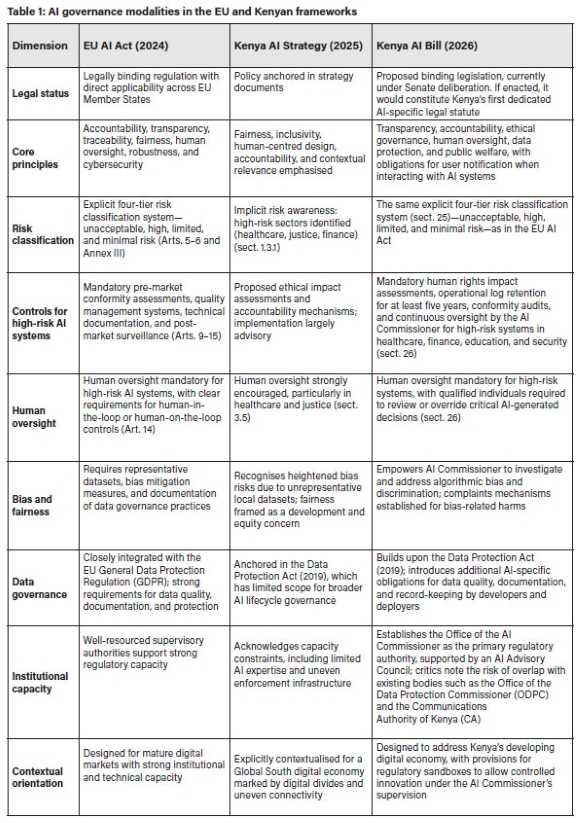
The rapid adoption of artificial intelligence (AI) has intensified demand for national AI governance frameworks that balance innovation with ethical, legal, and societal safeguards. Emerging economies such as Kenya face the dual challenge of seeking to foster AI-driven growth while at the same time managing numerous risks. This study explores Kenya's emerging approach to AI governance, as represented by its Artificial Intelligence Strategy 2025-2030 and Artificial Intelligence Bill of 2026. Through policy-legislative content analysis, the study examines the degree to which Kenya's approach is both transplanting and localising the orientation and provisions of the EU's influential AI governance instrument, the Artificial Intelligence Act of 2024. The research also applies a contextual-adaptation analysis to examine the extent to which Kenya's AI governance approach is geared towards its particular national needs.
artificial intelligence (AI); AI governance; Kenya AI Strategy 2025-2030; Kenya Artificial Intelligence Bill; 2026; EU AI Act of 2024; policy-legislative content analysis; contextual-adaptation analysis; policy-legislative transplantation; policy-legislative localisation