Healthcare research and development (R&D) as reflected in digital news: Analysis from Kenya, Nigeria, and South Africa
Abstract
This study used a new open-source repository of African news media to study coverage of healthcare research and development (R & D) in the news ecosystems of Kenya, Nigeria, and South Africa. A corpus of more than 5 million potentially relevant news articles was filtered through refined queries, ultimately yielding 2,917 highly topically relevant articles from 377 publications. These were analysed using both computational natural language processing (NLP) and manual qualitative analysis. The study revealed the following: the types of healthcare developments that were making news in each of the three countries (e.g., new medical technologies, activities of high-profile individuals in the health space, and health sector-building events); the diseases and conditions being prioritised (e.g., HIV/AIDS and mental health); the key stakeholders in the sector (e.g., government officials and funding organisations); and the media narratives around the impact of healthcare R (including emphasis on digital health). The study illustrates the value of using large news datasets to gain a deeper understanding of developments and discourse around rapidly evolving topics of high social importance, such as healthcare.
research and development (R & D); news media; media monitoring; big data; free and open-source software; healthcare
1. Introduction
Healthcare research and development (R&D) is a central public concern, as breakthroughs may lead to cheaper, more effective, and more accessible medical treatment. Such R&D is also of concern to a range of stakeholders, including health authorities, civil society and non-governmental organisations, and recipients of healthcare. Digital news media provide important data to understand and monitor developments in the healthcare sector, but traditional methods of manual content analysis face challenges of expediency and reaching sufficient scale for efficacy and rigour. Over the past several years, there has been an increasing focus on developing platforms to allow for at-scale analysis of textual data from online news and social media for purposes of monitoring and analysis (Bahri et al., 2017; Barros et al., 2020; Jahanbin et al., 2019; Li et al., 2020; Vivion & Gauvin, 2022; Zhang & Matingwina, 2016).
African media researchers are disadvantaged because of the inequalities between Western and African institutions in access to resources (Mutsvairo, 2018), including access to African-focused media archives (Keakopa, 2008; Mafunda et al., 2022). The launch in 2019 of CivicSignal,1 an African-focused instance of the open-source media repository and analysis tools developed by the US-based Media Cloud consortium, is enabling researchers to conduct large-scale content analysis of African media content. As of March 2024, CivicSignal provided open-source access to almost 4,000 African online media sources and over 33 million stories.2 These sources in the database are found through automated search and discovery, identified lists of influential sources, user suggestions, and expert input from journalists and media practitioners. This study employed the CivicSignal news database and its associated natural language processing (NLP) methods, in combination with manual qualitative analysis, to analyse 12 months of digital-news coverage of healthcare R&D in Kenya, Nigeria, and South Africa.
More specifically, the objectives were to answer research questions in the domains of (1) news attention, (2) thematic foci, and (3) influential entities across the news ecosystems of the three countries. The research recognised the dual role of news media in both reflecting and shaping reality for audiences; news stories about healthcare R&D not only inform the public, but also influence perceptions and potentially affect policy and investment decisions. This research set out to provide a unique and timely contribution to assess the post-pandemic landscape for reporting on healthcare R&D in three different countries.
2. Literature review and contextualisation of the issue
The news media is a crucial avenue for communicating scientific and healthcare developments to broader populations (Smith & Morgoch, 2022). Kenya, Nigeria, and South Africa all have ambitions to become science and technology hubs, and promote themselves as such (Federal Ministry of Finance, Budget and National Planning, 2021; NPC, 2012); SDEP, 2007). Kenya's Vision 2030 indicates the country's ambition to become a knowledge-led economy through strengthening technical capabilities, improving skills through greater numbers of tertiary graduates, and increased innovation through basic and applied research (SDEP, 2007). Universities and small and medium enterprises (including startups) are prime avenues for this drive towards innovation. Sectors identified for innovation under the plan include the health sector (Ncube & Ondiege, 2013; SDEP, 2007).
Nigeria's National Development Plan (NDP) 2021-2025 highlights the need for innovation to enhance productivity, increase efficiency, create jobs, and drive growth across sectors, including health. South Africa has been the sub-Saharan African nucleus for the production of research and inventions since at least 2000 (Pouris & Pouris, 2009). South Africa's National Development Plan includes the goal of improving education, training, and innovation, and innovation and R&D are seen as critical for growing the economy (NPC, 2012). Accompanying the governmental commitments to research and development are communication strategies in South Africa and Kenya to inform the public about emerging R&D (DST, 2018; Ministry of Science and Technology, 2008).
However, despite the governmental focus, attracting local coverage of science has proved difficult. Original reporting on R&D in the news of developing countries often originates from Western sources, landing largely unmodified in African media (Nguyen & Tran, 2019). Many healthcare R&D stories require specialist science skills to communicate effectively, including statistical and mathematical literacy, critical analysis skills, background knowledge of specific scientific topics, the ability to evaluate sources, and the ability to translate scientific findings into language that a broader audience can understand (Matsilele et al., 2024; Smith & Morgoch, 2022). While numerous associations of science journalists have been established in sub-Saharan Africa in the last 30 years, few journalists are dedicated to covering science (Appiah et al., 2012). Science stories are often easily cut, and are the result of negotiation with editors to cover the stories initially, and negotiation with scientific sources who wish to check the stories of journalists before publication (Göpfert, 2007; Joubert, 2007; Palmerini, 2007). In fact, journalists with scientific expertise are very difficult to find (Matsilele et al., 2024).
In South Africa, scientists who are skilled at media outreach often want to encourage future generations of scholars and/or broaden scientific understanding, but they are constrained by time limitations, institutional barriers, and potential negative fallouts for their careers (Joubert, 2007; Joubert, 2018). While South Africa's National Research Foundation (NRF), a national body under the Department of Science and Technology (DST), does encourage public engagement by grantee researchers ( Joubert, 2018), such engagement is difficult to accomplish even in this environment. This scarcity of alternative sources and access barriers to journalists reporting on science mean that politicians tend to dominate as sources in science reporting (Nguyen & Tran, 2019, p. 12).
The communication research subfield of evaluating health-related reporting is well established. Media content analysis can be used to explore the extent of media coverage of a host of health issues, including infectious, mental, non-communicative, and other (Anyanwu et al., 2022; Asaolu et al., 2016; Asemah, 2015; Chinedu-Okeke et al., 2021; Eke et al., 2023; Erubami et al., 2023; Uzochukwu & Ikegbunam, 2022). Some studies assess how health issues are covered (Kiptinness & Kiwanuka-Tondo, 2019; Kiptinness & Okoye, 2021; Mutoro, 2021; Smith & Smith, 2016), including how accurate the coverage is (Muzyka et al., 2012). Studies are sometimes associated with theoretical positions about how coverage may lead to behaviour and social change, such as to limit transmission or discrimination associated with diseases, or that health should be covered, as it is an important developmental issue (Apuke & Omar, 2020; Govender, 2010; Obukoadata & Abuah, 2014). Longitudinal studies have been undertaken to assess changes in reportage over time (Okpoko & Aniwada, 2017). COVID-19 has dominated many recent studies. In studies where the source was categorised, government officials often dominated as sources (Adeniran & Oso, 2020; Essman et al., 2021).
While the above works provide important contextual underpinning to the scope and design of the current study, a review of the literature uncovered few articles that included media coverage of healthcare R&D, and they were all about COVID-19 (Asogwa, 2021; O'Connor et al., 2021; Olijo, 2020). In addition, due to a historical lack of tooling to support identifying stories from many sources at the scale of big data, many previous studies examined a small number of news publications, often four or fewer. For similar reasons of technical feasibility, some previous studies have relied on sampling methods to discover related content rather than querying the entirety of published content; this may result in missing key event-based drivers to news attention on health, as well as seasonal or periodic drivers such as seasonal illness surges or annual commemorative days for certain health conditions. Finally, related work in evaluating health coverage tends to preselect a health condition of focus, often outbreaks and infectious diseases. This research was designed not to preselect conditions, but instead to learn from the data what diseases are receiving more attention with regard to R&D in the news landscapes of the countries of focus. In both scale and scope, this research provides a novel and valuable look at the important question of what is reported on in three countries at the intersection of health and innovation.
3. Research methods and design
Data collection
This research used a mixed methods design, employing computational NLP content analysis on a large news corpus as well as qualitative manual coding of individual news items. Digital news articles from Kenya, Nigeria, and South Africa, published during a 12-month period, were analysed using the aforementioned CivicSignal repository of African digital media.
CivicSignal was built upon a codebase initially developed by Media Cloud, a media repository and analysis project originally developed at the Berkman Klein Center at Harvard University (Roberts et al., 2021) and now managed by a consortium of US-based educational institutions. The news data contained in the CivicSignal repository comprises digital news stories ingested through RSS feeds. The publications for which RSS feeds are monitored are sourced through a combination of manual and automated search and discovery; sourcing and using existing lists of influential news sources from literature and industry reports; and expert input from journalists and media practitioners. In addition, all CivicSignal users can suggest sources for inclusion. Verification and exclusion are done by Code for Africa's3 CivicSignal team, which identifies and removes irrelevant sources, such as web portals that primarily link to external websites. The various methods used to collect and remove sources maintain the integrity and relevance of the data for meaningful analysis.
Publications are next grouped into collections categorised by the country of publication, allowing for country-specific news-corpora generation. CivicSignal has created media collections for over 21 African countries. Kenya, Nigeria, and South Africa were chosen as the countries of study for this research based on the prominence of English media in the countries and the geographic diversity that the countries represent. The total number of publications contained in each collection as of September 2024 was as follows: Kenya, 491 media sources; Nigeria, 591 media sources; and South Africa, 1,087 sources. During the 12-month news period covered by the study, between 1 September 2022 and 1 September 2023, 5,215,492 news articles were published and contained in these three collections.
The corpus for the study was collected from these news articles using a complex Boolean query to identify content relevant to healthcare R&D. So as not to bias the results towards specific types of healthcare developments, subject matter keywords (e.g., "vaccines", "mRNA", and "telehealth") were not included in the query itself. Instead, based on preparatory research reviewing the headlines of previously identified relevant articles, a query was designed that united a query clause of keywords evincing newness (e.g., "innovat*", "develop*", and "advanc*") with a clause of broad keywords highly relevant to health (e.g., "health* treatment*" and "medic*"). Iterative testing was conducted to refine the keywords used and evaluate the effectiveness of using the query against headlines or against body text; headline-based searching was discovered to greatly improve the precision while retaining sufficient recall. After an initially satisfactory query was reached, the research team manually reviewed a sample of the results for each country of study, using a binary code for whether the articles returned were sufficiently relevant to the research topic. Query iteration was completed based on the findings of the manual review, most often in the form of negation of terms that produced irrelevant results. This process of manual review and iteration was completed three times, until a query was reached that met a threshold of highly relevant articles accounting for at least 80% of the sample for each country of study.
After deploying the keyword query against the CivicSignal repository, the final full corpus of relevant content returned amounted to a total of 2,917 stories: 454 stories from 64 Kenyan publications; 1,217 stories from 166 Nigerian publications; and 1,246 stories from 147 South African publications. As noted in the literature review, the quantity and diversity of publications in this study are unique, allowing for greater robustness in drawing conclusions on the news ecosystems of study, as well as cross-country comparative findings. Sampling was subsequently employed to generate a subset for manual coding from this corpus. A random sample from each country's results was taken, with sampling parameters set to 90% confidence level and 5% margin of error. The randomly sampled news articles extracted for the manual-coding portions of analysis amounted to a total of 796 stories: 209 from Kenya, 293 from Nigeria, and 294 from South Africa.
Data analysis
Three primary computational methods were employed on the full returned corpus: quantification of normalised volume of relevant stories over time; named-entity recognition and extraction (people and organisations); and n-gram (words or short phrases) frequency analysis.
To explore research questions related to news attention regarding healthcare R&D, a normalised percentage was calculated for each date in the research timeframe. This metric quantified the number of articles matching the query over the total number of articles published on that date in the country's media collection. This normalised percentage allows for comparison both at the day level and across different countries' media collections.
To explore questions pertaining to thematic foci in the news coverage of healthcare R&D, the computational method of n-gram frequency analysis was employed. The extracted text was processed to generate n-grams, which are phrases consisting of n words. Single words, bigrams (pairs of adjacent words), and trigrams (triplets of adjacent words) are the most common n-grams used for quantitative linguistic analysis. The frequency and prominence of these n-grams were calculated across the corpus of articles, providing insight into the most frequently covered areas of focus. N-grams were extracted from a random sample of up to 1,000 articles from each country's results (based on the analysis pipeline available in CivicSignal), which encompassed all of Kenya's results, 82% of Nigeria's results, and 80% of South Africa's results.
To explore questions about influential entities (people or organisations) in news coverage of healthcare R&D, entity extraction was employed. The analytical tooling in the CivicSignal database uses the Stanford named entity recognition (NER) model (Finkel et al., 2005) to identify and label sequences of words which are proper nouns, and then further classify those into categories of person, organisation, or location. CivicSignal runs entity extraction on a random sample of 5,000 articles, but as the relevant news corpus was below this value, all articles underwent this processing. This automated process was supplemented with manual researcher review for the purposes of disambiguation and removal of erroneous entries.
Findings from the computational NLP content analysis were supplemented and further investigated using qualitative manual coding of a random sample of articles from the full corpus. More specifically, research questions about thematic focus and influential entities in coverage were targeted with this approach. A codebook was developed and tested amongst the research team for inter-rater reliability. Variables were clearly defined and conceptualised, and the format of variables included binary, category selection, short answer, and numerical scale. The coding was conducted by four different researchers, and a final round of review and meta-analysis was completed by one single researcher to ensure consistency of coding across the countries and samples.
Ethical considerations
As this study used secondary data from published news articles, no human or animal subjects were involved, and an institutional review board was not engaged. The dataset collected and used for this study was derived from an open-source tool. Ethical values of academic honesty, rigour, and replicability were incorporated at all stages of the research process.
4. Results
The key research questions-on media attention to healthcare R&D; the thematic foci of the coverage; and the influential entities featured in the coverage-are now explored. This section begins by examining the levels and event-based drivers of media attention in Kenya, Nigeria, and South Africa. Thereafter, the key thematic foci are covered, including the types of healthcare developments (such as healthcare delivery programmes and awareness campaigns), the diseases that form the bulk of the reporting (such as infectious and fungal diseases), the beneficiary populations, and the prominence of digitisation and AI in the coverage. The section ends with an analysis of the organisations and individuals associated with the developments in each country. The results draw on both the entire corpus of relevant stories found and those sampled for manual coding.
News attention in the coverage
Kenya
Of all stories published by Kenyan sources in CivicSignal in the period of study, 0.1% (454) matched the relevancy query for stories focused on healthcare R&D; this was the highest among the three countries studied. The single date with the highest normalised percentage of coverage to the issue was 14 August 2023, when the Ministry of Health launched a comprehensive census to assess sector gaps (Saya, 2023); this day was also the only single date when attention to the issue exceeded 1% of all stories published, at 1.12%. The census aim was to gather data on the services offered by hospitals and health facilities, and thus inform infrastructure and service investments in health by the government. On three other dates, attention to the issue reached 0.75% of all stories: 25 April 2023 (0.75%), when Aga Khan University launched a slate of postsecondary programmes in medicine and nursing (Business Times, 2023); 17 June 2023 (0.75%), when it was announced that Bill Gates would be visiting Niger and Nigeria to discuss global health and supporting health innovation (Capital News, 2023); and 1 September 2023 (0.79%), when Kenya hosted the inaugural Transforming African Medtech Conference (Muchira, 2023).
Nigeria
Of all stories published by Nigerian sources in CivicSignal in the period of study, 0.04% (1,217) matched the relevancy query; further, no single date had attention levels to the topic higher than 0.25% of all stories. These metrics demonstrate the lower attention levels to the issue of healthcare R&D in the country, relative to Kenya. The single highest daily level of attention was 17 June 2023, when healthcare R&D articles accounted for 0.25% of all stories (the only date where attention topped 0.2%). Two key events contributed to the increased topic attention on that date: Bill Gates' planned visit to Niger and Nigeria (Alibi, 2023), as also covered in Kenya; and President Tinubu's first official trip to France for the Global Financing Pact Summit, which was also reported to be a medical trip so that he could receive health treatment in France (NG Daily News, 2023).
South Africa
Of all stories published by South African sources in CivicSignal in the period of study, 0.06% (1,241) matched the relevancy query. The single highest date of coverage was 27 May 2023, when attention reached 1.19% of all stories. The driving event was the launch of an asthma pump spacer, which is a low-cost device for easy and effective delivery of asthma medication. This device, invented by Professor Heather Zar, a paediatric pulmonologist and head of the Department of Paediatrics and Child Health at the Red Cross Children's Hospital in Cape Town, is the refinement of a homemade spacer made from a plastic cold drink bottle. This invention (the AfriValve) won Zar the World Lung Health Award, making her the first African and the first paediatrician to win this award (Pretoria Rekord, 2023). The launch was timed to take place in May, which is Asthma Awareness Month. A second date on which coverage topped 1% was 26 September 2022, when reports noted that US celebrity Megan Thee Stallion had launched a website providing mental health support and resources (Bang Showbiz, 2022).
Thematic foci in the coverage
Types of healthcare developments appearing in the news
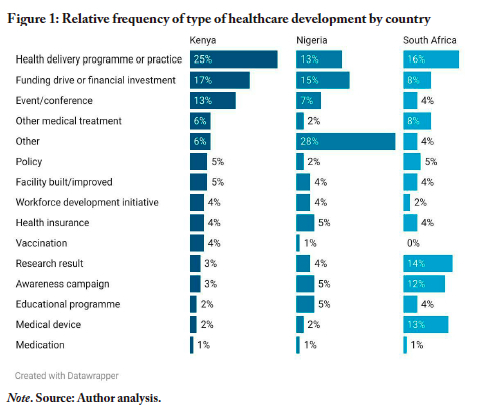
Analysing the type of developments featured in healthcare R&D news was a key part of monitoring and understanding the issue. The manual coding process generated such data from the random sample corpus. Cross-country comparative results are visualised in Figure 1 below.
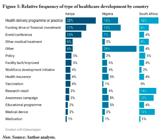
The data shows a high level of focus on health (programme or practice) delivery in all three countries, accounting for 25% of the Kenyan sample, 13% of the Nigerian sample, and 16% of the South African sample. "Health delivery programme or practice" was the largest category of development for Kenya and South Africa, and the third largest for Nigeria (including the catch-all "other" category, which in Nigeria mostly included stories about entities announcing their intentions to make an improvement in the health sector, launching a health programme, or stating national health concerns). It was clear from the media reporting that essential healthcare service delivery interventions are reported on using a frame of novelty and innovation, similar to that used in developments in technological advances. This was evidence that improvements in the availability of key healthcare services were highly newsworthy in the countries of study. The prominence of this category indicated a high level of relevance, to the public health authorities and infrastructure, of monitoring such news.
"Funding drive or financial investment" in healthcare was a second key area of focus, accounting for 17% of the Kenyan sample, 15% of the Nigerian sample, and 8% of the South African sample; this was the second largest area of focus in Kenya, and the largest area of focus in Nigeria outside of the "other" category. Two key types of funding drives seen in reporting were medical-related startups launching or obtaining seed funding, and government investments in healthcare systems.
"Medication" and "vaccination" were the least frequently appearing categories; "medication' developments accounted for only 1% of the sample in each country, while vaccination accounted for 0% of the South African sample, 1% of the Nigerian sample, and 4% of the Kenyan sample. This was particularly interesting data given a thread of reporting seen in this study that emphasised the need for more pharmaceutical development and production to take place on the continent, as argued for in a story by The Maravi Post (2022), which highlighted that Africa imports 70% of its medication.
While in general the three countries had similar levels of attention to different types of developments, South African news did feature developments in the categories of "medical device", "awareness campaign", and "research result", notably more than the other two countries (by a factor of more than two). The "medical device" and "Research result" category foci were largely driven by the development of the new asthma treatment, noted previously as a key event. Similarly, Kenya had a notably higher portion of coverage in the "event/conference" category, due to the prominence of the Transforming African MedTech Conference.
Diseases of focus
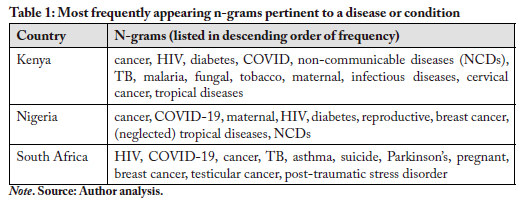
To discover the most prominent diseases or health conditions in reporting, two analysis paths were employed. The computational method involved extraction of the 1,000 most frequently used n-grams from a random sample of 1,000 articles from each country's relevant corpus, followed by a manual review process to isolate those n-grams that pertained to a disease or condition. Results for these lists can be seen in Table 1 below.
As can be seen in Table 1, cancer, HIV/AIDS, COVID-19, and maternal health (i.e., the "maternal" and "pregnant" n-grams) appeared prominently in all three countries' coverage. Kenya and Nigeria shared a focus on malaria and tropical diseases that was not reflected to the same extent in South African healthcare R&D coverage. Asthma appeared only in the South African list, which was due to the prominent coverage, noted earlier, of the development of the AfriValve asthma pump spacer. South Africa also had two mental health-related terms (suicide and post-traumatic stress disorder) that were not reflected in the top n-grams for the other two countries.
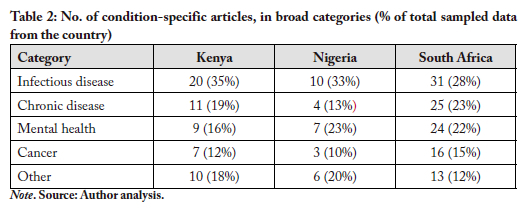
Diseases focused on in the stories were also explored using qualitative manual coding. There was some difference by country in the percentage of coded articles that had a specific disease of focus: in Kenya it was 33%, in Nigeria 13%, and in South Africa 49%. After this binary field, the specific disease of focus was recorded, and through qualitative analysis, labelled into a broader disease category. Table 2 details the percentage of articles with a specific disease of focus that pertained to each broad category. While cancer can be considered a chronic disease, due to its prevalence in the results, a decision was made to separate it out so as to better quantify its presence in the data.
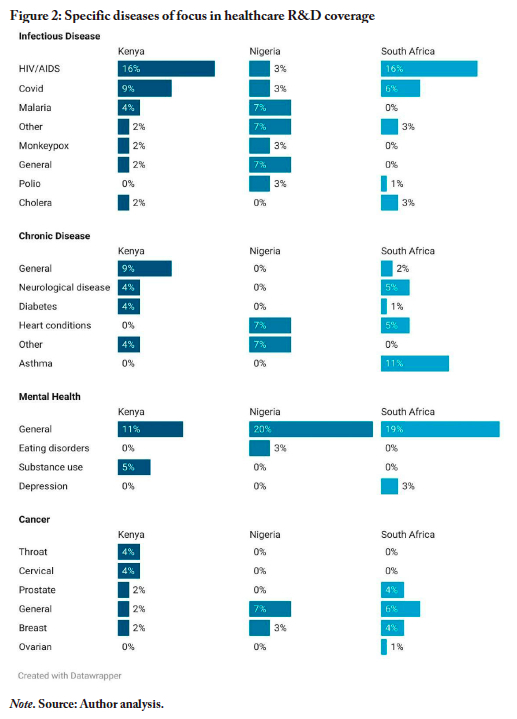
As can be seen from the data in Table 2, "infectious disease" was the most prevalent category in all three countries, at approximately one-third of condition-specific articles focusing on a disease in that category. "Mental health" developments accounted for close to one in five condition-specific articles in all countries, representing either the second or third most prevalent condition category outside of "other". "Cancer" was mentioned in 10-15% of condition-specific articles, with variance by country for which specific type of cancer development had made the news. To explore that question and others, Figure 2 details the specific diseases of focus. The figure does not visualise specific conditions in the "other" category, but stories featuring those conditions are factored into the denominator in the tabulated percentages.
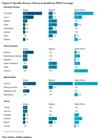
As seen in Figure 2, "mental health general" (i.e., reference to the condition of "mental health" without further specificity) was the most prevalent condition in both Nigerian and South African coverage, at 20% and 19%, respectively. It was the second most prevalent condition in Kenya at 11%, following "HIV/AIDS". It was most often discussed with this broad label; when a more specific diagnosis was given, it included depression, anxiety, eating disorders, and substance-use disorders. One common thread in articles surrounding developments in general mental health was the intersection with technology, and advances in telehealth that were allowing more people to access mental health services.
HIV/AIDS was the most prevalent infectious disease mentioned, accounting for 16% of condition-specific articles in Kenya and South Africa; this amounts to the most frequently covered condition in Kenya, and the second highest in South Africa (after "mental health general"). It accounted for only 3% of condition-specific articles in Nigeria, however. COVID-19 was the second most prevalent infectious disease covered, accounting for 9% of condition-specific articles in Kenya, 6% in South Africa, and 3% in Nigeria. Other specific infectious disease conditions that were covered by articles in at least two countries were malaria, monkeypox, polio, and cholera.
As also seen in the computational results, the specific condition of asthma appeared only in the South African results, accounting for 11% of all condition-specific articles there, and the most prevalent of the chronic disease category. There was also an interesting variation in the specific cancers of focus by country: Kenya was the only country to have articles pertinent to throat and cervical cancer, while South Africa was the only country to have coverage of a development in ovarian cancer.
Beneficiary groups featured in the coverage
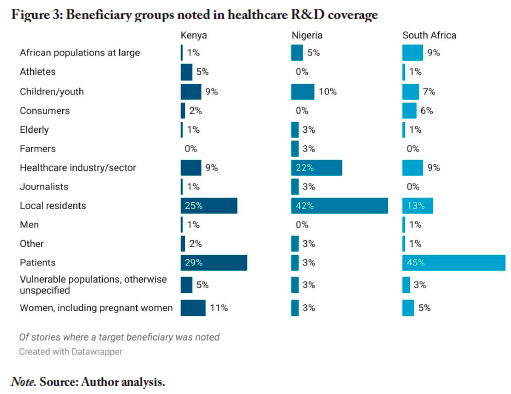
Understanding which populations are benefiting from healthcare R&D is an important piece of information for applied public health, particularly given principles of health equity. The manual coding process generated data about the key population(s) noted in reporting as likely to benefit from the healthcare R&D. Of the sample articles, 60% in Kenya listed a target beneficiary population, 52% in Nigeria, and 78% in South Africa. The categories noted, as well as their prevalence, are visualised in Figure 3 below.
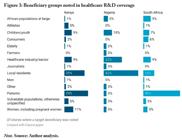
Figure 3 illustrates that "patients" were the most common beneficiary group in Kenya and South Africa, with 29% and 45% of stories, respectively. An interesting departure was Nigeria, where healthcare stories were much more focused on the benefits for all "Local residents", framed as potential patients, at 42% of stories with noted beneficiaries, while active patients accounted for only 3%. "Local residents" were also a frequently identified beneficiary in Kenya and South Africa (15% and 13%, respectively). "Women" and "children/youth" were also among the more frequent beneficiaries across each country. Again, Nigeria departed slightly from the other countries in its focus, being the only country to mention "farmers" as a beneficiary, and the only country not to mention "men" or "consumers" as beneficiaries of the featured healthcare R&D. Nigeria also had a greater proportion of articles focused on the "healthcare industry" as the beneficiary, where reporting noted politicians remarking on new initiatives to support the growth and welfare of the industry.
Digitisation and Al
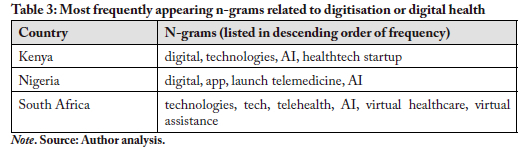
Digitisation of healthcare in various forms emerged as a prominent theme in healthcare R&D coverage in all the countries of study. Among the other technical advancements mentioned were AI, telehealth, the digitisation of medical records, and advances in medical payment systems. The qualitative codebook included a binary field for if the healthcare development pertained to digitisation or digital health, and 15% of the entire sample (95 articles) did have such a focus, with levels of 27% in Kenya, 11% in Nigeria, and 11% in South Africa. To triangulate this observation, within the 100 most frequently used n-grams, those that pertained to digitisation and digital health were isolated. Table 3 below lists the resulting keywords present, in descending order of frequency.
As can be seen in Table 3, AI was present in the top n-grams for each country studied. Kenya's results include healthtech, which was in keeping with the Transforming African MedTech Conference key event. South Africa's results indicate a frame of virtual care, which was not present in the media landscape of the other countries.
This focus on digitisation was in stark contrast to the lack of focus on, or mention of, traditional medicine. The manual coding set had a binary variable for the presence of reference to traditional medicine, and only 16 articles (2%) across the sample included such a reference (three articles in Kenya, five in Nigeria, and eight in South Africa).
Influential entities featured in the coverage
Kenya
Coverage of healthcare R&D in Kenya named Cabinet Minister for Health Susan Nakhumicha and President William Ruto more frequently than any other individuals, with each appearing in 5% of such stories. Both appeared in coverage of the most prominent driving event noted earlier, CS Nakhumicha's launch of a study into health sector gaps. After these key government officials, the next five most frequently appearing individuals (at 3% of relevant stories each) were tied to another driving event noted earlier, the Kenya-hosted Transforming African Medtech Conference: Khatuchi Kasandi (convener, Rice360 Institute of Global Health Technologies), Paul Wainaina (convener, Kenyatta University), Sewu-Steve Tawia (convener, Jaza Rift Ventures), Victor Konde (participant, UN Economic Commission for Africa), and Wambui Gachiengo (participant, Villgro Africa). Finally, the Director-General for Health in the Ministry of Health, Patrick Amoth, was included in 3% of relevant stories, including news about the launch of a study into the efficacy of vaginal rings for HIV/AIDS prevention in three counties in Kenya.
Among the top extracted organisation entities, the Kenyan Ministry of Health was the most frequently mentioned organisation, with mentions in 14% of relevant stories; often "Ministry of Health" or "MOH" appeared in the title of stories, indicating prominent placement as well as frequent mentions. The Ministry was mentioned in news stories about its own activities, as well as in cases where the Ministry was invited to show support for private or non-profit initiatives. The next most prominent organisational entity was the World Health Organisation (WHO), which appeared in 9% of relevant stories; the WHO's presence was observed in multiple contexts, including references to healthcare standards set by the WHO and coverage of the WHO's first summit on traditional medicine, held in India.
Subsequent in prominence was the United Nations (UN), which was mentioned in 5% of relevant stories; a key inclusion context for the UN was references to its sustainable development goals. The Bill & Melinda Gates Foundation was mentioned in 4% of the stories; it was most prominently mentioned in stories related to an upcoming visit to Niger and Nigeria, noted earlier as an event-based driver of coverage to the issue of healthcare R&D in Kenyan media, as well as stories noting it as a funder for healthcare innovation grants. Finally, entities associated with the Transforming African Medtech Conference complete the most frequently mentioned organisations list: Kenyatta University (4%), Jaza Rift Ventures (3%), Rice360 Institute of Global Health Technologies (3%), and the UN Economic Commission for Africa (3%).
Nigeria
In Nigeria, the most prominent individual was then-President Muhammadu Buhari, named in 3% of the articles. Buhari's presidency ended in June 2023, meaning he was the incumbent for most of the time period under study. He had the greatest number of co-mentions with the entity "State House Medical Centre", which allowed Nigerians to get state-of-the-art treatment in-country. Bola Tinubu, who followed Buhari into office, was mentioned in 2% of healthcare R&D stories.
Representatives from Lagos State, the most densely populated state in Nigeria despite its small geographical size (Obubu et al., 2023), also featured in the list of the most frequently mentioned people in the corpus; these were Babajide Sanwo-Olu, the governor of Lagos State, and Akin Abayomi, the Lagos State Commissioner for Health, both at 2% of stories each. Tedros Adhanom Ghebreyesus, the Ethiopian-born Director-General of the WHO, also made the list at 2%.
The WHO was the most frequently mentioned organisation, and was included in 7% of stories. The WHO was featured both in making announcements related to international and national health issues, and in driving initiatives in the Nigerian context, including being involved in fundraising issues. The UN appears in similar contexts; while the UN's sustainable development goals are mentioned, the UN often appears in Nigerian stories as an implementation or support partner. The UN appears in 3% of all stories, as does the Federal Ministry of Health in Nigeria.
South Africa
In South Africa, the most frequently mentioned individual in healthcare R&D stories was Nomantu Nkomo-Ralehoko, the Member of the Executive Council (MEC) for Health in Gauteng, at 6% of relevant stories. Gauteng is the most populous province in South Africa, with over 15 million people, contributing one-third of the country's GDP, according to the 2022 Census (Stats SA, 2022). Nkomo-Ralehoko's coverage included her making appearances to encourage healthy behaviours and launching services in the province. Prominent services-launch stories were related to a forensic pathology service and a digital fingerprint system to identify unclaimed bodies. Nkomo-Ralehoko was the only person, among those who were featured in 3% or more of stories, who featured in such a diverse set of stories.
Other individuals who received relatively high proportions of mentions were all associated with the invention of an asthma pump spacer, noted earlier in the key events for South Africa. The elevated level of coverage of the event led to associated individuals being mentioned in 4% of relevant articles: Heather Zar (inventor of the device), Gokul Nair (biomedical engineer who spearheaded the development), Dr. Mike Levin (CEO of the Allergy Foundation of South Africa), Dr. Riaad Moosa (comedian and doctor who participated in the launch), and Florence Masebe (South African soap opera actress and asthma sufferer who participated in the launch).
Frequently mentioned organisations in South Africa presented a more diverse picture than those in other countries. The organisation appearing in the most articles was the WHO, which appeared in 11% of all relevant stories. Stories featuring the WHO were about conferences, the launch of a research institute, treatments, awareness campaigns, and outbreaks. The WHO was also mentioned as an expert indicating the seriousness of health issues in most cases, as in the other country samples. South African coverage of healthcare R&D frequently included universities, with the University of Cape Town, Stellenbosch University, and the University of KwaZulu-Natal all featured in 3% or more of the stories. Many of the most-often-appearing organisations could be accounted for based on stories related to the development of an asthma spacer, all getting 8% of mentions: these organisations were the University of Cape Town, the Allergy Foundation of South Africa (AFSA), and the Red Cross Children's Hospital (the institution where the inventor was based). Stellenbosch University in the Western Cape province featured in 4% of the stories; most pertained to the rollout of a wireless ultrasound device, and others pertained to the launch of a Biomedical Research Institute at the university.
5. Discussion
The normalised percentage of news attention to the issue of healthcare R&D was less than 0.1% overall, ranging from 0.04% of all stories published in Nigeria in the CivicSignal database to 0.1% in Kenya. This was unsurprising, as the query was designed to isolate highly pertinent coverage to a specific issue in health news, and as previous studies have found that health-related news accounts for less than 4% of all news published (KFF & Pew Research Center, 2008). Key events driving coverage included launches of new medical education programmes, the activities of high-profile individuals in the health space (such as Bill Gates' visit to Niger and Nigeria), moving into the health space (such as celebrity Megan Thee Stallion's new mental health website), and groundbreaking health treatment innovations (such as the AfriValve asthma pump spacer).
The most prominent types of developments in coverage were "health delivery programme or practice" and "funding drive or financial investment". The activities written about in the former type largely overlapped with the key activities of public health systems, indicating the relevance, to the healthcare field, of monitoring such news. Similarly, funding drives were often government investments in healthcare infrastructure, as well as fundraising or funds secured by healthtech startups. "Medication" was the least prominent type of development in coverage, which lends credibility to calls for increased pharmaceutical development on the continent in the news coverage.
HIV/AIDS, COVID-19, cancer, maternal health, and mental health were the most frequently mentioned health conditions in coverage of healthcare R&D. HIV/ AIDS, in particular, was the most common condition of focus for Kenyan healthcare R&D coverage, and the second highest for South Africa (with lower prevalence in Nigeria). Infectious diseases were the focus in approximately one in three articles with a specific condition of focus, while mental health was the focus in approximately one in five.
Technology was a prominent theme covered, with approximately 15% of healthcare R&D articles pertaining to some form of technological intervention or digital health. This was in stark contrast to the 2% of articles that pertained to traditional medicine. "AI" or "artificial intelligence" appeared in the most frequently used keywords and phrases for all countries studied. This revealed how healthcare R&D stories were linked to innovation, rather than pure research. The coverage also revealed that healthcare R&D was linked to tangible benefits for people in need of healthcare. Across the coverage, there was a primary narrative focus on the benefits of healthcare R&D for patients and local residents, followed by women and children.
In contrast to the focus on patients as key beneficiaries, influential entities sourced or featured in coverage tended to be high-ranking government officials, namely presidents and the heads of both federal and state health authorities. However, the prominence of specific government officials varied, with Kenya and Nigeria showing a higher concentration of attention on a few key figures, and Nigeria and South Africa showing both national and state-level actors, particularly in key states. The overall focus on governmental authorities in health news was in line with findings from related work (Adegoke et al., 2021; Adeniran & Oso, 2020; Essman et al., 2021).
Researchers, research institutes, and health companies also had a notable presence in the coverage of all three countries, highlighting the importance of academic and private sector contributions to healthcare R&D. However, the extent to which these entities are based in the respective countries differs, with South Africa showing a stronger emphasis on local researchers and institutions. Intergovernmental bodies, such as the WHO, feature prominently in the coverage of all three countries, underscoring the significance of international collaboration and guidance in advancing healthcare R&D.
In summary, therew was very little coverage afforded to healthcare R&D across countries, even in this post-pandemic period. In line with national policies and developmental goals, there was an emphasis on innovation as a result of R&D and a concern that local communities, particularly patients, will benefit. Yet, government officials and intergovernmental bodies tend to dominate as entities in stories, rather than these beneficiaries or the innovators themselves. The pattern differs slightly for South Africa, where healthcare R&D experts feature more frequently than in the other two countries.
Strengths and limitations
A primary strength of this study design was the breadth of news publications that were analysed (377 publications), made possible by the large-scale African news corpus, CivicSignal. This made it possible to quantify attention in a systematic way and normalise it across media ecosystems. Further, the computational methods and qualitative methods allowed for the triangulation of results, with the qualitative data allowing for a greater richness and understanding of the computational results. This use of the dual methodology in three African countries with the large corpus represented was unique.
A key limitation of this study was that it was conducted only in English; the countries of focus all have several official languages, and news stories published in any non-English languages were not included in the analysis. Another secondary limitation was the Boolean basis for scoping relevant articles; as machine learning advances and becomes more prevalent in computational social science, it may be possible to increase the recall of relevant articles without lowering the precision by training a model to detect pertinent stories, as was done by Suresh et al. (2022). Finally, there was a limitation inherent in news media research, which is that the news ownership landscape means that certain conglomerate publishers are able to publish very similar news articles across a variety of different verticals and domains. This means that the outsized influence that these news organisations have on the publishing landscape will similarly be reflected when studying news data at scale. Similarly, press releases and sponsored content can and do appear in the news landscape, and so were reflected in the news data analysed.
Implications for future research
There are numerous possibilities for expanding this work, particularly in light of recent developments in NLP and machine-learning for textual analysis, including large language models (LLMs). A possible next step for this work is to train a model to identify healthcare R&D stories, followed by researcher review, to eliminate the need for a direct keyword match (see Suresh et al., 2022, for a similar approach and pipeline). A valuable comparative study would be to analyse the results of such a method and to compare the precision and recall to the results of the work in this paper.
Finally, this work can be parlayed into a monitoring project for healthcare NGOs and funders who wish to understand the latest developments in the healthcare sector on the continent. The attention metrics, extracted entities, and top n-grams can be derived from a corpus in close to real-time, using CivicSignal. A clearly bounded, well-prompted LLM could produce summaries of the articles to supplement the extracted metadata.
6. Conclusion
This study used an African media database to analyse news coverage of healthcare R&D in three countries, in 377 different publications. The scale of the corpus analysed and the methods employed, including computational methods of NLP, allowed for meaningful conclusions to be drawn about the wider news landscape, in a way not possible through traditional manual news content analysis; this work introduces into the literature (as far as the authors are aware) the use of CivicSignal as an open-source tool. A combination of the two methods, computational and manual, was deployed, and is advisable for rigorous analysis of news corpora (Shahin, 2016). The study was able to explore news coverage of the critical topic of healthcare R&D by answering research questions in the domains of news attention, thematic foci, and influential entities (people and organisations). It also offers a post-pandemic quantification of the healthcare R&D topics making news in three key countries, a practical contribution to understanding the focus of health reporting at this juncture, which is useful for journalists, health authorities, and researchers alike.
The coverage was low, at less than 0.1% overall, and was largely driven by events around health services delivery (South Africa and Kenya) and funding drives (Nigeria). The bulk of attention was given to infectious diseases as opposed to NCDs or other disease categories, but with mental health concerns receiving the highest attention for any single condition. Prominent persons associated with healthcare R&D tended to be government officials, with heads of state featuring prominently in Kenya and Nigeria. In South Africa, researchers and institutions (academic and private sector) were highly visible. Beneficiaries in the stories were often local residents (Kenya and Nigeria) or patients (Kenya and South Africa).
Funding
This article is based on research funded by the Bill & Melinda Gates Foundation. The findings and conclusions in this article are those of the authors and do not necessarily reflect positions or policies of the Foundation.
Data availability
The data that supports the findings of this study is openly accessible from the CivicSignal database, available in the public domain at https://civicsignal.africa
AI declaration
ChatGPT version 4.0 was used to standardise date formats in the list of news story URLs used for manual coding. Other than that, artificial intelligence was not used in the preparation of this research or manuscript.
Authors' contributions
EBN led study design, with feedback from and participation by SR and PA. All authors participated in data collection, results analysis, and manuscript drafting. EBN led manuscript revision, with suggestions and edits from SR, PA, and the advisers acknowledged above. SR led project management. All authors read and approved the final manuscript.
Competing interests
The authors declare that they have no financial or personal relationships that would create a conflict of interest in the research undertaken and the writing of this research article.
Disclaimer
The views and opinions expressed in this article are those of the authors and the product of professional research. They do not claim to represent the official position of any affiliated institution or funder or that of the publisher. The authors are responsible for this article's results, findings, and content.
Acknowledgements
The authors would like to acknowledge the technical assistance of the Media Cloud and Code for Africa technical teams. Peter Whiting provided foundational research support to this work. Justin Arenstein, Fernando Bermejo, and Amanda Strydom provided review, guidance, oversight, and support to this work. Rahul Bhargava reviewed the work and provided revision feedback.
References
- Adeniran, R., & Adenle, G. O. (2012). Science news reportage in selected Nigerian newspapers. Journal of Communication and Media Research, 4(1), 169-176.
- Adeniran, R., & Oso, L. (2020). Making health news: Examining how health influencers drive coverage of maternal and child healthcare issues in Nigerian newspapers. Communication & Society, 33(4), 47-60 https://doi.org/10.15581/003.33.4.47-60
- Alibi, M. (2023, June 19). Healthcare development: Bill Gates to visit Nigeria days after Tinubu announces adviser on health. Premium Times. https://www.premiumtimesng.com/health/health-news/605088-healthcare-development-bill-gates-to-visit-nigeria-days-after-tinubu-announces-adviser-on-health.html?tztc=1
- Anyanwu, C., Okpevra, U. B., & Aghogho, L. I. (2022). Nigerian newspaper headlines on Covid-19: a reflection of government and citizens' perception and attitude. Cogent Arts & Humanities, 9(1), 1-12.
- Apuke, O. D., & Omar, B. (2020). How do Nigerian newspapers report COVID-19 pandemic? The implication for awareness and prevention. Health Education Research, 35(5), 471-480. https://doi.org/10.1093/her/cyaa031
- Asaolu, A., Ifijeh, G., Iwu-James, J., & Odaro, O. (2016). Newspaper coverage of Ebola virus disease epidemic in Nigeria: Implications for prevention and control. The International Journal of Communication and Health, 10, 53-58. http://eprints.gouni.edu.ng/3979/
- Asemah, E. S. (2015). A content analysis of newspaper coverage of health issues in Nigeria. Lapai Journal of Literature, Language and Communication Studies, 2(2), 73-93.
- Asogwa, C. E. (2021). Nigerian media coverage of medical progress on the development of COVID-19 vaccine. Human Vaccines & Immunotherapeutics, 17(8), 2421-2426. https://doi.org/10.1080/21645515.2021.1882282
- Bahri, P., Fogd, J., Morales, D., & Kurz, X. (2017). Application of real-time global media monitoring and "derived questions" for enhancing communication by regulatory bodies: The case of human papillomavirus vaccines. BMC Medicine, 15(1), 1-13. https://doi.org/10.1186/s12916-017-0850-4
- Bang Showbiz. (2022, September 26). Megan Thee Stallion launches website with mental health resources. IOL. https://www.iol.co.za/lifestyle/health/mind/megan-thee-stallion-launches-website-with-mental-health-resources-2f94c100-c600-4f34-aa4d-0b8930b3a6ec
- Barros, J. M., Duggan, J., & Rebholz-Schuhmann, D. (2020). The application of internet-based sources for public health surveillance (Infoveillance): Systematic review. Journal of Medical Internet Research, 22(3), e13680. https://doi.org/10.2196/13680
- Brandstories. (2023, April 20). Cutting-edge Biomedical Research Institute a 'game changer' for healthcare in Africa. IOL. https://www.iol.co.za/news/partnered/cutting-edge-biomedical-research-institute-a-game-changer-for-healthcare-in-africa-1b3a8193-f42b-41f4-be5d-aa55f7d5ac52
- Business Times. (2023, April 25). Aga Khan University launches undergraduate programmes in medicine and nursing. https://businesstimes.co.ke/aga-khan-university-launches-undergraduate-programmes-in-medicine-and-nursing/
- Capital News. (2023, June 17). Bill Gates to visit Niger and Nigeria to meet with leaders and partners tackling health and development challenges. https://www.capitalfm.co.ke/news/2023/06/bill-gates-to-visit-niger-and-nigeria-to-meet-with-leaders-and-partners-tackling-health-and-development-challenges
- Chinedu-Okeke, C. F., Agbasimelo, C. I., Obi, I., & Onyejelem, T. E. (2021). Newspaper coverage of COVID-19 issues in Nigeria. Journal of Healthcare Communications, 6(5), 20-24.
- Department of Science and Technology (DST). (2018). Science Engagement Strategy Implementation Plan. Republic of South Africa. https://www.dsti.gov.za/images/Science_Engagement_Implementation_Plan_13_Nov_2018_copy_002.pdf
- Eke, C., Oke, M. M., Bufumoh, A. A., & Apata, T. (2023). National newspaper coverage of health issues in Niger Delta, Nigeria. IMSUJournal of Communication Studies, 7(1), 241-254. https://nbn-resolving.org/urn:nbn:de:0168-ssoar-88497-8
- Erubami, J. A., Bebenimibo, P., Ezeah, G. H., & Muobike, O. I. (2023). Newspaper depiction of mental illness in Nigeria. Journal of Public Health in Africa, 14(11), 1527. https://doi.org/10.4081/jphia.2023.1527
- Federal Ministry of Finance, Budget and National Planning. (2021). National Development Plan (NDP) 2021-2025. Federal Republic of Nigeria. https://nationalplanning.gov.ng/wp-content/uploads/2021/12/NDP-2021-2025_AA_FINAL_PRINTING.pdf
- Finkel, J. R., Grenager, T., & Manning, C. (2005). Incorporating non-local information into information extraction systems by Gibbs sampling. In Proceedings of the 43rd Annual Meeting of the Association for Computational Linguistics (pp. 363-370). https://doi.org/10.3115/1219840.1219885
- Francke, R. L. (2023). SA medical tech company rolls out innovative wireless ultrasound solution. IOL._https://www.iol.co.za/news/feel-good/sa-medical-tech-company-rolls-out-innovative-wireless-ultrasound-solution-e0a2a22d-113c-47d2-bfc5-fa40f035f733
- Göpfert, W. (2007). The strength of PR and the weakness of science journalism. In M. W. Bauer & M. Bucchi (Eds.), Journalism, science and society: Science communication between news and public relations (pp. 215-226). Routledge. https://doi.org/10.4324/9780203942314
- Govender, E. M. (2010). How effective is HIV and AIDS communication in Africa? African Communication Research, 3(2), 205-234.
- Jahanbin, K., Rahmanian, F., Rahmanian, V., & Jahromi, A. S. (2019). Application of Twitter and web news mining in infectious disease surveillance systems and prospects for public health. GMS Hygiene and Infection Control, 14, Doc19. https://doi.org/10.3205/dgkh000334
- Joubert, M. (2007). South Africa: Building capacity. In M. W. Bauer & M. Bucchi (Eds.), Journalism, science and society: Science communication between news and public relations (pp. 251-253). Routledge. https://doi.org/10.4324/9780203942314
- Kaiser Family Foundation (KFF), & Pew Research Center. (2008). Health news coverage in the U.S. media, https://www.kff.org/other/health-news-coverage-in-the-u-s/
- Keakopa, S. M. (2008). Trends in long-term preservation of digital information: Challenges and possible solutions for Africa. Paper presented to Conference on Electronic Publishing and Dissemination, 6-7 October, Dakar. CODESRIA.
- Kiptinness, E. M., & Okoye, J. (2021). Media coverage of the novel Coronavirus (Covid-19) in Kenya and Tanzania: Content analysis of newspaper articles in East Africa. Cogent Medicine, 8(1). https://doi.org/10.1080/2331205X.2021.1956034
- Li, Y., Nair, P., Wen, Z., Chafi, I., Okhmatovskaia, A., Powell, G., Shen, Y., & Buckeridge, D. (2020). Global surveillance of COVID-19 by mining news media using a multi-source dynamic embedded topic model. In Proceedings of the 11th ACM International Conference on Bioinformatics, Computational Biology and Health Informatics (pp. 1-14). Virtual event. https://doi.org/10.1145/3388440.3412418
- Mafunda, M. C., Schuld, M., Durrheim, K., & Mazibuko, S. (2022). A word embedding trained on South African news data. The African Journal of Information and Communication (AJIC), 30, 1-24. https://doi.org/10.23962/ajic.i30.13906
- Ministry of Science and Technology. (2008). Science, Technology and Innovation Policy and Strategy. Republic of Kenya. http://www.ist-africa.org/home/files/kenya_sti-policy_mar08.pdf
- Muchira, C. (2023, September 1). Kenya hosts first Pan-African Conference to accelerate growth of medical technology development. KBC. https://www.kbc.co.ke/kenya-hosts-first-pan-african-conference-to-accelerate-growth-of-medical-technology-development/
- Mutoro, D. (2021). Media framing and public perception of infectious disease outbreaks: A case of HIV/AIDS and COVID-19 pandemics in Kenya (Doctoral dissertation, University of Nairobi). https://erepository.uonbi.ac.ke/handle/11295/160914
- Mutsvairo, B. (2018). If I were a carpenter: Reframing debates in media and communication research in Africa. In B. Mutsvairo (Ed.), The Palgrave handbook of media and communication research in Africa (pp. 413-425). Springer. https://doi.org/10.1007/978-3-319-70443-2_23
- Muzyka, C., Thompson, L., Bombak, A., Driedger, S., & Lorway, R. (2012). A Kenyan newspaper analysis of the limitations of voluntary medical male circumcision and the importance of sustained condom use. BMC Public Health, 12, 465-473.
- National Planning Commission (NPC). (2012). National Development Plan 2030: Our Future - Make It Work. Republic of South Africa, https://www.gov.za/sites/default/files/gcis_document/201409/ndp-2030-our-future-make-it-workr.pdf
- Ncube, M., & Ondiege, P. (2013). Silicon Kenya - Harnessing ICT innovations for economic development. African Development Bank. https://www.afdb.org/en/documents/document/silicon-kenya-harnessing-ict-innovations-for-economic-development-33212
- NG Daily News. (2023, June 17). Exclusive: Nigerian president, Tinubu proceeds on first official trip to France, plans to meet team of medical doctors. https://ngdailynews.ng/exclusive-nigerian-president-tinubu-proceeds-on-first-official-trip-to-france-plans-to-meet-team-of-medical-doctors/
- Nguyen, A., & Tran, M. (2019). Science journalism for development in the Global South: A systematic literature review of issues and challenges. Public Understanding of Science, 28(8), 973-990. https://doi.org/10.1177/0963662519875447
- Olijo, I. I. (2020). Nigerian media and the global race towards developing a COVID-19 vaccine: Do media reports promote contributions from African countries? Ianna Journal of Interdisciplinary Studies, 2(1), 65-74.
- Palmerini, C. (2007). Science reporting as negotiation. In M. W. Bauer & M. Bucchi (Eds.), Journalism, science and society: Science communication between news and public relations. Routledge. https://doi.org/10.4324/9780203942314
- Pouris, A., & Pouris, A. (2009). The state of science and technology in Africa (2000-2004): A scientometric assessment. Scientometrics, 79(2), 297-309. https://doi.org/10.1007/s11192-009-0419-x
- Pretoria Rekord. (2023, May 27). Ground-breaking new asthma treatment device launches in SA. https://www.citizen.co.za/rekord/uncategorized/2023/05/27/ground-breaking-new-asthma-treatment-device-launches-in-sa
- Saya, M. (2023, August 14). MoH launches health facility census to check gaps in sector. The Star. https://www.the-star.co.ke/news/realtime/2023-08-14-moh-launches-health-facility-census-to-check-gaps-in-sector/
- Smith, H., & Morgoch, M. L. (2022). Science & journalism: Bridging the gaps through specialty training. Journalism Practice, 16(5), 883-900. https://doi.org/10.1080/17512786.2020.1818608
- Smith, S., & Smith, S. (2016). Media coverage of the Ebola virus disease in four widely circulated Nigerian newspapers: Lessons from Nigeria. Health Promotion Perspectives, 6(2), 92-95. https://doi.org/10.15171/hpp.2016.16
- State Department for Economic Planning (SDEP). (2007). Kenya Vision 2030: A Globally Competitive and Prosperous Kenya. Republic of Kenya. https://web.archive.org/web/20220805174421/https://www.planning.go.ke/wp-content/uploads/2020/11/Vision_2030_-_2007.pdf
- Statistics South Africa (Stats SA). (2022). Census 2022: Province: Gauteng. https://census.statssa.gov.za/#/province/7/2
- Suresh, H., Movva, R., Dogan, A. L., Bhargava, R., Cruxen, I., Martinez Cuba, A., Taurino, G., So, W., & D'Ignazio, C. (2022). Towards intersectional feminist and participatory ML: A case study in supporting feminicide counterdata collection. In FAccT '22: Proceedings of the 2022 ACM Conference on Fairness, Accountability, and Transparency (pp. 667-678). https://doi.org/10.1145/3531146.3533132
- The Maravi Post. (2022, December 22). African Development Bank unveils the African Pharmaceutical Technology Foundation at the 2nd International Conference on Public Health in Africa. African News Agency, https://africannewsagency.com/african-development-bank-unveils-the-african-pharmaceutical-technology-foundation-at-the-2nd-international-conference-on-public-health-in-africa-f92f785e-864f-544d-99f1-2081c407501f
- Uzochukwu, C. E., & Ikegbunam, P. C. (2022). Analysis of newspaper coverage ofworld cancer day: A study of select newspapers in Nigeria. Journal of Media and Communication Studies, 14(4), 79-91. https://doi.org/10.5897/JMCS2022.0781
- Zhang, Y., & Matingwina, S. (2016). A new representation of Africa? The use of constructive journalism in the narration of Ebola by China Daily and the BBC. African Journalism Studies, 37(3), 19-40. https://doi.org/10.1080/23743670.2016.1209224
2 Lists of sources per country are available at https://sources.civicsignal.africa
3 https://github.com/CodeForAfrica