Use of information-fusion deep-learning techniques to detect possible electricity theft: A proposed method
Abstract
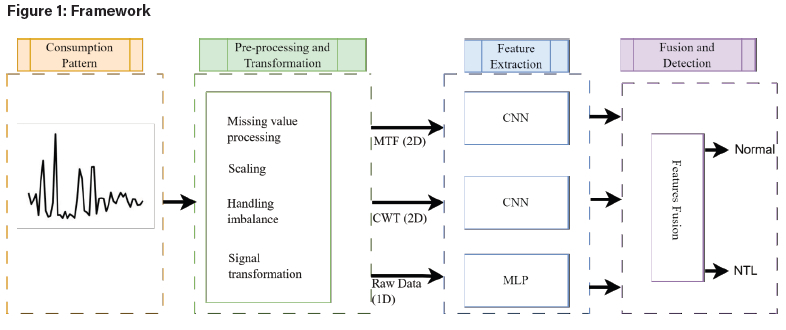
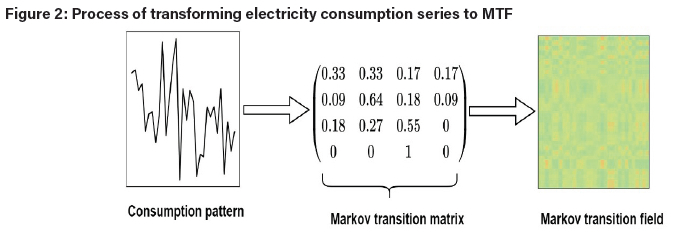
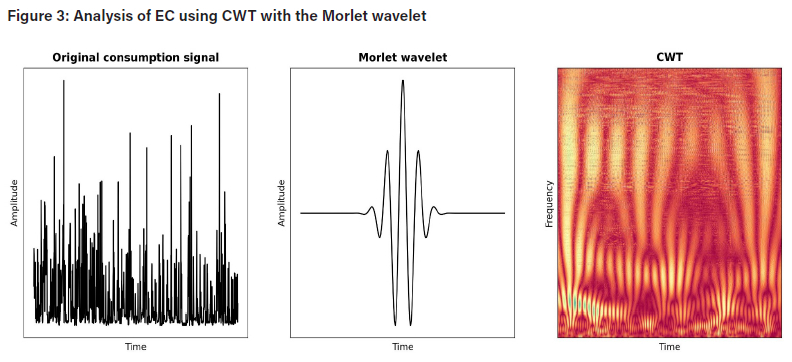
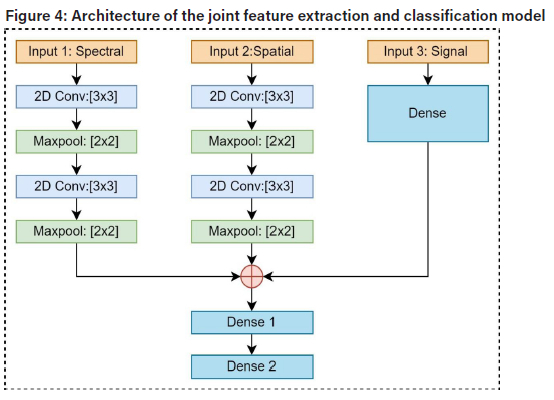
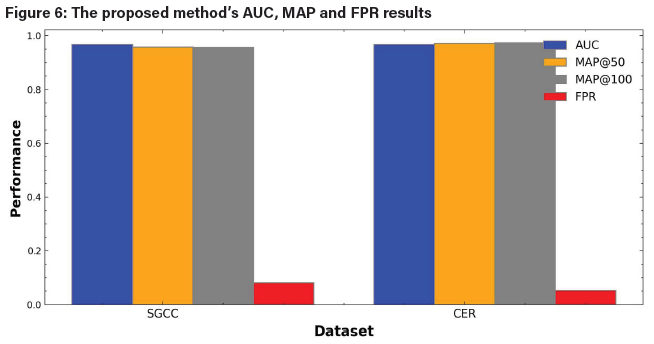
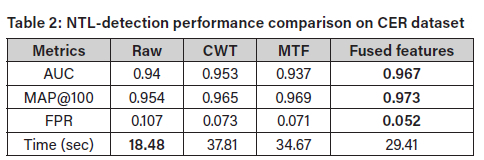
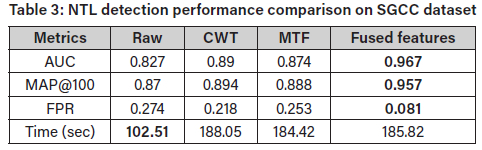
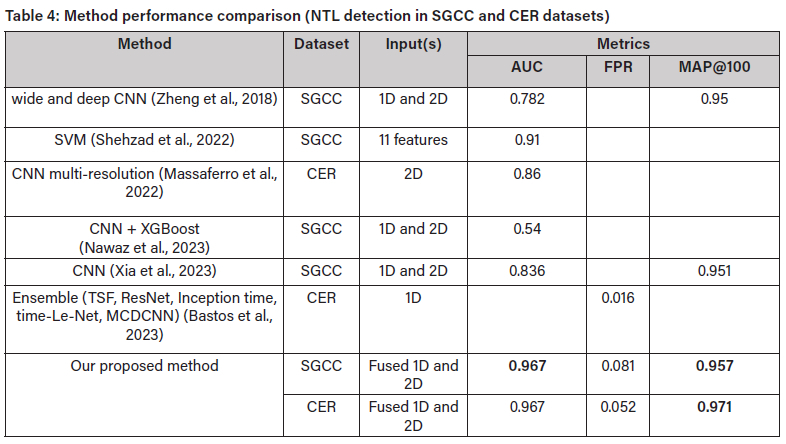
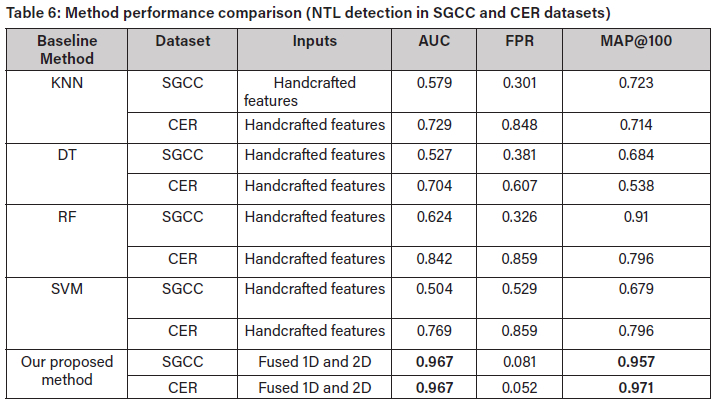
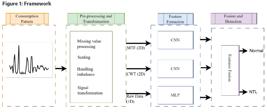
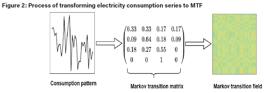
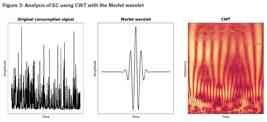
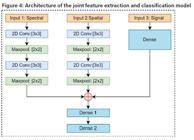
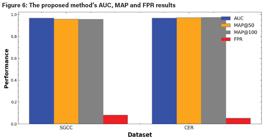
The performance of electricity utilities in many African countries is undermined by electricity theft. Such non-technical losses (NTLs) pose significant economic challenges to electricity grids, leading to the need for improved detection methods. This study tested an NTL detection method that transformed electricity consumption (EC) profiles into two-dimensional (2D) and one-dimensional (1D) representations, and utilised deep-learning techniques, specifically convolutional neural networks (CNN) and multi-layer perceptron (MLP), to extract features indicating NTLs. This NTL detection method involved three parallel branches: analysing temporal information from application of a Markov transition field (MTF) to EC patterns; analysing spectral information from application of the continuous wavelet transform (CWT) tool; and extracting frequent co-occurrence features from 1D consumption patterns. CNN and MLP were employed within the three branches to capture information from the 2D and 1D inputs, respectively. The features extracted from the three branches were then aggregated through information fusion and applied to EC datasets produced by the State Grid Corporation of China (SGCC) and the Irish Commission for Energy Regulation (CER). This multi-branch approach was found to offer strong NTL detection accuracy. With the SGCC dataset, the method achieved an AUC (area under the curve) of 96.7%, a mAP@100 (mean average precision at 100) of 95.7%, and an FPR (false positive rate) of 8.1%. With the CER dataset, the method achieved an AUC of 96.7%, a mAP@100 of 97.3%, and an FPR of 5.2%.
electricity consumption (EC); electricity theft; non-technical losses (NTLs); information fusion; deep-learning; convolutional neural networks (CNN); multi-layer perceptron (MLP); Markov transition field (MTF); continuous wavelet transform (CWT)
 Thumbnail
 Thumbnail
 Thumbnail
 Thumbnail
 Thumbnail
 Thumbnail