Factors influencing South African consumer acceptance of marketers' use of human digital twins (HDTs)
Abstract
Human digital twins (HDTs) are virtual, data-driven consumer replicas that are generated by AI and used by marketers to analyse and predict consumer behaviours. By collating large amounts of personalised data on the online behaviour of specific consumers, an HDT facilitates sophisticated modelling of those individuals' preferences and potential future choices, thus assisting marketers in determining which consumer to target with product offerings. This study aimed to identify the factors that may influence South African consumers' acceptance of HDT use for marketing purposes. A cohort of 121 adults was recruited to complete a Likert-scale survey comprising statements linked to five factors that could influence a consumer's acceptance of HDT use. Two of the tested factors, namely perceived usefulness and perceived ease of use, were drawn from the technology acceptance model (TAM), with three additional factors, namely knowledge, trust, and technological proficiency, added based on constructs present elsewhere in the technology-acceptance literature. Statistical analysis of the survey responses found that all five factors had statistically significant positive relationships with customer acceptance of HDT use.
human digital twin (HDT); artificial intelligence (AI); marketing; technology acceptance model (TAM); consumer choice modelling
1. Introduction
A digital twin (DT) is a virtual representation of a physical object, process, or person that is contextualised in a virtual version of the environment in which the actual object, process, or person exists (Jones et al., 2020; McKinsey, 2024). A sub-category of DTs is human digital twins (HDTs), which Budiu (2025) defines as generative AI (genAI)-based virtual models of an individual that can be used to predict both individual and population-level preferences and behaviours. To effectively represent its physical counterpart, the virtual DT needs to know the physical counterpart's properties, rules, and behaviours (Tao & Zhang, 2017). To enable this, there is a constant flow of data between the physical objects and the digital representations. The data contained in the virtual representations allows simulations to be executed, and learning from these simulations enables better decision-making about the physical artefact without affecting the physical realm (Jones et al., 2020). DTs have been implemented to analyse processes in the manufacturing sector, and other industries such as healthcare, organisational planning, agriculture, and commerce have implemented or proposed DTs as a means to find solutions to some of the difficulties faced by these industries (Vijayakumar, 2020).
HDTs can be of great potential value to marketers. Kwok (2025) states: "Every human is going to have a digital companion. These AI teammates and humans will work together so that humans can work at their exponential potential" This study focuses on HDTs and people's acceptance of having an HDT. By taking the characteristics and traits of humans, HDTs seek to create accurate representations of humans, similar in accuracy to virtual representations used in other sectors (Shahat et al., 2021; Tao & Zhang, 2017). These virtual entities allow organisations to run simulations and experiments on larger sets of users to better optimise products and communication for maximum engagement, which in turn assists marketers to improve the customer experience.
HDTs can be effectively used in consumer choice modelling to determine a person's preferences and assist organisations in marketing products and alternatives to customers. Location, purchasing behaviour, and online activity can be used to predict potential future customer behaviour and choices of what have also been called "consumer digital twins" (Hornik & Rachamim, 2025). Cui (2025) observes that the potential role of human-AI-driven personalised marketing remains underexplored. There are several ethical and moral implications in creating HDTs, including matters of data privacy and the capturing of details of an individual's emotional and psychological state (Kabalska & Wagner, 2025).
South African consumer perceptions of the twinning process have not been adequately researched, and this study aimed to address the existing research gap. The study surveyed a cohort of 121 adults, using a Likert-scale survey to investigate the significance of five potential factors that could influence a consumer's acceptance of HDT use: knowledge, perceived usefulness, perceived ease of use, trust, and technological proficiency.
The notion of an "all-knowing" digital model of a human can be of value to marketers and other fields where there is value in testing predictions and theories without affecting the physical realm (Hornik & Rachamim, 2025). HDTs differ from DTs of physical goods and products in terms of the data, because, in many cases, sensitive data is collected (Löcklin et al., 2021). This is where HDTs raise ethical and legal issues, such as the right to access data contained in the twin, and the privacy of the person that the twin represents (Braun, 2021; Truby & Brown, 2021). HDTs are not to be confused with clones. Digital cloning involves creating a virtual copy of a person that is largely indistinguishable from the real person. This includes the creation of fake images, fake internet personas, or fake videos involving a person (Truby & Brown, 2021). Two features of HDTs make them distinct from clones. First, HDTs are designed with the idea of running simulations and performing optimisations on the twins. Second, HDTs are developed to provide future predictions (Agrawal et al., 2023; Braun, 2021). The twin is trained or primed with personal information, such as demographics, past survey responses, interviews, and behavioural logs, and can be used to predict individual-level behaviour and population-level behaviours (Budiu, 2025).
Researchers have found the use of HDTs and DTs to be valuable in many areas. In fitness, HDTs are used to suggest behavioural changes that can improve fitness (Barricelli et al., 2020). In healthcare, DTs have been used to mirror individual organs of the human body and the entire human body (Braun, 2021). Hospitals, equipment, and patients can be represented in DT environments and agents, and the data can be used to make decisions and provide advice and suggestions to staff. Recent developments in the use of large language models such as ChatGPT have introduced the concept of "agentic AI" Agentic AI introduces the concept of AI agents who, in theory, can act independently and proactively, mimicking human reasoning and handling multiple tasks (Kwok, 2025). The AI agents can, in theory, interact with an HDT to perform various tasks.
An HDT in marketing is a dynamic, virtual representation of a customer or customer group built on real data to predict behaviour and test campaigns (Hornik & Rachamim, 2025). HDTs hold large amounts of data about a person and use this data to predict behaviour and manipulate choices in the real world (Truby & Brown, 2021). Consumer choice modelling is an area where the twinning of humans can be used very effectively. Consumer data such as location, purchasing habits, and online activity will be fed to a virtual space and this, in turn, will be used to predict future behaviour and choices made by the person (Budiu, 2025; Gaffinet et al., 2025; Vijayakumar, 2020). This study investigated the respondents' acceptance of the creation and use of HDTs.
An HDT reference architecture
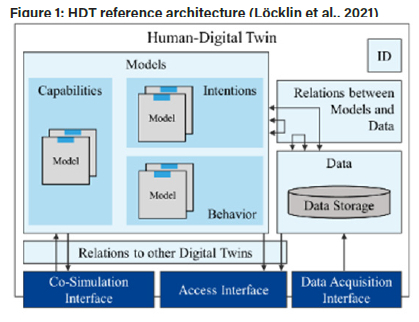
Löcklin et al. (2021) propose a reference architecture (Figure 1) for uniform interfaces with HDTs.
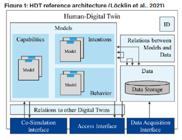
As seen in Figure 1, this proposed reference architecture includes the following components:
• An ID: The ID uniquely identifies a specific HDT, so data and models for it can be accessed.
• Data: The data of the represented person that is collected via sensors and trackers are stored in either long-term data storage or short-term memory if it is sensitive data.
• Models: Different tools from possible different providers create these models and are used to represent the HDT's capabilities, intentions, and behaviour. The models are used to describe the various aspects of the person being represented.
• Relations to other DTs: The ever-changing relationships between the HDT and other DTs, such as machinery or retail store aisles, are stored. This component keeps a record of the current relationships as well as historical data for later analysis.
• Relationship between models and data: In this component, the relationships between the various models and data are defined and stored. An example of such a relationship is the intention to enter a marathon based on the ability to run a certain distance.
• Data acquisition interface: The data acquisition interface collects data made available by the connection between the physical and virtual space.
• Access interface: The access interface provides access, based on predefined access rules, to the connection between the physical and virtual space. The interface ensures that only authorised applications can gain access to the data stored in the HDT.
Ethical issues with HDTs
An HDT can offer great value to researchers, organisations, and even the person it represents. It does, however, require a constant stream of data to be transmitted for further processing to the virtual representation. In non-human entities, this is, in many cases, not an issue because ownership of the physical entity is usually shared with the virtual space. DTs of people, i.e., HDTs, do, however, pose ethical issues, which need to be considered before there is further development in this area (Kabalska & Wagner, 2025). As algorithms become more entrenched in the daily decision-making process of the average person, more emphasis needs to be placed on people's awareness of, and attitudes towards, these algorithms (Gran et al., 2021). Certain legal issues, including matters of privacy, consent, discrimination, and copyright, need to be considered when creating digital representations of a person (Truby & Brown, 2021).
HDTs in marketing
HDTs in marketing are virtual, AI-powered replicas of individual customers or segments that predict behaviour and preferences using real-time data to personalise experiences, test campaigns, and identify bottlenecks in the customer journey (Cui, 2025). A HDT can be used to predict both individual and population-level preferences and behaviours (Budiu, 2025).
Digital advertising platforms aim to identify potential customers of a product or service and display relevant, targeted advertisements to these users (Shin & Yu, 2021). Advertising platforms rely on historical data and user engagement events to predict future engagements with digital advertisements (Manchanda et al., 2019). User clusters were built around publicly accessible data such as census results and public address data (Truby & Brown, 2021). Although this data was useful to marketers in creating consumer groups that roughly fit the profile of each other, the marketers still risked stereotyping large groups of consumers. With additional data available from transaction histories and social media activity, combined with the increased processing power available to marketers, consumer profiles and choice predictions can be created with much higher accuracy (Cui, 2025; Truby & Brown, 2021).
The need for current data about a user in order to deliver targeted adverts can be addressed by HDTs, which can help to create accurate representations of user characteristics and events, similar to how non-human DTs can represent processes in manufacturing and other sectors (Shahat et al., 2021; Tao & Zhang, 2017). By creating virtual entities that represent users, marketers can run simulations and experiments on large sets of users to optimise advertisements for maximum engagement. For users, HDTs have the potential to deliver better-targeted marketing campaigns and product or service suggestions (Cui, 2025). At the same time, it is important for marketers to understand the degree to which consumers accept the use of HDTs, an understanding that can be achieved through the application of technology-acceptance frameworks.
Technology acceptance model (TAM)
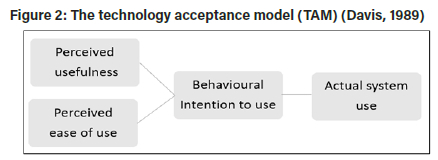
The technology acceptance model (TAM) is a widely used information systems model that investigates user acceptance and use of new technologies. TAM is based on the belief that a user's perception of a new technology's usefulness and ease of use influences the user's attitude and intention to use it (Davis, 1989). The TAM (Davis, 1989) is shown in Figure 2. The model was later extended to better explain what users perceive as useful in a system (Venkatesh & Davis, 2000).
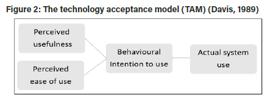
Perceived usefulness can be defined as the extent to which someone believes that using a particular system will enhance their job performance (Davis, 1989; Venkatesh & Davis, 2000). Perceived usefulness is the greatest predictor of intention to use (Sagnier et al., 2020). Perceived ease of use can be defined as the extent to which someone believes that using a particular system will be free of effort (Bulsara & Vaghela, 2020; Davis, 1989; Venkatesh & Davis, 2000). It refers to the degree to which users feel that a system requires minimal effort to use (Malik et al., 2025).
3. Research design
An extended TAM model
This study deployed an extended TAM model, with three additional factors-knowledge, trust, and technological proficiency-added to the two aforementioned factors in the traditional TAM: perceived usefulness and perceived ease of use. The model was extended to make it of greater relevance to the acceptance of HDTs. The three factors added to the model are discussed below.
Knowledge
Knowledge has been introduced as a factor in extending acceptance models of technology, and has a positive relationship with the users' intention and actual use of systems (Jan et al., 2019; Wang, 2010). This relationship exists because knowledge of a system influences a person's attitude towards a system and thus influences their intention to use a system (Wang, 2010). Researchers in marketing use three distinct categories of knowledge (Jan et al., 2019). First, subjective knowledge refers to what a consumer thinks they know about a product. Subjective knowledge influences a user's attitude towards a technology. Second, objective knowledge refers to the actual knowledge that a consumer possesses, as measured by some form of instrument. Third, prior experience of a product or service can be considered a form of knowledge.
Trust
Trust is related to the potential benefit of using a system (Sørensen & van den Bulck, 2020). Trust, or rather a lack of trust, is common in systems or platforms that use AI decision-making. This lack of trust can be attributed to the relative novelty of AI and the general lack of understanding by the general population (Hoff & Bashir, 2015). The fear that robots or non-human entities can take control of national key points or other critical infrastructure also acts as a barrier to trust (Fuller et al., 2020). Trust plays a critical role in users' acceptance and use of new technologies (Zhao et al., 2018). Trust was not initially included in TAM but has been found to be equally important in determining intention to use, as perceived usefulness and perceived ease of use. Trust is a crucial aspect of any relationship, including those between a customer and a retailer, or between a user and a technology platform (Gefen et al., 2003).
Technological proficiency
A person requires a certain level of technological proficiency to effectively use technology. Technological proficiency refers to the set of skills that a person possesses, enabling the effective use of technology such as personal computers, smartphones, or the internet (Saad & Sankaran, 2020). The level of perceived proficiency can be measured on two levels: basic proficiency and advanced proficiency (Marques et al., 2013). This proficiency describes a person's ability to use digital devices efficiently and effectively to achieve a specific goal (Grefen, 2021).
Hypotheses
The following hypotheses were developed from the literature and academic theory:
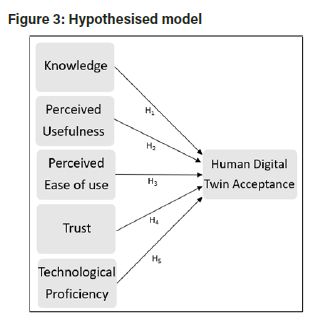
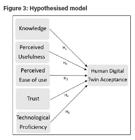
• H1 : Knowledge positively influences HDT acceptance.
• H2 : Perceived usefulness positively influences HDT acceptance.
• H3 : Perceived ease of use positively influences HDT acceptance.
• H4 : Trust positively influences HDT acceptance.
• H5 : Technological proficiency positively influences HDT acceptance.
Hypothesised model
Figure 3 shows the hypothesised model for the study, including the five independent factors and the dependent factor, HDT acceptance.
Data collection
The positivist philosophical view was chosen for this study and the study was conducted using a quantitative survey. The primary data collection instrument was an online questionnaire on the QuestionPro platform, consisting of closed-ended questions. The questionnaire, developed based on the literature and validated through a pilot study, was divided into two sections. The first section gathered demographic data on the respondents. The second section included items relating to the five independent factors and the dependent factor (Table 2). A five-point Likert scale with the options "strongly disagree" (1), "disagree" (2), "neutral" (3), "agree" (4), and "strongly agree" (5) was presented for each factor's measurement items.
The population consisted of South African adults over the age of 18 who had access to an Internet-enabled smartphone and a minimum of a Grade 12 level of education. Convenience sampling was used, followed by snowball sampling, where MBA students at the Nelson Mandela University (NMU) Business School were requested to complete the study, and they were encouraged to send the survey link to their friends and colleagues. Participation in the survey was voluntary and no personal information was gathered. The NMU Human Ethics Committee gave ethical clearance for the study.
Data analysis
The data were statistically analysed. The statistical analyses included inferential statistics and exploratory factor analysis (EFA).
4. Results and discussion
Participant demographics
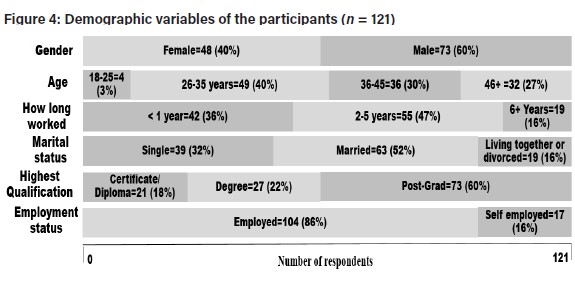
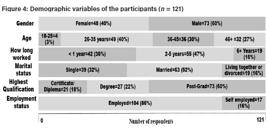
The demographic variables are presented in Figure 4. A total of 122 responses were received, of which 121 were fully completed. Most (70%) of the respondents were aged between 26 and 45. Some 86% of the respondents were employed and had been working for less than six years, and the highest level of education for 82% of respondents was either a degree or a postgraduate degree. The findings further indicated that 95% of the respondents used WhatsApp, 76% had a Facebook profile, and 69% were on Linkedln.
Significance of the five human technology-acceptance factors
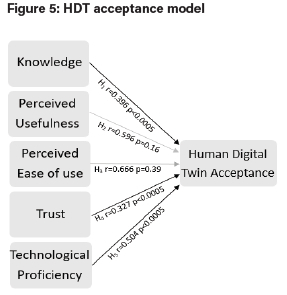
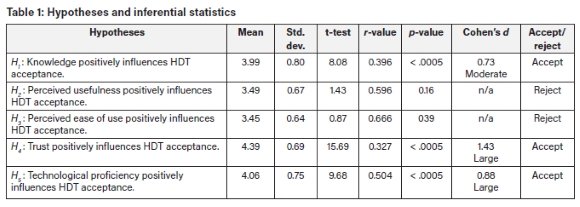
Table 1 tabulates the survey responses to each of the five independent technology-acceptance factors, indicating the level of agreement that respondents had with items in the survey related to each factor. The response data indicate the relationships between the independent factors and HDT acceptance, which was the dependent factor. To determine the statistical and practical significance between the factors, one-sample t-tests were performed. Factors compared and displayed a p-value of less than 0.0005 show statistical significance and Cohen's d above 0.2 indicates practical significance. Knowledge about the role of technology (μ = 3.99; d = 0.73; p < 0.0005), trust in HDTs (μ = 4.39; d = 143; p < 0.0005), and technological proficiency (μ = 4,06; d = 0,88; p < 0.0005) all showed both statistical and practical significance. The practical significance of these three independent factors ranged from moderate for knowledge (Cohen's d = 0.73) to large for trust (Cohen's d = 1.43) and for technology proficiency (Cohen's d = 0.88). Hypotheses H1, H4 and H5 were accepted (Table 1).
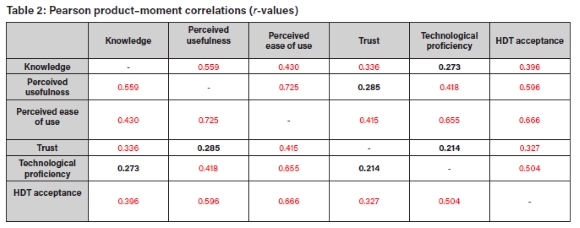
A summary of Pearson product-moment correlations (r-values) for the relationships between the various factors is presented in Table 2. The correlations that are significant (both statistically and practically) are in red, and those that are statistically but not practically significant are bold black.
In Table 2, the r-values for the relationships between the various independent factors indicate that perceived usefulness (r = 0.596), perceived ease of use (r = 0.666), and technological proficiency (r = 0.504) all had statistically strong positive relationships with HDT acceptance, with the r-values being greater than .300 for all these relationships. Medium positive relationships were observed between knowledge (r = 0.396) and HDT acceptance, and between trust (r = 0.327) and HDT acceptance. The positive relationship between perceived ease of use and perceived usefulness was the strongest of the observed relationships (r = 0.725). A strong positive relationship was also observed between perceived ease of use and technological proficiency (r = 0.655).
Item analysis
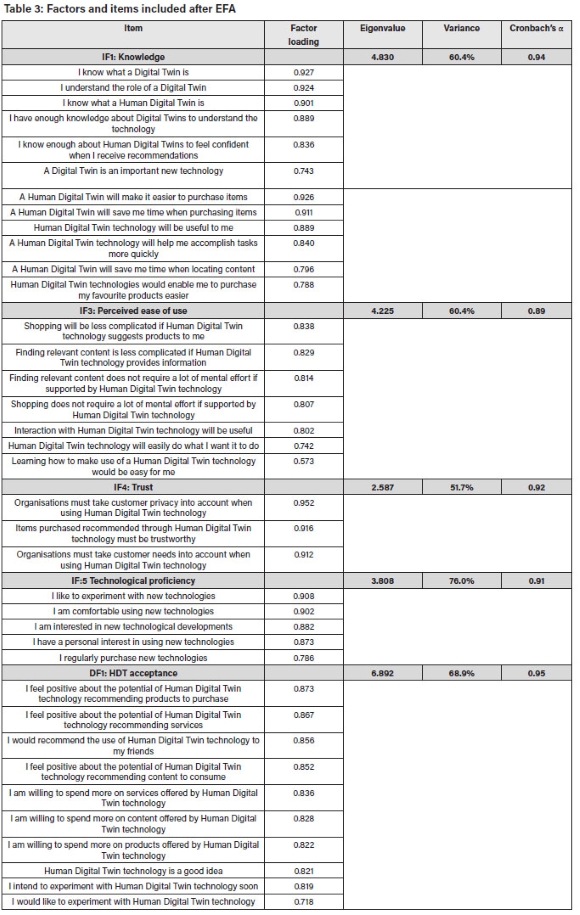
Table 3 provides the eigenvalues and factor loadings for each of the factors. For the purposes of this study, factors with an eigenvalue of greater than one were considered valid. Factor loadings greater than or equal to 0.500 were deemed significant at the α = 0.05 level for the sample size n = 121, as recommended by Hair et al. (2006). The remaining items, after EFA and the variance explained by each factor, are presented in Table 3. The Cronbach's alpha coefficients were all greater than 0.80, indicating good (0.80-0.89) or excellent (0.90+) reliability for all the factors. The factor items, loading, and percentage of total variance explained for each factor are also included in Table 3.
Knowledge is an important factor in HDT acceptance and has a significant effect on the acceptance of this technology. Knowledge about HDTs had a mean value of 3.99, indicating that most respondents had a degree of knowledge about HDTs and the role of technology in their daily lives. Jan et al. (2019) identified this form of knowledge as subjective knowledge, which refers to what consumers think they know about HDTs. This factor had a statistically significant (r = 0.396) and a moderately practical significant (Cohen's d = 0.73) positive relationship with the dependent factor, HDT acceptance. Hypothesis H1 was accepted (p < 0.0005).
The results of the study indicate a strong positive relationship between perceived usefulness and HDT acceptance (r = 0.596), which corresponds with previous studies on technology acceptance (Groß & Sohn, 2021; Jan et al., 2019). However, hypothesis H2 could not be accepted due to p = 0.16. This study found a significant positive relationship between perceived ease of use and the acceptance of HDTs (r = 666). This means that if people perceive the technology to be free of effort from their side, they will be more willing to make use of HDTs. Ease of use of a system also impacts the perceived usefulness of such a system (Venkatesh & Davis, 2000). However, hypothesis H3 could not be accepted due to p = 0.39.
Trust in using HDTs had a mean of 4.39, indicating that most respondents believed that organisations implementing HDT technology should do so in a trustworthy manner. The study indicates a medium positive relationship between trust and HDT acceptance (r = 0.327). HDTs could, for example, offer consumers the ability to save time, effort, and money in assisting consumers with daily decision-making. In turn, consumers must accept that they lose agency over their purchasing decisions. This allows the technology to be sales- or organisation-biased in order to achieve maximum profits, rather than keeping the interests of the consumer at the forefront of the decision-making process (Sørensen & van den Bulck, 2020). Hypothesis H4 was accepted (p < 0.0005).
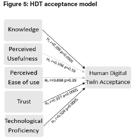
Technological proficiency plays an important role in HDT acceptance. Technological proficiency (r = .504) has statistically and practically strong positive relationships with HDT acceptance. Hypothesis H5 was accepted (p < 0.0005). The results also found that the highest-educational-level demographic item showed significant differences in responses for the factor technological proficiency. Respondents with a postgraduate degree had a higher mean value for the technological proficiency factor (M2 = 4.22) than those with a qualification below degree level (M7 = 3.70). No statistical difference was found between respondents with a degree (M2 = 3.92) and those with a qualification below degree level (M1 = 3.70) for the technological proficiency factor. The final hypothesised model and research findings are presented in Figure 5. The hypotheses for the independent factors, perceived usefulness (H2) and perceived ease of use (H3), were rejected.
5. Conclusions, limitations, and future research
An HDT contains information about a person and has been found to have applications in areas such as fitness and healthcare, assisting in simulating various scenarios and monitoring the results (Agrawal et al., 2023; Braun, 2021). HDTs can be of great value to an organisation's marketing department (Kwok, 2025). By considering consumers' perceptions of HDTs, marketers will be able to better employ the technology in their organisations and create well-thought-out campaigns for consumers.
The aim of this study was to determine, through the application of an extended TAM model, consumers' perceptions, in the South African context, of the use of HDTs in marketing. The correlations for all five independent factors with the dependent factor, HDT acceptance, were both statistically and practically significant (Table 2). The hypotheses for the independent factors knowledge (Hi), trust (H4), and technological proficiency (H5) were accepted (Figure 5). The EFA also helped us to better understand the independent factors and the items included for each factor (Table 3). The theoretical contribution of the study is its extension of TAM with three additional factors: knowledge, trust, and technological proficiency. The study's practical contribution is that it is the first study that we are aware of that investigates South African consumers' acceptance of HDT use for marketing purposes.
In the study's sample, 86% of respondents were employed, 70% fell within the 26-45 age range, and 82% had the highest educational attainment of a degree or a postgraduate degree. This meant that a high level of technological proficiency could be expected, thus limiting the generalisability of the findings. A larger sample, representing a larger segment of the South African population, would have been beneficial. Future research can focus on obtaining a larger and more representative sample and conducting a more comprehensive national survey, by including more respondents with lower levels of education. Further research can also be conducted on the ethical issues related to HDT use by marketers. Finally, marketers must heed the arguments of Kabalska and Wagner (2025), as cited above in the literature review, who argue, correctly, that the rise of HDTs presents both opportunities and threats; that HDTs should be used ethically; and that HDTs should be used to enhance, not replace, non-virtual explorations of human thoughts and behaviours.
AI declaration
No GenAI tools were used in the study.
Funding
No funding was received for this study or for the preparation of the article.
Data availability
The data supporting the findings of this study is available upon written request from the corresponding author at
Competing interests' declaration
The authors have no competing interests to declare.
Author contributions
M.B.: conceptualisation, methodology, investigation, data curation, formal analysis, visualisation, writing - original draft
M.C.: conceptualisation, methodology, investigation, data curation, formal analysis, visualisation, project administration, supervision, validation, writing - original draft, writing - review and editing
A.C.: conceptualisation, methodology, investigation, data curation, formal analysis, visualisation, writing - original draft
References
2. Literature review
- Agrawal, A., Thiel, R., Jain, P., Singh, V., & Fischer, M. (2023). Digital Twin: Where do humans fit in? Automation in Construction, 148, 104749. https://doi.org/10.10167j.autcon.2023.104749
- Barricelli, B. R., Casiraghi, E., Gliozzo, J., Petrini, A., & Valtolina, S. (2020). Human Digital Twin for fitness management. IEEE Access, 8, 26637-26664. https://doi.org/10.1109/ACCESS.2020.2971576
- Braun, M. (2021). Represent me: please! Towards an ethics of digital twins in medicine. Journal of Medical Ethics, 47(6), 394-400. https://doi.org/10.1136/medethics-2020-106134
- Budiu, R. (2025, August 1). Digital twins: Simulating humans with generative AI. https://www.nngroup.com/articles/digital-twins
- Cui, J. (2025). Human AI in digital media effects on digital twins and the moderating role of personalised advertising. Media, Communication, and Technology, 7(1), 35-41. https://doi.org/10.30560/mct.v1n1p35
- Davis, F. D. (1989). Perceived usefulness, perceived ease of use, and user acceptance of information technology. MIS Quarterly: Management Information Systems, 73(3), 319-339. https://doi.org/10.2307/249008
- Favela, L. H., & Amon, M. J. (2023). The ethics of human digital twins: Counterfeit people, personhood, and the right to privacy. In IEEE 3rd International Conference on Digital Twins and Parallel Intelligence (DTPI) (pp. 1-6). https://doi.org/10.1109/DTPI59677.2023.10365409
- Fuller, A., Fan, Z., Day, C., & Barlow, C. (2020). Digital Twin: Enabling technologies, challenges and open research. IEEE Access, 8, 108952-108971. https://doi.org/10.1109/ACCESS.2020.2998358
- Gefen, D., Karahanna, E., & Straub, D. W. (2003). Trust and TAM in online shopping: An integrated model. MIS Quarterly, 27, 51-90. https://doi.org/10.2307/30036519
- Gran, A. B., Booth, P., & Bucher, T. (2021). To be or not to be algorithm aware: A question of a new digital divide? Information Communication and Society, 24(12), 1779-1796. https://doi.org/10.1080/1369118X.2020.1736124.
- Grefen, P. (2021). Digital literacy and electronic business. Encyclopedia, 1(3), 934-941. https://doi.org/10.3390/encyclopedia1030071
- Grieves, M., & Vickers, J. (2017). Digital Twin: Mitigating unpredictable, undesirable emergent behavior in complex systems. In Transdisciplinary Perspectives on Complex Systems (pp. 85-113). Springer International. https://doi.org/10.1007/978-3-319-38756-7_4
- Groß, M., & Sohn, S. (2021). Understanding the consumer acceptance of mobile shopping: The role of consumer shopping orientations and mobile shopping touchpoints. The International Review of Retail, Distribution and Consumer Research, 31(1), 36-58. https://doi.org/10.1080/09593969.2020.1852096
- Hair, J. F., Black, W. C., Babin, B. J., Anderson, R. E., & Tatham, R. L. (2006). Multivariate data analysis (6th ed.). Pearson Education.
- Hoff, K., & Bashir, M. (2015). Trust in automation: Integrating empirical evidence on factors that influence trust. The Journal of the Human Factors and Ergonomics Society, 57, 407-434. https://doi.org/10.1177/0018720814547570
- Hornik, J., & Rachamim, M. (2025). AI-enabled consumer digital twins as a platform for research aimed at enhancing customer experience. Management Review Quarterly. https://doi.org/10.1007/s11301-025-00527-3
- Jan, M. T., de Jager, J. W., Ameziane, A. M., & Sultan, N. (2019). Applying technology acceptance model to investigate the use of smartphone advertising in Malaysia. Journal of Economics and Behavioral Studies, 11(1), 202-210. https://doi.org/10.22610/jebs.v11i1(J).2760.
- Kabalska, A., & Wagner, R. (2025). The better ones: The rise of human digital twins-our future or our demise? Future Business Journal, 11(155). https://doi.org/10.1186/s43093-025-00582-y
- Kwok, K. (2025, February 20). AI agents have clear mission, hazy business model. Reuters. https://www.reuters.com/breakingviews/ai-agents-have-clear-mission-hazy-business-model-2025-02-20
- Malik, H.A.S., Abdullah, N.A.H.A., & Fakhrorazi, A. (2025). Understanding customer loyalty in mobile wallet apps: A post-pandemic analysis with customer involvement as moderator. Innovative Marketing, 21(1), 338-349. https://doi.org/10.21511/im.21(1).2025.27
- Manchanda, S., Yadav, P., Doan, K., & Keerthi, S. S. (2019). Targeted display advertising: The case of preferential attachment. In 2019 IEEE International Conference on Big Data (Big Data) (pp. 1868-1877). https://doi.org/10.1109/BigData47090.2019.9006184
- Marques, E., de Oliveira Neto, J. D., & Marques, E. D. M. R. (2013). Digital proficiency and digital inclusion: Comparison between students of computer science, public relations and engineering. In IEEE Global Engineering Education Conference, EDUCON, March (pp. 934-939). https://doi.org/10.1109/EduCon.2013.6530219
- McKinsey. (2024, August 26). What is digital-twin technology? https://www.mckinsey.com/featured-insights/mckinsey-explainers/what-is-digital-twin-technology
- Saad, N., & Sankaran, S. (2020). Technology proficiency in teaching and facilitating. In Oxford research encyclopedia of education. https://oxfordre.com/education/view/10.1093/acrefore/9780190264093.001.0001/acrefore-9780190264093-e-591
- Shahat, E., Hyun, C. T., & Yeom, C. (2021). City digital twin potentials: A review and research agenda. Sustainability, 13(6). https://doi.org/10.3390/su13063386
- Shin, J., & Yu, J. (2021). Targeted advertising and consumer inference. Marketing Science, 40(5), 900-922. https://doi.org/10.1287/mksc.2021.1284
- Sørensen, J. K., & van den Bulck, H. (2020). Public service media online, advertising and the third-party user data business: A trade versus trust dilemma? Convergence, 26(2), 421-447. https://doi.org/10.1177/1354856518790203
- Tao, F., & Zhang, M. (2017). Digital twin shop-floor: A new shop-floor paradigm towards smart manufacturing. IEEE Access, 5, 20418-20427. https://doi.org/10.1109/ACCESS.2017.2756069
- Venkatesh, V., & Davis, F. D. (2000). A theoretical extension of the Technology Acceptance Model: Four longitudinal field studies. Management Science, 46(2), 186-204. https://doi.org/10.1287/mnsc.46.2.186.11926
- Vijayakumar, S. (2020). Chapter Eleven - Digital twin in consumer choice modeling. Advances in Computers, 117(1), 265-284. https://doi.org/10.1016/bs.adcom.2019.09.010
- Wang, P. A. (2010). Information security knowledge and behavior: An adapted model of technology acceptance. In 2010 2nd International Conference on Education Technology and Computer, vol. 2 (pp. 364-367). https://doi.org/10.1109/ICETC.2010.5529366