From lecture halls to clinical corridors: Exploring student perspectives on the qualities and attributes of a health sciences educator
BACKGROUND. Although the significance of the student-supervisor relationship in clinical education is well documented, there is a gap in understanding the specific qualities and attributes of educators that optimise the integration of theory and practice. Gathering insights from students on the role of educators can provide valuable guidance for enhancing the seamless integration of theoretical learning into practical clinical education, ultimately shaping the development of competent healthcare professionals. OBJECTIVE. To explore the qualities and attributes of a health sciences educator from a student perspective. METHODS. We conducted focus group interviews with 15 undergraduate optometry programme students. Data were assessed with content analysis using an inductive approach. RESULTS. Students identified key qualities of lecturing staff that enhance theoretical grounding, such as the ability to provide practical examples. Additionally, students emphasised clinical educators' positive and negative attributes as significant factors shaping the clinical learning environment. Insights from students led to recommendations aimed at improving the overall learning environment from their perspective. CONCLUSION. The findings of this study confirm the significant influence of the student-educator relationship on the learning experience, underscoring the importance of fostering a collaborative team dynamic within the integrative learning environment.
optometry education; clinical learning environment; theory-practice integration; qualitative research; health profession educator
From lecture halls to clinical corridors: Exploring student perspectives on the qualities and attributes of a health sciences educator
E KempenI; J M J LabuschagneI; M P JamaII
IPhD (HPE); Division of Health Sciences Education, Faculty of Health Sciences, University of the Free State, Bloemfontein, South Africa
IIPhD (Higher Education Studies); Division of Health Sciences Education, Faculty of Health Sciences, University of the Free State, Bloemfontein, South Africa
BACKGROUND. Although the significance of the student-supervisor relationship in clinical education is well documented, there is a gap in understanding the specific qualities and attributes of educators that optimise the integration of theory and practice. Gathering insights from students on the role of educators can provide valuable guidance for enhancing the seamless integration of theoretical learning into practical clinical education, ultimately shaping the development of competent healthcare professionals.
OBJECTIVE. To explore the qualities and attributes of a health sciences educator from a student perspective.
METHODS. We conducted focus group interviews with 15 undergraduate optometry programme students. Data were assessed with content analysis using an inductive approach.
RESULTS. Students identified key qualities of lecturing staff that enhance theoretical grounding, such as the ability to provide practical examples. Additionally, students emphasised clinical educators' positive and negative attributes as significant factors shaping the clinical learning environment. Insights from students led to recommendations aimed at improving the overall learning environment from their perspective.
CONCLUSION. The findings of this study confirm the significant influence of the student-educator relationship on the learning experience, underscoring the importance of fostering a collaborative team dynamic within the integrative learning environment.
Keywords: optometry education; clinical learning environment; theory-practice integration; qualitative research; health profession educator
Health sciences education is characterised by the symbiotic relationship between theory and practice.[1] The theoretical part, acquired mainly through lectures (online or face-to-face), case studies, group work and interactive discussions, serves as a platform for students to develop their knowledge, skills, attitudes and values.[2] Simultaneously, clinical education allows students to put theoretical knowledge into practice and acquire clinical knowledge and skills.[2,3] Effective clinical learning experiences are strategic and vital for students to gain the ability to apply theoretical knowledge and skills.[4,5] Furthermore, establishing an effective clinical learning environment is crucial for guiding students towards greater competence and confidence as they transition into independent health professionals.'[6] With that in mind, Nehmad et al.[7]noted that optometry education, as other health sciences programmes, aims to train proficient optometry clinicians.
Kirkman et al.[8] emphasise the importance of ensuring that a student's clinical experience is also a learning experience, as the clinical setting is an important component in the entire learning process of a healthcare student. Launer[9] suggests that clinical education is the most general form of education in health education. In the training context, it may overlap with theoretical training. Papastavrou et al.[1]describe individuals in supervisory roles using various terms such as mentor, link teacher or preceptor, typically guiding students through clinical practice. However, the same person may also be a lecturer or facilitator responsible for theoretical grounding. While research suggests that having the clinical educator also serve as the lecturer enhances theory-practice integration,[1] this is not always possible. In our case, one supervisor was responsible for the theoretical instruction and participated in clinical supervision, while the other supervisors assisted with supervision but did not take on formal teaching roles.
The relationship between a student and a supervisor is crucial for the student's professional development.[1] Optometry students have previously identified the supervisor-student relationship as the most important clinical experience factor.'81 This study takes a distinct approach by focusing on the perspectives of optometry students regarding the qualities of lecturing staff and the attributes of clinical educators. While existing research, particularly in nursing, has examined the relationship between students and clinical educators and the characteristics of effective clinical educators, insights specific to optometry students on how these qualities enhance the integration of theoretical learning into practical clinical education remain underexplored. Exploring students' perspectives on the role of the educator can guide efforts to provide a smooth integration and, ultimately, competent healthcare professionals.
Methods
Study design
This study formed part of a larger study that followed an intrinsic qualitative case study design. The study focused on the interpretation of 'lived experiences' that were crucial to the learning environment of undergraduate optometry students.[10] The intrinsic case study, with the emphasis placed on describing the particulars of a case rather than making generalisations, is prevalent in educational research and was used in this study.[11,12] A constructivism enquiry was followed, as the researchers gained access to the perceptions and experiences of undergraduate optometry students through their constructed concepts, the knowledge derived from these and how they created different realities in the teaching-learning environment. These concepts were then used to interpret the experiences, perceptions and opinions and to understand and ascribe meaning to these.[13] The practical orientation aligns with our purpose to facilitate enhancements in integrating theory and practice, particularly regarding the educator's role. Data for the study were collected through a focus group interview and a questionnaire containing only open-ended questions. The questionnaire was administered after nine different teaching and learning methods were applied in the theoretical part of the curriculum, capturing students' perceptions and experiences. This study specifically focuses on analysing the results of the focus group interview conducted after the questionnaire, which provided in-depth insights into the students' perspectives on integrating theoretical learning and clinical practice.
Ethical approval was obtained from the Health Sciences Research Ethics Committee (HSREC), Faculty of Health Sciences, University of the Free State (UFS), Bloemfontein, South Africa (SA) (ref. no. HSREC 128/2016).
Setting
The study was conducted during the 4-year undergraduate optometry programme at UFS. The education and training of undergraduate optometry students in the programme align with the South African Qualifications Authority (SAQA) requirements. The first- and second-year optometry curricula mainly consist of theoretical modules of basic and visual sciences. The third and fourth academic years' modules are more practical, with clinical modules built into the curricula. Throughout the third and fourth academic years, the emphasis is on exposing students to various specialised clinical services that optometrists can provide, such as binocular vision, contact lenses, paediatric vision, low vision and pathology. Final-year students participate in the clinical rotations, where patients are referred to receive these specialised services. The study took place in a clinical setting where optometry students participated in pathology clinics, typically held on Friday mornings. According to the schedule, 10 students attended each clinical session, tasked with conducting a pathology workup on patients. The schedule was designed to ensure that students saw the required number of pathology patients as mandated by the Health Professions Council of South Africa (HPCSA). The students were supervised by a team of three supervisors: one supervisor responsible for theoretical instruction and clinical supervision; a private optometrist; and a hospital-based supervisor. Additionally, an ophthalmologist was available to assist with diagnoses beyond the scope of optometry, further enriching the clinical learning experience.
Participants
This study formed part of a larger project to determine undergraduate optometry students' experiences and perceptions of teaching-learning methods based on the experiential learning theory. Fourth-year undergraduate students in the Department of Optometry, UFS, were invited via email to participate in focus group discussions. The undergraduate optometry class of 2017 comprised only 17 students. All participants shared a specific trait: each had successfully completed their rotation at the pathology clinic. Such purposeful, non-probability sampling techniques enabled a rich understanding of students' experiences and perceptions of their theoretical and clinical learning experience and environment.[14]
Data collection
An agenda with the interview questions for the focus group interviews and, subsequently, the specific areas of interest was developed by EK (a PhD candidate). The agenda was piloted with MJL (promotor) and MPJ (co-promotor), as well as the interview facilitator, a member of the faculty with experience in health sciences education research and the focus group interviewing method. The question was evaluated in terms of clarity and usefulness and refined to meet the purpose of the focus group interviews, which were conducted in a familiar but neutral setting for all participants. The facilitator was not personally involved in the research or the optometry programme but was familiar to the participants owing to her involvement in the Faculty of Health Sciences, UFS. She was appointed as the facilitator because she is an independent and competent academic who takes a special interest in creating a learning community that engages and motivates students.
The data collection involved one focus group discussion, which was conducted in two different sessions to accommodate all participants. Participants were given the choice to select the group with which they wanted to participate. It can be assumed that their selection was based on their preference for being with peers with whom they felt the most comfortable or the most suitable time slot. This was done to ensure each participant's optimal participation. The focus group interview sessions took place at the end of their clinical rotation and towards the end of the third semester in their final year. At the start of each focus group interview, the process and the ground rules were explained to all the participants. These included confirming voluntary participation, confidentiality and anonymity, using a number to identify their input.
Analysis
Following the intrinsic qualitative case study design, content analysis with an inductive approach was used to provide knowledge, new insights and a representation of facts to attain a full and condensed description of the experiences of students in the clinical environment, always remaining sensitive to how the results might be applied in practice.[15] This was done through the researchers' interaction with the data while discovering patterns, themes and categories.[16]
To prepare for the analysis, EK typed the data and then read the transcribed data repeatedly to ensure familiarisation with the data.[17] With familiarisation with the data, an initial code list was created by identifying a unit of analysis and meaning and corresponding concepts.[18] It was then confirmed that the information corresponded with the aim of the study before themes and categories were identified from the data.[19] This was done manually by highlighting the themes and categories that came to the fore in the discussion. For this process, the researcher worked through the transcriptions several times using different colours for the categories and themes identified. The categories were then transferred into a table and consequently interpreted. To ensure the quality of the study, the qualitative analysis was verified with the assistance of an independent expert, which included verifying the data coding, quality assurance and trustworthiness of the final transcriptions. The analysed and interpreted data from the focus group interviews were also verified with the study participants to ensure that the findings reflected their perceptions, experiences and views.[20]
Results
Two focus group sessions were conducted with 15 participants. The initial group consisted of nine participants, while the second group comprised six participants. The reduced number in the second group was attributed to two participants being unable to attend the interview due to illness. There were two male participants in each focus group, seven females in the first group and four females in the second group. The ages of the participants ranged between 21 and 22 years. The duration of the first focus group interview was 82 minutes, and that of the second was 70 minutes, which was in line with the indication on the agenda. The responses from the second group generated similar data to the first, there were no more new opinions or issues raised, and data saturation was reached.
From the analysis of the data, the focus fell on the following three major focus areas:
• theoretical grounding and integration of theory and clinical practice
• factors that influenced the pathology clinical learning environment
• recommendations on the enhancement of the learning environment.
The findings are presented based on these identified focus areas, incorporating themes, categories and supporting quotes. The numbered paragraph (_P) is in brackets to reference the quote. The prefix 1 or 2 before the numbered paragraph in brackets refers to the first and second focus groups, respectively.
Focus area 1: Theoretical grounding to enhance theory-practice integration
This focus area concentrated on the theoretical grounding required for applying and integrating theory in the pathology clinic. Everyone agreed that theoretical lectures were of such a nature that they were useful in the clinic, and they mentioned qualities of lecturing staff contributing to theoretical grounding.
Theme: Qualities of lecturing staff contributing to theoretical grounding
One participant made the following comment:
'I also just think it can differ for other people, but I think the right people presented pathology. I feel that the people who presented it are good teachers, so they had a way of conveying it and I think that if one had it with other lecturers, who are not good teachers per se, it would not necessarily have led to such good integration as it had.' [1_P36]
How the knowledge was transferred contributed to the integration of knowledge for the participants. They mentioned that the lecturers teaching these modules had a passion for the subject, which was contagious, as one participant mentioned:
...they do not only have a passion for the subject, but they have a passion for making us passionate about the subject.' [1_P39]
In addition, the lecturers had the ability to simplify difficult concepts. One participant voiced it as follows:
'I think it's their way of simplifying things and explaining it like that ...
they always tried to explain it in a different way.' [1_P36]
Adding to this quality, the lecturers explained everything and did not leave themes to study as self-study. The group appreciated this extensive approach with clear guidance on the learning material.
Students agreed unanimously that a good lecturer has the ability to make ...:
'a very difficult concept practical.' [1_P38]
The participants stated that the abovementioned lecturer previously worked with an ophthalmologist. This clinical experience provided the lecturer with the ability to give practical explanations during the lectures, which contributed to the positive experience in the clinic. A participant voiced it as follows:
'...they really make it their own, because our pathology lecturers ... have worked in such a setting, like with an ophthalmologist.' [1_P43]
Focus area 2: Factors that influenced the pathology clinical learning environment
The next focus area dealt with the factors that contributed to the influences in the clinical learning environment, specifically in the pathology clinic. The supervisor (clinical educator) attributes were highlighted within this focus area.
Theme: Supervisor attributes
The facilitator raised the topic and inquired about the supervisor's role in easing anxiety or uncertainty among participants. They were asked if it was important to them, to which the response was affirmative. Two categories were analysed in this theme, i.e. positive and negative attributes. These categories are reported and discussed separately.
Category: Positive attributes. Most of the positive attributes of the supervisors that contributed to a safe learning environment were mentioned during the first focus group interview. The group agreed that:
'They make it really feel safe.' [1_P7]
The group concluded with:
'[they] really go out of their way in pathology clinic to make us comfortable.' [1_P113]
The positive attributes included the supervisors always being willing to help and stimulating the students' thinking process. They were knowledgeable but also eager to learn with the students. Lastly, they acted humanely towards them and the patients and never let them feel unimportant.
Participants mentioned that the supervisors were always willing to help: 'They were always willing to offer advice on your patient, so even if you did not ask for it they would contribute [1_P5]
They stimulated students' thinking while assisting:
'They do not prevent us from broadening our knowledge, they first give you the opportunity and if you're perhaps wrong, they'll correct you.' [1_P7]
The participants recognised that the supervisors were knowledgeable and maintained high-quality work, as one participant stated:
'You'll never be able to say that they don't know what they're doing.
They're really good at what they do, they have very sound knowledge and it's really a good thing to learn from them.' [1_P119]
In the same way, they also valued the feeling that the supervisors learnt with them, as a participant remarked:
the lecturers often made me feel that they're not going to pretend to be so clever or try to be kind or better than you and that when they also don't know, they acknowledge it, ... So, then you feel as if you learn with them and they can contribute something, and you learn.' [1_P8]
They also appreciated that one specific supervisor never belittled them and worded it as follows:
never lets you feel stupid, you can always ask ... always give you an answer without letting you feel small.' [2_P68]
Category: Negative attributes. Most participants in the second focus group did not experience the learning environment as safe and raised a few aspects regarding the supervisors that created feelings of uncertainty, humiliation and incompetence that consequently affected the learning environment negatively. These negative attributes of the supervisors are discussed below.
One aspect raised in both focus groups that contributed most to the uncertainty among the participants in the learning environment was that they felt inconsistencies among the supervisors. The participants used phrases such as:
'They were not all on the same wavelength.' [1_P9]
'They are not on the same page.' [2_P14]
This referred not only to the application of different techniques but also to the knowledge the participants thought the supervisors should have. They identified factors that might have caused these inconsistencies. These included the different educational backgrounds of the supervisors and that some supervisors were not up to date with the theory content, as one participant mentioned:
'... the supervisors don't always know who what we learned, so then they think we must know this, but we haven't learned it ...' [1_P18]
In contrast to the positive experience of finding the supervisors helpful, one participant in the second focus group experienced supervisors as unapproachable:
'... actually, I experienced totally the opposite this year. Many of our supervisors will first scold you before they help you.' [2_P2]
During the first focus group discussion, some participants mentioned that the supervisors were untactful and made them feel incompetent in the presence of a patient:
'... but the lecturers ... are not all equally tactful. So, if you make mistakes, then some of them scold you in front of the patient and then the patient thinks you're incompetent.' [1_P13]
Another participant stated that especially the academic staff supervisors were very clinical and,
... they forget kind of that, uhm, human side of thinking not of the patient and not of the student.' [1_P105]
The supervisors' actions, namely being untactful and handling the students very clinically, seemed to have caused the participants to doubt their own abilities.
Another negative attribute was the feeling that some supervisors forced learning on the participants and did not allow them to learn practically, as one participant explained:
'... like not all the supervisors will tell or show, actually the show is more important to me than the tell.' [2_P20]
In addition, it was also reported that:
'I'll just say that knowledge isn't the problem, but sometimes conveying the knowledge is.' [1_P120]
The participants seemed to recognise the supervisors as good role models, but they preferred practical demonstration to only telling the students what to do.
Focus area 3: Recommendations on the enhancement of the learning environment in the pathology clinic
The last focus group area that was analysed and that is discussed deals with the participants' recommendations on the enhancement of the learning environment in the pathology clinic. Recommendations were made on the vital attributes of the supervisors and how they might contribute to a safer learning environment. The identified attributes are reported with direct quotes from the participants' comments.
Theme: Recommendation for supervisors
Several recommendations for clinical education supervisors emerged in the focus group discussion analysis. Participants emphasised the importance of supervisors providing constant communication to foster a supportive learning environment:
'I think the most important thing to me is that they must communicate with us ... we are there to learn and we don't only learn from a book, we learn mostly from clinics and from them.' [2_P65]
Another participant shared:
'I think they will also have patience and understand that one is also afraid in clinics because it also helps that one will be more comfortable to ask questions.' [2_P66]
This highlighted the significance of supervisors being approachable, creating a space where students feel comfortable seeking guidance and feedback. Moreover, participants stressed the need for supervisors to be helpful and supportive, enhancing students' confidence through acknowledgement and belief in their abilities:
'I just think support is better than anything else. If you get support, then you try once again.' [1_P114]
Collaboration among supervisors was also deemed essential, as it promotes a holistic approach to student development. Furthermore, participants underscored the value of supervisors being present, actively engaging with students, and clearly understanding what is expected from the students.
Discussion
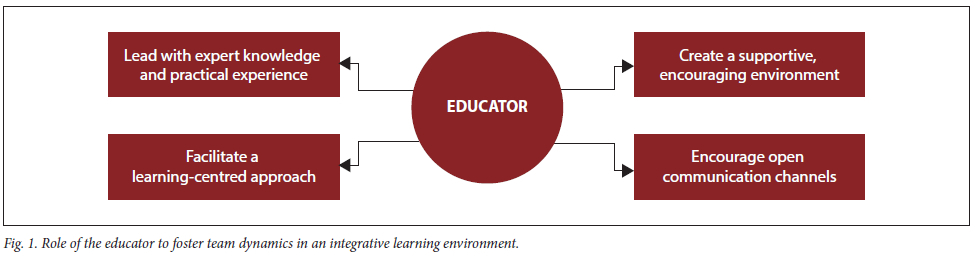
The integration of theory and practice in health professions education is crucial for developing competent healthcare professionals. Educators (lecturing staff and clinical supervisors) play a pivotal role in facilitating this integration. The findings of a study among physiotherapy students also highlighted that the students' learning experience is greatly influenced by the student-educator relationship.[21] This notion was emphasised by the engagement and thoughtfulness shown by participants of this optometry programme during the focus group discussions, as well as the significant amount of time devoted to exploring this critical relationship. The dynamic process from the lecture hall to the clinical corridor emphasises the importance of key characteristics and mechanisms of teamwork between students and educators within the integrative learning environment. The entire team, consisting of the students and educators, should work together to create and become competent healthcare professionals. These team members' relationships and collaborative processes are essential for translating educational theories into effective practices.[22] Our study highlights the crucial role that the educator plays in ensuring the effectiveness of the team and optimising the students' learning experience within the integrative clinical education environment (Fig. 1).
The educator takes the lead in the lecture hall, with expert knowledge and practical experience, aligning with the requirement that medical educators have mastery over the content or subject area.[23] This study highlights that students appreciate it when educators engage them in practical, straightforward ways, fostering a collaborative effort in understanding theoretical concepts. A skilled medical educator goes beyond merely delivering content; their teaching approach must be informed by evidence-based practices.[23] By implementing practical and collaborative strategies, educators create a learning environment where students actively participate in bridging the gap between theory and practice.
A learning-centred approach eased the integration from theory to practice by designing learning experiences that actively engage students, facilitate the development of knowledge, skills and attitudes, and motivate the students to take responsibility for their learning.[24] This study suggests that the clinical learning environment creates opportunities for team members to learn together, enhancing individual knowledge and promoting a shared understanding of educational goals and practices. Similar to a primary healthcare team, fostering supportive processes within a team can empower team members to deliver effective patient care and, in the educational context, provide the students with confidence in their ability in the clinical learning environment.[25] Educators can cultivate this support by being approachable, helpful and actively engaged with their students. Constant communication and feedback also help students to understand what is expected of them and how they can contribute to the overall success of their own educational programme. Bankert and Kozel'[26] suggest that fostering a caring environment, which demonstrates value, respect and support as a collaborative endeavour between educators and students, not only nurtures relationships but also facilitates learning without stress and anxiety. This notion aligns with the findings of our study, which highlight the importance of the student-educator relationship in shaping the learning experience and promoting the integration of theory and practice in clinical education.
Within this educational team, students and supervisors must clearly understand their roles and responsibilities in the clinical education environment. It is recommended that supervisors who are not directly involved in the theoretical aspects should be informed about the students' knowledge levels and learning objectives. Establishing transparent expectations and responsibilities fosters effective teamwork, encourages the desired behaviours and promotes a conducive learning environment for students in clinical settings.[26] Open communication is a hallmark of effective teams in healthcare and in health professions education.[27] It is evident from the study that when students feel comfortable sharing their ideas, concerns and questions, it fosters a culture of trust and collaboration. Students in this study suggested that open communication promotes learning, aligning with the principles of effective communication emphasised in healthcare. According to the World Health Organization, effective communication is essential for successful teamwork, as teams prioritise and continually improve their communication skills.[28] Establishing consistent and accessible channels for communication used by all team members across various settings is key.[27] Similarly, in education, open communication fosters collaboration and supports the integration of theoretical knowledge with practical experience, enhancing learning outcomes and team dynamics. This study reminded educators to be mindful of their communication styles within the educational team, with particular emphasis on body language, tone and attitude. The study revealed that when communication conveys a sense of reprimand, it may hinder open dialogue and collaboration. Instead, the focus should be on breaking down silos and fostering a shared vision aimed at better integrating theory and practice. The students suggested that educators play a key role in building bridges between the theoretical knowledge shared in lecture halls and the hands-on experience gained in clinical settings.
Study limitations
Study limitations include the fact that this study offers valuable insights into the educator's role in enhancing theory-practical integration, but within a particular institution and with a specific cohort of students. Therefore, due to this specificity, the findings cannot be generalised.
Conclusion
Educators in health professions education can enhance the integration of theory and practice by fostering team dynamics that prioritise learning together, provide support, ensure clear expectations, encourage open communication and promote approachability. By investing in these key aspects of team dynamics, they can create an environment that enables educators to translate educational theories into effective, evidence-based practices that prepare healthcare professionals for the challenges of clinical practice.
Data availability. The data supporting the findings of this study are available from the corresponding author upon reasonable request.
Declaration. The authors declare that the work submitted herewith results from the corresponding author's independent investigation. Where help was sought, it was acknowledged.
Acknowledgements. We acknowledge Lynette van der Merwe, UFS, for her role as focus group interviewer.
Author contributions. This study formed part of a PhD (Health Professions Education) thesis by EK at UFS. MJL served as the study supervisor and MPJ as the co-supervisor. EK, MJL and MPJ were responsible for the conceptualisation and planning of the study. EK developed the research protocol, collected the data, wrote the article and completed all subsequent revisions. All authors reviewed and approved the final version of the article.
Funding. The Health and Welfare Sector Education and Training Authority (HWSETA) provided a bursary to fund the study.
Conflicts of interest. None.
References
-
1. Papastavrou E, Lambrinou E, Tsangari H, Saarikoski M, Leino-Kilpi H. Student nurses experience of learning in the clinical environment. Nurse Educ Pract 2010;10(3):176-182. https://doi.org/10.1016/j.nepr.2009.07.003
» https://doi.org/10.1016/j.nepr.2009.07.003 -
2. Ohman E, Alinaghizadeh H, Kaila P, Hult H, Nilsson GH, Salminen H. Adaptation and validation of the instrument clinical learning environment and supervision for medical students in primary health care. BMC Med Educ 2016;16(1):308. https://doi.org/10.1186/s12909-016-0809-8
» https://doi.org/10.1186/s12909-016-0809-8 -
3. Amoo SA, Enyan NIE. Clinical learning experiences of nursing and midwifery students; a descriptive cross-sectional study. Int J Africa Nurs Sci 2022;17. https://doi.org/10.1016/j.ijans.2022.100457
» https://doi.org/10.1016/j.ijans.2022.100457 -
4. Walker R, Cooke M, Henderson A, Creedy DK. Using a critical reflection process to create an effective learning community in the workplace. Nurse Educ Today 2013;33(5):504-511. https://doi.org/10.1016/j.nedt.2012.03.001
» https://doi.org/10.1016/j.nedt.2012.03.001 -
5. O'Mara L, McDonald J, Gillespie M, Brown H, Miles L. Challenging clinical learning environments: Experiences of undergraduate nursing students. Nurse Educ Pract 2014;14(2):208-213. https://doi.org/10.1016/j.nepr.2013.08.012
» https://doi.org/10.1016/j.nepr.2013.08.012 -
6. Zhang J, Shields L, Ma B, et al. The clinical learning environment, supervision and future intention to work as a nurse in nursing students: A cross-sectional and descriptive study. BMC Med Educ 2022;22(1):548. https://doi.org/10.1186/s12909-022-03609-y
» https://doi.org/10.1186/s12909-022-03609-y - 7. Nehmad L, Dul MW, Bodack MI, Modica PA. Overseeing student clinical education: The role of the educational facilitator. Optometric Educ 2008;33(2).
-
8. Kirkman JM, Bentley SA, Wood-Bradley RJ, Woods CA, Armitage JA. Supervisor experiences of extended clinical placements in optometry: A mixed methods study. BMC Med Educ 2022;22(1):854. https://doi.org/10.1186/s12909-022-03918-2
» https://doi.org/10.1186/s12909-022-03918-2 - 9. Launer J. Teaching and learning in medical education: How theory can inform practice. In: Swanwick T, ed. Understanding Medical Education: Evidence, Theory and Practice. 2nd ed. Oxford: Wiley Blackwell, 2014.
-
10. Cooper R, Fleisher A, Cotton FA. Building connections: An interpretative phenomenological analysis of qualitative research students' learning experiences. Qual Rep 2012;17(17):1-16. https://doi.org/10.46743/2160-3715/2012.1780
» https://doi.org/10.46743/2160-3715/2012.1780 - 11. Johnson B, Christensen L. Educational Research: Quantitative, Qualitative, and Mixed Approaches. 3rd ed. California: Sage, 2008.
- 12. Springer K. Educational Research: A Contextual Approach. USA: John Wiley & Sons, 2010.
-
13. Fink LD. Toward learning-centered education in colleges and universities. New Direct Teach Learn 2021:7-16. https://doi.org/10.1002/tl.20447
» https://doi.org/10.1002/tl.20447 -
14. Tong A, Sainsbury P, Craig J. Consolidated criteria for reporting qualitative research (COREQ): A 32-item checklist for interviews and focus groups. Int J Qual Health Care 2007;19(6):349-357. https://doi.org/10.1093/intqhc/mzm042
» https://doi.org/10.1093/intqhc/mzm042 -
15. Elo S, Kyngäs H. The qualitative content analysis process. J Adv Nurs 2008;62(1):107-115. https://doi.org/10.1111/j.1365-2648.2007.04569.x
» https://doi.org/10.1111/j.1365-2648.2007.04569.x - 16. Patton MQ. Qualitative Research and Evaluation Methods. 3rd ed. Thousand Oaks, CA: Sage, 2002.
- 17. Nieuwenhuis J. Qualitative research designs and data gathering techniques. In: Maree K, ed. First Steps in Research. Pretoria: Van Schaik, 2007.
-
18. Bengtsson M. How to plan and perform a qualitative study using content analysis. Nursing Plus Open 2016;2:8-14. https://doi.org/10.1016/j.npls.2016.01.001
» https://doi.org/10.1016/j.npls.2016.01.001 -
19. Taylor-Powell E, Renner M. Analyzing Qualitative Data. Program Development and Evaluation, University of Wisconsin-Madison Division of Extension. 2003. https://cdn.shopify.com/s/files/1/0145/8808/4272/files/G3658-12.pdf (accessed 20 May 2025).
» https://cdn.shopify.com/s/files/1/0145/8808/4272/files/G3658-12.pdf -
20. Petty NJ, Thomson OP, Stew G. Ready for a paradigm shift? Part 2: Introducing qualitative research methodologies and methods. Manual Therapy 2012;17(5):378-384. https://doi.org/10.1016/j.math.2012.03.004
» https://doi.org/10.1016/j.math.2012.03.004 -
21. Ernstzen D, Bitzer E, Grimmer-Somers K. Physiotherapy students' and clinical teachers' perspectives on best clinical teaching and learning practices: A qualitative study. S Afr J Physiother 2010;66(3):25-33. https://doi.org/10.4102/sajp.v66i3.70
» https://doi.org/10.4102/sajp.v66i3.70 -
22. Wagner M, Dubé T, Gomez-Garibello C. It takes a team: Generating evidence to define and foster collective competence in health professions education. Can Med Educ J 2020;11(5):e109-e111. https://doi.org/10.36834/cmej.69664
» https://doi.org/10.36834/cmej.69664 - 23. Harden MH, Lilley P. The Eight Roles of the Medical Teacher. Amsterdam: Elsevier, 2018.
- 24. Fink LD. Creating Significant Learning Experiences: An Integrated Approach to Designing College Courses. San Francisco: Jossey-Bass, 2013.
-
25. Song H, Chien AT, Fisher J, et al. Development and validation of the primary care team dynamics survey. Health Service Res 2015;50(3):897-921. https://doi.org/10.1111/1475-6773.12257
» https://doi.org/10.1111/1475-6773.12257 - 26. Bankert EG, Kozel VV. Transforming pedagogy in nursing education: A caring learning environment for adult students. Nurs Educ Perspect 2005;26(4):227-229.
- 27. Babiker A, El Husseini M, Al Nemri A, et al. Health care professional development: Working as a team to improve patient care. Sudan J Paediat 2014;4(2):9-16.
-
28. World Health Organization. Being an effective team player. http://www.who.int/patientsafety/education/curriculum/who_mc_topic-4. (accessed 24 March 2024).
» http://www.who.int/patientsafety/education/curriculum/who_mc_topic-4

Accepted 22 April 2025