The nowledge, attitudes, practices and barriers faced by the University of Namibia's medical students regarding undergraduate research
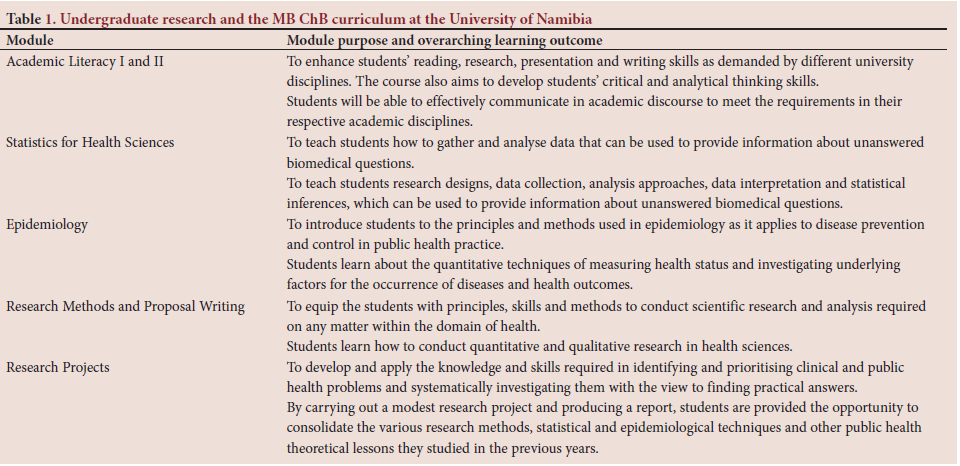
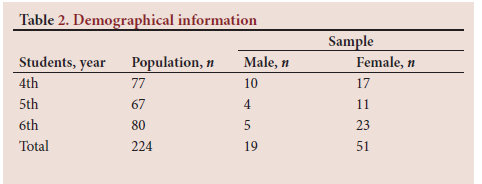
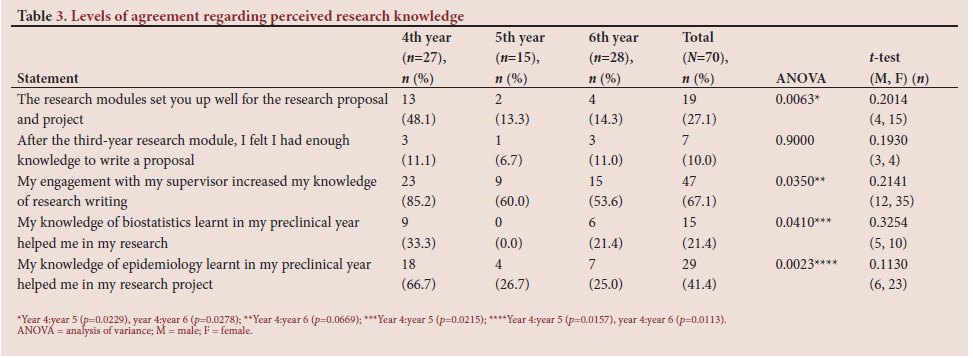
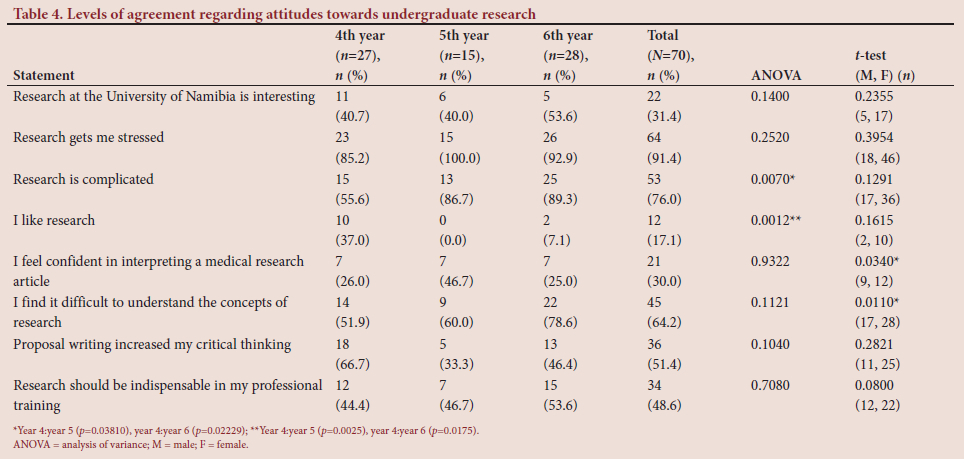
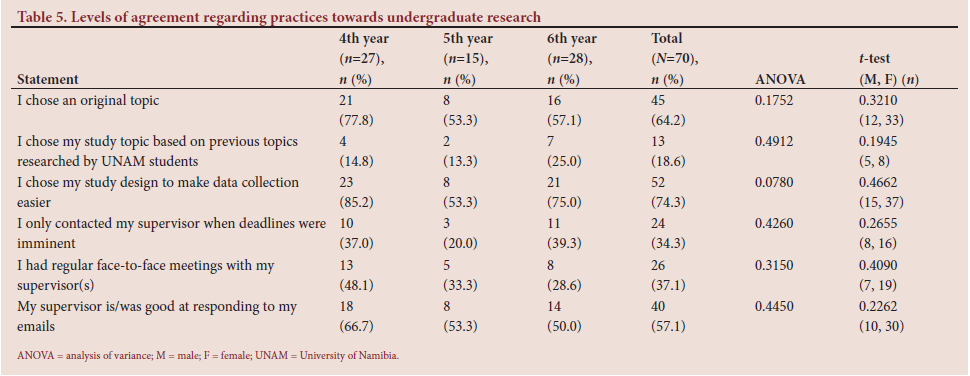
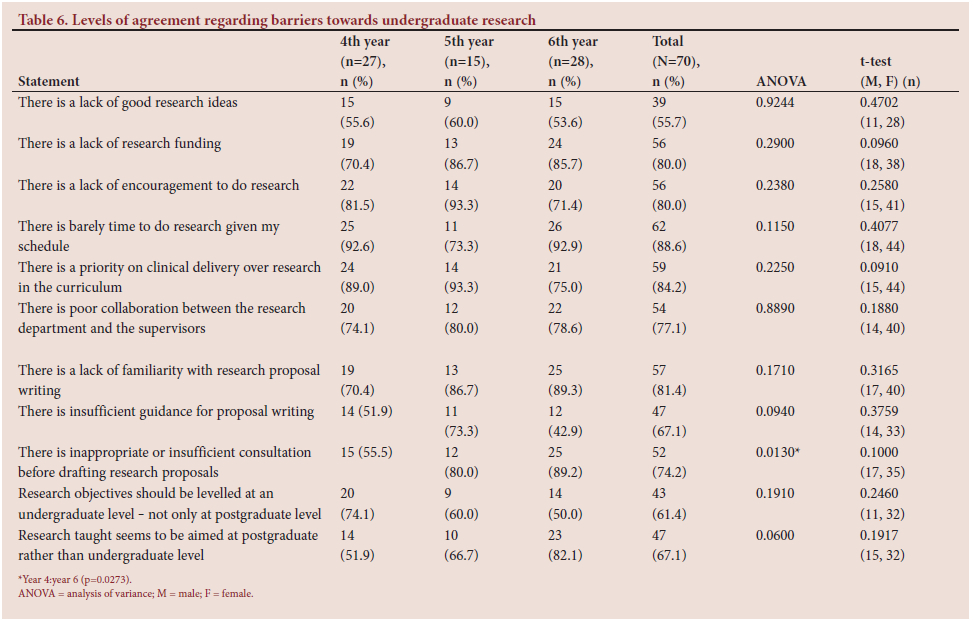
BACKGROUND. The University of Namibia's Bachelor of Medicine and Bachelor of Surgery (MB ChB) programme includes compulsory research as part of the undergraduate curriculum. Each student is required to complete a self-directed research project. OBJECTIVES. To determine the senior medical students' knowledge, attitudes, practices and barriers regarding their undergraduate research (UR) projects. METHODS. A descriptive cross-sectional study with an online self-developed questionnaire was employed and distributed to students in their fourth, fifth and sixth years of study. Data collection occurred over a 1-month period. RESULTS. Fourth-year (n=27/77), fifth-year (n=15/67) and sixth-year (n=28/80) students, totalling 70, participated. Most students (69%, n =48/70) did not find research interesting. Students felt that the research module did not prepare them well for the research project (73%, n =51/70) and respondents indicated a lack of research ideas (56%, n =39/70), with some needing to develop an original topic (64%, n =45/70). Students felt that there was poor collaboration between the research department and supervisors (77%, n =54/70). Communication with supervisors occurred through email (57%, n =40/70) and face-to-face meetings (37%, n =26/70). Insufficient time for consultation (74%, n =52/70) has been reported. Students chose cross-sectional studies (60%, n =40/70) to make data collection easier (74%, n =52/70). Students indicated that clinical exposure is prioritised in the curriculum (84.3%, n =59/70). CONCLUSION. UR is predominantly perceived as stressful and uninteresting, and student-supervisor engagement followed a 'just-in time' approach. Early scaffolding of research knowledge diminishes, with the emphasis on clinical content delivery. To foster a culture of research among students, a more scaffolded curriculum with protected research is required.
Scientific Letter • Afr. J. Health Prof. Educ. (Online) 17
(3)
• • https://doi.org/10.7196/AJHPE.2025.v17i3.2238 copy