Feminist Research into Gendered Violence: Developing PhotoVOICE 2.0 in Zambia as a Participatory Arts-based Research Method
Abstract
Researching violence, especially within homes, families or closed community spaces, is often challenging. PhotoVOICE 2.0 is an innovative technology-assisted adaptation of the participatory arts-based research (PABR) method, Photovoice. It was developed and piloted in 2018 by the authors to conduct research on the ways the Anglican Mothers' Union in Zambia contributes to and/or resists violence against women and violence against children. This article discusses the methodological underpinnings and origins of this method and offers an overview of its implementation in Zambia. Several key insights emerge regarding how PhotoVOICE 2.0 enables feminist, participatory arts-based research, including that it empowers local community co-researchers and amplifies the voices of insiders to the specific institution being researched in ways that can support feminist research aims for social transformation. The technological component of the method centers PABR methods throughout the whole research process. The article concludes by emphasizing the extraordinary disruptive power of the PhotoVOICE 2.0 method in subverting existing hierarchies of knowledge and control and highlighting its continued evolution in new settings.
Photovoice; participatory arts-based research; violence against women; violence against children; feminist methodologies; Zambia
Introduction
Researching violence, especially within homes, families or closed community spaces, is very challenging. This is particularly true where religious or cultural practices may feature strongly as a driver of violence, or where some forms of violence may be normalized or even legitimated.1 The research process itself can also raise additional challenges with complex power hierarchies impacting who and what is being represented and by whom. Using creative research methodologies may be essential for a more nuanced understanding of endemic forms of violence that often have hidden dimensions within families and homes, such as violence against women and violence against children. Participatory arts-based research (PABR) offers opportunities to sensitively engage with complexities that drive these patterns of violence whilst simultaneously subverting patterns of knowledge creation that exclude certain voices and experiences.
PABR is a rapidly growing methodological genre and is viewed as particularly relevant for engaging marginalized groups and researching sensitive and complex issues of gender, violence, and abuse.2 PABR adapts key tenets of the creative arts for social research to make it publicly accessible, evocative, and engaging.3 This article discusses an innovative, technology-assisted adaptation of a specific form of PABR: Photovoice.4This adaptation, which we refer to as PhotoVOICE 2.0, is a PABR method that has the potential to contribute to the field of feminist research as it utilizes technology to disrupt power hierarchies, enables multi-vocal storytelling, and centers individuals and groups whose knowledge, feelings, and experiences may have been excluded from, or devalued within, traditional research methods.5
PhotoVOICE 2.0 was developed and piloted in 2018 by two lead researchers (the authors of this article) following an invitation from an African women's movement and an international faith-based relief and development agency to conduct research on the ways the Anglican Mothers' Union in Zambia (MUZ) contributes to and/or resists violence against women and violence against children. Violence against women and against children remains endemic within the Zambian context, where research from 2015 found that 47% of ever-married women between the ages of 15 and 49 reported having experienced physical, sexual, and/or emotional violence from their current or most recent husband/partner, with 31% reporting having experienced such violence within the preceding 12 months.6 In the 2014 Zambia Violence against Children Survey, nearly half of both female and male respondents reported having experienced at least one type of violence (physical, sexual or emotional) during their childhood.7 In light of this, more attention is being paid to the underlying structures and social norms that are seen to be fueling these abuses. Specifically, the patriarchy has been identified as a driver, shaping how power is understood and distributed, particularly at the household level and within families.8 While many intervention programs focus on transforming masculinities, less attention has been paid to the roles of women and women-led organizations.9 Indeed, in Zambia an estimated 95.5% of the population identify as Christian,10 explaining why religious women's organizations hold significant power and influence across rural and urban areas.
The authors, both feminist researchers based at a research unit at a Global South university, were able to benefit from a close practitioner-academic partnership to develop and pilot this innovative method that allowed for qualitative research on highly sensitive issues to be carried out within a relatively closed religious space. This article describes and discusses PhotoVOICE 2.0, drawing on the pilot study conducted in Zambia to illustrate the method and process and offer some insights and lessons learned from using it there. This PhotoVOICE 2.0 method has continued to evolve and has since been used by the lead researchers in two South African university contexts to explore different forms of gendered violence. For the purposes of this article, however, the focus will be on the initial development of this method within a Zambian setting to explore complex, hidden questions of gendered violence.
Using participatory arts-based methods in feminist research
Feminist research frameworks focus on the reality of women's oppression, providing an awareness that the personal is political and an explicitly conscious challenge of gender inequalities.11 Feminist research has political commitments (to gender equality), substantive commitments (to make gender a key focus of analysis), but also methodological commitments that seek to describe the world in ways that accurately reflect women's experiences and identify the fundamental social transformations necessary for full equality between the sexes.12 How these commitments are applied in practice within feminist empirical research is an ongoing conversation to which this article contributes. Feminist frameworks also pay close attention to intersectional realities that recognize that women are not a homogenous group, and that their lived experiences, voices, and needs are simultaneously shaped by a range of other factors such as, religion, age, social location, literacy, etc. This requires a multi-vocal approach that ensures women's diverse experiences be built into the research design.13Eight principles have been identified by scholars that shape contemporary feminist research on gender, violence, and abuse:14 addressing power imbalances; expanding the questions asked; listening to women's voices and experiences; incorporating diversity and intersectionality; conducting interdisciplinary and mixed-methods research; being reflexive; building social relationships in the research process; and using research results for social transformation. While a detailed reflection on these principles is beyond the scope of this article, they have underpinned the development of the PhotoVOICE 2.0 method being explored here.
PABR15 has been defined broadly as an approach where people collaborate with researchers in arts-making as a way of knowing.16 It combines the key tenets of participatory action research around democratizing research processes and orienting them towards social change with the use of arts-forms as methodological tools in all, or part of, the research process. It offers a unique constellation of participation, art, and research that can help to amplify marginalized voices and experiences, improve accessibility to non-academic audiences, and communicate more sensuous, embodied, and affective ways of knowing.17 The specific value of PABR across many stages of the community-based research process with vulnerable populations has been noted where "(a)rt forms [...are...] essential to the research process itself and central in formulating the research question, generating data, analyzing data, and presenting the research results".18 Within decolonial and feminist research frameworks, PABR is receiving increased attention and can be used alongside traditional qualitative methods to deepen research awareness of ambiguities and complexities.19
PABR includes many diverse forms of creative arts, including literary, audio, audio visual, multi-media, performative, and storytelling. It may also include dance, games, songs, photography, collages, and journaling techniques.20Visual methods have received the most attention to date, but PABR covers a wide range of creative arts. These forms, especially when participant-generated, offer increased autonomy and agency to express concepts, feelings, and ideas. They often involve a transference of narrative authority in ways that amplify the voices of previously silenced people within their own environments and engage with artefacts and symbols that have powerful meanings within their informal cultural frameworks. For example, PABR has previously been used to reclaim indigenous communal frameworks of knowing that have historically been dismissed by Western academic hierarchies of knowledge.21 The evolving role of technology in PABR has also been identified as an important area for further development.22
Existing literature highlights that PABR has a number of strengths that can be well-utilized within a feminist research framework to explore sensitive issues around gender, violence, and abuse.23 First, PABR has the transformative potential to "challenge dominant representations and ways of knowing, to facilitate dialogue across ideological and epistemological boundaries, and to change hearts and minds through building intellectual and affective understanding".24 This efficacy and emphasis on changing hearts and minds through facilitating creative dialogue can be vital for translating and disseminating challenging knowledge and lived experiences for broader audiences through embodied experiences that can generate ongoing effects.25 This can be particularly important when what is being studied is complex, experiential, and not easily expressed in writing. The arts help depict multiple representations and symbols that are familiar to, and can be understood by, wider audiences and can create ongoing dialogue between researchers and audiences. Participants' voices also resonate more directly in the final research products due to the iterative and participatory nature of the research design.26 Timely dissemination of research findings to benefit the communities and the people that produced them form part of PABR, as well as using creative formats to reach the right people and make longer-term contributions to policy development and social transformation.27
Second, PABR empowers and offers skills development to marginalized or devalued groups who are trained as community co-researchers, as well as fostering wider social connections, and improving the recognition of their ideas and experiences. It can offer cathartic tools for exploration of, and reflection on, their emotions and lived experiences, knowledge that has often been dismissed.28 This counters wider challenges within qualitative research where participants may pretend to outsiders that there are no problems.29Instead, complex and ambiguous challenges can be communicated in nuanced and creative ways that surface insider knowledge and insights from lived experience throughout the research process.
Third, PABR deepens the critical and disruptive aims of feminist research founded on radical political statements about social justice and control over the production and political dissemination of knowledge.30 PABR helps concretize these aims in practice by reducing power differentials and calling for social action. This holds important decolonizing power for wider participatory research by subverting what is viewed as academic knowledge and addressing the concerns that many conventional methods of research are unduly power-laden.31 This disruption of the knowledge creation processes places participants and their lived contexts at the center of the research process, instead supporting their perspectives, feelings, and interests. Enabling participants and researchers to think, learn, engage, and express differently together fosters mutual respect and agency, as well as developing critical awareness, linkages, and reciprocity within participating communities in a process of collective creation. Sharing, learning, and doing together then become ways to foster plural voices, amplify unspoken histories, and help reverse power hierarchies.32
Fourth, PABR can be part of a feminist framing of gender, violence, and abuse, specifically to increase collaboration with those most directly affected by these sensitive issues, and help access knowledge and feelings that are not easily expressed in words.33 This supports research participants to assert and maintain ownership over their own knowledge that can become a source of power to effect social change.34 It is particularly relevant to researching gender-based violence (GBV) in the Global South where historical and continuing gendered and racialized inequalities of power can further marginalize GBV survivors and communities. Specific PABR methods, such as Photovoice, have been identified as having the potential to enable survivors of GBV to "transgress the violence" and reclaim their experiences.35 Photovoice is one method that has been identified as especially suitable for feminist research that is focused on social change. It is to this specific method and its innovative adaptation into PhotoVOICE 2.0 that this article now turns.
The origins of PhotoVOICE 2.0
Photovoice is a PABR method that was designed by Caroline Wang and Mary Anne Burris in the 1990s as a process through which people identify, represent, and enhance their communities. By using cameras, Photovoice enabled people to record and reflect on their community's strengths and concerns, promoting dialogue and shared knowledge about community issues through group discussions on the photos, as well reaching and influencing policymakers.36 Since Wang and Burris's first use of Photovoice to conduct a participatory needs assessment, the methodology has been used in many different ways, such as exploring experiences of chronic pain in older adults,37 as part of community-based participatory research with a First Nation,38 and to help understand youth violence.39 It has also continued to evolve in a range of different ways40 with Photovoice being increasingly recognized as an important participatory research method.41
In 2018, the lead researchers were invited by Speak One Voice42 and Episcopal Relief and Development43 to conduct in-depth research into ways that the Anglican Mothers' Union in Zambia (MUZ) contributes to and/or resists violence against women and violence against children. Responding to the sensitivity of the issues being studied, but also conscious of the power dynamics of researchers coming from outside the country, the lead researchers decided to use a PABR method that would enable insiders within the institution to play a key role as co-researchers. This resulted in the development of an adaptation of Photovoice as the central method used in the qualitative approach that followed. The adaptations made by the lead researchers to the original Photovoice focused on enabling and amplifying the multiple voices of the community co-researchers, who were ordinary members of the MUZ, and supporting them over time to deepen their ability to directly and critically reflect on the institution to which they belong. Key changes to the original Photovoice included the use of smartphones, the sharing of photos and oral voice notes in real time using WhatsApp, a lengthier data collection period situated within three different communities, and the involvement of a small group of women throughout the process as community co-researchers44 who both collected and analyzed that data. This adapted form was named PhotoVOICE 2.0.
As explained earlier, this paper uses the Zambian pilot of PhotoVOICE 2.0 to explain and illustrate the uses and usefulness of this method from the perspective of the two lead researchers. Some brief background information on the pilot study is offered here to provide context. The Mothers' Union was founded by the Anglican Church in England in 1876 by Mary Sumner, the wife of an Anglican Rector. With the original aim of supporting mothers as they raised their children to be Christians, the union is now active in 83 countries with 4 million members in total.45 While all national-level Anglican Mothers' Unions stem from Mary Sumner's organization in England (and, therefore, have a colonial history), they each have a certain level of freedom and autonomy in how they embody and interpret key Mothers' Union texts and teachings.
The research study was conducted in 2018-2019 in three congregations in Zambia, each from a different diocese (one rural, two urban). It was guided by the question "how and why do members of the MUZ contribute to and/or challenge violence against women and violence against children?". A multi-pronged, qualitative approach was used, including a) PhotoVOICE 2.0; b) key informant interviews (Klls); and c) focus group discussions (FGDs). Extensive data was collected during this period, culminating in 238 photographs and 238 voice notes, 24 KII transcripts, and 8 FGD transcripts and translations. During the endline analysis process, 18 Photoboards and 6 Voice Note boards were created by the community co-researchers. Ethical permission for this research was secured at multiple levels, from within academia and the churches and communities involved.46 For the purposes of this article, the focus will only be on the PhotoVOICE 2.0 component of the research methods used.
An overview of the implementation of PhotoVOICE 2.0
PhotoVOICE 2.0 has five main steps, within which PABR is concretized in various ways. With all five steps, the participatory role of the people affected by the issue under consideration is deepened. They function as "institutional insiders" of the space being researched, and as co-researchers and co-creators, rather than only participants in or subjects of the research. Below we discuss each step in two paragraphs: the first details how the steps can be more generally implemented in PhotoVOICE 2.0, the second explores how it was applied in Zambia, specifically.
Baseline training
Baseline training of the community co-researchers is an important component of PhotoVOICE 2.0., whereby participation was emphasized in the selection of the diverse group of community co-researchers. The training process prioritizes trust-building, the sharing of experiences and opinions, and the capacitating of community co-researchers, including how to collect stories and photos from others in ethical ways. Where the research focuses on complex, sensitive topics (such as gendered or child violence), the baseline training by the lead researchers offered an opportunity to ensure that community co-researchers have an enriched and shared understanding of the various drivers and issues relevant to the topic they would be photographing, which, in turn, would lead to more nuanced photos and voice notes. Practical issues are also covered, such as the use of relevant technology, confidentiality, how to take good photos and record oral voice notes, asking permission to take photos in safe, ethical ways, and more.
In Zambia, the in-person baseline training took place over four days. It focused on developing the six community co-researchers' understanding of the evidence base around the various drivers and root causes of violence against women and violence against children. It also included training around photo-taking, storytelling, interpreting photos, ethics and mobile technologies. The training was experiential and participatory, using a feminist framework and drawing on arts-based methods such as songs, connection games, and interactive bible studies. This helped to build the critical awareness and confidence of the community co-researchers, but also built trust and shared understanding and interaction between them and the lead researchers.
Data collection
With PhotoVOICE 2.0, data collection includes both visual imagery and oral storytelling as part of PABR. Community co-researchers take several photos over an extended period (preferably 4-6 months) while based in their local, "home" contexts, insiders to the space (e.g., the organization or institution) being researched. Photos are taken on smartphones and shared directly, and confidentially, in real time with the lead researchers using WhatsApp, with each photo accompanied by a 30-60 second oral voice note (a significant adaptation to the original Photovoice). These voice notes can be in the language the community co-researcher feels most comfortable with. Community co-researchers are also intentionally invited to speak from their personal viewpoints and include their own emotions, feelings, analysis, and questions in the voice notes where appropriate (that is, not only a description of the photo). In this way, the voice note serves as a first step of interpretative analysis by the individual community co-researcher that often involves deeper oral engagement with the subjects of the photo. The lead researchers similarly reply in real time, acknowledging the submission. WhatsApp also allows for continuous communication and input from the lead researchers, which helps ensure that community co-researchers stay motivated and feel supported. More intentional forms of support and motivation can also be implemented through things like monthly group meetings, for example. The continuous connection provided by WhatsApp also helps ensure a continued connection between the research team members, despite often being geographically dispersed, which in turn motivates community co-researchers to remain committed to the study.
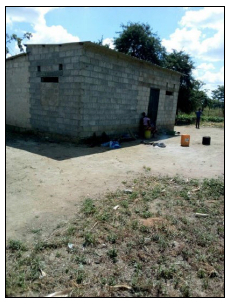
In Zambia, each community co-researcher received a smartphone, monthly airtime, and a small stipend for the duration of the data-collection period. A private WhatsApp group with the lead researchers was created for each community co-researchers in which they would share their photos and voice notes with the lead researchers as well as with an in-country project assistant who spoke the local languages. Where a community co-researcher preferred doing voice notes in a local language, the project assistant would immediately translate the voice note and record the English version on the same WhatsApp group. There was also a shared WhatsApp group that included all six community co-researchers in which the lead researchers shared regular encouraging messages and monthly 3-minute video clips as motivation and reminders of important or relevant issues. This also enabled the lead researchers to be adaptive and flexible in response to how the process evolved. Below is one example of a photo and voice note taken (from the 238 that were collected in total) and shared by Jane, one of the six community co-researchers:
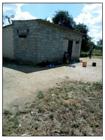
"This is a story of a husband and a wife who've been married for over ten years and have three children ... girls. One day the husband went out to do his usual business where he at times stays away for a week plus. Only on this time, this day that he came home with a boy child. The wife is shocked. She doesn't know what do to. She's already a mother of three. The challenge is how to accommodate the boy. I feel the husband is not fair to the wife because God is the one who blesses us with children. By bringing a boy child in the house it's like he judged that the woman can't give him a boy child" (Jane, voice note, 27 August 2018).
Endline analysis
The endline analysis uses PABR methods (the building of Photoboards and Voice Note Boards) to enable participant-led analysis and stimulate group discussion, as well as creating new research artefacts designed by the community co-researchers. Transcribed voice notes are matched with photos and printed, with each community co-researcher receiving copies of the photos and voice notes that they collected and shared. During the (ideally in-person) analysis process at endline, each community co-researcher analyses their own photos in a process called Photoboarding. Here, each community co-researcher selects multiple photos to create a collage and orally present it to the others for discussion. Notes should be taken of these discussions that then form part of the research data set. It can also be useful to have the discussions recorded and transcribed. The Photoboards are created in response to a specific question or instruction from the lead researchers related to the original research question. In this way, the community co-researchers are guided in the second step (the first being the voice notes accompanying the photos) of the analysis of their own photos and relooking at their initial interpretations. Voice Note Boards can also be created.
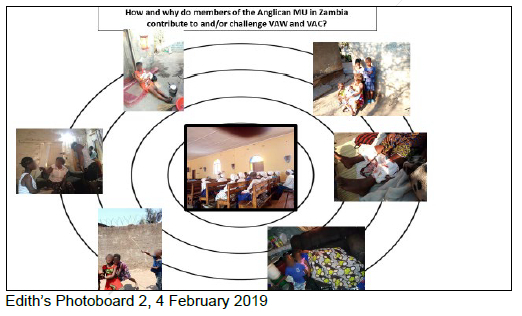
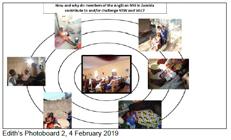
In Zambia, the endline analysis workshop took place in-person over two and a half days. Each community co-researcher created three Photoboards. In Photoboard 1, each community co-researcher reviewed their photos and built a Photoboard that illustrated what they identified as the central theme across their photos. In Photoboard 2, the community co-researchers used their photos to answer the main research question of the project. They were presented with lightly drawn concentric circles on their board and asked to place their photos along the circles to indicate how relevant they felt the photo was in answering the main research question. In the final Photoboard, the community co-researchers worked with a second framework for analyzing the data (that had been introduced in the baseline training), namely the "social norms tree".47 '
A Voice Note Board was also created by each community co-researcher. Each one reviewed their transcribed voice notes, selected those they found the strongest and most relevant to the research question, and built a Voice Note Board, choosing a heading that indicated its main theme/s.
Analysis and integration
Another level of analysis of all the Photovoice material is then conducted by only the lead researchers. All the data, including from the group analysis process, is included here. This includes photos and voice notes, Photoboards and Voice Note boards, and any notes/transcriptions from endline analysis discussions and exit interviews.
In Zambia, the lead researchers reviewed each community co-researcher's photos, voice notes, Photoboards, and Voice Note Boards as a whole, identifying what they took photos of, what types of issues each one focused on, and the overarching themes of each community co-researcher's photos. Each community co-researcher's Photoboards and Voice Note board were analyzed, as well as the three photos that each community co-researcher selected as their favorites, and the transcript of the exit interview that were conducted with each community co-researcher. A synthesis document was then created for each community co-researcher based on all these processes, summarizing the community co-researcher's photos, emerging themes, and overall focus. This was then used to write the final internal research report.
Dissemination and uptake
One of the key aims of the original Photovoice (as designed by Wang and Burris) is to more effectively reach policymakers with research findings to enable community change. PhotoVOICE 2.0 shares this aim of supporting the wider uptake and impact of the research within the institution itself. The dissemination and uptake of the research and its findings is a key component of the method, planned for from the inception of the project. This also challenges the lead researchers to rethink traditional ways of academic dissemination (e.g. journal articles, conference proceedings) and instead prioritize timely dissemination that uses the findings and PABR methods to most directly respond to the needs and priorities of the community co-researchers, and engage with the communities and organizations in which the research took place to align suggestions for change with their mandates. In Zambia, for example, a one-day meeting with senior faith leaders (both male and female) within the Zambian Anglican Church and MUZ was organized, where the research findings were shared and discussed. As part of this, a physical PhotoVOICE 2.0 exhibition was set up to showcase the Photoboards, photos, and voice notes created by the community co-researchers, which (whilst protecting their anonymity) enabled their voices, images, and analysis to be directly present. Moreover, the exhibition played a role in transforming the awareness of these senior policy makers/leaders as to the unintentional ways in which violence against women and against children could be perpetuated by religious institutions. In the later stages of dissemination, direct use of the photos and oral voice notes (often played directly to audiences) was an important feature in creating an interactive and empathic set of ongoing conversations with diverse groups of senior leaders and policy makers. This was identified as methodologically innovative and offered an important counterpoint to the typical word-based, numbers-centerd briefs. Moreover, it invited these senior leaders to see, hear, and understand the harmful aspects of their institutions that they may have previously been unaware of, and to build political will for positive change from within.
Discussion
In the light of the implementation of the PhotoVOICE 2.0 pilot in Zambia, the lead researchers identified several key insights regarding how the method enables feminist research and PABR. These are discussed below to strengthen the understanding of the method and encourage its further use.
PABR aims to amplify marginalized voices and experiences, improve accessibility to non-academic audiences, and showcase more nuanced and affective ways of knowing. In doing so, it emphasizes two core tenets as part of the research process: participation, so as to democratize the research process and steer it towards practical social change; and the use of art forms as methodological tools that broaden what is captured as knowledge. Various authors have highlighted the value of PABR in community-based research with vulnerable populations.48 PhotoVOICE 2.0 centers PABR throughout the research process, maximizing the opportunities for those benefits of PABR to be realized.
What emerged from the Zambia pilot is the understanding that the technological component of PhotoVOICE 2.0 (photos, voice notes, use of WhatsApp) enables more PABR approaches to be present throughout the entire research process and not only during the data collection stage. For example, the voice notes shared via WhatsApp meant that community co-researchers would undertake the first step of data interpretation and analysis without influence from other community co-researchers or the research leads. This also reduced the social desirability bias that may be present once they are with their peers or the research leads. Another example is the photos and voice notes that were exhibited and played during dissemination events. These forms of data challenge and enlarge the scope of what is often considered to be knowledge and evidence and, as a result, connects with and impacts various audiences in different ways by surfacing voices that are deeply affected by hidden patterns of violence and may be at odds with, or even be unintended results of, formal institutional policies or teachings.
The technological component of PhotoVOICE 2.0 has meant that the participation of community co-researchers, as insiders to the space and issues being studied, were constantly present and steering the research in a much more comprehensive way, as well as continuously being offered the autonomy and agency to express their own concepts, feelings, ideas, and interpretations. For example, PhotoVOICE 2.0's use of WhatsAppS enabled the community co-researchers to engage in a first step of real time interpretation with each photo they shared, unlike Photovoice, where such analysis is only developed at the end when the photos are printed. This confirms the wider value of PABR, but also PhotoVOICE 2.0 specifically, where the technology-assisted dimensions enable more democratic, inclusive, and representative research that allows for the complex feelings of subjects and co-researchers to be captured. The voice notes, especially, enable reflection on the intricate dilemmas that are present in a specific photo. While the use of insider voices in research has both advantages and disadvantages,49 the diversity of insiders used also helps identify silences or gaps across the data. For example, while many photos were taken of child neglect, very few were taken of corporal punishment, making it clear that most of the community co-researchers did not recognize this as a form of violence against children.
PhotoVOICE 2.0 amplifies insider voices in ways that can support feminist research aims for social transformation. This takes place mainly by comprehensively centralizing community co-researchers situated within the organizations or institutions being researched. This is done by creating (compared to Photovoice) multiple opportunities for community co-researchers to record, reflect, and interpret data in ways that allows for their own feelings and interpretations to be included. From the pilot in Zambia, four important insights emerged about how and what insider positioning allows for in PhotoVOICE 2.0.
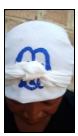
First, the implementation of PhotoVOICE 2.0 in Zambia showed that the preexisting status of the community co-researchers as insiders to the system(s) being studied was critical for research success. As insiders within the MUZ, the six women who had been trained as community co-researchers had unique and trusted access to the policies, structures, symbols, educative practices, and social norms of the organization. This enabled them to identify and reflect critically by drawing on their own experiences, feelings, and opinions around issues that might be hidden from the public or from researchers coming in from the outside. For example, Mary took a photo of the MUZ headscarf that members received after an internal training process. She shared that, while the original intention of the headscarf is to symbolize the importance of confidentiality (no gossiping) for MUZ members, in practice it often functions as a way to keep patterns of family-related violence hidden as shameful secrets (with the underlying idea that a good MUZ wife does not talk about what happens in her family and home). In her Photoboard analysis, Mary chose to place this image at the center of her answer to the research question about what she feels fuels violence against women in the MUZ:

"This picture shows the head veil of the Mothers Union uniform which has got the sign on top. It means that every Mothers Union (member) must keep secrets that are known to herself, but are not known to others. Even if she has any problem, she can't tell anyone". Mary, voice note, 19 October 2018
Second, by developing this insider role, the community co-researchers had pre-existing credibility from which to engage directly with other MUZ and community members. This trusted access to the experiences, feelings, and opinions of others in the community was brokered through their long-term peer relationships and enabled them to collect sensitive photos and stories more widely, often from one-on-one interactions. This also reduced the power dynamics of research engagement by outsiders whilst amplifying hidden voices, experiences, and stories around taboo topics. For example, family-related violence emerged as a primary concern across many photographs and voice notes, with complex intersections identified between violence against wives and against children. Many photos told a story about how wives were frequently encouraged (by other women) to remain in violent marriages for the sake of their children's economic future and safety, creating real-life dilemmas for them. See, for example, this voice note which accompanied a photo of a young woman sitting on the ground with her children:
"This woman you see is married and has kids, but she's physically abused by her husband to such a dangerous extent. Every time she decides to leave, she thought to come back for the sake of her children. As you see her now, she was from being beaten to the extent that she can't even stand up on her own. She has to be helped up." (Emeldah, 18 September 2019)
Third, PhotoVOICE 2.0 allowed insiders that were perceived as low on the social hierarchy in their institution to speak back, freely yet safely and anonymously, to those higher up in the same hierarchical power structures. This also has gendered dimensions as most formal religious leaders in the Anglican church are male compared to the majority of those attending churches who are female. PhotoVOICE 2.0's use of technology enabled these voices to be directly heard. At the same time, it allowed a masking of identity where needed. In Zambia, this meant that each community co-researcher and wider participant could decide how to be represented: some wanted their name and details shared, others wanted to be anonymized. Those insider voices and decisions are also directly present in the research dissemination through technology-assisted artifacts created by the community co-researchers (e.g., photos, voice notes, Photoboards) and carry the authority, feelings and insights of insider perspectives for those higher in the organizational hierarchy to be invited to see, hear, and respond to. Viewers are presented with an opportunity to visualize violence against women and children through the eyes of those directly affected and those who bore witness to its presence within their own community. The pictures, voice notes, and the ethical process that underpins their taking offer a gaze of resistance, inviting more audiences to think about what they see and interpret what they are asked to witness. For example, one woman had run to the forest in fear with her young baby to hide from her husband and abusive in-laws but was still willing to stand proud in front of a camera and to share her story as a survivor.
Finally, by amplifying and centralizing the voices of insiders positioned lower in the formal institutional hierarchies at multiple stages of the research process, the PhotoVOICE 2.0 method has inherent disruptive and decolonizing power to un-silence and make visible images and stories simultaneously. This was showcased in the Zambia research, where women within the MUZ were equipped to speak about, and directly to, the women-led structures of which they are also a part. The innovation of voice notes also offers a subversive counter to research the risks of infantilizing religious women50 by showcasing their own critical reflections on their religious movements whilst simultaneously recognizing the MUZ's value and meaning in their lives. This more nuanced picture holds complexities and ambiguities in ways that can help support an organization's own social transformation from within. Indeed, the community co-researchers noted that it was often in the process of taking photographs that they began to see the hidden forms of violence and understand the complex stories behind them.
The pilot in Zambia also illustrated how empowering PhotoVOICE 2.0 was for all the diverse community co-researchers. Rather than only offering a one-off opportunity for these individuals to speak (such as an interview or focus group), the method consistently created ongoing opportunities for diverse community co-researchers to offer their multi-vocal insights and opinions. Beatrice, one of the community co-researchers who is married with eight children and living in a rural area, explained in her exit interview that the process had impacted her own sense of self and role in the community:
"I feel important now. (They say of me) 'that is the lady that takes the pictures of us' and I feel proud of that" (Beatrice, 5 February 2019).
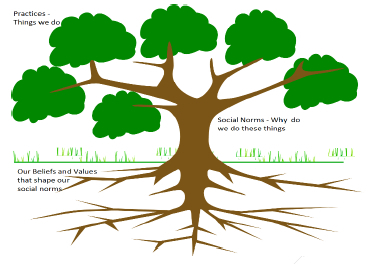
By intentionally developing the role of local community co-researchers as central to the PhotoVOICE 2.0 method, significant time and attention is also given to the initial in-person training, ongoing mentoring, and support of the community co-researchers and their skills development. To support this process of feminist empowerment, a number of analysis tools were developed and shared with the community co-researchers to increase their critical awareness on how violence can be normalized. In Zambia, one community co-researcher, who had never held a camera before this project and whose voice notes were primarily delivered in her local language, reflected that, "In the community, I just used to look at things and people and their problems as normal. But after I came here and being taught, I started to see things differently, to say there must be a solution to all these" (Emeldah, 5 February 2019). Many practical tools were shared with the community co-researchers to help facilitate their emerging analysis abilities whilst prioritizing their agency and decision-making. One example of these diverse techniques shared with the community co-researchers was the "social norms tree",51 an analysis tool originally developed by the authors in relation to a research study on understanding religious forms of resistance to end child marriage.
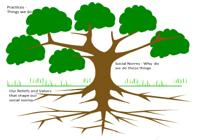
The three levels of this tree invite community co-researchers to not only capture images and insights at the top (leaves and fruit), such as, the various acts of violence they see around them, but also asks them to analyze and capture their own reflections and images around why these may happen in their contexts (the trunk of the tree) and the beliefs and values that underpin them (the roots).
In Zambia, the social norms tree was first introduced during the in-person group training in an interactive group exercise. It also provided an ongoing frame that community co-researchers could use as they collected their photo and voice note data, with video mentoring reminding them to keep looking at all three levels and informing their real time voice note analysis of their photos. Furthermore, the social norms tree also formed the framework for one of the three Photoboards designed during the endline analysis. Finally, the social norms tree was a powerful tool for research dissemination, showcasing the interconnections made by the community co-researchers beyond the descriptive, and inviting audiences to look beyond the surface of what they may see to further learn, explore, and better understand the complex interconnections between violence, social norms, values, and beliefs.
Practical tools such as this tree similarly enabled community co-researchers to take a critical approach to their own social identities and reflect both on what they felt lay beneath the violence they were capturing and the ways in which they felt the MUZ could contribute to finding or working towards solutions. The six community co-researchers remained personally committed to the MUZ whilst also wanting to take a more active role in changing aspects of its practices that they viewed as being harmful. One community co-researcher noted that, as a result of this process, she was inspired to remain in the MUZ and to help it become a different Mothers Union that helped solve the identified issues and problems.
Conclusion
PhotoVOICE 2.0 emerged as an intentional adaptation of Photovoice, developed in response to a particular research question in a specific context. It enabled the lead researchers to collaborate closely with women insiders within a religious institution whose official mandate centered the support and protection of both wives and children, and gain a deeper understanding of the complex, challenging, and often taboo realities of multiple relationships involving violence and the ambivalent cultural and religious frameworks around them, especially within homes and families. This method offers concrete ways of centering feminist principles in the research project as a whole while also allowing for the dissemination of research findings in creative and non-traditional ways that showcases the community co-researchers' voices and agency directly to senior leaders within these institutions and beyond. PhotoVOICE 2.0 has continued to evolve since this first pilot in 2018 and has already been used in different ways in two other research studies, both studying gendered violences at specific university campuses in South Africa.52 The method centers the knowledge insights of community co-researchers whose voices and experiences have often been excluded or diminished within existing power structures. Their multi-vocal insights as insiders to the systems being researched give it extraordinary disruptive power to subvert existing hierarchies of knowledge and control, and to make visible and verbalize both the stories and images that lie beneath normalized practices of violence. PhotoVOICE 2.0's technology-assisted dimensions significantly amplify whose voices are heard and counted, and in what ways, as a central part of the wider project of feminist research that aims to contribute towards long-term social transformation. This research method offers a tangible, concrete, and real-time invitation to leaders and policy makers within the institutions concerned to hear and see differently and to allow this to nurture social change from within in ways that align with their institutional mandates.
References
- Austin, D, & Forinash, Michelle. "Arts-based inquiry." In Music Therapy Research, ed. B Wheller 2nd ed. Gilsum, 458-471. NH: Barcelona Publishers, 2005.
- Baker, Tamara, and Caroline Wang. "Photovoice: Use of a Participatory Action Research Method to Explore the Chronic Pain Experience in Older Adults." Qualitative Health Research 16, no.10 (2006):1405-413.
- Beckman, Linda J. "Training feminist research methodology: doing research on the margins." Women & Therapy 37, no.1-2 (2014): 164177.
- Bergen, Nicole, and Ronald Labonté. "Everything Is Perfect, and We Have No Problems: Detecting and Limiting Social Desirability Bias in Qualitative Research." Qualitative Health Research 30, no.5 (2020): 783-792.
- Brown, Nicole. "Scope and continuum of participatory research." International Journal of Research & Method in Education 45, no.2 (2022): 200-211.
- Budig, Kirsten, Julia Diez, Paloma Conde, Marta Sastre, Mariano Hernán and Manuel Franco. "Photovoice and empowerment: evaluating the transformative potential of a participatory action research project." BMC Public Health 18, (2018): 432.
- Buckley, C. Made in patriarchy: Toward a feminist analysis of women and design. Design Issues, 3, no.2 (1986): 3-14.
- Castleden, Heather, Theresa Garvin and Huu-ay-aht First Nation. "Modifying Photovoice for community-based participatory Indigenous research." Social Science & Medicine 66 (2008): 1393-405.
- Central Statistical Office Zambia, Ministry of Health Zambia, & ICF International. Zambia Demographic and Health Survey 2013-14. Rockville, Maryland, USA: Central Statistical Office, Ministry of Health, and ICF International, 2014.
- Chilton, Gioia, and Patricia Leavy. "Arts-based Research Practice: Merging Social Research and the Creative Arts." In Oxford Handbook of Qualitative Research, edited by Patricia Leavy, 2nd edition, 601-32. New York, NY: Oxford University Press, 2020.
- Chryssides, George D. and Gregg, Stephen E. eds., The Insider/Outsider Debate: New Perspectives in the Study of Religion. Bristol: Equinox, 2019.
- Chonody, Jill., Barbara Ferman, Jill Amitrani-Welsh, and Travis Martin. "Violence through the eyes of youth: a Photovoice exploration." Journal of Community Psychology 41, no.1 (2013): 84-101.
- Coemans, Sara, Qingchun Wang, Joyce Leysen and Karin Hannes. "The use of arts-based methods in community-based research with vulnerable populations: Protocol for a scoping review." International Journal of Educational Research 71, (2015): 33-39.
- Fenge, Lee-Ann. "Using Participatory Arts-Based Approaches to Promote Inclusive Research." In The Handbook of Social Inclusion, edited by P Liamputtong, 511-26. Springer, Cham, 2021.
- Kandiyoti, Deniz. "Bargaining with patriarchy." Gender and Society, 2, no. 3 (1988): 274-290.
- Le Roux, Elisabet, and Palm, Selina. What lies beneath? Tackling the roots of religious resistance to ending child marriage. London: Girls Not Brides, 2017.
- Le Roux, Elisabet, "Can religious women choose? Holding the tension between complicity and agency." African Journal for Gender and Religion 25, no.1 (2019): 1-19.
- Macule, Salvador A. and Sarojini Nadar. "Women oppressing women: The cultivation of Espris de Corps in Xirilo (Women's Association) of the UCCSA in Mozambique." The Ecumenical Review 64, no. 3 (2012): 357-365.
-
Ministry of Youth, Sport and Child Development, Ministry of Community Development and Social Services, University of Zambia, United Nations Children's Fund, Save the Children International, United States, Centers for Disease Control and Prevention. 2018. Violence against Children in Zambia: Findings from a national survey, 2014. Ministry of Youth, Sport and Child Development, Lusaka. [Online]. Available at: https://www.unicef.org/zambia/media/1091/file [2019. May 7].
» https://www.unicef.org/zambia/media/1091/file - Morris, Julia E and Lisa F Paris. "Rethinking arts-based research methods in education: enhanced participant engagement processes to increase research credibility and knowledge translation." International Journal of Research & Method in Education 45, no. 1 (2022): 99-112.
-
Mothers' Union A. 2018. Our story. [Online]. Available at: https://www.mothersunion.org/our-story/our-history [2019, May 7}.
» https://www.mothersunion.org/our-story/our-history - Nadar, Sarojini, and Cheryl Potgieter. "Living It Out. Liberated Through Submission? The Worthy Woman's Conference as a Case Study of Formenism," Journal of Feminist Studies in Religion 26 (2010): 141151.
- Nunn, Caitlin. "The participatory arts-based research project as an exceptional sphere of belonging." Qualitative Research 22, no. 2 (2020): 251-68.
- Palm, Selina. A space to feel free? Digital Storytelling around gender-based violence at the University of the Western Cape (UWC). Findings from student-led research in 2022. South Africa: University of the Western Cape, 2024.
- Palm, Selina. "Seen but not heard? Engaging the mechanisms of faith to end violence against children." In Childhood Vulnerabilities in South Africa: Some Ethical Perspectives, edited by Chris Jones and Jan Grobbelaar. 33-64. AOSIS. South Africa, 2020.
- Pertek, Sandra I, and Elisabet le Roux, On the Significance of Religion in Violence Against Women and Girls. London: Routledge, 2023.
- Seppälä, Tiina, Melanie Sarantou and Satu Miettinen, (eds.) Arts-Based Methods for Decolonising Participatory Research. New York. Routledge, 2021.
- Suprapto, Nadi, Titi Candra Sunarti, Suliyanah Suliyanah, Desi Wulandari, Hasan Nuurul Hidayaatullaah, Alif Syaiful Adam and Husni Mubarok. "A systematic review of photovoice as participatory action research strategies." International Journal of Evaluation and Research in Education 9 no. 3 (2020): 675-83.
- Thomas, Sian N, Sanne Weber, and Caroline Bradbury-Jones. "Using Participatory and Creative Methods to Research Gender-Based Violence in the Global South and With Indigenous Communities: Findings from a Scoping Review." Trauma, Violence, & Abuse 23, no. 2 (2022): 342-55.
-
US Department of State. 2022 Report on International Religious Freedom: Zambia. [Online]: https://www.state.gov/reports/2022-report-on-international-religious-freedom/zambia/ [2024. April 12].
» https://www.state.gov/reports/2022-report-on-international-religious-freedom/zambia/ - Walby, Sylva. Theorizing Patriarchy. Oxford: Basil Blackwell, 1990.
- Wang, Caroline, and Mary-Ann Burris. "Photovoice: Concept, Methodology and Use for Participatory Needs Assessment," Health Education and Behaviour 24, no. 3 (1997): 369-87.
- Westmarland, Nicole & Hannah Bows, Researching Gender, Violence and Abuse. Theory, Methods and Action. London and New York: Routledge, 2019.
Acceptance date: 12 April 2024
ii Selina Palm is an independent researcher, consultant and educator working across academic, practitioner and faith spaces. Palm holds a PhD from the University of Kwa-Zulu Natal and is also a Research Fellow at Stellenbosch University. She develops feminist methodologies for interdisciplinary engagement around religions, violence, gender, sexuality and human rights.
1 Elisabet le Roux and Sandra Iman Pertek, On the Significance of Religion in Violence Against Women and Girls (London: Routledge, 2023); Selina Palm, "Seen but not heard? Engaging the mechanisms of faith to end violence against children," in Childhood Vulnerabilities in South Africa: Some Ethical Perspectives, eds. Chris Jones and Jan Grobbelaar (AOSIS. South Africa, 2020), 33-64.
2 Nicole Westmarland and Hannah Bows, Researching Gender, Violence and Abuse. Theory, Methods and Action (London and New York: Routledge, 2019).
3 Gioia Chilton and Patricia Leavy, "Arts-based Research Practice: Merging Social Research and the Creative Arts," in The Oxford Handbook of Qualitative Research, ed. Patricia Leavy (New York, NY: Oxford University Press, 2020), 601-632.
4 Caroline Wang and Mary-Ann Burris. "Photovoice: Concept, Methodology and Use for Participatory Needs Assessment," Health Education and Behaviour 24, no. 3 (1997): 369-387.
5 Julia E Morris, and Lisa F Paris. "Rethinking arts-based research methods in education: enhanced participant engagement processes to increase research credibility and knowledge translation," International Journal of Research & Method in Education 45, no.1 (2022): 99-112.
6 Central Statistical Office Zambia, Ministry of Health Zambia, & ICF International. Zambia Demographic and Health Survey 2013-14. (Rockville, Maryland, USA: Central Statistical Office, Ministry of Health, and ICF International), 2014.
7 Ministry of Youth, Sport and Child Development, Ministry of Community Development and Social Services, University of Zambia, United Nations Children's Fund, Save the Children International, United States, Centers for Disease Control and Prevention. Violence against Children in Zambia: Findings from a national survey, 2014. (Lusaka, Ministry of Youth, Sport and Child Development, 2014).
8 Cheryl Buckley, "Made in patriarchy: Toward a feminist analysis of women and design," Design Issues, 3 no 2 (1986): 3-14; Sylvia Walby, Theorizing Patriarchy (Oxford: Basil Blackwell, 1990).
9 Deniz Kandiyoti, "Bargaining with patriarchy," Gender and Society 2, no 3 (1988):274-290; Sarojini Nadar, and Cheryl Potgieter, "Living It Out. Liberated Through Submission? The Worthy Woman's Conference as a Case Study of Formenism," Journal of Feminist Studies in Religion 26 (2010):141-151; Salvador A Macule, and Sarojini Nadar, "Women oppressing women: The cultivation of Espris de Corps in Xirilo (Women's Association) of the UCCSA in Mozambique," The Ecumenical Review 64, no. 3 (2012): 357-365.
10 US Department of State. 2022 Report on International Religious Freedom: Zambia. [Online report]: https://www.state.gov/reports/2022-report-on-international-religious-freedom/zambia/.
11 Westmarland and Bows, "Researching Gender", 10.
12 Westmarland and Bows, "Researching Gender", 11.
13 Seppälä, T. Melanie Sarantou, M, Miettinen, S. (eds) Arts-Based Methods for Decolonising Participatory Research. (New York. Routledge, 2021).
14 Westmarland and Bows, "Researching Gender", 12.
15 Different scholars refer to a range of terms, including arts-based methods, participatory research, arts-based research, and participatory arts-based methods. For this article, the term participatory arts-based research is used as it best describes the aims of the PhotoVOICE 2.0 methodology whilst recognising that participatory research and arts-based research, though developing in overlapping and parallel ways, should not be automatically conflated (See Westmarland and Bows, "Researching Gender"; Seppälä et al., "Arts Based Methods").
16 Caitlin Nunn, "The participatory arts-based research project as an exceptional sphere of belonging," Qualitative Research 22, no. 2 (2020): 251.
17 Nunn, "Participatory Arts-Based," 266.
18 D Austin and Michelle Forinash, "Arts-based inquiry." In Music Therapy Research, ed. B Wheller (Gilsum NH: Barcelona Publishers), 458-471.
19 Westmarland and Bows, "Researching Gender," 88; Seppälä et al., "Arts Based Research", Morris and Paris, "Rethinking Arts," 91.
20 Seppälä et al., "Arts Based Methods"; Chilton and Leavy, "Merging Social Research", 601.
21 Seppälä et al., "Arts-Based Methods".
22 Westmarland and Bows, "Researching Gender," 152.
23 Westmarland and Bows "Researching Gender," 88-101; Sian N Thomas, Sanne Weber, and Caroline Bradbury-Jones. "Using Participatory and Creative Methods to Research Gender-Based Violence in the Global South and With Indigenous Communities: Findings from a Scoping Review." Trauma, Violence, and Abuse 23, no. 2 (2022): 342-55; Linda J Beckman, "Training feminist research methodology: doing research on the margins." Women and Therapy 37, no.1-2 (2014): 164-77.
24 Nunn, "Sphere of Belonging," 254.
25 Morris and Paris, "Rethinking Arts,'' 99.
26 Lee-Ann Fenge. "Using Participatory Arts-Based Approaches to Promote Inclusive Research," in Handbook of Social Inclusion, eds. P Liamputtong, (Springer, Chambers, 2021), 511-26.
27 Westmarland & Bows, "Researching Gender," 97.
28 Nicole Brown, "Scope and continuum of participatory research." International Journal of Research & Method in Education 45, no. 2 (2022):200-11.
29 Nicole Bergen & Ronald Labonté. "Everything Is Perfect, and We Have No Problems: Detecting and Limiting Social Desirability Bias in Qualitative Research," Qualitative Health Research 30, no. 5 (2020):783-92.
30 Brown, "Scope," 200; Beckman, "Training feminist research methodology", 164.
31 Seppälä et al., "Arts-Based Methods," 11.
32 Seppälä et al., "Arts-Based Methods," 11.
33 Westmarland and Bows, "Researching Gender," 88.
34 Thomas et al., "Creative Methods to Research Gender-Based Violence," 488.
35 Thomas et al., "Creative Methods to Research Gender-Based Violence," 488.
36 Caroline Wang and Mary-Ann Burris, "Photovoice: Concept, Methodology and Use for Participatory Needs Assessment," Health Education and Behaviour 24 (3) (1997): 369387.
37 Tamara Baker and Caroline Wang, "Photovoice: Use of a Participatory Action Research Method to Explore the Chronic Pain Experience in Older Adults," Qualitative Health Research 16, no.10 (2006):1405-413.
38 Heather Castleden, Theresa Garvin,Huu-ay-aht First Nation. "Modifying Photovoice for community-based participatory Indigenous research," Social Science & Medicine 66 (2008):1393-405.
39 Jill Chonody, Barbara Ferman, Jill Amitrani-Welsh, and Travis Martin. "Violence through the eyes of youth: a photovoice exploration," Journal of Community Psychology 41, no.1 (2013):84-101.
40 Nadi Suprapto, Titi Candra Sunarti, Suliyanah Suliyanah, Desi Wulandari, Hasan Nuurul Hidayaatullaah, Alif Syaiful Adam and Husni Mubarok. "A systematic review of photovoice as participatory action research strategies," International Journal of Evaluation and Research in Education 9 no.3 (2020): 675-83.
41 Kirsten Budig Julia Diez, Paloma Conde, Marta Sastre, Mariano Hernán and Manuel Franco. "Photovoice and empowerment: evaluating the transformative potential of a participatory action research project," BMC Public Health 18 (2018): 432.
42 Speak One Voice is a women-led movement that started in Zambia and Burundi to engage the church and women at grassroots level in ending violence against women and children. It envisions harmonious, safe, and healthy families and communities where men and women respect one another as equally valuable with relationships based on biblical principles of justice and love.
43 Episcopal Relief and Development is a faith-based international relief and development agency that defines itself as the compassionate response of the Episcopal Church to human suffering around the world.
44 Whilst conducting the research, these community co-researchers were called "research assistants". This was a term that they appreciated as it gave them confidence but also clear boundaries to their responsibilities. However, in the aftermath of the project, the lead researchers chose the term "community co-researchers", as they felt this better represents the roles that were played by these six women.
45 Mothers' Union A. 2018. Our story. [Online] https://www.mothersunion.org/our-story/our-history.
46 The study in Zambia was conducted with permission from the Anglican Diocesan Bishops, Parish Priests and the Mother's Union Leadership from the targeted Zambian Anglican Dioceses and parishes. A range of measures were put into place to ensure consent and confidentiality at all levels of the process. International ethical clearance was received from the Stellenbosch University Research Ethics Committee: Humanities.
47 This "social norms tree" framework is explored in more detail in the Discussion section.
48 Seppälä et al., "Arts-Based Methods". See also Coemans, Sara, Qingchun Wang, Joyce Leysen and Karin Hannes. "The use of arts-based methods in community-based research with vulnerable populations: Protocol for a scoping review," International Journal of Educational Research 71, (2015): 33-39.
49 See, for example, George D Chryssides and Stephen E Gregg, (eds.) The Insider/Outsider Debate: New Perspectives in the Study of Religion. (Bristol: Equinox, 2019).
50 Elisabet le Roux, "Can religious women choose? Holding the tension between complicity and agency," African Journal for Gender and Religion 25, no.1 (2019): 1-19.
51 Elisabet le Roux & Selina Palm. What lies beneath? Tackling the roots of religious resistance to ending child marriage. (London: Girls Not Brides, 2017).
52 For more information on the use of PhotoVOICE 2.0 to study campus rape culture at Stellenbosch University in South Africa, see www.campusrapeculture.co.za. For more information on its adapted use at the University of Western Cape in South Africa, see Selina Palm, A space to feel free? Digital Storytelling around gender-based violence at the University of the Western Cape (UWC). Findings from student-led research in 2022. South Africa: University of the Western Cape, 2019.