
 Wearing Christ: A Lived Theology of the Uniform among Reformed Women in Zambia
Abstract
Members of African ecclesiastical women's organisations can be re cognised by a special uniform they wear during meetings, Christian holidays, and designated Sundays. This uniform, and its wearing, can be considered a kind of religious practice that carries theological meaning. Often, this practice reflects a lived theology shaped by women's everyday life experiences, rather than a formalised theology. This article teases out women's lived theology of the uniform based on empirical research (observations, interviews, focus groups) from one women's fellowship, the Chigwirizano cha Azimai of the Reformed Church in Zambia. The article illustrates how the uniform is not simply a symbol of membership but, rather, a significant embodiment of the faith and religious identity of the members of the women's fellowship. It represents the core doctrines of the Christian faith, a commitment to a holy lifestyle, and a divine calling to be a light in a dark world. It also reminds the wearers to stand firm in a world full of socio-economic challenges, patriarchy, and spiritual warfare. For some, it acts as a shield, protecting them against temptation and evil powers.
women's fellowship; lived theology; religious dress; uniform; Reformed Church in Zambia; African women's theology
Introduction
A uniform is a distinctive characteristic of ecclesiastical women's organisations in Southern and Eastern Africa.1 The phrase "I started to wear the uniform" is synonymous with "I became a member of the women's fellowship". Women wear the uniform during fellowship meetings, Christian holidays, and designated Sundays, sitting together in the front pews. The uniformed women are considered the backbone of the church and are, usually, very active in pastoral care, evangelism, and fundraising. This study focuses on the members of one women's fellowship, the Chigwirizano cha Azimai (henceforth CcA) of the Reformed Church in Zambia (henceforth RCZ), one of the mainline protestant churches in Zambia.2 Each congregation within the RCZ has a local women's fellowship chaired by the pastor's wife. These fellowships are interconnected at the regional and national levels.
During my fieldwork, it became evident that the uniform is not a colonial or missional remnant, although the modest design may suggest so, but, rather, a meaningful garment for the CcA members in the 21st century. While initially puzzled, I realised that the uniform is a dress that expresses and embodies various beliefs and convictions. Wearing the uniform is a profoundly religious practice, as is evidenced by the statement of one of the members of the CcA, amai Chisomo: "When you are in your uniform, some of us feel just happy. You feel as if you are moving with Jesus just next to you."3
This article explores the theological meaning contemporary CcA members ascribe to the uniform. How do they perceive the meaning of the uniform's design and colours? Which metaphors do they use to describe it? How do they perceive wearing the uniform? Using the uniform as a lens, this article maps aspects of the lived theology of members of the CcA in Zambia. Insight into the lived theology of CcA members provides a better understanding of how these women live their faith, search for meaning, and what role being a CcA member plays in all this.
The article is structured as follows: First, it discusses the methodology and data collection methods. To situate the experiences and stories, it then briefly pays attention to the origins of the practice of church uniforms in the early 20th century in southern Africa. Subsequently, it analyses the theological themes emerging from the data acquired during fieldwork. Through an inductive analytical process of the data, three main thematic theological clusters emerge that shed light on how the uniform expresses a lived theology: women consider the uniform to be 1) a representation of their faith and a holy lifestyle, 2) a reminder of their vocation, and 3) an embodiment of spiritual power.
Methodology
This article is part of an ongoing larger empirical research project on the significance of women's fellowships in present-day African Christianity, specifically focusing on the meaning of membership for women. In other articles, I argue that the uniform is more than just a significant identity marker and symbol of belonging for CcA members. It signifies women's commitment to Christ and leading a holy life. As such, the uniform mirrors gender ideals and moral standards as propagated by the RCZ.4
In this article, I study the uniform within the lived theology framework. Lived theology is an interdisciplinary approach that makes use of the social sciences as well as theology. Sociologists of religion, such as Nancy Ammerman and Meredith McGuire, introduced the study of lived religion to draw attention to the religious practices of ordinary people rather than confining the study of religion to doctrinal or cognitive ideas as defined by theologians or institutions.5 Their research concentrates on how people at home and in the streets, embedded in specific contexts, experience and bring "alive" beliefs and convictions.6 Lived religion and lived theology are contested terms that are sometimes used interchangeably.7 I opt for lived theology for this article, which I consider a sub-category of lived religion, as I analyse the data from a theological point of view. Based on the theory of lived religion/theology, I postulate that the way CcA members perceive and interpret the uniform reveals something about their experience of God in their daily lives. As Helen Cameron states, "practices participated in and observed are themselves bearers of theology" and "a proper 'articulation' of theological conviction and insight".8 Within the scope of this article, three characteristics of the lived theology framework are taken into consideration: 1) Lived theology is performative and it takes place within the everyday practices of religious life; 2) Lived theology is complex and multi-layered and is about thought and action where people may attribute different meanings to and interpret the same practices differently; and 3) lived theology is not coherent or systematic but, rather, an individual's lived theology may consist of contradicting or conflicting perspectives.9
By focusing on the lived theology of the uniform, I attempt to capture and make heard a marginalized voice that is not often part of the dominant narrative on Christianity in Africa. Religious and cultural systems usually ignore and marginalize the "unspoken" voices of women, even though women comprise approximately 70% of church membership in churches all over Africa.10 By contrast, African Women Theologians, organised in the Circle of Concerned African Women Theologians, consider women's voices, stories, and experiences primary resources for theology and knowledge.11 Women, such as the CcA members, do not write or articulate a theology but "live and practice" a theology in "everyday experiences and activities", as th e late Kenyan theologian, Anne Nasimuyu Wasiki, states.12 Though Circle members do not use the term lived theology, the framework seems consistent with the methodology of the Circle members, who call attention to faith experiences in the everyday lives of African women and consider this a source of theology. Zambian Circle members also encourage Zambian women "to research and write about their own stories and experiences and those of other women that have not been told for long".13
Uncovering this lived theology requires close observations and careful listening. Fieldwork was conducted in Zambia between 2019 and 2023 for this research project. Three local fellowships that were part of local congregations belonging to the same presbytery of the Reformed Church of Zambia were selected: Shalom (an urban congregation), Fountain (peri-urban), and Vineyard (rural). Various methods used to gather information included semi-structured interviews, focus groups, and participatory observations. Ordinary members, leaders, and pastors' wives participated in the focus groups and interviews. I attended meetings at all levels and informally interacted with many women during breaks, meals, and in the corridors. To gather information on the official view on the uniform, as declared in the documents of the RCZ, I consulted Buku la Zinchito, the handbook of the CcA, and the constitution of the RCZ, both of which include regulations and prescriptions concerning the uniform.14 Two male pastors were also interviewed, who, at different times, held the position of actuarius, the liaison between the Synod Executive Committee (the national board of the RCZ) and the national board of the CcA.15 During the analytical stage, information, and my interpretation of the data, was cross-checked with informants via WhatsApp. Moreover, to ensure that the data had been interpreted within the cultural beddings, Associate Professor, Dr. Lukas R. K. Soko, a former Zambian colleague at Justo Mwale University, read and commented on the draft of this article. Ethical guidelines for human-centred research at Utrecht University were observed throughout this fieldwork.
The historical setting of the Chigwirizano cha Azimai and its uniform
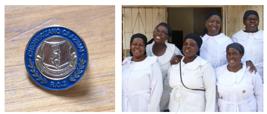
The Dutch Reformed Church from Orange Freestate (South Africa) initiated mission work in the eastern part of Zambia in 1896. The RCZ, including the CcA, emerged from these missionary endeavours. As part of the mission work, missionary wives and single female missionaries organised special activities for women, mainly at the local level around the mission station. They taught sewing and literacy classes in line with the domestic ideal they promoted, that of a good Christian woman caring for her family.16 In the 1940s, missionary wives started to organise work among women in a more structured way and connected the local groups to a national movement named Chigwirizano cha Azimai.17 Initially, the members of the CcA did not wear a uniform, nor was this customary among the missionary wives or the fellowship members in the Dutch Reformed Church. When the first indigenous RCZ pastor's wives came across this practice among members of African women's church organisations in South Africa and Malawi, they made a case for introducing the uniform in the CcA.18 In Zambia, the missionary wives were initially reluctant to promote the "unnecessary" uniform because they feared it would make the members proud and create division between the CcA members and other female church members.19However, after persistence from the Zambian members who felt it important to don the uniform, they complied, and in the 1950s, the uniform became common practice. Since then, the modest design and colours of the uniform, consisting of a long black skirt, a white blouse with long sleeves, a belt and a round collar, a black headscarf and black shoes, have not changed. The uniform also includes a badge pinned on the blouse, though not all members wear it.20
Literature on African women's fellowships has drawn attention to the uniform of women's fellowships as a dress full of meaning. According to Deborah Gaitskell in her historical study of Women's Fellowships in South Africa, the origin of the design and colours of the uniform is not completely clear. She hypothesises that a military-style may have influenced the design and colours of the uniform in South/ern Africa in the early twentieth century.21Despite there being no indications that the design and colours were initially intended to be symbolic, Gaitskell mentions that as early as 1925, Methodist Manyano members in South Africa began attributing meaning to the colours of their uniform, seemingly epitomising core aspects of the Christian faith: black representing sin, red denoting the blood of Jesus, and white referring to holiness and purity.
Other historical studies on women's fellowships (manyano) in South Africa and Zimbabwe provide similar explanations of the colours.22 In a 2017, study of a Methodist women's fellowship in Zimbabwe, Martin Mujinga states that the colours and all the different parts of the uniform (belt, buttons, etc.) carry symbolic meaning for Zimbabwean Manyano members.23 A recent study by Lihle Ngcobozi on the Methodist Manyano in South Africa corroborates this assertation that the uniform carries theological significance. She cites a Manyano member who states that, "[t]he Manyano uniform is red, black, and white. And because everything we do is spiritual, every part of the uniform has a spiritual meaning, it's not just a play-thing", and subsequently gave a detailed explanation of all the colours and pieces of the uniform.24 Beverley Haddad, who studied the Anglican women's fellowship Mother's Union in South Africa, found that the uniform is one of the "expressions of subjugated survival theologies" and "infused with God's power, it brings hope and comfort and healing in the face of illness".25
The lived theology of the uniform for the members of the CcA
During fieldwork, it was apparent that the uniform was also important for the Zambian women who participated in this research, where it contributed to feelings of unity and belonging and filled the women with pride. Members were observed handling the uniform with great care, ensuring that it was always spotless and carefully ironed. Women never wore the uniform while completing household chores and protected it against dust and dirt, by wrapping a chitenge (cotton-coloured wrap) with the logo of the RCZ over it when necessary. Informants often mentioned that being buried in the uniform was one of the membership privileges. Some informants used religious terminology and metaphors to describe their uniform, such as "armour of God" and "light in the darkness." Moreover, during meetings, uniforms and their rules and regulations were a recurring topic. CcA leaders, that is the pastors' wives, repeatedly emphasised the importance of the uniform and the associated behaviour and commitment.
Based on the fieldwork, it was concluded that analysing the practises and meaning attributed to the uniform would reveal aspects of how the CcA members experience their faith in their daily lives. In other words, the uniform represents their theology. The following sections elaborate on this theology and successively unfold the three theological themes of the uniform as: 1) a representation of faith and a holy lifestyle, 2) a reminder of vocation, and 3) an embodiment of spiritual power.
"And now I am a holy person."
The uniform is a visible identity marker, distinguishing the CcA members from other female church members and marking them in society as RCZ members. However, to the CcA members, the uniform is more than just a symbol of belonging to the CcA; it is an external signifier and a mirror of an inner conviction and a corresponding lifestyle transformation. Ss a pastor's wife expressed it, the uniform signifies someone giving her life to Christ.26National board leaders stated that the uniform indicates that a woman "wears Christ" (Galatians 3.27) or "has Christ in her" (Colossians 1.27).27 In the various focus groups, the CcA members affirmed that wearing the uniform represented the faith of a CcA member and underlines who she is: "a God-fearing woman in Christ",28 a "woman of God",29 and "a holy person".30
To most CcA members, the uniform's colours, black and white, symbolise this transformation. The white blouse colour is seen as referring to purity or holiness, justification or purification by Christ (a central Reformed doctrine), forgiveness of sins, and the transformation into a "holy person" (sanctification).31 The black colour of the skirts, shoes, and scarf refers to human beings' sinful nature. Informants stated that this interpretation was part of the teaching they received before joining the CcA.32 Remarkably, the CcA handbook and the RCZ constitution do not ascribe any specific meaning to the uniform's colours and design.
Nevertheless, one of the pastors' wives who participated in the research explained the colours in this manner during a meeting, and claimed that the design of the uniform illustrates how this transformation concerns all aspects of life:
The uniform covers the whole body because the Holy Spirit is not only in the heart but lives in us and is related to our entire lives. The headscarf tells that you need to think as a Christian. The skirt and the black shoes teach that you cannot just walk everywhere.33
For many informants, wearing the uniform is a deliberate religious practice. In interviews, they linked wearing the uniform to ethics and emphasised that wearing it denotes striving for sanctification. In the informants' interpretation, this commitment to leading a holy life first and foremost means adherence to rules and moral standards, as promised on the day they joined the CcA. During a special ritual, called the blousing ceremony, aspiring candidates for membership vow to pray, read the bible, attend the meetings, take up their Christian duties, obey the leaders of the church, show others the way to salvation, and abstain from alcohol and all practices that contradict the word of God.34 By doing so, they are considered "good mothers and wives", that is, examples of good behaviour, modesty, and integrity. Moreover, they are held responsible for transmitting moral norms and values to the next generation of women. This may relate specifically to the African context where women are often seen as custodians of beliefs and acceptable behaviours.35
Following the "blousing" ceremony, CcA members are also expected to pay prescribed weekly and monthly contributions. Additionally, all members must renew their vows annually during a special renewal ceremony. Moreover, during meetings, the message that donning the uniform means a conscious and continuous commitment to live out these vows was regularly repeated.36
From the interviews, it is evident that joining the CcA and wearing the uniform is a deliberate and well-considered choice. Indeed, several informants emphasised that one had to take time "to be ready" for that step. After all, women who wear the uniform promise to live up to the norms, abide by the rules, live according to the prescribed moral standards, and contribute financially to the fellowship.37 Most women take this promise very seriously, and they should do so because for those who fall short of their promise, the local board (in case of financial arrears in contributing) or the church council (in case of suspension) may deprive them of the privilege of wearing the uniform. A pastor's wife explained:
Because, with the uniform, you identify yourself to say, "I have chosen to be a Christian, and I will live like this". If you live against what is agreed, we put a question mark and say: "You are not fit to be part of us".38
These requirements make some women reluctant to join the CcA. A pastor's wife explained that even female church members who regularly attend the CcA meetings hesitate to be bloused: "They feel that they will get a lot of responsibilities. (They think:) 'When I stand and make a vow for God, and then I do not fulfil it, then maybe I am sinning against God".39 This line of reasoning is the logical consequence of the strong emphasis on obedience to God and the leaders. The same pastor's wife clarified: "If we agree as women to do so and you do the opposite of what we agreed on, already, God will look at you as a very rebellious person".40 Indeed, other informants agreed that if a woman was not ready to change her lifestyle, it was better to refrain from joining the CcA: "Other women are still living the old sinful life, they are drunkards. They feel, 'should I join the WF? I still drink, they will find me drinking in my uniform, it is better that I stay away from the CcA'".41
For some informants, the uniform functions as a moral corrective, encouraging and reminding them to do the right thing. An informant stated that, "[w]hen I wear this uniform, it makes me live a holy life. Even when I want to sin, I ask myself, I am wearing this uniform, so I have to live a non-sinful life".42 A member in Fountain explained: "Even me myself, when I wear this uniform, I know that uhuh that spirit (emphasises), I can feel that spirit in me that wearing this uniform, I should behave, I should not do this or that",43 suggesting that for some the uniform itself is imbued with power, and reminds and gives strength to adopt a holy lifestyle and also to relate well to others:
Even if you want to insult the children, if you want to insult anyone, with your uniform, you calm down. If somebody has insulted you or used bad language to you, bad words, you can't reiterate [these words], you feel bad. No, I am a woman of God, I cannot reiterate what this person is saying. Let me pray for him or her so that they realise what they just said is not good.44
The uniform is seen as proof of commitment and one that women need to live up to continuously, not only in the eyes of other people, but also in the eyes of God. The religious significance of the uniform becomes most evident on the day of death, as an active member of the CcA will be buried in her uniform, which all informants considered of great importance. The denial of the privilege by the leadership means that, in one way or another, a woman was not sufficiently obedient and, according to a pastor's wife, will raise questions at the gate of heaven. God might ask the recently deceased woman: "Why are you not in your uniform?".45 Consequently, for an informant in Vineyard, the uniform, inferred access to heaven, acting as proof of good behaviour. Responding to why the uniform was essential to her, she testified: "Myself I feeL.I feeL.if God comes today, I can enter the kingdom of God".46
Other informants were concerned that too much value was being attached to the uniform: "It is not the uniform that makes you a Christian. The heart is the one who decides".47 The CcA handbook also cautions that wearing the uniform does not guarantee salvation and eternal life: "In these clothes, there is no justice or salvation. We are saved by our faith in Jesus Christ, and therefore, the uniform does not lead to pride but to humbleness".48 This was also the concern of a male pastor who was part of the national RCZ leadership. He suggested that the strong emphasis on obedience and fulfilling obligations as a precondition for the uniform hindered understanding of the concept of grace, an essential doctrine within the Reformed Theology.49 However, during meetings, leaders constantly reminded the members to follow the rules, be obedient, and pay the subscriptions as a prerequisite for wearing the uniform. This created the impression that wearing the uniform represented the continuous process of sanctification rather than symbolising justification.
To conclude, for the women of the CcA, the uniform, in which they were clothed when they joined the CcA during the so-called "blousing ceremony" symbolises "wearing Christ" and acts as an embodim ent of their faith and religious identity. The black and white colours remind them of key aspects of Christian theology: justification and sanctification. Consequently, the women are tasked with living a holy life, abiding by the rules and living according to engendered moral standards. On the one hand, being allowed to wear the uniform serves as proof that the women are willing to live such a holy life as long as they abide by the CcA rules. On the other hand, the uniform is a constant, tangible reminder to the women to live a holy life, requiring continuous sanctification and internal change.
Wherever I go, I have to shine in this world.
To the informants, wearing the uniform not only signified a conscious and continuous commitment to lead a holy life, but also exemplified the commitment of CcA members to being a light to the world, in and beyond the church's walls. The notion of light in the darkness is a central theme in the RCZ. Indeed, the phrase "Kuunika mudima" (light in the darkness) is the RCZ's motto and part of the official church logo. The motto also appears on the badge that the CcA members pin on the white blouse.
According to an informant, the design of the uniform, the white blouse between the black skirt and headscarf, conveys that messa ge as well: "It [the uniform] talks about light in darkness [kuunika mudima]. This is what it represents".50 After one of the meetings, a group of women sitting together in their white blouses (literally, a bright spot in the pews) pointed to themselves: "Look, so we are light in the darkness".51 Another informant stated that the uniform means "we give light when there is no light in the dark". 52 The black represents a world full of challenges, particularly for women. Life is uncertain, and many informants shared their concerns about high poverty levels, unemployment, and sickness.53 Moreover, the COVID-19 pandemic had negatively influenced business activities, leading to income loss. Many informants struggled to send their (grand)children to school. Yet, despite this, they were committed to sharing their time and meagre resources with the CcA, the RCZ, and the community. Amidst these challenges, CcA members strove to embody the light of Christ. In an interview with the national board of the CcA, one of them explained, "[w]hen someone has Christ in them, they will shine, so the uniform is symbolic of that belief that now they will be able to shine like a star, to be the light for the world".54
With the firm conviction that they have a divine vocation to be the light, the CcA members would participate in the church's diaconal, educative and fundraising activities.55 Informants also mentioned dedicating their time and resources to beautifying the church, cleaning, and hospitality such as visiting the sick, all considered typical female tasks within the church.56 They perceive these activities as serving God and, therefore, meaningful religious practices. Several other studies point to women's fellowships as the backbone of the church because of their involvement in such activities, despite being minimally represented in leadership positions.57
The CcA members also aspired to spread the light to the community and the world, like "a house built on the top of a mountain".58 Both collectively and individually, they are involved in diaconal and missional tasks through charity and evangelism. An older woman in one of the compounds elaborated on how being a light in the world becomes tangible in daily life. She related to how the uniform shows "the greatness of God" and indicates that the wearer has "a humble and merciful heart". As such, people in the communities approach the members with requests for help or support. She continued, "Here, in our community, we have many people, including old people and orphans. Some have no place to sleep. But when you have the uniform, these people come to you: 'Amai, do you have some food?'".59 Moreover, in one of the focus groups, the women stressed that people in their neighbourhood understood the uniform to be an indicator of someone's willingness to "do good deeds".60 Similarly, the uniform also creates opportunities for evangelism, as one informant stated: "I will explain (the uniform) to those who are asking, and that could also be an opportunity for me to say, 'Come and worship'. I value the uniform".61
While the vocation to serve, to be the light, in the church and the community is a personal one, it is, first and foremost, a communal responsibility. The local board of Shalom articulated this communal aspect by stating, "We are chosen by God to work for him".62 Members are expecting to always be ready to do that work. Therefore, they are advised not to put the uniform in a laundry basket but to wash and iron it directly after activity to ensure that it is clean, "if anything happens".63 To accomplish this work, the women need one another, regardless of position or socio-economic background: "You can't tell from the uniform whether someone holds a position or not. The uniform is for all the same".64 Moreover, a pastor's wife stated that wearing the same uniform "helps to serve God with your friends".65
For the CcA members, the uniform represents the theology that, as Christian women, they are called to work for God and bring light into the darkness. In line with Ngcobozi's observations about women's fellowship members in South Africa, the CcA members acknowledge that all their work is important and that their contribution serves to help the church to survive.66 The uniform, which is the same for all women, expresses that they have, both individually and collectively, practical, diaconal, and missional responsibilities in the church and the world around them. The uniform also symbolises that they do not have to accomplish these tasks alone, but rather, they do so with each other and with and for God. Their work and sacrifices at home, in the church, and in the community, which are mostly not highly regarded, are responses to this divine vocation. Knowing that all this work is a form of service to God elevates their daily lives and hardships.
The uniform strengthens and empowers you
Lastly, according to some informants, the uniform provides strength and power to the wearer. National board members explained that wearing the uniform is seen as a "spiritual thing you cannot walk away from".67 Rituals68around the uniform also corroborates this, such as the blousing ceremo ny during which women are dressed in the uniform and underscores that wearing the uniform is a long-life commitment, just like a marriage. As a ring symbolises marital commitment, the uniform is the visible marker of the women's commitment to Christ, the church, and the community:
It is not a piece of cloth that I can put on in my own time. But I should follow the rules and, also, if I want to stop [wearing the uniform], just as people witnessed and came and some people had to dress me [during the blousing ceremony], I also have to stick to it. That is not something I can just stop when I want to.69
Because of this status, the uniform requires special treatment. Women handle the uniform carefully and ensure it is always ready to wear. They do not wear it during house chores and protect it against dust and dirt. It is also inappropriate to put on someone else's uniform or the uniform of another church just to see how it looks. This is also signalled by Ngcobozi, who states that this special treatment points to the sacredness of the uniform.70
For some informants, the uniform signified the proximity of divine presence. One informant in Shalom testified, "When you are moving [it is] like you are with Jesus, Jesus is just following you. That is how you feel sometimes".71An informant in Vineyard shared that when she is in her uniform,
I feel like I am meeting the angels; I am in fellowship with the angels, and even when I am prompted to sin, something stops me because I am holy. And even when I put it, I feel good, and I feel comfortable.72
Some informants stated that they experienced a rupture with the past when they became a CcA member and were "being bloused". They shared how in the past, they had felt attacked by evil powers but that this was no longer the case: "Before I joined the CcA, I was oppressed by demons and evil powers who stopped me from praying and singing. Now, I am able to preach and I am able to pray free".73 Some informants referred explicitly to the uniform as an object that played a role in this change:
This uniform helps me in many ways because before I was bloused, I used to meet a lot of temptations. But when I was bloused, and I heard the word, and I learnt in the CcA, these temptations are not coming the way they came before.74
Women often characterised life as spiritual warfare where supernatural powers, whether positive or negative, are perceived as a reality. For some, the uniform visualisation of God being on their side. For others, it invoked a certain protective power in the battle against temptations, relapses into sin, and attacks of evil powers. A pastor's wife, referring to Ephesians 6.13, compared the uniform to the armour of God claiming "you need to have something that protects you".75 Others compared the uniform to a military dress. Just as soldiers wear a uniform during combat, the CcA members wear their uniform during their spiritual warfare.76
Several informants shared their marital problems, about men who drink or do not support the family. One informant testified that the uniform helped her in such a situation:
Sometimes, when you put on this uniform, and you have some conflict with your husband, it tells you to be strong. I need to be strong, and the uniform encourages you. When you respond, you have to be sure that you respond according to the Bible.77
In this case, the uniform does not protect against difficult situations or violence but provides the power of endurance, particularly in marriage. Female subordination to the man as head of the family is regularly part of teachings during CcA meetings and is also part of the cultural vocabulary during marriage preparations.78 Lilian Siwila confirms that in Zambia's culture, the patriarchy, religion, mission, and colonial influence were tools used to silence and subjugate women.79 Heleen Joziasse, in her study on lived Christologies among Kenyan women, also states that faith strengthens women to respect and submit to their husbands rather than liberate them from a violent or abusive marriage.80
Though the CcA members articulated the meaning of the uniform in different ways, wearing the uniform is an experience of the presence of the transcendent that creates feelings of joy, security, happiness, and encouragement. This is in line with Beverley Haddad's findings in her study on the Anglican Mothers' Union in South Africa. She found that women attribute supernatural powers to the uniform, which, in their perception, helps them stay alive in the harsh reality and struggle of their daily lives.81 A male RCZ church leader suggested that some women need a tangible object to experience Jesus' presence and, as such, ascribe a protective power to the uniform. However, he considered this thinking as indicative of the influence of African traditional religion. He stated that more teaching is needed to eradicate this misconception because, according to him, it is not in line with the Reformed doctrine.82 This might also explain why some informants were reluctant to assign meaning to the uniform, except for indicating RCZ membership, and stated that ascribing power was only a practice in other churches.83
Nevertheless, other practices reinforce the idea of the uniform as an object imbued with power. New candidates sometimes approach their pastor the day before they enter the CcA to request to pray for the uniform. During one blousing ceremony, a pastor's wife put her hands on the uniforms just before she dressed the new candidates. While doing so, she prayed, "Let these clothes be covered by the blood of Jesus".84 According to Samuel Olarewaju, prayers that appeal to the protective power of Jesus' blood attempt to address the constant quest for protection against demonic powers among believers. Indeed, the blood of Jesus is considered to be a powerful protection against all kinds of dangers and evil. Many believe that objects used in daily life, such as the uniform, when "covered in Jesus' blood", may avert these evil powers and protect the wearer against demonic and personal attacks.85
To sum up, despite its various perceptions, the lived theology of the uniform proves that CcA members long for divine presence, protection, and support. For some, the uniform only symbolises this divine presence, while for others, it is an "object imbued with power" that seemingly provide protection, the power to resist temptation or evil forces, and the power to endure difficult situations. Though this seems in conflict with the official theology of the RCZ, it underlines that the CcA members experience God as the One who is at their side amidst socio-economic challenges, the realities of a patriarchal system, and spiritual warfare.
Conclusion
In a patriarchal society like Zambia and a church like the RCZ, where the leadership is heavily male-dominated, the uniform is the tangible object for CcA members that makes their presence and contribution visible. Wearing the uniform is a religious practice. Ordinary members and pastors' wives in leadership positions at all levels appropriate the meaning of the uniform in various, and sometimes contested, ways. The lived theology of the uniform reveals that the uniform is a meaningful dress that plays a role in the everyday religious experience of the CcA members and is an important embodiment of their faith and vocation. The meaning of the uniform is multi-layered: it is simultaneously about the colours and the wearing itself.; it conveys a message to the wearer and those who perceive it; and it is a symbol and has its own power. For some women, the uniform's colours symbolise the doctrines at the heart of the RCZ, a Reformed church, that of justification, sanctification, and the calling to be a light in the darkness. By wearing the uniform, these women embody these central dogmas of the church. They have made them their own, and they dedicate themselves to this by living exemplary lives as mothers of the church, contributing their time and money and helping people when called upon. This is not easy as sanctification is a continuous struggle, but putting on the uniform is a constant reminder for these women of their promises and their commitment to live those promises. How complicated it is to promise to live a holy life and be a light in the world is evident in some informal rituals that emerged around the uniform, such as praying to be covered with the blood of Christ. To resist temptations, relapses into sin, and the attacks of evil powers, some women see the uniform as a garment that protects them from evil powers. In contrast, others see it as a symbolic armour to go to war against them. Others still experience the uniform as a symbol of Christ's nearness, giving them hope and joy amid challenges and problems.
Wearing the uniform is, therefore, much more than a sign of belonging to the CcA. It is a religious practice that expresses a lived theology. This theology is not formalised or consistent but relevant and powerful in the lives of women who try to stand firm as Azimai cha Chigwirizano (Mothers of the Fellowship). The uniform symbolises how these women try to live and defend their faith in a world where this is not easy. The uniform confirms that they do not have to do it alone but, rather, with each other and with God on their side.
References
-
Ammerman, Nancy T. "Rethinking Religion: Toward a Practice Approach." American Journal of Sociology 126, no. 1 (2020): 6-51. https://doi.org/10.1086/709779.
» https://doi.org/10.1086/709779 -
Ammerman, Nancy T. "Social Practices and Cultural Contexts: Frameworks for the Study of Spirituality" In Situating Spirituality: Context, Practice, and Power, edited by Brian Steensland, Jaime Kucinskas, and Anna Sun. Oxford University Press, 2022. https://doi.org/10.1093/oso/9780197565001.003.0002.
» https://doi.org/10.1093/oso/9780197565001.003.0002 - Cameron, Helen, Deborah Bhatti, Catherine Duce, James Sweeney, and Clare Watkins. Talking About God in Practice: Theological Action Research and Practical Theology. Hymns Ancient & Modern Ltd, 2010.
-
Chifungo, Phoebe Faith. "Women in the CCAP Nkhoma Synod: A Practical Theological Study of Their Leadership Roles." PhD diss., Stellenbosch University, 2014. http://hdl.handle.net/10019.1/96112.
» http://hdl.handle.net/10019.1/96112 -
Cooke, Claire. "Capping Power? Clothing and the Female Body in African Methodist Episcopal Mission Photographs." Mission Studies 31, no. 3 (2014): 418-42. https://doi.org/10.1163/15733831-12341359.
» https://doi.org/10.1163/15733831-12341359 - Cronjé, J. M. Vroue met nardusparfuum: die aandeel van die vrou in die sendingwerk van die Nederduitse Gereformeerde Kerk. 1st edition. NG Kerkboekhandel Transvaal, 1984.
- Fiedler, Rachel Nyagondwe. African Feminist Hermeneutics. An Evangelical Reflection. Mzuni Books 18. Mzuni Press, 2016.
- Fiedler, Rachel Nyagondwe. Coming of Age. A Christianized Initiation among Women in Southern Malawi. Assemblies of God Press, 2005.
-
Gaitskell, Deborah. "Female Mission Initiatives: Black and White Women in Three Witwatersrand Churches, 1903-1939". PhD diss., University of London, 1981. http://www.soas.ac.uk/library/.
» http://www.soas.ac.uk/library/ - Haddad, Beverley. "African Women's Theologies of Survival: Intersecting Faith, Feminisms, and Development." PhD diss., University of Kwazulu-Natal, 2000.
- Haddad, Beverley. "The Manyano Movement in South Africa: Site of Struggle, Survival, and Resistance." Agenda: Empowering Women for Gender Equity 18, no. 61 (2004): 4-13.
- Hendriks, H. Jurgens. "Churches, Seminaries and Gender Statistics." In Men in the Pulpit, Women in the Pew?: Addressing Gender Inequality in Africa, edited by Elna Mouton, L. D. Hansen, Elisabet Le Roux, and H. Jurgens Hendriks, 25-32. African Sun Media, 2012.
- Hinfelaar, Marja. Respectable and Responsible Women: Methodist and Roman Catholic Women's Organisations in Harare, Zimbabwe. Boekencentrum, 2001.
-
Joziasse, L. J. "Women's Faith Seeking Life: Lived Christologies and the Transformation of Gender Relations in Two Kenyan Churches." PhD diss., Utrecht University, 2020. https://dspace.library.uu.nl/handle/1874/398494.
» https://dspace.library.uu.nl/handle/1874/398494 - McGuire, Meredith. "Embodied Practices: Negotiation and Resistance." In Everyday Religion: Observing Modern Religious Lives, 187-200. Oxford University Press, 2006.
- Mombo, Esther. "The Ordination of Women in Africa: A Historical Perspective." In Women and Ordination in the Christian Churches: International Perspectives, 123-143. Bloomsbury Publishing, 2012.
-
Moyo, Fulata Lusungu. "Religion, Spirituality and Being a Woman in Africa: Gender Construction Within the African Religio-Cultural Experiences." Agenda 18, no. 61 (2004): 72-78. https://doi.org/10.1080/10130950.2004.9676045.
» https://doi.org/10.1080/10130950.2004.9676045 - Moyo, N. "Revisiting Economic Justice. An Examination of Dignity of Women in a Zambian Context." In Living with Dignity. African Perspectives on Gender Equality, edited by Elna Mouton, Gertrude Kapuma, Len Hansen, and Thomas Thogom, 179-190. African Sun Media, 2015.
- Mujinga, Martin. The Historical Development of Methodism a North-South Paradigm. Connexial Bookshop, 2017.
- Muzorewa, Farai David. "Through Prayer to Action. The Rukwadzano Women of Rhodesia." In Themes in the Christian History of Central Africa, edited by T. Ranger and J. Weller, 256-268. Heinemann, 1975.
- Ngcobozi, Lihle. "Lizalise Idinga Lakho [Honour Thy Promise]: The Methodist Church Women's Manyano, the Bifurcated Public Sphere, Divine Strength, Ubufazi and Motherhood in Post-Apartheid South Africa." PhD diss., Rhodes University, 2017.
- Olarewaju, Samuel. "The Efficacy of Prayer in the Blood of Christ in Contemporary African Christianity." Africa Journal of Evangelical Theology 22, no. 1 (2003).
- Phiri, Isabel A., and Chammah Kaunda. "Gender." In Christianity in Sub-Saharan Africa, edited by Ross, Kenneth R., J. Kwabena Asamoah-Gyadu, and Todd M. Johnson, 386-396. Edinburgh University Press, 2017.Reformed Church in Zambia. Buku La Zinchito Za Chigwirizano Cha Azimai. Reformed Church in Zambia, 2015.
- Reformed Church in Zambia. The Constitution, by-laws and procedures of the Reformed Church in Zambia. Reformed Church in Zambia, 2013.
- Roest, Henk de. Collaborative Practical Theology: Engaging Practitioners in Research on Christian Practices. Brill, 2020.
- Siwila, Lilian Cheelo. "African Women Speak out in the Face of Empire." In Chikamoneka!: Gender and Empire in Religion and Public Life, 13-32. Mzuni Press, 2022.
- Verstraelen-Gilhuis, Gerdien. From Dutch Mission Church to Reformed Church in Zambia: The Scope for African Leadership and Initiative in the History of a Zambian Mission Church. Wever, 1982.
- Ward, Pete. Introducing Practical Theology: Mission, Ministry, and the Life of the Church. Baker Publishing Group, 2017.
- Wasike, Anne Nasimiyu. "Christology and an African Woman's Experience." In Jesus in African Christianity: Experimentation and Diversity in African Christology, 2nd ed., 123-135. Acton Publishers, 1998.
- Watt, Gideon van der, and Mariette Odendaal. A Family of Reformed Churches in Africa. Remarkable Stories of God's Grace. 2nd edition. CLF Publishers, 2022.
- Williams, Beth Ann. "Mainline Churches: Networks of Belonging in Postindependence Kenya and Tanzania." Journal of Religion in Africa 48, no. 3 (2018): 255-285.
- Zulu, William, and Henry Mbaya. "Some Missiological Imperatives of the Christianisation of Cinamwali as Cilangizo in the Reformed Church in Zambia." Studia Historiae Ecclesiasticae 42, no. 3 (2016): 178-219.
Acceptance date 25/07/2025
1 Beverley Haddad, "The Manyano Movement in South Africa: Site of Struggle, Survival, and Resistance," Agenda: Empowering Women for Gender Equity 18, no. 61 (2004): 11; Phoebe Faith Chifungo, "Women in the CCAP Nkhoma Synod: A Practical Theological Study of Their Leadership Roles," (Stellenbosch University, 2014), 47, http://hdl.handle.net/10019.1/96112; Lihle Ngcobozi, "Lizalise Idinga Lakho [Honour Thy Promise]: The Methodist Church Women's Manyano, the Bifurcated Public Sphere, Divine Strength, Ubufazi and Motherhood in Post-Apartheid South Africa" (Rhodes University, 2017), 2; Beth Ann Williams, "Mainline Churches: Networks of Belonging in Postindependence Kenya and Tanzania," Journal of Religion in Africa 48, no. 3 (2018): 272.
2 This research is part of a PhD study at Utrecht University about the Women's Fellowship of the Reformed Church in Zambia. I conducted my fieldwork between 2019 and 2023, while I was a lecturer at Justo Mwale University in Lusaka, Zambia, an institution owned by the Reformed Church in Zambia. The Reformed Church in Zambia was born out of mission work by the Dutch Reformed Church in South Africa. The RCZ became an independent church in 1966. Currently, it consists of 17 presbyteries, 200 congregations, and approximately 1,000,000 members. The women's fellowship has just under 40,000 members. For a brief history of the RCZ see: Gideon van der Watt and Mariette Odendaal, A Family of Reformed Churches in Africa. Remarkable Stories of God's Grace, second edition (CLF Publishers, 2022), 76-84.
3 Amai Chisomo, participant of Focus Group 4, Shalom (24 September 2021). Amai is the standard way to address an adult woman. Chisomo is a fictive name. To protect the anonymity of the informants, all names of persons and congregations are anonymised. For this article, I refer to my data by indicating the type of meeting (individual interview, focus group or gathering), the name of the congregation and the date of the interview, focus group, or gathering. If necessary, I mention the position of the interviewee. Most of _the participants were women; if not, the sex is indicated._
4 Marike Blok-Sijtsma, "Cash, Cooking and Cleaning. The Contribution of the Women's Fellowship in the Reformed Church in Zambia." In Ecclesiology in Africa, edited by David K. Ngaruiya and Rodney L. Reed (Langham Global Library, 2024), 303-323; Marike Blok-Sijtsma, "Work done for God": The Role of the Women's Fellowship in the Reformed Church in Zambia," Exchange 54, no. 3 (2025): 248-276. Forthcoming: Marike Blok-Sijtsma, "Why this Uniform? The Significance of the Uniform for Members of the Women's Fellowship in the Reformed Church in Zambia," Studies in World Christianity (University _Press).
5 Meredith McGuire, "Embodied Practices: Negotiation and Resistance", in Everyday Religion: Observing Modern Religious Lives (Oxford University Press, 2006), 187-200; Nancy T. Ammerman, "Rethinking Religion: Toward a Practice Approach," American Journal of Sociology 126, no. 1 (2020): 6-51, https://doi.org/10.1086/709779.
6 Nancy T. Ammerman, "Social Practices and Cultural Contexts: Frameworks for the Study of Spirituality," in Situating Spirituality: Context, Practice, and Power, ed. Brian Steensland, Jaime Kucinskas, and Anna Sun (Oxford University Press, 2022), 35-36, https://doi.org/10.1093/oso/9780197565001.003.0002.
7 Social scientists and practical theologians apply the adjective "Lived" as in "Lived religion", "Lived theology" or "Lived faith". Definitions overlap since the social sciences have rediscovered religion as a crucial factor in the lives of people in and outside institutions, and theology has broadened its scope from the study of doctrine to the empirical study of "experiences, beliefs, values and practices which take place in all spheres of life as long as they relate to notions of sacredness or transcendence in some way" (cited from Henk de Roest, Collaborative Practical Theology: Engaging Practitioners in Research on Christian Practices, (Brill, 2020), 106. For an overview and development of definitions, see Roest, 100-106 and Ammerman, "Rethinking Religion," 9-11. Others refer to theology or theologies located in everyday life as ordinary, non-academic, informal, narrative, or oral theology, in contrast to formal or written theology.
8 Helen Cameron et al., Talking About God in Practice: Theological Action Research and _Practical Theology (Hymns Ancient & Modern Ltd, 2010), 51.
9 Pete Ward, Introducing Practical Theology: Mission, Ministry, and the Life of the Church (Baker Publishing Group, 2017), 65-66.
10 H. Jurgens Hendriks, "Churches, Seminaries and Gender Statistics," in Men in the Pulpit, Women in the Pew?: Addressing Gender Inequality in Africa, ed. Elna Mouton et al. (AFRICAN SUN MeDIA, 2012), 27; L. J. Joziasse, "Women's Faith Seeking Life: Lived Christologies and the Transformation of Gender Relations in Two Kenyan Churches," (Utrecht University, 2020, PhD dissertation), 18, http://hdl.handle.net/1874/398494; Lilian Cheelo Siwila, "Introduction: African Women Speak out in the Face of Empire," in Chikamoneka!: Gender and Empire in Religion and Public Life, ed. Lilian Cheelo Siwila, Sylvia Mukuka and Nelly Mwale (Mzuni Press, 2022), 20.
11 Beverley Haddad, "African Women's Theologies of Survival: Intersecting Faith, Feminisms, and Development." (University of Kwazulu-Natal, 2000, PhD dissertation), 4-5; Siwila, "African Women Speak out in the Face of Empire," 31.
12 Anne Nasimiyu Wasike, "Christology and an African Woman's Experience," in Jesus in African Christianity: Experimentation and Diversity in African Christology, 2nd ed. (Acton Publishers, 1998), 130.
13 Siwila, "African Women Speak out in the Face of Empire," 14.
14 Reformed Church in Zambia, Buku La Zinchito Za Chigwirizano Cha Azimai, (2015); Reformed Church in Zambia, The Constitution, by-Laws and Procedures of the Reformed Church in Zambia (2013).
15 According to the RZC constitution, the actuarius is "the person appointed to be the chief whip and interpreter of the RCZ Constitution, By-Laws and Procedures". Reformed Church in Zambia, The Constitution, by-laws and procedures of the Reformed Church in Zambia, art. 47.c. The task of the actuarius is, among other things, to support and provide guidance to the CcA and determine if their decisions are in line with the overall _constitution of the church.
16 J. M. Cronjé, Vroue met nardusparfuum: die aandeel van die vrou in die sendingwerk van die Nederduitse Gereformeerde Kerk, 1st edition (NG Kerkboekhandel Transvaal, 1984), 134-36.
17 Gerdien Verstraelen-Gilhuis, From Dutch Mission Church to Reformed Church in Zambia: The Scope for African Leadership and Initiative in the History of a Zambian Mission Church (Wever, 1982), 187. Chigwirizano cha Azimai literally means the "women's guild or alliance". It refers to the Vrouwebond in the Dutch Reformed church in South Africa, _and the Mothers' Union within the Anglican church.
18 Verstraelen-Gilhuis, From Dutch Mission Church, 187.
19 Verstraelen-Gilhuis, From Dutch Mission Church, 250.
20 Reformed Church in Zambia, The Constitution, by-laws and procedures of the Reformed Church in Zambia, 82.6; Reformed Church in Zambia, Buku La Zinchito Za Chigwirizano Cha Azimai, 9. Only the national synod meeting of the RCZ (the church's highest authority) may change these prescriptions.
21 Deborah Gaitskell, "Female Mission Initiatives: Black and White Women in Three Witwatersrand Churches, 1903-1939". (PhD diss., SOAS University of London, 1981), 216-220, https://doi.org/10.25501/SOAS.00033856
22 Farai David Muzorewa, "Through Prayer to Action. The Rukwadzano Women of Rhodesia," in Themes in the Christian History of Central Africa, eds. T. Ranger and J. Weller (Heinemann, 1975), 261; Marja Hinfelaar, Respectable and Responsible Women: Methodist and Roman Catholic Women's Organisations in Harare, Zimbabwe (Boekencentrum, 2001), 53; Claire Cooke, "Capping Power? Clothing and the Female Body in African Methodist Episcopal Mission Photographs," Mission Studies 31, no. 3 (2014): 433, https://doi.org/10.1163/15733831-12341359.
23 Martin Mujinga, The Historical Development of Methodism a North-South Paradigm (Connexial Bookshop, 2017), 131-32.
24 Ngcobozi, "The Methodist Church Women's Manyano", 86.
25 Haddad, "African Women's Theologies of Survival", 282.
26 Interview 3, Shalom, pastor's wife (12 January 2021).
27 Focus Group 14, national leaders CcA (19 November 2022).
28 Focus group 3, Shalom (4 September 2021).
29 Focus group 11, Vineyard (26 August 2022).
30 Focus group 10, Vineyard (26 August 2022).
31 Weekly Meeting, Fountain (18 February 2022). Confirmed in WhatsApp conversations (25 May 2024 and 8 June 2024).
32 Weekly Meeting, Fountain (18 February 2022). Confirmed in WhatsApp conversations (25 May 2024 and 8 June 2024).
33 Weekly Meeting, Fountain (18 February 2022).
34 Reformed Church in Zambia, Buku La Zinchito Za Chigwirizano Cha Azimai, 105._
35 Fulata Lusungu Moyo, "Religion, Spirituality and Being a Woman in Africa: Gender Construction Within the African Religio-Cultural Experiences," Agenda 18, no. 61 (2004): 72, https://doi.org/10.1080/10130950.2004.9676045.
36 Regional meeting (22 May 2021), Monthly meeting, Shalom (8 January 2022).
37 Phoebe Faith Chifungo, "Women in the CCAP Nkhoma Synod: A Practical Theological Study of Their Leadership Roles" (PhD dissertation, Stellenbosch University, 2014), 50, http://hdl.handle.net/10019.1/96112. Chifungo describes similar strict rules in the women's fellowship in the Church of Central Africa Presbyterian (CCAP).
38 Interview 3, Shalom, pastor's wife (12 January 2021).
39 Interview 3, Shalom, pastor's wife (12 January 2021).
40 Interview 3, Shalom, pastor's wife (12 January 2021).
41 Focus Group 11, Vineyard local leaders (26 August 2022).
42 Focus group 10, Vineyard local leaders (26 August 2022).
43 Focus group 9, Fountain local leaders (22 April 2022).
44 Focus group 4, Shalom (24 September 2021).
45 Interview 3, Shalom, pastor's wife (12 January 2021).
46 Focus group 10, Vineyard (26 August 2022).
47 Focus group 1, Shalom (21 May 2021).
48 Reformed Church in Zambia, Buku La Zinchito Za Chigwirizano Cha Azimai, 11.
49 Interview 12 national leader RCZ, male (18 July 2022).
50 Focus group 3, Shalom (4 September 2021).
51 Weekly Meeting, Shalom (23 April 2021)
52 Interview 6 Fountain (12 June 2022).
53 Most women in Zambian society are economically and socially disadvantaged in comparison to men. See: N. Moyo, "Revisiting Economic Justice. An Examination of Dignity of Women in a Zambian Context," in Living with Dignity. African Perspectives on Gender Equality, ed. Elna Mouton et al. (African Sun Media, 2015), 179-90.
54 Focus Group 14 - National leaders CcA (19 November 2022).
55 Focus group 3, Shalom (4 September 2021) and focus group 7, Fountain (12 February 2022).
56 Focus group 9, Fountain local leaders (22 April 2022).
57 Esther Mombo, "The Ordination of Women in Africa: A Historical Perspective", in Women and Ordination in the Christian Churches: International Perspectives (Bloomsbury Publishing, 2012), 125; Isabel A. Phiri and Chammah Kaunda, "Gender", in Christianity in Sub-Saharan Africa, Edinburgh Companions to Global Christianity (Edinburgh University Press, 2017), 388-389.
58 Interview 3, Shalom, pastor's wife (12 January 2021).
59 Focus group 8, Fountain (18 February 2022).
60 Focus Group 3, Shalom (4 September 2021).
61 Interview 11, CcA member and social scientist (18 June 2022).
62 Focus group 2, Shalom, local board (11 June 2021).
63 Interview 1, Shalom, local leader (3 September 2021), interview 12, national leader RCZ, male (18 July 2022), WhatsApp conversation (8 June 2024).
64 Interestingly, seating arrangements divide the women according to status and position. Pastor's wives are always seated in front or on the stage. Women with a higher rank in the organisation also seated in the front. In some other women's organisations, leaders will wear a uniform with distinctive markers identifying them as leaders.
65 Weekly Meeting - Fountain (18 February 2022).
66 Ngcobozi, "The Methodist Church Women's Manyano", 81.
67 Focus Group 14, national leaders CcA (19 November 2022).
68 A pastor's wife dresses a new candidate the day she joins the CcA during a ceremony called the 'blousing.'
69 Focus Group 14, national leaders CcA (19 November 2022).
70 Ngcobozi, 'The Methodist Church Women's Manyano', 89.
71 Focus group 4 Shalom (24 September 2021).
72 Focus group 10 Vineyard local leaders (26 August 2022).
73 Focus group 10 Vineyard local leaders (26 August 2022).
74 Focus group 10 Vineyard local leaders (26 August 2022).
75 Weekly Meeting Fountain (18 February 2022).
76 Focus group 11 Vineyard (26 August 2022).
77 Focus group 8 Fountain (18 February 2022).
78 Rachel Nyagondwe Fiedler, Coming of Age. A Christianized Initiation among Women in Southern Malawi, 25 (Assemblies of God Press, 2005), 138; William Zulu and Henry Mbaya, Some Missiological Imperatives of the Christianisation of Cinamwali as Cilangizo in the Reformed Church in , Studia Historiae Ecclesiasticae 42, no. 3 (2016): 182.
79 Siwila, African Women Speak out in the Face of Empire, 13.
80 Joziasse, Women's Faith Seeking, 145. Cf. Chifungo, Women in the CCAP Nkhoma, 59. She narrates that, during a conference, she advised women to take care of themselves to be attractive to their (unfaithful) husbands. See also: Rachel Nyagondwe Fiedler, African Feminist Hermeneutics. An Evangelical Reflection, Mzuni Books 18 (Mzuni Press, 2016), 139-140.
81 Haddad, "African Women's Theologies of Survival", 281 -82.
82 Interview 12, National church leader, male (18 July 2022).
83 WhatsApp conversation (30 March 2024).
84 Monthly Meeting, Fountain (11 March 2022). Some women also approach the pastor the day before the blousing, requesting to pray for the uniform.
85 Samuel Olarewaju, "The Efficacy of Prayer in the Blood of Christ in Contemporary African Christianity", Africa Journal of Evangelical Theology 22, no. 1 (2003): 32.
