Relevance of the African Union Transitional Justice Policy for Lesotho: Towards Sustainable Peace
Abstract
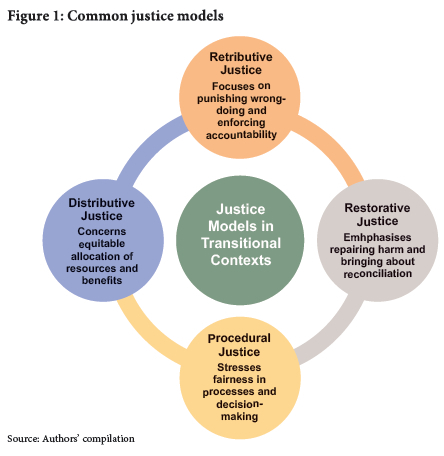
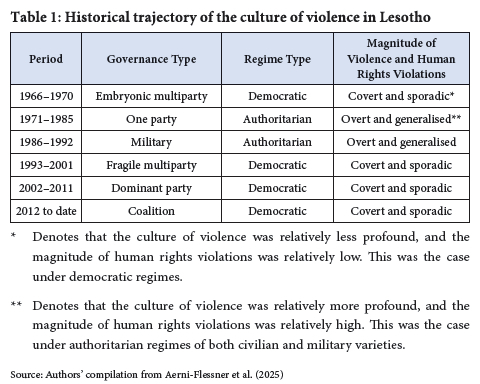
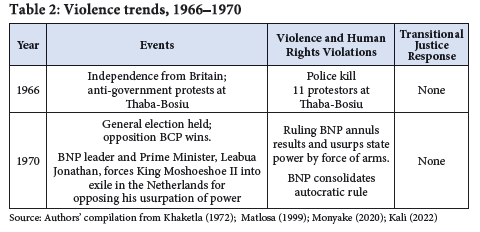
Lesotho's protracted history of political instability and authoritarian governance between 1970 and 1992 has entrenched a culture of violence, the effects of which continue to undermine peacebuilding efforts under the current democratic dispensation (1993-2025). The novelty of this paper lies in its illustration of the utility of transitional justice in situations of political instability that are not characterised by large-scale civil wars or violence. The paper argues that sustainable peace and reconciliation require institutionalising a robust, context-sensitive transitional justice framework aligned with the African Union Transitional Justice Policy (AUTJP). Drawing on qualitative analysis of historical records and expert interviews of purposively sampled experts between 2024 and 2025 by the Lesotho Council of Non-Governmental Organisations and the Strategic Institute for Research and Dialogue, the study identifies a lack of coordinated, victim-centred justice responses to past human rights violations. The AUTJP offers a strategic blueprint for embedding transitional justice into Lesotho's ongoing governance reforms. The study finds that combining retributive, restorative and redistributive justice approaches - while rooted in local traditions -can help address structural grievances and enhance the legitimacy of the reforms. Ultimately, the paper makes the case for adopting a legally grounded, nationally owned and participatory transitional justice policy informed by African and international best practices.
transitional justice; African Union Transitional Justice Policy; accountability; Lesotho
 Thumbnail
 Thumbnail