Rural-Urban Youth Migration in Rapidly Expanding Urban Centers in Ethiopia: Evidence from Hawassa City
Abstract
This study explores the extent and impact of rural-urban migration in Ethiopia, focusing on the factors that drive young people to move to urban centers, their well-being in these urban destinations, and their ties to their rural origins. To gain deeper insights, the study employed a sequential mixed-methods design, combining a household survey of migrant families with qualitative, in-depth interviews conducted with purposively selected participants. The findings showed that the migration of youth and children to Hawassa City is attributed to a range of push and pull factors, whereby limited employment opportunities, land scarcity, and poverty emerged as critical reasons for driving them from their native villages. In contrast, the aspirations to attain industrial jobs, educational opportunities, and the allure of modern lifestyles were identified as strong magnets attracting them to the urban areas. Moreover, young people attributed their migration to prolonged illness or death of biological parents or caregivers, and family breakdown. The findings further showed that once migrants arrived in the cities, they faced multiple challenges in accessing public services and resources, including access to basic education and health care. Furthermore, children's rights to protection from emotional, physical, and sexual abuse were found to be largely unaddressed. Finally, the study proposes alternatives to inform the development of short- and long-term measures to address the challenges.
Rural-urban migration; Urbanization; Migrant well-being; Hawassa; Ethiopia
INTRODUCTION
The movement of people within national borders continues to be the most significant form of human mobility worldwide. Among others, urbanization creates the conditions for internal migration for individuals and families to relocate in search of better opportunities for employment, education, and health care (ICMPD, 2025). Countries in Africa and Asia are experiencing particularly high rates of rural-to-urban migration, with megacities expanding rapidly and facing challenges such as overcrowding, housing shortages, and strained infrastructure. Climate change is also intensifying internal migration: droughts, floods, and other environmental pressures are forcing communities to move to safer regions, especially in South Asia, sub-Saharan Africa, and Latin America (2025). According to the Food and Agriculture Organization (FAO, 2024), over 1.3 billion people living in developing countries have migrated within their own countries. Numbers are rapidly increasing, as the deterioration of rural livelihoods, accelerated by climate change, is leading millions of people to migrate, especially within home countries (2024).
Africa is experiencing rapid urbanization driven by both internal and cross-border migration. The continent's urban population is expanding at an annual rate of 3.3%, and over the next decade, more than 150 million people are expected to relocate to urban areas (McGranahan et al., 2023). The unprecedented growth of Africa's urban population, particularly driven by rural-to-urban migration, is not considered a blessing. Instead, it is often perceived as a challenge, especially in low-income countries, due to the strain it places on scarce resources and limited public infrastructure. The influx of rural populations into urban centers is expected to exacerbate shortages in employment, housing, and other basic public services which, in turn, contribute to overcrowding and heighten exposure to environmental hazards (Mthiyane et al., 2022; Ayuba et al., 2023).
Rural-urban migration is a defining feature of Ethiopia's contemporary urbanization, particularly in rapidly expanding urban centers, such as Hawassa City. Nationally, the urbanization rate remains relatively low (around 21% in 2019), yet the pace of growth is among the fastest in Africa, driven largely by youth migration from rural areas (Mezgebo, 2021). In this regard, Hawassa stands out as one of the cities that better exemplifies the existing dynamics. As one of Ethiopia's fast-growing industrial hubs, with an expanding service sector, tourism, and educational institutions, Hawassa has been a great attraction to young migrants seeking upward mobility. While comprehensive data on the push and pull factors remain limited, a few studies (e.g., Bimerew, 2015) that examined the drivers of rural-urban migration show that economic opportunities and aspirations for an urban lifestyle are the primary determinants of migration to Hawassa. Yet the well-being of migrants in cities is uneven; many experience precarious housing, informal employment, and social exclusion, complicating their integration into city life (Bimerew, 2015).
This article explores the extent to which the conditions have changed after a decade since Bimerew's (2015) report and two decades after the introduction of Ethiopia's Urban Development Policy (2005); the latter promised to manage rapid urban growth by improving infrastructure, housing, and governance. Moreover, the article addresses this empirical gap by exploring the drivers of rural-to-urban migration among young people in Ethiopia, while at the same time identifying the challenges that have an impact on their personal, social, and economic well-being at their destinations. It focuses on the city of Hawassa and highlights how the migrants perceived their well-being in the city. Furthermore, it foregrounds the reciprocal interplay between rural-to-urban migration and urbanization in the context of emerging Ethiopian cities. The study also examines how the city administration responds to the growing demand for basic public services and infrastructure owing to the influx of young migrants. Specifically, it answers the following questions: (a) Why do rural children, adolescents, and youth migrate to the city of Hawassa? (b) How has urbanization caused the influx of rural people to Hawassa? (c) Does existing city governance and leadership adequately respond to the influx of migrants from rural areas? (d) What are the perceived consequences of internal migrants from rural villages for the city?
CONCEPTUALIZING MIGRATIONConceptual framework
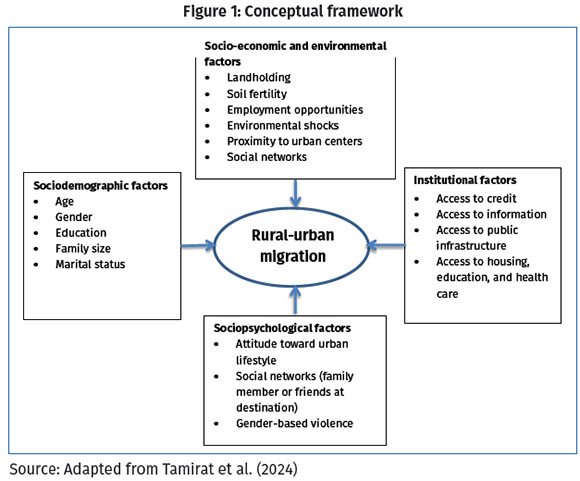
Rural-urban youth migration in Ethiopia emerges from the interaction of sociodemographic, socio-economic, environmental, institutional, and sociopsychological factors (see Figure 1). These drivers operate cumulatively within a broader context of rapid population growth, resource scarcity, and uneven rural-urban development, thus intensifying livelihood constraints and shaping mobility patterns (Ezra and Kiros, 2001; Bimerew, 2015; Semela and Cochrane, 2019).
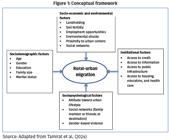
Sociodemographic factors highlight migration selectivity, as youth are more mobile due to life-cycle transitions and limited rural opportunities. Gendered dynamics are evident: young men migrate primarily for employment, while young women's decisions are shaped by gender-based violence, poverty, low farm productivity, and drought (Simachew, 2023). Education raises aspirations for non-farm employment, while large family size and marital status increase pressure on household resources, prompting out-migration (Mitiku and Mulatu, 2021).
Socio-economic and environmental drivers constitute the principal structural pressures. Fragmented landholdings, declining soil fertility, and recurrent environmental shocks undermine agricultural viability and food security, generating strong push factors (Tamirat et al., 2024). These are reinforced by perceived urban employment opportunities, proximity to urban centers, and social networks that reduce migration costs and risks (Debie and Ayele, 2023). On the other hand, institutional factors mediate these processes. Limited access to credit, information, and rural infrastructure constrains livelihood diversification, while relatively better access to housing, education, health care, and public services in urban areas strengthens their pull effect despite urban challenges (Tamirat et al., 2024).
Sociopsychological factors further shape migration decisions. Aspirations and perceptions, such as positive attitudes toward urban lifestyles and the presence of migrant networks facilitate mobility, while gender-based violence acts as an additional push factor, particularly for young women (Simachew, 2023).
Overall, rural-urban youth migration reflects both distress-driven and opportunity-seeking responses to structural constraints, with significant implications for household livelihoods, food security, and resilience in places of origin. The framework underscores that migration is not driven by a single determinant but emerges from the convergence of demographic pressure, land scarcity, environmental stress, institutional limitations, and evolving sociocultural aspirations. Crucially, the interplay between push factors (e.g., land scarcity and environmental shocks) and pull factors (e.g., urban employment and services) is mediated by social networks and institutional access, shaping both the scale and pattern of youth migration.
Rural-urban migration in developing countries
Recent studies highlight that although most African cities are small, rapid rural-urban migration continues to drive the emergence of new urban centers (Fadda and Heinrigs, 2025). Research in sub-Saharan Africa often overlooks the benefits of rural-urban migration, as the emphasis has been on the causes (see Berisso and Kebu, 2023; Ogar et al., 2024) and the consequences (see Chisasa and Khumalo, 2023). This trend amplifies its negative impacts (Ayuba et al., 2023) and gives less attention to its positive effects, which include the flow of remittances, knowledge transfer, and skills that migrants bring back to rural areas. In this vein, Gutu (2023) identifies seven key linkages between urbanization and rural development: (i) production and consumption; (ii) employment; (iii) finances; (iv) land markets; (v) information and knowledge; (vi) social interactions; and (vii) environmental externalities. This suggests that these linkages can be positive if effectively integrated into policy. Nonetheless, realizing these benefits requires adequate infrastructure, strong institutions, and political will-challenges that Ethiopia shares with much of the region.
Theoretical perspectives
Various theoretical frameworks have been developed to explain migration, particularly rural-to-urban movement, shaped by distinct disciplinary perspectives (see Mabogunje, 1970). Despite their differences, however, most of the theories still focus on understanding the motivations behind migration decisions (De Haas, 2021). Notable theories include gravity theory of migration (Ravenstein, 1885), push and pull theory (Lee, 1966), neo-classical theory (Harris and Todaro, 1970), new economics of labor migration (Stark and Bloom, 1985), network theory (Taylor et al., 1999), dual labor-market theory (Piore, 1978), and cumulative causation theory (Stark, 1978; Massey, 1990). While some aim for a broad understanding of migration, others target specific types, such as rural-to-urban migration (Harris and Todaro, 1970) or international migration (De Haas, 2021).
The widely used yet equally criticized perspective is the push-pull theory of migration (De Haas, 2021), which underscores the importance of a range of both uncomfortable and comfortable situations that shape an individual's migration decisions. In particular, the pull-push theory contends that migration from rural to urban areas is based on the premise that all migrations can bring about both positive and negative results. According to Lee's (1966) early work on push-pull factors, migration is driven by the existence of pull forces at the destination and push factors at the origin.
The social network theory subscribes to the functionalist view, which underscores the significance of connections among migrant returnees and non-migrants encouraging rural-urban migration, especially in developing nations (Taylor et al., 1999). Meanwhile, the new economics of labor migration (Stark and Bloom, 1985) view migration as a household strategy aimed at reducing economic risk and maximizing welfare, rather than as an individual decision. This often results in increased household income through remittances. This has been empirically demonstrated in the Ethiopian context, where households invest heavily in sending young household members to South Africa (Semela and Cochrane, 2019).
This study combines multiple theoretical frameworks including the pull-push theory of migration, social network theory, and aspiration-capability theory to determine the reasons for youth migration as well as the causes and consequences of rural-urban migration.
Consequences of rural-urban migration
Rural-urban migration has both positive and negative outcomes. Depending on the level of economic development of countries, rural-urban migration has different consequences (Tacoli et al., 2015). One argument is that the labor lost due to migration may have a negative impact on the welfare of sending households, by lowering human capital and agricultural output in the areas of origin (Kumar and Raj, 2024).
In low-income settings, rapid rural-urban migration often leads to shortages in infrastructure, housing, and services in destination areas, straining local and national governments. It also contributes to overcrowding, congestion in streets, markets, and other public places, creating problems for urban residents (Mthiyane et al., 2022). In South Africa, migration has been linked to overpopulation, rising crime, housing pressure, traffic congestion, and service delivery issues, while also depriving rural areas of skills and innovation (Mthiyane et al., 2022). In Nigeria, Ayuba et al. (2023) found that the inflows worsened conditions for the urban poor by increasing food insecurity and limiting access to safety nets and urban agriculture. Similarly, a review in Ethiopia identified rural-urban migration as a major driver of urban food insecurity (Abebe, 2024).
Migration from rural to urban areas affects both destination areas and places of origin with regard to their economic, demographic, and sociocultural identities. For instance, Chaplitskaya et al.'s (2024) study examined the potential drivers of migration between rural and urban areas in Russia from 2011 to 2020. The findings show that socio-economic circumstances, environmental factors, population size, wages, employment opportunities, and housing availability significantly impact migration flows. The authors concluded that rural-to-urban migration is the leading reason behind the increased depopulation of rural areas. On the other hand, a study in Nigeria by Dokubo et al. (2023) found that youth rural-urban migration in Kuje, Nigeria negatively impacted agricultural productivity, income, and household food security in sending areas. A similar study in Hossana, Ethiopia (Mitiku and Mulatu, 2021) identified unemployment, low education, landlessness, and inadequate income as push factors, while pull factors included expected higher income, geographical proximity, better educational opportunities, and the presence of relatives in the destination area.
MATERIALS AND METHODS
The study site
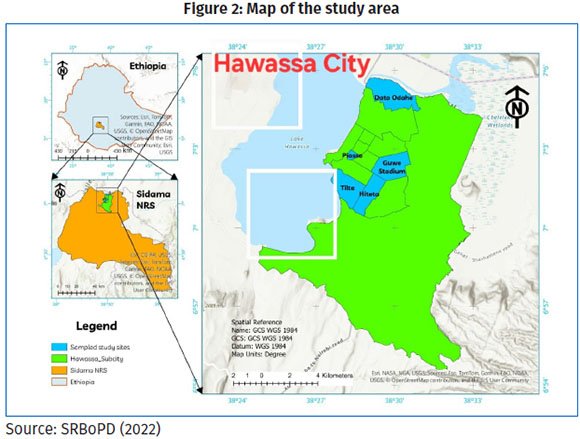
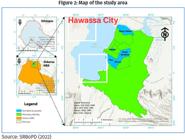
The city of Hawassa is the capital of the Sidama National Regional State, located 275 km south of Addis Ababa, Ethiopia (see Figure 2). It is one of the rapidly growing cities in Ethiopia. It has been the largest tourist destination in the country with considerable cultural, economic, and geographical attractions for local and international tourists. The city is situated on the shore of Lake Hawassa along the Great East African Rift Valley. Geographically, it lies between 6°9'1'' to 7°1'0'' N latitude and 38°4'1'' and 38°5'6'' E longitude. With a total area of 249.8 km2, the city is characterized by warm sub-humid midlands climatic conditions (SRBoPD, 2022). Based on the Central Statistical Authority Census Report of 2007, the projected population size of Hawassa was 453,440, of whom 51.46% were males and 48.54% were females (SRBoPD, 2022).
Research methodology
This study employed sequential mixed design, beginning with a quantitative household survey, followed by qualitative in-depth interviews to gather comprehensive data to determine the drivers of rural-urban migration in Sidama. The purpose was also to mutually complement datasets generated based on survey findings and qualitative interviews. This research approach was adopted to obtain valid empirical evidence, while at the same time enabling the researchers to corroborate findings obtained based on the baseline study. The study particularly focused on three sub-cities, comprising six urban kebeles (villages) that were purposively selected from the Hawassa city administration. To identify participants for the household survey, a snowball sampling technique was used, focusing specifically on migrant households that had relocated to the city from different districts of Sidama regional state.
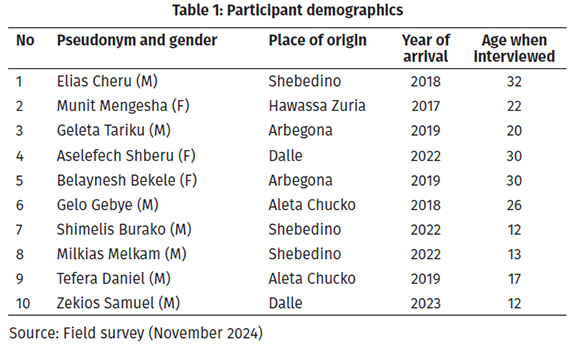
Qualitative data was collected through in-depth narrative interviews with 10 migrants (seven males and three females) who arrived between 2017 and 2023, at least two years before the fieldwork (see Table 1). They shared their migration decisions, experiences, and future plans.
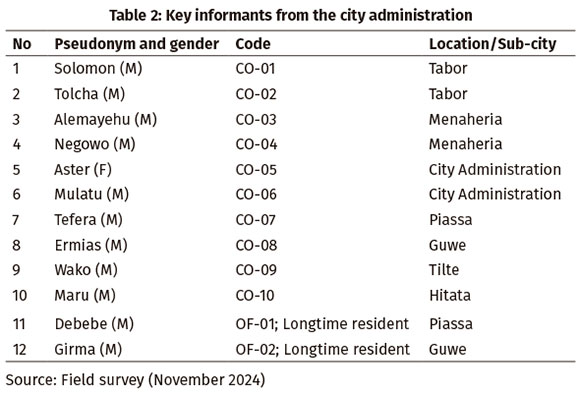
To complement this, interviews were conducted with 10 key informants who assumed major administrative positions in the purposively selected kebeles and sub-cities where most migrants live, as well as city-level administration offices. Specifically, the key-informant interview participants included selected kebele administrators, sub-city managers, and city administration-level heads of Children, Youth and Women Affairs, and Housing and Construction Bureaus (see Table 2). In addition, longtime residents living in close proximity to places where migrant households were located were also interviewed. Interview data was gathered with the help of extensive field notes, audio recording, and site observation.
Sample size and sampling procedures
To obtain optimal sample size for the household survey, Slovin's (Ryan, 2013) single proportion sample size calculation formula was used at 95% confidence interval (Equation 1).

(Z=1.96), 5% margin of error (e), 50% expected population proportion (p) with anticipated characteristics. The estimated sample size based on the computation was 384. However, to compensate for possible dropouts, we added a 6% (n = 24) attrition rate. Hence, the resulting sample size became 408 households. The distribution of the total sample households was determined based on population proportions of the selected kebeles within the three sub-cities.
Data analysis
Quantitative and qualitative analyses were conducted to make sense of the empirical evidence obtained from data collected, using a household survey, qualitative narrative, and key informant interviews. In the case of the household survey, Multiple Logistic Regression was employed to predict migrants' access or non-access to basic services (e.g., housing, transportation, health care). Being the outcome variable, the predictor variables are migrants' background characteristics (X1,X2, … Xk), including respondents' age, gender, educational status, time of out-migration, presence of a close relative at the destination, land scarcity, native language, and average monthly income. The relationship between the predictor and outcome variables is defined by the logit transformation of P:

Where: α is the intercept of the model (constant), βi represents regression coefficients while Xi are the corresponding predictor variables representing migrant characteristics.

On the other hand, the qualitative data obtained from biographical interviews with migrants and key informant interviews with officials was subject to analysis of the biographical history surrounding their migration and experiences in the original rural areas, as well as what they experienced after their arrival at their destination areas. Data was generated based on responses of key informant interviews who were at kebele, sub-city, and city-municipality levels to obtain data on the level of readiness and ability of the respective levels of city administration in terms of ensuring access to basic public services and infrastructure. The coding, patterns, and themes were developed following the steps outlined in Braun and Clarke (2006).
RESULTS AND DISCUSSION
Sociodemographic characteristics of respondents
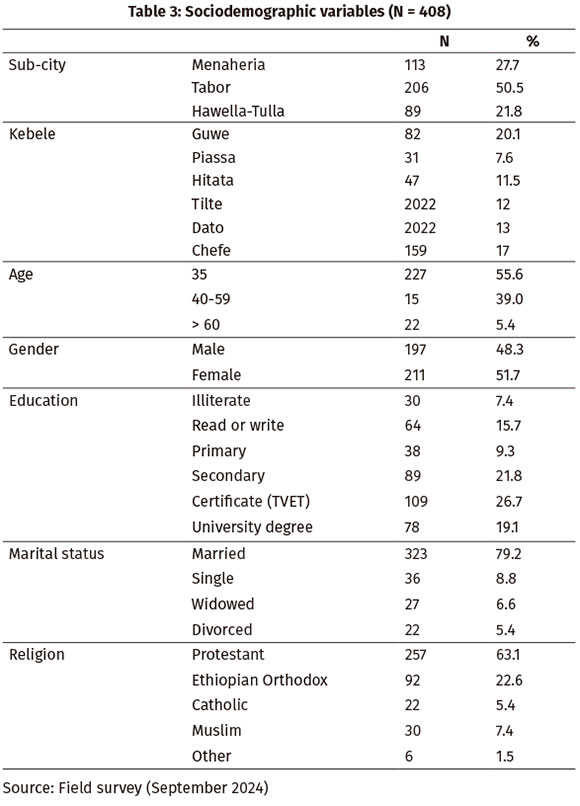
Distribution of the respondents by sub-city is the largest in Tabor, with about half of the respondents (n = 206, 50.5%), followed by Menaheria (n = 113, 27.7%), and Hawella-Tula (n = 89, 21.8%), in that order (see Table 3).
The profile of respondents with regard to gender shows that 48.3% (n = 197) were males and 51.7% (n = 211) were females. In terms of age, the household heads within the age category of 20-39 years made up of younger migrant households, account for 55.6%, followed by the adult migrants aged 40-59 years, who account for about 39%, and the elders age group older than 60 years, accounting for about 5.4% (Table 3).
The educational status of the migrant households constitutes 7.4% illiterates, 15.7% able to read or write, 9.3% primary school, 21.8% secondary school, 26.7% attained a TVET certificate or diploma, and 19.1% attained a university degree. In terms of marital status, 79.2% were married, 8.8% were single, 6.6% were widowed, and 5.4% were divorced. Regarding religion, 63.1% of migrant households were Protestant, 22.6% were Ethiopian Orthodox, 7.4% were Muslim, 5.4% were Catholic, and 1.5% adhered to other practices.
Push and pull factors influencing migration
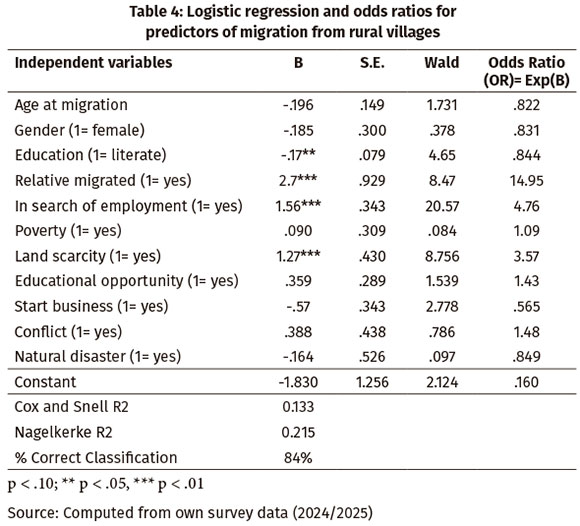
Logistic regression results reveal the key factors influencing rural-urban migration (see Table 4).
Households whose relatives had previously migrated were 15 times more likely to move to Hawassa (OR = 14.95; B = 2.7, p < .01) than those without relatives. On the other hand, employment seekers were five times more likely to migrate than non-employment seekers (OR = 4.76; B = 1.56, p < .01), while those facing land scarcity were 3.5 times more likely to migrate (OR = 3.57; B = 1.27, p < .01) (Table 4).
Unlike cross-border migration studies in Ethiopia (Semela and Cochrane, 2019), rural-to-urban migrants were more likely to be illiterate (OR = 0.844, p < .05). This aligns with the findings of Mitiku and Mulatu (2021), showing that migrants are often less educated and landless. While those migrating for better education were 1.4 times more likely to move (OR = 1.43); the result lacked strong statistical significance. Rapid urbanization also serves as a major pull factor for child and youth migration to cities.
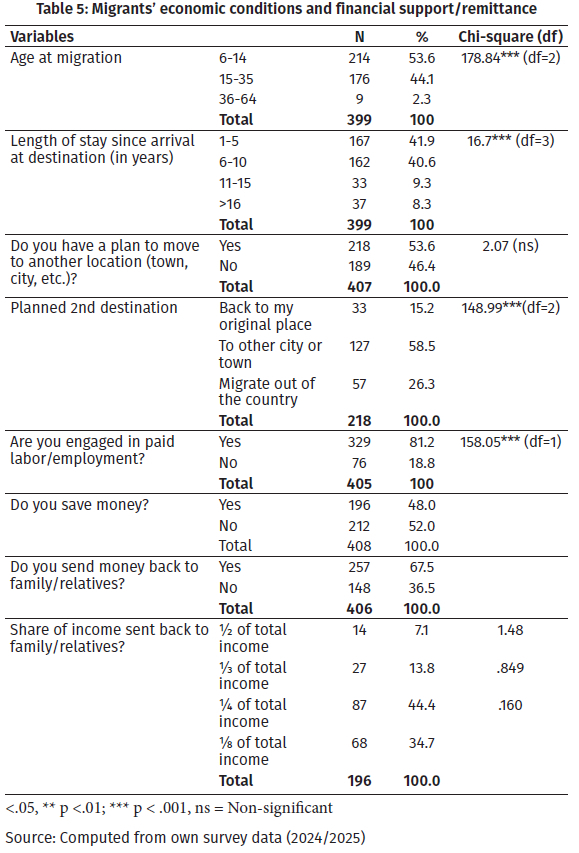
According to the social network theory, rural-urban migration can offer economic benefits to migrant-sending households (see Table 5).
While 81.2% of respondents (n = 329) were engaged in paid labor, only 48% (n = 196) managed to support their families. Still, 67.5% (n = 257) reported sending remittances, though amounts varied significantly (χ2 = 71.7, p < .001): 7.1% sent half of their savings, 13.8% sent a third, 44.4% sent a quarter, and 34.7% sent one-eighth (see Table 5).
Rural poverty is one of the key factors pushing children and youth to cities. Most of the young people who migrated to Hawassa had parents who were either divorced or separated. Moreover, they had lost their caregivers or could no longer support them owing to prolonged illness or living in extreme poverty. The excerpts below capture the children's narratives.
My mother and father are separated (divorced). My father married another wife and left us, so we stayed with our mother. Since our mother is weak, it was difficult for her to send us to school … even have difficulties to eat. We came to Hawassa together with my friends. It has been three years since I came here. (Milkias, 13 years old, from Shebedino).
The data further reveals that the reasons for forced migration are multiple. Shimelis, a 12-year-boy told his story as follows:
I am one of the four children from our village. We came here because we had no job. It's been almost a year since my father passed away and my mother lives in the village and earns a living by farming.
Apart from the death of his father, Shimelis had additional reasons that forced him to decide to leave his village. He indicated that he was not on good terms with his mother. He explained:
My mother brewed liquor (kati-kala) [a local alcoholic drink] and she often got drunk … as a result, we had always argued with each other. This is apart from sharing my father's farmland with another man. Finally, I reached a point where couldn't take it anymore.
According to our respondents, children migrate to the city largely due to death or long illness of one or both of their biological parents. This resulted in lack of adequate support to attend school or engage in some form of paid labor in their original location. Of the 10 migrant youths interviewed, three of them were between 12 and 13 years of age. Below are accounts of more migrant experiences that influenced their decisions to leave their home areas:
I decided to migrate by myself as 12-year-old boy. In the area where I was born, there are not many options. My older siblings and other children we know did not have a job, other than aimlessly wandering around. (Tefera, 17 years old, from Aleta Chucko).
My uncle, who was living in Hawassa, had encouraged me that I can find a job to support myself. My father was too poor to send all his children to school in our village. There is no work in the countryside, since the agricultural land is limited. So, it's better to come here, especially after finishing school. (Munit, 22 years old, female, from Hawassa Zuria).
My husband used to be a farmer, and when his parents got sick, we had to sell our farm, as we had no money to pay for their medical expenses. Because of this, we were left with nothing to eat. So, I left my area two years ago with my four children. (Aselefech, 30 years old, single mother, from Dalle).
My older brother brought me here to live with him so that we can help our parents back in the village. (Zekios, 12 years old).
Many respondents reported that migration decisions were made by family members, who provided them with support. This is in accord with the social network theory of migration, the Harris and Todaro (1970) model, and "hybrid" models (Brueckner et al., 1999; Brueckner and Kim, 2001), which shed light on migrants' efforts to overcome the rural-urban migration disequilibrium.
The findings show that the prospects of employment opportunities in the informal sector in cities trigger the migration of the rural labor force-often large numbers of rural youth-to explore work options in the form of daily labor, or starting small businesses, like vending food, drinks, and snacks to cafés, bars, and the like. These are areas where less-educated, unskilled, or semi-skilled laborers may be able to earn a living. The attraction of urban development, which makes its way closer to local sub-cities and villages, fuels migration aspiration among young people (De Haas, 2021).
Furthermore, the findings show that the knowledge of fellow migrants from their native village served as their source of inspiration, which, in a way, is instrumental in boosting their aspiration to migrate:
From time to time, we are seeing people, young and adults, getting jobs and [being] transferred to Hawassa. So, we [migrants] thought that it would be possible to build a life in a city.
In contrast to the aspiration-capability framework (De Haas, 2021), which draws on Sen's (1999) capability theory, in which individuals have the natural desire to migrate owing to the aspiration they form, what triggers rural children and youth to leave their native villages, according to this study's findings, seems to provide an empirical basis for what Lee (1966) describes as the uncomfortable situation in their native areas.
Extent of migration and migrants' aspirations
While the study's participants come from various regions outside Sidama, including Amhara, Oromia, Tigray, and Southern and Central Ethiopia, the majority originate from within Sidama, particularly from the districts of Boricha, Dalle, Shebedino, and Gorche (CO-01: Table 2). Many of these migrants, especially children and youth, are involved in begging, with a smaller number engaged in labor activities. In just one sub-city, in 2023, the sub-city's Labor and Social Affairs Office had recorded that, excluding some having some form of accommodation, those living in the sub-city's streets totaled 761 (males = 715, females = 46) (CO-02: Table 2).
In agreement with previous studies (e.g., Mitiku and Mulatu, 2021; Kassay et al., 2023), rural migration to Hawassa from across Sidama has significantly increased. In the studied households, 82.5% of migrants arrived within the past decade, 42% in the last five years, and 40.6% within 6-10 years. Only 17.6% migrated more than a decade ago. This suggests that rural migration to Hawassa has quadrupled over the past ten years (see Table 5).
More than half of the migrants (53.6%, n = 214) arrived in Hawassa as children (ages 6-14), 44.1% as youth (15-35), and 13.8% as adults (χ2 = 178.84, p < .001). Despite settling in the city, 53.6% (n = 218) of respondents expressed a desire to migrate elsewhere, either to another town or abroad, while 46.4% preferred to stay. However, this difference was not statistically significant (χ2 = 2.07).
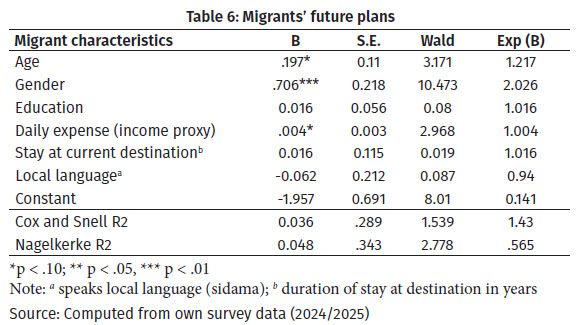
Over half of the respondents (53.6%, n = 218) (see Table 5) indicated plans to leave Hawassa, suggesting that it is not their final destination. Further analysis showed that migration intentions were influenced by gender, age, and income. Gender had a significant effect, indicating that women were twice more likely than men to plan further migration (B = 0.71, p < .01), while age (B = 0.197) and income (B = 0.004) showed weaker, non-significant associations (p < .10) (see Table 6).
Regarding migrants' future plans, respondents were not on the same page. Some wanted to stay, while others planned to go to other cities, including destinations outside the country, while a few others wanted to go back to their villages, which accounts for about 15.2% (n = 33). Of the majority (84.8%, n = 184) who wished to continue their migration, about 58.5% (n = 127) said they planned to migrate to other cities locally, while 26.3% (n = 57) indicated that they planned to migrate internationally. One of the few participants who preferred to return home, said the following:
I would like to stay if we could make a living here, but if life continues like this [challenging], we [he and his family] will return to the countryside. Because when we were in the countryside, we ate whatever was found; and if we were hungry … here, no one would feed us. (Elias, 32 years old, from Shebedino).
Socio-economic impacts of rural-urban migration
Research on rural-urban migration in sub-Saharan Africa often emphasizes its negative impacts, which this study also confirms. Key concerns include socio-economic and security issues. In Hawassa, uncontrolled migration has led to widespread street begging, especially by women and children around traffic lights and tourist areas. According to one participant, a sub-city administrator, this has damaged the city's image, reduced tourism revenue, and made visitors feel uncomfortable.
Depending on their personal life histories, the respondents vary in terms of the kind of lives they were able to build for themselves. Those who had family connections and social networks were able to build their lives quicker. They were also relatively successful in adapting to their new situations, while those who had inadequate knowledge and preparation about urban life and the possible challenges they may encounter in their destination areas faced serious difficulties to survive on day-to-day bases. This is more pronounced among migrant children:
In the past, we used to earn money by carrying goods or by begging [from] people. But now, there is little work for us to be able to get some money, and people are getting harsher by the day; and there are not many people who give money. … Powerful and older boys sometimes forcefully take our money, and if we say anything, they severely beat us. (Shimelis, 12 years old, from Shebedino).
Older children who have some knowledge of life in the city were those whose origins are from nearby communities in close proximity to Hawassa. For instance, Tefera is one of the successful children who managed to overcome the obstacles. He recounts how he was able to make it:
So far, so good for me, I think I have succeeded because I am doing well … I am earning sufficient income doing business in the city. In the area where I was born, it is very difficult to find a job. (Tefera, 17 years old, from Aleta Chucko).
Uncontrolled migration into the city also resulted in inconvenience for tourists. Migrants often beg from them and prevent them from moving freely. This contributes to the deterioration of the city's image (CO-01). Another participant added this view:
… overcrowding major city centers and marketplaces while searching for job[s] or food and drinks free of charge; … street children and other people coming from the outskirts of the city have caused a great increase in begging. (CO-03).
Despite its attraction, urbanization and the urban expansion process may result in disappointment for aspiring youth. This is because there has been insufficient urban development planning, as described by one of the longtime city residents:
As the urbanization process was not planned to ensure controlled expansion, so is the influx of people from rural villages and nearby woredas (districts). The city administration and lower-level administrative structures had to react to the crisis due to the pressure on small public service infrastructure. (OF-01).
Unplanned urban expansion has drawbacks, but it also brings some benefits. In Ethiopia, many cities grow by incorporating nearby rural land, often forcing farming communities to assimilate. However, this expansion can lead to higher incomes, better education, improved infrastructure, urbanization, and a gradual shift from agrarian economies to industrial and service-based systems in low-income countries (De Haas, 2021). This was corroborated by these participants:
I came here about two years ago in search of work, because I thought I might have the opportunity, since I live in a rural village very close to Hawassa. I see the expanding city, more people, and growing business. (Tefera, 17 years old, from Aleta Chucko).
When I got married six years ago, my parents could not give me some land, since they had not enough for themselves. Hence, I decided to come to the city in search of opportunities. (Gelo, 26 years old, from Aleta Chucko).
For that matter, the migrants know very little about what awaits them at their destination areas, except the unsubstantiated rumors that Hawassa provides more educational and job opportunities. Our respondents, who were in different positions of decision-making-specifically sub-city administrators and heads of labor and social affairs-reported that of those who migrated to the city, the majority of teenage children ended up in the streets of the city center.
Despite the growth in the number of migrants, there has been limited attention and preparation to address the escalating demand for housing, health care, and other social services that people need to settle. According to officials of the major sub-cities, the existing public infrastructure is under intense pressure from the growing influx.
Access to education and health care for migrants remains extremely limited, with only occasional support from nongovernmental organizations (NGOs), particularly in education. Efforts to enroll street-dwelling migrant children and youth are often short-lived and inconsistent. In Menaheria and Tabor-Hawassa's most migrant-populated sub-cities-administrators admit to a lack of structured health-care services, as most young migrants lack stable income. Growing concerns focus more on the disturbances these youths cause to tourists and residents than on their welfare.
This study aimed to assess the level of preparedness and current status of the city administration based on in-depth interviews with the selected officials of three sub-city managers, based on the size of total inhabitants as well as the relative concentration of in-migrants. The findings are structured under the following themes: (a) creating job opportunities; (b) accessing basic services, such as housing, educational and health care provision for migrants, including children and youth under 19 years of age; and (c) determining the status of child protection and care.
According to one informant:
Public infrastructure and services could not cope with the overwhelming demand-housing, electricity, water supply-that were even accessible for city residents, leave alone to rural internal migrants that are mostly children, adolescents, young adult men and women who didn't have the necessary educational or vocational preparation for gainful employment in the available job markets. … [As a result,] most rural migrants are involved in the informal sector, including as daily laborers in construction sites, guards, janitors, housemaids, or engaged in small street-side businesses, such as shoe shining, lottery vending. (OF-02).
Despite limited support, small-scale, ad-hoc initiatives at the kebele and sub-city levels have been implemented in collaboration with local NGOs. A sub-city head noted efforts to create job opportunities through youth training programs. Similarly, another city official of the target sub-cities said:
We are organizing women and young men for skills training in areas like woodworking, sewing, and metalwork, some of which have led to meaningful improvements in their lives. (CO-01).
Few rural migrant children and youth in Hawassa have access to education and health care. City officials acknowledge a lack of structured support, especially in education, despite global and national commitments like the United Nations Sustainable Development Goals (SDGs), in particular SDG 4 and the United Nations Convention on the Rights of the Child (UNCRC) (UNICEF, 1990). Children from poor migrant families and those living on the streets are most affected. However, some, like Tefera, a 17-year-old whose parents fund his college education and housing, face fewer financial challenges. He described his situation as follows:
I came to Hawassa to get college education. My parents pay for my school and accommodation.
According to these sub-city administration respondents:
Regarding housing services, if migrants are internally displaced (from their home areas) due to natural or man-made disasters, we do not provide permanent housing or land, apart from providing temporary shelter until they return to where they came from. (CO-03).
Most of the children and youth who migrated from rural areas are engaged in alcohol and substance abuse, and sometimes they are also involved in criminal activities. Visitors who come to the city are occasionally robbed; city residents are also victims. They steal phones, jewelry and money from residents and tourists. (CO-01).
In contrast, however, migrant children living in the streets (Menaheria sub-city) are also victims of street life, despite petty crimes. This sub-city administrator stated:
Refugees [migrant children], especially those on the streets, are in a crisis and often victims of drug addiction. (CO-02).
City and sub-city officials frequently cited alcohol and drug use among migrant children as a major issue. One kebele manager noted:
Very young children often sniff benzene from plastic bottles, sometimes in groups, leading [to] them sleeping on streets during the day.
When asked why migrant children were engaged in sniffing substances, the respondents frequently mentioned that sniffing benzene suppresses appetite. A teenage respondent confirmed this, stating that hunger was the most difficult challenge for him and his peers, and that sniffing helped them as a coping mechanism against hunger.
Overall, even though the outcomes of the rural-to-urban influx are not always negative, there are consequences, mainly associated with inadequate preparation and limited capacity of the municipality and lower-level urban management bodies. In effect, the problem that started as small and limited in scope and magnitude degenerated into a compelling social crisis of youth alcohol and drug abuse.
CONCLUSION AND POLICY IMPLICATIONS
Conclusion
Rural-urban migration from the Sidama region to the city of Hawassa has shown a dramatic increase over the past decade, where about 82% of migrant households have been confirmed to settle in the city. This is inconsistent with the prediction made in connection with Africa's rural-urban migration trends vis-à-vis Asia (Tacoli et al., 2015).
The migrant population is diverse, including children, adolescents, youth, and adults. Findings from surveys and interviews reveal that migration to the city is driven by a range of personal, household, and structural factors. Personal drivers include parental separation, illness, death of parents, and poverty. Structurally, there are macro-level policies related to urbanization, which in turn led to rural land expropriation, shrinking agricultural space and employment opportunities for young people, with expanding built-up areas in the suburbs.
Migration drivers vary by age group. Children and adolescents often migrate due to the prolonged illness or death of parents or caregivers. For adolescents and youth, two main factors emerge: first, the illness or death of a parent, leading to abandoned farms and loss of income; second, limited farmland, which makes rural life unsustainable and prompts migration in search of better prospects.
Migrants with family support have integrated into urban life through relatives, while unaccompanied children often face physical and psychological harm, falling victim to street youth involved in crime and drug addiction. Many dropped out of school and still lack access to education and health care, trapping them in poverty. Meanwhile, some who came to Hawassa as teenagers from nearby rural districts have become self-sufficient, have married, and are raising families.
Policy implications
1.Children who migrated to the city as teenagers or younger children and who were living on the streets, reported having experienced severe physical and emotional abuse, which requires urgent attention at the city administration and regional levels.
2. Urban expansion has created job and business opportunities for young people, especially those with close relatives in the city, compared to migrants who came from remote districts of the Sidama region; thus, the opportunities are not evenly distributed across all migrants. This requires the attention of the city government to ensure rational distribution of job opportunities and other valued resources.
3. The city lacks prior planning at all administrative levels, from kebeles and sub-cities to the highest city administration, with respect to accommodating rural migrants and providing access to public services and infrastructure for their integration. This demands short- and long-term planning and preparation of tailored projects by the city administration and kebeles to properly address the matter.
4. On top of the impact of urban expansion, which attracted mainly young people looking for employment, land scarcity was found to be the key driver, owing to dwindling land sizes of properties owned by families. At household level, this frustrated any foreseeable chance of participants inheriting land for self-employment in their native rural villages. This requires further and elaborate study to design ways to ascertain how rural youth influx could be kept to a minimum by creating on-farm and off-farm job opportunities.
5. While alcohol or drug abuse could result from a range of factors, young respondents unequivocally stated that sniffing benzene and consuming leftover alcohol were coping strategies to suppress constant hunger. Though further investigation is needed, it is crucial for the city administration to lead efforts alongside public, private, and NGO partners to provide the care and education these young people are entitled to.
DISCLOSURE STATEMENTNo potential conflict of intersect was reported by the authors.
DATA AVAILABILITY STATEMENT
The datasets supporting this article are included in the manuscript.
ETHICS STATEMENTThis study was conducted in accordance with the Declaration of Helsinki and was approved by the Humanities and Social Sciences Research Ethics Committee of the University of the Western Cape (Approval number: HS24/2/21). Informed consent was obtained from all participants involved in the study. Participants were informed about the purpose of the research, their right to withdraw at any time, and the measures taken to ensure confidentiality and anonymity. All procedures were performed in compliance with ethical standards.
ACKNOWLEDGMENTS
This work was supported by the Norwegian Agency for Development Cooperation (NORAD) under the Institutional Cooperation Program Phase V (ICP V). The authors gratefully acknowledge NORAD's commitment to strengthening research capacity and academic collaboration. The views expressed in this publication are those of the authors and do not necessarily reflect the views of NORAD or its partners.
REFERENCES
- Abebe, M.G. 2024. Impacts of urbanization on food security in Ethiopia: A review with empirical evidence. Journal of Agriculture and Food Research, 15(1): 100997. https://doi.org/10.1016/j.jafr.2024.100997
- Ayuba, D., Akinga, A.Y., Okeh, D.U., et al. 2023. Migration and food security in urban Nigeria: The dilemma of the urban poor. In Cohen, M.J. (ed.), Advances in food security and sustainability. Amsterdam: Elsevier, pp. 235-265. https://doi.org/10.1016/bs.af2s.2023.08.003
- Berisso, O. and Kebu, H. 2023. Determinants of rural‑urban migrants' employment choices in the urban labor market: A study from selected cities in central Oromia, Ethiopia. Ethiopian Journal of Science and Sustainable Development, 10(1): 61-74. https://doi.org/10.20372/ejssdastu:v10.i1.2023.546
- Bimerew, H. 2015. Rural‑urban migration and its consequences on urban living: The case in Hawassa City. Global Journal of Human Social Science, 15(4): 17-24.
- Braun, V. and Clarke, V. 2006. Using thematic analysis in psychology. Qualitative Research in Psychology, 3(2): 77-101. https://doi.org/10.1191/1478088706qp063oa
- Brueckner, J.K. and Kim, H.A. 2001. Land markets in the Harris‑Todaro model: A new factor equilibrating rural‑urban migration. Journal of Regional Science, 41(3): 507-520. https://doi.org/10.1111/0022-4146.00228
- Brueckner, J.K., Thisse, J.F. and Zenou, Y. 1999. Why is central Paris rich and downtown Detroit poor? An amenity‑based theory. European Economic Review, 43(10): 91-101. https://doi.org/10.1016/S0014-2921(98)00019-1
- Chaplitskaya, A., Tassinari, G., Heijman, W. and Van Ophem, J. 2024. Rural‑urban migration within Russia: Prospects and drivers. Regional Science Policy and Practice, 16(9): 100053. https://doi.org/10.1016/j.rspp.2024.100053
- Chisasa, J. and Khumalo, P. 2023. Exploring the nexus between migration and urbanisation in the Southern Africa region. International Journal of Research in Business and Social Science, 12(10): 85-95. https://doi.org/10.20525/ijrbs.v12i10.3114
- De Haas, H. 2021. A theory of migration: The aspirations‑capabilities framework. Comparative Migration Studies, 9(1). https://doi.org/10.1186/s40878-020-00210-4
- Debie, E. and Ayele, A.W. 2023. Perceived determinants of smallholder households' resilience to livelihood insecurity in Goncha District, northwest highlands of Ethiopia. SAGE Open, 13(3). https://doi.org/10.1177/21582440231184861
- Dokubo, E.M., Sennuga, S. O., Omolayo, A. F., Bankole, O.-L. and Barnabas, T. M. 2023. Effect of rural-urban migration among the youths and its impacts on agricultural development in Kuje Area Council, Abuja, Nigeria. Journal of Research in Science and Technology, 4(2): 12-27.
- Ezra, M. and Kiros, G.E. 2001. Rural out‑migration in the drought‑prone areas of Ethiopia: A multi‑level analysis. International Migration Research, 35(3): 749-771.
- Fadda, M. and Heinrigs, P. 2025. Beyond boundaries: Understanding Africa's rural-urban linkages through Africapolis. In Handbook on rural-urban linkages in the Global South. Tacoli, C., Agergaard, J., Andreasen, M.H., and Brown, D. (eds.), Cheltenham: Edward Elgar, pp. 40-55.
- Food and Agriculture Organization of the United Nations (FAO). 2024. Decent rural employment: Migration. https://www.fao.org/rural-employment/work-areas/migration/en/
- Gutu, S.T. 2023. Urbanisation and rural development in sub‑Saharan Africa: A review of pathways and impacts. Research in Globalization, 6. https://doi.org/10.1016/j.resglo.2023.100133
- Harris, J.R. and Todaro, M.P. 1970. Migration, unemployment and development: A two‑sector analysis. American Economic Review, 60(1): 126-142
- International Center for Migration Policy Development (ICMPD). 2025. Migration outlook 2025. https://www.icmpd.org/file/download/63373/file/ICMPD
- Kassay, A.B., Tuhar, A.W. and Ulsido, M.D. 2023. Integrated modelling techniques to implication of demographic change and urban expansion dynamics on water demand management of developing city in Lake Hawassa Watershed, Ethiopia. Environmental Research Communications, 5(5). https://doi.org/10.1088/2515-7620/acd512
- Kumar, S. and Raj, A. 2024. Trends and patterns of migration from Jharkhand, India. Humanities and Social Sciences Review, 12(2): 8-15. https://doi.org/10.18510/hssr.2024.1222
- Mabogunje, A.L. 1970. Systems approach to a theory of rural‑urban migration. Geographical Analysis, 2(1): 1-18. https://doi.org/10.1111/j.1538-4632.1970.tb00140.x
- Massey, D.S. 1990. Social structure, household strategies, and the cumulative causation of migration. Population Index, 56(1): 3-26. https://www.jstor.org/stable/3644186
- McGranahan, G., Balk, D., Colenbrander, S., et al. 2023. Is rapid urbanization of low‑elevation deltas undermining adaptation to climate change? A global review. Environment and Urbanization, 35(2): 527-559. https://doi.org/10.1177/09562478231192176
- Mitiku, T. and Mulatu, N.T. 2021. Cause and consequence of rural‑urban migration: Evidence from Hosanna town, SNNPR, Ethiopia. Journal of International Trade, Logistics and Law, 7(1).
- Mthiyane, D.B., Wissink, H. and Chiwawa, N. 2022. The impact of rural‑urban migration in South Africa: A case of Kwa Dukuza municipality. Journal of Local Government Research and Innovation, 3. https://doi.org/10.4102/jolgri.v3i0.56
- Ogar, W.O., Thompson, H.O., Muhammed, I., et al. 2024. Socio‑economic implications of rural‑urban migration on food security in Nigeria: A study of Zuru local government area of Kebbi State. Journal of Political Discourse, 2(1). https://jopd.com.ng/index.php/jopdz/article/view/98/90
- Piore, M.J. 1978. Dualism in the labor market: A response to uncertainty and flux. The case of France. Programme National Persée, 29(1): 26-48. https://doi.org/10.3406/reco.1978.408371
- Ravenstein, E.G. 1885. The laws of migration. Journal of the Statistical Society of London, 48(2): 167-235. https://doi.org/10.2307/2979181
- Ryan, T.P. 2013. Sample size determination and power. New Jersey: John Wiley and Sons.
- Semela, T. and Cochrane, L. 2019. Education‑migration nexus: Understanding youth migration in Southern Ethiopia. Education Sciences, 9(2). https://doi.org/10.3390/educsci9020077
- Sen, A. 1999. Development as freedom. Oxford: Oxford University Press.
- Simachew, A.Z. 2023. Factors and consequences of rural‑urban women migration: Evidence from Injibara town, Ethiopia. Lwati: A Journal of Contemporary Research, 20(2). www.universalacademicservices.org
- Sidama Regional State Bureau of Planning and Development (SRBoPD). 2022. Hawassa, Ethiopia: SRBoPD.
- Stark, O. 1978. Technological change and rural‑to‑urban migration of labor: A micro‑economic causal relationship in the context of less developed economies. International Union for the Scientific Study of Population, IUSSP Papers, 11. https://www.econstor.eu/bitstream/10419/246786/1
- Stark, O. and Bloom, D.E. 1985. The new economics of labor migration. Papers and proceedings of the Ninety‑Seventh Annual Meeting of the American Economic Association. American Economic Review, 75(2): 173-178. https://www.jstor.org/stable/1805591
- Tacoli, C., McGranahan, G. and Satterthwaite, D. 2015. Urbanisation, rural‑urban migration and urban poverty. International Institute for Environment and Development (IIED), UK. https://www.iied.org/10725iied
- Tamirat, N., Tadele, S. and Assefa, W. 2024. Determinants of rural‑urban migration in Duna district, Southern Ethiopia. Cogent Social Sciences, 10(1). https://doi.org/10.1080/23311886.2024.230717
- Taylor, J.E., Yunez‑Naude, A. and Dyer, G. 1999. Agricultural price policy, employment, and migration in a diversified rural economy: A village-town CGE analysis from Mexico. American Journal of Agricultural Economics, 81(3): 653-662. https://doi.org/10.2307/1244030
- United Nations Children's Fund (UNICEF). 1990. United Nations Convention on the Rights of the Child (UNCRC). New York: United Nations.
Accepted 30 March 2026
Published 30 April 2026