Is Voluntary Repatriation the Preferred Durable Solution? The View of Refugees in South Africa
Abstract
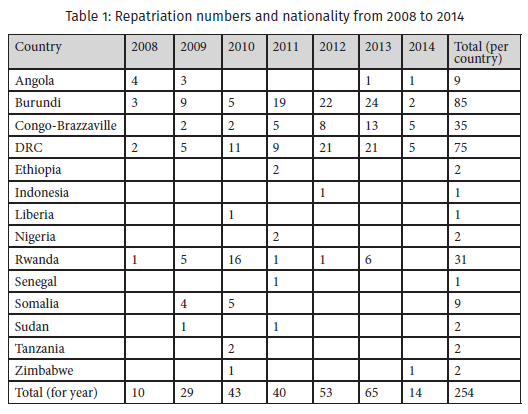
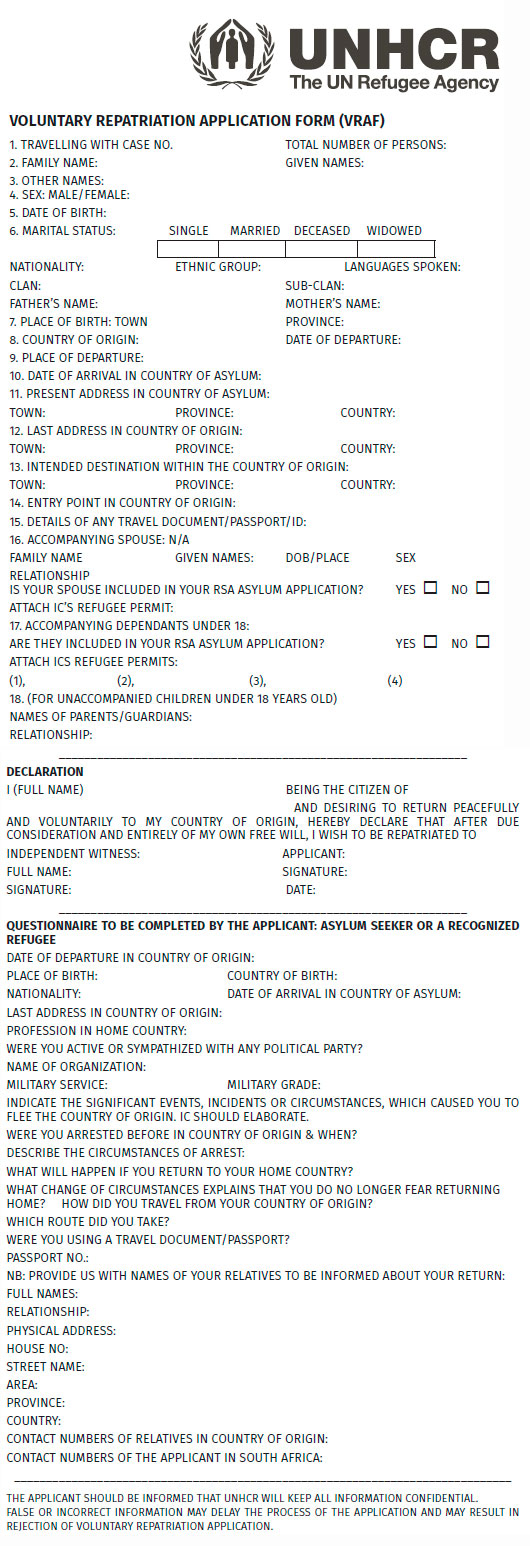
Voluntary repatriation as the preferred durable solution for refugees has attracted much scholarly attention and the existing literature highlights the complexities of the process. This paper attempts to answer the question of when return can be considered as truly voluntary and preferred. To answer this question, the paper considers reasons offered by refugees themselves. The percentage of voluntary repatriation applications by refugees living in South Africa is low in relation to the number of refugees living in the country. However, reasons why refugees might choose to repatriate are still worthy of interrogation if we are to truly establish whether it is a preferred solution. Refugees' answers illustrate that they are not always completely free to make choices. They may indicate consent, but consent does not necessarily indicate a preference. This paper incorporates a study which reveals that refugees choosing to repatriate from South Africa are indeed very small in number, despite the vigorous attempts of the United Nations High Commissioner for Refugees (UNHCR) at promoting voluntary repatriation. It further reveals that this can be partly attributed to the fact that in an urban setting such as South Africa with a rights-based framework, refugees are often able to better integrate into their host society without the direct assistance of the UNHCR as they would do in a camp-based setting. As such, assumptions that voluntary repatriation is a preferred durable solution for all refugees, need to be interrogated.
voluntary repatriation; refugees; South Africa; UNHCR; urban policy
 Thumbnail