The link between Documentation Status, Occupation Status, and Healthcare Access for African migrants: Evidence from Kenya, Nigeria, and South Africa
Abstract
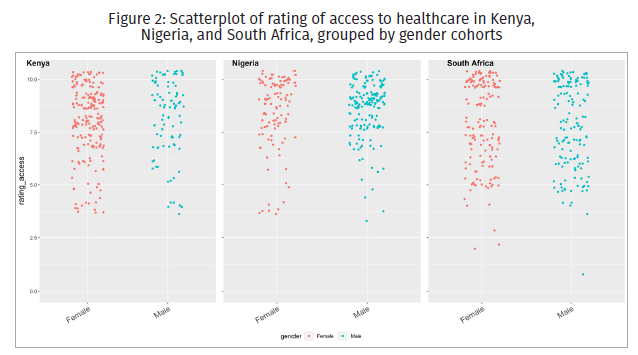
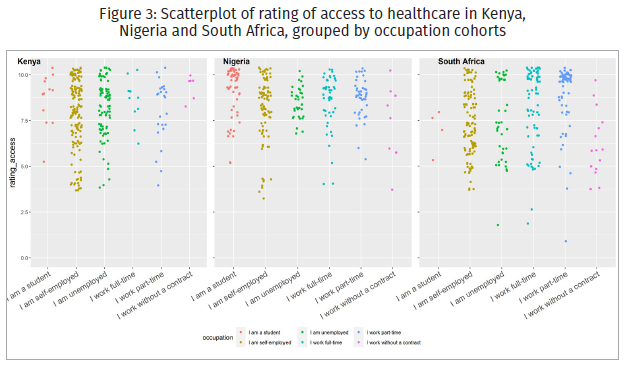
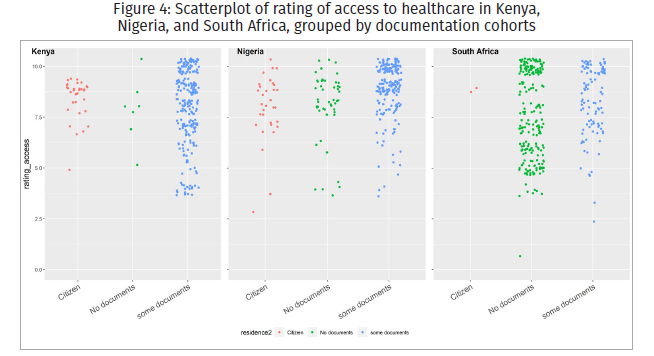
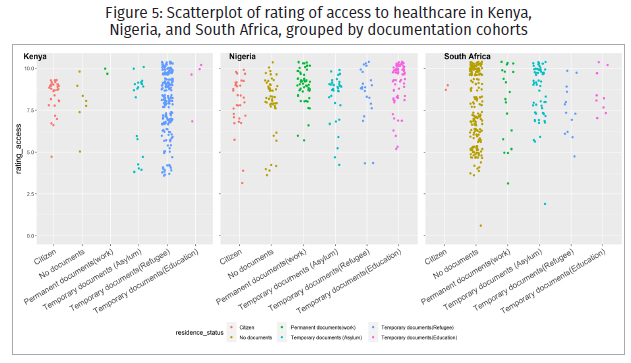
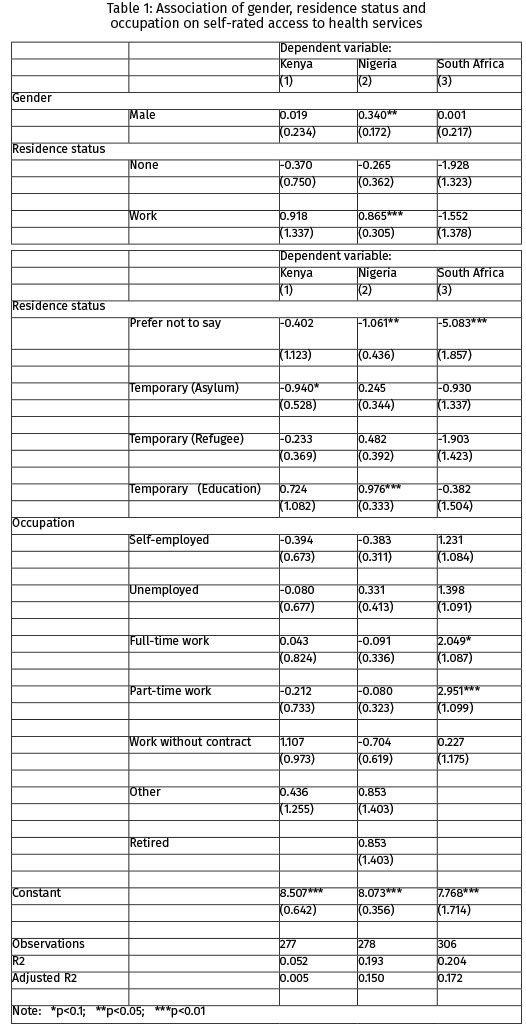
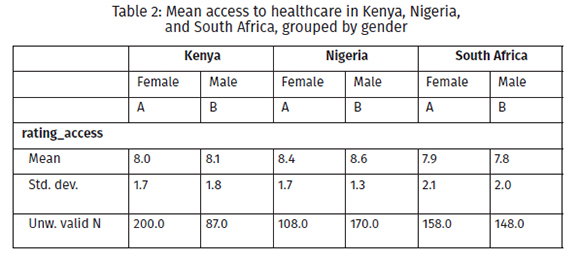
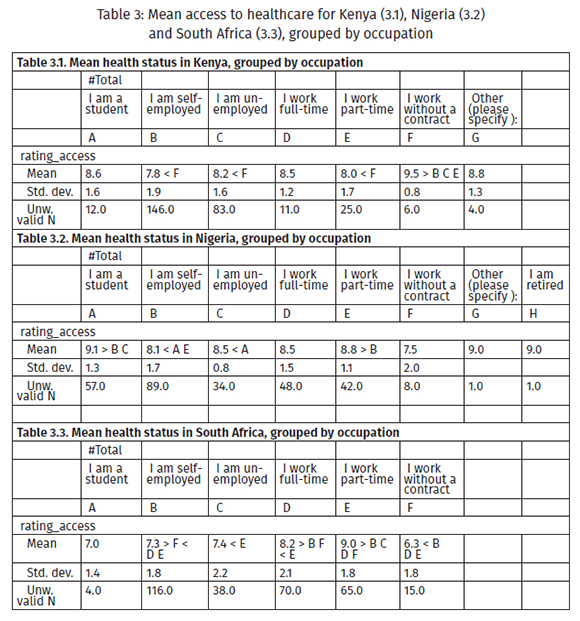
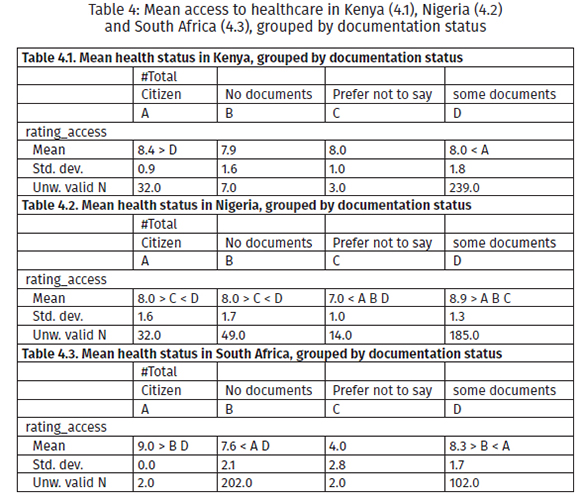
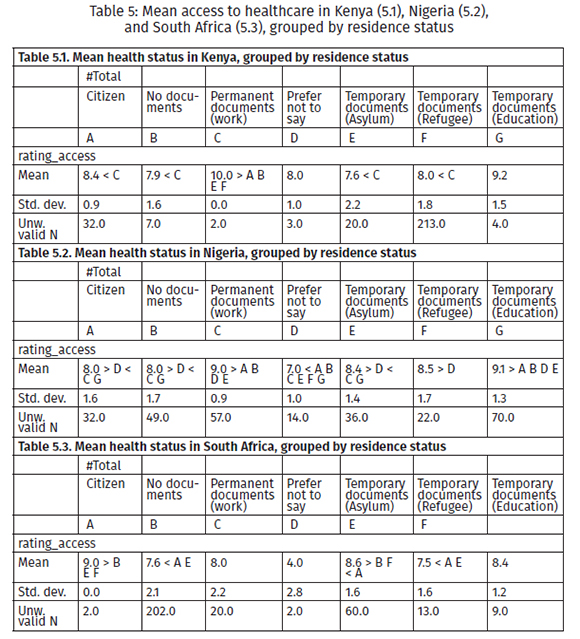
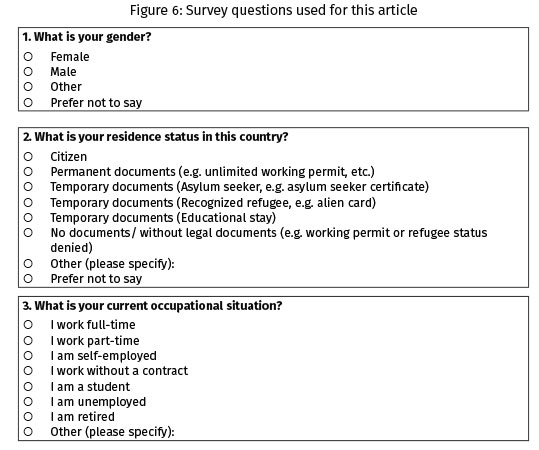
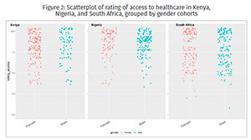
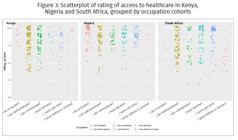
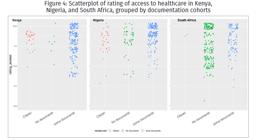
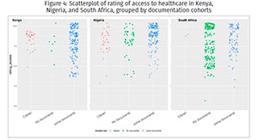
The link between migrants' legal and employment status, access to health and health outcomes is widely explored in the academic literature on migration and health. However, there are few, if any, studies examining this link within African states. In this article we present survey data collected from refugees and people in refugee-like situations in Kenya, regular (labor) migrants in Nigeria, and irregular migrants in South Africa to examine the link between registration status, employment or occupation status, gender, and (perceptions of) access to healthcare. A range of statistical tests and models were applied to examine the effects of these different characteristics. A consistent finding throughout the three sample countries is that access for people without any documentation is lower than other groups, not only by means but also within the linear models. This strongly suggests that extending regularization pathways in African states, even if on a temporary basis, would be an effective policy lever to improve migrants' access to healthcare, and by extension migrants' health. However, the effects of employment status and gender on access to healthcare were more ambiguous, and further research in African contexts is required to clarify their impact.
migration; access to healthcare; Africa; African Union; refugees; regular migrants; irregular migrants; health policy; migration policy; health systems; migrant registration status
 Thumbnail
 Thumbnail
 Thumbnail
 Thumbnail
 Thumbnail
 Thumbnail
 Thumbnail
 Thumbnail
 Thumbnail