Security Risk and Xenophobia in the Urban Informal Sector
Abstract
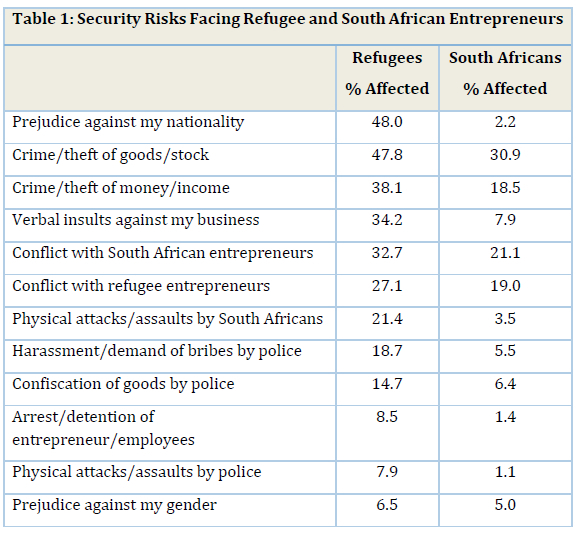
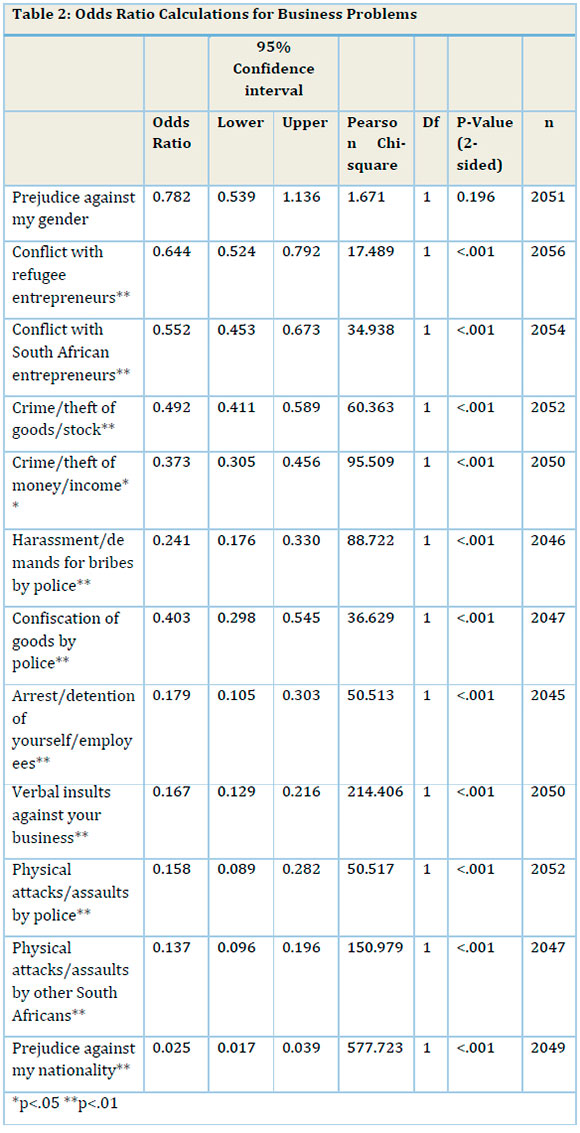
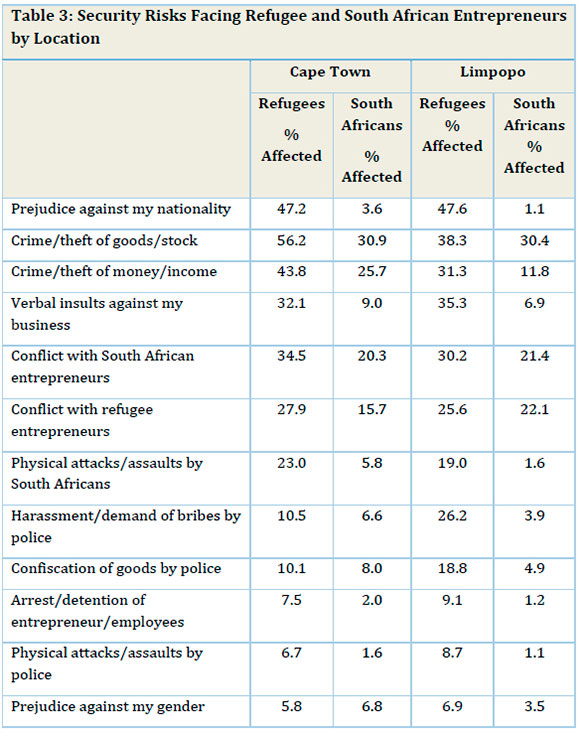
Whenever there are violent attacks on refugee and migrant businesses in South Africa's informal sector, politicians, officials and commissions of enquiry deny that xenophobia is a driving force or indeed exists at all in the county. A new strain of nativist research in South Africa does not deny the existence of xenophobia but argues that it is an insignificant factor in the violence. It is argued that because South African and non-South African enterprises are equally at risk, the reasons for the violence are internal to the sector itself. This paper critiques this position on the basis of the results of a survey of over 2,000 enterprises in the contrasting geographical sites of Cape Town and small town Limpopo. The survey results reported in this paper focus on security risks and the experience of victimisation and the experience of the two groups of enterprise operator are systematically compared. The findings show that while both cohorts experience many of the same security risks, refugee operators are significantly more exposed to most threats including verbal abuse, theft, unprovoked attacks and harassment by law enforcement agencies. Far from being irrelevant, xenophobia is an important additional risk for refugee entrepreneurs, as they themselves clearly recognise.
Security risks; informal sector; xenophobia; refugee entrepreneurs; South African entrepreneurs