Urban Refugee Protection and the 2030 Sustainable Development Agenda in Ethiopia: Challenges and Missing Links
Abstract
Urban refugees in Ethiopia face persistent challenges despite progressive legal and policy reforms, including the 2019 Refugee Proclamation, the Comprehensive Refugee Response Framework, and some alignment with the 2030 Sustainable Development Goals. This study examined the gaps between policy commitments and lived realities by integrating desk reviews, key informant interviews with government and humanitarian actors, and in-depth interviews with 21 refugees from diverse nationalities in Addis Ababa. Findings reveal partial successes in economic inclusion, education, healthcare, documentation, and social participation, yet structural, administrative, and legal barriers constrain meaningful access to livelihoods, housing, services, and social networks. Social capital mediates refugees' ability to navigate these challenges, while disparities in documentation, language, and market access exacerbate vulnerability. The study concludes that Ethiopia's urban refugee protection system exhibits implementation gaps that undermine Sustainable Development Goal-aligned outcomes and emphasizes the need for coordinated, inclusive, and context-sensitive policies that translate formal rights into substantive capabilities and equitable integration opportunities.
Urban refugees; refugee protection; challenges facing refugees; sustainable development goals (SDGs); access to services
INTRODUCTION
Forced displacement has emerged as one of the defining global challenges of the 21st century, with urban areas increasingly becoming primary destinations for refugees seeking safety, services, and livelihood opportunities. Although global frameworks such as the 2030 Agenda for Sustainable Development and the Global Compact on Refugees (GCR) call for inclusive approaches that integrate refugees into national development systems, the practical realization of these commitments remains slow and uneven (UNHCR, 2018b; UNDP, 2019). Ethiopia, one of Africa's largest refugee-hosting countries, has undertaken significant legal and policy reforms over the past decade to align its refugee response with international standards and development-oriented principles, including the Comprehensive Refugee Response Framework (CRRF) and the revised 2019 Refugee Proclamation. These developments represent a shift from predominantly humanitarian assistance toward a more holistic, rights-based, and developmental approach to protection.
Despite these advances, the governance of urban refugee protection in Ethiopia remains complex. Urban refugees occupy a unique position: they benefit from expanded rights relative to camp-based refugees yet face heightened vulnerabilities due to the cost of living, limited service access, and inconsistent implementation of legal provisions (Kobia and Cranfield, 2009; UNHCR, 2009; Easton-Calabria, 2020). At the same time, national development planning and Sustainable Development Goal (SDG) implementation processes do not consistently or systematically integrate refugee needs, creating "missing links" between national policy commitments and the global imperative to ensure that displaced persons are not left behind (UNHCR, 2020c).
The central argument of this article is that Ethiopia's current urban refugee protection system contains critical policy and implementation gaps that undermine alignment with the 2030 SDGs, particularly in areas of social protection, inclusion, and equitable access to services. The research problem addressed in this manuscript concerns the misalignment between international commitments, national refugee reforms, and the lived realities of urban refugees in Ethiopia. Although Ethiopia's policy architecture, through the GCR, CRRF, and the 2019 Refugee Proclamation, promotes inclusion and self-reliance, evidence suggests that implementation has lagged behind ambition. Urban refugees continue to face legal, socioeconomic, and administrative barriers that impede their well-being and prevent meaningful realization of SDG-aligned protection standards.
A review of existing scholarship highlights several clear research gaps. Much of the work on urban refugees in Ethiopia consists of organizational reports rather than peer-reviewed studies and tends to address discrete themes such as livelihoods, skills, education, legal recognition, or administrative procedures (Betts et al., 2017; Pape et al., 2018b; UNHCR, 2024). Few studies adopt a comprehensive perspective that integrates these dimensions with analyses of the national policy and legal frameworks, including the GCR, CRRF, and the 2019 Refugee Proclamation, and how they interact with implementation realities in urban settings. In particular, evidence on the effectiveness, reach, and enforcement of key instruments, such as work permits, residence outside camps, civil documentation directives, and sectoral policies affecting education, health, and social protection, remains limited (UNHCR, 2018c; Watol and Assefa, 2019; Carver, 2020; RRS and UNHCR, 2021; UNHCR, 2021b).
Critically, existing studies seldom analyze urban refugee protection through the lens of the SDGs, despite international calls to mainstream displacement into development monitoring and planning (UNDP, 2019; UNHCR, 2020a). As a result, important dimensions of refugee well-being, including legal, socioeconomic, and administrative barriers, risk being overlooked in national development metrics and policy debates. Moreover, there is limited empirical evidence on how these gaps affect the day-to-day experiences of urban refugees, including their access to livelihoods, education, financial services, and civil rights, which constrains the ability of policymakers to design interventions that are both inclusive and SDG aligned.
This study addresses these gaps by offering a holistic analysis of Ethiopia's urban refugee protection landscape, integrating the policy and legal frameworks with empirical insights from urban settings. By situating Ethiopia's evolving refugee governance within the broader global protection agenda and the 2030 SDGs, the article identifies where progress has been made, where persistent barriers remain, and what policy and programmatic adjustments are required to ensure that urban refugees are meaningfully included in the country's sustainable development trajectory.
BACKGROUND: POLICY AND LEGAL FRAMEWORK
Ethiopia's refugee protection regime is anchored in a progressive set of international, regional, and national instruments. At the international level, the country is a signatory to key legal instruments, including the 1951 Convention Relating to the Status of Refugees, its 1967 Protocol, and the 1969 OAU Convention Governing the Specific Aspects of Refugee Problems in Africa (Watol and Assefa, 2019). Although Ethiopia enacted its first national refugee law in 2004, responses remained predominantly humanitarian until more recent years (Betts, 2006).
A major policy shift emerged in 2016 at the Leaders' Summit on Refugees in New York, where Ethiopia made nine pledges to enhance refugee inclusion and self-reliance. These commitments addressed education access across all levels, expanded healthcare services, issued work permits, provided civil documentation, and allocated irrigable land for refugee and host-community households. Additional measures included expanding the Out-of-Camp Policy (OCP), promoting local integration for refugees residing over 20 years, developing industrial parks with employment quotas for refugees, and enabling access to banking services and birth registration (UNHCR, 2018c; UNHCR, 2021b).
In 2017, Ethiopia became one of seven African pilot countries for the CRRF, the main vehicle for implementing these pledges. The CRRF operationalizes the GCR, adopted in 2018, by embedding refugee responses within broader development strategies and strengthening service delivery for both refugees and host communities (UNHCR, 2018c; Carver, 2020; European Council on Refugees and Exiles, 2020; UNHCR, 2021b).
To facilitate implementation, Ethiopia adopted the Roadmap for the Implementation of the Ethiopian Government Pledges (RIEGP), established a CRRF Steering Committee, and launched a National Coordination Office (NCO), followed by the National Comprehensive Refugee Response Strategy (NCRRS) in 2018 (Carver, 2020). A revised refugee law was introduced in 2019, formally expanding refugees' rights to employment, education, civil registration, driving licenses, and banking services. It also strengthened the OCP's reach (UNHCR, 2021b). To provide legal guidance and operationalize the proclamation, three directives were issued on December 30, 2019: Directive No. 01/2019 outlined procedures for mobility and residence outside camps, Directive No. 02/2019 clarified refugees' right to work, and Directive No. 03/2019 established a framework for grievance and appeals handling (Refugee and Returnee Services and UNHCR, 2021).
The GCR and CRRF aim to address long-standing barriers to durable solutions, including declining global resettlement opportunities, protracted displacement crises, and the political sensitivity of local integration. By reframing refugee assistance within development discourse, Ethiopia's evolving legal and policy architecture reflects a commitment to building resilience and fostering inclusive integration (Carver, 2020).
Theoretical literature
To frame the analysis of urban refugee protection and integration in Ethiopia, several theoretical lenses are particularly instructive: social capital theory, self-reliance theory, rights-based approaches, the capability approach, and integration/social inclusion frameworks.
Social capital theory
Bourdieu's (1986) theory of social capital emphasizes the value of networks, trust, and social relationships in accessing resources and opportunities. In the context of urban refugees, social capital enables access to housing, employment, information, and emotional support, often compensating for gaps in formal legal protections or state services. Studies in refugee contexts highlight that both strong ties (family and close community networks) and weak ties (broader civil society connections) are crucial for successful integration (Olsson et al., 2023).
Self-reliance framework
The principle of self-reliance has emerged as a central theoretical lens in refugee studies, emphasizing the capacity of individuals, households, and communities to sustainably meet their own needs rather than remain dependent on humanitarian aid (UNHCR, 2005). Within the United Nations High Commissioner for Refugees (UNHCR) and CRRF frameworks, self-reliance is framed as both a policy objective and a conceptual paradigm for refugee inclusion. Scholars highlight its dual role: promoting economic and social autonomy while raising critical questions about structural barriers, market access, and the shifting of responsibility from states to refugees themselves (Betts et al., 2019; Betts et al., 2020). In Ethiopia, self-reliance is embedded in the CRRF and the 2019 Refugee Proclamation that formally expand refugees' rights to work, education, and participation in local economies. Critiques caution that self-reliance discourse can obscure structural barriers, such as restricted labor markets, legal restrictions, and limited institutional support, and can place disproportionate responsibility on refugees to achieve economic independence (Betts, 2022; World Food Programme, 2023). However, when analyzed alongside social capital theory, self-reliance provides a nuanced lens for understanding how refugees mobilize networks and resources to achieve sustainable livelihoods, while also revealing the constraints imposed by institutional and socioeconomic contexts (McAteer and Leeson, 2021).
Rights-based frameworks
A rights-based framework reconceptualizes refugees as rights-holders rather than passive recipients of aid. This perspective emphasizes that legal protections such as the right to work, documentation, and access to education are necessary but not sufficient; their realization depends on effective implementation, power dynamics, and institutional accountability (Hathaway, 2010; UNHCR, 2018a). Scholars employing this lens investigate how legal frameworks are operationalized, who enforces rights, and whether marginalized subgroups defined by gender, ethnicity, or legal status can meaningfully claim and exercise these protections (Ballard, 2018).
Capability approach
Sen's (2011) capability approach emphasizes what individuals are actually able to do and to be, which is their substantive capabilities rather than simply the formal rights or resources they possess. Within refugee studies, this framework shifts attention to whether legal entitlements such as education, employment, and freedom of movement can be translated into meaningful capabilities and well-being (Crisp and Long, 2016; Clark et al., 2019). Research using this lens assesses whether policies foster genuine empowerment that enables sustainable livelihoods and agency rather than mere survival (Al-Husban and Adams, 2016). By foregrounding substantive freedoms, the capability approach aligns closely with SDG-driven discourse on inclusion, dignity, and human development (Sen, 2011; UNDP, 2019).
Integration/ social inclusion framework
Ager and Strang's (2008) work provides one of the most widely recognized conceptual frameworks for understanding refugee integration. Their model identifies key domains, including markers and means (employment, housing, education), social connections (bonds, bridges, and links), facilitators (language, safety, rights), and foundations (citizenship and rights), all of which are critical for successful integration. Strang and Ager (2010) further emphasize that integration is a multi-way process involving refugees, host communities, and institutions. This framework is particularly relevant for analyzing urban refugees in Ethiopia, as it enables assessment not only of formal access to services but also of the social, cultural, and relational dimensions of inclusion.
Empirical literature
Empirical studies on urban refugees across sub-Saharan Africa show recurring patterns that align closely with the theoretical lenses adopted above.
Social capital, networks, and survival strategies
Empirical studies consistently demonstrate that social networks, both strong ties (family and co-national groups) and weak ties (host-community contacts, non-governmental organizations (NGOs)) are central to how urban refugees navigate daily life, secure livelihoods, and access essential services. In Addis Ababa, refugees mobilize bonding, bridging, and linking forms of social capital to obtain housing, information, informal employment, and small loans, particularly where formal assistance is limited (Betts et al., 2017). Comparable dynamics are observed in South Africa, where African migrants and refugees rely on inter-household cooperation and community networks as informal safety nets, which underscores the compensatory role of social capital when state support is weak (Choudry and Hlatshwayo, 2016; Hlatshwayo, 2016; Mlambo, et al., 2023). Comparative analyses also highlight how networks shape aspirations, livelihood opportunities, and vulnerability levels across refugee groups (Pape et al., 2018c; Easton-Calabria, 2020; Omata, 2021). Collectively, this body of literature illustrates that social capital not only supports survival in precarious urban environments but also mediates access to formal entitlements and influences integration trajectories.
Self-reliance, livelihoods, and structural constraints
Across sub-Saharan Africa, empirical research shows that self-reliance remains both an aspirational policy goal and a constrained reality for urban refugees. In Uganda, often cited as a global model due to refugees' rights to work and move freely, studies reveal that legal permission alone is insufficient; outcomes depend on market access, capital, credential recognition, institutional capacity, and gender norms (Betts et al., 2019; Omata, 2022). In Ethiopia, refugee self-reliance remains constrained by legal ambiguities, limited formal employment, and reliance on informal livelihoods and remittances, with outcomes varying significantly across refugee groups (Nigusie and Carver, 2019). Gendered disparities further restrict participation, with women encountering acute obstacles to employment and financial autonomy (Admasu, 2021). In South Africa, sustained migrant livelihood businesses and self-reliance are undermined by prejudice and violent attacks (Tawodzera and Crush, 2023). Additional studies highlight how limited capital, reliance on informal work, and weak institutional environments undermine the durability of self-reliance efforts (Easton-Calabria, 2020; IRC, 2022).
Rights, legal protections, and implementation gaps
Empirical research consistently shows that formal legal rights often fail to translate into meaningful protections for urban refugees in sub-Saharan Africa. In Ethiopia, while the 2019 Refugees Proclamation expanded entitlements, UNHCR and Refugee and Returnee Service reviews show that documentation delays, work permit bottlenecks, and inconsistent enforcement of the OCP still limit refugees' access to jobs, services, and mobility (RRS and UNHCR, 2021; 2023; UNHCR, 2024). These gaps reflect broader institutional capacity limitations and fragmented governance under the CRRF, with persistent challenges in coordination, monitoring, and enforcement (UNHCR, 2021a). Similar obstacles are reported in Kenya and Uganda, where unresolved documentation, status recognition problems, and opaque administrative procedures restrict refugees' access to services and legal employment (Koizumi and Hoffstaedter, 2015). In South Africa, strong legal protections exist in principle, but xenophobic hostility, bureaucratic hurdles, and uneven law enforcement undermine their realization (Choudry and Hlatshwayo, 2016; Hlatshwayo, 2016; Mlambo et al., 2023). Global studies of urban refugee contexts likewise highlight barriers such as discrimination, inadequate documentation, and weak administrative responsiveness (UNHCR, 2009; Thomas et al., 2011). Collectively, this literature underscores a central insight of rights-based analysis: statutory entitlements alone are insufficient unless supported by effective, accessible, and accountable implementation systems.
Capabilities, education, and conversion of rights into freedoms
Empirical studies in Ethiopia, Kenya, and Uganda show that refugees' formal entitlements often fail to translate into substantive freedoms. In Ethiopia, despite the 2019 Refugees Proclamation, documentation delays, work permit bottlenecks, and weak enforcement of the OCP limit refugees' ability to convert rights into livelihoods (World Bank and UNHCR, 2024). In Kenya, socioeconomic surveys reveal that even highly educated refugees face discrimination, credential recognition challenges, and limited access to capital (World Bank, 2024). In Uganda, studies of the self-reliance strategy show that rights to work and cultivate land are undermined by resource scarcity and weak institutional support (Omata, 2022; Mastrorillo et al., 2024). Together, this literature underscores the capability approach insight: rights alone do not guarantee freedoms unless supported by enabling institutional, social, and economic conditions (Phillimore, 2024).
Integration, social inclusion, and host-refugee relations
Empirical findings reflect the multidimensional integration domains outlined by Ager and Strang (2008). In Addis Ababa, refugees face barriers to housing, employment, education, and social participation, with limited opportunities to connect with host communities (UNHCR, 2009; Pape et al., 2018a; Betts et al., 2019). In Nairobi, municipal governance and local politics shape access to services and inclusion (Campbell, 2006; Mixed Migration Centre, 2022), while in Uganda and Kenya, weak institutional facilitation and constrained legal implementation hinder participation despite formal entitlements (Koizumi and Hoffstaedter, 2015). South African studies highlight more severe exclusion, where restrictive policies, xenophobic hostility, and episodic violence undermine belonging and economic participation (Choudry and Hlatshwayo, 2016; Hlatshwayo, 2016; Mlambo et al., 2023). Local initiatives, including community organizations, faith groups, and grassroots networks, offer partial inclusion, though such efforts remain uneven and fragile.
In sum, three gaps persist in the literature. First, evidence is fragmented, with much research programmatic rather than peer-reviewed comparative analysis (Kindie et al., 2023). Second, the interaction between social capital and institutional frameworks is underexplored, as studies often treat networks and policy separately (Hlatshwayo, 2016; Betts et al., 2019). Third, refugee inclusion is rarely assessed within SDG monitoring and national planning (UNHCR, 2020a). This study addresses these gaps through an integrated, multi-theoretical lens, linking rights, capabilities, self-reliance, social capital, and integration domains in urban Ethiopia and comparative sub-Saharan contexts.
Conceptual framework
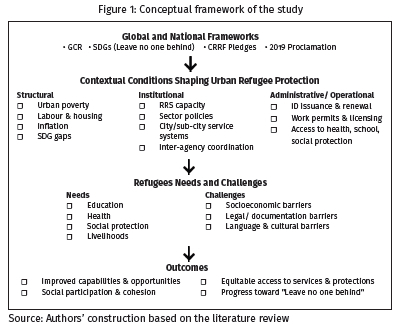
Figure 1 situates urban refugee protection within Ethiopia's policy landscape and the global commitments of the 2030 Sustainable Development Agenda. Global and national frameworks including the GCR, SDGs, CRRF, and the 2019 Refugee Proclamation establish the legal and normative basis for refugee protection and articulate principles of inclusion and "Leave No One Behind."
The framework then outlines the contextual conditions that shape how these commitments unfold. Structural factors such as urban poverty, inflation, and housing and labor market constraints define the socioeconomic environment. Institutional conditions reflect the capacity of the Refugees and Returnees Service (RRS), the alignment of sectoral policies, municipal service capacity, and inter-agency coordination. Administrative and operational conditions include documentation processes, work-permit and licensing procedures, and access to health, education, and social protection systems. Together, these determine whether formal commitments translate into practical access.
At the center are refugee needs, including education, health, social protection, and livelihoods alongside the challenges that mediate access, including socioeconomic vulnerabilities, documentation barriers, and language and cultural obstacles. Presenting these together underscores that protection depends both on service availability and on overcoming systemic barriers.
The interaction of commitments, contextual conditions, and refugee needs and challenges shapes protection and development outcomes, such as improved capabilities, social participation, equitable service access, and progress toward "Leave No One Behind." The framework thus identifies where gaps emerge between Ethiopia's formal commitments and the lived realities of urban refugees.
METHODOLOGY
Our research methods encompassed desk reviews, key informant interviews, and in-depth interviews. Desk research, also known as secondary research, involves analyzing and synthesizing existing data sources such as books, articles, and reports (Bryman, 2016). This method is cost effective and time efficient. It provides a comprehensive understanding of a topic without the need for primary data collection (Bryman, 2016). We reviewed relevant qualitative and quantitative works on the needs and various socioeconomic, legal, and cultural challenges facing urban refugees. However, a significant limitation of our desk review was the reliance on reports due to the scarcity of peer-reviewed publications on this empirically under-researched topic. Additionally, we analyzed data from the Welcoming Neighbourhoods: Sustainable Migration in North and West Africa Cities (WelCit) Project.1
Key informant interviews involve interviewing individuals with expert knowledge or experience in the research topic to gain insights and information not available through other sources (Akhter, 2022). We used purposive sampling to select individuals actively engaged with urban refugees, ensuring valuable insights from knowledgeable and experienced informants. We interviewed five experts from three organizations: the Refugee and Returnee Service of Ethiopia (RRS), Ethiopian Orthodox Tewahido Church-Development and Inter-Church Aid Commission (EOTC-DICAC), and the International Organization for Migration (IOM).
In-depth interviews, another qualitative research method, aim to build a deep understanding rather than gather factual or abstract information (Osborne and Grant-Smith, 2021). Due to the challenges of accessibility and location, we employed a snowball sampling technique, where initial participants recruited new ones (Nikolopoulou, 2023). This method is particularly useful for researching hard-to-reach populations. Interviews were conducted in Amharic, English, Somali, and Arabic. Eritrean refugees, proficient in Amharic, sometimes used translators who were also our focal points. The collected information was transcribed, categorized, and analyzed thematically, with case studies supporting the arguments presented in the results section.
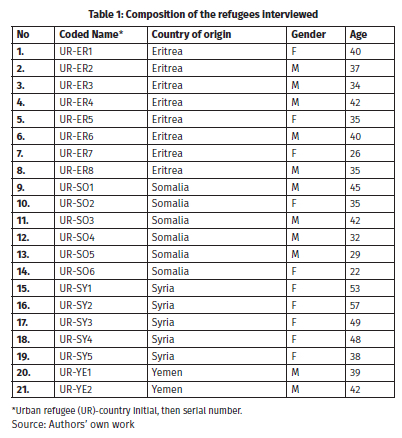
While in-depth interviews are typically unstructured, we used semi-structured interviews to follow a set of questions, allowing flexibility for clarifying and follow-up questions. This approach helped us to explore refugees' personal experiences, which provided rich information to understand the complex issues they face in accessing basic services and protection needs. The method employed in the research helped capture the lived experiences, coping mechanisms, and nuanced social changes and continuities. It provided an in-depth context to our understanding of the refugee communities involved in the research. The data used in the study complement existing literature by grounding theoretical frameworks that explain social capital and networks, as well as forced migration and marginality, in real-world contexts. By doing so, it validates and challenges earlier contributions and fills knowledge gaps in the existing literature. The insights from the data are expected to inform broader context-sensitive and inclusive refugee interventions while shaping policy, programs, and practices that emphasize humanity, respect, agency, and continuous integration. This will ultimately foster policies that are both data-driven and responsive to the demands of refugees and the complexities of the challenges refugees face. We conducted in-depth interviews with 21 refugees (10 female and 11 male) from various countries of origin (Table 1). Although our sample size did not achieve saturation in the strict methodological sense, recruitment was constrained by the challenges of accessing urban refugee populations, including mobility, fear of exposure, and limited formal registration. Nevertheless, the sample was purposively diverse, and recurring themes across participants indicated thematic sufficiency. In line with qualitative research standards (Guest et al., 2006; Mason, 2010), the modest sample size provided rich, varied insights into protection challenges, while also reflecting the empirical reality that urban refugees are a hard-to-reach population.
Research participants were sampled through focal persons who served as gatekeepers in all our engagements with the refugees. The gatekeepers helped ensure gender, nationality, and age representativeness across the samples.
Before conducting the interviews, the interviewer provided participants with all necessary information. The data collection followed the Helsinki Declaration to ethically safeguard the rights of the refugees. Participants were informed of their right to terminate the interview at any time and to decline answering specific questions. To ensure confidentiality, they were assured that their names would not be used and pseudonyms would be employed instead. Participants gave oral consent to participate in the study. We opted for oral consent to create a safe environment for participants to share their experiences freely. Data protection requirements were strictly followed by securely storing the recorded tapes. All data collected from participants were treated as anonymous. Data were analyzed thematically by organizing codes into themes through an iterative comparison and were triangulated across researchers, data sources, methods and participant feedback.
RESULTS
Economic inclusion and decent work (SDG 8, SDG 10)
Ethiopia has made concerted efforts to enhance economic inclusion for both refugees and host communities. The 2019 revised refugee law and the Ethiopia Job Compact, part of the CRRF, aimed to create 100,000 jobs, of which 30,000 were for refugees and 70,000 for host communities, and were supplemented by European Union (EU)-supported projects integrating refugees into urban safety net programs and fostering small and medium enterprise-based economic opportunities (UNHCR, 2019; European Council on Refugees and Exiles, 2020). By 2023, 38,621 refugees and 90,828 host-community members had benefited from economic initiatives in agriculture and livestock value chains, while skills training programs provided labor-market-linked qualifications to 7,756 refugees and 6,773 host members (RRS and UNHCR, 2021; 2023). Despite these achievements, challenges such as insufficient coordination, limited private sector engagement, short-term employment, and reliance on humanitarian aid constrained broader impacts.
Interviews reveal how these policy efforts are experienced on the ground. Refugees' labor market access is diverse: some work formally, others are self-employed, and many engage in informal work. Entrepreneurial ventures include fast-food businesses, tailoring, and traditional Yemeni honey trade. One participant described the following:
I rent the house for a fast-food service business, pay 15000 birr monthly, and have five workers in the business too. The trade license permission came through my father's family because my father is Ethiopian. (UR11-ER)
Some other participants reported being enrolled in the government's urban Safety Net Program, and employed as janitors. As one of the beneficiaries of government support explained:
I am registered for the Safety Net Program, so they chose the poorest of the poor from the society and registered me based on the number of my family members, and I am receiving assistance from the program. They provide me with training and a job as a cleaner. And I work as a janitor (cleaning service) and make a living from it. (UR-ER1)
However, formal employment is often inaccessible due to legal and documentation gaps. A key informant interview from government agencies noted this:
The biggest obstacle appears to be a lack of regulations and directives that would make it easier to apply the revised proclamation. Consequently, urban refugees have restricted access to the labor market. The gaps in the legal framework have also generated substantial impediments for urban refugees, which range from problems with documentation to opportunities for work in the labor market. (RRS-1)
Despite their diverse labor market access experiences in common, refugees face challenges. Participants from Eritrea working in the tailoring sector mention lack of the required documents forcing them to work informally and increasing their vulnerability. An Eritrean stated:
I am a traditional clothing tailor by profession, yet I cannot operate here due to a lack of a license, working space, and passport (National ID). The business owner pays me a low wage because it is a form of favoritism, given that I have no other option but to work there. (UR-ER2)
Overall, while policy initiatives have produced measurable outcomes, structural barriers and reliance on informal employment constrain meaningful and equitable economic inclusion.
Housing and the urban development (SDG 11)
The desk review indicated lack of urban housing options and insufficient infrastructure support for refugee-hosting areas, compounded by high inflation and urban redevelopment projects in Addis Ababa (RRS and UNHCR, 2021; 2023).
Interviews showed that refugees often rent collectively or rely on family abroad, reflecting both economic constraints and limited formal support. Participants described the strain of high rents and the challenge of meeting basic needs as follows:
Every day is a struggle for me since I don't have a place to live, I don't have any income, and I can't afford the rent on a house. I don't know what I'll do. (UR-SY9)
We used to receive 2,000 to 3,000 Birr monthly from the Refugee Commission, but they stopped providing aid five months ago. Due to this we have serious concerns. (UR-SY8)
High housing costs often compel children to work or families to rely on begging, while temporary accommodations such as small hotels are unaffordable or lack privacy. The shortage of affordable housing has heightened tensions with host communities, particularly regarding rising rental prices and security concerns, further complicated by urban corridor development projects that have removed housing units in large parts of the city.
Health and healthcare access (SDG 3)
Desk review findings show notable progress in refugee registration, ID issuance, and social protection enrolment, including 905,388 refugees enrolled in the Biometric Identity Management System (BIMS) by 2023 (RRS and UNHCR, 2023). Yet, healthcare access remains uneven, particularly for unregistered urban refugees who lack proper documentation.
Interviews reveal a strong preference for private healthcare due to perceived gaps in public hospitals, documentation barriers, and quality concerns. Refugees highlighted the high cost of private services, but often had no alternative. A Syrian refugee stated the following:
I went to the public hospital first, but they were unwelcome for me and did not get the service. Then, I use a private hospital named Amin Hospital with my family because my son requires follow-up care there, and I spend 5,000 Birr per week to do so. (UR-SY7)
An Eritrean refugee linked the choice of a private health provider to documentation issues, saying:
I am well [now], but if a problem arises, I will go to a private hospital. I wish to visit the public hospital but lack a kebele identification card. (UR-ER2)
The desk review also highlighted that inadequate energy and infrastructure support indirectly affect health outcomes, showing the interconnectedness of environmental and social determinants of well-being (RRS and UNHCR, 2021; 2023).
Education, skills, and language (SDG 4)
Desk review evidence shows that by 2023, 7,756 refugees had accessed skills training, yet educational opportunities remain uneven, particularly for higher education (RRS and UNHCR, 2021; 2023). Interviewees emphasized the importance of education for employment and integration but highlighted multiple barriers including financial constraints, language difficulties, and the prioritization of immediate survival. One of refugee students in higher education stated this:
I am currently enrolled as a student pursuing a degree in nursing at the African College, a reputable institution of higher learning situated in the bustling city of Addis Ababa. My academic pursuits are focused on acquiring the necessary knowledge and skills to become a competent nursing professional. (UR-SO10)
Some refugees reported having access to education thanks to various interventions, such as the government's Safety Net Program. One participant noted the following:
Although I did not pursue any form of education for myself, I did put my son through public school. In terms of training, I already participate in training under the Safety Net Program, and because of family members, they pay me every month. (UR-ER1)
Some refugees also reported receiving education through the Jesuit Refugee Service (JRS), which offers training in music, computers, languages, and hairdressing. Many others reported no access at all, as a participant said:
I did not receive any education or training. My children did not attend school either. (UR-SY7)
An Eritrean said this:
I did not get any education or training in Addis because I didn't have the chance. Due to a lack of opportunities, I could not participate in any educational or training programs in Addis. (UR-ER2)
The desk review corroborates that while training programs exist, limited scale, language barriers, and financial constraints continue to hinder educational participation.
Legal and political frameworks, documentation, and access to justice (SDG 16, SDG 1.4)
Desk review shows that by 2023, 484,179 refugees had ID cards, and 179,196 asylum seekers were processed (RRS and UNHCR, 2021; 2023). However, interviews revealed persistent barriers in practice, particularly regarding employment, business licensing, and access to financial services. An Eritrean participant explained the challenge as follows:
I used to make a living by peddling potato chips (chips) on the street, but I'm not allowed to do that anymore because I don't have a business license. (UR-ER1)
The participant added:
Forget all accesses, ID card is vital to me because without it I can't receive any kind of financial credit. (UR-ER1)
While many participants reported difficulties accessing identification documents and work permits, some informants stated they had bypassed these obstacles using various strategies. These included utilizing social networks, relying on assistance from family members, marrying local community members, or seeking help from other trusted community members. One of the participants explained how they managed to get around the barriers as follows:
The trade license permission was accomplished through my father's family because my father is Ethiopian. [Though], no micro-credit service received yet. (UR11-ER)
Documentation challenges vary by nationality, with Eritrean refugees particularly affected, often compelled to work in informal businesses that lack protections.
Social participation, networks, and social cohesion (SDG 10.2, SDG 11.3, SDG 16.7)
Desk review depicted the importance of social capital for refugee adaptation, and aligned with theoretical frameworks on social integration and inclusion. Interviews underscored how social networks provide access to employment, safety, and social adaptation. Co-ethnic and host-community networks facilitate information exchange, referrals, and client acquisition. Somalian refugees relied heavily on their previous social networks, such as friends and family, established with their co-ethnic host communities. An Eritrean refugee explained this networking in the following manner:
When I came here, I rented the home of an Ethiopian owner. We had family relationships. Currently, I live in Jemo, where many Eritreans reside. As a result, we communicate every day, regardless of how serious the problem is. But language difficulty sometimes restricted my interest and communication [with those host communities that are not co-ethnic]. (UR-ER4)
Many participants stated that having a social network made them feel more protected and secure when facing the challenges of living in a new and unfamiliar environment. This was especially true for those lacking local language proficiency or official documentation. Some even used their social network to obtain clients for their businesses, as word-of-mouth recommendations were considered sufficient for promoting their services. As the participants elaborated on the value of networking, they stated:
People come to me on referrals from others to make a variety of traditional garments; effective communication is essential to both my job and my business. (UR4-ER)
Refugees underscored the role of social networks and participation:
It is essential to have a network since it helps other people get familiar with my work, either Eritrean or Ethiopian. (UR5-ER)
I have good social networks here with different customers; even my previous social networks helped me settle here in Addis. (UR11-ER)
However, the benefits of social networks are not uniformly distributed; Eritrean and Somali refugees rely more heavily on co-ethnic networks to navigate linguistic and cultural barriers, while social participation for others is constrained by language, limited documentation, and uneven access to formal community activities.
DISCUSSION
This study examined how protection challenges and resource constraints shape the lived experiences of urban refugees in Ethiopia, drawing on social capital theory, self-reliance theory, rights-based approaches, the capability approach, and integration/social inclusion frameworks. Organizing the findings around the SDG-aligned thematic clusters suggested by reviewers helped clarify how refugees' needs, institutional responses, and structural barriers intersect. Across all domains, the results revealed significant gaps between policy commitments, especially under the 2019 Refugee Proclamation, the CRRF, and Ethiopia's alignment with the 2030 Agenda for Sustainable Development, and the realities of implementation.
Economic inclusion and decent work (SDG 8; SDG 10)
Findings underscore deep constraints on refugees' ability to achieve economic self-reliance. Participants repeatedly described their efforts to secure livelihoods, reflecting a structural environment where formal labor markets remain largely inaccessible despite legal reforms. This echoes empirical research showing that urban refugees in sub-Saharan Africa remain concentrated in precarious informal work with limited protections (Betts et al., 2017, 2019). Interpreted through the self-reliance and capability frameworks, these constraints demonstrate that formal rights alone are insufficient to expand refugees' real freedoms. While Ethiopia's refugee policies promise access to employment and financial services, desk reviews reveal gaps in administrative implementation, employer resistance, sector-specific restrictions, and documentation barriers that limit the conversion of rights into capabilities (UNHCR, 2023; World Bank and UNHCR, 2024). The social capital lens is also revealing. Refugees who lacked supportive networks faced greater economic insecurity, consistent with studies showing that bonding and bridging social capital can be decisive for job access, training, and credit in urban contexts (Campbell, 2006). Yet the same networks may trap refugees in saturated and low-return sectors, reinforcing the low-income equilibrium described in the self-reliance literature. Overall, this result highlights a persistent tension between Ethiopia's rights-oriented policy reforms and the structural exclusion that continues to hinder the realization of SDG 8 and SDG 10.
Housing and urban development (SDG 11)
Housing emerged as a defining challenge, with respondents identifying overcrowding, unaffordable rents, unsafe neighborhoods, and lack of tenure security. These experiences mirror evidence across African cities where urban refugees shoulder disproportionate housing burdens (Pavanello et al., 2010; Brown et al., 2018; Nigusie, 2024). Desk review findings show that government regulations limiting refugees' access to subsidized housing maintain unequal access to urban space. From a rights-based perspective, inadequate housing signals shortcomings in fulfilling the right to adequate shelter for non-citizens. Social inclusion frameworks further emphasize that spatial marginalization contributes to exclusion from employment, services, and community participation. Housing insecurity also undermines refugees' capabilities, particularly safety, health, and mobility. These findings reinforce calls in the literature for urban planning and social protection systems that explicitly integrate refugee populations (Zetter and Ruaudel, 2016).
Health and healthcare access (SDG 3)
Findings reveal systemic and intersectional vulnerabilities. Respondents cited language barriers, discrimination, unaffordable services, and administrative hurdles despite Ethiopia's formal commitment to integrate refugees into national health systems. Desk review evidence corroborated this, highlighting fragmentation between policy and implementation, particularly around health insurance eligibility and fee waivers (UNHCR, 2020; World Bank and UNHCR, 2024). Viewed through the capability approach, health access is foundational for human development; its denial constrains all other capabilities. The rights-based perspective similarly frames equitable healthcare as a core entitlement under international and domestic law. Yet empirical studies show that urban refugees often encounter parallel systems, weak referral pathways, and limited cultural mediation (Pavanello et al., 2010). These structural and administrative barriers indicate that progress toward SDG 3 remains uneven and highly dependent on social capital, personal networks, and individual resilience rather than rights guarantees.
Education, skills, and language (SDG 4)
Education, skills and language development emerged as both aspirations and areas of persistent exclusion. Refugees described being unable to enroll in higher education, vocational training, or language programs due to documentation problems, tuition fees, and quota systems. These narratives complement desk review findings which showed that although Ethiopia's policies allow refugee access to public education, administrative practices, resource shortages, and discrimination continue to produce disparities (UNICEF, 2020; World Bank and UNHCR, 2024). The capability approach is particularly useful here: education enhances refugees' capabilities for economic participation, social inclusion, and long-term well-being. Empirical studies in the region similarly note that language barriers and interrupted schooling diminish refugees' competitiveness in urban labor markets (Dryden-Peterson, 2011). Education is a key pathway for long-term inclusion; however, the findings suggest that Ethiopian urban settings provide limited institutional support for such pathways. As one participant noted, "Without language and training, we remain stuck." These constraints undermine progress toward SDG 4, reinforcing intergenerational exclusion.
Legal and political frameworks, documentation, and access to justice (SDG 16; SDG 1.4)
Ethiopia's 2019 Refugee Proclamation is widely recognized as progressive, yet refugees continue to face delays, expired IDs, and fragmented administrative procedures that block access to jobs, banking, and services. Such gaps between reform and practice echo findings from Nairobi and Kampala, where documentation difficulties perpetuate exclusion from housing, work, and justice systems (Pavanello et al., 2010; Easton-Calabria et al., 2022). From a rights-based perspective, these barriers undermine both procedural and substantive rights, while integration theories emphasize that legal identity is a prerequisite for civic and economic participation (Zetter and Ruaudel, 2016). The cascading effects across multiple SDGs confirm that documentation functions as a gatekeeper: without it, rights remain aspirational. Comparative studies of urban refugee governance show this is systemic across African cities, not unique to Ethiopia (Campbell, 2006; UNHCR, 2023; World Bank and UNHCR, 2024).
Social participation, networks, and social cohesion (SDG 10.2; SDG 11.3; SDG 16.7)
The findings revealed uneven social participation, constrained by discrimination, language barriers, and limited interaction with Ethiopian communities. While some refugees reported support from neighbors or religious groups, others described exclusionary attitudes that reinforced outsider status. These dynamics align with integration frameworks which emphasize that social cohesion depends not only on refugees' agency but also on institutional facilitation and host-community attitudes (Ager and Strang, 2008). Competition over scarce housing, jobs, and services further exacerbates tensions, as documented in Nairobi and Kampala (Pavanello et al., 2010; Easton-Calabria et al., 2022). Empirical studies across African cities similarly show that refugees struggle to build bridging capital with host communities due to structural inequalities and limited platforms for interaction (Landau and Duponchel, 2011; Dryden-Peterson, 2015). These patterns suggest that without deliberate policies to foster inclusion, social cohesion remains fragile and uneven, undermining progress toward SDGs on equality, inclusive urban development, and participatory governance.
Taken together, the discussion underscores a persistent disjuncture between Ethiopia's progressive refugee policy commitments and the lived realities of urban refugees. Across economic inclusion, housing, health, education, legal identity, and social participation, the findings reveal that rights are often undermined by administrative fragmentation, resource shortages, and exclusionary social dynamics. Comparative evidence from other African cities reinforces that these challenges are systemic rather than isolated, pointing to the need for deliberate institutional reforms and inclusive urban planning that bridge the gap between policy and practice. Ultimately, the study shows that achieving the SDG targets for refugees in Ethiopia requires not only legislative innovation but sustained implementation, accountability, and host-community engagement to transform rights into real opportunities for social and economic participation.
CONCLUSION AND RECOMMENDATIONS
Conclusion
This study shows that Ethiopia's evolving refugee policy environment reflects some normative alignment with the 2030 Sustainable Development Agenda, yet significant gaps remain between these commitments and the lived experiences of urban refugees in Addis Ababa. Across the domains of economic opportunity, housing, health, education, documentation, and social participation, refugees display resilience, initiative, and an ability to mobilize social networks to compensate for systemic constraints. However, these strategies operate within structural, institutional, and socioeconomic conditions that limit the translation of legal rights into meaningful capabilities.
The discussion demonstrates that the principal challenges facing urban refugees do not stem from an absence of legal reforms, but from uneven implementation, administrative bottlenecks, and the inadequacy of urban systems to absorb and support displaced populations. As a result, refugees remain concentrated in informal work, precarious housing, and under-resourced services, despite policy frameworks that, in principle, enable broader access and participation. These findings echo wider regional evidence indicating that the effectiveness of refugee protection depends largely on governance capacity, local-level coordination, and the responsiveness of service delivery systems.
At the same time, the analysis highlights opportunities for strengthening protection outcomes. Social networks play a crucial bridging role in employment, housing, and access to information, while existing training and education initiatives, though uneven, demonstrate the potential of inclusive programming when institutional commitments and resources align. The experiences identified in this study thus point to the importance of consolidating gains from recent policy reforms while addressing persistent implementation gaps.
Overall, the study concludes that achieving meaningful alignment with the SDGs requires sustained investment in administrative capacity, clearer and more predictable documentation processes, and more inclusive urban planning and service delivery systems. Enhancing refugees' access to decent work, affordable housing, quality healthcare, and education and enabling their participation in social and civic life is essential not only for the realization of their rights but also for strengthening social cohesion and advancing Ethiopia's commitments under the GCR.
Recommendations
The findings point to three foundational reforms that determine the effectiveness of protection measures for urban refugees in Ethiopia: (1) strengthening implementation of the 2019 Refugee Proclamation, (2) streamlining documentation and access systems, and (3) institutionalizing multi-level coordination and CRRF-city linkages. In each case, we propose both short-term and long-term interventions along with key actors and linked SDGs/GCR.
1. Strengthen implementation of the 2019 refugee proclamation
Although Ethiopia has put in place a progressive refugee legal framework with three operational directives issued, enforcement and uptake remain uneven across urban contexts. Strengthening implementation requires better dissemination, monitoring, and capacity-building.
Short-term interventions:
• Disseminate directives widely to all sub-city bureaus and frontline service providers;
• Train health, education, social protection, and municipal staff on refugee rights and procedures;
• Strengthen monitoring mechanisms to track compliance and resolve gaps in service delivery.
Long-term interventions:
• Expand RRS urban oversight and capacity for implementing Proclamation provisions;
• Institutionalize accountability frameworks to ensure consistent enforcement;
• Review and update directives as needed to respond to emerging urban challenges.
Lead actors: RRS; Ministry of Justice; Addis Ababa City Administration; Ministry of Women and Social Affairs (MoWSA); Parliament.
SDG/GCR links: SDG 16 (strong institutions); SDG 10.3 (reduce inequality); GCR Objective 2 (enhance refugee self-reliance by strengthening opportunities to access education, employment, and livelihoods).
2. Streamline documentation, identity management, and access systems
Documentation is the functional gateway to healthcare, education, livelihoods, and social protection. The study identified bottlenecks including delayed ID issuance, inconsistent renewal practices, and fragmented data systems that limit refugee access.
Short-term interventions:
• Digitize and standardize ID issuance and renewal workflows;
• Establish one-stop documentation and referral centers in high-density sub-cities;
• Deploy mobile documentation teams to reach vulnerable groups.
Long-term interventions:
• Integrate refugee identity data with sectoral management systems- Health Management Information System (HMIS), Education Management Information System (EMIS), Social Protection Management Information System (SPMIS), and so forth;
• Align refugee documentation with national digital ID reforms;
• Implement interoperable citywide verification and referral protocols.
Lead actors: RRS; UNHCR; Addis Ababa sub-city bureaus; MoWSA; Ministry of Education; Ministry of Health.
SDG/GCR links: SDG 16.9 (legal identity); SDG 3.8 (universal health coverage); SDG 4.1 (inclusive education); GCR Objective 2.
3. Institutionalize multi-level coordination and CRRF-city linkages
Fragmented governance between federal, city, and sub-city authorities has been a persistent challenge. Effective coordination ensures coherent policy implementation and sustainable service delivery.
Short-term interventions:
• Establish structured referral pathways between RRS and sub-city service providers;
• Strengthen CRRF focal points and integrate refugee affairs into city social sector teams.
Long-term interventions:
• Embed refugee considerations into city development plans, budgets, and performance frameworks;
• Institutionalize joint monitoring systems and data-sharing agreements across sectors;
• Integrate refugees into national and municipal housing, social protection, and livelihood schemes.
Lead actors: CRRF Steering Committee; RRS; Addis Ababa City Administration; MoWSA; Ministry of Finance; UNHCR; and other relevant line ministries.
SDG/GCR links: SDG 17 (partnerships and policy coherence); SDG 11.1 (adequate housing); SDG 8.5 (decent work); GCR Objective 4 (ensure that the needs and priorities of host communities are addressed).
REFERENCES
Admasu, Y. 2021. Forced displacement, gender, and livelihoods: Refugees in Ethiopia. Policy Research Working Paper 9862. World Bank Group. Available at: https://doi.org/10.1080/00220388.2024.2376399.
LITERATURE REVIEW
- Ager, A. and Strang, A. 2008. Understanding integration: A conceptual framework. Journal of Refugee Studies, 21(2): 166-191. Available at: https://academic.oup.com/jrs/article/21/2/166/1621262.
- Akhter, S. 2022. Key informants' interviews. In Islam, M.R., Khan, N.A. and Baikady, R. (eds.), Principles of social research methodology. Singapore: Springer. Available at: https://doi.org/10.1007/978-981-19-5441-2_27.
- Al-Husban, M. and Adams, C. 2016. Sustainable refugee migration: A rethink towards a positive capability approach. Sustainability, 8(5): 451. Available at: https://doi.org/10.3390/su8050451.
- Betts, A. 2022. Bargains of inclusion: The politics of refugee self-reliance. Refugee Studies Centre, University of Oxford. Available at: https://www.rsc.ox.ac.uk/completed-projects/bargains-of-inclusion-the-politics-of-refugee-self-reliance.
- Betts, A., Bloom, L., Kaplan, J. and Omata, N. 2017. Refugee economies: Forced displacement and development. Oxford University Press. Available at: https://global.oup.com/academic/product/refugee-economies-9780198794305.
- Betts, A., Chaara, I., Omata, N. and Sterck, O. 2019. Refugee economies in Uganda: What difference does the self-reliance model make? Refugee Studies Centre, University of Oxford. Available at: https://www.rsc.ox.ac.uk/publications/refugee-economies-in-uganda-what-difference-does-the-self-reliance-model-make/@@download/file.
- Betts, A., Omata, N. and Sterck, O. 2020. Self-reliance and social networks: Explaining refugees' reluctance to relocate from Kakuma to Kalobeyei. Journal of Refugee Studies, 33(1): 62-85. Available at: https://doi.org/10.1093/jrs/fez084 Fulltext: https://www.refugee-economies.org/assets/downloads/Journal_Self-Reliance_and_SocialcNetworks.pdf.
- Betts, Alexander. 2006. Local integration and self-reliance. Refugee Survey Quarterly, 25(1): 134-142. Available at: http://www.jstor.org/stable/45054070.
- Bourdieu, P. 1986. The forms of capital. In J. Richardson (ed.), Handbook of theory and research for the sociology of education. Greenwood, pp. 241-258. Available at: https://www.socialcapitalresearch.com/bourdieu-on-social-capital-theory-of-capital/.
- Brown, A., Mackie, P., Dickenson, K. and Gebre-Egziabher, T. 2018. Urban refugee economies: Addis Ababa, Ethiopia. International Institute for Environment and Development (IIED). URL: https://www.refugee-economies.org/assets/downloads/Report_IIED.pdf.
- Bryman, A. 2016. Social research methods (5th ed.). Oxford University Press. Available at: https://books.google.com/books/about/Social_Research_Methods.html?id=N2zOCgAAOBAT.
- Campbell, E.H. 2006. Urban refugees in Nairobi: Problems of protection, mechanisms of survival, and possibilities for integration. Journal of Refugee Studies, 19(3): 396-413. Available at: https://doi.org/10.1093/jrs/fel011.
- Carver, F. 2020. Refugee and host communities in Ethiopia 2018-2019 integrated national study. Research report. Available at: https://cdn.odi.org/media/documents/Refugee_and_host_communities_in_Ethiopia_20182019_integrated_national_study.pdf.
- Choudry, A. and Hlatshwayo, M. 2016. Tust work? Migrant workers, capitalist globalisation and resistance. In Choudry, A. and Hlatshwayo, M. (eds.), Just work? Migrant workers' struggles today. Pluto Press, pp. 1-20.
- Clark, D.A., Biggeri, M. and Frediani, A.A. (eds.). 2019. The capability approach, empowerment and participation: Concepts, methods and applications (Rethinking International Development series). Palgrave Macmillan. Available at: https://doi.org/10.1057/978-1-137-35230-9.
- Crisp, J. and Long, K. 2016. Safe and voluntary refugee repatriation: From principle to practice. Journal on Migration and Human Security, 4(3): 141-147. Available at: https://doi.org/10.1177/233150241600400305.
- Dryden-Peterson, S. 2011. Refugee education: A global review. Geneva: UNHCR. Available at: https://www.unhcr.org/4fe317589.pdf.
- Easton-Calabria, E. 2020. Urban displacement, local engagement: Examining the role of local actors in urban refugee response. In People forced to flee: history, change and challenge. UNHCR, pp. 1-22. Available at: https://www.unhcr.org/people-forced-to-flee-book/wp-content/uploads/sites/137/2021/10/Evan-Easton-Calabria_Urban-Displacement-Local-Engagement.pdf.
- Easton-Calabria, E., Abadi, D. and Wood, J. 2022. Improving local governance in forced migration: Case studies and considerations from East Africa. Cities Alliance. Available at: https://www.citiesalliance.org/sites/default/files/2022-06/citiesalliance_improvinglocalgovernanceinforcedmigration_2022.pdf.
- European Council on Refugees and Exiles. 2020. ECRE Annual Report 2020. Available at: https://ecre.org/wp-content/uploads/2021/03/ECRE-Annual-Report-on-2020.pdf.
- Hathaway, J.C. 2010. The rights of refugees under international law. Cambridge University Press. Available at: https://doi.org/10.1017/CBO9780511614859.
- Hlatshwayo, M. 2016. Xenophobia, resilience, and resistance of immigrant workers in South Africa: Collective and individual responses. In Choudry, A. and Hlatshwayo, M. (eds.), Just work? Migrant workers' struggles today. Pluto Press, pp. 21-40.
- International Rescue Committee (IRC). 2022. IRC Kenya and Uganda refugee policy and practice review. International Rescue Committee. Available at: https://www.rescue.org/sites/default/files/2022-10/IRC%20Kenya%20and%20Uganda%20Refugee%20Policy%20and%20Practice%20Review%20-%209th%20June%202022%20%281%29.pdf.
- Mason, M. 2010. Sample size and saturation in PhD studies using qualitative interviews. Forum Qualitative Sozialforschung / Forum: Qualitative Social Research, 11(3): Article 8. Available at: http://www.qualitative-research.net/index.php/fqs/article/view/1428/3027.
- Mastrorillo, M., d'Errico, M. and Pietrelli, R. 2024. Is the self-reliance strategy sustainable? Evidence from assistance programmes to refugees in Uganda. Food Security, 16(3): 567-582. Available at: https://doi.org/10.1007/s12571-024-01467-8.
- McAteer, B. and Leeson, K. 2021. Self-reliance programming in urban displacement: A pragmatic approach or a disillusionment? International Institute for Environment and Development / Refugee Self-Reliance Initiative. Available at: https://data.unhcr.org/en/documents/download/112048.
- Mixed Migration Centre (MMC). 2022. 4Mi cities: Data collection on urban mixed migration - Nairobi city report. Nairobi: MMC & Mayors Migration Council. Available at: https://mixedmigration.org/wp-content/uploads/2022/06/238Nairobi_City_Report_and_Annex.pdf.
- Nigusie, A.A. 2024. Promoting durable solutions for urban refugees in Addis Ababa, Ethiopia. Regional durable solutions secretariat (ReDSS). Available at: https://www.regionaldss.org/wp-content/uploads/2025/06/Promoting-Durable-Solutions-for-Urban-Refugees-in-Addis-Ababa_Alemu-2024.pdf.
- Nigusie, A.A. and Carver, F. 2019. Self-reliance and livelihoods of refugees in Ethiopia: State of play, opportunities and challenges. In The Comprehensive Refugee Response Framework Progress in Ethiopia. ODI, pp. 5-22. Available at: https://www.jstor.org/stable/resrep50364.7.
- Nikolopoulou, K. 2023. What is snowball sampling? | Definition & examples. Scribbr. Available at: https://www.scribbr.com/methodology/snowball-sampling/.
- Omata, N. 2022. Rethinking self-reliance and economic inclusion of refugees through a distributive lens: A case study from Uganda. African Affairs, 121(485): 649-674. Available at: https://doi.org/10.1093/afraf/adac035.
- Osborne, N. and Grant-Smith, D. 2021. In-depth interviewing. In Baum, S. (ed.), Methods in Urban Analysis. Cities Research Series. Singapore: Springer. Available at: https://doi.org/10.1007/978-981-16-1677-8_7.
- Pape, U., Petrini, B. and Iqbal, S. 2018a. A skills survey for refugees in Ethiopia: Informing durable solutions by micro-data. World Bank. Available at: https://documents1.worldbank.org/curated/en/996221531249711200/pdf/128185-WP-PUBLIC-P162987-SkillsReport.pdf.
- Pape, U., Petrini, B. and Iqbal, S. 2018b. Refugee livelihoods: Evidence from Ethiopia. World Bank Policy Research Working Paper. Available at: https://documents.worldbank.org/en/publication/documents-reports/documentdetail/.
- Pavanello, S., Elhawary, S. and Pantuliano, S. 2010. Hidden and exposed: Urban refugees in Nairobi, Kenya. Humanitarian Policy Group Working Paper. London: Overseas Development Institute. Available at: https://odi.org/en/publications/hidden-and-exposedurban-refugees-in-nairobi-kenya/.
- Refugees and Returnees Service and United Nations High Commissioner for Refugees (RRS and UNHCR). 2021. Joint updates and thematic factsheets on Ethiopia refugee response. UNHCR & RRS. Available at: https://data.unhcr.org/en/partners/view/56.
- Refugees and Returnees Service and United Nations High Commissioner for Refugees (RRS and UNHCR). 2023. GRF 2023 - Ethiopia Pledge 2019 Progress Report. Available at: https://reliefweb.int/report/ethiopia/grf-2023-ethiopia-pledge-progress-report.
- Sen, A. 2011. The idea of justice. Harvard University Press. Available at: https://www.hup.harvard.edu/catalog.php?isbn=9780674060470.
- Thomas, F.C., Roberts, B., Luitel, N.P., Upadhaya, N. and Tol, W.A. 2011. Resilience of refugees displaced in the developing world: A qualitative analysis of strengths and struggles of urban refugees in Nepal. Conflict and Health, 5(1): 20. Available at: https://doi.org/10.1186/1752-1505-5-20.
- United Nations Children's Fund (UNICEF). 2020. Improving access to quality education for refugee learners in Ethiopia. Addis Ababa: UNICEF Ethiopia. Available at: https://www.unicef.org/documents/improving-access-quality-education-refugee-learners-ethiopia.
- United Nations Development Programme (UNDP). 2019. Human development and the Sustainable Development Goals. UNDP Policy Brief, December 13. Available at: https://www.undp.org/publications/human-development-and-sustainable-development-goals.
- United Nations High Commissioner for Refugees (UNHCR). 2005. Handbook for self-reliance. Geneva: UNHCR. Available at:https://www.unhcr.org/media/handbook-self-reliance-complete-publication.
- United Nations High Commissioner for Refugees (UNHCR). 2009a. Survival strategies of urban refugees. Geneva: UNHCR. Available at:https://www.unhcr.org/research/working/4b0e4c2e9/survival-strategies-urban-refugees.html
- United Nations High Commissioner for Refugees (UNHCR). 2009b. UNHCR policy on refugee protection and solutions in urban areas. Available at:https://emergency.unhcr.org/sites/default/files/UNHCR%2C%20Policy%20on%20Protection%20and%20Solutions%20in%20Urban%20Areas.pdf.
- United Nations High Commissioner for Refugees (UNHCR). 2018. Global compact on refugees. UNHCR. Available at: https://www.unhcr.org/gcr/GCR_English.pdf.
- United Nations High Commissioner for Refugees (UNHCR). 2018a. The Sustainable Development Goals and the global compact on refugees: Working together to ensure that refugees and host communities are not left behind. Available at: https://www.unhcr.org/sites/default/files/legacy-pdf/5efcb5004.pdf.
- United Nations High Commissioner for Refugees (UNHCR). 2018b. Comprehensive Refugee Response Framework (CRRF) Ethiopia. Available at: http://www.unhcr.org.
- United Nations High Commissioner for Refugees (UNHCR). 2019. Global trends: Forced displacement in 2018. Available at: https://www.unhcr.org/5d08d7ee7.pdf.
- United Nations High Commissioner for Refugees (UNHCR). 2020a. Including forced displacement in the SDGs: A new refugee indicator, December 7. UNHCR. Available at: https://www.unhcr.org/blogs/how-an-indicator-on-refugees-became-part-of-the-sustainable-development-goals/ Accessed on 07/12/2023.
- United Nations High Commissioner for Refugees (UNHCR). 2020b. Public health: Ensuring access to healthcare for refugees. UNHCR. Available at: https://www.unhcr.org/public-health.
- United Nations High Commissioner for Refugees (UNHCR). 2020c. Indicator proposal summary template. Available at: https://www.unhcr.org/blogs/including-forced-displacement-in-the-sdgs-a-new-refugee-indicator/.
- United Nations High Commissioner for Refugees (UNHCR). 2021a. Ethiopia country refugee response plan 2020-2021. Available at: https://reporting.unhcr.org/sites/default/files/Ethiopia%20CRP%202020-2021.pdf.
- United Nations High Commissioner for Refugees (UNHCR). 2021b. Ethiopia: 2021 country refugee response plan. Global focus on Refugees. Available at: https://reporting.unhcr.org/sites/default/files/Ethiopia%20CRP%202020-2021.pdf.
- United Nations High Commissioner for Refugees (UNHCR). 2023. Labor market access and outcomes for refugees. Available at: https://www.unhcr.org/research/reports/2023/03/labor-market-access-outcomes-refugees.html.
- United Nations High Commissioner for Refugees (UNHCR). 2024. Socio-economic profiling of urban refugees in Ethiopia. Geneva: UNHCR. Available at:https://data.unhcr.org/en/documents/details/107654.
- Watol, B.S. and Assefa, D.T. 2019. Ethiopia and the refugees: The history, current situations and legal frameworks. Historical Research Letter, 49: 1-7. Available at: https://www.iiste.org/Journals/index.php/HRL/article/viewFile/49055/50685.
Accepted 02 December 2025
Published 22 December 2025