Strengthening climate resilience in water, sanitation and hygiene: Evaluating women-led enterprises in rural Ethiopia
Abstract
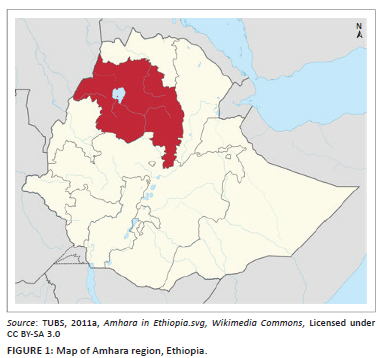
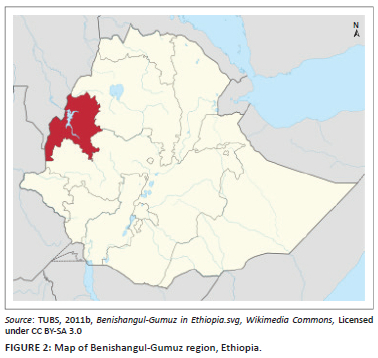
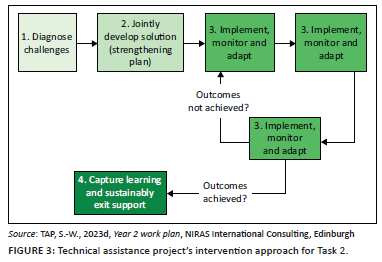
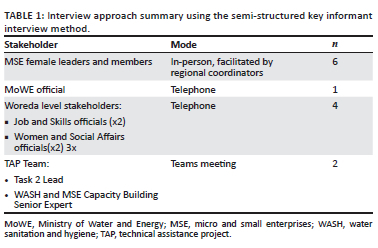
BACKGROUND: Climate change and increasing water scarcity pose significant challenges to sustainable water, sanitation and hygiene (WASH) service delivery in rural Africa. In Ethiopia, poor maintenance of rural water schemes exacerbates vulnerability to climate stressors, disproportionately affecting women and marginalised communities. While women-led enterprises are emerging as a promising model, there is limited scholarship on how evaluation frameworks can capture their gender-transformative and climate resilience outcomes OBJECTIVES: This study examines how an adaptive Monitoring, Evaluation and Learning (MEL) framework, informed by the Water, Sanitation and Hygiene - Gender Equality Measure (WASH-GEM) and empowerment theory, was applied to assess the Strengthening Climate Resilience WASH (SCRS-WASH) Technical Assistance Project (TAP). It focuses on the methodological and analytical lessons for evaluating women-led micro and small enterprises (MSEs) in climate-vulnerable WASH systems METHOD: A qualitative design incorporated 13 key informant interviews with stakeholders in two Ethiopian regions, alongside document review. Data were thematically coded using NVivo, with findings organised according to empowerment domains and stakeholder collaboration dimensions from relevant evaluation frameworks RESULTS: The adaptive MEL process captured early indicators of women's agency, leadership and stakeholder collaboration while revealing gaps in business capacity and institutional follow-up. Using a gender-transformative evaluation lens highlighted how flexible recruitment and localised capacity building supported inclusivity but also exposed region-specific social norms that influenced sustainability prospects CONCLUSION: Embedding gender-transformative frameworks in adaptive MEL enables evaluators to capture both empowerment processes and system resilience outcomes in complex, climate-vulnerable contexts. This study offers methodological insights for evaluators seeking to integrate feminist and climate justice principles into WASH-related evaluation practice CONTRIBUTION: This research positions women-led enterprises not only as service innovations but as a case for advancing evaluation practice on measuring empowerment and resilience in multi-stakeholder, climate-affected systems
WASH; climate resilience; GESI; Women-led enterprises; Monitoring evaluation and learning
 Thumbnail
 Thumbnail
 Thumbnail
 Thumbnail
 Thumbnail
 Thumbnail