Formulation of eucalyptus oil-zinc sulphide hybrid nanoemulsion and evaluation of its larvicidal potential against Aedes aegypti
Abstract
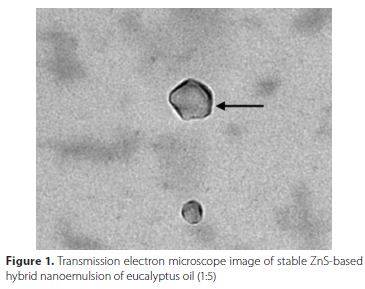
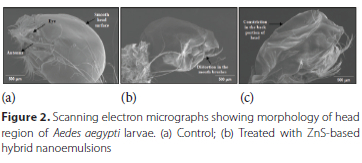
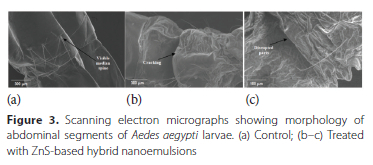
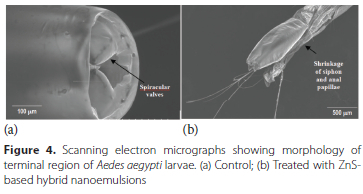
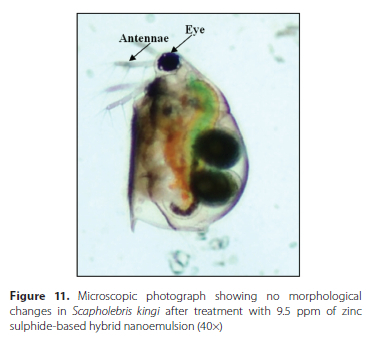
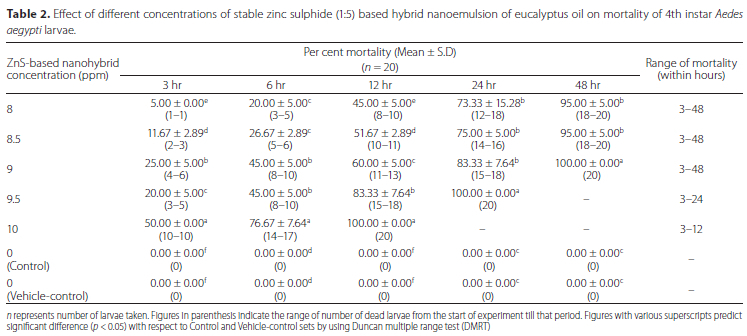
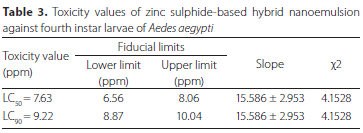
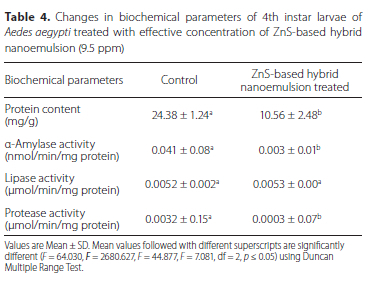
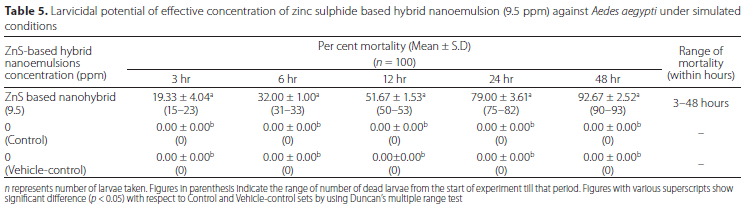
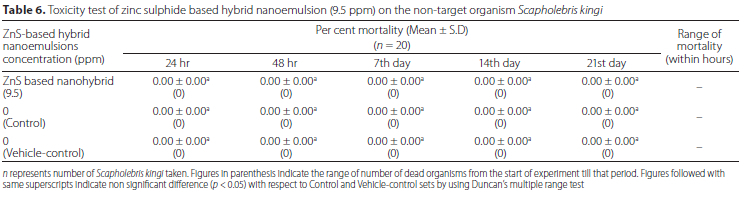
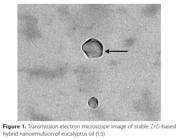
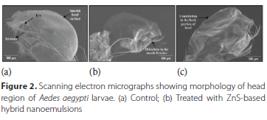
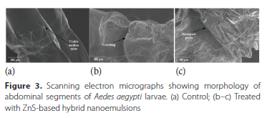
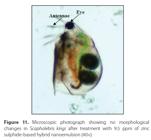
The growing threat of vector-borne diseases and their associated health risks has prompted the nanotechnology-based investigations. The present study aimed to use a nanotechnological application with larvicidal potential against Aedes aegypti by preparing aqueous hybrid nanoemulsion of zinc sulphide nanoparticles and Eucalyptus globulus oil. The mean droplet size of prepared and most stable hybrid nanoemulsion (9.5 ppm) was found to be 60 ± 10.00 nm with rectangular shape. The hybrid nanoemulsion exhibited LC50 and LC90 values of 7.63 and 9.22 ppm, respectively, against larval stages of Aedes aegypti. The findings obtained from the larvicidal assay were corroborated with SEM, histological and biochemical profiles of Aedes larvae after treating with hybrid nanoemulsion. Under simulated conditions, nanohybrid treatment demonstrated optimum larvicidal potency after 48 hours of exposure. Further, biosafety studies of hybrid nanoemulsion were carried out against Scapholebris kingi and this larvicidal concentration of nanohybrid was found to be non-toxic to this species. Thus, the following research explains the larvicidal efficacy of zinc sulphide-based hybrid nanoemulsion of eucalyptus oil formulated during the present study is a step towards safe and efficient approach against the dengue-spreading vector mosquito, Aedes aegypti.
biosafety; essential oils; mosquito control; simulated conditions; zinc sulphide
 Thumbnail
 Thumbnail
 Thumbnail
 Thumbnail
 Thumbnail
 Thumbnail
 Thumbnail
 Thumbnail
 Thumbnail
 Thumbnail
 Thumbnail