Assessment of antibacterial genes of emerging queen Apis mellifera L. induced by the bacterium Paenibacillus larvae larvae
Abstract
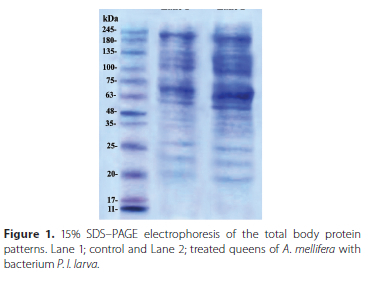
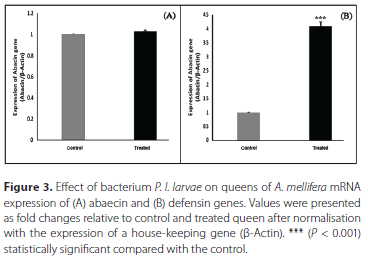
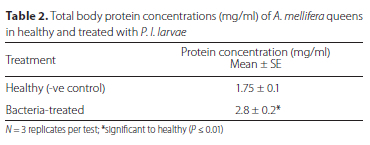
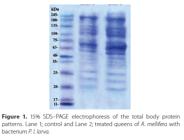
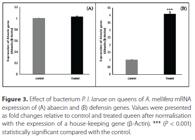
This study evaluated the expression of antimicrobial abaecin and defensin genes in virgin honey-bee queens (Apis mellifera) following induction of 4th larval instar with the bacterium Paenibacillus larvae larvae (1.07 x 10² CFU/queen); to investigate whether the presence of bacteria affects the immune response as well as gene transcript levels for the immune proteins. The total body proteins of bacteria-treated queens showed a highly significant increase, and the appearance of new proteins patterns and/or disappearance of others. The gene expression profile of treated queens showed up-regulation equalled four-fold of the defensin gene, whereas no progression occurred in the abacien gene. This finding likewise greatly affects the diseases challenging this pollinator.
Honey-bee queen; American foulbrood; antimicrobial peptides; abacien; defensin; RT-PCR
 Thumbnail
 Thumbnail