Multigene phylogeny of South African Anopheles mosquitoes
Abstract
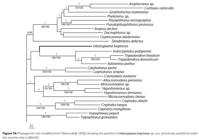
Mosquitoes substantially impact human and animal health as vectors of disease and consequently take a heavy toll on the economy. In order to effectively investigate the evolutionary history of vectors of disease and understand their associated biological tendencies, it is vital to correctly identify and classify the relevant species. Since phylogenetic studies on South African species are currently markedly underrepresented in the literature, the current study aimed to investigate the placement of South African Anopheles Meigen mosquito species within the genus' extensive taxonomic framework based on the cytochrome oxidase subunit 1 (COI), internal transcribed spacer 2 (ITS2) and 28S ribosomal DNA sequences. Maximum likelihood and Bayesian phylogenetic analyses were performed for each of the COI, ITS2 and 28S DNA datasets, as well as a concatenated analysis for all three DNA regions combined. Upon examination, several phylogenetic findings were corroborated by analyses based on multiple DNA regions. These findings supported the non-monophyly of several taxa relevant to the region (subgenus Anopheles, Laticorn Section, and the Funestus Group) and may indicate the non-monophyly of several South African species [An. coustani Laveran, An. tenebrosus Dönitz, An. parensis Gillies, An. funestus Giles and An. longipalpis C (Theobald) (Type C) (Koekemoer et al. 2009)]. The results reveal numerous challenges within the current systematic framework of the genus Anopheles and provide a novel focus on the phylogeny of South African taxa.
COI; ITS2; 28S; molecular phylogeny; systematics
 Thumbnail
 Thumbnail
 Thumbnail
 Thumbnail
 Thumbnail
 Thumbnail
 Thumbnail
 Thumbnail
 Thumbnail