Role of developmental plasticity in tethered flight performance of the oriental fruit fly, Bactrocera dorsalis (Hendel) (Diptera: Tephritidae)
Abstract
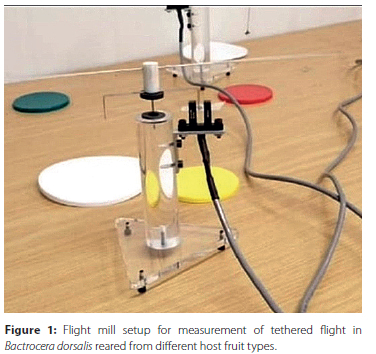
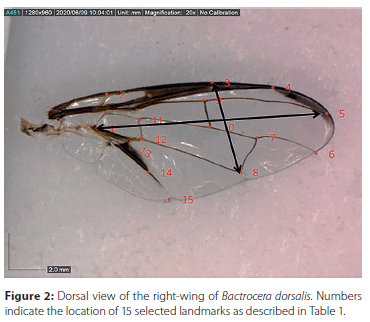
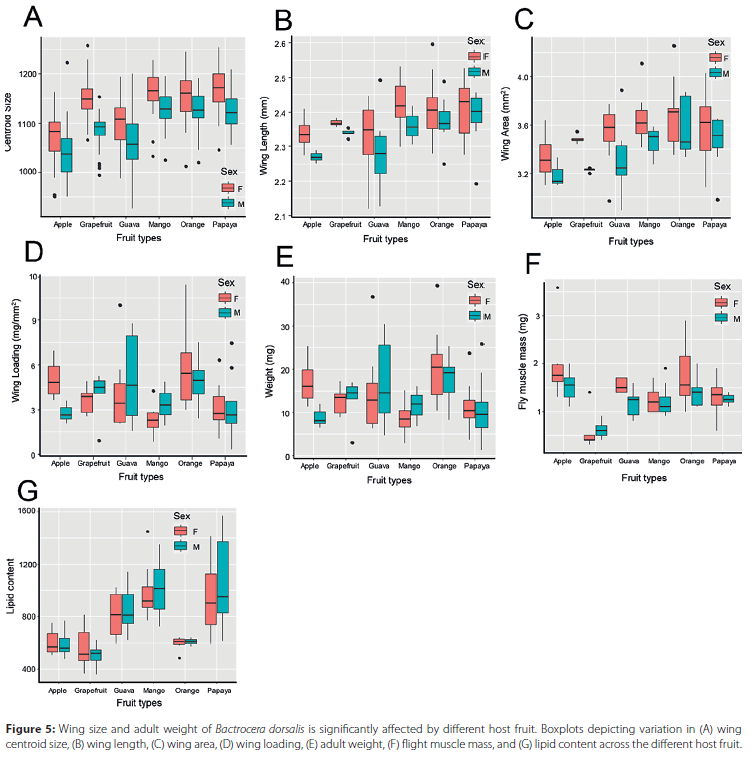
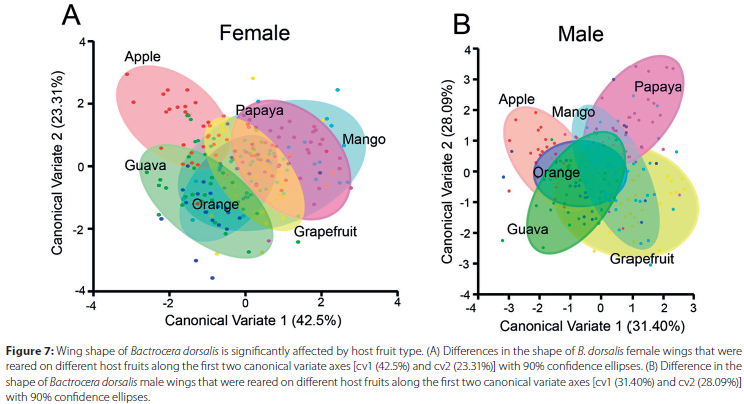
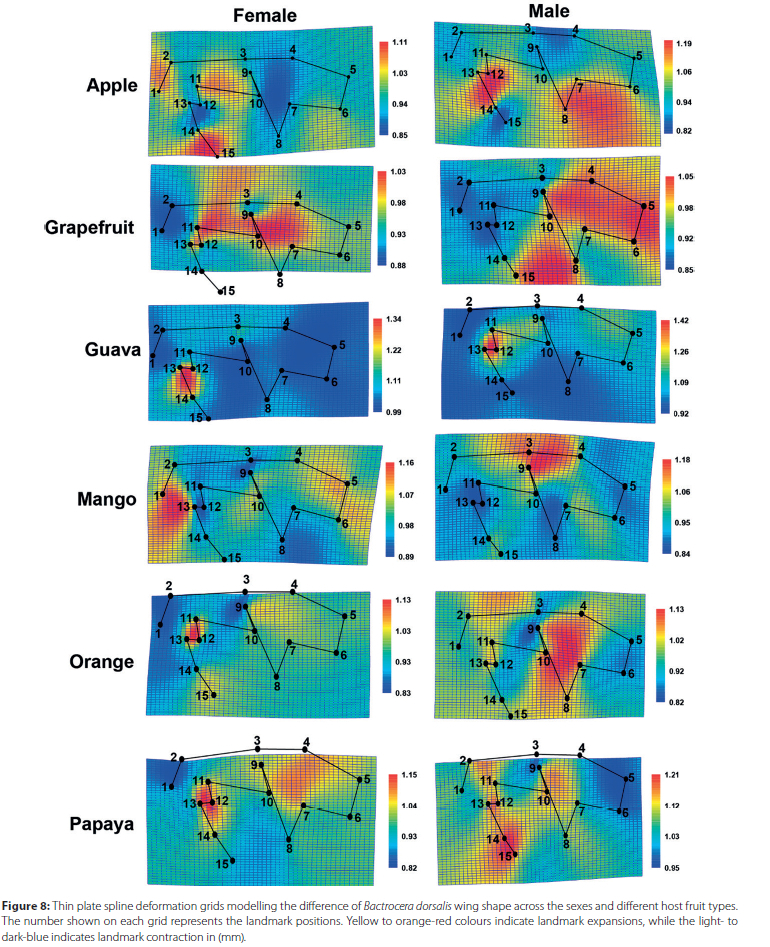
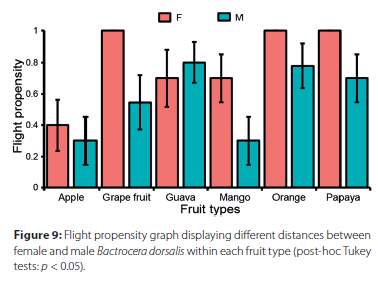
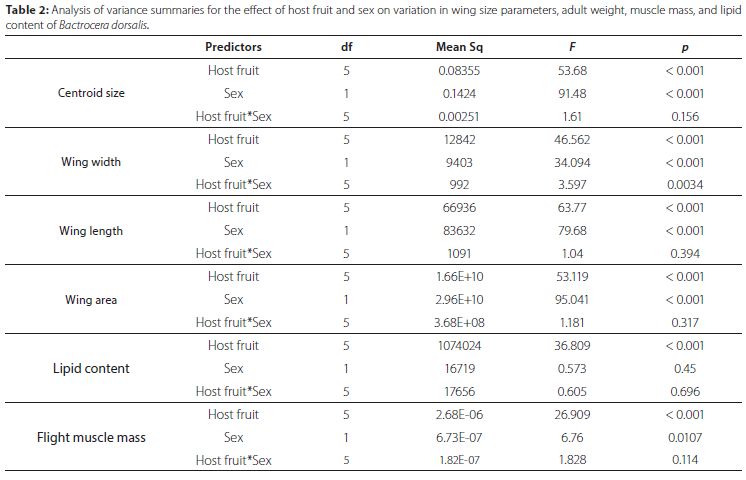
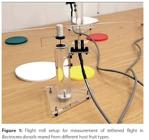
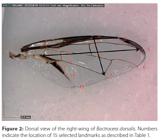
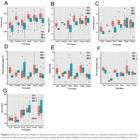
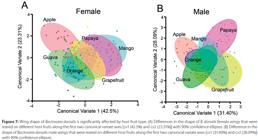
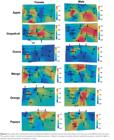
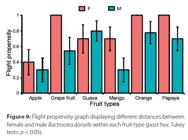
This study investigated the effect of nutrition on development of wings and adult body condition of Bactrocera dorsalis (Hendel), an exotic pest of Asian origin and a species of economic importance in South Africa. Six host fruit types were used to rear B. dorsalis: mango, guava, orange, grapefruit, papaya and apple. One day after emergence, adults were used for tethered flight assessments using computerised flight mills. Additional flies were assessed in terms of wing morphology using geometric morphometrics, flight muscle mass, and lipid content. There were significant differences in the larval and pupal developmental time as well as larval and pupal survival amongst the tested host fruit, with orange tending to lead to poor performance in development and survival. Host fruit type and sex had a significant effect on the flight performance and wing morphology of B. dorsalis. There was a significant difference between female and male wing shapes, indicating the presence of sexual dimorphism. Females were more likely to fly than the males, and flies that developed on grapefruit covered the shortest distance. Host fruit type influenced both the lipid content and the flight muscle mass, with development in grapefruit leading to the lowest values. Our results show that variation in flight performance of B. dorsalis individuals can be associated with differences in resource quality during their development, and may lead to regional and temporal differences in the ability of the pest to disperse.
flight mill; flight muscle mass; geometric morphometrics; host fruit; landmarks; lipid content
 Thumbnail
 Thumbnail
 Thumbnail
 Thumbnail
 Thumbnail
 Thumbnail