Parasitoid diversity associated with Phoracantha semipunctata and Phoracantha recurva in South African Eucalyptus plantations
Abstract
Phoracantha semipunctata Fabricius and Phoracantha recurva Newman (Coleoptera: Cerambycidae) are xylophagous beetles, native to Australia, that infest Eucalyptus trees in the native and invasive range. Outbreaks of Phoracantha species are associated with drought stress, so climate change is predicted to increase the frequency of outbreaks and elevate the importance of this pest for Eucalyptus plantation forestry. Although biological control agents were released in the Western Cape, Limpopo, and parts of Mpumalanga provinces from 1910 to 1995, it is unclear if they established successfully in the key forestry hubs of Mpumalanga and KwaZulu-Natal. Knowledge on the diversity and distribution of the parasitoids of the two Phoracantha species in South Africa is important to inform future biological control initiatives, given the potential future importance of Eucalyptus pests. The aim of the study was to determine the distribution of P. recurva and P. semipunctata in the main Eucalyptus production regions and identify the parasitoids associated with them. Logs were collected from infested trees (fallen and living), placed in insect rearing cages and emerging insects identified based on morphology. Both species of Phoracantha were present, with P. recurva emerging in higher numbers. Twelve species of parasitoids emerged from the infested logs. These included the egg parasitoid, Oobius longoi (Siscaro) (Hymenoptera: Encyrtidae) and the larval parasitoid Syngaster lepidus Brullé (Hymenoptera: Braconidae), previously released in South Africa and have now spread throughout the main Eucalyptus production region. Novel associations of native parasitoids with Phoracantha were also identified, but further studies are required to determine their ecological role.
biological control; Chalcedectus; novel host associations; Oobius longoi; Syngaster lepidus
INTRODUCTION
The wood-boring beetles Phoracantha semipunctata Fabricius and Phoracantha recurva Newman (Coleoptera: Cerambycidae), native to Australia, have spread to various Eucalyptus (Myrtaceae) producing countries in Africa, North America, South America and Europe (Hurley et al. 2016). Phoracantha semipunctata is also invasive in parts of Australasia (Hurley et al. 2016). Damage caused by larvae boring into the tree trunk include reduction of the crown, leaf drop, girdling and death of the tree (Scriven et al. 1986; Paine et al. 1995). Both species have a similar morphology and life cycle, with the life cycle varying in duration due to temperature (Scriven et al. 1986; Wang 1995; Bybee et al. 2004). The life cycle can take between 2 and 9 months to complete depending on climatic conditions (Ivory 1977; Scriven et al. 1986). The adults live from 40 to more than 200 days depending on temperature and P. recurva adults lived longer than P. semipunctata adults in a laboratory study (Scriven et al. 1986; Bybee et al. 2004). Adults feed on nectar and pollen from Eucalyptus flowers. Female P. semipunctata and P. recurva oviposit clusters of up to 100 eggs under the loose bark of the trees at night (Lounsbury 1915; Ivory 1977; Scriven et al. 1986; Sopow et al. 2015) and eggs hatch in 3-5 days (Paine et al. 1995). The neonate larvae then mine through the outer bark into the tree where it feeds on the cambium (Scriven et al. 1986; Lounsbury 1915; Paine et al. 1995). The larval galleries within the wood are oval shaped and increase in size as the larvae matures. The mature larvae mines into the sapwood to form a cavity where it pupates. The adult beetle emerges from the tree through the same tunnel and exits through the bark (Lounsbury 1915).
Phoracantha species are frequently associated with physiologically stressed trees. For example, outbreaks of P. semipunctata have been reported in Australia during severe heat waves (Ruthrof et al. 2018; Seaton et al. 2020). Studies by Hanks et al. (1999), determined that water stressed Eucalyptus trees show increased susceptibility to Phoracantha larvae in green house trials. These findings indicate that P. semipunctata and P. recurva pose a potential economic threat to Eucalyptus plantations, particularly in regions where trees are subject to water limitation (Lounsbury 1915; Ivory 1977; Paine et al. 1995; Hanks et al. 1999; Paine & Millar 2002; Corrêa et al. 2020). As climate change is projected to intensify the frequency and severity of drought events (Hoffmann et al. 2019; Smith 2011), the risk of Phoracantha outbreaks is expected to increase (Seaton et al. 2015; Hoffmann et al. 2019). This threat is particularly concerning for countries such as South Africa, where these species are not currently recognized as major pests but may become more problematic under future climate scenarios.
Classical biological control has been the main strategy used to manage Phoracantha species in countries where they have been accidentally introduced and become pests in Eucalyptus plantations. In the native range numerous parasitoid species have been reported to attack the egg, larval and pupal stages of Phoracantha and several of these species have been released in the invasive range as biological control agents (Paine et al. 1995; Hanks et al. 1996; Moore 2003). These include the egg parasitoid, Oobius longoi (Siscaro) (Hymenoptera: Encyrtidae), larval parasitoids, Syngaster lepidus Brullé, Jarra phoracantha Marsh and Austin, Jarra maculipennis Marsh and Austin and Callibracon limbatus (Brullé) (Hymenoptera: Braconidae), and a pupal parasitoid Megalyra fasciipennis Westwood (Hymenoptera: Megalyridae). These introductions were mainly in California (USA) and South Africa. Accidental introductions of O. longoi have been reported in Italy and Portugal (Siscaro 1992).
The egg parasitoid, O. longoi, was introduced into California for the control of Phoracantha semipunctata (Hanks et al. 1996), from where it was introduced into South Africa in 1993 (Moore 2003). The adults live for about 26 days at 25 °C and take about 16 days to develop from egg to adult, and produce about 200 eggs. The sex ratio of the offspring are female biased in young females and become more male biased as females age (Hanks et al. 1995). Parasitism rates are variable, with between 13 and 62.8% parasitism recorded in the Western Cape Province, South Africa, between 1993 and 1997 (Moore 2003) and between 71 and 91% parasitism was recorded in California, USA, between 1993 and 1995 (Hanks et al. 1996). Superparasitism has been recorded and up to five adult wasps can emerge from a single Phoracantha egg, although these wasps are notably smaller (Hanks et al. 1995; Moore 2003).
Several attempts were made to introduce larval parasitoids for the control of Phoracantha with varying success. Syngaster lepidus, Doryctes sp. Haliday (Hymenoptera: Braconidae) and Callibracon capitator F. (Hymenoptera: Braconidae), native to Australia, (Austin et al. 1994) were imported into South Africa in 1969 (Drinkwater 1973; Moore 2003; Tribe 2003). Thereafter, S. lepidus was reported to be released but not established. Subsequently, the Doryctes sp. was identified as J. phoracantha and J. maculipennis by Austin et al. (1994). Another attempt at introducing S. lepidus, J. phoracantha and J. maculipennis in South Africa was made in 1995, where J. phoracantha established in Limpopo and Mpumalanga (Moore 2003; Tribe 2003) with populations sourced from California, where it was introduced between 1992 and 1996 (Millar et al. 2002).
The parasitoid, M. fasciipennis, that attacks the pupae of Phoracantha was also introduced into South Africa (Austin et al. 1994; Moore 2003). The date of introduction into South Africa is not clear, but the species was imported in 1910 and reported established in 1962 (Tribe 2003). Its distribution within South Africa is restricted to the south-western Cape (Moore 2003). The female wasps oviposit through the frass plug made by Phoracantha larvae in the tree at an optimal depth of 11-20 mm and takes approximately 55 days to complete its development. They are diurnal and active at temperatures between 16 °C and 34 °C with an optimum at 30 °C (Moore 2003).
Other parasitoid species, native to the introduced range for P. semipunctata and P. recurva have been reported in South Africa. During the release and establishment program of the introduced parasitoids between 1992 and 1999 in the Western Cape province, two species of larval parasitoids, Cleonymus sp. Latreille (Hymenoptera: Cleonymidae) and Oxysychus genualis Delluchi (Hymenoptera: Pteromalidae), were detected (Moore 2003; Prinsloo 2004). Their origin is unknown but both appear to be native to South Africa (Prinsloo 2004). Consignments of the Cleonymus sp. were sent to other Eucalyptus production regions. Establishment was confirmed in Limpopo shortly after its release (Moore 2003). Other indigenous larval parasitoids recorded from Phoracantha in South Africa include Iphiaulax sp. Brullé (Hymenoptera: Braconidae) and Tanycoryphus sulcifrons Cam. (Hymenoptera: Calcidoideae), though their role in the biological control of Phoracantha species is not clear (Drinkwater 1973; Moore 2003).
No systematic monitoring has been conducted since the release and establishment of the egg and larval parasitoid species to determine their long term establishment, spread to other parts of the country or their impact on the management of Phoracantha sp. in South Africa. The highest percentage of Eucalyptus is produced in KwaZulu-Natal (59.5%) and Mpumalanga (34.3%), with only 4.2% in Limpopo and 0.2% in the Western Cape (Godsmark & Oberholzer 2019), where the initial classical biological control programme was focused. Given the increasing likelihood that climate change will elevate the pest status of P. semipunctata and P. recurva, it is important to have a comprehensive understanding of the diversity and distribution of the parasitoid species associated with this pest. We therefore aimed to determine the distribution of P. semipunctata and P. recurva and their associated natural enemies in KwaZulu-Natal, Limpopo and Mpumalanga.
MATERIALS AND METHODS
Collection of Phoracantha and their parasitoids
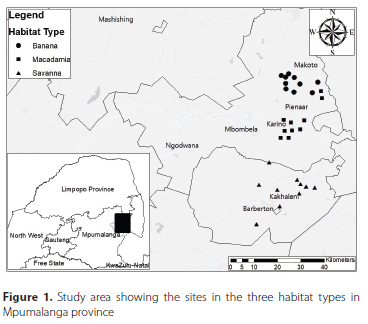
Two sampling strategies, namely, ad hoc sampling of infested trees and trap trees, were used to collect Phoracantha infested logs and parasitoid species associated with Phoracantha in the following Eucalyptus producing regions in South Africa: Limpopo; Mpumalanga; northern KwaZulu-Natal (KZN); KZN Midlands; and KZN Zululand. Sites were selected based on forestry reports where Phoracantha was detected. Sites where damage was reported were inspected and logs that had signs of Phoracantha infestations were sampled. Sites where Phoracantha damage was reported but no sign of living insects were detected were not included in the study. Collections of logs were made from a total of 21 sites during spring and summer (September 2019-April 2022) when the insects are most active (Figure 1).
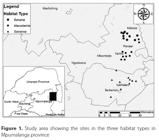
For the ad hoc sampling, two to five infested trees (depending on the number of trees infested) were selected from the site. Ad hoc collections were made from 13 of the 21 sites. During the pilot study, four billets of 80 cm each were taken from the bottom, and middle sections of the tree to determine if there was a difference between species emerging from the various sections of the logs. No clear pattern was detected from logs collected at five sites, so in subsequent collections, three billets were sampled from distinct sections of each tree, where Phoracantha infestations were observed, to ensure representative coverage.
Ad hoc collections were taken from recently dead trees that were still standing upright, except for one site in Piet Retief (Mpumalanga) where the compartment was already harvested. In addition, a search was done at each site for Phoracantha eggs by carefully lifting the bark of trees that appeared to be stressed, dying or recently dead. Eggs were collected into vials and taken to the lab for rearing.
Trap trees were made in 11 of the 21 sites, by felling three trees in various compartments where Phoracantha damage was observed. Four sites were selected in Zululand, three in KZN Midlands, two in northern KZN and three in Limpopo. Differences in the number of sites sampled between regions were due to differences in the number of sites where Phoracantha activity was detected. Samples were collected 8-9 weeks after the trees were felled to allow for larval development to complete and all larval stages to be exposed to parasitism (Millar et al. 2002). Two billets of 80 cm each were selected from the trees where Phoracantha larvae or parasitoid activity was noted. One from the bottom third of the tree and one from the mid to upper third of the tree. At the sites where adult parasitoids were observed drilling into the trees with their ovipositor, the parasitoids were collected for identification. Three of the 11 trap tree sites were also used for ad hoc collections.
For both ad hoc collections and trap trees, the circumference of each tree was measured and the diameter at breast height (dbh) calculated.
Insect rearing and identification
Field collected Phoracantha eggs were placed in glass vials with the piece of bark they were collected on in an incubator at ambient temperature (23 °C) and natural relative humidity (RH) for emergence. Eggs were monitored for 4 weeks. All parasitoids that emerged were collected into ethanol for identification. The Phoracantha infested logs brought to the lab were placed in insect rearing cages and monitored regularly for emerging insects. The Phoracantha beetles and parasitoids that emerged from each log were collected and identified.
The adult beetles that emerged were identified using morphological characteristics (Wang 1995). The elytra of P. semipunctata has a reddish brown to black colour with a narrow yellow band across the elytra with brown zig-zag markings through the yellow line. Phoracantha recurva has predominantly yellow-coloured elytra with a similar brown zig-zag pattern, dense long golden hairs on the ventral side of each antennal segment and strong dense spines on the front-dorsal side of the hind femora (Wang 1995).
Parasitoids were grouped into morpho species and the identification key of the parasitoid species of Phoracantha in Australia developed by Austin et al. (1994) was used to identify the parasitoids, where possible. Species that could not be identified using Austin et al. (1994) were given a species code. Sub samples of the various parasitoid species collected were determined by Simon van Noort at the Iziko South African Museum, where they were accessioned, assigned catalogue numbers and databased on Specify6.
Imaging
Images acquired at the South African Museum, Cape Town (SAMC) used a Leica LAS 4.9 imaging system, comprising a Leica® Z16 microscope (using either a 2× or 5× objective) with a Leica DFC450 Camera and 0.63× video objective attached; diffused lighting was achieved using a Leica LED5000 HDI dome; and the imaging process, using an automated Z-stepper, was managed using the Leica Application Suite V 4.9 software installed on a desktop computer. All images presented in this paper, as well as supplementary images, are available on WaspWeb at www.waspweb.org (van Noort 2025).
Specimen depositories
1. FABI: Forestry and Agricultural Biotechnology Institute, ethanol collection.
2. SAMC: South African Museum, Iziko Museums of South Africa, Cape Town (Curator: Simon van Noort)
Statistical analysis
The Phoracantha and parasitoid emergence data was summarized with descriptive statistics using the tidyverse package in R studio version 2023.12.0.369, ©2009-2023 Posit Software, PBC. The adult parasitoids collected directly from Phoracantha infested tree trunks in the field were not included in the final emergence data.
RESULTS
Phoracantha infested logs were collected from E. grandis × urophylla, E. grandis × camaldulensis, E. nitens hybrid, E. nitens × grandis, E. grandis × nitens hybrids, and an unknown Eucalyptus species (Table S1). Tree age varied between 3 and 9 years. The dbh of the infested trees ranged between 9.87 cm and 19.75 cm with an average of 15.24 cm (Table S1).
Phoracantha species
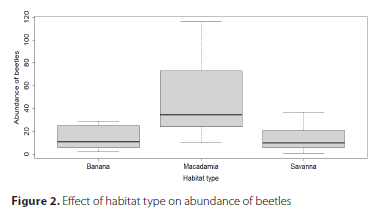
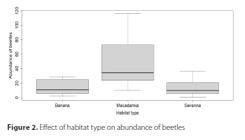
A total of 1 233 adult beetles emerged from the infested logs. Phoracantha recurva (n = 851) emerged in higher numbers than P. semipunctata (n = 382) (Figure 2). This pattern where P. recurva was the dominant species to emerge from the logs was consistent across the collections from KZN Zululand, Limpopo and Mpumalanga, apart from KZN Midlands, where a higher number of P. semipunctata adults emerged.
Parasitoid species
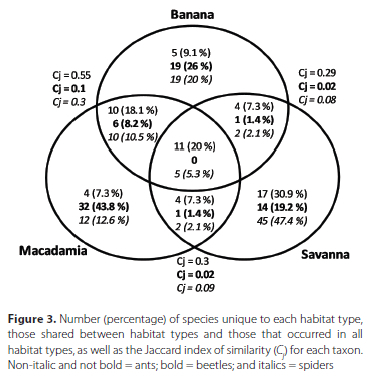
Phoracantha eggs were not found during field searches in Mpumalanga, Tzaneen, northern KZN and the KZN Midlands. One species of egg parasitoid, Oobius longoi (Figure 3), was identified from KZN Zululand during field searches.
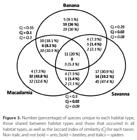
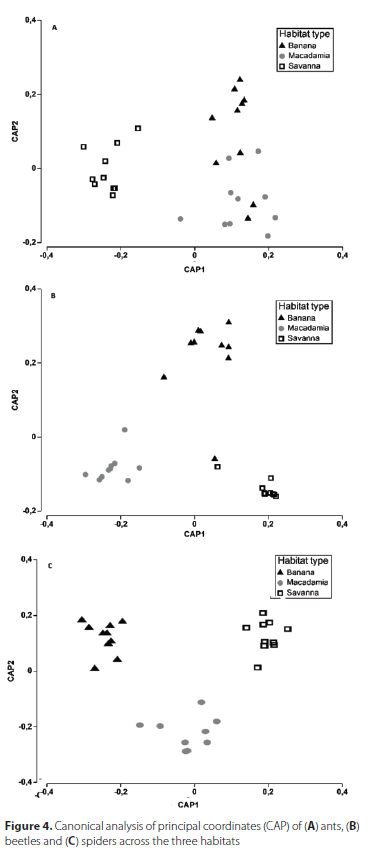
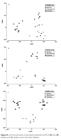
In total 1 048 larval parasitoids were collected from the Phoracantha infested logs (Figure 4, Table S2). Specimens were distributed amongst three superfamilies, eight families and ten genera (Figure 5-21). These included species from the Chalcidoidea (20%), Chrysidoidea (0.5%) and Ichneumonoidea (79.5%). Parasitoid species in the superfamily Chalcidoidea included Chalcidectidae (Chalcedectus schroderae van Noort, 6.4% (n = 67), Figures 5-6), Cleonymidae (Cleonymus sp., 1% (n = 11), Figures 7-8), Eulophidae (Entedon sp. Dalman, 0.2% (n = 2), Figure 9), Eupelmidae (Brasema sp. Cameron, 0.6% (n = 6), Figure 10; Calosota sp. Curtis, 4% (n = 42), Figure 11), Eurytomidae (Eurytoma Illiger, 5.5% (n = 58), Figures 12-13) and Pteromalidae (Oxysychus genualis, 2.3% (n = 24), Figures 14-15). One species was collected from the superfamily Chrysidoidea, Scolebythidae (Ycaploca evansi Brullé, 0.5% (n = 5), Figure 16) and three species from the superfamily Ichneumonoidae, Braconidae (Iphiaulax sp., 0.3% (n = 3), Figure 17; Syngaster lepidus, 77.6% (n = 813), Figure 18; and Zombrus sp. Marshall, 1.7% (n = 17), Figures 19-21). The species composition of the parasitoids collected during this study varied between the collection regions (Table S2).
Northern KZN and Mpumalanga
In total, 221 parasitoids emerged from this region, consisting of five species, Chalcedectus schroderae (0.9%, n = 2), Cleonymus sp. (2.3%, n = 5), Eurytoma sp. (0.9%, n = 2), Iphiaulax sp. (0.9%, n = 2) and S. lepidus (95%, n = 210) (Figure 4).
KZN Zululand
The highest number of larval parasitoid (total = 734) emergences were recorded from the sites in KZN Zululand, with the highest species diversity between the various collection regions within this study. Nine species of larval parasitoids were identified from this region, Chalcedectus schroderae (8.6%, n = 63), Cleonymus sp. (0.7%, n = 5), Entedon sp. (0.2%, n = 2), Brasema sp. (0.8%, n = 6), Calosota sp. (5.7%, n = 42), Eurytoma sp. (7.6%, n = 56), O. genualis (2.6%, n = 18), Iphiaulax sp. (0.1%, n = 1), S. lepidus (71.8%, n = 527), and Zombrus sp. (1.9%, n = 14) (Figure 4).
KZN Midlands
The lowest number of parasitoids (26) and species were collected from this region (Figure 4). Three species of larval parasitoids were identified, including the most abundant species, S. lepidus (76.9%, n = 20). The other two species included, Cleonymus sp. (3.8%, n = 1) and Y. evansi (19.2%, n = 5), which was identified from a single site in this region.
Limpopo
Overall, 67 parasitoids were recorded from this region (Figure 4). Four species of larval parasitoids, two species from the superfamily Chalcidoidea, (Chalcedectus schroderae (3%, n = 2)), O. genualis (9%, n = 6)) and Ichneumonidae (S. lepidus (83.6%, n = 56) and Zombrus sp. (4.5%, n = 3)) each were recorded from Limpopo (Figure 4).
TAXONOMYChalcidoidea
Chalcidectidae
Chalcedectus Walker, 1852
Chalcedectus schroderae van Noort, 2026 (Figures 5-6)
Material examined
SOUTH AFRICA
Holotype
• 1 ♀: KwaZulu-Natal, Zululand, -28.332450 32.268669, 20/4/2022, Eucalyptus grandis × urophylla, ML Schröder, Phoracantha infested log, Plantation, Site 17, T1; SAM-HYM-P095392 (SAMC).
Paratypes
• 1 ♂; KwaZulu-Natal, Dumbe, -28.342557 30.750525, 15/4/2022, Eucalyptus sp., ML Schröder, Phoracantha infested log, Plantation, Site 5, T2; IMAGED WaspWeb, LAS 4.9, SAMC 2023, SAM-HYM-P095425 (SAMC).
• 1 ♀: KwaZulu-Natal, Zululand, -28.332450 32.268669, 20/4/2022, Eucalyptus grandis × europhylla, ML Schröder, Phoracantha infested log, Plantation, Site 17, T1; SAM-HYM-P095395 (SAMC).
• 1 ♂: ditto except for SAM-HYM-P095428 (SAMC).
• 1 ♀: ditto except for 20/5/2022; SAM-HYM-P095427 (SAMC).
• 1 ♂: ditto except for 15/4/2022; SAM-HYM-P095426 (SAMC).
• 1 ♂: KwaZulu-Natal, Zululand, -28.753324 31.949909, 30/4/2022, Eucalyptus grandis × urophylla, ML Schröder, Phoracantha infested log, Plantation, Site 14, T3; SAM-HYM-P095429 (SAMC).
• 1 ♂: South Africa, Mpumalanga, Piet Retief, -26.924900 30.789000, 14/10/2020, Eucalyptus grandis × nitens, ML Schröder, Phoracantha infested log, Plantation (felled), Site 4, T17L1+2; SAM-HYM-P095430 (SAMC).
• 1 ♂: KwaZulu-Natal, Richards Bay, -28.6881181 31.9934517, 23/10/2020, Eucalyptus grandis × urophylla, ML Schröder, Phoracantha infested log, Plantation, Site 1, T5L3+4; SAM-HYM-P095431 (SAMC).
• 1 ♂: ditto except for SAM-HYM-P095432 (SAMC).
• 1 ♀: ditto except for 19/10/2020; SAM-HYM-P103673 (SAMC).
• 1 ♂: ditto except for 16/11/2020; SAM-HYM-P103675 (SAMC).
• 1 ♂: KwaZulu-Natal, Zululand, -28.369966 32.268309, 15/4/2022, Eucalyptus grandis × urophylla, ML Schröder, Phoracantha infested log, Plantation, Site 20, T2; SAM-HYM-P103674 (SAMC).
Biology
Chalcedectus species are parasitoids of wood-boring beetle larvae (Bostrichidae, Buprestidae and Cerambycidae). Known or potential hosts of the world Chalcedectus species include: Phoracantha semipunctata (Coleoptera: Cerambycidae) infesting Eucalyptus grandis × E. urophylla and Eucalyptus grandis × E. nitens logs in South African Eucalyptus plantations; Osphranteria coerulescens Redenbacher (Coleoptera: Cerambycidae) on Rosa sp. (Rosaceae); and Acmaeodera Eschscholtz and Anthaxia Eschscholtz (Coleoptera: Buprestidae) boring in Acacia raddiana [= Vachellia tortilis subsp. raddiana] (Fabaceae). (Grissell 1991; Gibson 2003, 2025a; Marchiori 2023; van Noort et al. 2026).
Distribution and species richness
This is a widespread African species recorded from Angola, Botswana, Kenya, Ivory Coast, Somalia, South Africa (KwaZulu-Natal, Mpumalanga, Northern Cape, and Western Cape provinces), Zambia (van Noort et al. 2026). The genus Chalcedectus has a worldwide distribution. The Chalcedectidae comprises the single genus Chalcedectus which has 31 valid described species (UCD Community 2025).
Cleonymidae
Cleonymus Latreille, 1809
Cleonymus species (Figures 7-8)
Material examined
SOUTH AFRICA
• 2 ♀♀ 3 ♂♂; KwaZulu-Natal, Dumbe, -27.461000, 30.836000, 24/10/2020, Eucalyptus grandis × nitens, ML Schröder, Phoracantha infested log, Plantation, Site 5, T24L1+2, Cleonymus sp. det L Fusu 2025, SAM-HYM-P095178, SAM-HYM-P095179, SAM-HYM-P095180, SAM-HYM-P095181, SAM-HYM-P095182 (SAMC)
• 1 ♂; KwaZulu-Natal, KZN Midlands, -29.532610 30.285482, 25/11/2021, Eucalyptus grandis × urophylla, ML Schröder, Phoracantha infested log, Plantation, Site 21, T27, Cleonymus sp. det L Fusu 2025, SAM-HYM-P102994 (SAMC).
Biology
Cleonymus species are primary parasitoids of wood-boring beetles (Anobiidae, Anthribidae, Bostrichidae, Buprestidae, Cerambycidae, Curculionidae and Scolytidae), rarely of bees (Apidae, Megachilidae), and one species has been reared as a hyperparasitoid of Cerambycidae through Ichneumonidae (Gibson 2003, 2025b).
Distribution and species richness
Cleonymidae includes 83 described valid species placed in six genera. Cleonymus has 45 described species and is cosmopolitan in distribution (Burks et al. 2022; Gibson 2003, 2025b; UCD Community 2025).
Encyrtidae
Oobius Trjapitzin, 1963
Avetianella Trjapitzin, 1968 (synonymised by Noyes, 2010)
Oobius longoi (Siscaro, 1992) (Figure 3)
Material examined
SOUTH AFRICA
• 2 ♀♀; KwaZulu-Natal, close to Empangeni, -28.75602 31.94912, 25/9/2020, Eucalyptus sp., ML Schröder, Phoracantha infested log, Plantation, Site 3, Tree 12, Oobius longoi det. JS Noyes 2025, SAM-HYM-P103699, SAM-HYM- P103700 (SAMC).
Biology
Oobius longoi attack the eggs of P. semipunctata and is used as a biological control agent to manage P. semipunctata (Siscaro 1992; Hanks et al. 1995). They are generally solitary parasitoids, but can be gregarious when host limited (Hanks et al. 1995). Males and females take about 16 days to complete their life cycle at 25 °C. The females are highly fecund and can produce approximately 200 eggs per female (Hanks et al. 1995). Oobius longoi females prefer to oviposit into younger host eggs, 0-2 days old.
Distribution and species richness
The species was described in Italy where it was first collected from P. semipunctata eggs (Siscaro 1992). It is native to Australia and has been introduced in various countries, including North America, South Africa, Portugal, Chile, Tunisia and Uruguay (Hanks et al. 1995; Moore 2003; Ben Jamâa et al. 2009).
Eulophidae
Entedon Dalman, 1820
Entedon species (Figure 9)
Material examined
SOUTH AFRICA
• 2 ♀♀; KwaZulu-Natal, Richards Bay, -28.6881181 31.9934517, 18/11/2020, Eucalyptus grandis × urophylla, ML Schröder, Phoracantha infested log, Plantation, Site 1, T2L1+2, Entedon sp. det S van Noort 2023, SAM-HYM-P095183, SAM-HYM-P095184 (SAMC).
Biology
Entedon species are solitary or gregarious koinobiont endoparasitoids of xylophagous beetles (Schauff 1988; Marković & Stojanović 2012).
Distribution and species richness
Eulophidae is a highly diverse family with 6,000 described species placed in five subfamilies (Ghahari et al. 2021; Burks et al. 2025a). There are 186 species of Entedon with a worldwide distribution (UCD Community 2025).
Eupelmidae
Eupelminae
Brasema Cameron, 1884
Brasema species (Figure 10)
Material examined
SOUTH AFRICA
• 1 ♀; KwaZulu-Natal, Zululand, -28.286836 32.281121, 30/4/2022, Eucalyptus grandis × urophylla, ML Schröder, Phoracantha infested log, Plantation, Site 15, T3, Brasema sp. det S van Noort 2023, IMAGED WaspWeb SAMC 2023, SAM-HYM-P095416 (SAMC)
• 1 ♀; KwaZulu-Natal, Richards Bay, -28.6881181 31.9934517, 16/9/2020, Eucalyptus grandis × urophylla, ML Schröder, Phoracantha infested log, Plantation, Site 1, T5L2, Brasema sp. det S van Noort 2023, SAM-HYM-P095415 (SAMC)
• 1 ♀; KwaZulu-Natal, Richards Bay, -28.6881181 31.9934517, 18/11/2020, Eucalyptus grandis × urophylla, ML Schröder, Phoracantha infested log, Plantation, Site 1, T5L3+4, Brasema sp. det S van Noort 2023, IMAGED WaspWeb SAMC 2023, SAM-HYM-P095187 (SAMC).
Biology
Primary parasitoids or hyperparasitoids of a wide range of insects (Apionidae, Cecidomyiidae, Coccidae, Curculionidae, Cynipidae, Pteromalidae) usually developing within concealed situations such as galls or cocoons, or other plant substrates; a few species are predators or parasitoids of eggs (Homoptera, Mantodea, Orthoptera) (Gibson 1995; Fusu & Gibson 2025; UCD Community 2025).
Distribution and species richness
There are 53 valid described world species of Brasema (UCD Community 2025).
Eupelmidae
Calosotinae
Calosota Curtis, 1836
Calosota species (Figure 11)
Material examined
SOUTH AFRICA
• 1 ♀; KwaZulu-Natal, Richards Bay, -28.6881181 31.9934517, 26/10/2020, Eucalyptus grandis × urophylla, ML Schröder, Phoracantha infested log, Plantation, Site 1, T5L1+2, Calosota sp. det L Fusu 2025, SAM-HYM-P095417 (SAMC)
• 1 ♀; ditto except for 28/10/2020, SAM-HYM-P095418 (SAMC)
• 1 ♀; KwaZulu-Natal, Richards Bay, -28.6881181 31.9934517, 28/10/2020, Eucalyptus grandis × urophylla, ML Schröder, Phoracantha infested log, Plantation, Site 1, T1L2, Calosota sp. det L Fusu 2025, SAM-HYM-P095419 (SAMC)
• 1 ♀; KwaZulu-Natal, Richards Bay, -28.6881181 31.9934517, 21/10/2020, Eucalyptus grandis × urophylla, ML Schröder, Phoracantha infested log, Plantation, Site 1, T1L2, Calosota sp. det L Fusu 2025, SAM-HYM-P095420 (SAMC)
• 4 ♀♀; KwaZulu-Natal, Zululand, -28.369966 32.268309, 24/4/2022, Eucalyptus grandis × urophylla, ML Schröder, Phoracantha infested log, Plantation, Site 20, T2, Calosota sp. det L Fusu 2025, SAM-HYM-P095421, SAM-HYM-P095422, SAM-HYM-P095423, SAM-HYM-P103783 (SAMC)
• 1 ♀; South Africa, KwaZulu-Natal, Zululand, -28.332450 32.268669, 20/5/2022, Eucalyptus grandis × urophylla, ML Schröder, Phoracantha infested log, Plantation, Site 17, T1, Calosota sp. det L Fusu 2025, IMAGED WaspWeb SAMC 2022, SAM-HYM-P095424 (SAMC).
Biology
Idiobiont ectoparasitoids of wood-boring beetle larvae (Anobiidae, Scolytidae) but are also primary or hyper parasitoids of Diptera (Cecidomyiidae, Tephritidae), Hymenoptera (Braconidae, Eurytomidae, Torymidae), and Lepidoptera (Lasiocampidae, Tortricidae) (Fusu & Gibson 2025; UCD Community 2025).
Distribution and species richness
The genus Calosota is cosmopolitan, with 72 valid described species worldwide (UCD Community 2025).
Eurytomidae
Eurytoma Illiger, 1807
Eurytoma species (Figure 12-13)
Material examined
SOUTH AFRICA
• 1 ♀; KwaZulu-Natal, Richards Bay, -28.6881181 31.9934517, 21/10/2020, Eucalyptus grandis × urophylla, ML Schröder, Phoracantha infested log, Plantation, Site 1, T5L1, Eurytoma sp. det S van Noort 2020, SAM-HYM-P102981 (SAMC)
• 1 ♀; ditto except for, 18/11/2020, Site 1, T5L1+2, SAM-HYM-P102982 (SAMC)
• 2 ♀♀; ditto except for, 11/11/2020, Site 1, T5L1, SAM-HYM-P102983, SAM-HYM-P102984 (SAMC)
• 1 ♀; ditto except for, 21/10/2020, Site 1, T5L2, SAM-HYM-P102985 (SAMC)
• 1 ♀♂ (gynandromorph); KwaZulu-Natal, Zululand, -28.374082 32.263980, 10/2/2022, Eucalyptus grandis × urophylla, ML Schröder, Phoracantha infested log, Plantation, Site 7, Eurytoma sp. det S van Noort 2022, SAM-HYM-P102980 (SAMC)
• 3 ♀♀; ditto except for SAM-HYM-P095450, SAM-HYM-P095451, SAM-HYM-P095452 (SAMC)
• 2 ♀♀; ditto except for 19/1/2022, SAM-HYM-P095433, SAM-HYM-P095434 (SAMC)
• 2 ♀♀ 2 ♂♂; KwaZulu-Natal, Zululand, -28.332450 32.268669, 20/4/2022, Eucalyptus grandis × urophylla, ML Schröder, Phoracantha infested log, Plantation, Site 17, T1, Eurytoma sp. det S van Noort 2022, SAM-HYM-P095436 to SAM-HYM-P095439 (SAMC)
• 2 ♀♀ 2 ♂♂; ditto except for 15/4/2022, SAM-HYM-P095440 to SAM-HYM-P095443 (SAMC)
• 2 ♂♂; South Africa, KwaZulu-Natal, Zululand, -28.753324 31.949909, 30/4/2022, Eucalyptus grandis × urophylla, ML Schröder, Phoracantha infested log, Plantation, Site 14, T2, Eurytoma sp. det S van Noort 2022, SAM-HYM-P095447, SAM-HYM-P095448 (SAMC)
• 1 ♂; KwaZulu-Natal, Dumbe, -28.342557 30.750525, 20/4/2022, Eucalyptus sp., ML Schröder, Phoracantha infested log, Plantation, Site 5, Eurytoma sp. det S van Noort 2022, SAM-HYM-P095449 (SAMC).
Biology
Eurytomidae are a very diverse group of Hymenoptera. They are known to be phytophagous, primary or secondary parasitoids of herbivorous insects, or inquilines feeding on the host and plant tissue (Lotfalizadeh et al. 2007; Gates et al. 2025; van Noort 2025). For example, the larvae of E. bajarii feed on seeds of Euphorbia. Some species of Eurytoma have been reported as parasitoids of xylophagous beetles (Bostrichidae, Cerambycidae and Scolytidae) (Lotfalizadeh & Khalghani 2008). Other hosts include species of Lepidoptera and Curculionidae. A species of Eurytoma has also been recorded as a secondary parasitoid, parasitizing larvae of Iphiaulax sp. attacking Chilo partellus (Swinhoe) (Lepidoptera: Pyralidae) in South African maize fields (Kfir 1990).
Distribution and species richness
There are 696 valid described species of Eurytoma distributed worldwide (UCD Community 2025).
Comments
This species is not Eurytoma descartesi Girault, 1925 reared from Phoracantha semipunctata in Australia, which has a very distinctive female metasoma that is red-brown with dark transverse bands (Austin et al. 1994). The 696 valid described species of Eurytoma (UCD 2024) makes determination of this species challenging. It is not necessarily an indigenous African species requiring a comparative assessment of the world species.
Pteromalidae
Oxysychus Delluchi, 1956
Oxysychus genualis (Walker, 1862) species (Figures 14-15)
Material examined
SOUTH AFRICA
• 1 ♀; Limpopo, Tzaneen, -23.711020 30.086332, 18/5/2022, Eucalyptus sp., ML Schröder, Phoracantha infested log, Plantation, Site 19, T3, Oxysychus genualis det S van Noort 2022, IMAGED WaspWeb SAMC 2022, SAM-HYM-P095375 (SAMC)
• 1 ♀; ditto except not imaged and SAM-HYM-P095376 (SAMC)
• 1 ♀; KwaZulu-Natal, Richards Bay, -28.6881181 31.9934517, 23/10/2020, Eucalyptus grandis × urophylla, ML Schröder, Phoracantha infested log, Plantation, Site 1, T5L1+2, Oxysychus genualis det S van Noort 2022, SAM-HYM-P095370 (SAMC)
• 1 ♀; KwaZulu-Natal, Richards Bay, -28.6881181 31.9934517, 9/9/2020, Eucalyptus grandis × urophylla, ML Schröder, Phoracantha infested log, Plantation, Site 1, Oxysychus genualis det S van Noort 2022, SAM-HYM-P095371 (SAMC)
• 1 ♀; KwaZulu-Natal, Richards Bay, -28.6881181 31.9934517, 18/9/2020, Eucalyptus grandis × urophylla, ML Schröder, Phoracantha infested log, Plantation, Site 1, T5L3, Oxysychus genualis det S van Noort 2022, SAM-HYM-P095372 (SAMC)
• 1 ♀; KwaZulu-Natal, Richards Bay, -28.6881181 31.9934517, 23/9/2020, Eucalyptus grandis × urophylla, ML Schröder, Phoracantha infested log, Plantation, Site 1, T5L2, Oxysychus genualis det S van Noort 2022, SAM-HYM-P095373 (SAMC)
• 1 ♀; South Africa, KwaZulu-Natal, Richards Bay, -28.6881181 31.9934517, 21/10/2020, Eucalyptus grandis × urophylla, ML Schröder, Phoracantha infested log, Plantation, Site 1, T1L4, Oxysychus genualis det S van Noort 2022, SAM-HYM-P095374 (SAMC)
• 2 ♂♂; KwaZulu-Natal, Richards Bay, -28.6881181 31.9934517, 14/10/2020, Eucalyptus grandis × urophylla, ML Schröder, Phoracantha infested log, Plantation, Site 1, T5L1, Oxysychus genualis det S van Noort 2022, IMAGED WaspWeb SAMC 2020, SAM-HYM-P095185, SAM-HYM-P095186 (SAMC)
• 1 ♂; KwaZulu-Natal, Richards Bay, -28.6881181 31.9934517, 14/10/2020, Eucalyptus grandis × urophylla, ML Schröder, Phoracantha infested log, Plantation, Site 1, T5L2, Oxysychus genualis det S van Noort 2022, SAM-HYM-P102992 (SAMC)
• 1 ♂; ditto except for 21/10/2020, SAM-HYM-P102993 (SAMC).
Biology
Recorded as a parasitoid of P. semipunctata on Eucalyptus grandis reared in Sabie (Mpumalanga) (Prinsloo 2004). Several species of Oxysychus have been recorded as a primary parasitoid of Anobiidae, Buprestidae, Cerambycidae and Curculionidae (Tselikh 2016).
Distribution and species richness
The newly circumscribed family Pteromalidae contains eight subfamilies, 418 genera and has high species richness with over 3 000 described species, mostly in the subfamily Pteromalinae (Burkes et al. 2022; Burks et al. 2025b). There are 30 valid described world species of Oxysychus (UCD Community 2025).
Chrysidoidea
Scolebythidae
Ycaploca evansi Brullé (Figure 16)
Material examined
SOUTH AFRICA
• 1 ♀; KwaZulu-Natal, Midlands, -29.532610 30.285482, 25/11/2021, Eucalyptus grandis × urophylla, ML Schröder, Phoracantha infested log, Plantation, Site 21, T27, Ycaploca evansi sp. det S van Noort 2022, IMAGED WaspWeb LAS 4.9 SAMC 2022, SAM-HYM-A034669 (SAMC)
• 3 ♀♀; ditto, but not imaged, with catalogue numbers: SAM-HYM-A034670 to A034672(SAMC).
Biology
They are gregarious external parasitoids of wood-boring Cerambycidae whose larvae pupate within the host burrow (Nagy 1975; Brothers 1981; Naumann 1990).
Distribution and species richness
The family is known from the tropical and sub-tropical regions of the southern hemisphere. Ycaploca evansi is known from Australia, South Africa and New Zealand (Nagy 1975; Naumann 1990).
Comments
This species is thought to be either a human introduction into Australia from South Africa, or it could be a Gondwanan relic (Naumann 1990; Engel 2005). It has been recently hypothesized that the Australian and South African specimens could be separate cryptic species which requires further investigation (Lepeco & Melo 2021).
Ichneumonoidea
Braconidae
Braconinae
Iphiaulax species (Figure 17)
Material examined
SOUTH AFRICA
• 1 ♀; Limpopo, Tzaneen, -23.711020 30.086332, 18/5/2022, Eucalyptus sp., ML Schröder, Phoracantha infested log, Plantation, Site 19, T3, Iphiaulax sp. det S van Noort 2022, SAM-HYM-P095341 (SAMC)
• 1 ♀; KwaZulu-Natal, Richards Bay, -28.747726 31.949214, 30/3/2022, Eucalyptus grandis × urophylla, ML Schröder, Phoracantha infested log, Plantation, Site 22, Field, Iphiaulax sp. det S van Noort 2022, SAM-HYM-P095342 (SAMC)
• 1 ♀; Limpopo, Tzaneen, -23.711020 30.086332, 18/5/2022, Eucalyptus grandis × urophylla, ML Schröder, Phoracantha infested log, Plantation, Site 19, Field, Iphiaulax sp. det S van Noort 2022, SAM-HYM-P095343 (SAMC)
• 1 ♀; South Africa, KwaZulu-Natal, Dumbe, -28.342557 30.750525, 20/4/2022, Eucalyptus sp., ML Schröder, Phoracantha infested log, Plantation, Site 5, Iphiaulax sp. det S van Noort 2022, SAM-HYM-P095344 (SAMC)
• 1 ♂; KwaZulu-Natal, Zululand, -28.369966 32.268309, 8/4/2022, Eucalyptus grandis × urophylla, ML Schröder, Phoracantha infested log, Plantation, Site 20, T2, Iphiaulax sp. det S van Noort 2022, SAM-HYM-P095345 (SAMC).
Biology
Iphiaulax species are idiobiont ectoparasitoids, primarily of wood-boring beetle larvae in the family Cerambycidae (Quicke 1988) and some species appear to attack other hosts including concealed Lepidoptera larvae (Kfir 1990; Quicke, 1991). Iphiaulax sp. have also been associated with Phoracantha semipunctata infested Eucalyptus trees in Zambia (Ivory 1977). Iphiaulax varipalpis Cary attacks Dirphya nigricornis (Coleoptera: Cerambycidae) (Wanjala & Khaemba 1987).
Distribution and species richness
There are 319 described species distributed across the Old World: Afrotropical, Oriental and Indo-Australasian regions (Yu et al. 2016).
Comments
These four females and a male all represent the same species.
Braconidae
Doryctinae
Syngaster lepidus Brullé (Figure 18)
Material examined
SOUTH AFRICA
• 3 ♀♀; KwaZulu-Natal, Richards Bay, -28.6881181 31.9934517, 16/11/2020, Eucalyptus grandis × urophylla, ML Schröder, Phoracantha infested log, Plantation, Site1, T5L3+4, Syngaster lepidus det. S van Noort, 2022, SAM-HYM-P095351, SAM-HYM-P095352, SAM-HYM-P095353 (SAMC)
• 1 ♀; KwaZulu-Natal, Richards Bay, -28.6881181 31.9934517, 14/9/2020, Eucalyptus grandis × urophylla, ML Schröder, Phoracantha infested log, Plantation, Site 1, T5L4, Syngaster lepidus det. S, van Noort, 2022, SAM-HYM-P095354 (SAMC)
• 1 ♀; KwaZulu-Natal, Richards Bay, -28.6881181 31.9934517, 19/9/2020, Eucalyptus grandis × urophylla, ML Schröder, Phoracantha infested log, Plantation, Site 1, T5L1, Syngaster lepidus det. S, van Noort, 2022, SAM-HYM-P095355 (SAMC)
• 1 ♂; KwaZulu-Natal, Richards Bay, -28.6881181 31.9934517, 19/9/2020, Eucalyptus grandis × urophylla, ML Schröder, Phoracantha infested log, Plantation, Site 1, T5L1+2, Syngaster lepidus det. S, van Noort, 2022, SAM-HYM-P095356 (SAMC)
• 2 ♂♂; KwaZulu-Natal, Richards Bay, -28.6881181 31.9934517, 19/9/2020, Eucalyptus grandis × urophylla, ML Schröder, Phoracantha infested log, Plantation, Site 1, T5L2, Syngaster lepidus det. S, van Noort, 2022, SAM-HYM-P095357, SAM-HYM-P095358 (SAMC)
• 2 ♀♀ 2 ♂♂; KwaZulu-Natal, Zululand, -28,374082 32,263980, 7/03/2022, Eucalyptus grandis × urophylla, ML Schröder, Phoracantha infested log, Plantation, Site 7, Syngaster lepidus det. S, van Noort, 2022, IMAGED WaspWeb, LAS 4.9, SAMC 2022, SAM-HYM-P095359, SAM-HYM-P095360 (SAMC)
• 2 ♀♀ 1 ♂; ditto except for: 4/2/2022, SAM-HYM-P095366, SAM-HYM-P095368, SAM-HYM-P095369 (SAMC).
• 2 ♀♀ 2 ♂♂; KwaZulu-Natal, Dumbe, -28.342557, 30.750525, 4/2/2022, Eucalyptus grandis × nitens, ML Schröder, Phoracantha infested log, Plantation, Site 5, Syngaster lepidus det. S van Noort, 2022, IMAGED WaspWeb, LAS 4.9, SAMC 2022, SAM-HYM-P095361, SAM-HYM-P095362, SAM-HYM-P095363, SAM-HYM-P095364 (SAMC).
Biology
Solitary idiobiont ectoparasitoid that attacks the larvae of the Eucalyptus longhorn beetles, P. recurva and P. semipunctata (Austin et al. 1994). Other host genera include Coptocerus and Epithora (Austin et al. 1994; Iqbal et al. 2006).
Distribution and species richness
In its native range, S. lepidus is distributed along the eastern and south-eastern margins of Australia, Tasmania and the south-west of Western Australia (Austin et al. 1994). This species has been introduced in California, USA and South Africa (Millar et al. 2002; Moore 2003).
Zombrus Marshall, 1897
Zombrus species (Figures 19-21)
Material examined
SOUTH AFRICA
• 1 ♀; KwaZulu-Natal, Zululand, -28.286836 32.281121, 29/3/2022, Eucalyptus grandis × urophylla, ML Schröder, Phoracantha infested log, Plantation, Site 15, T3 Field, Zombrus sp. det S van Noort 2022, SAM-HYM-P095336 (SAMC)
• 1 ♀; ditto except for SAM-HYM-P095338 (SAMC)
• 1 ♀; KwaZulu-Natal, Zululand, -28.374082, 32.263982, 7/4/2022, Eucalyptus grandis × nitens, ML Schröder, Phoracantha infested log, Plantation, Site 7, T1, Zombrus sp. det S van Noort 2022, SAM-HYM-P095337 (SAMC)
• 1 ♀; ditto except for SAM-HYM-P095339 (SAMC)
• 1 ♀; KwaZulu-Natal, Zululand, -28.374082 32.263980, 19/1/2022, Eucalyptus grandis × urophylla, ML Schröder, Phoracantha infested log, Plantation, Site 7, Zombrus sp. det S van Noort 2022, SAM-HYM-P095340 (SAMC)
• 1 ♂; ditto except for 8/3/2022, SAM-HYM-P095346 (SAMC)
• 1 ♂; ditto except for 8/3/2022, SAM-HYM-P095347 (SAMC)
• 1 ♂; Limpopo, Tzaneen, -23.711020 30.086332, 7/4/2022, Eucalyptus sp., ML Schröder, Phoracantha infested log, Plantation, Site 19, T1, Zombrus sp. det S van Noort 2022, SAM-HYM-P095348 (SAMC).
Biology
Zombrus species are known to be parasitoids of mostly Cerambycidae with a few records from Bostrichidae (Belokobylskij & Samartsev 2011; Cao et al. 2015; Dal Pos 2017), so this species could potentially be attacking Phoracantha species.
Distribution and species richness
There are about 50 described species occurring in the Old World (Afrotropical, Australasian, Oriental, and Palaearctic regions) (Belokobylskij & Samartsev 2011) and many more undescribed species. It is not possible to achieve a species identification without doing a full taxonomic revision. It is likely to be an undescribed species. The genus is characterised and easily recognised by the two protruding teeth present on each hind coxa.
Comments
These specimens all belong to a single species. One of the females has far more extensive black markings on the mesosoma (Figures 19-20). The other females and males are largely unicolorous, and the wings have darker infuscation. In the authors opinion this is intraspecific colour variation, as the specimens are conspecific regarding all other structural morphology.
DISCUSSION
We confirmed that Phoracantha semipunctata and P. recurva are present in important eucalyptus growing regions of KwaZulu-Natal, Mpumalanga, and Limpopo provinces. Phoracantha activity was found to be more prevalent in KZN Zululand than in Mpumalanga, Limpopo and KZN Midlands. Phoracantha recurva was present in higher numbers than P. semipunctata in all regions except in KZN Midlands. In total twelve species of parasitoids, one egg parasitoid and 11 larval parasitoid species, were associated with Phoracantha infested Eucalyptus trees in South Africa. The number of species present within each region or province differed, with the greatest number of species recorded from KZN Zululand and the least number of species from KZN Midlands. Two of the parasitoid species recorded in this study, namely O. longoi and S. lepidus, were previously released as biological control agents in South Africa (Moore 2003). However, three of the species previously released as biological control agents in South Africa, namely J. maculipennis, J. phoracantha and M. fasciipennis, were not recovered during this study. Three of the native parasitoid species recorded in this study, namely Cleonymus sp., Iphiaulax sp. and O. genualis, have been previously reported from Phoracantha infested Eucalyptus trees in South Africa (Prinsloo 2004). The remaining seven parasitoid species recorded in this study have not been previously recorded from Phoracantha infested Eucalyptus trees in South Africa.
Phoracantha is known to attack trees that are water stressed (Hanks et al. 1999) indicating that local climatic factors may contribute to the variation in Phoracantha prevalence between the different collection regions. Four of the collection regions, Limpopo, Mpumalanga and northern KZN, and KZN Midlands are within the warm temperate climate zone with dry winters and warm to hot summers according to the Köppen Geiger climate classification system (Beck et al. 2023). The coastal region of KZN, namely KZN Zululand, falls within the Equatorial savanna climate zone. However, spatiotemporal factors and the frequency of heat waves and drought conditions at the tree, stand and regional scale can also play a role in wood boring beetle outbreaks (Ruthrof et al. 2018; Lantschner & Corley 2023). A long-term study focused on understanding population dynamics of Phoracantha and the site-specific factors that drive population outbreaks is needed to better understand differences between P. recurva and P. semipuncata outbreaks between the different Eucalyptus production regions in South Africa. In addition, top down factors such as parasitism rates and potential hyperparasitism of biological control agents may also play a role in Phoracantha prevalence observed (Lantschner & Corley 2023).
The presence of P. recurva in higher numbers than P. semipunctata was detected in previous studies from South Africa and California (Luhring et al. 2000; Moore 2003; Luhring et al. 2004). This difference in numbers between the two beetle Phoracantha species was attributed to the host preference of O. longoi (Moore 2003). Oobius longoi preferentially attacked P. semipunctata eggs which contributed to the higher number of P. recurva beetles recovered after the release of O. longoi. Further investigation into the host relations of the egg parasitoid, O. longoi, in California revealed that P. recurva has a cellular defense response of encapsulation in response to parasitism by O. longoi (Luhring et al. 2000; Reed et al. 2007). A second strain, the R-strain, was later detected in Australia that showed a higher survival rate in eggs of P. recurva than the S-strain originally released for biological control (Umeda & Paine 2015). The R-strain was later released in California to improve the biological control of P. recurva. In South Africa, a single introduction of O. longoi was made from California and the strain was not confirmed. However, as Moore (2003) reports that P. recurva eggs are relatively unaffected by O. longoi in South Africa it is likely that the S-strain was introduced. Future studies will be needed to confirm the higher prevalence of P. recurva and parasitoid diversity in regions where Phoracantha activity was low in the present study. The O. longoi strain present in South Africa should also be confirmed. This information will improve understanding of the different densities of P. semipunctata and P. recurva between forestry production regions, and inform strategies to improve the biological control of P. recurva.
Oobius longoi, released in South Africa between 1993 and 1995 in the Western Cape and Limpopo, was detected in KZN Zululand, indicating that it has spread from its original release point to other Eucalyptus producing regions. Oobius longoi has a high dispersal rate, it was detected 300 km north and 270 km east of Cape Town, Western Cape, the site of its initial release, within 5 years of introduction (Moore 2003). The absence of O. longoi in Limpopo, Mpumalanga and the KZN Midlands during the present survey could have been due to the methods of the study not being optimal to detect this species. Phoracantha eggs emerge within 4-10 days and larval development varies between 70 and 180 days (Scriven et al. 1986). Eucalyptus spp. logs are also attractive to Phoracantha for a short time after they have been felled (Tooke 1928). There is thus a short window in which to locate the eggs before they emerge. Phoracantha eggs were typically collected from trees where the canopy was dying back and adult Phoracantha activity was observed during the present study. Phoracantha eggs and adult activity was not detected at all the sites and the trap tree sampling protocol was selected to target larval parasitoids. To better understand the distribution of O. longoi in South Africa different methods, such as yellow sticky traps, oviposition traps or placing sentinel Phoracantha eggs in the field, should be used.
One of the three larval parasitoids previously released as biological control agents for Phoracantha spp. in South Africa was recorded in this study. Syngaster lepidus, released in South Africa for the biological control of P. semipunctata and P. recurva was detected in Limpopo and Mpumalanga. Jarra phoracantha was released and reported to be established in Mpumalanga (Moore 2003), but this species was not recovered during the current survey. This could have been due to the parasitoid not having spread beyond Sabie, Mpumalanga, where it was released. The current survey did not include the Sabie region in Mpumalanga because there were no reports of Phoracantha infestations from that area. Phoracantha prevalence was low in Mpumalanga and Limpopo during the study and the trap trees did not detect the presence of J. phoracantha. It is possible that J. phoracantha was present in very low numbers and therefore not detected given the limited sample size.
In addition to the egg and larval parasitoid species previously released for the biological control of Phoracantha, several novel parasitoid species associated with P. recurva and P. semipunctata were identified. These novel associations include Zombrus sp., Chalcedectus schroderae, Eurytoma sp., Entedon sp., Brasema sp., Calosota sp. and Y. evansi. The study did not investigate the interactions between the parasitoid species and Phoracantha. Both primary and secondary parasitoid species are present within the genera: Chalcedectus, Entedon, Eurytoma and Brasema. Eurytoma species have been found to hyperparasitize Iphiaulax sp. attacking Chilo partellus (Swinhoe) (Lepidoptera: Crambidae) in South Africa (Kfir 1990). However, it is not clear if the Eurytoma sp. identified from this study is the same as the species identified in Kfir (1990). Ycaploca evansi is likely a parasitoid of Phoracantha as it is known to attack Cerambycidae larvae (Nagy 1975; Brothers 1981; Naumann 1990). Further studies to elucidate the taxonomy of these species, the interactions between the parasitoids and Phoracantha and potential niche overlap will be needed to better understand the community and the potential negative impact that hyperparasitism may have on the biological control of Phoracantha.
Native parasitoids are known to expand their host range into invasive insect hosts (Cornell & Hawkins 1993; Duan et al. 2016; Murillo Pacheco et al. 2018). Phoracantha has been present in South Africa for over a century and has been found to vary in prevalence between the regions. Time since introduction (Cornell & Hawkins 1993) and host abundance (Murillo Pacheco et al. 2018) have been determined to be contributing factors to parasitoids expanding their host range into invasive insect hosts. Previous studies have reported parasitoid species native to South Africa, such as Cleonymus sp., O. genualis and Iphiaulax sp., to parasitize Phoracantha (Moore 2003; Prinsloo 2004). It is likely that with time more species have become associated with Phoracantha infested Eucalyptus trees since the surveys by Drinkwater (1973) and Moore (2003). Other examples where native parasitoids have been associated with invasive Cerambycidae include the Asian longhorned beetle in North America, that is attacked by several native species of larval parasitoids (Duan et al. 2016). The role that native parasitoid species play in the biological control of Phoracantha is not clear. Many of the parasitoid species were recorded in low numbers in this study, indicating that the introduced species, S. lepidus, is mainly responsible for the biological control of Phoracantha population in South Africa.
Phoracantha species are currently not considered a significant pest of Eucalyptus in South Africa. Localized outbreaks of Phoracantha have been observed within compartments that had visible signs of stress, dead or dying trees. The activity of Phoracantha varies between regions and this may be related to climatic and site-specific factors such as rainfall, soil drainage and moisture content. A clear understanding of drought stress in Eucalyptus trees and the interaction between Phoracantha species and its host is required to predict if this pest will be of economic concern under a changing climate.
The study concludes O. longoi, S. lepidus and O. genualis to be the main egg and larval parasitoid species associated with Phoracantha species in the major Eucalyptus production regions in South Africa. Future studies are needed to confirm seasonal patterns and parasitism rates. It is recommended that the strain of O. longoi in South Africa be confirmed and if not already present then the R-strain should be considered for release in South Africa to improve the biological control of P. recurva. A good understanding of the interactions between the parasitoid and Phoracantha species will be important to gain insight into the effect of parasitoid diversity on the management and impact of Phoracantha on tree health. The system also presents itself as a good model system to study the impact of climate change on woodboring beetles and their biological control.
AUTHOR CONTRIBUTIONSMS: conceptualization, data curation, formal analysis, investigation, methodology, project administration, visualization, writing. SvN: data curation, methodology, investigation, resources, visualization, writing. IG: investigation, project administration, resources, writing-review and editing. BH: conceptualization, funding acquisition, investigation, methodology, resources, supervision, writing-review and editing.
ORCID IDML Schröder: https://orcid.org/0000-0002-7233-1947
S van Noort: https://orcid.org/0000-0001-6930-9741
I Greyling: https://orcid.org/0000-0001-5611-6182
BP Hurley: https://orcid.org/0000-0002-8702-5547
ACKNOWLEDGEMENTS
The authors thank staff from forestry companies, MPACT, Mondi, Merensky and NCT, for their support in identifying Phoracantha infested plantations and collection of logs. The Tree Protection Co-operative Program (TPCP) provided funding for the project. Staff at the FABI Biological Control Centre for their support in maintaining collected material and collecting insects that emerged. Lucian Fusu, Mircea-Dan Mitroiu and John Noyes are thanked for their assistance with identifying the parasitoid wasp taxa.
REFERENCES
- Austin AD, Quicke DIJ, Marsh PM. 1994. The hymenopterous parasitoids of eucalypt longicorn beetles, Phoracantha spp. (Coleoptera: Cerambycidae) in Australia. Bulletin of Entomological Research. 84:145-174. https://doi.org/10.1017/S000748530003964X.
- Beck HE, McVicar TR, Vergopolan N, Berg A, Lutsko NJ, Dufour A, Zeng Z, Jiang X, van Dijk AIJM, Miralles DG. 2023. High-resolution (1 km) Köppen-Geiger maps for 1901-2099 based on constrained CMIP6 projections. Scientific Data. 10:724. https://doi.org/10.1038/s41597-023-02549-6.
- Belokobylskij SA, Samartsev KG. 2011. First records of the tribe Holcobraconini and the genus Zombrus Marshall, 1897 (Hymenoptera: Braconidae: Doryctinae) in Europe. Zoosystematica Rossica. 20:310-318. https://doi.org/10.31610/zsr/2011.20.2.310.
- Ben Jamâa ML, Dhahri S, Villemant C. 2009. First record of Avetianella longoi, an egg parasitoid of Phoracantha semipunctata in Tunisia. Tunisian Journal of Plant Protection. 4:229-234.
- Brothers DJ. 1981. Note on the biology of Ycaploca evansi (Hymenoptera: Scolebythidae). Journal of the Entomological Society of Southern Africa. 44:107-108.
- Burks R, Mitroiu M-D, Fusu L, Heraty JM, Janšta P, Heydon S, Papilloud ND-S, Peters RS, Tselikh EV, Woolley JB, et al. 2022. From hell's heart I stab at thee! A determined approach towards a monophyletic Pteromalidae and reclassification of Chalcidoidea (Hymenoptera). Journal of Hymenoptera Research. 94:13-88. https://doi.org/10.3897/jhr.94.94263.
- Burks R, Gumovsky AV, Hansson C, Gates MW, Domer T, Perry RK. 2025a. Chapter 27, Eulophidae. In: Heraty JM, Woolley JB, editors. Chalcidoidea of the World. Oxford: CABI Press. pp. 357-375. https://doi.org/10.1079/9781800623545.0027.
- Burks R, Mitroiu M-D, Cruaud A, Rasplus JY. 2025b. Chapter 53, Pteromalidae. In: Heraty JM, Woolley JB, editors. Chalcidoidea of the World. Oxford: CABI Press. pp. 568-595. https://doi.org/10.1079/9781800623545.0053.
- Bybee LF, Millar JG, Paine TD, Campbell K, Hanlon CC. 2004. Effects of temperature on fecundity and longevity of Phoracantha recurva and P. semipunctata (Coleoptera: Cerambycidae). Environmental Entomology. 33:138-146. https://doi.org/10.1603/0046-225X-33.2.138.
- Cao L, Yang Z, Tang Y, Wang X. 2015. Notes on three braconid wasps (Hymenoptera: Braconidae, Doryctinae) parasitizing oak long-horned beetle, Massicus raddei (Coleoptera: Cerambycidae), a severe pest of Quercus spp. in China, together with the description of a new species. Zootaxa. 4021:467-474. https://doi.org/10.11646/zootaxa.4021.3.6.
- Cornell HV, Hawkins BA. 1993. Accumulation of native parasitoid species on introduced herbivores: A comparison of hosts as natives and hosts as invaders. The American Naturalist. 141:847-865. https://doi.org/10.1086/285512.
- Corrêa CA, dos Anjos N, Carvalho AG, Soares MA, dos Santos Junior VC, Zanuncio JC. 2020. Phoracantha recurva (Coleoptera: Cerambycidae): first report in the Atlantic rainforest of Minas Gerais, Brazil. Florida Entomologist. 103:142-144. https://doi.org/10.1653/024.103.0426.
- Dal Pos D. 2017. Zombrus bicolor (Enderlein, 1912): evidence of its establishment in Italy (Hymenoptera: Braconidae: Doryctinae). Onychium. 13:39-43. https://doi.org/10.5281/zenodo.546321.
- Drinkwater TW. 1973. 'n Vergelykende morfologiese en bio-ekologiese studie van Phoracantha semipunctata (Fab.) en P. recurva Newman. MSc thesis, University of Pretoria, South Africa.
- Duan JJ, Aparicio E, Tatman D, Smith MT, Luster DG. 2016. Potential new associations of North American parasitoids with the invasive asian longhorned beetle (Coleoptera: Cerambycidae) for biological control. Journal of Economic Entomology. 109:699-704. https://doi.org/10.1093/jee/tov328.
- Engel MS. 2005. The wasp genus Clystopsenella in Belize (Hymenoptera: scolebythidae). Journal of the Kansas Entomological Society. 78:186-188. https://doi.org/10.2317/0408.19.1.
- Fusu L, Gibson GAP. 2025. Chapter 29, Eupelmidae. In: Heraty JM, Woolley JB, editors. Chalcidoidea of the World. Oxford: CABI Press. pp. 380-396. https://doi.org/10.1079/9781800623545.0029.
- Gates MW, Delvare G, Zhang YM. 2025. Chapter 30, Eurytomidae. In: Heraty JM, Woolley JB, editors. Chalcidoidea of the World. Oxford: CABI Press. pp. 397-414. https://doi.org/10.1079/9781800623545.0030.
- Ghahari H, Gibson G, Viggiani G. 2021. Chalcidoidea of Iran (Insecta: Hymenoptera). Wallingford: CABI. https://doi.org/10.1079/9781789248463.0000.
- Gibson GAP. 1995. Parasitic wasps of the subfamily Eupelminae: classification and revision of world genera (Hymenoptera: Chalcidoidea: Eupelmidae). Memoirs on Entomology, International. Vol. 5. Gainesville: Associated Publishers.
- Gibson GAP. 2003. Phylogenetics and classification of Cleonyminae (Hymenoptera: Chalcidoidea: Pteromalidae). Memoirs on Entomology. International Vol. 16. Gainesville: Associated Publishers.
- Gibson GAP. 2025a. Chapter 16, Chalcedectidae. In: Heraty JM, Woolley JB, editors. Chalcidoidea of the World. Oxford: CABI Press. pp. 251-255. https://doi.org/10.1079/9781800623545.0016.
- Gibson GAP. 2025b. Chapter 19, Cleonymidae. In: Heraty JM, Woolley JB, editors. Chalcidoidea of the World. Oxford: CABI Press. pp. 287-295. https://doi.org/10.1079/9781800623545.0019.
- Grissell EE. 1991. A revision of Nearctic Chalcedectini (Chalcidoidea: Pteromalidae) with a New World checklist. Proceedings of the Entomological Society of Washington. 93:1-15.
- Godsmark R, Oberholzer F. 2019. South African forestry and forest products industry 2018. https://www.forestry.co.za/statistical-data/ (accessed 24 June 2020).
- Hanks LM, Paine TD, Millar JG. 1996. Tiny wasp helps protect eucalypts from eucalyptus longhorned borer. California Agriculture. 50:14-16. https://doi.org/10.3733/ca.v050n03p14.
- Hanks LM, Gould JR, Paine TD, Millar JG, Wang Q. 1995. Biology and host relations of Avetianella longoi (Hymenoptera: Encyrtidae), an egg parasitoid of the eucalyptus longhorned borer (Coleoptera: Cerambycidae). Annals of the Entomological Society of America. 88:666-671. https://doi.org/10.1093/aesa/88.5.666.
- Hanks LM, Paine TD, Millar JG, Campbell CD, Schuch UK. 1999. Water relations of host trees and resistance to the phloem-boring beetle Phoracantha semipunctata F. (Coleoptera: Cerambycidae). Oecologia. 119:400-407. https://doi.org/10.1007/s004420050801.
- Hoffmann AA, Rymer PD, Byrne M, Ruthrof KX, Whinam J, McGeoch M, Bergstrom DM, Guerin GR, Sparrow B, Joseph L, et al. 2019. Impacts of recent climate change on terrestrial flora and fauna: some emerging Australian examples. Austral Ecology. 44:3-27. https://doi.org/10.1111/aec.12674.
- Hurley BP, Garnas J, Wingfield MJ, Branco M, Richardson DM, Slippers B. 2016. Increasing numbers and intercontinental spread of invasive insects on eucalypts. Biological Invasions. 18:921-933. https://doi.org/10.1007/s10530-016-1081-x.
- Iqbal M, Austin AD, Belokobylskij SA. 2006. Systematics of the Australasian endemic wasp genus Syngaster Brullé (Hymenoptera: Braconidae: Doryctinae). Journal of Natural History. 40:819-853. https://doi.org/10.1080/00222930600790653.
- Ivory MH. 1977. Preliminary investigations of the pests of exotic forest trees in Zambia. The Commonwealth Forestry Review. 56:47-56.
- Kfir R. 1990. Parasites of the spotted stalk borer, Chilo partellus [Lepidoptera: Pyralidae] in South Africa. Entomophaga. 35:403-410. https://doi.org/10.1007/BF02375264.
- Lantschner MV, Corley JC. 2023. Spatiotemporal outbreak dynamics of bark and wood-boring insects. Current Opinion in Insect Science. 55:101003. https://doi.org/10.1016/j.cois.2022.101003.
- Lepeco A, Melo GAR. 2021. Clystopsenella australiana sp. nov. (Hymenoptera: Scolebythidae): first species of the genus found outside the Neotropical region. Austral Entomology. 60:455-460. https://doi.org/10.1111/aen.12551.
- Lotfalizadeh H, Delvare G, Rasplus J-Y. 2007. Phylogenetic analysis of Eurytominae (Chalcidoidea: Eurytomidae) based on morphological characters. Zoological Journal of the Linnean Society. 151:441-510. https://doi.org/10.1111/j.1096-3642.2007.00308.x.
- Lotfalizadeh H, Khalghani J. 2008. Hymenopterous parasitoids (Hym.: Chalcidoidea) of xylophagous beetles in Iran. Entomofauna Zeitschrift für Entomologie. 29:249-264.
- Lounsbury CP. 1915. The Phoracantha beetle: a borer pest of Eucalyptus trees. Agricultural Journal of South Africa. 1:150-161.
- Luhring KA, Paine TD, Millar JG, Hanks LM. 2000. Suitability of the eggs of two species of Eucalyptus longhorned borers (Phoracantha recurva and P. semipunctata) as hosts for the encyrtid parasitoid Avetianella longoi. Biological Control. 19:95-104. https://doi.org/10.1006/bcon.2000.0853.
- Luhring KA, Millar JG, Paine TD, Reed D, Christiansen H. 2004. Ovipositional preferences and progeny development of the egg parasitoid Avetianella longoi: factors mediating replacement of one species by a congener in a shared habitat. Biological Control. 30:382-391. https://doi.org/10.1016/j.biocontrol.2004.01.008.
- Marchiori CH. 2023. A systematic review of the Families Chrysolampidae, Cleonymidae, Diparidae, Cerocephalidae, Chalcedectidae, Ceidae and Herbertiidae. Open Access Research Journal of Multidisciplinary Studies. 5:42-69. https://doi.org/10.53022/oarjms.2023.5.1.0015.
- Marković Č, Stojanović A. 2012. Fauna of phloemo-xylophagous insects, their parasitoids and predators on Ulmus minor in Serbia. Biologia (Bratisl). 67:584-589. https://doi.org/10.2478/s11756-012-0044-7.
- Millar JG, Paine TD, Campbell CD, Hanks LM. 2002. Methods for rearing Syngaster lepidus and Jarra phoracantha (Hymenoptera: Braconidae), larval parasitoids of the phloem-colonizing longhorned beetles Phoracantha semipunctata and P. recurva (Coleoptera: Cerambycidae). Bulletin of Entomological Research. 92:141-146. https://doi.org/10.1079/BER2002152.
- Moore JA. 2003. Biological control of the eucalypt borers, Phoracantha semipunctata (Fabricius) and P. recurva Newman (Coleoptera: Cerambycidae) in South Africa. MSc thesis, Stellenbosch University, South Africa.
- Murillo Pacheco H, Vanlaerhoven SL, Marcos García MÁ, Hunt DW. 2018. Food web associations and effect of trophic resources and environmental factors on parasitoids expanding their host range into non‐native hosts. Entomologia Experimentalis et Applicata. 166:277-288. https://doi.org/10.1111/eea.12674.
- Nagy CG. 1975. A new genus of Scolebythidae (Hymenoptera) from South Africa and Australia. Journal of the Entomological Society of Southern Africa. 38:75-78.
- Naumann ID. 1990. The aculeate wasps and bees (Hymenoptera) of Norfolk and Philip islands. Australian Entomologal Magazine. 17:17-28.
- Paine TD, Millar JG. 2002. Insect pests of eucalypts in California: implications of managing invasive species. Bulletin of Entomological Research. 92:147-151. https://doi.org/10.1079/BER2002151.
- Paine TD, Millar JG, Hanks LM. 1995. Integrated program protects trees from eucalyptus longhorned borer. California Agriculture. 49:34-37. https://doi.org/10.3733/ca.v049n01p34.
- Quicke DLJ. 1988. Host relationships in the Braconinae (Hymenoptera: Braconidae)-How little we know. Entomological Society of Queensland News Bulletin. 16:85-92.
- Quicke DLJ. 1991. A revision of the Australian species of Iphiaulax Foerster and Chaoilta Cameron (Insecta: Hymenoptera: Braconidae). Records of the Australian Museum. 43:63-84. https://doi.org/10.3853/j.0067-1975.43.1991.41.
- Reed DA, Luhring KA, Stafford CA, Hansen AK, Millar JG, Hanks LM, Paine TD. 2007. Host defensive response against an egg parasitoid involves cellular encapsulation and melanization. Biological Control. 41:214-222. https://doi.org/10.1016/j.biocontrol.2007.01.010.
- Ruthrof KX, Breshears DD, Fontaine JB, Froend RH, Matusick G, Kala J, Miller BP, Mitchell PJ, Wilson SK, van Keulen M, et al. 2018. Subcontinental heat wave triggers terrestrial and marine, multi-taxa responses. Scientific Reports. 8:13094. https://doi.org/10.1038/s41598-018-31236-5.
- Schauff ME. 1988. The species of Entedon in America north of Mexico (Hymenoptera: eulophidae). Journal of the New York Entomological Society. 96:30-62.
- Scriven GT, Reeves EL, Luck RF. 1986. Beetle from Australia threatens Eucalyptus. California Agriculture. 40:4-6.
- Seaton S, Matusick G, Hardy G. 2020. Within-tree distribution and survival of the Eucalyptus Longhorned Borer Phoracantha semipunctata (Coleoptera: Cerambycidae) in a Mediterranean-type ecosystem. Insects. 11:225. https://doi.org/10.3390/insects11040225.
- Seaton S, Matusick G, Ruthrof KX, Hardy GESJ. 2015. Outbreak of Phoracantha semipunctata in response to severe drought in a Mediterranean Eucalyptus forest. Forests. 6:3868-3881. https://doi.org/10.3390/f6113868.
- Siscaro G. 1992. Avetianella longoi sp. n. (Hymenoptera Encyrtidae) egg parasitoid of Phoracantha semipunctata F. (Coleoptera Cerambycidae). Bollettino di Zoologia Agraria e Bachicoltura, Milano. 24:205-212.
- Smith MD. 2011. The ecological role of climate extremes: current understanding and future prospects. Journal of Ecology. 99:651-655. https://doi.org/10.1111/j.1365-2745.2011.01833.x.
- Sopow S, Gresham B, Bain J. 2015. Exotic longhorn beetles (Coleoptera: Cerambycidae) established in New Zealand. New Zealand Entomologist. 38:107-125. https://doi.org/10.1080/00779962.2014.993798.
- Tooke F. 1928. A borer pest of Eucalyptus. The destructive Phoracantha beetle and its control. Farming in South Africa. 79:1165-1166.
- Tribe GD. 2003. Biological control of defoliating, and phloem-or wood-feeding insects in commercial forestry in Southern Africa. In: Neuenschwander P, Borgemeister C, Langewald J, editors. Biological control in IPM systems in Africa. Wallingford: CABI Publishing. pp. 113-129. https://doi.org/10.1079/9780851996394.011.
- Tselikh E. 2016. New data on the pteromalid wasps (Hymenoptera, Chalcidoidea: Pteromalidae) of the Russian Far East. Entomological Review. 96:175-190. https://doi.org/10.1134/S0013873816020056.
- UCD Community. 2025. Universal Chalcidoidea Database. https://ucd.chalcid.org [accessed 30 April 2025].
- Umeda C, Paine TD. 2015. Evidence of a genetic basis for differences in parasitization success between strains of Avetianella longoi (Siscaro). PLoS One. 10:e0129558. https://doi.org/10.1371/journal.pone.0129558.
- van Noort S. 2025. WaspWeb: Hymenoptera of the World. https://www.waspweb.org (accessed 30 April 2025).
- van Noort S, Gibson GAP, Ranjith AP, Mitroiu M-D. 2026. Revision of Chalcedectidae (Hymenoptera, Chalcidoidea) from the Afrotropical, Oriental and Palaearctic regions with description of eleven new species. ZooKeys. 5781:1-106.
- Wang Q. 1995. A taxonomic revision of the Australian genus Phoracantha Newman (Coleoptera: Cerambycidae). Invertebrate Systematics. 9:865-958.
- Wanjala FME, Khaemba BM. 1987. The biology and behaviour of Iphiaulax varipalpis [Hymenoptera: Braconidae] as a parasite of Dirphya nigricornis [Coleoptera: Cerambycidae]. Entomophaga. 32:281-289. https://doi.org/10.1007/BF02373252.

Accepted: 3 August 2026