Distribution and assemblage structure of blackflies in the western Aures Mountains, Algeria (Diptera: Simuliidae)
Abstract
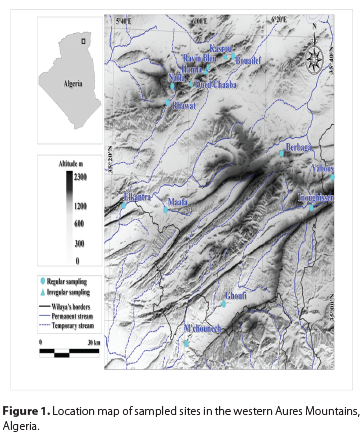
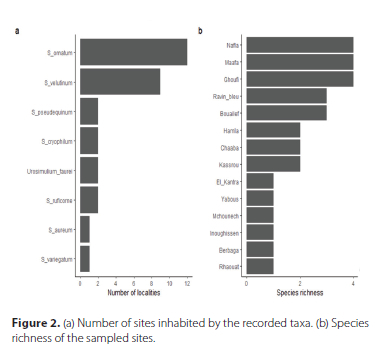
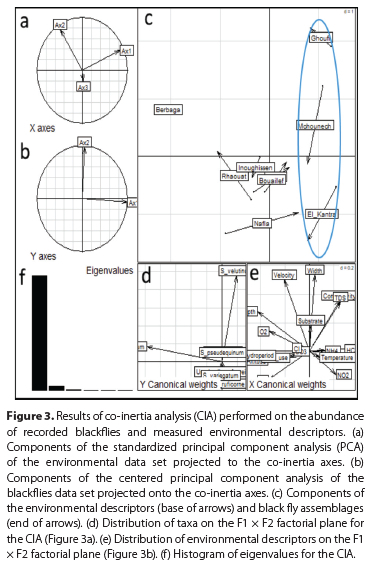
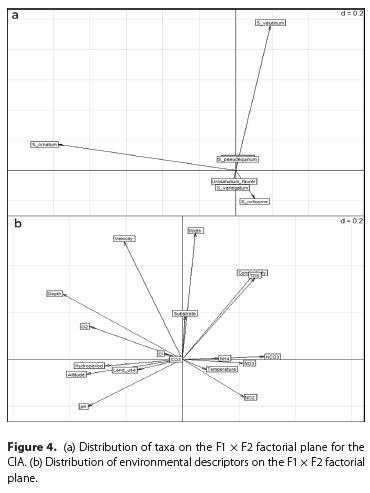
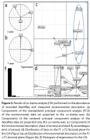
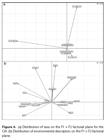
Besides their important ecological role in flowing waters, blackflies (Diptera: Simuliidae) may pose medical and veterinary risks. For seventeen months, we surveyed the blackflies of ten localities across the Aures Mountains, in the Saharan Atlas, Algeria, and recorded eight taxa (i.e. species, species groups or species complexes). High altitude sites were dominated by the Simulium ornatum (Meigen, 1818) group, whereas sites located on the southern slope of the Aures Mountains were occupied by the eurytopic Simulium velutinum (Santos Abreu, 1922) complex and the thermophilic, pollutant-tolerant Simulium ruficorne Macquart, 1838 'A' morphotype. Co-inertia analysis was used to determine the relationship between a species' abundance and habitat types. The co-inertia analysis revealed a likely co-structure between blackfly assemblages and measured environmental descriptors (water temperature, conductivity, current velocity, bed width, etc.) in sampled habitats. This confirmed the importance of altitude as a driver of blackfly distribution. Our results also showed that there has been an increase in anthropogenic pressures on the vulnerable freshwater biota of the Aures Mountains.
aquatic insects; co-inertia analysis; freshwater biodiversity; North Africa; river stream
 Thumbnail
 Thumbnail
 Thumbnail
 Thumbnail