Supply chain management and municipal service quality: The mediating influence of innovation
Abstract
ORIENTATION: South African municipalities rely heavily on effective supply chains for public service delivery, making it vital to adopt models that foster innovation. Understanding innovation helps municipalities to make informed decisions to improve service quality. RESEARCH PURPOSE: This study examined the impact of Supply Chain Management (SCM) practices on service delivery quality in selected South African municipalities, focusing on the mediating role of innovation. MOTIVATION FOR THE STUDY: Persistent service delivery challenges highlight the need to explore the combined potential of SCM and innovation as strategic interventions. This study investigates whether their integration can offer a sustainable solution. RESEARCH DESIGN, APPROACH AND METHOD: A quantitative, cross-sectional survey was conducted among 315 SCM professionals drawn from municipalities in Gauteng and North West provinces. Partial least squares structural equation modelling was used to test the proposed hypotheses. MAIN FINDINGS: The SCM practices, specifically strategic supplier partnerships, internal lean practices, and information sharing, significantly drive municipal innovation. Innovation, in turn, strongly enhances service delivery quality. The mediating role of innovation was confirmed through lean practices. PRACTICAL/MANAGERIAL IMPLICATIONS: The study encourages municipalities to align SCM initiatives with strategic goals and strengthen innovation capacity to improve service performance. CONTRIBUTION/VALUE-ADD: The findings underscore the importance of SCM and innovation in advancing municipal service delivery and support evidence-based policy and practice improvements.
Innovation Performance; Service Delivery; South African Municipalities; Supply Chain Management; SCM Practices
Introduction
In most countries, the responsibility to provide basic services, create and maintain healthy environments and promote local development lies with local government authorities such as municipalities. In the South African context, municipalities are classified into three categories: metropolitan, which are the largest in scale, followed by district and local, the last of which are the smallest (Republic of South Africa 1998). Regardless of their classifications, the common role of all municipalities in the country is recognised as providing essential public services and enhancing the overall quality of life for residents within their respective jurisdictions (Development Bank of South Africa 2022). However, most municipalities in the country have failed to meet their mandates, owing to various internal and external constraints. Some of these constraints include the lack of skills and administrative capacity, political interference, poor planning and policy implementation and wasteful expenditures linked to supply chain management (SCM) irregularities (Ngxesha, Langton & Mafini 2024). The result has been poor or a lack of services, which has in many cases resulted in decreased property values, infrastructural decay, high poverty and unemployment levels in municipal constituencies (Bester 2024; Ngobeni 2025). In response, residents of various municipalities have resorted to public protests as a way of demonstrating their displeasure.
The challenges facing South African municipalities have opened up avenues for the adoption of context-specific innovative interventions aimed at resolving service delivery challenges for the benefit of residents in constituencies. The unanimous view among policymakers and scholars is that innovation serves as a key enabler in expanding access to basic services (Council for Scientific and Industrial Research [CSIR] 2024). Consistent with this view, Ramoroka, Booyens and Jacobs (2018) advocate for promoting public sector innovation within local government, especially as a remedy for persistent service delivery deficits and infrastructure failures in under-resourced and rural areas. Likewise, cities around the world are actively transforming themselves and their institutional frameworks to better respond to changing conditions by developing adaptive policies, programmes and services that meet shifting demographic, cultural, social, economic and environmental demands (Burgalassi & Matsumoto 2024; Duminy & Parnell 2020). As a result, municipalities are ushering in a new era of public sector innovation to address their challenges and seize available opportunities.
This study sets out to investigate the impact of SCM practices on the quality of service delivery (SDQ) within selected municipalities in South Africa, with a particular focus on the mediating influence of innovation performance in this relationship. The ability of a municipality to manage its SCM effectively may determine its success or failure (Zindi & Sibanda 2022). Within South Africa, SCM is recognised as a critical function that facilitates the implementation of governmental policies at the municipal level. Nevertheless, concerns persist regarding the underperformance of numerous municipalities, prompting inquiries into whether SCM could serve as a catalyst for both innovation and improved service delivery within local government institutions. The present paper is drawn from doctoral research conducted by the authors at a South African University. As such, the study builds upon the theoretical foundation and methodology established in the original thesis.
Municipalities are mandated to provide high-quality services that are essential for sustaining and enhancing the well-being of communities. As such, they are expected to continuously innovate to meet service delivery demands. Drawing on the perspective of Shava and Vyas-Doorgapersad (2023), innovations, particularly digital technologies, are enabling municipal governments to respond more effectively to the public's growing expectations for improved service quality and cost-efficiency. An example is the use of innovative technologies as a tool to manage the residents' complaints and suggestions within municipalities (Parliament Monitoring Group 2017). Still, such innovations are acquired and deployed through the SCM system, creating a necessity to assess how the latter can be successfully harnessed to foster the former in municipalities. Hence, the study approached the service delivery dilemmas faced by South African municipalities from an SCM perspective because of its strategic importance in organisations, using the mediating effects of innovation to improve SDQ.
To further bolster the need for the present study, a comprehensive review of literature indicated that few, if any, empirical studies have examined the specific research model considered in this study, highlighting an existing knowledge gap. Accordingly, the study explores the interrelationship between SCM practices, municipal innovation performance (MIP) and SDQ in municipalities, by so doing expanding the existing knowledge base on municipal SCM, especially in relation to the mediating effects of innovation. It emphasises that although all SCM practices play a vital role in improving innovation and service delivery within South African municipalities, their individual effects may vary, depending on prevailing circumstances and context.
The adoption of SCM in South African municipalities began in 2005, following a series of reforms aimed at aligning procurement practices with globally recognised standards (Ambe 2016). The SCM process is regulated by a framework of established policies and legislative guidelines by the government with a view to streamlining the procurement functions within the public sector (Mabotja, Mokoena & Ndlovu 2024). Key legislative instruments that shape municipal SCM include the Broad-Based Black Economic Empowerment (B-BBEE), the Municipal Systems Act (MSA), the Municipal Finance Management Act (MFMA), and the Preferential Procurement Policy Framework Act (PPPFA), among others. Nonetheless, the presence of these regulatory frameworks has not translated into operational efficiency within many municipalities. A recent report by the Auditor General of South Africa (2024), for example, indicates that 85 municipalities in the country attained qualified audits. The major reasons specified for these results include non-compliance with legislation, inadequate internal controls, unauthorised and wasteful expenditure, and governance failures, among others. Therefore, SCM constraints and the lack of innovation remain among the major bottlenecks preventing municipalities from fulfilling their mandate.
Strategic supplier partnerships
Strategic supply chain partnerships refer to long-term, mutually beneficial relationships between organisations and their key material suppliers (Bicen, Hunt & Madhavaram 2021; Sukati, Sanyal & Awaain 2020). These collaborations enable firms to jointly assume responsibility for the success of products or services, reinforcing the importance of supplier involvement. According to Yang et al. (2021), the formation of such alliances is often driven by goals such as market competitiveness, fostering innovation, building legitimacy, enhancing corporate reputation, and sharing both risks and rewards (Yang et al. 2021). Furthermore, cultivating strong supplier relations is increasingly viewed as a vital element for maintaining a sustainable competitive edge (Rebelo, Nobre & Szczygiel 2019). Within South African municipalities, a large share of income is directed towards the procurement of goods, services and infrastructure needs. By doing so, they gain time, reduce costs, and conclude long-term partnerships with suppliers and other stakeholder organisations within their supply chains.
Customer relationship
Customer relationship management (CRM) refers to a holistic strategy aimed at understanding, reaching and retaining loyal customers over time by utilising a structured system of interpersonal relationship management (Sukati et al. 2020; Zips et al. 2024). Modern business organisations are increasingly adopting a customer-centric approach, striving to cultivate strong relationships and foster loyalty, as markets shift quickly and product designs are easily replicated. To stand out, business organisations concentrate on trust, experience quality, and ongoing engagement, rather than just competing on price or product features (Sankur et al. 2024). In municipal SCM, there is typically no direct, external-facing interaction with end recipients of goods and services procured, which partly explains the limited use of the term 'customer' within public sector SCM discourse (Zips et al. 2024). Rather, procurement activities are conducted on behalf of an internal end-user department, which is responsible for the final delivery of services to the customer (Setino 2018). However, it is important to note that municipal employees and departments are also users of the outputs of the SCM process and can thus be considered internal customers (Muringa & Mutereko 2024). These end-user departments rely on the SCM function to fulfil service obligations, making it essential to closely manage the relationship between the end-user and SCM. Service level agreements (SLAs) are commonly used as a mechanism to govern these internal relationships, ensuring performance expectations are clearly defined and monitored (Muringa & Mutereko 2024).
Cross-functional teams
A cross-functional team (CFT) consists of individuals with diverse areas of expertise who collaborate towards a shared objective, with the aim of achieving greater creativity, innovation and success (Dussart, Van Oortmerssen & Albronda 2021). Within organisations, CFTs are instrumental in building market competitiveness and driving overall success (Jannson & Persson 2020). These teams often serve as platforms for experimentation and adaptive learning in unfamiliar or changing environments, enabling organisations to develop effective responses (Nanda et al. 2021). A culture of high performance can emerge when departments engage in cross-functional cooperation, facilitated through the mediating influence of SCM. The degree and quality of interdepartmental collaboration are key factors that influence the successful execution and impact of SCM practices in organisations (Thanh Hoai & Nguyen 2021). In municipal supply chains, CFTs are enhanced by the establishment of diverse bid committees with a view to influencing decisions that will be best for the organisation and customers, but not necessarily for the performance of an individual functional management area (Ambe & Badenhorst-Weiss 2021).
Strategic sourcing
Strategic sourcing (SS) represents a structured and ongoing process within SCM, through which organisations continuously reassess and enhance their procurement practices (Ramakrishnan 2018). The goal of this approach is to secure optimal products and services at the best possible value (Ramakrishnan 2018). In dynamic and uncertain environments, making proactive procurement decisions becomes essential for managing evolving risks and external changes (Juma 2021). Like elsewhere, South African municipalities invest substantial public funds annually in acquiring the goods and services required to fulfil policy mandates and operational goals (National Treasury 2022). In this way, SS is key for successful SCM in municipalities, as it ensures that the procurement process is executed with precision and efficiency.
Internal lean practice
Lean is commonly understood as a methodology for continuous improvement aimed at boosting organisational efficiency (Hopp & Spearman 2021). At its core, lean thinking and lean practices seek to maximise customer value by eliminating waste and enhancing product or service attributes without incurring additional costs (Gutierrez et al. 2022). The application of Lean SCM practices offers various advantages, including lower operational costs, reduced cycle times and improved quality outcomes (Moyano-Fuentes et al. 2021). In the public sector, growing societal demands for better services have compelled organisations to embrace more adaptative and innovative management approaches, such as Lean SCM. They have responded by seeking efficiency throughout government services, having identified lean as a tool for improving quality and reducing costs (Andersson et al. 2020). However, implementing lean processes in the public sector is often more complex than in the private sector, as process changes such as Business Process Re-engineering (BPR) or Business Process Automation (BPA) are subject to legislative governance structures and typically require approval from the National Treasury Department (Mojaki, Tuyikeze & Ndlovu 2024). The adoption of lean practices by public sector entities, including municipalities, can lead to more efficient and streamlined processes, while also establishing structures that enhance the accountability of political stakeholders (Ambe & Badenhorst-Weiss 2021).
Information sharing
Information sharing (IS) entails the exchange of data between people, organisations and technologies through activities such as creation, representation, organisation, maintenance, visualisation, reuse, sharing, communication and disposal (Mathu 2019). Effective IS enables organisations to better align with their partners by improving communication and achieving outcomes in a more cost-efficient manner (Ahmed 2022; Sukati et al. 2020). A supply chain is composed of various stakeholders, including manufacturers, suppliers, distributors and retailers, who collaborate to fulfil the primary objective of delivering goods and services that meet consumer demand (Hassan & Nasereddin 2018). These stakeholders possess different types of information that must be exchanged to maintain coordination and efficiency (Hassan & Nasereddin 2018). Within municipal settings, the exchange of accurate, high-quality and timely SCM-related information between municipalities and their procurement partners plays a critical role in streamlining procurement planning, reducing acquisition costs and order cycles, enhancing transparency, and ultimately elevating the quality of service delivery (Ngxesha et al. 2024).
Municipal innovation performance
Municipal innovation can be defined as 'the adoption of new or enhanced processes, services, or products by municipal organisation' (South African Local Government Association [SALGA] 2018). It encompasses enhancement to public services for which the municipality is accountable, including those provided through external partners, and relates both to the substance of the services and the tools or mechanisms used for their delivery (SALGA 2018). Importantly, innovation within the municipal context may range from simple adjustments in policy or management practices to significant changes that enhance the quality, quantity or efficiency of services (SALGA 2018). Innovation can lead to improved efficiency by lowering costs and streamlining service delivery (Amusa & Fadiran 2024), and it can also influence demand by creating new channels for accessing or procuring services (Adjei-Bamfo et al. 2023). Because of the significant economic role of the public sector, there is an increasing policy focus on promoting innovation within government institutions (Torfing & Ansell 2017).
Municipal service delivery
Service delivery involves the provision of essential public services, including access to clean water, electricity, health care, roads, street lighting, traffic management, waste removal, sewage disposal and maintenance, as along with municipal parks and recreation (Development Bank of Southern Africa 2022). Service provision in South Africa is governed by the principles of the Batho Pele initiative, launched in 1997 by Mandela's government, which created relatively transparent formula-based allocations for local financial support (De Kadt & Lieberman 2017). The principles of consultation, service standards, accessibility, courtesy, IS, openness and transparency, redress mechanisms, and value for money are designed to drive transformation across all spheres of public service delivery (Molobela 2024). As a result, municipalities are urged to engage with citizens regarding service quality and, where feasible, offer them options in the types of services provided (Masiya, Davids & Mangai 2021).
In this study, municipal service delivery quality is conceptualised using three key dimensions from the SERVQUAL model, namely, tangibles, reliability and responsiveness. According to Pakurár et al. (2019), tangibles refer to the physical aspects of a service environment, including infrastructure, staff and communication tools. These elements form the visible image of the service, which clients often rely on to evaluate its quality. Reliability, as defined by Setiono and Hidayat (2022), is linked to the expertise, politeness and professionalism of employees, which helps instil customer confidence and trust in the organisation's credibility. In a municipal context, this involves the consistent and accurate execution of promised services, such as routine waste collection or timely infrastructure maintenance. Responsiveness, meanwhile, is associated with the readiness and speed of service personnel in assisting clients (Setiono & Hidayat 2022). Within local government, this dimension reflects the degree to which municipal staff are attentive and quick to respond to citizens' needs, illustrating the quality of support and care provided during service delivery.
Research model
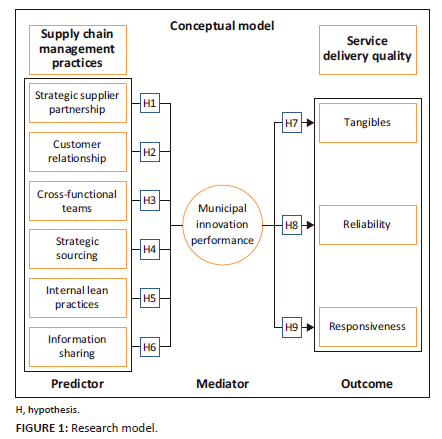
Figure 1 illustrates the proposed research model, which includes six predictor constructs: Strategic Supplier Partnership, Customer Relationship, Cross-Functional Teams, Strategic Sourcing, Information Sharing and Internal Lean Practice. Municipal innovation performance serves as the mediating variable, while service delivery quality represents the outcome variable.
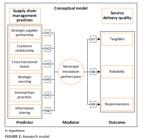
The constructs identified above are considered key enablers of effective service delivery. The proposed model posits that SCM practices exert a direct predictive effect on MIP (H1-H6), while MIP subsequently impacts service delivery (SD) directly (H7-H9). This study aims to empirically examine these proposed relationships.
Hypotheses development
Innovation within supply chains has transformed business models across various industries, leading to significant advancements in product development, production techniques, operations and after-sales services (Wu, Tseng & Chiu 2017). The adoption of robust SCM practices plays a crucial role in strengthening competitiveness throughout the supply chain. Organisational performance is often assessed in relation to innovation outcomes (Xu & Zhao 2022). Previous research suggests that SCM practices influence overall supply chain performance, as both efficiency and effectiveness are key components of SCM. Within this framework, innovation serves as a direct explanatory factor for organisational performance in the context of SCM implementation (Khuram, Rashid & Nawaz 2019). In general, SCM practices contribute to business innovation by coordinating and integrating tasks and activities throughout the chain (involving customers, vendors and the central organisation) to support the creation, advancement and implementation of tailored solutions. Thus, the following hypotheses are proposed:
H1: Strategic Supplier Partnership (SSP) has a positive relationship with Municipal Innovation Performance (MIP).
H2: Customer Relationship positively influences Municipal Innovation Performance (MIP).
H3: Cross-Functional Teams (CFTs) positively affect Municipal Innovation Performance (MIP).
H4: Strategic Sourcing positively influences Municipal Innovative Performance (MIP).
H5: Internal Lean Practice (ILP) positively affects the Municipal Innovation Performance (MIP).
H6: Information sharing positively influences the Municipal Innovation Performance (MIP).
Municipal innovation performance and service delivery quality
The study examined the impact of MIP on three key dimensions of SD: Tangibles (TAN); Reliability (REL); and Responsiveness (RES). Hypotheses H8 through to H10 posit that MIP positively influences the quality of service delivery within South African municipalities. This view is supported by Thusi, Ragolane and Matyana (2023), who argue that innovation enhances the quality of public services and the problem-solving capacity of governmental organisations facing societal issues. Similarly, Mhlanga, Ndhlovu and Hofisi (2021) emphasise that innovation plays a pivotal role in strengthening public service provision, serving as the foundation for strategic frameworks, policies and delivery models. In line with this, Demircioglu and Audretsch (2019) affirm that public sector innovation contributes to improved service quality. Based on this, the following hypotheses are proposed:
H7: Municipal Innovation Performance leads to improved service delivery (TAN) of South African municipalities.
H8: Municipal Innovation Performance leads to improved service delivery (REL) of South African municipalities.
H9: Municipal Innovation Performance leads to improved service delivery (RES) of South African municipalities.
Research method and design
The deductive reasoning approach was chosen for this study and focused on the positivist philosophy as it allows quantitative methods to test hypotheses deductively and to determine, through statistical analysis, the existence of predictive relationships (Creswell & Creswell 2018). A quantitative method was employed by combining the correlational and survey designs. Use of a quantitative design ensured that the study findings could be generalised to municipalities in other contexts, while a correlational design facilitated the testing of predictive relationships between the different research constructs considered in the study. A survey strategy was useful for collecting data from large groups of respondents using a questionnaire (Flynn, Pagell & Fugate 2018). A cross-sectional research design was utilised, as data were gathered during a single time period. This design was deemed suitable for capturing respondents' views across multiple municipalities within a defined timeframe.
Sampling
The targeted population included management and staff who are SCM role-players employed from the selected municipalities in Gauteng and North West Provinces. According to Ambe (2016), key role-players in municipal SCM include SCM officials, municipal executives and functional management teams. These role-players were selected because they possess valuable knowledge of SCM, hold strategic influence over SCM decision-making, and are responsible for overseeing and assessing the implementation of SCM processes within their municipalities. The sampling frame was derived from lists of SCM role-players obtained from selected municipalities in the Gauteng and North West Provinces. The municipalities targeted in this study were the West Rand District Municipality (WRDM), Rand West City Local Municipality (RWCLM), Mogale City Local Municipality (MCLM), Bojanala Platinum District Municipality (BPDM) and Madibeng Local Municipality (MLM). To ensure fair representation across all selected municipalities, a probability-based cluster random sampling technique was applied to select participants. Only participants with relevant knowledge and expertise in the subject area were included. The cluster sampling approach was chosen to ensure an equitable representation of respondents across geographically dispersed municipal structures while maintaining control over the selection process.
A final sample comprised 315 participants, which was deemed sufficient as it surpassed the recommended minimum of 150 participants for quantitative studies utilising Partial Least Squares Structural Equation Modelling (PLS-SEM) (Hair et al. 2021).
Instrumentation
The measurement scales used in this study were adapted from established research. Each of the seven SCM practices, as well as the MIP construct, was measured using five items. The sources of the adapted items are as follows: Strategic Supplier Partnerships (SSP) from Al-Madi et al. (2021); Customer Relationship from Mashiloane, Mafini and Pooe (2018); CFT from Monczka et al. (2012); SS from Willy and Njeru (2014); Internal Lean Practices (ILP) from Antony, Snee and Hoerl (2017), and Govender and Jason (2018); IS from Mashiloane et al. (2018); MIP from Ju, Ferreira and Wang (2020), and Booyens et al. (2018). The sub-components of SD were measured using four items each, drawn from the SERVQUAL framework, as adapted from Ko and Chou (2021), and Kowalska and Ostrega (2020).
The questionnaire used in the study was self-administered and administered online using Google Forms, a free and≈accessible web-based survey platform. Participants responded using a 6-point Likert scale, ranging from (1) strongly disagree to (6) strongly agree. To enhance the content validity of the instrument, a pilot study involving 43 participants was conducted prior to the rollout of the main survey. The pilot test offered an opportunity to refine the questionnaire, particularly by modifying the response format from a 5-point to a forced-choice 6-point scale. This change aimed to encourage respondents to take a clear stance, thereby enhancing data quality and addressing issues identified during the pilot phase, including a high occurrence of neutral responses across several constructs. To ensure face validity, two SCM experts reviewed the questionnaire. Participants took part in the study voluntarily, and no form of compensation or incentive was offered for their participation. Each participating municipality designated an internal administrator to act as a liaison. This liaison circulated the survey link internally via email to selected respondents after receiving basic research fieldwork training from the primary researcher.
Several ethical considerations were followed throughout the research process. First of all, all participants were provided with a study information sheet, which explained the purpose of the research, assured them of their anonymity, and clarified that participation was entirely voluntary. As such, by completing the questionnaire, informed consent was implied. The primary researcher did not have direct contact with the respondents, and confidentiality was maintained throughout the research process. No personally identifiable information was collected, and all data were stored securely in a password-protected cloud folder accessible only to the researchers.
Data analysis
Descriptive statistics were processed using SPSS version 27.0, while inferential statistical analysis for hypothesis testing was conducted using Smart-PLS version 4.0.
Ethical considerations
Ethical clearance to conduct this study was obtained from the University of South Africa, Graduate School of Business Leadership RERC (2023_SBL_DBL_026_FA_1465).
Results
Respondent demographic profiles
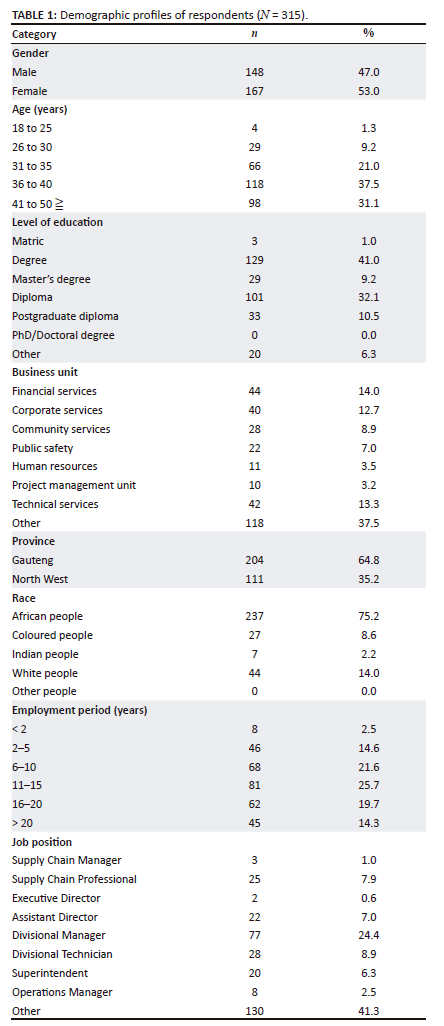
Out of the 350 questionnaires distributed, 315 valid responses were received, resulting in a 90% response rate. According to Wang et al. (2020), this response rate is considered acceptable. The profile of respondents is presented in Table 1.
As indicated in Table 1, female participants made up 53% of the respondents (n = 167). When age groups were combined, 69% (n = 216) were over 35 years old. Approximately 41% (n = 129) held a first-degree qualification. The majority of respondents were from municipalities in Gauteng Province (65%; n = 204), while the remaining 35% (n = 111) were from the North West Province. Notably, 60% (n = 188) of respondents had over 10 years of service in their respective municipalities. Regarding job positions, 31% (n = 99) worked as divisional managers or assistant directors.
Common methods variance
Common methods variance (CMV) was minimised by using measurement scales obtained from different sources. A pilot test was conducted to identify and address potential ambiguities, thereby enhancing the clarity and effectiveness of the questionnaire. To evaluate CMV, Harman's single-factor test was applied, revealing 10 factors that together explained 73.7% of the variance. The factor with the highest variance accounted for 42.7%, indicating that no single factor dominated. This is consistent with the guideline provided by Fuller et al. (2016), who suggest that the first factor should account for no more than 50% of the total variance.
Analysis of reliability and validity
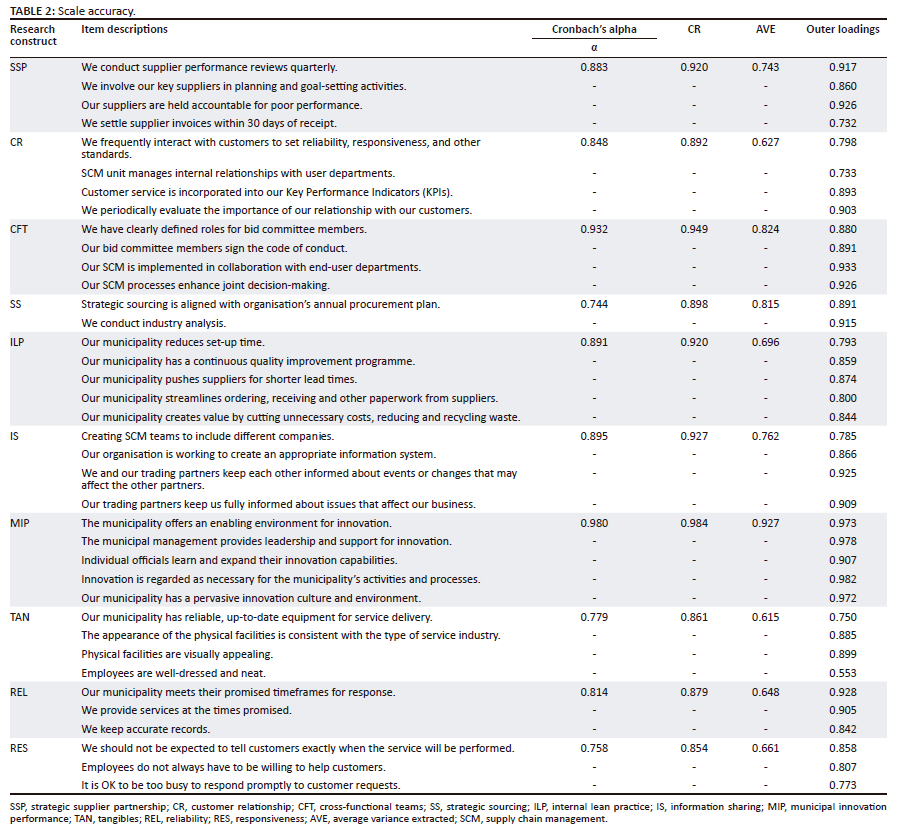
To assess reliability, both Cronbach's alpha (α) and the composite reliability (CR) coefficients were utilised. Cronbach's alpha was used to evaluate the internal consistency of each construct. Following the refinement of the measurement scale, the alpha values presented in Table 2 ranged from 0.744 to 0.980, all exceeding the minimum acceptable threshold of 0.7 (Hussey et al. 2023). Similarly, CR values fell between 0.854 and 0.984, surpassing the recommended cut-off point of 0.7 (Hair et al. 2021), thereby confirming strong internal reliability within the constructs measured in this study.
Scale validity
Convergent and discriminant validity
Convergent validity was evaluated through the average variance extracted (AVE) and outer loadings, both of which are expected to exceed a threshold of 0.5 to be considered acceptable (Al-Zwainy & Al-Marsomi 2023). As shown in Table 2, the AVE values for the study's constructs ranged from 0.615 to 0.927, while factor loadings were between 0.553 and 0.981. These results indicate that the criteria for convergent validity were satisfactorily met (Roebianto et al. 2022).
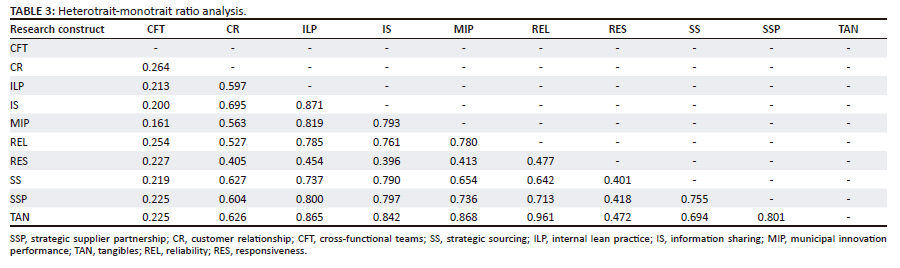
To assess discriminant validity, the heterotrait-monotrait (HTMT) ratio was applied, as displayed in Table 3. Heterotrait-monotrait values serve as indicators of correlation between different constructs. According to Pehlivan et al. (2024), values below 0.90 suggest adequate discriminant validity and are deemed acceptable (Pehlivan et al. 2024). The HTMT results presented in Table 3 were all below the 0.90 threshold, thereby confirming that the scale demonstrated sufficient discriminant validity.
Effect sizes
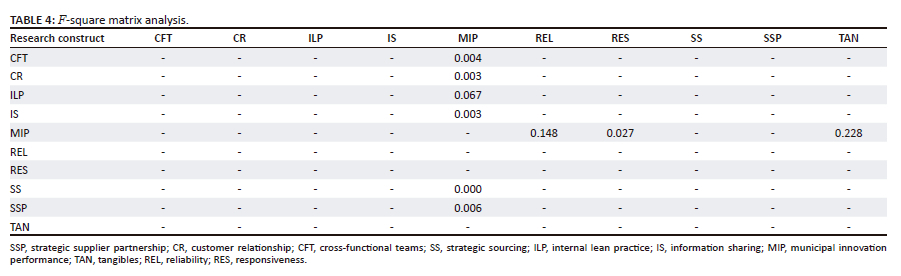
Effect size (f2) measures the strength of the relationship between two variables on a numeric scale (Bilal et al. 2021). The F-square (effect size) of 0.02 is considered minor, a value of 0.15 is regarded as moderate, while 0.35 indicates a strong effect (Cohen, West & Aiken 2013). The F-square statistic measures the impact of each predictor variable on the dependent variable (Pratiwi & Irawan 2021). The findings from the F-square are displayed in Table 4.
Based on Cohen's effect size guidelines, the influence of the SCM practices on MIP was generally weak, with CFT (f2 0.004), CR (f2 0.003), IS (f2 0.003), SSP (f2 0.006), SS (f2 0.000), and ILP (f2 0.067) all falling within the small effect size range. The effect of MIP on service delivery sub-components also showed limited impact, particularly on RES with an f2 of 0.027. However, the effect of MIP on REL and TAN was moderate, with values of f2 = 0.15 and f2 =0.228, respectively. Therefore, the strongest relationship occurred between MIP and TAN (f2 = 0.228).
Path analysis
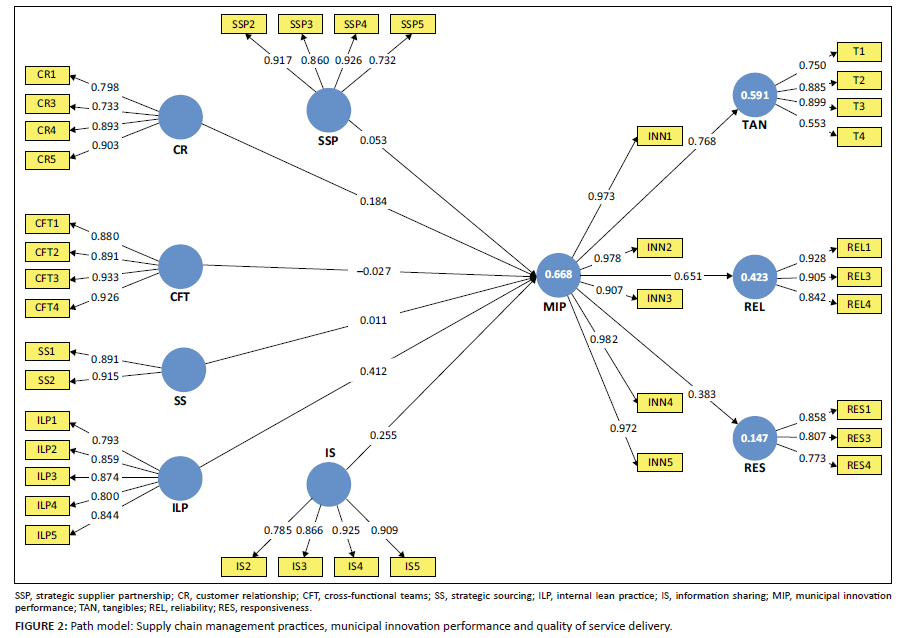
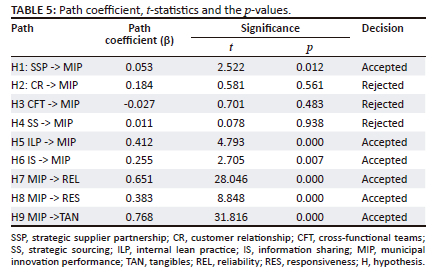
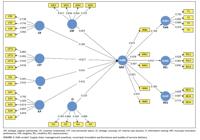
Structural path analysis was conducted to examine the proposed relationships between SCM practices, MIP and service delivery. The path model and the construction of pathways among the research constructs are displayed in Figure 2. The results show path coefficients ranging between −0.027 and 0.768, demonstrating the existence of a mix of associations between the constructs. The findings reveal that all relationships were positive, with the exception of CR, CFT and SS which did not exhibit a positive association.
Discussion
This study explored the association between SCM practices, MIP and SDQ in selected municipalities in South Africa. Table 5 summarises the outcomes, presenting the path coefficient (β), t-statistics (t) and the p-values (p) for each hypothesised relationship.
The results of this study are interpreted through the lens of the Practice Based View (PBV), which provides a theoretical foundation for understanding the extent to which MIP and SDQ are shaped by routinised and situated practices of individuals and collectives. Accordingly, the significant relationships observed among the constructs, namely SSP, CR, CFT, SS, ILP and IS (as predictors), reflect the central role of SCM in driving MIP and SDQ outcomes.
Path analysis
The study revealed significant positive relationships between three SCM practices and MIP. Specifically, SSP (β = 0.053; t = 2.522; p = 0.012), ILP (β = 0.412; t = 4.793; p = 0.000), and IS (β = 0.255; t = 2.705; p = 0.007) were all found to exert a positive influence on MIP. These results suggest that when municipalities adopt and effectively implement SSP, ILP and IS, their capacity for innovation improves. This result is consistent with previous findings by Zhang (2023) and Huo, Liu and Li (2023).
The significant relationship between SSP and MIP underscores the importance of collaborative practices between municipalities and their stakeholders. The positive association between ILP and MIP indicates that ILP, as a routinised activity, contributes to innovation in local government institutions. The significant link between IS and MIP reflects that knowledge exchange is a practice that shapes municipal capabilities and innovation.
In contrast, three SCM practices, CR (β = 0.184; t = 0.581; p = 0.561), CFT (β = −0.027; t = 0.701; p = 0.483), and SS (β = 0.011; t = 0.078; p = 0.938) exerted no effect on MIP. These outcomes align with an earlier study by Gil-Gomez et al. (2020). These results could be reflective of the challenges municipalities face in fostering trust with customers and maintaining structured, well-led CFTs. Given the enduring climate characterised by poor service delivery, public distrust in municipalities may hinder the effectiveness of customer engagement strategies. Similarly, inadequate leadership may prevent municipalities from functioning optimally, reducing their potential to drive innovation.
Municipal innovation performance and service delivery quality
The path analysis results show that MIP significantly and positively affects SDQ through its dimensions: TAN (β = 0.768; t = 31.816; p = 0.000), REL (β = 0.651; t = 28.046; p = 0.000) and RES (β = 0.383; t = 8.848; p = 0.000). These results indicate that innovative approaches adopted by municipalities contribute meaningfully to enhancing service quality by providing more dependable services, enabling them to respond more effectively to stakeholders' needs, including the physical aspects of service.
Mediation analysis
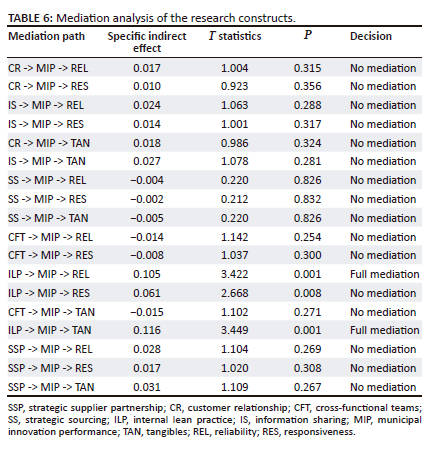
As shown in Table 6, the mediation analysis revealed that MIP significantly mediates the relationship between ILP and two specific dimensions of service delivery quality, namely, REL and TAN. The mediation effects were statistically significant, with β values of 0.105 (t = 3.422; p = 0.001) for REL and 0.116 (t = 3.449; p = 0.001) for TAN. This implies that ILP's influence on service delivery is amplified when innovation is integrated into municipal systems and processes. These findings highlight the crucial role of innovation in bridging SCM practices with improved public service quality, suggesting that municipalities that invest in and promote innovation are more likely to see greater benefits from their SCM strategies, particularly in delivering more reliable and tangible services. The results align with Phudetch et al. (2020), who argue that increased innovativeness allows organisations to manage operations and material flows more effectively, enhancing service quality and efficiency. Similarly, Alabdullah and Kanaan (2023) observed that adopting lean practices fosters an environment conducive to innovation, which, in turn, drives organisational performance.
Moreover, the analysis revealed that no mediation effects were identified in the remaining relationships, such as, but not limited to, CR on REL (β = 0.017, t = 1.004, p = 0.315), RES (β = 0.010, t = 0.923, p = 0.356), and TAN (β = 0.018, t = 0.986, p = 0.324) indicating that the presence of MIP in those cases did not produce any significant indirect impact. The findings suggest that adopting ILP is a critical SCM approach that significantly improves both SDQ and innovation performance in the context of the selected South African municipalities.
Conclusion
Theoretical and practical contributions
The study examined the influence of SCM practices on SDQ in selected South African municipalities, while assessing the mediating role of MIP in this relationship. It confirms the importance of SSP, ILP and IS as essential driving factors of improved innovation in municipalities. However, CR, CFT and SS emerged as insignificant drivers of innovation. Mediation effects of MIP were realised on the connection of ILP and REL only, indicating that innovation plays a vital role in enhancing the reliability component of SDQ through the adoption of lean practices. No additional significant mediation effects were identified in the study.
This research examined multiple dimensions of SCM practices, including SSP, CR, CFT, ILP, IS and SS, as key predictors of innovation performance aimed at enhancing service delivery in South African municipalities. The study developed a model illustrating the impact of SCM practices on innovation performance, which subsequently impacts service delivery outcomes. Drawing from the results, the study makes several notable theoretical contributions. Firstly, it offers fresh perspectives on the interrelationships among the key constructs, expands the existing literature on municipal SCM, particularly in relation to innovation, and reveals that different SCM practices carry varying levels of importance in enhancing innovation performance and service delivery quality within the South African municipal context. Secondly, the study establishes a theoretical foundation for future empirical research, encouraging further investigation into the dynamics between SCM practices, innovation performance and service delivery in local government settings across South Africa.
Practically, the study contributes to developing progressive municipal SCM policies and regulations. Managers are provided with new perspectives on how to align the SCM practices with chosen supply chain strategies to meet the demands of their customers and to enhance the effectiveness of their supply chains. For instance, municipalities could pilot AI-enabled process mining tools to analyse workflows and eliminate inefficiencies, thereby reinforcing internal lean practices and fostering continuous innovation. Additionally, investing in integrated digital platforms, such as cloud-based SCM systems and real-time collaboration dashboards, can significantly improve IS both within departments and with external stakeholders. Municipalities should also consider formalising long-term supplier partnerships through strategic supplier development programmes, co-innovation initiatives, or shared digital infrastructure that enables more agile and responsive service delivery. Finally, the study outcomes create awareness among municipalities about the importance of continuously reviewing, monitoring and managing their supply chain operations to mitigate risks and address potential vulnerabilities. This could be achieved through the implementation of real-time risk visualisation dashboards powered by predictive analytics, enabling supply chain teams to anticipate disruptions, assess impact levels, and prioritise mitigation strategies before issues escalate.
Limitations and implications for further research
This study has limitations worth noting. It targeted the SCM role-players in only five selected South African municipalities located in two provinces, namely Gauteng and North West, restricting its geographic scope. As such, although the study was quantitative in nature, allowing the findings to be generalised to other municipal environments, this should still be done cautiously. Future studies should consider expanding the scope to other municipalities excluded from the study. The study was quantitative, which misses the in-depth insights that could be collected through qualitative research. A mixed methods approach could be used for future studies to obtain both qualitative and quantitative insights. Unlike the current study that utilised a cross-sectional design, future research may benefit from adopting longitudinal or time series approaches to track the evolution of these relationships over various timeframes. Additionally, subsequent studies should consider analysing the distinct categories of municipalities, including metropolitan, district and local, separately instead of treating them as homogeneous organisations.
This article is based on data from a larger study. A related article focusing on the impact of supply chain management dimensions on service delivery quality in selected South African municipalities has been published in Journal of Transport and Supply Chain Management 19(0) a1157. The present article addresses a distinct research question, focusing on the mediating role of innovation.
Competing interests
The authors declare that they have no financial or personal relationships that may have inappropriately influenced them in writing this article.
CRediT authorship contribution
Gladys N. Mahache: Conceptualisation, Methodologoy, Writing - original draft. Chengedzai Mafini: Supervision.
Funding information
The authors received no financial support for the research, authorship and/or publication of this article.
Data availability
The data that support the findings of this study are not openly available because of confidentiality and are available from the corresponding author, Gladys N. Mahache, upon reasonable request.
Disclaimer
The views and opinions expressed in this article are those of the authors and are the product of professional research. They do not necessarily reflect the official policy or position of any affiliated institution, funder, agency or that of the publisher. The authors are responsible for this article's results, findings and content.
References
Acknowledgements
The authors would like to acknowledge the support provided by the following municipalities: Rand West City, Mogale City, Madibeng, West Rand District and Bojanala Platinum District, towards the completion of the research project. This article is based on research originally conducted as part of Gladys N. Mahache's Doctor of Business Leadership thesis titled 'Supply Chain Management-Based Municipal Service Delivery Optimisation in South Africa', submitted to the Graduate School of Business Leadership. The thesis was supervised by Chengedzai Mafini. The manuscript has since been revised and adapted for journal publication.
Literature review
-
Adjei-Bamfo, P., Djajadikerta, H.G., Jie, F., Brown, K. & Kiani Mavi, R., 2023, 'Public procurement for innovation through supplier firms' sustainability lens: A systematic review and research agenda', Business Strategy and the Environment 32(1), 387-407. https://doi.org/10.1002/bse.3197
» https://doi.org/10.1002/bse.3197 -
Ahmed, M.A., 2022, 'Impact of information sharing on supply chain performance with mediation of trust', South Asian Journal of Social Review 1(2), 56-79. https://doi.org/10.57044/SAJSR.2022.1.2.2207
» https://doi.org/10.57044/SAJSR.2022.1.2.2207 -
Alabdullah, T. & Kanaan, A., 2023, 'The mediating role of innovation in the relationship between supply chain management and company performance in Bahrain', Journal of Humanities, Social Sciences and Business 3(1), 160-176. https://doi.org/10.55047/jhssb.v3i1.845
» https://doi.org/10.55047/jhssb.v3i1.845 -
Al-Madi, F., Alfalah, T., Al Shraah, A. & Abu-Rumman, A.A., 2021, 'Supply chain practices and organisational performance: Evidence from Jordanian medical devices firms', Uncertain Supply Chain Management 9(4), 831-840. https://doi.org/10.5267/j.uscm.2021.1.009
» https://doi.org/10.5267/j.uscm.2021.1.009 -
Al-Zwainy, F.M.S. & Al-Marsomi, M.S.K., 2023, 'Structural equation modelling of critical success factors in the development programs of regional', Journal of Project Management 8(2), 119-132. https://doi.org/10.5267/j.jpm.2023.1.004
» https://doi.org/10.5267/j.jpm.2023.1.004 -
Ambe, I.M., 2016, 'Insight into supply chain management in a municipal context', Public and Municipal Finance 5(2), 20-29. https://doi.org/10.21511/pmf.5(2).2016.02
» https://doi.org/10.21511/pmf.5(2).2016.02 -
Ambe, I.M. & Badenhorst-Weiss, J.A., 2021, A review of procurement practices in the South African public sector, viewed 27 June 2025, from https://marcusambe.com/wp-content/uploads/2018/06/A-Review-of-Procurement-Practises-in-the-South-African-Public-Secotr-Chapter-16-1.pdf.
» https://marcusambe.com/wp-content/uploads/2018/06/A-Review-of-Procurement-Practises-in-the-South-African-Public-Secotr-Chapter-16-1.pdf -
Amusa, H.D.A. & Fadiran, D., 2024, 'The efficiency of public expenditures on basic services: The case of South African municipalities', South African Journal of Economics 92(2), 183-213. https://doi.org/10.1111/saje.12312
» https://doi.org/10.1111/saje.12312 -
Andersson, G., Lynch, M.P.J., Johansen, F.R., Fineide, M.J. & Martin, D., 2020, 'Exploring perceptions of lean in the public sector', Public Money & Management 43(1), 64-72. https://doi.org/10.1080/09540962.2020.1847454
» https://doi.org/10.1080/09540962.2020.1847454 -
Antony, J., Snee, R. & Hoerl, R., 2017, 'Lean Six Sigma: Yesterday, today and tomorrow', International Journal of Quality & Reliability Management 34(7), 1073-1093. https://doi.org/10.1108/IJQRM-03-2016-0035
» https://doi.org/10.1108/IJQRM-03-2016-0035 -
Auditor General South Africa (AGSA), 2024, Consolidated General Report on the Local Government Audit Outcomes - MFMA 2022/23, viewed 17 May 2025, from https://www.agsa.co.za/Reporting/MFMAReports.aspx.
» https://www.agsa.co.za/Reporting/MFMAReports.aspx -
Bester, J., 2024, 'Making dysfunctional municipalities functional: Towards a framework for improving municipal service delivery performance in South African municipalities', Commonwealth Journal of Local Governance 29, 59-78. https://doi.org/10.5130/cjlg.vi29.8702
» https://doi.org/10.5130/cjlg.vi29.8702 -
Bicen, P., Hunt, S.D. & Madhavaram, S., 2021, 'Competitive innovation alliance performance: Alliance competence, alliance's market orientation, and relational governance', Journal of Business Research 123, 23-31. https://doi.org/10.1016/j.jbusres.2020.09.023
» https://doi.org/10.1016/j.jbusres.2020.09.023 - Bilal, H.B., Ahad, A., Iram, A. & Baig, M.O., 2021, 'Satisfaction level of COVID-19 patients regarding physical therapy services in Islamabad, Pakistan', Rawal Medical Journal 46(4), 780-782.
- Booyens, I., Sinyolo, S., Jacobs, P. & Hart, T., 2018, Innovation for basic service delivery: Enhancing municipal innovation maturity, Policy Brief, Human Sciences Research Council (HSRC), Cape Town.
- Burgalassi, D. & Matsumoto, T., 2024, Demographic change in cities: Trends, challenges and insights from G7 economies, OECD Regional Development Papers No. 67, OECD Publishing, Paris.
- Cohen, J., Cohen, P., West, S.G. & Aiken, L.S., 2013, Applied multiple regression/correlation analysis for the behavioral sciences, 3rd edn., Routledge, New York, NY.
-
Council for Scientific and Industrial Research (CSIR), 2024, Integration of innovation in the municipal environment, viewed 06 May 2025, from https://www.dsti.gov.za/index.php/documents/knowledge-products/195-integration-of-innovation-in-the-municipal-policy-environment-vvisdp-project-4/file.
» https://www.dsti.gov.za/index.php/documents/knowledge-products/195-integration-of-innovation-in-the-municipal-policy-environment-vvisdp-project-4/file - Creswell, J.W. & Creswell, J.D., 2018, Research design: Qualitative, quantitative and mixed methods approach, 5th edn., Sage, Los Angeles, CA.
-
De Kadt, D. & Lieberman, E.S., 2017, 'Nuanced accountability: Voter responses to service delivery in Southern Africa', British Journal of Political Science 47(1), 185-214. https://doi.org/10.1017/S0007123417000345
» https://doi.org/10.1017/S0007123417000345 -
Demircioglu, M.A. & Audretsch, D.B., 2019, 'Public sector innovation: The effect of universities', The Journal of Technology Transfer 44(2), 596-614. https://doi.org/10.1007/s10961-017-9636-2
» https://doi.org/10.1007/s10961-017-9636-2 -
Development Bank of Southern Africa (DBSA), 2022, The impact of municipal infrastructure in basic service delivery in South Africa, viewed 13 April 2023, from https://www.dbsa.org/article/impact-municipal-infrastructure-basic-service-delivery-south-africa.
» https://www.dbsa.org/article/impact-municipal-infrastructure-basic-service-delivery-south-africa - Duminy, J. & Parnell, S., 2020, Supporting city futures: The Cities Support Programme and the urban challenge in South Africa, African Centre for Cities, Cape Town.
-
Dussart, P., Van Oortmerssen, L.A. & Albronda, B., 2021, 'Perspectives on knowledge integration in cross-functional teams in information systems development', Team Performance Management: An International Journal 27(3/4), 316-331. https://doi.org/10.1108/TPM-11-2020-0096
» https://doi.org/10.1108/TPM-11-2020-0096 -
Flynn, B., Pagell, M. & Fugate, B.S., 2023, 'Survey research design in supply chain management: The need for evolution in our expectations', Journal of Supply Chain Management 54(1), 1-15. https://doi.org/10.1111/jscm.12206
» https://doi.org/10.1111/jscm.12206 -
Fuller, C.M., Simmering, M.J., Atinc, G., Atinc, Y. & Babin, B.J., 2016, 'Common methods variance detection in business research', Journal of Business Research 69(8), 3192-3198. https://doi.org/10.1016/j.jbusres.2015.12.008
» https://doi.org/10.1016/j.jbusres.2015.12.008 -
Gil-Gomez, H., Guerola-Navarro, V., Oltra-Badenes, R. & Lozano-Quilis, J.A., 2020, 'Customer relationship management: Digital transformation and sustainable business model innovation', Economic Research - Ekonomska Istraživanja 33(1), 2733-2750. https://doi.org/10.1080/1331677X.2019.1676283
» https://doi.org/10.1080/1331677X.2019.1676283 - Govender, C.M. & Jasson, C.C., 2018, 'Lean practices for efficiency in the South African hospitality sector', African Journal of Hospitality, Tourism and Leisure 7(2), 1-14.
-
Gutierrez, L., Lameijer, B.A., Anand, G., Antony, J. & Sunder, M.V., 2022, 'Beyond efficiency: The role of lean practices and cultures in developing dynamic capabilities micro-foundations', International Journal of Operations & Production Management 42(13), 506-536. https://doi.org/10.1108/IJOPM-02-2022-0086
» https://doi.org/10.1108/IJOPM-02-2022-0086 - Hair, J.F., Hult, G.T.M., Ringle, C.M., Sarstedt, M., Danks, N.P. & Ray, S., 2021, 'Evaluation of reflective measurement models', in Partial least squares structural equation modeling (PLS-SEM) using R. Classroom Companion: Business, Springer, Cham.
- Hassan, A.Y. & Nasereddin, H.H.O., 2018, 'Importance of information sharing in supply chain and knowledge leakage', Transylvanian Review 26(48), 6769-6775.
-
Hopp, W.J. & Spearman, M.S., 2021, 'The lenses of lean: Visioning the science and practice of efficiency', Journal of Operations Management 67(5), 610-626. https://doi.org/10.1002/joom.1158
» https://doi.org/10.1002/joom.1158 -
Huo, B., Liu, X. & Li, S., 2023, 'The impact of justice on information sharing and innovation performance: A social exchange theory perspective', Journal of Business & Industrial Marketing 38(11), 2519-2532. https://doi.org/10.1108/JBIM-04-2022-0179
» https://doi.org/10.1108/JBIM-04-2022-0179 -
Hussey, I., Alsalti, T., Bosco, F., Elson, M. & Arslan, R., 2023, 'An aberrant abundance of Cronbach's alpha values at .70', Advances in Methods and Practices in Psychological Science 8(1), 1-18. https://doi.org/10.1177/25152459241287123
» https://doi.org/10.1177/25152459241287123 - Jannson, T. & Persson, D., 2020, 'Management of cross-functional teams: The impact of motivation and human resources on efficiency in Swedish organizations', Master's thesis, Jönköping University.
-
Ju, X., Ferreira, F.A.F. & Wang, M., 2020, 'Innovation, agile project management and firm performance in a public sector dominated environment: Empirical evidence from high-tech SMEs in China', Journal of Socio-Economic Sciences 72, 1-194. https://doi.org/10.1016/j.seps.2019.100779
» https://doi.org/10.1016/j.seps.2019.100779 - Juma, L., 2021, 'The role of strategic sourcing in facing uncertainty of the manufacturing business environment during COVID-19', International Journal of Innovation, Creativity and Change 15(2), 532-546.
-
Khuram, K.M., Rashid, K. & Nawaz, K.S., 2019, 'A study on the effect of supply chain management practices on organisational performance with the mediating role of innovation in SMEs', Uncertain Supply Chain Management 7(2), 179-190. https://doi.org/10.5267/j.uscm.2018.10.007
» https://doi.org/10.5267/j.uscm.2018.10.007 -
Ko, C.H. & Chou, C.M., 2021, 'Apply the SERVQUAL instrument to measure service quality for the adaptation of ICT technologies: A case study of nursing homes in Taiwan', Healthcare Journal 9(108), 1-16. https://doi.org/10.3390/healthcare9010108
» https://doi.org/10.3390/healthcare9010108 -
Kowalska, N. & Ostręga, A., 2020, 'Using SERVQUAL method to assess tourist service quality by the example of the Silesian Museum established on the post-mining area', Land Journal 9(333), 1-19. https://doi.org/10.3390/land9090333
» https://doi.org/10.3390/land9090333 -
Mabotja, M., Mokoena, L. & Ndlovu, T., 2024, 'Reforming public sector supply chains in Limpopo: Unveiling governance challenges and strategic imperatives', International Journal of Research in Business & Social Science 13(10), 25-37. https://doi.org/10.20525/ijrbs.v13i10.3749
» https://doi.org/10.20525/ijrbs.v13i10.3749 -
Mashiloane, M.W., Mafini, C. & Pooe, R.D.I., 2018, 'Supply chain dynamism, information sharing, inter-organisational relationships and supply chain performance in the manufacturing sector', Independent Research Journal in the Management Sciences 18(1), 1-15. https://doi.org/10.4102/ac.v18i1.547
» https://doi.org/10.4102/ac.v18i1.547 - Masiya, T., Davids, Y.D. & Mangai, M.S., 2021, 'Assessing, public service delivery: Perception of municipal service delivery in South Africa', Theoretical and Empirical Research in Urban Management 14(2), 20-40.
-
Mathu, K.M., 2019, 'The information technology role in supplier-customer information sharing in the supply chain management of South African small and medium-sized enterprises', South African Journal of Economic and Management Sciences 22(1), 1-8. https://doi.org/10.4102/sajems.v22i1.2256
» https://doi.org/10.4102/sajems.v22i1.2256 - Mhlanga, D., Ndhlovu, E. & Hofisi, C., 2021, 'Assessment of the 4IR challenges of radical innovation in service delivery in Africa', Journal of Public Administration 56(4.1), 1002-1017.
-
Mojaki, L.M., Tuyikeze, T. & Ndlovu, N.K., 2024, 'A digital procurement framework for South African public sector: A content analysis approach', South African Journal of Information Management 26(1), 1-9. https://doi.org/10.4102/sajim.v26i1.1871
» https://doi.org/10.4102/sajim.v26i1.1871 - Molobela, T.T., 2024, 'A theoretical paper on Batho Pele principles as a catalyst for transformative public administration within South Africa's Government of National Unity (GNU)', African Renaissance 21(4), 157-172.
- Monczka, R.M., Handfield, R.B., Giunipero, L.C. & Patterson, J.L., 2012, Purchasing and supply management, 5th edn., South-Western, Mason.
-
Moyano-Fuentes, J., Maqueira-Marín, J.M., Martínez-Jurado, P.J. & Sacristán-Díaz, M., 2021, 'Extending lean management along the supply chain: Impact on efficiency', Journal of Manufacturing Technology Management 32(1), 63-84. https://doi.org/10.1108/JMTM-10-2019-0388
» https://doi.org/10.1108/JMTM-10-2019-0388 -
Muringa, T.P. & Mutereko, S., 2024, 'Exploring municipal personnel perspectives on the viability of shared service centres in South Africa's underperforming municipalities', African Journal of Governance and Development 13(2), 48-74. https://doi.org/10.36369/2616-9045/2024/v13i2a3
» https://doi.org/10.36369/2616-9045/2024/v13i2a3 -
Nanda, R., Copulsky, J., Phillips, A.N. & Kane, G.C., 2021, Teaming your way through disruption, viewed 13 June 2024, from https://www2.deloitte.com/us/en/insights/topics/strategy/cross-functional-collaboration.html.
» https://www2.deloitte.com/us/en/insights/topics/strategy/cross-functional-collaboration.html -
National Treasury, 2022, Budget review 2022, viewed 17 May 2022, from http://www.treasury.gov.za/documents/national%20budget/2022/review/FullBR.pdf.
» http://www.treasury.gov.za/documents/national%20budget/2022/review/FullBR.pdf - Ndebele, N.C. & Mdlalose, M.Z., 2021, 'Transparency in local government procurement during the era of COVID-19 in South Africa', Journal of Public Administration 56(3), 539-550.
-
Ngobeni, F., 2025, Municipalities failing, and the government watching as Gauteng deteriorates, viewed 06 May 2025, from https://thestar.co.za/opinion/2025-04-24-municipalities-failing-and-the-government-watching-as-gauteng-deteriorates/.
» https://thestar.co.za/opinion/2025-04-24-municipalities-failing-and-the-government-watching-as-gauteng-deteriorates/ -
Ngxesha, C.N., Langton, I. & Mafini, C., 2024, 'Municipal supply chain performance through information sharing and stakeholder collaboration', South African Journal of Economic and Management Sciences 27(1), a5543. https://doi.org/10.4102/sajems.v27i1.5543
» https://doi.org/10.4102/sajems.v27i1.5543 -
Pakurár, M., Haddad, H., Nagy, J., Popp, J. & Oláh, J., 2019, 'The service quality dimensions that affect customer satisfaction in the Jordanian banking sector', Sustainability 11(4), 1113. https://doi.org/10.3390/su11041113
» https://doi.org/10.3390/su11041113 -
Parliament Monitoring Group, 2017, Local government turn-around strategy, viewed 14 April 2023, from https://static.pmg.org.za/docs/120214lgtas_0.pdf.
» https://static.pmg.org.za/docs/120214lgtas_0.pdf -
Pehlivan, D., Aras, S., Glaze, D.G., Ak, M., Suter, B. & Motil, K.J., 2024, 'Development and validation of parent-reported gastrointestinal health scale in MECP2 duplication syndrome', Orphanet Journal of Rare Diseases 19(52), 1-14. https://doi.org/10.1186/s13023-024-03022-2
» https://doi.org/10.1186/s13023-024-03022-2 - Phudetch, P., Toompho, A., Jituea, N. & Homyamyen, P., 2020, 'Innovativeness as an antecedent to firm supply performance: The mediating role of innovation performance and supply chain integration', International Journal of Supply Chain Management 9(2), 376-384.
-
Pratiwi, S. & Irawan, M.I., 2021, 'Investigating the impact of website quality on user satisfaction in IDN Times News website', Journal of Physics: Conference Series 1842(1), 012074. https://doi.org/10.1088/1742-6596/1842/1/012074
» https://doi.org/10.1088/1742-6596/1842/1/012074 - Ramakrishnan, D., 2018, 'Strategic sourcing', Information Systems & Economics eJournal 1, 1-16.
-
Ramoroka, K.H., Booyens, I. & Jacobs, P.T., 2018, Innovation by local government for improved basic service delivery in South Africa, IPRDP Concept Paper no. 1, HSRC, Cape Town, viewed 03 August 2021, from https://www.dst.gov.za.
» https://www.dst.gov.za - Rebelo, A., Nobre, H. & Szczygiel, N., 2019, Managing relationships with suppliers: The case of a local subsidiary of a global company of components for the automotive industry, pp. 50-69, IGI Global, Pennsylvania, PA.
- Republic of South Africa, 1998, Local Government: Municipal Structures Act (Act 117 of 1998), Government Printers, Pretoria.
-
Roebianto, A., Savitri, I., Sriyanto, A., Syaiful, I. & Mubarokah, L., 2022, 'Content validity: Definition and procedure of content validation in psychological research', Testing, Psychometrics, Methodology and Applied Psychology 30(1), 5-18. https://doi.org/10.4473/TPM30.1.1
» https://doi.org/10.4473/TPM30.1.1 -
Sankur, A., Duncan, E., Cilento, G. & Fuchs, S., 2024, A pragmatic, customer-centric business model can help companies achieve profitable growth by reimagining business processes end to end with the aid of digital technologies, viewed 27 June 2025, from https://www.mckinsey.com/industries/industrials-and-electronics/our-insights/true-customer-centricity-an-operating-model-for-competitive-advantage.
» https://www.mckinsey.com/industries/industrials-and-electronics/our-insights/true-customer-centricity-an-operating-model-for-competitive-advantage -
Setino, R., 2018, 'Supply chain management practices in state-owned enterprises environment', Risk Governance & Control: Financial Markets & Institutions 6(4-3), 380-391. https://doi.org/10.22495/rcgv6i4c3art3
» https://doi.org/10.22495/rcgv6i4c3art3 -
Setiono, B.A. & Hidayat, S., 2022, 'Influence of service quality with the dimensions of reliability, responsiveness, assurance, empathy and tangibles on customer satisfaction', International Journal of Economics, Business and Management Research 6(9), 1-12. https://doi.org/10.51505/IJEBMR.2022.6924
» https://doi.org/10.51505/IJEBMR.2022.6924 -
Shava, E. & Vyas-Doorgapersad, S., 2023, 'Inclusive participation in information and communication technologies (ICTs) processes for smart services in the City of Johannesburg', Insights into Regional Development 5(1), 26-40. https://doi.org/10.9770/IRD.2023.5.1(2)
» https://doi.org/10.9770/IRD.2023.5.1(2) -
South African Local Government Association (SALGA), 2018, Local government innovation toolkit: Building local government capacity in innovation, viewed 27 June 2025, from https://www.salga.org.za/Documents/Knowledge-products-per-theme/Municipal%20Innovation%20n%20Technology/Local%20Government%20%20Innovation%20Toolkit.pdf.
» https://www.salga.org.za/Documents/Knowledge-products-per-theme/Municipal%20Innovation%20n%20Technology/Local%20Government%20%20Innovation%20Toolkit.pdf - Sukati, I., Sanyal, S. & Awaain, A.M.B., 2020, 'Supply chain management practices and organisational performance: An investigation from service industry', International Journal of Supply Chain Management 9(3), 207-213.
-
Thanh Hoai, T. & Nguyen, N.P., 2021, 'How does cross-functional cooperation influence organizational performance? The mediating role of management accounting systems', Cogent Business & Management 8(1). https://doi.org/10.1080/23311975.2021.1907011
» https://doi.org/10.1080/23311975.2021.1907011 -
Thusi, X., Ragolane, M. & Matyana, M., 2023, 'Innovation as a tool to improve public service delivery: South African government perspective', Interdisciplinary Journal on Law, Social Sciences and Humanities 4(2), 175-189. https://doi.org/10.19184/idj.v4i2.39165
» https://doi.org/10.19184/idj.v4i2.39165 -
Torfing, J. & Ansell, C., 2017, 'Strengthening political leadership and policy innovation through the expansion of collaborative forms of governance', Public Management Review 19(1), 37-54. https://doi.org/10.1080/14719037.2016.1200662
» https://doi.org/10.1080/14719037.2016.1200662 -
Wang, B., Van Fan, Y., Chin, C.S., Klemeš, J.J. & Liang, Y., 2020, 'Environmental sustainability of bioethanol production from sweet sorghum: A case study in China', Renewable and Sustainable Energy Reviews 130, 109935. https://doi.org/10.1016/j.rser.2020.109935
» https://doi.org/10.1016/j.rser.2020.109935 - Willy, K. & Njeru, A., 2014, 'Effects of procurement planning on procurement performance: A case study of Agricultural Development Corporation Nairobi', International Journal of Business and Commerce 3(1), 58-68.
-
Wu, K.J., Tseng, M.L., Chiu, A.S.F. & Lim, M.K., 2017, 'Achieving competitive advantage through supply chain agility under uncertainty: A novel multi-criteria decision-making structure', International Journal of Production Economics 190, 96-107. https://doi.org/10.1016/j.ijpe.2017.01.018
» https://doi.org/10.1016/j.ijpe.2017.01.018 -
Xu, H. & Zhao, C., 2022, 'Supply chain management practices influence supply chain performance with mediation role of innovation and moderation role of top management support', Frontiers in Public Health 10, 813828. https://doi.org/10.3389/fpubh.2022.813828
» https://doi.org/10.3389/fpubh.2022.813828 -
Yang, Y., Zheng, Y., Xie, G. & Tian, Y., 2021, 'The influence mechanism of strategic partnership on enterprise performance: Exploring the chain mediating role of information sharing and supply chain flexibility', Sustainability 14(8), 4800. https://doi.org/10.3390/su14084800
» https://doi.org/10.3390/su14084800 -
Zhang, R., 2023, 'Whether lean management can affect the innovative performance in the manufacturing industry: A case study of a Chinese state-owned company', Enterprise Operation and Human Resource Management Journal 170(03003), 1-5. https://doi.org/10.1051/e3sconf/202317003003
» https://doi.org/10.1051/e3sconf/202317003003 -
Zindi, B. & Sibanda, M.M., 2022, 'Barriers to effective supply chain management: The case of a metropolitan municipality in the Eastern Cape', Journal of Local Government Research and Innovation 3, 54. https://doi.org/10.4102/jolgri.v3i0.54
» https://doi.org/10.4102/jolgri.v3i0.54 - Zips, S., Kotorov, I., Krasylnykova, Y. & Holendová, J., 2024, 'Challenges in customer relationship management for the 21st century', EBES Conference Proceedings 48, 1-15.

Accepted: 23 Oct. 2025
Published: 27 Nov. 2025