Reconceptualising Afrophobia in postapartheid South Africa: a conflict transformational perspective
Abstract
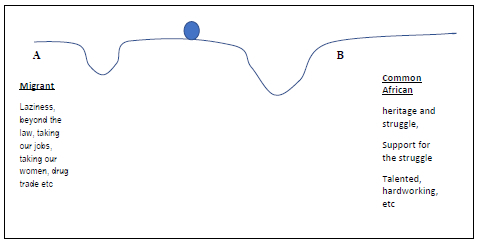
Xenophobic violence has assumed a regular appearance in the body politic of South Africa. Such xenophobia/racism is mainly targeted at migrants from elsewhere in Africa. The phenomenon flies in the face of expectations, given the history of the struggle against apartheid, and the role of the frontline states in support of that struggle. It runs counter to the inclusive ethos of the ANC government, the Rainbow Nation and South Africa's progressive constitution. This contribution, in the spirit of conflict transformation, focuses on the occurrence of xenophobia in South Africa. Given the complexity of the context, it seeks to explain the phenomenon, using a selection of commonly used theoretical approaches, mediated through the lenses of the Just World theory, and the notion of state crimes. It challenges any notion of South Africa as a post-conflict society, finds significant government culpability for the episodes, and attempts to provide corrective policy advice, using a dynamical systems theoretical approach.
complexity; just world-hypothesis; state crimes; xenophobia/racism; conflict management
 Thumbnail