A Benjaminian analysis of the built environment: toward a critical theory of architecture
Abstract
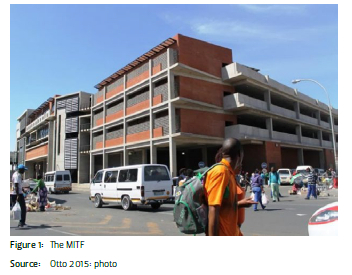
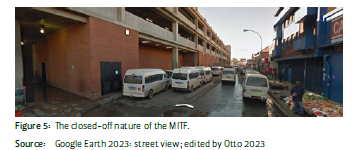
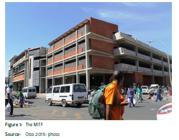
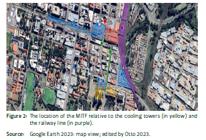
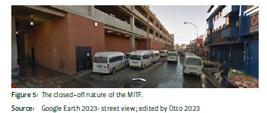
Walter Benjamin was a critical theorist and lover of architecture, and he spent most of his career studying urban spaces and places. In this paper, we use his theory of architecture to develop a normative critique that can be used to analyse public architecture in the context of the South African built environment. In this regard, we argue that architecture has to function simultaneously as a cultural sign and a material presence, and that failure to meet these criteria will result in the creation of oppressive structures. Since the advent of modernity, architecture has, for the most part, failed to function as both a cultural sign and a material presence. This is especially true of public architecture in contemporary South Africa, and the consequence is that public buildings continually fail to meet their objectives. By way of demonstrating our analysis, we apply our framework to the Mangaung Intermodal Transport Facility (MITF), a public building located in the Central Business District (CBD) of Bloemfontein that was designed in the spirit of modern architecture. Infamous as an oppressive structure in the urban fabric, we aim to use our analysis to better understand why this is the case. By developing and applying our Benjaminian critique, we hope to bring to light some of the challenges facing the South African built environment, and call for a deeper understanding of the architecture that is being produced in, and for, the country's communities.
public architecture; urban planning; Critical Theory; Walter Benjamin; urban informality
 Thumbnail
 Thumbnail
 Thumbnail
 Thumbnail
 Thumbnail