




Services on Demand
Journal

Article
 English (pdf)
 Article in xml format
 Article references
 Automatic translation
 Send this article by e-mail
Indicators
Related links
-
 Cited by Google
 -
 Similars in Google
Share

 Permalink
Journal of Student Affairs in Africa
On-line version ISSN 2307-6267Print version ISSN 2311-1771
JSAA vol.13 n.1 Cape Town 2025
https://doi.org/10.24085/jsaa.v13i1.5114
RESEARCH ARTICLE
A health and wellness transformation programme to ensure optimal student performance and well-being within ICE environments
'n Gesondheid- en welstandtransformasieprogram om optimale studenteprestasie en -welstand binne ICE-omgewings te verseker
Juanita JonkerI; Ryk LuesII
IAcademic, Researcher: Faculty of Health and Environmental Sciences, Central University of Technology, Bloemfontein, South Africa. Email: jjonker@cut.ac.za. ORCID: 0000-0002-8700-9045
IIDirector: Centre for Applied Food Sustainability and Biotechnology, Central University of Technology, Bloemfontein, South Africa. Email: ryklues@cut.ac.za. ORCID: 0000-0003-0047-4209
ABSTRACT
International research has identified numerous impacts of the COVID-19 circumstances on students, such as decreased activity, food insecurity and self-reported poor mental health. This article proposes an intervention programme that universities could apply to prepare for similar future situations. Design thinking and project management processes were integrated towards a proposed intervention to respond to the challenges found in the mixed method research study. Strategies were developed within two areas, awareness and communication, and resources. In the awareness and communication category the following strategies were suggested: increasing communication, awareness campaigns, developing skills/knowledge and ensuring adequate capacity. The resources category consisted of a wellness software application, an adequate, accessible food relief programme, and a wellness support programme. The proposed programme should be implemented according to the Nadler-Tushman (NT) model of congruence. The programme is adaptable, enabling institutions to respond in alignment with their specific contexts and ensure congruence amongst all elements. A programme is proposed to institutions through reflection on their current support service structures, and amendment thereof to suit the specific circumstances. The proposed programme serves as a point of departure for institutions aiming to ensure student health and wellness, as well as academic performance during future isolated, confined and extreme (ICE) events. Furthermore, this programme contributes towards the third sustainable development goal: good health and well-being.
Keywords: COVID-19, higher education, transformation, design thinking, project management, Nadler-Tushman model
OPSOMMING
Internasionale navorsing het verskeie impakte van die COVID-19-omstandighede op studente uitgelig, insluitend verminderde fisieke aktiwiteit, voedselonsekerheid en selfgerapporteerde swak geestesgesondheid. Hierdie artikel stel 'n intervensieprogram voor wat universiteite kan gebruik om beter voor te berei vir soortgelyke toekomstige situasies. Ontwerpdenke en projekbestuursprosesse is geïntegreer met die doel om 'n toepaslike intervensie te ontwikkel om die uitdagings aan te spreek wat tydens 'n gemengde-metode studie geïdentifiseer is. Strategieë is ontwikkel binne twee sleutelareas: (1) bewusmaking en kommunikasie, asook (2) hulpbronne. In die eerste kategorie is die volgende strategieë voorgestel: verbeterde kommunikasie, bewusmakingsveldtogte, vaardigheids- en kennisontwikkeling, en voldoende kapasiteit. Die hulpbronkategorie het bestaan uit 'n welstand-sagtewaretoepassing, 'n toeganklike en genoegsame voedselhulpprogram, en 'n omvattende ondersteuningsprogram vir studente se welstand. Die voorgestelde program behoort geïmplementeer te word volgens die Nadler-Tushman (NT) kongruensiemodel. Hierdie model maak voorsiening vir aanpasbaarheid, waardeur universiteite die program volgens hul unieke konteks kan aanpas en kongruensie tussen alle elemente kan verseker. 'n Program word aan universiteite voorgestel deur besinning oor hul huidige ondersteuningsdiensstrukture, en wysiging daarvan om by die spesifieke omstandighede te pas. Die voorgestelde program dien as 'n vertrekpunt vir universiteite wat daarna streef om studentegesondheid en -welstand te verseker, sowel as akademiese prestasie tydens toekomstige geïsoleerde, beperkte en ekstreme (ICE) gebeurtenisse. Daarbenewens dra die program by tot die derde volhoubare ontwikkelingsdoelwit: goeie gesondheid en welsyn.
Sleutelwoorde: COVID-19, hoër onderwys, transformasie, ontwerpdenke, projekbestuur, Nadler-Tushman-model
Introduction
The coronavirus disease of 2019 (COVID-19) resulted in a global pandemic. To contain the spread of the virus, various far-reaching regulations were enforced. These regulations varied from the closing of non-essential businesses to movement restrictions and isolation (Stiegler & Bouchard, 2020). Therefore, the effects of the COVID-19 pandemic involved far more than merely being infected by the virus itself. The regulations that were applicable during the pandemic resulted in an isolated, confined and extreme (ICE) environment that impacted the lives of many (Suedfeld & Steel, 2000).
Higher education institutions had to conform to certain regulations during the pandemic, such as vacating campus residences and reverting to online learning (Van Schalkwyk, 2020). As a result, students had to cope with both the negative effects of the ICE environment and the challenges of remote, online studying. Global research has identified numerous negative impacts of the COVID-19 circumstances and resultant ICE environment on students, including decreased physical activity, changes in diet, weight gain, food insecurity and poor mental health (Jehi et al., 2023; Bughrara et al., 2023).
As a result, an overarching mixed methods research study investigated food security and related wellness indicators of Health Sciences students in South Africa during COVID-19 and to propose a programme to higher education institutions toward alleviating the impact of ICE events. The current article utilised findings from the mentioned study to suggest a programme of interventions and strategies to the higher education sector in South Africa. Research studies like the present are particularly important in developing nations, like South Africa, due to the socio-economic challenges students face in these countries (Bethea, 2019).
Prior to the pandemic, higher education institutions offered mainly in-person psychosocial support to students (Naidoo & Cartwright, 2020) and some type of nutritional support (Wegerif & Adeniyi, 2019). During the pandemic, such services had to be expanded to enable support for the increased and altered needs of students. Before the pandemic, the specific institution investigated in the current study offered support services in the form of meal vouchers and face-to-face counselling sessions to students. These services were expanded during the pandemic by means of financial assistance and mobile counselling services. According to the current study's findings, these support services were not adequate to ensure students' food security, nor their health and wellness. There was, therefore, a need for a higher education programme to alleviate the impact of COVID-19 circumstances, and for institutions to review their student support services. Hence, the higher education programme is recommended to be implemented via a change model with the potential to assist institutions transform the serviced they offer to meet the needs of students in ICE environments/conditions.
Methodology
The overarching research study was a concurrent, exploratory mixed methods study (Tashakkori & Teddlie, 2010) that utilised online survey and focus group discussions to examine food security and related wellness indicators of a cohort of students in central South Africa. The first section of the survey investigated food security status with the Household Food Insecurity Access Scale (Coates et al., 2007) and dietary intake with the SA Demographic and Health survey (Department of Health, Medical Research Council, OrcMacro, 2007). The second section of the survey assessed health and wellness indicators with the questionnaire to assess adherence to diet and exercise advice (Dubasi et al., 2019) and mental health by means of the self-reporting Depression, Anxiety and Stress Scale of 21 Items (Lovibond & Lovibond, 1995). It should be noted that the results on the mental health survey section were not diagnostic but rather self-reported challenges. Focus group discussion probes were aligned to encourage discussions on food security, dietary intake, health and wellness, mental health, and institutional support services during COVID-19.
Ethical clearance to conduct this overarching study was obtained from the University of the Free State Health Sciences Research Ethics Committee (reference no.: UFS-HSD2021/0762/21). The study population for both the survey and focus group discussions were the same and comprised of Health Sciences students in their final years of study during 2021 at a university of technology in the Free State province of South Africa. No sampling was performed for the survey and the entire population was included and invited to participate. Systematic random sampling was utilised to select eight participants for each of the six focus group discussions. A total of 148 complete questionnaires were obtained and 17 students participated in the six focus group discussions. Based on findings from the overarching mixed methods study, the current article proposes a programme with interventions and strategies.
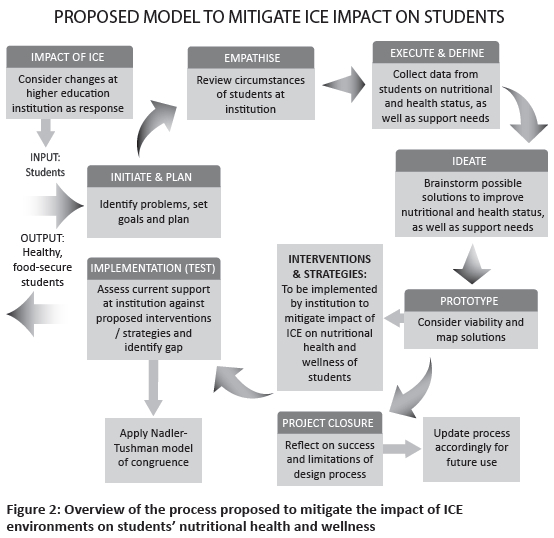
This article uses design thinking and project management principles as methodology to develop interventions and strategies for higher education to limit the negative impacts of ICE environments/conditions on students (see Table 1). In addition, the NT congruence model was then utilised to discuss and interpret the proposed interventions and strategies. This model is a management model used in organisational transformation based on identifying the problems around performance (outputs) and how to address them to improve that performance (Cameron & Green, 2019).
Design thinking is a methodology that facilitates innovative solutions to problems and operates at the interface of human values, business, and technology. This is a well-researched method for non-design trained professionals to solve problems, find solutions and design an action plan (Stanford University, 2023). The current study utilised the Stanford Design Thinking Model that was originally proposed by Hasso-Plattner and is popular within the higher education environment (Stanford University, 2023; UCT, 2023). The five phases in the Stanford design thinking process include empathise, define, ideate, prototype and test. Despite the mentioned strengths of design thinking in problem-solving, it was anticipated that the addition of some project management principles could add value to the design process, providing a more comprehensive design model within the context of the research study. Therefore, the design thinking method was integrated with five phases of project management as described by the Project Management Body of Knowledge (PMBOK).
Application and adaptations of the design thinking and project management phases
The Stanford design thinking and project management processes were adapted and applied within the context of a study where the researcher was the designer and project manager. The students were the users and beneficiaries in these processes. The adapted design process consisted of six phases that were applied to this study (Table 1) as follows.
• In the initiation and planning phases the research problem was identified: "How did the ICE environment resulting from the COVID-19 pandemic impact the nutritional health and wellness of students?" Should this impact be determined, a programme with preventative strategies and interventions could be developed to ensure optimal performance of students when experiencing ICE environments.
• Various actions were taken to empathise with the users that included conducting literature and document reviews on the higher education context during COVID-19, as well as surveys and focus group discussions to gather data to gain insight into the behaviour and preferences of Health Sciences students during the pandemic. More specifically, the behaviour and preferences relating to food security, dietary intake and related health and wellness indicators were investigated.
• The execution and define phase involved data collection and the interpretation thereof. Data were collected by means of survey and focus group discussions. The quantitative survey data and qualitative focus group data were interpreted against literature to define the core challenges. These challenges referred to the identified impacts of the ICE conditions during COVID-19 on food security, dietary intake and health and wellness of students. These challenges led to the creation of a meaningful and actionable problem statement: Based on information generated in this study, what future strategies and recommendations may be proposed to the higher education fraternity, to limit the impact of probable future ICE incidences on student well-being and performance?
• The ideation phase focused on the transition from identifying problems to considering viable solutions for mitigating the impact of ICE environments on students. This ideation phase had already commenced during the data collection phases, where students were requested to suggest support and other solutions. Additionally, this phase entailed considering and integrating the findings regarding the pandemics impact on students' food security, dietary intake and related health and wellness indicators. Finally, the researcher constructed a wide set of viable solutions by means of brainstorming.
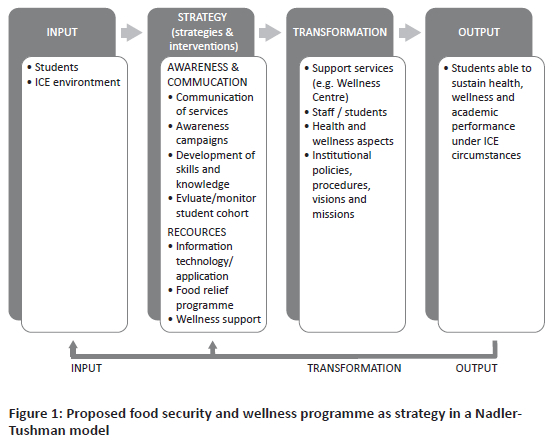
• Once all the ideas were generated, the ideas were streamlined and integrated to create a prototype of solutions. This prototype included a food security and wellness programme captured in a mind map (Figure 1). The interventions and strategies from the prototype were interpreted according to the NT congruence model (section 2.2).
• During the last project closure phase, the research project was completed and reflected upon. The monitor and control principles of project management were not a phase on its own but were integrated into all six phases to monitor aspects of the study. An example was the ethical clearance process that ensured that the project adhered to ethical standards prior to execution.
The change model
The NT congruence model of change highlights how gaps can result from inadequate inputs and transformation functions that fail to work coherently, as well as how gaps in the output can lead to identification of problems in the inputs and transformation functions. Moreover, in this NT model the environment has a strong impact on the process itself, as well as the inputs and outputs of the system (Cameron & Green, 2019). Therefore, the NT congruence model was deemed suitable for higher education institutions to identify gaps in their support service offerings and implement changes from the gap analysis and recommendations of this study.
The NT congruence model is an elementary framework used to analyse the key drivers of performance in an organisation and to improve the drivers to all work in congruence with one another. The NT model is based on the principle that an organisation can only succeed when the following four elements are congruent: work, the people who do it, the organisational structure, and the culture.
Considering the strengths of the NT model, it was projected for implementation within the higher education context, and, provided that the relevant institutional stakeholders collectively work on this study's proposed health and wellness programme, it may contribute to successful, desired outcomes for the students.
Results
The execution and define phase entailed data collection and defining of an actionable problem statement which enquired about future strategies and recommendations for the higher education fraternity to limit the impact of probable future ICE incidences on students. Moreover, this was informed by the challenges students experienced which emerged from the findings of the study (Table 2).
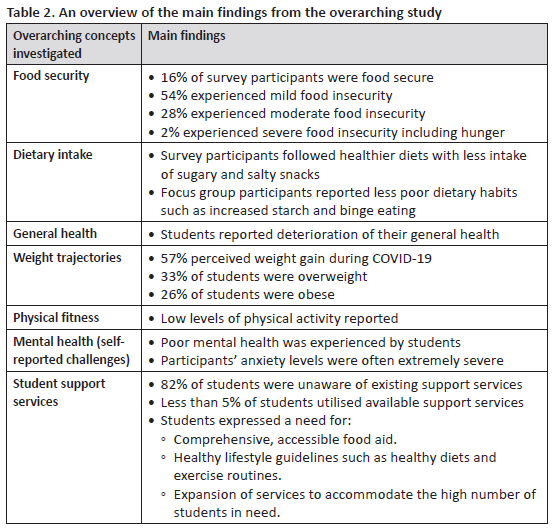
The following challenges were identified in relation to food insecurity. Food insecurity existed amongst students during the COVID-19 pandemic. Students experienced a lack of money for food and for resources to prepare food. Some students reverted to binge eating in response to emotions experienced during the pandemic. During COVID-19, the dietary intake of some students changed to a healthier quality diet, with evidence of a decreased intake of food high in salt, sugar, and fat. However, some controversies regarding dietary intake emerged between survey and focus groups findings. Some students changed to healthier diets and others to less healthier diets, which may be due to circumstances relating to food access and availability in student homes away from campus. However, students expressed a need for healthy, cost-effective dietary guidelines to assist them in pursuing healthier diets.
Furthermore, the overarching study investigated health and wellness indicators that included perceived general health, weight trajectories, physical fitness as well as mental health. Students perceived their general health to have decreased and they fell ill more often. Students perceived weight gain and numerous students were overweight or obese according to BMI categories. Low levels of physical activity were evident, and students suffered from poor mental health as per self-reported survey results. Anxiety levels were reported to be extremely severe. Lack of caretakers to assist students with household management and challenges related to online learning were two of the prevalent contributing factors to the self-reported poor mental health.
Findings regarding students' awareness and utilisation of institutional support services highlighted the following challenges. Few students were aware of the existence of support services at the institution. Food insecurity existed despite available food parcels and meal vouchers. Although these services were limited and aimed at the most severe form of food insecurity, namely hunger. Students had trouble accessing food relief support due to a tedious application process or feelings of embarrassment. This highlights the importance of the university changing the application process and ensuring that those that do receive food aid are not known to other students (confidentiality). The self-reported survey revealed the prevalence of poor mental health, despite the availability of counselling services. Although counselling services expanded during COVID-19, students expressed concern that counselling services did not have the capacity to attend to all students in need of assistance - thus indicating a lack of resources. Students expressed a need for more accessible and confidential support services that address health and lifestyle matters including exercise guidelines and eating habits. Correlation findings showed that students who resided in rural areas experienced higher levels of food insecurity. Moreover, students who experienced food insecurity showed a larger prevalence of poor mental health from the self-reported survey, especially increased anxiety.
Discussion
The objective of the current article is to propose a programme for higher education institutions. This programme serves as the prototype/solution and contains interventions and strategies that emanated from the aforementioned challenges. The prototype of solutions is illustrated in the mind map below (Figure 1) based on the change model of NT. The recommended interventions and strategies represent the strategy element of the original NT model.
The proposed programme as strategy
The interventions and strategies of the proposed food security and wellness programme (Figure 1) were considered in two categories: 'awareness and communication' and 'resources'. The communication and awareness category was mainly aimed at improving support services and empowering students. The resources category was aimed at increasing certain resources at the institution to better assist students.
This proposed food security programme should be implemented as soon as possible under normal circumstances, and not only during ICE environments, for institutions to be prepared should ICE conditions arise. Although this research study collected data during COVID-19 to determine the impact of the resulting ICE environments on students, no comparisons could be made with students' health and wellness prior to the pandemic because no data were available on the specific student cohort prior to the COVID-19 pandemic. Therefore, it is possible that the challenges identified by students during COVID-19 may have existed under normal circumstances. In which case such students could benefit from immediate implementation of the proposed programme.
Communication and awareness
The communication and awareness interventions and strategies entailed the following: communication of services, evaluation/monitoring of students, awareness campaigns and development of skills and knowledge (Figure 1). Communication about support services on offer (Figure 1) should be increased by means of marketing which will increase student awareness. It is essential that marketing is structured in a way that it can continue under ICE conditions, for example, in the form of bundle mobile messages to students. Considering ubiquity of mobile technology usage among students, mobile-based communication methods are well suited (Johnson & Kalkbrenner, 2017). Important aspects to be included in this communication should be the purpose, access locations (on and off campus), and elaboration of the different services available (Roberts et al., 2018). Not all students were aware of the purpose of counselling services. For example, they were not aware that this division could assist them with anxiety coping strategies. Moreover, few students knew that such services were available to them free of charge; thus, a fear of financial implications is likely to have hindered the utilisation thereof. Lastly, students were unaware of the variety of services offered. This lack of awareness could have resulted in the poor utilisation of services. For example, some students were aware of the counselling services but not the social services which could have assisted to them in alleviating socio-economic issues (e.g. money for food).
When students are aware of all the available support services, their individual purposes and how to access them, they utilise them to attend to challenges relating to mental health and food insecurity (Roberts et al., 2018). When students are aware of services prior to experiencing ICE conditions, they are more likely to seek the necessary assistance. Furthermore, the food insecurity-mental health vicious cycle would be prevented, as less food insecurity results in improved mental health (Block et al., 2011). Moreover, optimum mental health prevents poor dietary habits (e.g. binge eating) that may occur due to emotional challenges (Mukigi et al., 2018). Improved mental health also improves physical health as it may result in improved immunity and less illnesses (Mukigi et al., 2018). Lastly, improved academic performance may be experienced by students once mental health improves due to the link between these two factors (Raskind et al., 2019).
In addition to communicating the availability of support services, awareness campaigns (Figure 1) can also be useful amplifiers of such messaging, as suggested by Stoltenkamp et al. (2007). The institution should explore innovative presentations for awareness campaigns during ICE conditions (e.g. social media campaigns). Social media platforms, like Facebook, can be effective marketing tools for business and education institutions. This type of social media marketing should not be unsystematic and should be preceded by the development of coherent strategies and goals (Assimakopoulos et al., 2017). Furthermore, awareness campaigns can serve as informal means of reaching out to students who may be too embarrassed to seek assistance (Hyun et al., 2006). Additionally, these awareness campaigns can inform students about health risks such as anxiety and obesity. This would address students' lack of knowledge regarding obesity and could assist with motivating students to maintain healthy body weight (Harring et al., 2010).
Development of skills and knowledge is another strategy within the communication/ awareness category. The identified challenges indicated that students need to be empowered with the following knowledge (Figure 1): healthy, cost-effective dietary and exercise guidelines. Empowering students with knowledge on dietary guidelines will support them to follow healthy diets and to prevent possible nutrient deficiencies. Nutrient deficiencies may compromise immunity and health (Clemente-Suárez et al., 2021), and therefore this strategy may also improve students' general health, with less frequent illnesses. Moreover, a healthy diet will address the high levels of obesity (Lofgren, 2015). The following considerations are necessary when empowering students with knowledge on healthy eating, especially within South African: directly address prevalent misconceptions about healthy eating practices; increase self-efficacy regarding the purchasing and preparation of healthy food; represent diverse cultural traditions and consider the issues of affordability and availability of food (Everett-Murphy et al., 2015). It must be acknowledged, however, that knowledge does not necessarily lead to improved practices when barriers exist, such as poverty. Therefore, innovative, cost-effective ways of eating healthily should also be included to factor in the economic statuses of less fortunate students. Similar to other strategies, empowering students with skills and knowledge can be conducted by means of face-to-face initiatives on campus but might need innovative strategies to empower them during off-campus periods. As mentioned earlier, mobile communication is a suitable means of communicating (Johnson & Kalkbrenner, 2017).
Besides knowledge on dietary intake, students expressed the need to receive knowledge on exercise routines. Knowledge must include the health benefits of exercise and innovative routines that do not necessitate expensive equipment or large exercise space, to enable students to be physically active despite financial issues or movement restrictions. This knowledge may increase physical activity, which in turn may decrease overweight, and improve general and mental health (Harring et al., 2010).
The need for skills such as stress and time management was also identified. These skills can be taught by the Student Support Division in the form of workshops, mentorship programmes, or can be included in curricula. Various studies have documented the benefits of including interventions such as stress management into curricula (Butcher et al., 2021). Stress management skills may improve mental health, prevent deleterious habits, and improve academic performance. Moreover, time management assists students in coping with household demands while studying online. This coping mechanism will alleviate stress and improve mental health (Keogh et al., 2006). According to the correlation findings of the current study, certain factors increased the tendency of the following challenges: food insecurity and poor mental health. Food insecurity was more prevalent amongst students from rural areas, and food insecure students suffered more from poor mental health. This information can assist the institution to identify vulnerable students and to communicate relevant support services to those at-risk students, especially during ICE conditions. Additionally, the institution can also have an indication of the probable future student requests for specific services which can assist to plan resources and make provision for such student requests. Such provision will in turn ensure that support services have adequate capacity to support all the students in need.
Resources
The second category of the intervention and strategy programme referred to resources (Figure 1). This is a critical category that relates to expansion of existing support services which may have substantial financial implications to the university. This category includes information technology, the development of a food aid programme, and wellness support. These three resource-related strategies aim to address a wide variety of challenges.
The information technology intervention (Figure 1) is based on development of a health and wellness application (app) for students. Development of such apps involves in-depth research which could not fit into the scope of this study. However, software applications are popular amongst younger generations and are useful within the health and wellness sector, where they are often combined with artificial intelligence (AI) (Global Market Insights, 2024). Suggested functions to be ideally included in the app are self-reporting surveys to analyse various aspects of health (e.g. BMI) to determine weight status, specific training needs, mental wellness to identify areas of concern, food intake to identify dietary needs, supplementations, or food insecurity. Survey findings should be made available to students automatically on completion thereof to inform them of health risks relating to the aspect analysed in the respective survey. This will assist students to realise when to seek assistance from available support services. Furthermore, this will assist the university in identifying students in the direst circumstances such as those that are hungry or suffer from mental health issues. The application should also automatically reply with the relevant support service contact details to students in health risk categories. Alternatively, the app could make use of AI to provide knowledge and guidelines to students in need (e.g. suggest possible food types to consume to improve a nutrient deficiency. The application must contain a knowledge database with information leaflets such as weight loss programmes, at-home exercise programmes and breathing exercises for managing anxiety. Another useful function could be sending automated requests to support services to contact the student in need of assistance. This would especially be useful to assist students without mobile data/airtime to contact support services during ICE conditions, as well as reaching students who are too embarrassed to approach support services. The suggested app could have two primary benefits for the institution: it would enable the institution to assist students remotely and alleviate pressure on staff as resource. It is recommended that such an app be researched and developed for the institution, as the app may deal with many of the challenges that the students experienced.
A second resource that should be implemented as an intervention at the institution is a comprehensive food aid programme (Figure 1). Despite the meal vouchers that some students received from the institutions, food insecurity still existed, and students expressed that access to the offered support was challenging. Therefore, the institution should invest in a food aid programme with easy access. A food aid programme would necessitate innovative ideas to be viable during ICE conditions, as providing fresh food can be impossible at such times. Moreover, the available resources for students to prepare or collect food should be considered. Therefore, providing students with non-perishable, convenient and nutritious food products like fortified maize meal/shakes to prevent nutrient deficiencies would be ideal (Romero-Garcés et al., 2023). This could limit fresh food waste, while the students could benefit from maintaining food security and acquiring the recommended daily allowances for nutrients. As mentioned earlier, strategies to mitigate food insecurity could also positively influence students' immunity, mental health, and academic performance (Ruegsegger & Booth, 2018).
Wellness support was the last intervention in the resource category (Figure 1). This intervention refers to expanding the capacity of current services, as well as including additional support services. The institution should expand the counselling services of its Wellness Centre either by appointing more counsellors or by utilising other methods of counselling assistance, such as AI included in the suggested student support app. Expansion of current counselling services would address the challenge of insufficient capacity during an ICE occurrence. Additionally, students reported a need for nutritional and fitness support, which should be added to the current services, either by employing professionals like dieticians, or providing such assistance by other means (e.g. online support). The implementation and sustainability of the mentioned appointments would be reliant on financial resources, which the Student Support Division or the university should be able to provide. Therefore, it is suggested that dedicated staff be appointed to secure external or institutional funding to support these appointments, as well as to ensure the provision of adequate services (e.g. comprehensive food relief). The addition of such services would be especially beneficial to younger students who, in pursuing their post-school studies away from home, are in the process of transitioning into independent life (LaFountaine et al., 2006). Moreover, these services could attend to the high obesity levels amongst students, as well as the lack of physical activity (Asselin et al., 2005).
Three-step gap analysis based on the Nadler-Tushman congruence model
The implementation of the aforementioned interventions, which represent the strategy in the Nadler-Tushman congruence model, would necessitate institutions to review their current student support practices. Such a review would serve as gap analysis to guide transformation of student support to mitigate the impacts of future ICE. This gap analysis process should be performed according to the three-step process, as described by Filipovic et al. (2020), and based on the NT model. The three steps of this gap analysis include: first, identifying and analysing the elements; second, analysing the relationship between the elements; and third, developing and maintaining congruence (Filipovic et al., 2020).
Step 1: Identifying and analysing the elements
The original NT model consists of six elements that include (1) input (strategy, resources, and environment), (2) work, (3) culture, (4) structure, (5) people, and (6) output (organisational, team and performance). When this model was applied within the context of the current study, the elements of the model were represented as follows: the students under ICE circumstances represented the input and maintaining their health, wellness, and academic performance in this ICE setting was the output. Furthermore, the strategy was represented by the proposed programme that includes strategies and interventions for institutions (Figure 1). The elements involved in the transformation include support services (e.g. the Wellness Centre) that represented the work, health and wellness aspects, culture, institutional regulatory code that represented the structure, and the staff/students that represented the people. A brief analysis of each element within the transformation of support services area will be provided.
Support services is the institutional department that was responsible for supporting students' health and wellness, often referred to as a wellness centre. The investigated institution included medical assistance, psychological counselling, and social services as support services. Study findings suggest these support services should be expanded to also cover nutritional and physical fitness guidance, as well as development of skills and knowledge amongst students, regarding health and wellness (e.g. weight management). As result, a person/division should be appointed to seek funding from external entities to assist with the awareness campaigns and expansion of support services. Moreover, the division should increase its visibility and create awareness by means of communicating its available services, the purposes thereof and means of access. It is important that this communication, as well as the support services provided, can be conducted during ICE circumstances when students are off campus. Under normal circumstances (i.e. prior to ICE events), the support service department should evaluate students to detect those possibly at risk, to whom support service offerings should especially be communicated.
The health and wellness aspects (culture/informal process) referred to the areas that were investigated in the current study and include: food security, dietary intake, general health, weight management, physical fitness, and mental well-being. As is evident from the literature, these aspects are interconnected and should be in synergy to ensure optimal health (Kruger, 2019). For example, food insecurity results in poor mental health, as was evident in the findings. Similarly, good mental health can foster poor dietary habits like binge eating. Therefore, when these aspects of health and wellness are in synergy - unlike in the current study's findings - they can help individuals achieve optimal health and well-being, the output. The institutional regulatory code is imperative in the transformation process (Figure 2); however, this study did not examine the institution's existing code. Instead, the proposed recommendations are grounded solely in the empirical findings. Hence, it is suggested that the institution review its regulatory code against the proposed transformation model to identify if the relevant code is sufficient to obtain the desired output.
The staff at the investigated institution's support services included social workers, nurses, and counsellors. However, the number of counsellors must be increased to ensure adequate capacity to assist all students in need. Moreover, staff should be appointed to provide additional services, such as dieticians and fitness instructors. Alternatively, the staff component can be relieved with an information technology app containing AI that could provide some of these services. The students in need of support did not all approach support services for help and strategies should be implemented to increase the utilisation of support services (Figure 1).
Step 2: Analysing the relationship between the elements
The support service department influences staff, students, health, and wellness, as well as the institutional regulatory code. Additional support services would necessitate an increase in staff to facilitate services. If the support service division increases its visibility/awareness and ensures easy access, there could be an increase in service utilisation. Furthermore, should the additional services be included in the division, the health and wellness aspects could improve and result in synergy. Lastly, if the support services department increased types of services, number of staff, communication as well as improved access and capacity, it is imperative that the institutional regulatory code provide support by means of policies, procedures, vision, mission, as well as resources.
The health and wellness aspects (food security, dietary intake, general health, weight management, physical fitness, and mental well-being) influence each other when they are not in synergy. Therefore, when one aspect of health and wellness is not optimal it will not only increase the need for support regarding the specific aspect, but due to disrupting the synergy between the aspects, other aspects will also be negatively impacted resulting in further needs. For example, conditions of food insecurity result in not only a need for food relief, but may also lead to poor mental health, which creates an increased need for counselling.
In addition to the interconnectedness of health and wellness, aspects of health and wellness can impact the other three elements of the transformation (Figure 1). One suboptimal aspect of health and wellness may result in a student needing assistance which should be provided by the support service department and its staff. Moreover, the institutional regulatory code should make provisions for all aspects related to students' health and wellness in its vision and mission, as well as policies and procedures to reach the output.
The institutional regulatory code (structure/formal process) (see Figure 1) has an impact on all the elements in the transformation section due to the roles thereof in resource management, policy, and procedures. The institutional regulatory code should inform resource allocation for the implementation of the proposed programme and will thus have an impact on the staffing, health, and wellness aspects, as well as the support services on offer. Adequate staff should be employed in the support service division to ensure sufficient capacity to serve all students in need, especially during ICE situations. Adequate money should be available for providing food relief to prevent food insecurity, as a health and wellness aspect. Similarly, the necessary funding should be made available to the support services department for it to function at the required capacity, as well as to provide the variety of support services required (e.g. physical fitness support). It is suggested that the university and/or support services division should seek external funding to assist with the aforementioned financial implications. Furthermore, the regulatory code should include policies and procedures to enable easy access to support services and continuation of support services during ICE situations.
Staff ensure the functioning of the support services department, which in turn ensures synergy within the health and wellness element. Furthermore, staff employment and functioning are regulated by the institutional regulatory code. Students in need justify the existence of a support services department. Furthermore, should such students in need use the support service it will improve their health and wellness. Hence, institutional regulatory codes should provide procedures that will enable students to access the available support services.
Step 3: Developing and sustaining congruence
The congruences of the elements' relationships are referred to as sustainable congruence. As a result, when higher education institutions execute the proposed programme's strategies and interventions, they should analyse each element and implement transformation processes to remedy any incongruence between elements. If all elements and sub-elements (for example, aspects of health and wellness) are congruent, the odds of successfully obtaining the output improve. An example is to identify the number of students from rural areas. This number will serve as an estimate of students in need of food relief during ICE conditions (student element).
The institution should then ensure that enough resources (institutional regulatory code element) are made available to sustain a food aid programme (support services) and to prevent food insecurity (health and wellness element). If such congruence exists, food insecurity will be addressed which could have negatively impacted the health and wellness, as well as the academic performance of students during an ICE situation (output). This congruence is equivalent with the Stanford Model of Professional Fulfillment (Bohman et al., 2017). According to Bohman et al. (2017), this model conceptualises well-being/ fulfilment as being influenced by three components: (1) culture of wellness, which refers to the supportiveness of the environment which is the support services division in this case; (2) efficiency of practice, which refers to the institutional regulatory code that makes it easier or more difficult to complete the work, referring to support in this case; and (3) personal resilience, which refers to individual self-care - in this case the actual health and well-being of students. Important to note from this equivalent model is that it emphasises that personal resilience (health and wellness) cannot make up for sustained exposure to a negative culture and inefficient processes, thus, stressing the essential role of the institution, including its support service division and regulatory code in the endeavour towards the well-being of students (Butcher et al., 2021).
Lastly, the output resulting from the transformation should be evaluated to reflect on the efficiency of the transformation process in mitigating the negative impact of the ICE conditions on the health and wellness of the student cohort. If the output is successfully obtained, it will influence the input because the output would have resulted in healthier students during ICE circumstances. For example, if the students obtain knowledge and skills from the support services department about coping skills for anxiety, their mental health will be supported, and the output will be students with sustained mental health and academic performance. However, should these students, who are now empowered with these coping skills, enter another ICE environment, the input would be different as they would be more prepared than prior to the initial transformation. Conversely, if the output is not successfully realised and negative impacts on the students' health and wellness are identified, the institution should determine viable solutions to amend strategies proposed in this study. The solutions can be designed by using the suggested design model illustrated in Table 1. Moreover, it is suggested that students be involved in this designing of solutions, similar to the solutions of the current study.
Student involvement has two benefits within this context: they have first-hand experience of their needs and utilisation of services. Second, involving them as co-creators will increase awareness and a sense of agency in the wider university community (Baik et al., 2019). It is anticipated that if a specific higher education institution makes amendments to the proposed programme, together with sustaining congruence between the elements in accordance with the specifications of the institution, the proposed programme can be adapted to suit the circumstances of the specific institution. In this way, the findings of this research study can be extrapolated to other institutions where maintaining student health and wellness during ICE conditions, such as the COVID-19 pandemic, is necessary.
In conclusion, the findings of the overarching research study confirmed the need for higher education institutions to implement strategies and interventions to alleviate the negative impact of ICE environments, like COVID-19 circumstances, on the health and wellness of students. Design thinking and project management principles were integrated as methodology to develop strategies and interventions as a proposed programme (prototype) for higher education institutions (Figure 2).
This integrated process consisted of six phases which were applied to design interventions and strategies (Figure 2) that emanated from the challenges (identified from the study's findings). The strategies and interventions were streamlined into a mind map and categorised into awareness and communication, and resources. It was recommended that the proposed programme be implemented by higher education institutions according to the NT model of congruence (Figure 2). Implementation based on this model entails a process of transformation at the institution to reach the output: students with maintained health and wellness, as well as academic performance under ICE conditions. The applied model is not a one-size-fits-all approach, and institutions must implement the model cognisant of their specific contexts and ensure that congruence exists between all the elements of the model. Furthermore, the output is not guaranteed with implementation of the programme, and institutions must reflect on the output to amend the strategies to suit their specific circumstances. Therefore, the proposed model of strategies and interventions serves as a point of departure for institutions wanting to extrapolate the findings to their contexts. Furthermore, such a programme would contribute towards the third sustainable development goal, namely: good health and well-being.
Some strategies and interventions were proposed, while the solution options were not exhausted. In some instances, the proposed strategies lacked detail specifically with strategies that necessitate in-depth research and development, for instance the student health and wellness app. Therefore, it is recommended that future research studies investigate the feasibility of the proposed app.
Authors' contributions
Jonker planned the study, collected data, provided analysis, and drafted the article. Lues supervised the study. Walsh supervised the study and revised the article.
Data availability
The data of this study are not openly available due to confidentiality and protection of participant privacy. However, the corresponding author, Jonker, could make the data available upon reasonable request.
Acknowledgements
This article is based on an extract of the author's thesis titled 'Food security and related wellness indicators of Health Sciences students in central South Africa during COVID-19: A programme to mitigate the impact of isolated, confined and extreme environments' towards a PhD in Environmental Health, at the Central University of Technology, supervised by Professors R. Lues and C. Walsh. We would like to thank participants for their contributions to this study.
Ethics statement
Ethical clearance for this research was obtained from the General/Human Research Ethics Committee (GHREC) at the University of the Free State, which serves as the designated ethics committee for the Faculty of Health and Environmental Sciences at the Central University of Technology. The study was conducted in accordance with established ethical guidelines, and approval was granted under ethical clearance number UFS-HSD2021/0762/21.
Potential conflict of interests
The authors have no competing interests to declare that are relevant to the content of this article.
Funding acknowledgement
No funding was received to assist with the preparation of this research article.
Disclaimer
The views and opinions expressed in this article are those of the authors and are the product of professional research. They do not necessarily reflect the official policy or position of any affiliated institution, funder, agency, or that of the publisher. The authors are responsible for the study's results, findings, and the content of this article.
References
Asselin, R., Ortiz, G., Pui, J., Smailagic, A., & Kissling, C. (2005). Implementation and evaluation of the personal wellness coach. In 25th IEEE international conference on distributed computing systems workshops (pp. 529-535). IEEE.
Assimakopoulos, C., Antoniadis, I., Kayas, O. G., & Dvizac, D. (2017). Effective social media marketing strategy: Facebook as an opportunity for universities. International Journal of Retail & Distribution Management, 45(5), 532-549. [ Links ]
Baik, C., Larcombe, W., & Brooker, A. (2019). How universities can enhance student mental wellbeing: The student perspective. Higher Education Research & Development, 38(4), 674-687. [ Links ]
Bethea, J. (2019). The hunger factor: Evaluating what factors contribute to African American first-generation student academic success [Unpublished master's thesis]. North Carolina Central University. [ Links ]
Block, L. G., Grier, S. A., Childers, T. L., Davis, B., Ebert, J. E., Kumanyika, S., Laczniak, R. N., Machin, J. E., Motley, C. M., Peracchio, L., Pettigrew, S., Scott, M., & Van Ginkel Bieshaar, M. N. (2011). From nutrients to nurturance: A conceptual introduction to food well-being. Journal of Public Policy & Marketing, 30(1), 5-13. [ Links ]
Bohman, B., Dyrbye, L., & Sinskey, C. (2017). Physician well-being: The reciprocity of practice efficiency, culture of wellness, and personal resilience. NEJM Catalyst, 2017(3). https://catalyst.nejm.org/doi/full/10.1056/CAT.17.0429
Bughrara, M. S., Swanberg, S. M., Lucia, V. C., Schmitz, K., Jung, D., & Wunderlich-Barillas, T. (2023). Beyond COVID-19: The impact of recent pandemics on medical students and their education: A scoping review. Medical Education Online, 28(1), 2139657. DOI: 10.1080/10872981.2022. 2139657. [ Links ]
Butcher, M. R., Thompson, K. M., Williams, M. K., Cooke, B. K., & Merlo, L. J. (2021). Assessment of student perspectives on improving wellness in medical school: Qualitative results from a cross-sectional survey of medical students in Florida. Advances in Medical Education and Practice (2021), 1067-1079.
Cameron, E., & Green, M. (2019). Making sense of change management: A complete guide to the models, tools and techniques of organizational change. Kogan Page.
Choukér, A., & Stahn, A. C. (2020). COVID-19-The largest isolation study in history: The value of shared learnings from spaceflight analogs. npj Microgravity, 6, 32. https://www.nature.com/articles/s41526-020-00122-8 [ Links ]
Clemente-Suárez, V. J., Ramos-Campo, D. J., Mielgo-Ayuso, J., Dalamitros, A. A., Nikolaidis, P. A., Hormeño-Holgado, A., & Tornero-Aguilera, J. F. (2021). Nutrition in the actual COVID-19 pandemic. A narrative review. Nutrients, 13(6), 1924. https://doi.org/10.3390/nu13061924 [ Links ]
Coates, J., Swindale, A., & Bilinsky, P. (2007). Household Food Insecurity Access Scale (HFIAS) for measurement of household food access: Indicator guide. Food and Nutrition Technical Assistance Project, Academy for Educational Development.
Department of Health, Medical Research Council, OrcMacro (2007). South Africa demographic and health survey 2003. Department of Health.
Dubasi, S. K., Ranjan, P., Arora, C., Vikram, N. K., Dwivedi, S. N., Singh, N., Kaloiya, G. S., & Shalimar, S. (2019). Questionnaire to assess adherence to diet and exercise advice for weight management in lifestyle-related diseases. Journal of Family Medicine and Primary Care, 8(2), 689-694. [ Links ]
Everett-Murphy, K., De Villiers, A., Ketterer, E., & Steyn, K. (2015). Using formative research to develop a nutrition education resource aimed at assisting low-income households in South Africa adopt a healthier diet. Health Education Research, 30(6), 882-896. [ Links ]
Filipovic, S., Vasic, M., Tica, S., Veg, E., & Sinikovic, G. (2020). Using modified Nadler-Tushman model in GAP analysis of educational process of EFMNS certified engineer. Tehnicki vjesnik, 27(4), 1213-1220. [ Links ]
Global Market Insights. (2024). Artificial intelligence in healthcare market - By offering, by application, by end use: Global forecast, 2024 to 2032. Global Market Insights. https://www.gminsights.com/industry-analysis/healthcare-artificial-intelligence-market
Harring, H. A., Montgomery, K., & Hardin, J. (2010). Perceptions of body weight, weight management strategies, and depressive symptoms among US college students. Journal of American College Health, 59(1), 43-50. [ Links ]
Hyun, J. K., Quinn, B. C., Madon, T., & Lustig, S. (2006). Graduate student mental health: Needs assessment and utilization of counselling services. Journal of College Student Development, 47(3), 247-266. DOI: 10.1353/csd.2006.0030. [ Links ]
Jehi, T., Khan, R., Halawani, R., & Dos Santos, H. (2023). Effect of COVID-19 outbreak on the diet, body weight and food security status of students of higher education: A systematic review. British Journal of Nutrition, 129(11), 1916-1928. DOI: 10.1017/S0007114522002604. [ Links ]
Johnson, K. F., & Kalkbrenner, M. T. (2017). The utilization of technological innovations to support college student mental health: Mobile health communication. Journal of Technology in Human Services, 35(4), 314-339. [ Links ]
Keogh, E., Bond, F. W., & Flaxman, P. E. (2006). Improving academic performance and mental health through a stress management intervention: Outcomes and mediators of change. Behaviour research and therapy, 44(3), 339-357. [ Links ]
Kruger, E. (2019). Well-being for whom? Unpacking the teacher well-being discourse of the South African Department of Basic Education. South African Journal of Education, 39(4), 1-8. DOI: 10.15700/saje.v39n4a1866. [ Links ]
LaFountaine, J., Neisen, M., & Parsons, R. (2006). Wellness factors in first year college students. American Journal of Health Studies, 21(3/4), 214. [ Links ]
Lofgren, I. E. (2015). Mindful eating: An emerging approach for healthy weight management. American Journal of Lifestyle Medicine, 9(3), 212-216. [ Links ]
Lovibond, S. H., & Lovibond, P. F. (1995). Manual for the depression anxiety & stress scales (2nd ed.). Psychology Foundation.
Mukigi, D., Thornton, K., Binion, A., Brown, K., Church, M., Cook, M., Henry, D., Hopkinson, J., Masucci, C., Pruett, J., Rogers, M., Singleton, O., Vichi-Miller, V., Wofford, R., & Brown, O. (2018). Food insecurity among college students: An exploratory study. Journal of Nutrition and Health Sciences, 5(1), 1-9. DOI: 10.15744/2393-9060.5.106. [ Links ]
Nadler, D., & Tushman, M. (1980). A model for diagnosing organizational behaviour. Organizational Dynamics, 9(2), 35-51. [ Links ]
Naidoo, P., & Cartwright, D. (2020). Where to from here? Contemplating the impact of COVID-19 on South African students and student counseling services in higher education. Journal of College Student Psychotherapy, 36(4), 355-369. https://doi.org/10.1080/87568225.2020.1842279 [ Links ]
Project Management Institute. (2023). What is project management? https://www.pmi.org/about/learn-about-pmi/what-is-project-management
Raskind, I. G., Haardorfer, R., & Berg, C. J. (2019). Food insecurity, psychosocial health, and academic performance among college and university students in Georgia, USA. Public Health Nutrition, 22(3), 476-485. DOI: 10.1017/S1368980018003439. [ Links ]
Roberts, P. A., Dunworth, K., & Boldy, D. (2018). Towards a reframing of student support: A case study approach. Higher Education, 75(2018), 19-33. https://doi.org/10.1007/s10734-017-0127-z [ Links ]
Romero-Garcés, J., Romero-Rincón, L. M., Romero Alvarado, M. C., Santos Simancas, C., & Palencia Sánchez, F. (2023). Recommendations for preparing food kits in case of emergencies and natural disasters: A rapid literature review. SSRN. https://dx.doi.org/10.2139/ssrn.4460628
Ruegsegger, G. N., & Booth, F. W. (2018). Health benefits of exercise. Cold Spring Harbor Perspectives in Medicine, 8(7), a029694. DOI: 10.1101/cshperspect.a029694. [ Links ]
Siems, J. (2023). A guide to the Project Management Body of Knowledge (PMBOK guide). Amazon Digital Services LLC - Kdp.
Stanford University. (2023). An introduction to Design Thinking PROCESS GUIDE. https://web.stanford.edu/~mshanks/MichaelShanks/files/509554.pdf
Stiegler, N., & Bouchard, J. P. (2020). South Africa: Challenges and successes of the COVID-19 lockdown. Annales Médico-psychologiques, revue psychiatrique, 178(7), 695-698. [ Links ]
Stoltenkamp, J., Kies, C., & Smit, K. (2007). 'Awareness campaign': A necessity for the adoption of e-learning at a HEI in South Africa. In Proceedings of E-Learn 2007 - World conference on e-learning in corporate, government, healthcare, and higher education (ELEARN 2007) (pp. 1294-1301). Association for the Advancement of Computing in Education (AACE).
Suedfeld, P., & Steel, G. D. (2000). The environmental psychology of capsule habitats. Annual Review of Psychology, 51(2000), 227-253. DOI: 10.1146/annurev.psych.51.1.227. [ Links ]
Tashakkori, A., & Teddlie, C. (2010). Handbook of mixed methods in social & behavioural research (6th ed.). Sage.
UCT (University of Cape Town). (2023). Design thinking in practice. https://www.gsb.uct.ac.za/executive-education/design-thinking/
Van Schalkwyk, F. (2020). Reflections on the public university sector and the Covid-19 pandemic in South Africa. Studies in Higher Education, 46(1), 44-58. DOI: 10.1080/03075079.2020.1859682. [ Links ]
Wegerif, M., & Adeniyi, O. (2019, September 18). Student hunger at South African universities needs more attention. The Conversation. https://theconversation.com/student-hunger-at-south-african-universities-needs-more-attention-123378
Received 25 March 2024
Accepted 1 October 2024
Published 28 July 2025

