




Services on Demand
Journal

Article
 English (pdf)
 Article in xml format
 Article references
 Automatic translation
 Send this article by e-mail
Indicators
Related links
-
 Cited by Google
 -
 Similars in Google
Share

 Permalink
South African Journal of Libraries and Information Science
On-line version ISSN 2304-8263Print version ISSN 0256-8861
SAJLIS vol.91 n.1 Pretoria 2025
https://doi.org/10.7553/91-1-2476
RESEARCH ARTICLES
Strategies for tackling misinformation, disinformation and malinformation for sustainable science communication among undergraduate Students at the Federal University Lokoja, Nigeria
Njideka Nwawih Charlotte OjukwuI; Danjuma SaiduII
IPostgraduate Fellow in the Department of Information Studies at the University of Zululand, South Africa. ojukwun@unizulu.ac.za ORCID: 0000-0002-7617-8759
IIE-Librarian in the Department of Library and Information Science at the Federal University Lokoja, Nigeria. danjuma.saidu@fulokoja.edu.ng ORCID: 0000-0002-5054-2823
ABSTRACT
The pervasive spread of misinformation, disinformation and misinformation poses a significant threat to the integrity of information and knowledge among students. This study examined strategies to tackle misinformation, disinformation, and misinformation for sustainable science communication among undergraduate students at Federal University Lokoja, Nigeria. By sampling 485 students, the research identified primary information sources, assessed students' perceptions and abilities in recognising false information, evaluated verification strategies and identified challenges encountered. The theoretical framework underpinning this research drew on the principles of information theory and the knowledge deficit model, which suggest that misinformation proliferates when there is a gap between what the audience communicates and understands. This study conducted surveys and data analysis through quantitative methodology. Findings revealed that social media is the predominant information source, used by 35% of respondents, followed by online news websites (25%), university lectures (20%), friends and family (15%) and academic journals (5%). The study concludes that while a substantial number of students feel confident in their ability to recognise false information, there is a significant need for improved scientific literacy and critical thinking skills. The study includes recommendations, and the implementation can foster a more informed and critically engaged student body capable of effectively navigating and verifying scientific information. This research highlights the importance of targeted educational initiatives in combating misinformation and ensuring sustainable science communication in academic environments.
Keywords: strategies, Misinformation, Disinformation, Malinformation, Science Communication, Undergraduate Students, Federal University Lokoja.
1 Introduction
In today's digital age, the dissemination of misinformation, disinformation and malinformation (MDM) has become a significant challenge, particularly among undergraduate students within academic institutions that serve as epicentres for knowledge creation and dissemination (Lazer et al. 2018). The Federal University Lokoja (FUL) in Nigeria, like many other universities worldwide, is not immune to this phenomenon. The proliferation of false information can undermine scientific integrity, distort public understanding and ultimately impede societal progress (Lewandowsky, Ecker & Cook 2017). As universities are pivotal in shaping informed citizens and fostering critical thinking, it is crucial to explore effective strategies to combat misinformation in these settings.
Misinformation, often defined as false or misleading information, spreads without malicious intent and contrasts with disinformation, which is deliberately deceptive (Wardle & Derakhshan 2017). Malinformation, on the other hand, involves genuine information used to cause harm (Posetti & Matthews 2018). Each type of false information poses unique challenges, particularly in academic environments where the accuracy of information is paramount. The increasing digitalisation of information sharing has exacerbated these challenges, making it easier for incorrect information to spread rapidly and widely (Vosoughi, Roy & Aral 2018).
According to Loomba et al. (2021), misinformation can severely impact scientific communication and public trust in science. For instance, misinformation related to health and science topics can lead to public misperceptions and harmful behaviours, such as vaccine hesitancy (Loomba et al. 2021). Universities, as trusted sources of information, have a responsibility to address this issue proactively. The role of digital literacy and critical thinking skills has been emphasised as essential in equipping individuals to identify and counter false information (Guess, Nagler & Tucker 2019).
At FUL, the task of mitigating misinformation among undergraduate students is multifaceted, requiring a comprehensive approach that encompasses educational interventions, institutional protocols and collaborative efforts. Previous studies highlight the effectiveness of educational programmes in enhancing digital literacy and critical thinking among students and faculty (Jones-Jang, Mortensen & Liu 2021). Additionally, establishing robust fact-checking and verification processes within academic institutions can help ensure the reliability of disseminated information (Graves 2018). Collaboration across different university departments and the use of digital platforms for accurate science communication are also critical components of this strategy (Vraga & Bode 2020).
This study aimed to investigate the current strategies employed at FUL to combat misinformation, disinformation and malinformation among undergraduate students, and assess their effectiveness. By conducting surveys and analysing data from students, this research sought to provide insights into how information sourcing educational interventions, institutional protocols and collaborative efforts can be optimised. The findings will contribute to the broader understanding of combating misinformation in academic settings and offer practical recommendations for fostering a culture of responsible science communication at FUL. This approach not only addresses the immediate challenges posed by misinformation, disinformation and misinformation, but also supports the long-term goal of sustaining a scientifically informed and critical-thinking society.
2 Statement of the problem
The pervasive spread of misinformation, disinformation and misinformation poses a significant threat to the integrity of academic institutions, including the Federal University Lokoja (FUL), Nigeria. Authors indicated that the digital falsehoods could distort opinions and erode trust in scientific output (Warin 2024; Praveenkumar 2024; Osadola et al. 2024). This issue is specific to the context of science communication, where the accuracy and reliability of information are crucial for fostering a well-informed and critically thinking academic community. The unchecked proliferation of false information can undermine research efforts, erode trust in scientific findings and ultimately hinder societal development (Oladokun, Aruwa, Ottah & Ajani 2024). Recommendations from this study for combating misinformation includes: implementation of AI -driven tools to detect and mitigate spread of misinformation, such as multi-modal AI systems, watermarking and cross-platform efforts, as these can enhance misinformation defence (Warin 2024); community engagement, such as peer-supported debunking initiatives and trace analysis (Cagle et al 2024); and digital information literacy and fact-checking skills, such as AI-enhanced digital literacy tools (Oladokun et al. 2024). Despite the acknowledged significance of confronting misinformation, there is a deficiency of extensive strategies specifically designed for the distinct context of academic institutions such as FUL, and there is a dearth of scholarly literature elucidating the resolutions to this misinformation within FUL and the discipline of science communication. Furthermore, digital information sourcing skills and approaches often fail to adequately inform students on the accurate information resource required. This study filled this gap by investigating the effectiveness of various strategies to combat misinformation among undergraduate students at FUL and making recommendations. Through this research, FUL can develop a more robust framework to mitigate the impact of misinformation, thereby supporting the advancement of accurate academic resources for knowledge and societal progress.
3 Objectives of the study
The primary objective of this study was to investigate and evaluate strategies to combat misinformation, disinformation and misinformation within the context of science communication among undergraduate students at Federal University Lokoja (FUL), Nigeria. Specifically, the study aimed to achieve the following objectives:
• To identify the primary sources of misinformation, disinformation and misinformation among undergraduate students at Federal University Lokoja.
• To assess the perceptions and abilities of undergraduate students at Federal University Lokoja in recognising misinformation, disinformation, and misinformation.
• To evaluate the strategies used by undergraduate students at Federal University Lokoja to verify the authenticity of scientific information.
• To determine the challenges in employing these verification strategies among undergraduate students at Federal University Lokoja.
By achieving these objectives, the study aimed to provide FUL with actionable insights and practical recommendations that will help mitigate the spread of misinformation and promote a more informed and critically engaged academic environment.
4 Scope of the study
This study focused on examining the strategies to combat misinformation, disinformation and misinformation within the context of science communication among undergraduate students at FUL, Nigeria. The study targeted undergraduate students at FUL to capture a comprehensive range of perspectives from the university community. The study sample included representatives from various academic departments in the Faculty of Sciences to ensure diverse viewpoints on scientific information.
5 Significance of the study
The importance of this research is contingent upon its ability to significantly improve the credibility and efficacy of science communication at FUL, thus tackling an urgent concern that impacts not only the scholarly community but also the wider society that depends on precise and trustworthy information disseminated by higher education institutions. By investigating and evaluating strategies to combat misinformation, disinformation and misinformation, the study aimed to provide FUL with a robust framework to mitigate the spread of false information, which can otherwise impede research progress, erode trust in scientific findings and hinder societal advancement. The insights gained from this research will be instrumental in identifying the most effective educational interventions, such as workshops and seminars, which can significantly improve digital literacy and critical thinking skills among students and faculty.
Additionally, the study's emphasis on investigating strategies for ameliorating MDM in FUL and the protocols for fact-checking and verifying information before dissemination will help to ensure that the university maintains a high standard of information accuracy. Moreover, by fostering collaborative efforts between academic departments, research centres and the university administration, the study aimed to build a cohesive and united frontier against misinformation, thereby creating a culture of responsible science communication. The strategic use of digital platforms and social media highlighted in the study will also enable FUL to disseminate accurate scientific information more effectively and counter false narratives, ensuring that the academic community and the public are better informed. Ultimately, this study will contribute to the creation of a more informed and critically engaged academic environment at FUL, which is essential for the advancement of knowledge, the cultivation of trust in scientific research and the promotion of societal progress.
6 Literature review
The proliferation of MDM has become a global challenge, particularly within academic institutions. As universities are central to knowledge dissemination and the cultivation of critical thinking, understanding how students navigate MDM is essential. This literature review explores the primary sources of MDM, assesses students' perceptions and abilities to recognise it, evaluates verification strategies and identifies challenges in employing these strategies among undergraduate students at FUL.
Recent studies highlight social media as a significant source of MDM among university students. Social media platforms, including Facebook, Twitter and Instagram, are prevalent due to their accessibility and user-friendly interfaces (Guess et al., 2019). These platforms, however, are often criticised for their role in spreading unverified information rapidly (Cinelli et al. 2020; Yesmin 2024). Additionally, online news websites and blogs, which may lack rigorous editorial standards, contribute to the dissemination of inaccurate information (Pennycook & Rand, 2018). University lectures and academic resources are generally considered reliable; however, occasional lapses in fact-checking and the spread of outdated information can still occur (Kata 2012). The role of family and peer networks in propagating MDM cannot be overlooked, as these sources often share information without verification, driven by trust and personal relationships (Lewandowsky et al. 2017).
The ability of students to recognise MDM is influenced by their digital literacy and critical thinking skills, but, unfortunately, information literacy in most Nigeria institutions is merely for ICT skills and fails to consider the MDM in digital literacy. According to Jones-Jang et al. (2021), students with higher levels of digital literacy are better equipped to identify false information. However, many students overestimate their ability to discern credible sources, leading to susceptibility to MDM (Wineburg, McGrew, Breakstone & Ortega 2016). Studies indicate that educational interventions can significantly improve students' ability to detect misinformation (Vraga & Tully 2021; Dame Adjin-Tettey 2022). Programmes focusing on enhancing critical thinking and providing tools for fact-checking are effective in fostering a more discerning approach to information consumption (Dame Adjin-Tettey 2022; McGrew, Ortega, Breakstone & Wineburg 2018). Therefore, understanding the eradication strategies for misinformation will be an important practice to equip students of FUL with the rigour to check sources of information when in doubt.
The undergraduate students employ various strategies to verify the authenticity of scientific information (Májovský et al. 2023; Ngo 2023; Hunde et al. 2023;). Cross-referencing with multiple sources is a common technique, as it allows students to compare different perspectives and identify inconsistencies (Tandoc, Lim & Ling 2018). Consulting academic journals and seeking expert opinions are also prevalent methods, leveraging the credibility and authority of these sources (Mason, Ariasi & Boldrin 2020). The use of fact-checking websites has gained traction, with platforms like Snopes and FactCheck.org providing accessible verification tools (Graves, 2018). Despite these efforts, the effectiveness of these strategies varies, with students often struggling to navigate the overwhelming volume of information and determining the reliability of sources (Vraga & Bode 2017). Several challenges hinder the effective use of verification strategies among undergraduate students. A primary challenge is the lack of access to credible sources, particularly in regions with limited digital infrastructure or where academic resources are not readily available (Livingstone 2018). Time constraints also pose a significant barrier, as thorough verification requires considerable effort and dedication (Paul & Elder 2019). In view of this, strategies for ameliorating misinformation among students of higher institution has been scarce in literature. Furthermore, the complexity of scientific terminology can be daunting for students, reducing their ability to critically evaluate information (Scheufele & Krause 2019).
Conflicting information from different sources can create confusion and uncertainty, making it difficult for students to ascertain the truth (Lewandowsky et al. 2017). For instance, regular engagement with Instagram, which could disseminate a political post from a peer expressing approval of a political party's post may heighten students' vulnerability to misinformation. Finally, limited understanding of verification techniques and a general lack of training in critical evaluation skills further exacerbate these challenges (Koltay 2017). Other scholars such as Corbitt et al. (2023), McGrew and Chinoy (2022), Brodsky et al. (2021) and Belova, Krause and Siemens (2022) identify various strategies to check misinformation from different perspectives, but within the context of FUL, such strategic applications are not proven in research. Understanding the dynamics of MDM among undergraduate students at FUL requires a multifaceted approach. Identifying primary sources of MDM, assessing students' recognition abilities, evaluating verification strategies and addressing the challenges experienced are critical steps in fostering a more informed and discerning student body. Therefore, the present study found that it is critically important to investigate the possible approach to ameliorate the challenges posed by MDM for teaching and learning in FUL.
7 Theoretical framework
The theoretical framework for this investigation amalgamated the cognitive behavioural theory (CBT) of Hupp, Reitman and Jewell (2008) and the media literacy theory of Potter (2004) to elucidate the influences of misinformation, disinformation and malinformation on the perceptions and information-processing behaviours exhibited by students. The CBT asserts that the cognitive frameworks and behavioural tendencies of individuals significantly influence their interactions with and reactions to information. In this context, the CBT facilitates an exploration of how students at FUL process, critically appraise and respond to scientific information, particularly considering their susceptibility to misinformation because of pre-existing cognitive biases and emotional reactions. Concurrently, the media literacy theory, which underscores the capacity to access, analyse, evaluate and generate media across diverse formats, serves as a foundational element of the study's emphasis on cultivating digital information literacy competencies among students to counteract misinformation. The media literacy theory aligns with aims such as assessing students' skills in fact-checking, their comprehension of information credibility and the efficacy of instruments like AI-enhanced digital literacy to equip students with the ability to discern scientific authenticity.
In conjunction with these theoretical frameworks, the information literacy theory and the social cognitive theory further contextualised the inquiry. The information literacy theory emphasises the necessity for educational frameworks that empower students to locate, assess and use information proficiently. The social cognitive theory, which encompasses observational learning and the impact of social networks on behaviour, endorses methodologies such as peer-supported debunking and community involvement in the fight against misinformation. Collectively, these theories furnish a comprehensive framework for analysing and enhancing students' competencies and behaviours pertinent to information authenticity, particularly within an academic milieu such as FUL, where precise scientific information is paramount.
8 Research method
The descriptive survey was adopted for this study because descriptive research methodology is exceptionally well-suited for this investigation, which examines the origins, perceptions and strategies pertinent to the mitigation of misinformation among undergraduate students at FUL (Gliner, Morgan & Leech 2011). This methodological approach is centred on elucidating and mapping the characteristics, behaviours and attitudes present within a particular demographic or contextual framework. The population of the study consisted of 500 undergraduate students from 100-level and 200-level during the class hour in the Faculty of Sciences randomly sampled at FUL, Nigeria. However, out of the 500 questionnaires distributed, a total of 485 were duly returned representing 97% respondents.
The selection of 500 undergraduate students from 100-level and 200-level at FUL ensured a diverse and representative sample of early-stage students, providing insights into their foundational understanding and exposure to misinformation, disinformation and misinformation. The first part consisted of items that measured personal and demographic variables. The second part consisted of sources of misinformation, disinformation and misinformation; perception and identification of misinformation, disinformation and misinformation; verification strategies and challenges in employing verification strategies. Data collected for this study were analysed using descriptive statistics such as frequency counts and percentages. Insights derived from the study will inform FUL in the execution of structured, context-specific solutions for misinformation, thereby bolstering knowledge integrity and fostering a scientifically literate academic community.critical thinking: Incorporate critical thinking
9 Results and discussion of findings
The responses obtained are presented in table. The findings are discussed mainly on the basis of the set objectives of the study.
Gender
Age range
Academic level
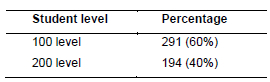
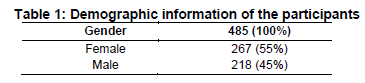
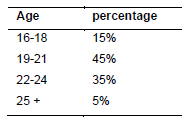
The participants' demographic data showed that all 485 (100%) of the students participated in the response during the class hours. Many of the students were first-year students (60%) and second-year students (40%). Their age range was also checked, and it was indicated that more students were in the age range of 19-21 (45%), followed by 22-24 (35%) and 16-18 (15), and the least were those in the range of 25 and above (5%).
The data in Table 1 reveals that social media was the most prevalent sources of information among undergraduate students at FUL, with 170 respondents (35%) primarily relying on platforms such as Facebook, Twitter and Instagram for scientific information. This source of information includes literates and illiterates, capable of misinformation. This is followed by online news websites, which served as the primary information source for 121 respondents (25%). University lectures were also a significant source, with 97 respondents (20%) relying on them. Friends and family influenced 73 respondents (15%), indicating a notable role of personal networks in information dissemination.
Academic journals, while considered the most credible, were the least-used source, with only 24 respondents (5%) depending on them. These findings highlight the dominance of digital and social media as primary information channels and suggest a potential gap in accessing and using academic journals, possibly due to accessibility issues or a lack of familiarity with academic resources among the students. However, drawing upon preceding scholarly contributions, the finding is in line with the findings of Moser (2024) and Tkácová, Pavlíková, Stranovská and Králik (2023). It is evident that misinformation manifests in various formats: fabricated news, propaganda, conspiracy narratives, highly partisan journalism, sensationalised content and 'alternative' scientific claims.
The data in Table 2 reveals diverse levels of confidence among undergraduate students at FUL in their ability to recognise misinformation, disinformation and misinformation. Most respondents (194: 40%) expressed confidence in their skills, suggesting that many students feel reasonably equipped to identify false information. This might be due to those skilled in dictating digital MDM. However, 146 respondents (30%) felt neutral, indicating a significant portion of the student body was uncertain about their ability to discern misinformation. Additionally, 97 respondents (20%) reported feeling not confident, highlighting a considerable need for improved education and resources in this area. Meanwhile, a smaller group (49 respondents: 10%) felt very confident in their ability to recognise misinformation, showcasing a minority with strong self-assurance. Notably, no respondents reported feeling not confident at all, implying that all students possessed at least a minimal level of confidence. This distribution underscores the importance of targeted interventions to enhance students' critical evaluation skills and overall confidence in navigating misinformation.
The data in Table 3 indicates a range of strategies employed by undergraduate students at FUL to verify the credibility of scientific information. The most frequently used strategy, with 146 respondents (30%), sought opinions from professionals and experts, highlighting the value students place on authoritative sources. This was followed by 121 respondents (25%) who cross-checked information with multiple sources, demonstrating an understanding of the importance of corroborating evidence. Fact-checking websites were used by 97 respondents (20%), reflecting the growing reliance on digital tools for verification. Consulting academic journals, despite their credibility, was less common, with 73 respondents (15%) using this method, possibly due to accessibility or familiarity issues. The least employed strategy was ignoring questionable information, with only 48 respondents (10%) choosing this approach, indicating that most students preferred active verification over passive disregard. The strategies were applied in a peculiar instance in FUL, although the study recommendations such as: common sense, or common knowledge, flexible model, understanding of information fact-checking strategies (Corbitt et al., 2023; McGrew & Chinoy 2022; Belova 2022; Brodsky et al. 2021) were lacking from the identified strategies. These findings suggest a preference for expert validation and multiple sources, while also highlighting areas for improvement in accessing and utilising academic journals.
The data in Table 4 highlights the various challenges undergraduate students at FUL face when verifying scientific information. The most significant challenge, reported by 146 respondents (30%), was the difficulty in understanding scientific terminology, which suggests a need for better scientific literacy and more accessible language in scientific communication. Conflicting information from different sources is the second most common issue, affecting 121 respondents (25%), indicating the confusion that arises from contradictory data. A lack of access to credible sources is a challenge for 97 respondents (20%), reflecting potential barriers in obtaining reliable information, possibly due to limited digital infrastructure or resource availability. Time constraints, impacting 73 respondents (15%), showed that thorough verification can be time-consuming and not always feasible for students. Lastly, limited knowledge of how to verify information affected 48 respondents (10%), underscoring the gap in students' training and education regarding effective verification techniques. This finding concurs with the argument of Dame Adjin-Tettey (2022). Therefore, adjudicating for enhanced educational programmes to improve scientific literacy, critical thinking skills and access to reliable resources.
10. Conclusion and recommendations
The study revealed the significant insights into the sources, perceptions, verification strategies and challenges associated with information credibility. The findings indicated that social media is the predominant source of information among students, reflecting the pervasive influence of digital platforms such as social media mental health impact drawn from Instagram, self-learning from educational MDM such platforms like TikTok and YouTube, Echo Chambers and Political Polarization from Twitter and Reddit and others. While a substantial number of students were confident in their ability to recognise false information, a significant portion remained uncertain, underscoring the need for enhanced critical evaluation skills. The most used verification strategy was seeking expert opinions, followed by cross-checking with multiple sources, yet challenges such as understanding scientific terminology and accessing credible sources persist. These insights highlight the critical areas for improvement in science communication and information verification among undergraduates. However, future research should focus on developing targeted interventions to enhance digital literacy and critical thinking skills, thereby empowering students to navigate the complex information landscape effectively.
Based on the findings, several recommendations can be made to improve the ability of undergraduate students to effectively tackle misinformation, disinformation, and misinformation:
• Enhance digital information literacy: Educational programmes should focus on improving students' understanding of digital learning tools terminology and concepts to reduce the confusion and misinterpretation of digital information sources.
• Promote critical thinking: Incorporate critical thinking and media literacy courses into the university curriculum to equip students with the skills needed to evaluate the credibility of various information sources effectively.
• Increase access to credible sources: Improve access to academic journals and other credible resources through university libraries and online databases. Additionally, training in how to use these resources effectively should be provided.
• Utilise fact check application and insights: Encourage collaborations between students and professionals through seminars, workshops and mentorship programmes to provide students with direct access to expert opinions and use of fact check application.
• Develop verification tools: Invest in developing and promoting the use of digital tools and fact-checking websites that can aid students in quickly verifying the credibility of information.
• Address Time Constraints: Provide time management workshops to help students balance their academic workload with the need for thorough information verification and
• The critical need for digital media literacy on MDM dictation for higher institutions: The FUL administrators can pilot the drive-in policy principles against MDM as well as digital literacy for information sourcing.
By implementing these recommendations, FUL can foster a more informed and critically engaged student body, capable of navigating the complexities of scientific information in the digital age and should empower academics with the required skills. Future research in this discipline would have strong reports emanating from this study from the wider society.
References
Belova, N., Krause, M & Siemens, C. 2022. Students' strategies when dealing with science-based information in social media - a group discussion study. Education Sciences, 12(9): 603. [ Links ]
Brodsky, J.E., Brooks, P.J., Scimeca, D., Todorova, R., Galati, P., Batson, M., & Caulfield, M. 2021. Improving college students' fact-checking strategies through lateral reading instruction in a general education civics course. Cognitive Research: Principles and Implications, 6: 1-18. [ Links ]
Cagle, S.M., Anderson, A.A. and Kelp, N.C. 2024. Stop the spread: Empowering students to address misinformation through community-engaged, interdisciplinary science communication training. Journal of Research in Science Teaching.
Cinelli, M., Quattrociocchi, W., Galeazzi, A., Valensise, C.M., Brugnoli, E., Schmidt, A. L., ... & Scala, A. 2020. The echo chamber effect on social media. Proceedings of the National Academy of Sciences, 117(9): 4917-4923. [ Links ]
Corbitt, K. E., Hiltbrand, K.A., Coursen, M.M., Rodning, S.P., Smith, W.B., & Mulvaney, D.R. (2023). Credibility judgments in higher education: A qualitative approach to detecting misinformation from university instructors. Common Knowledge or Common Sense? Education Sciences, 14: 582. [ Links ]
Dame Adjin-Tettey, T. 2022. Combating fake news, disinformation, and misinformation: Experimental evidence for media literacy education. Cogent Arts & Humanities, 9(1): 2037229. [ Links ]
Gliner, J.A., Morgan, G.A. and, & Leech, N.L. (2011). Research methods in applied settings: An integrated approach to design and analysis. Routledge.
Graves, L. 2018. Understanding the promise and limits of automated fact checking. Oxford Internet Institute. https://www.oii.ox.ac.uk/research/projects/understanding-the-promise-and-limits-of-automated-fact-checking/
Guess, A., Nagler, J. & Tucker, J. 2019. Less than you think: Prevalence and predictors of fake news dissemination on Facebook. Science Advances, 5(1): eaau4586. [ Links ]
Hunde, M.K., Demsash, A.W. and Walle, A.D. 2023. Behavioral intention to use e-learning and its associated factors among health science students in Mettu university, southwest Ethiopia: Using modified UTAUT model. Informatics in Medicine Unlocked, 36: 101154. [ Links ]
Hupp, S.D., Reitman, D. and Jewell, J.D. 2008. Cognitive-behavioral theory. In M. Hersen & A.M. Gross (eds.), Handbook of clinical psychology, Vol. 2. Children and adolescents (pp. 263-287). John Wiley & Sons.
Jones-Jang, S.M., Mortensen, T., & Liu, J. (2021). Does media literacy help identification of fake news? Information literacy helps, but other literacies don't. American Behavioural Scientist, 65(2): 371-388. https://doi.org/10.1177/0002764219859619 [ Links ]
Kata, A. 2012. Anti-vaccine activists, Web 2.0, and the postmodern paradigm - An overview of tactics and tropes used online by the anti-vaccination movement. Vaccine, 30(25): 3778-3789. [ Links ]
Koltay, T. 2017. The media and the literacies: Media literacy, information literacy, digital literacy. Media, Culture & Society, 33(2): 211-221. [ Links ]
Lazer, D.M.J., Baum, M.A., Benkler, Y., Berinsky, A.J., Greenhill, K.M., Menczer, F & Zittrain, J.L. 2018. The science of fake news. Science, 359(6380): 1094-1096. https://doi.org/10.1126/science.aao2998 [ Links ]
Lewandowsky, S., Ecker, U.K.H. and Cook, J. 2017. Beyond misinformation: Understanding and coping with the "post- truth" era. Journal of Applied Research in Memory and Cognition, 6(4): 353-369. https://doi.org/10.1016/jJarmac.2017.07.008 [ Links ]
Livingstone, S. 2018. Audiences in an age of datafication: Critical questions for media research. Television & New Media, 19(1): 61-77. [ Links ]
Loomba, S., De Figueiredo, A., Piatek, S.J., de Graaf, K & Larson, H.J. 2021. Measuring the impact of COVID-19 vaccine misinformation on vaccination intent in the UK and USA. Nature Human Behaviour, 5: 337-348. https://doi.org/10.1038/s41562-021-01056-1 [ Links ]
Májovský, M., Cerný, M., Kasal, M., Komarc, M. and Netuka, D. 2023. Artificial intelligence can generate fraudulent but authentic-looking scientific medical articles: Pandora's box has been opened. Journal of Medical Internet Research, 25: e46924. [ Links ]
Mason, L., Ariasi, N & Boldrin, D. 2020. Epistemic evaluation and comprehension of web information: Students' evaluation and comprehension of web information. Journal of Educational Psychology, 104(2): 541-554. [ Links ]
McGrew, S. and Chinoy, I. 2022. Fighting misinformation in college: Students learn to search and evaluate online information through flexible modules. Information and Learning Sciences, 123(1/2): 45-64. [ Links ]
McGrew, S., Ortega, T., Breakstone, J & Wineburg, S. 2018. The challenge that's bigger than fake news: Teaching students to engage in civic online reasoning. American Educator, 41(3): 4-9. [ Links ]
Ngo, T.T.A. 2023. The perception by university students of the use of ChatGPT in education. International Journal of Emerging Technologies in Learning (Online), 18(17): 4. [ Links ]
Oladokun, B.D., Aruwa, J.E., Ottah, G.A & Ajani, Y.A. 2024. Misinformation and disinformation in the era of social media: The need for fact-checking skills. Journal of Information and Knowledge, 1-7.
Osadola, O., Amuta, E., Somefun, C., Somefun, T., Ongbali, S & Mene, J. 2024. Deciphering disinformation: Strategies for identifying and addressing fake news in today's information landscape. In 2024 International Conference on Science, Engineering and Business for Driving Sustainable Development Goals (SEB4SDG), 1-7. IEEE.
Paul, R & Elder, L. 2019. Critical thinking: Tools for taking charge of your professional and personal life. Pearson.
Pennycook, G & Rand, D.G. 2018. The implied truth effect: Attaching warnings to a subset of fake news stories increases perceived accuracy of stories without warnings. Management Science, 66(11): 4944-4957. [ Links ]
Posetti, J & Matthews, A. 2018. A short guide to the history of 'fake news' and disinformation. International Center for Journalists. https://www.icfj.org/sites/default/files/2018-07/A%20Short%20Guide%20to%20History%20of%20Fake%20News%20and%20Disinformation_ICFJ%20Final.pdf
Potter, W.J. 2004. Theory of media literacy: A cognitive approach. London: Sage. [ Links ]
Praveenkumar, B. 2024. Misinformation and disinformation: Unravelling the web of deceptive information. Journal of Law and Legal Research Development, 29-33. Proceedings of the National Academy of Sciences, 116(16), 7662-7669. [ Links ]
Scheufele, D.A & Krause, N.M. 2019. Science audiences, misinformation, and fake news. Proceedings of the National Academy of Sciences, 116. [ Links ]
Tandoc, E.C., Lim, Z.W & Ling, R. 2018. Defining "Fake News": A typology of scholarly definitions. Digital Journalism, 6(2): 137-153. [ Links ]
Tkácová, H., Pavlíková, M., Stranovská, E. and Králik, R. 2023. Individual (non) resilience of university students to digital media manipulation after COVID-19 (Case Study of Slovak Initiatives). International Journal of Environmental Research and Public Health, 20: 1605. [ Links ]
Vosoughi, S., Roy, D & Aral, S. 2018. The spread of true and false news online. Science, 359(6380): 1146-1151. https://doi.org/10.1126/science.aap9559 [ Links ]
Vraga, E.K & Bode, L. 2020. Defining misinformation and understanding its bounded nature: Using expertise and evidence for describing misinformation. Political Communication, 37(1): 136-144. https://doi.org/10.1080/10584609.2020.1716500 [ Links ]
Vraga, E.K & Tully, M. 2021. Effective strategies for teaching about misinformation and engaging with digital media. Media and Communication, 9(1): 271-285. [ Links ]
Wardle, C & Derakhshan, H. 2017. Information disorder: Toward an interdisciplinary framework for research and policymaking. Council of Europe Report. https://edoc.coe.int/en/media/7495-information-disorder-toward-an-interdisciplinary-framework-for-research-and-policymaking.html
Warin, T. 2024. Disinformation in the digital age: Impacts on democracy and strategies for mitigation (No. 2024PR-03). CIRANO. https://ideas.repec.org/p/cir/circah/2024pr-03.html
Wineburg, S., McGrew, S., Breakstone, J & Ortega, T. 2016. Evaluating information: The cornerstone of civic online reasoning. Stanford Digital Repository.
Yesmin, S. 2024. Misinformation, disinformation and malinformation and related issues: Experimental evidence of lis students' recognition and capacity of dealing. Science & Technology Libraries, 43(2): 173-187. [ Links ]
Received: 25 October 2024
Accepted: 3 February 2025


