Depressive symptoms and quality of life prior to metabolic surgery in Cape Town, South Africa
Abstract
BACKGROUND: Depression has been shown to have a negative impact on the outcomes of metabolic surgery and quality of life (QOL). Currently, there are limited data on mental distress and QOL in metabolic surgery candidates in South Africa. AIM: This study aimed to determine the prevalence of depressive symptoms at the time of presurgical assessment in participants undergoing metabolic surgery. SETTING: The Obesity and Metabolic Surgery Initiative at Tygerberg Hospital. METHODS: We conducted pre-operatively a retrospective cross-sectional study on patients who underwent metabolic surgery from September 2017 to September 2019. Participants were profiled in terms of metabolic parameters, depressive symptoms and QOL RESULTS: Of the 157 participants assessed, 88% were female with a body mass index in the super obese range. Twenty-two percent of participants had depressive symptoms. Metabolic surgery candidates with depressive symptoms had a significantly poorer overall QOL score compared with those without depressive symptoms. When controlling for all other variables, an increase in QOL score was shown to decrease the odds of current depressive symptoms, whilst back pain on non-narcotic medication and having had a stroke were found to increase the odds of current depressive symptoms. CONCLUSION: This study highlights the complex interplay between metabolic, clinical and psychiatric factors in patients undergoing metabolic surgery. The study highlights the vital role of a psychiatrist as part of a multidisciplinary team pre- and post-operatively in the early identification of depressive symptoms. Psychiatrists may have an important role to play as part of the multidisciplinary team in metabolic surgery, including screening for mental health problems pre- and post-operatively, providing psychoeducation and relevant pharmacological treatment and psychotherapy where needed CONTRIBUTION: This study expands our limited knowledge of psychiatric comorbidity (in particular depressive symptoms and associated fac.tors) in people undergoing metabolic surgery in low- and middle-income countries
obesity; depression; metabolic surgery; quality of life; back pain
Introduction
Given the steady increase of obesity rates worldwide and the associated health risks of a high body mass index (BMI), obesity has become a major global health problem.112333
There appears to be a bidirectional association between obesity and mental health disorders. There is existing evidence that levels of obesity are higher in patients with depression than in the general population.452225365
Given the immense burden on health care services, there is a need for suitable treatments for patients with obesity and its associated comorbidities. When compared with other interventions, metabolic surgery has superior outcomes.78,9,10111211,13141413141516
We hypothesised that in participants who undergo metabolic surgery, depressive symptoms are associated with a poorer QOL and metabolic profile prior to surgery. Because of the limited data available on metabolic surgery and psychiatric comorbidities in LMICs, we believed a study in this specific setting would be a valuable contribution to the current body of knowledge in this field. The aim of this study was to determine the prevalence of depressive symptoms at the time of presurgical assessment in a sample of participants undergoing metabolic surgery. We further aimed to describe the demographic characteristics, clinical and metabolic profiles and the QOL of participants who screened positive for depressive symptoms compared with participants who screened negative.
Methods
Study design
We conducted a descriptive, cross-sectional, retrospective analysis of prospectively collected pre-operative data from September 2017 to September 2019. This study is a secondary analysis of data obtained from the parent study, an observational prospective descriptive study of the feasibility, safety and efficacy outcomes of consecutive patients undergoing metabolic surgery at the Obesity and Metabolic Surgery Initiative at Tygerberg Hospital (OMIT). The safety and efficacy findings have been published elsewhere.12
Study setting
The parent study was conducted at Tygerberg Hospital, located in Parow, Cape Town, South Africa. Tygerberg Hospital, the largest hospital in the Western Cape, is a tertiary state hospital that predominantly serves a population of low- to middle-income patients. The hospital is a teaching facility of the Faculty of Medicine and Health Sciences, Stellenbosch University. Tygerberg Hospital is the only academic hospital in South Africa providing the service of metabolic surgery and thus receives referrals from all over the country, including the private sector.
Participant selection
We included all 157 participants who met the inclusion and exclusion criteria of the parent study. They were all voluntary patients and provided written, informed consent to participate in the study. In brief, participants were considered for the parent study according to guideline recommendations for metabolic surgery.1722
Data collection and measures
Each participant underwent presurgical assessment by the metabolic surgeon at nonuniform time points prior to their metabolic surgery. All participants were asked about current depressive symptoms using a screening questionnaire designed specifically for the OMIT study. Assessment of depressive symptoms was based on the clinical assessment of the attending clinician, who asked about the presence of symptoms of depression including low mood, anhedonia, fatigue, poor sleep and feelings of worthlessness. No specific rating scale or formal Diagnostic and Statistical Manuel of Mental Disorders, Fifth Edition (DSM-5) criteria were used to diagnose depressive symptoms. Based on patients' self-report of their depressive symptoms and required treatment, the attending clinician categorised patients as no current symptoms, mild symptoms not requiring medication or therapy, moderate symptoms accompanied by some impairment possibly requiring medication or therapy, moderate symptoms accompanied by significant impairment requiring medication or therapy and severe depression requiring intensive treatment, including hospitalisation. For this study, a participant was identified as having depressive symptoms if they screened positive for any current depressive symptoms at least one being low mood or anhedonia (mild and above). All participants requiring psychiatric treatment were referred to the collaborating Tygerberg Hospital Eating Disorders Unit for further care.
Metabolic parameters were measured for each participant. Type 2 diabetes mellitus was defined as a known diagnosis of T2DM on treatment or a serum HbA1c > 6.5% or two fasting glucose tests > 125 mg/dL. Prediabetes was defined as a fasting blood glucose between 100 mg/dL and 125 mg/dL. Height was measured in centimetres, and weight was measured in kilograms. Body mass index is universally used to define obesity and calculated from weight in kilograms and height in meters as kg/m21819
Quality of life was assessed using the Moorehead-Ardelt QOL Questionnaire II.20202021,2220
Statistical analyses
Stata version 13 was used to analyse the data.23t-test in the case of continuous variables. All factors associated with depression on bivariate analyses at a p < 0.1 level were entered into a logistic regression model to ensure that potentially important variables, including confounders as well as within-category group differences, were not missed.24p < 0.05 level and thereby control for confounding factors. Statistical significance was set at p < 0.05 throughout the analyses except for entry into the logistic regression model.
Ethical considerations
The study received ethical approval from the Health Research Ethics Committee (HREC) of Stellenbosch University (HREC ref. no. S18/01/003). All participants provided written informed consent. The study was conducted in accordance with the South African Good Clinical Practice Guidelines (DOH 2006) and the Declaration of Helsinki (2013).
Results
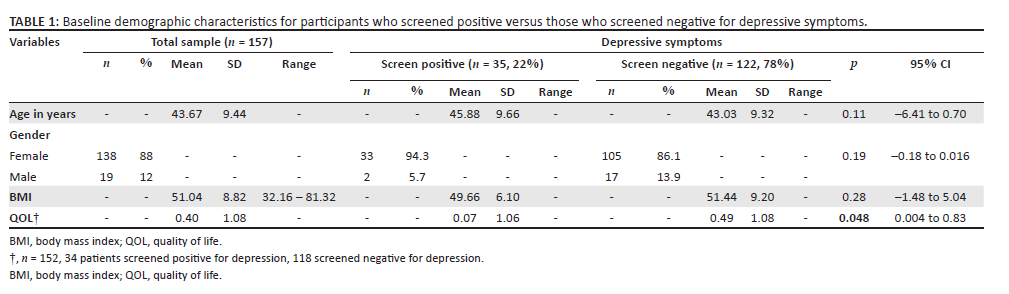
A total of 157 participants were assessed at Tygerberg Hospital before undergoing metabolic surgery. The baseline demographic characteristics are presented in Table 1. In this sample, participants were predominantly female (n = 138, 88%), with a BMI in the super obese range. Most participants reported no current depressive symptoms (n = 122, 77.2%) and no prior history of depression (n = 117, 74.5%). Participants largely rated their QOL as 'fair' with a mean (SD) QOL score of 3.2 (0.72). Metabolic surgery candidates with depressive symptoms had a significantly poorer overall QOL score (p = 0.048) compared with those without depressive symptoms.
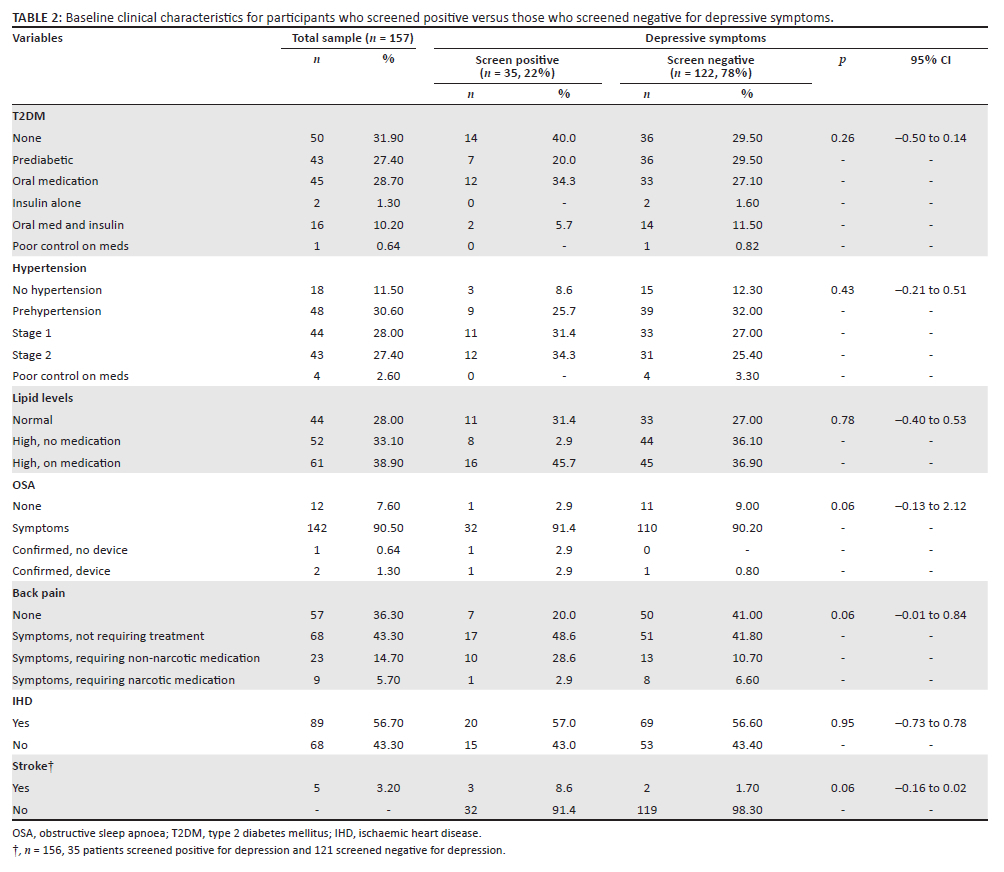
Metabolic parameters were deranged in most participants: over two-thirds were prediabetic or had T2DM; prehypertension or hypertension was prevalent in most of the cohort (n = 139, 88.5%), and only 44 participants (28%) had normal lipid levels (Table 2). Symptoms of obstructive sleep apnoea were experienced by most of the participants (n = 145, 92.4%). A total of 100 participants (63.7%) reported symptoms of back pain, but most participants reported no treatment required for their back pain. Ischaemic heart disease was present in 89 participants (56.7%), and five participants (3.2%) had a history of stroke. Metabolic surgery candidates with depressive symptoms did not differ significantly from those without depressive symptoms in terms of BMI, T2DM, hypertension, lipid level or ischaemic heart disease.
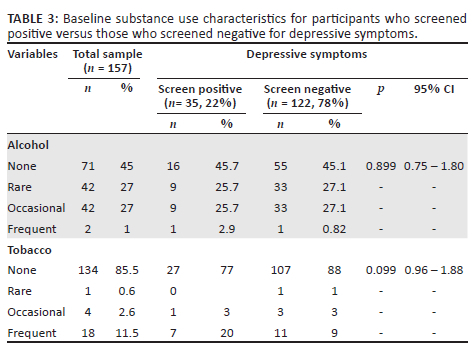
Substance use disorder and illicit substance use were exclusion criteria for metabolic surgery, and participants of this study used alcohol only occasionally or not at all (n = 155, 99%); the remaining two participants reported frequent use of alcohol (Table 3). Most of the participants were nonsmokers (n = 134, 85.4%). Metabolic surgery candidates with depressive symptoms did not differ significantly from those without depressive symptoms in terms of alcohol or tobacco use.
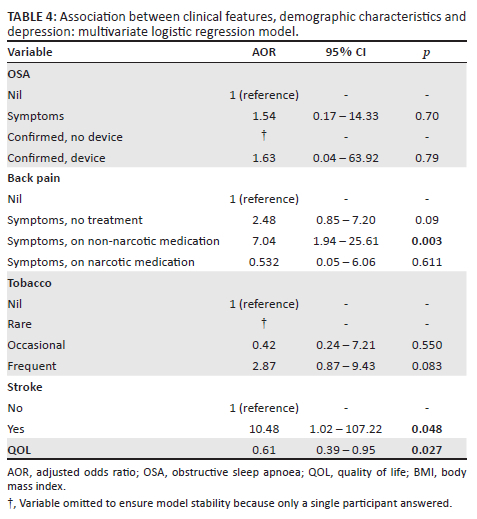
Based on the results of the above-mentioned bivariate analyses, the following variables qualified for inclusion in the logistic regression model: OSA (p = 0.06), previous stroke (p = 0.06), back pain (p = 0.06) and tobacco use (p = 0.099). Adjusted odds ratios and p-values illustrating the strength of the association between depression and demographic and clinical variables are presented in Table 4. When controlling for all other variables, an increase in QOL was shown to decrease the odds of depressive symptoms (OR = 0.607 [95% CI, 0.389 - 0.964], p = 0.027), whilst back pain on non-narcotic medication (OR = 7.041 [95% CI, 1.936 - 25.61], p = 0.003) and having had a stroke (OR = 10.478 [95% CI, 1.024 - 107.223], p = 0.048) were found to increase the odds of depressive symptoms.
Discussion
As far as we are aware, the present study is the first in South Africa to identify the prevalence of and discuss depressive symptoms in metabolic surgery candidates pre-operatively. The first important finding from this study was that most participants had no depressive symptoms at the time of presurgical assessment and fair QOL scores. The second important finding was that those participants with depressive symptoms had significantly lower QOL scores and were more likely to report back pain requiring non-narcotic analgesia and to have had a previous stroke compared with participants without depressive symptoms.
The prevalence of 22% of depressive symptoms in this sample is similar to that found in other studies. In a meta-analysis by Dawes et al.,1425
In our study, depressive symptoms were associated with lower QOL pre-operatively. Whilst heterogeneity in QOL measures and study design makes a direct comparison between our QOL scores and that of other studies difficult, our findings are consistent with the nature of the association between QOL and depression found in other metabolic surgery studies. Obesity is associated with a decreased health-related QOL for patients in the physical, social and psychological domains.1911,1416
In our sample, almost two thirds of patients with depressive symptoms reported chronic back pain. The bidirectional relationship between depression and chronic pain is well described and may be because of shared neural mechanisms.26272827293031
In our study, there was a weak association between depressive symptoms pre-operatively and history of stroke. According to the literature, there is a bidirectional association between depression and stroke, where depression is a known independent risk factor for stroke as well as being one of the most common neuropsychiatric sequelae following a cerebrovascular incident.323334162535
Limitations
Limitations of our study were the following: Psychiatric assessments of participants were done by the treating surgeon. Participants may have underreported their psychiatric symptoms, standardised psychiatric instruments were not used and the interviewer might have been biased (not objective). A small sample size was used. This study was conducted at a tertiary, academic hospital in Cape Town, and although the service receives referrals from all over the country, the findings may not be generalisable to other communities in South Africa. Finally, given the retrospective nature of the study, we relied on accurate base data entry.
Despite these limitations, the study highlights the importance of adequate psychosocial presurgical assessment and optimisation of psychiatric, medical and pain care. As part of standard practice guidelines, it is advised that a metabolic surgery program should include a dedicated multidisciplinary team (MDT).363738149,399
Conclusion
Our study showed that depressive symptoms at metabolic surgery presurgical assessment were associated with poorer QOL scores, back pain requiring non-narcotic medication and a history of stroke. This study highlights the complex interplay between metabolic, clinical and psychiatric factors in patients undergoing metabolic surgery in this setting. The study also supports the vital role of a psychiatrist as part of a MDT pre- and post-operatively in the early identification of depressive symptoms, psychoeducation and motivation of the patient to implement behaviour changes for permanent weight loss whilst adhering to the lifelong bariatric post-operatively programme. Ongoing research is required in this field, especially regarding postoperative outcomes and psychiatric comorbidities.
Competing interests
The authors have declared that no competing interest exist.
Authors' contributions
J.L. conceived the parent study. L.A. and K-A.L. supervised the MMed project. L.A. did the data analysis, and W.M.K.S. wrote the manuscript. L.A., K-A.L. and J.L. helped with writing and technical editing. All authors provided critical feedback and contributed to the final version of the manuscript.
Funding information
This research received no specific grant from any funding agency in the public, commercial, or not-for-profit sectors.
Data availability
The data that support the findings of this study are available on reasonable request from the corresponding author, L.A. The data are not publicly available due to restrictions.
Disclaimer
The views and opinions expressed in this article are those of the authors and do not necessarily reflect the official policy or position of any affiliated agency of the authors.
Acknowledgements
We acknowledge Karis Moxley and Muneeb Salie (Department of Psychiatry, University of Stellenbosch) for writing assistance and technical editing. We also thank Polly Joubert, research assistant on OMIT for providing us with the pre-operative QOL data on the metabolic surgery patients.
References
-
1.Ng M. Global, regional and national prevalence of overweight and obesity in children and adults 1980-2013: A systematic analysis. Lancet. 2014;384(9945):766-781. https://doi.org/10.1016/S0140-6736(14)60460-8
» https://doi.org/10.1016/S0140-6736(14)60460-8 -
2.Goetjes E, Pavlova M, Hongoro C, Groot W. Socioeconomic inequalities and obesity in South Africa - A decomposition analysis. Int J Environ Res Public Health. 2021;18(17):9181. https://doi.org/10.3390/ijerph18179181
» https://doi.org/10.3390/ijerph18179181 -
3.Heymsfield SB, Wadden TA. Mechanisms, pathophysiology, and management of obesity. N Engl J Med. 2017;376(3):254-266. https://doi.org/10.1056/NEJMra1514009
» https://doi.org/10.1056/NEJMra1514009 -
4.Allison DB, Newcomer JW, Dunn AL, et al. Obesity among those with mental disorders. A national institute of mental health meeting report. Am J Prev Med. 2009;36(4):341-350. https://doi.org/10.1016/j.amepre.2008.11.020
» https://doi.org/10.1016/j.amepre.2008.11.020 -
5.Luppino FS, De Wit LM, Bouvy PF, et al. Overweight, obesity, and depression: A systematic review and meta-analysis of longitudinal studies. Arch Gen Psychiatry. 2010;67(3):220-229. https://doi.org/10.1001/archgenpsychiatry.2010.2
» https://doi.org/10.1001/archgenpsychiatry.2010.2 -
6.Strawbridge R, Arnone D, Danese A, Papadopoulosa A, Herane Vivesae A, Clearead AJ. Inflammation and clinical response to treatment in depression: A meta-analysis. Eur Neuropsychopharmacol. 2015;25(10):1532-1543. https://doi.org/10.1016/j.euroneuro.2015.06.007
» https://doi.org/10.1016/j.euroneuro.2015.06.007 -
7.Gloy VL, Briel M, Bhatt DL, et al. Bariatric surgery versus non-surgical treatment for obesity: A systematic review and meta-analysis of randomised controlled trials. Br Med J. 2013;347(7931):f5934. https://doi.org/10.1136/bmj.f5934
» https://doi.org/10.1136/bmj.f5934 -
8.Bagdade PS, Grothe KB. Psychosocial evaluation, preparation, and follow-up for bariatric surgery patients. Diabetes Spectr. 2012;25(4):211-216. https://doi.org/10.2337/diaspect.25.4.211
» https://doi.org/10.2337/diaspect.25.4.211 -
9.Yen YC, Huang CK, Tai CM. Psychiatric aspects of bariatric surgery. Curr Opin Psychiatry. 2014;27(5):374-379. https://doi.org/10.1097/YCO.0000000000000085
» https://doi.org/10.1097/YCO.0000000000000085 - 10.Usubini AG, Cattivelli R, Villa V, et al. Psychological considerations for bariatric surgery. In: Saiz-Sapena N, Oviedo JM, editors. Bariatric surgery - From the non-surgical approach to the post-surgery individual care. London: IntechOpen; 2020, p. 441-448.
-
11.Gill H, Kang S, Lee Y, et al. The long-term effect of bariatric surgery on depression and anxiety. J Affect Disord. 2019;246:886-894. https://doi.org/10.1016/j.jad.2018.12.113
» https://doi.org/10.1016/j.jad.2018.12.113 -
12.Lubbe J, Webner A, Potgieter A, Odendaal W, Cooper C, Lambrechts A. Metabolic surgery in South Africa: An initial academic hospital experience. S Afr J Surg. 2019;57(2):20-26. https://doi.org/10.17159/2078-5151/2019/v57n2a2804
» https://doi.org/10.17159/2078-5151/2019/v57n2a2804 -
13.Osterhues A, Von Lengerke T, Mall JW, De Zwaan M, Müller A. Health-related quality of life, anxiety, and depression in bariatric surgery candidates compared to patients from a psychosomatic inpatient hospital. Obes Surg. 2017;27(9):2378-2387. https://doi.org/10.1007/s11695-017-2629-2
» https://doi.org/10.1007/s11695-017-2629-2 -
14.Dawes AJ, Maggard-Gibbons M, Maher AR, et al. Mental health conditions among patients seeking and undergoing bariatric surgery. A meta-analysis. JAMA. 2016;315(2):150-163. https://doi.org/10.1001/jama.2015.18118
» https://doi.org/10.1001/jama.2015.18118 -
15.Kolotkin RL, Andersen JR. A systematic review of reviews: Exploring the relationship between obesity, weight loss and health-related quality of life. Clin Obes. 2017;7(5):273-289. https://doi.org/10.1111/cob.12203
» https://doi.org/10.1111/cob.12203 -
16.Karlsson J, Taft C, Rydén A, Sjöström L, Sullivan M. Ten-year trends in health-related quality of life after surgical and conventional treatment for severe obesity: The SOS intervention study. Int J Obes (Lond). 2007;31(8):1248-1261. https://doi.org/10.1038/sj.ijo.0803573
» https://doi.org/10.1038/sj.ijo.0803573 -
17.NIH Conference. Gastrointestinal surgery for severe obesity. Consensus development conference panel. Ann Intern Med. 1991;115(12):956-961. https://doi.org/10.7326/0003-4819-115-12-956
» https://doi.org/10.7326/0003-4819-115-12-956 -
18.World Health Organization. Obesity and overweight [homepage on the internet]. c2021 [cited 2022 Apr 29]. Available from: https://www.who.int/news-room/fact-sheets/detail/obesity-and-overweight
» https://www.who.int/news-room/fact-sheets/detail/obesity-and-overweight -
19.Cochrane Library. Advanced Search: Medical terms (MeSH) for 'non-narcotic medication' and 'narcotic medication' [homepage on the internet]. London: Cochrane; 2020 [cited 2020 Mar 21]. Available from: https://www.cochranelibrary.com/advanced-search/mesh
» https://www.cochranelibrary.com/advanced-search/mesh -
20.Moorehead MK, Ardelt-Gattinger E, Lechner H, Oria HE. The validation of the Moorehead-Ardelt quality of life questionnaire II. Obes Surg. 2003;13(5):684-692. https://doi.org/10.1381/096089203322509237
» https://doi.org/10.1381/096089203322509237 -
21.Maciel J, Infante P, Ribeiro S, et al. Translation, adaptation and validation of a Portuguese version of the Moorehead-Ardelt quality of life questionnaire II. Obes Surg. 2014;24(11):1940-1946. https://doi.org/10.1007/s11695-014-1272-4
» https://doi.org/10.1007/s11695-014-1272-4 -
22.Poulsen L, Simonsen N, Klassen AF, et al. Comparison of the Moorehead-Ardelt quality of life questionnaire and the BODY-Q in Danish patients undergoing weight loss and body contouring surgery. Clin Obes. 2020;10(2):e12351. https://doi.org/10.1111/cob.12351
» https://doi.org/10.1111/cob.12351 - 23.StataCorp. Stata statistical software: Release 13. College Station, TX: StataCorp LP; 2013.
-
24.Bursac Z, Gauss CH, Williams DK, Hosmer DW. Purposeful selection of variables in logistic regression. Source Code Biol Med. 2008;3:17. https://doi.org/10.1186/1751-0473-3-17
» https://doi.org/10.1186/1751-0473-3-17 -
25.Van der Merwe M-T, Fetter G, Naidoo S, Wilson R, Drabble N. Baseline patient profiling and three-year outcome data after metabolic surgery at a South African centre of excellence. J Endocrinol Metab Diab S Afr. 2015;20(3):115-126. https://doi.org/10.1080/16089677.2015.1085700
» https://doi.org/10.1080/16089677.2015.1085700 -
26.Hooten WM. Chronic pain and mental health disorders: Shared neural mechanisms, epidemiology, and treatment. Mayo Clin Proc. 2016;91(7):955-970. https://doi.org/10.1016/j.mayocp.2016.04.029
» https://doi.org/10.1016/j.mayocp.2016.04.029 -
27.Williams LJ, Pasco JA, Jacka FN, Dodd S, Berk M. Pain and the relationship with mood and anxiety disorders and psychological symptoms. J Psychosom Res. 2012;72(6):452-456. https://doi.org/10.1016/j.jpsychores.2012.03.001
» https://doi.org/10.1016/j.jpsychores.2012.03.001 -
28.Currie SR, Wang JL. Chronic back pain and major depression in the general Canadian population. Pain. 2004;107(1-2):54-60. https://doi.org/10.1016/j.pain.2003.09.015
» https://doi.org/10.1016/j.pain.2003.09.015 -
29.Carroll LJ, Cassidy JD, Côté P. Depression as a risk factor for onset of an episode of troublesome neck and low back pain. Pain. 2004;107(1):134-139. https://doi.org/10.1016/j.pain.2003.10.009
» https://doi.org/10.1016/j.pain.2003.10.009 -
30.Kohler O, Krogh J, Mors O, Benros ME. Inflammation in depression and the potential for anti-inflammatory treatment. Curr Neuropharmacol. 2016;14(7):732-742. https://doi.org/10.2174/1570159X14666151208113700
» https://doi.org/10.2174/1570159X14666151208113700 -
31.Sullivan MD. Depression effects on long-term prescription opioid use, abuse, and addiction. Clin J Pain. 2018;34(9):878-884. https://doi.org/10.1097/AJP.0000000000000603
» https://doi.org/10.1097/AJP.0000000000000603 -
32.Villa RF, Ferrari F, Moretti A. Post-stroke depression: Mechanisms and pharmacological treatment. Pharmacol Ther. 2018;184:131-144. https://doi.org/10.1016/j.pharmthera.2017.11.005
» https://doi.org/10.1016/j.pharmthera.2017.11.005 -
33.Hackett ML, Pickles K. Part I: Frequency of depression after stroke: An updated systematic review and meta-analysis of observational studies. Int J Stroke. 2014;9(8):1017-1025. https://doi.org/10.1111/ijs.12357
» https://doi.org/10.1111/ijs.12357 -
34.Towfighi A, Ovbiagele B, El Husseini N, et al. Poststroke depression: A scientific statement for healthcare professionals from the American Heart Association/American Stroke Association. Stroke. 2017;48(2):e30-e43. https://doi.org/10.1161/STR.0000000000000113
» https://doi.org/10.1161/STR.0000000000000113 -
35.Bertram MY, Katzenellenbogen J, Vos T, Bradshaw D, Hofman KJ. The disability adjusted life years due to stroke in South Africa in 2008. Int J Stroke. 2013;8(suppl_A100):76-80. https://doi.org/10.1111/j.1747-4949.2012.00955.x
» https://doi.org/10.1111/j.1747-4949.2012.00955.x -
36.Mechanick JI, Youdim A, Jones DB, et al. Clinical practice guidelines for the perioperative nutrition, metabolic, and nonsurgical support of patients undergoing bariatric procedures - 2019 update: Cosponsored by American Association of Clinical Endocrinologists/American College of Endocrinology, The obesity society, American Society for Metabolic & Bariatric Surgery, Obesity Medicine Association, and American Society of Anesthesiologists - Executive summary. Endocr Pract. 2019;25(12):1346-1359. https://doi.org/10.4158/GL-2019-0406
» https://doi.org/10.4158/GL-2019-0406 -
37.Rebibo L, Maréchal V, De Lameth I, et al. Compliance with a multidisciplinary team meeting's decision prior to bariatric surgery protects against major postoperative complications. Surg Obes Relat Dis. 2017;13(9):1537-1543. https://doi.org/10.1016/j.soard.2017.05.026
» https://doi.org/10.1016/j.soard.2017.05.026 -
38.Sockalingam S, Hawa R, Micula-Gondek W, Lundblad W, Fertig A. Resource document on bariatric surgery and psychiatric care [homepage on the Internet]. Washington, DC: American Psychiatric Association; 2016 [cited 2019 May 11]. Available from: https://www.psychiatry.org/psychiatrists/search-directories-databases/library-and-archive/resource-documents
» https://www.psychiatry.org/psychiatrists/search-directories-databases/library-and-archive/resource-documents -
39.Sogg S, Lauretti J, West-Smith L. Recommendations for the presurgical psychosocial evaluation of bariatric surgery patients. Surg Obes Relat Dis. 2016;12(4):731-749. https://doi.org/10.1016/j.soard.2016.02.008
» https://doi.org/10.1016/j.soard.2016.02.008

Accepted: 14 June 2022
Published: 30 Sept. 2022