Double burden of malnutrition amongst patients with first-episode schizophrenia in a psychiatric hospital: A 1-year follow-up study
Abstract
BACKGROUND: Despite the burgeoning data on the double burden of malnutrition (DBM) in sub-Saharan Africa, longitudinal studies to examine malnutrition amongst first-episode schizophrenia are uncommon in the modern literature. AIM: To determine the extent of nutritional variations amongst persons with schizophrenia at intervals of 1-year treatment follow-up. SETTING: This study was conducted at the Federal Neuropsychiatric Hospital, Enugu, Nigeria. METHODS: Consecutive incident cases that fulfilled the criteria for schizophrenia were recruited into the study. After a baseline assessment, 206 incident cases of schizophrenia were followed up at 4th, 8th, 12th weeks, 6 months and 1 year for indicators of nutritional outcome. The body mass index (BMI) was used to measure the nutritional status amongst the study participants. Changes in the BMI across intervals of follow-up were examined using repeated measures analysis of variance, whereas the socio-demographic and clinical variables were evaluated as predictors of outcome using multiple regression analysis. RESULTS: After 1 year of treatment with antipsychotics, the prevalence of underweight decreased from 19.9% (95% CI, 19.8% - 20.0%) at baseline to 16.0% (95% CI, 15.9% - 16.1%) at 1 year, but the prevalence of overweight/obesity increased from 29.1% (95% CI, 29.0% - 29.2%) at baseline to 43.2% (95% CI, 43.0% - 43.3%) at 1 year of follow-up. The predictors of BMI at 1 year were antipsychotic medication (32.7% variance), duration of vagrancy (24.0%) and age at onset (20.0%). CONCLUSION: The finding of coexistence of undernutrition and overnutrition across the intervals of treatment follow-up underscores the need for comprehensive interventions to address both extremes of malnutrition amongst patients with schizophrenia.
burden; double; malnutrition; first-episode; schizophrenia
Introduction
The concept of double burden of malnutrition (DBM) first emerged in 1992 and was defined as the coexistence of both undernutrition and overnutrition or diet-related non-communicable diseases (NCDs) in the same individual, household or a population across the life course.112
Schizophrenia is a chronic disorder affecting about 1% of the population with heterogeneous treatment outcome.34526,786,7,8,9
Historically, famine and starvation were the common causes of malnutrition and have remained so till date. A growing concern is the malnutrition related to diseases, especially chronic physical and mental disorders.8,10,1112,13,141516135,1718161616
In response to the malady of malnutrition in the population, the United Nations Decade of Action on Nutrition and Sustainable Development Goals' double-duty actions has simultaneously and synergistically addressed undernutrition and overweight, obesity and diet-related NCDs more especially in the sub-Saharan Africa.152
•What proportions of patients with schizophrenia have different levels of nutritional status (i.e. underweight, normal and overnutrition (defined in the methodology section) at each interval of 1-year treatment follow-up?
•What are the socio-demographic, clinical and psychosocial (including social support) predictors of nutritional outcome at 1-year of treatment follow-up?
Materials and methods
Study design and population
The details of the study methodology have been published elsewhere.19
Diagnostic interview
Diagnosis of schizophrenia was made using the ICD-10 criteria for schizophrenia and confirmed using the Mini International Neuropsychiatric Interview (MINI). First, using the screening sections of the modules of the MINI, the researcher sought to screen out the presence of comorbid major mental disorders. A detailed medical history with full physical examination (including neurological examination) was conducted to exclude the presence of comorbid physical conditions.
Thereafter, the socio-demographic questionnaire was administered; this questionnaire contained items to assess socio-demographic characteristics and other nutritional variables (e.g. food refusal, changes in appetite and eating of non-nutritious materials).
The body mass index (BMI) or the Quetelet Index, which is a measure of weight in kilogram divided by height in metre squared, was used to determine the nutritional status across the intervals of treatment follow-up. The BMI has been known as a reliable measure of body proportions and composition, thinness or undernutrition.202122222223
The baseline assessments were completed at the emergency and crisis intervention unit or within 1 week of admission for admitted participants. The baseline weight and height were assessed, and BMI was calculated using the BMI formula (i.e. weight (in kg)/height squared (in meter). In addition, clinical severity of symptoms were rated using the Positive and Negative Symptoms Scale (PANSS),2425
For follow-up, participants were assessed at 4th, 8th, 12th weeks, 6 months and 1 year after the baseline. Participants were assessed using all the variables as described for the baseline assessment. Participants who missed their appointment were traced using phone numbers, family contact and next of kin's address or phone number. A record of participants lost to follow-up was made.
Data analysis
The statistical analysis was performed using the Statistical Package for Social Sciences, version 20 (IBM-SPSS 20). Data were entered and analysed based on the last observation carried forward (LOCF). Repeated measures analysis of variance was used to assess significant differences in change in BMI scores across the period of follow-up. The relationship between BMI at baseline, age at onset, duration of vagrancy, clinical severity and social support was assessed using Spearman's correlation analysis. Multivariate analyses using step-wise multiple regressions were used to assess the predictors of nutritional outcome (BMI at 1 year follow-up). All tests of significance were two-tailed at the 5% level of significance and confidence interval estimation of 95%.
Ethical consideration
Approval for this study was obtained from the Ethics and Research Committee of the Federal Neuropsychiatric Hospital, Enugu, Enugu State, Nigeria, with reference number FNHE/HTR/REA/VOL.11/356. This was approved on 15 August 2017 as part of a larger study on nutritional outcome of patients with schizophrenia. International ethical norms and standards were strictly adhered to at all times. Verbal and written consent were obtained from all the participants. Participation was voluntary.
Results
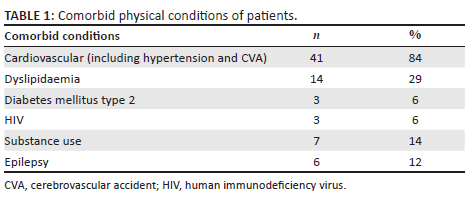
Table 1 shows the socio-demographic characteristics of the 206 schizophrenia participants. The study participants were mostly young (mean age 26 years), females (58.7%), single (63.6%), had high school education (56.0%) and employed (57.8%). Table 2 shows the prevalence of underweight at baseline, 4th, 8th, 12th week, 6 months and 1 year (95% CI) were 19.9% (19.8% - 20.0%), 17.0% (16.9% -17.1%), 16.5% (16.4% - 16.7%), 16.0% (15.9% - 16.1%), 16.0% (15.9% - 16.1%) and 16.0% (15.9% - 16.1%), respectively. The prevalence of overnutrition (overweight + obesity) at baseline, 4th, 8th, 12th week, 6 months and 1 year (95% CI) were 29.1% (29.0% - 29.2%), 36.9% (36.8% - 37.0%), 39.3% (39.2% - 39.4%), 40.3% (40.2% - 40.5%), 41.7% (41.6% - 41.8%) and 43.2% (43.0% - 43.3%), respectively.
Table 3 shows a progressive increase in weight across the intervals of treatment follow-up and 80.6% of the participants had greater than 5% increase in weight at 1 year follow-up. Similarly, there was a significant increase in the BMI across the intervals of follow-up (F = 49.65; p < 0.001; partial eta squared = 0.3). Pairwise comparison shows that the significant difference was across most of the intervals (p < 0.001), and the exceptions were between 8th week and 12th week (p = 0.25) and between 12th week and 6 months (p = 0.41) as shown in Figure 1.
The age at onset, duration of vagrancy, baseline BMI and antipsychotic medications were significant predictors of the BMI at 1 year, and they contributed 20.0%, 24.0%, 25.3% and 32.7%, respectively, of the variance as shown in Table 4.
Discussion
The study was aimed at a naturalistic treatment follow-up of 206 incident cases of schizophrenia over 1-year period, with a view to highlight the burden of double malnutrition and to examine the potential predictors of nutritional status at 1 year.
This study is amongst the few African studies to examine the DBM amongst patients with schizophrenia using incident cases in a longitudinal design. The major strengths of the study are as follows: First, incident cases, predominantly neuroleptic naïve at the baseline were used to overcome the methodological problems inherent in prevalent and/or chronic cases. Second, they were followed-up for relatively a long period of 1 year using a well-validated measure of nutritional status.
The main findings of this study were as follows: (1) the DBM was evident across the intervals of treatment follow-up. The prevalence of undernutrition (i.e. underweight) and overnutrition (i.e. overweight + obesity) amongst the study participants were at baseline (19.9% vs. 29.1%), 4th week (17.0% vs. 36.9%), 8th week (16.5% vs. 39.3%), 12th week (16.0% vs. 40.3%), 6 months (16.0% vs. 41.7%) and 1 year (16.0% vs. 43.2%), respectively. (2) There was a progressive increase in weight and BMI across the intervals of treatment follow-up and (3) the age at onset, duration of vagrancy, being on antipsychotic medication and baseline BMI were predictors of nutritional outcome at 1 year.
The finding of the baseline prevalence of underweight and overweight + obesity of 19.9% and 29.1%, respectively, is consistent with previous reports.13,141413,261327282965,17
Another important finding in this study is the progressive reduction in the prevalence of undernutrition with treatment. In other words, there was a progressive increase in weight and BMI across the intervals of treatment follow-up. This finding is consistent with the robust reports in the literature that with treatment, there is a progressive increase in weight and BMI.5,17
Concerning the predictors of nutritional status at 1 year, this study found that the age at onset of disease, duration of vagrancy, baseline body mass and use of antipsychotic medications were significant predictors of 1-year BMI. Previous studies have demonstrated that mental symptoms were significant risk factors of malnutrition amongst patients with mental disorders.19,30301231,3231,323132
Limitations
One of the limitations of this study was the use of institution-based samples (care seekers); although it saved cost and time and is the predominant methodology in the literature, a community sample would have been more representative. The second limitation was the use of semi-structured questionnaire to assess feeding and/or eating behaviours; a structured questionnaire would have been more appropriate. Third, this study did not examine other biochemical variables to add to its depth. Fourth, the study did not include a control group that would have compared with general population. Finally, the attrition rate in this study was 45.6%; although within the range of 30% - 70% previously reported in a meta-analysis of attrition rates in longitudinal studies,33 the characteristics of those lost to follow-up may have affected the findings of this study.
Conclusion
The main finding of this study is that the number of underweight patients stayed fairly similar but overweight increased over 1-year period of treatment follow-up. The finding of the coexistence of undernutrition and overnutrition amongst patients with schizophrenia underscores the need for proper nutritional assessment and a comprehensive multidisciplinary nutritional intervention to tackle the two extremes of malnutrition in this patient population.
Competing interests
The authors declare that no conflict of interest exists.
Authors' contributions
J.U.O. and P.N.O. contributed to the study design, analysis and interpretation of data. J.U.O. drafted the manuscript. All authors read and approved the final manuscript.
Funding information
This research received no specific grant from any funding agency in the public, commercial or not-for-profit sectors.
Data availability statement
The research data are available on request.
Disclaimer
The views expressed in this article are that of the authors and not an official position of the institution where the study was carried out.
Acknowledgements
The authors would like to thank Dr Muideen Bakare, the then Head of Training and Research, Federal Neuropsychiatric Hospital, Enugu, for providing the enabling environment and some logistic support for this study. In addition, they thank all the resident doctors of the Federal Neuropsychiatric Hospital, Enugu, for their cooperation throughout the period of the study. They are also grateful to the patients and their relatives for freely giving of their time to participate in the study.
References
- 1.United Nations Decade of Action on Nutrition. Seventieth Session of the United Nations General Assembly; 2015 Sep 15-28; New York, NY.
- 2.World Health Organization. Nutrition in the WHO African region. Brazzaville: World Health Organization; 2017.
-
3.Haro JM, Novick D, Bertsch J, Karagianis J, Dossenback M, Jones PB. Cross-national clinical and functional remission rates: Worldwide schizophrenia out-patient health outcome (S-SOHO) study. Br J Psychiatry. 2011;199(3):194-201. https://doi.org/10.1192/bjp.bp.110.082065
» https://doi.org/10.1192/bjp.bp.110.082065 -
4.Saha S, Chant D, McGrath J. A systematic review of mortality in schizophrenia: Is the differential mortality gap worsening over time? Arch Gen Psychiatry. 2007;64(10):1123-1131. https://doi.org/10.1001/archpsyc.64.10.1123
» https://doi.org/10.1001/archpsyc.64.10.1123 -
5.Cassy DE. Metabolic issues and cardiovascular diseases in patients with psychiatric disorders. Am J Med. 2005;118(2):15S-22S. https://doi.org/10.1016/j.amjmed.2005.01.046
» https://doi.org/10.1016/j.amjmed.2005.01.046 -
6.Dohan FC. Cereals and schizophrenia: Data and hypothesis. Acta Psychiatr Scand. 1966;42(2):125-152. https://doi.org/10.1111/j.1600-0447.1966.tb01920.x
» https://doi.org/10.1111/j.1600-0447.1966.tb01920.x -
7.Christensen O, Christensen E. Fat consumption and schizophrenia. Acta Psychiatr Scand. 1988;78(5):587-591. https://doi.org/10.1111/j.1600-0447.1988.tb06388.x
» https://doi.org/10.1111/j.1600-0447.1988.tb06388.x -
8.Peet M. Nutrition and schizophrenia: An epidemiological and clinical perspective. Nutr Health. 2003;17(3):211-219. https://doi.org/10.1177/026010600301700304
» https://doi.org/10.1177/026010600301700304 - 9.Zeman F. Clinical nutrition and dietetics. 2nd ed. New York, NY: Macmillan Publishing Company, 1991; p. 701-736.
-
10.Heys SD, Schofield AC, Wahle KW, Garcia-Caballero M. Nutrition and the surgical patient: Triumphs and challenges. Surgeons. 2005;3(3):139-144. https://doi.org/10.1016/s1479-666x(05)80033-2
» https://doi.org/10.1016/s1479-666x(05)80033-2 -
11.Warnold I, Lundholm K. Clinical significance of preoperative nutritional status in 215 noncancer patients. Ann Surg. 1984;199(3):299-305. https://doi.org/10.1097/00000658-198403000-00009
» https://doi.org/10.1097/00000658-198403000-00009 -
12.Kim SR, Kim JY, Kim HY, Nho JU, Kim YH, Min SY. Factors related to malnutrition in community-dwelling patients with schizophrenia. Perspect Psychiatr Care. 2019;55(3):415-423. https://doi.org/10.1111/ppc.12327
» https://doi.org/10.1111/ppc.12327 -
13.Sugai T, Suzuki Y, Yamazaki M, et al. High prevalence of underweight and undernutrition in Japanese inpatients with schizophrenia: A nationwide survey. BMJ Open. 2015;5(12):e008720. https://doi.org/10.113/bmjopen-2015-008720
» https://doi.org/10.113/bmjopen-2015-008720 -
14.Assefa T, Seid O, Tadese F, Gebremedhin T. Nutritional status and associated factors among adult psychiatric patients in Dessie referral hospital, Northeast-Ethiopia. Psychiatry J. 2020(3):5087573. https://doi:org/10.1155/2020/5087573
» https://doi:org/10.1155/2020/5087573 -
15.Patterson CW. Psychiatrists and physical examinations: A survey. Am J Psychiatry. 1978;135(8):967-968. https://doi.org/10.1176/ajp.135.8.967
» https://doi.org/10.1176/ajp.135.8.967 -
16.Sugawara N, Maruo K, Sugai T, et al. Prevalence of underweight in patients with schizophrenia: A meta-analysis. Schizophr Res. 2018;195(1):67-73. https://doi.org/10.1016/j.schres.2017.10.017
» https://doi.org/10.1016/j.schres.2017.10.017 -
17.Ighoroje M, Ogundele A, Abayomi O. Obesity and pattern of use of antipsychotic agents among outpatients with schizophrenia in Nigeria. Int J Psychiat Clin. 2017;5(2):32-38. https://doi.org/10.5923/j.ijcp.20170502.02
» https://doi.org/10.5923/j.ijcp.20170502.02 -
18.Wirth R, Streicher M, Smoline C, et al. The impact of weight loss and low BMI on mortality of nursing home residents-results from nutrition day in nursing homes. Clin Nutr. 2016;35(4):900-906. https://doi.org/10.1016/j.clnu.2015.06.003
» https://doi.org/10.1016/j.clnu.2015.06.003 -
19.Osuji PN, Onu JU. Feeding behaviors among incident cases of schizophrenia in a psychiatric hospital: Association with dimensions of psychopathology and social support. Clin Nutr ESPEN. 2019;34(1):125-129. https://doi.org/10.1016/j.cinesp.2019.08.001
» https://doi.org/10.1016/j.cinesp.2019.08.001 - 20.Norgan NG. Body mass index and body energy stores in developing countries. Eur J Clin Nutr. 1990;44(1):79-84.
- 21.Norgan NG. Population differences in body composition in relation to BMI. Eur J Clin Nutr. 1994;48(3):S10-S12.
-
22.Cervi A, Franceschini SCC, Priore SE. Critical analysis of the use of the body mass index for the elderly. Rev Nutr. 2005;18(6):765-775. https://doi.org/10.1590/S1415-52732005000600007
» https://doi.org/10.1590/S1415-52732005000600007 - 23.World Health Organization. Obesity: Preventing and managing the global epidemic. Geneva: World Health Organization, 1998; p. 276.
-
24.Kay SR, Fiszbein A, Opler LA. The positive and negative syndrome scale (PANSS) for schizophrenia. Schizophr Bull. 1987;13(2):261-276. https://doi.org/10.1093/schbul/13.2.261
» https://doi.org/10.1093/schbul/13.2.261 -
25.Zimet GD, Dahlem NW, Zimet SG, Farley GK. The multidimensional scale of perceived social support. J Pers Assess. 1988;52(1):30-41. https://doi.org/10.1207/s15327752jpa5201_2
» https://doi.org/10.1207/s15327752jpa5201_2 -
26.Yutaro S, Sugai T, Fukui N, Watanabe J, Ono S, Tsuneyama N. High prevalence of underweight and undernutrition in Japanese inpatients with schizophrenia. Psychiat Clin Neuros. 2014;68(1):78-82. https://doi.org/10.1111/pcn.12082
» https://doi.org/10.1111/pcn.12082 -
27.Caprio S, Daniels SR, Drewnowski A, Kaufman FR, Palinkas LA, Rosenbloom AL. Influence of race, ethnicity, and culture on childhood obesity: Implication for prevention and treatment. Diabetes Care. 2008;31(11):2211-2221. https://doi.org/10.2337/dc08-9024
» https://doi.org/10.2337/dc08-9024 -
28.Choo V. WHO reassesses appropriate body mass index for Asian populations. Lancet. 2002;360(9328):235. https://doi.org/10.1016/S0140-6736(02)09512-0
» https://doi.org/10.1016/S0140-6736(02)09512-0 -
29.Sola AO, Steven AO, Kayode JA, Olayinka AO. Underweight, overweight and obesity in adult Nigerians living in rural and urban communities of Benue State. Ann Afr Med. 2011;10(2):139-143. https://doi.org/10.4103/1596-3519.82081
» https://doi.org/10.4103/1596-3519.82081 -
30.Li IC, Kuo HT, Lin YC. The mediating effect of depressive symptoms on nutritional status of older adults in long term care facilities. J Nutr Health Aging. 2013;17(7):633-636. https://doi.org/10.1007/s12603-013-0018-7
» https://doi.org/10.1007/s12603-013-0018-7 - 31.Wiecha JL, Dwyer JT, Dunn-Strohecter M. Nutrition and health services needs among the homeless. Public Health Rep. 1991;106(4):364-374.
-
32.Halsu I, Gunther C, Hade E, Vandergriff S, Slesnick N, Williams R. Unaccompanied homeless youth have extremely poor food quality and nutritional status. Int J Adolesc Youth. 2019;24(3):1-24. https://doi.org/10.1080/02673843.2018.1538885
» https://doi.org/10.1080/02673843.2018.1538885 -
33.Fischer EH, Dornelas EA, Goethe JW. Characteristics of people lost to attrition in psychiatric follow-up studies. J Nerv and Ment Dis. 2001;189(1):49-55. https://doi.org/10.1097/00005053-200101000-00009
» https://doi.org/10.1097/00005053-200101000-00009

Accepted: 14 Aug. 2020
Published: 10 Nov. 2020